




by Noemi Capoccia 24/07/2026



Categories: Opinions / Disclaimer
Did Nolan really politicize *The Odyssey*? The answer isn’t simple. The director offers a contemporary interpretation of Ulysses’ journey, focusing on the trauma of war and the responsibility of those in power, but Homer’s epic has always been a tale of conflicts, hierarchies, and political relationships.


There is a man with a deep voice singing by the fire. He is not telling a story; he is passing it down. Song precedes the image; memory precedes cinema—and we have already said this.The Odyssey has been a voice that has traversed the centuries, entrusted to the aedi—the professional bards—and preserved through repetition and transformation. When Christopher Nolan decided to bring the poem attributed to Homer to the big screen, he carried out the task that the myth has always demanded. He sings a new version of the Odyssey. And on this point, we should all be in agreement by now.


For a week now, the film *Odyssey* has been at the center of debate—a reaction that is probably inevitable for a work that engages with one of the foundational texts of Western culture. Reactions have been mixed. There have been thoughtful and well-reasoned critiques that examine Nolan’s narrative and visual choices, as well as more superficial and dismissive judgments. Some have cited their classical education as sufficient grounds to determine what is faithful and what is not, as if knowing the poem by heart exhausted every possible interpretation of the work. Others have welcomed the director’s reinterpretation, recognizing in it a new way to approach the myth; while others have speculated that the controversy was part of a calculated marketing strategy; and still others, without seeking literal fidelity to Homer’s original, have found in the film a poetic dimension—the ability to evoke emotions and images that belong to everyone’s collective memory.


It is precisely the universal appeal of the myth that explains the film’s adoption of the language of the epic. In the history of cinema, the term refers to a work characterized by grandiose scenes, the presence of major stars, the use of large numbers of extras, and exceptional production costs. But a true epic is not merely a matter of scale. It is also an attempt to tap into a shared imagination. And what greater imagination exists than that of Odysseus, the man who crosses the Mediterranean after destroying a city and returns home bearing the weight of his own actions?Why, then, do we continue to want to hearthe same song over and over again when Odysseus’s journey has spawned countless versions of itself over the centuries?


For there is Homer’s cunning and ambiguous Odysseus, the polytropos, the man of a thousand faces; there is James Joyce’s modern Ulysses, transformed into Leopold Bloom, an ordinary man who traverses Dublin in a single day as a private, everyday hero; there is the television Odysseus portrayed by Bekim Fehmiu in the 1968 series *Odissea*, directed by Franco Rossi—one of the first major audiovisual adaptations of Homer’s epic, which restores to the hero not only his epic stature but also his human fragility, the pain of separation and the stubborn longing to return; there is the cinematic Ulysses portrayed by Sean Bean in *Troy* (2004), far removed from the divine dimension of the poem and transformed into a pragmatic, diplomatic man who understands that wars arise not only from emotions but from human interests; there is Dante’s Ulysses, placed in the eighth circle of Hell, condemned for his insatiable thirst for knowledge that drives him beyond all limits; there is Valerio Massimo Manfredi’s Ulysses, the protagonist of a narrative reinterpretation that restores a more human and earthly dimension to the Homeric hero—that of a man marked by the weight of his own exploits, by the longing to return, and by the constant search for his own balance.And now there is Nolan’s Ulysses, whether we like it or not. A man scarred by war, tormented by the memory of Troy’s destruction, forced to confront the monsters encountered on his journey and the inner monster of his own responsibility.
To truly understand the Homeric poem—including its political dimensions—we must start with a seemingly simple Greek word: xenia. Today we translate the term as “hospitality,” but in the Greek world its meaning was much deeper. Xenia was a sacred relationship governed by precise rules: the host had to respect the guest, the guest had to respect the host, and the guest’s departure had to be accompanied by a gift. It was a religious principle protected by Zeus Xenios, Zeus in his role as protector of foreigners and travelers. Indeed, every guest could conceal a divine presence: welcoming a stranger meant accepting the possibility of standing before a god in human form.
The entire *Odyssey*, including Nolan’s reinterpretation (for we are indeed speaking of an interpretation ), can be read as a lengthy reflection on the violation and reconstruction of *xenia*. Ulysses, shipwrecked and cast ashore on foreign shores by Poseidon, does not ask who the men he will encounter are; he wonders whether they are men capable of respecting the laws of hospitality. It is therefore the absence of civilization that is the traveler’s greatest fear, not the creatures hidden in the sea. Neither Scylla nor Charybdis. Not even the sirens.
Xenia is honored when the nymph Calypso offers him protection, when the swineherd Eumaeus takes in the unknown beggar without knowing that the king of Ithaca is hiding beneath those tattered clothes. But it is continually violated: by Polyphemus, who recognizes no law beyond his own strength; by the suitors, who ravage Odysseus’s home, violating the most sacred principle of the ancient world; and by Paris.
For Paris is the one who betrays the bond of hospitality: as a guest of Menelaus, he seduces his host’s wife and flees with her. The act thus constitutes a provocation against the divine order. Herodotus also recounts this in his *Histories*, when he presents an alternative version of the story: according to the Egyptian priests interviewed by the historian, Helen never actually arrived in Troy, but remained in Egypt after Paris, driven there by adverse winds, had landed there during his journey home. Even in this account, the central point remains the same: Paris is accused of violating the law of hospitality. King Proteus, in the presence of the Trojan prince, pronounces a crystal-clear moral condemnation: it is not the abduction of a woman that constitutes the real offense, but rather the fact that Paris betrayed the bond of hospitality. After receiving hospitality and trust, he turned that gift into a weapon against those who had hosted him. The Trojan War thus arises from a wound to xenia. And it is precisely this wound that Nolan inherits.
We also know that in the Greek world, every violation of order brings about a consequence. Hybris—the excess of a man who oversteps his limits—is necessarily followed by nemesis, the punishment that restores balance. Odysseus is the hero of both moderation and excess. His intelligence continually saves him, but his cunning also leads him to cross dangerous boundaries. He himself reveals his name to Polyphemus after deceiving him (yes, it’s true, this scene isn’t in the film): a gesture born of pride and cunning, which unleashes Poseidon’s vengeance. The man who triumphed through deception must therefore endure years of suffering. His victory already contains his own condemnation. And this is perhaps where Nolan most closely aligns with Homer: the Trojan Horse is the stratagem that allows the Greeks to win, but it is the moment when the hero realizes (or should realize) that victories come at a price.
I believe it is in the relationship between guilt and power that Nolan’s*Odyssey* seems to find its interpretive reinterpretation. The director recounts the inner journey of a ruler forced to come to terms with what he has done. His Odysseus is the man who returns after seeing the price of his own victory, and it is true that the perspective he offers us profoundly alters the meaning of the poem. Homer’s Odysseus is a man of many natures. As mentioned earlier, the term used to describe him, *polytropos*, refers precisely to his ability to change form, to adapt, to deceive, and to survive. He is the man who relies on intelligence rather than brute force, the one who succeeds where Achilles fails because he understands that the world belongs not only to warriors but also to those who know how to manipulate circumstances. He is not, however, an innocent hero, and he cannot be absolved. He is politically incorrect.
Odysseus lies, makes sacrifices, and uses others as tools. His greatness stems from this ambivalence. He is the one who saves his men and at the same time leads them to their deaths; he is the one who longs to return to Penelope but does not give up his adventures; he is still the one who rejects the immortality offered by Calypso because he prefers a human life, yet during his journey he performs deeds that belong more to the world of the gods than to that of men.
Nolan’s Odysseus, on the other hand, seems to belong to another era. He is a contemporary hero: a man scarred by trauma, consumed by remorse, almost a veteran who must come to terms with the weight of his actions. It is a recurring narrative archetype in the director’s films. Bruce Wayne in *Batman * and *Batman Begins* becomes Batman to transform his childhood trauma into a mission. J. Robert Oppenheimer, the protagonist of *Oppenheimer*, is remembered as the creator of the atomic bomb, but above all as the man who had to live with the knowledge of the destruction caused by his own invention. Joseph Cooper, the protagonist of *Interstellar*, also belongsto this same lineage of characters: a man called upon to embark on a journey beyond the known boundaries of space and time, forced to separate from his family for a mission that could determine the future of humanity. Cooper is the astronaut who travels through a wormhole in search of a new habitable world and, at the same time, the man willing to sacrifice his present and his relationship with time in order to save future generations. Odysseus, too, thus belongs to this same lineage. The exceptional man who wields enormous power, yet who, precisely through suffering, acquires a new moral legitimacy. *The Odyssey* is the adaptation conceived by Nolan, and it is a transposition that falls squarely within every author’s interpretive freedom.
But then who is the victor? The new hero—Nolan’s hero—is the one who has known the weight of victory. And this is where one of the film’s most intriguing questions emerges.Does remorse truly erase responsibility? Or does the hero’s pain become a new form of absolution? To answer this, we probably need to take a step back. The Odyssey arises from a war, and Homer recounts its consequences and what remains once the weapons have fallen silent. I believe Nolan is primarily interested in this aspect. When war is transformed above all into an individual moral drama, the political dimension of the conflict risks disappearing. War becomes an eternal tragedy of man against himself, a consequence of human nature, rather than the result of interests, ambitions, wealth, and power dynamics. The ancient Odyssey, on the other hand, does not hide these elements.
Love for Helen and wounded honor, in the tradition of the myth, may not be the only reasons behind the expedition against Troy. Behind the epic narrative, in fact, lies a more complex reality, shaped by the balance of power among kingdoms, political alliances, control of trade routes, prestige, and aspirations for dominance over the Mediterranean. This dimension of the conflict also emerges in cinematic reinterpretations such as *Troy*, and through the various portrayals of Agamemnon.
Even Helen, often reduced in modern tradition to the role of a mere cause of the war, is a far more complex figure.In the *Iliad*, she is simultaneously guilty and a victim, desired and condemned. One of the most heated debates surrounding the film, in fact, centered on the decision to cast Lupita Nyong’o, an actress of Kenyan and Mexican descent, in the role of Helen. Part of the public debate interpreted the decision through the lens of so-called “woke” culture—a term coined to denote greater awareness of social issues and often used, in a critical sense, to indicate a supposed excess of attention to representation and political correctness. I believe, however, that the relationship between myth and identity is far more complex. To ask whether a mythological character must necessarily correspond to a modern racial representation is to forget that myths have never remained static. Every era, in literature and art, has altered Homer in some way. Cinema itself has done so. The 2004 film *Troy*, often considered a more “classic” adaptation, was anything but faithful to the historical or archaeological reality of the Bronze Age. The armor, helmets, and weapons were largely a modern reinterpretation. Sean Bean portrayed an Odysseus far removed from the Homeric hero: less ambiguous, closer to the figure of a political advisor—a man capable of understanding that behind the glory of war lie interests and strategies. Yet no one contested those artistic liberties with the same intensity. The problem, therefore, lies in how the public accepts or rejects the fact that a myth continues to evolve.
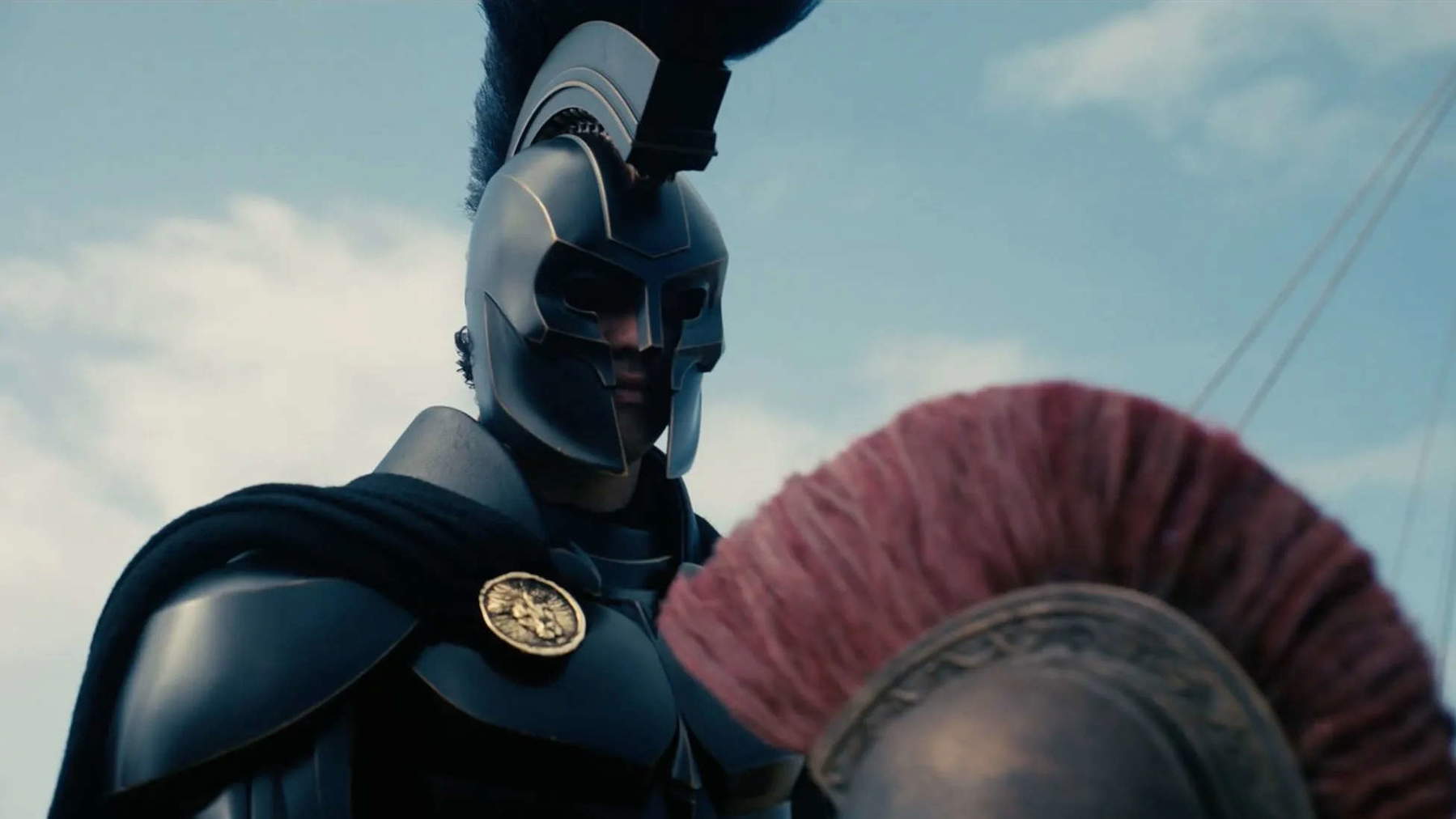
Even the criticism of the film’s visual choices highlights a long-standing difficulty: distinguishing between historical reconstruction and artistic interpretation. When the first promotional material was released, some viewers criticized Agamemnon’s armor, deeming it too dark, too shiny—almost like an ancient version of Batman’s suit. In an interview with The Times (May 2026), Nolan defended the choice by citing archaeological knowledge of the Mycenaean era. Our understanding of the Bronze Age is still largely fragmentary; much of the information comes from incomplete artifacts, ritual objects, and indirect evidence. Bronze could take on particular hues through specific processing techniques, and precious materials could be used to distinguish the rank of rulers. Agamemnon’s armor, therefore, is intended as a symbolic statement. The king must appear different from other men, and this is precisely where Nolan once again engages with myth. In the ancient world, power and politics are also constructed through images.
There is, however, one final level to consider—perhaps the most fascinating: that concerning the one who chooses to tell the story of Odysseus. For every time a civilization returnsto the *Odyssey*, it is telling its own story. The poem has survived because it is continually recreated through the voice of those who pass it down, and each era chooses which aspect of Odysseus to highlight.
Homer’s Odysseus is the man of cunning. Dante’s Odysseus is the man of knowledge who transcends imposed limits. Joyce’s Odysseus is the ordinary man, hidden in everyday life. Sean Bean’s cinematic Odysseus in *Troy* is the political advisor who understands the mechanisms of power. Nolan’s Odysseus is the man of trauma and redemption. Each generation chooses its own Ulysses because each generation embarks on its own journey. Ancient man saw in Odysseus the one who traversed a world populated by gods and monsters. Medieval man saw in him the symbol of knowledge that knows no bounds. Modern man has seen the inner traveler, the individual in search of his own identity. The twentieth century transformed Ithaca into a metaphor for everyday existence. Contemporary cinema, however, seems to be asking a different question: what happens when the victor must live with the consequences of his own victory?
It’s true: in Nolan’s version, some parts of the poem are omitted, while other aspects may come across as politically correct. Key episodes— —are missing, such as the encounter with Nausicaa, the story of Aeolus, and the passage through the island of the Lotophagi; Odysseus does not meet Achilles in Hades, and even the episode of Polyphemus is profoundly reworked, since the hero no longer appears with the cunning of “Nobody” who deceives the Cyclops. Some symbolic elements of the Homeric tradition are also transformed. Helen does not appear with the snow-white arms of the epic formula, Menelaus does not have the reddish, copper-colored hair of the traditional description, and Athena is not defined by the “glaucous gaze” that Homer attributes to the goddess—a term that can be interpreted as meaning bright, blue, or even owl-like eyes. Even the Greek warriors’ armor does not attempt a philological reconstruction of the Bronze Age.
But this is precisely where another issue arises. If we were to demand absolute fidelity, we would have to question many of the images that cinema has presented to us as incredible. What should we say, for example, about Zack Snyder’s warriors in *300*, based on Frank Miller’s graphic novel? Can we accept that artistic license because it stems from a comic book rather than an actual historical event? Yet the Battle of Thermopylae and the Persian invasion are also part of history; it’s hard to imagine that the Greek hoplites fought with their sculpted bodies and six-pack abs on full display, as in the panels of a comic book. Reducing a representation to the question of whether it is true or false—or dismissing it as a politically motivated “Americanized” version—means ignoring the very mechanism by which myth continues to survive. Each era rewrites it through its own language and selects images, symbols, and values to pass on to the present.
Ultimately, the issue isn’t even whether Nolan betrayed Homer. The Odyssey has survived precisely because it has been sung and, so to speak, continually transformed countless times. These rewritings are also forms of transformation. So, today, the most interesting question concerns the meaning we choose to attribute to it. Do we want to see Odysseus as the hero who returns home? Do we want to see the man who must question the consequences of his own actions? Do we want to recount the victory over Troy? Do we want to see the king who reclaims his kingdom? Or the traveler who realizes that no return can truly bring him back to where he started?The Odyssey lives on because it offers us no definitive answers. It is a poem about movement, about the impossibility of remaining the same. That is why every era sings of its own Odysseus.
So, has Nolan politicized the Odyssey? In a certain sense, yes—but not in the sense often attributed to the term today. Every retelling of a myth is inevitably a political choice, because it decides which conflicts to highlight, which figures to make central, and what vision of humanity and society to present. Homer, too, after all, depicted a world shaped by power dynamics, hierarchies, alliances, wars, and the consequences of rulers’ decisions. The difference is that Nolan shifts the focus: from the collective and political dimension of the Trojan War, he directs our attention to the individual trauma of those who fought and won that war. If by “politicizing” we mean attributing to the myth a meaning foreign to its original nature, then the answer is no: the *Odyssey* is already a political poem, because it speaks of kingdoms, conflicts, hospitality, justice, and order. If, on the other hand, we mean that Nolan has chosen a specific perspective, one tied to the sensibilities of our time, then yes. His Odysseus is a hero shaped by contemporary concepts, such as the need to confront the consequences of one’s actions. Nolan has thus chosen which political stance, which conception of power, and which conception of man to bring to the fore in a poem that has always addressed these very themes.
Warning: the translation into English of the original Italian article was created using automatic tools. We undertake to review all articles, but we do not guarantee the total absence of inaccuracies in the translation due to the program. You can find the original by clicking on the ITA button. If you find any mistake,please contact us.