





Archival research, when conducted with expertise and diligence, always yields positive results: this is evident from the research that Giuseppe Petralia conducted in various archives on topics related to the medieval history of Tuscany and Pisa, with reference to phenomena of European significance, gathering data that allow for a deeper understanding and appreciation of events linked to the Pisan notary Giuliano di Colino degli Scarsi da SanGiusto,¹ his professional activities, and his family—perhaps the very same family that played a politically significant role during the 14th century, under the rule of Gherardo (Gaddo) and Fazio Novello diDonoratico.² Giuliano degli Scarsi, who served as Operaio of the Primaziale di Pisa in the 1430s–1450s, is known in art history as the patron for whom Masaccio created, in 1426–1427, the polyptych intended for a chapel in the church of Santa Maria del Carmine—a work still in its original location in Vasari’s time and described by him in meticulousdetail³. A magnificent work, approximately five meters tall, it featured a series of images rigorously arranged in space within a framework that retained a Gothic structure. Some parts of the polyptych, which was dismantled at the end of the 16th century, have been lost, but many have survived and are now housed in various locations: the central panel, a Madonna and Child Enthroned, is at the National Gallery in London, while only a half-length Saint Paul remains at the Museo Nazionale San Matteo in Pisa, and its companion, a Saint Andrew, is at the J.P. Getty Museum in LosAngeles⁴.
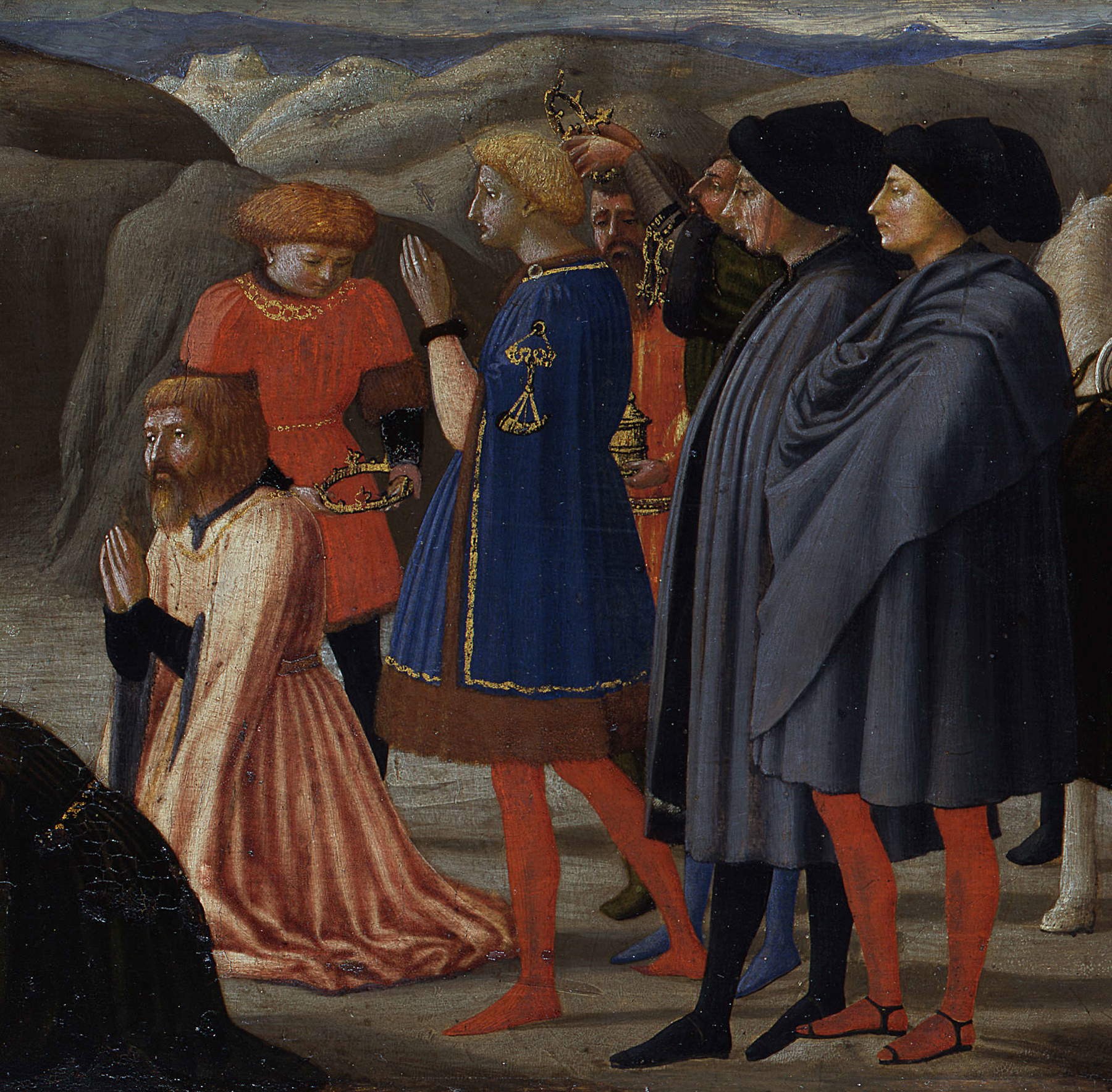
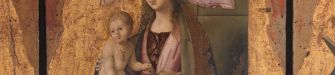
Critics have long identified the reasons for the presence of the numerous saints who originally surrounded the Virgin: a mature woman in style, austere, wrapped in a large blue cloak, with a newborn child sitting on her lap—its movements still uncertain yet lively—bringing to its mouth the grapes of a cluster offered byits mother.⁵ Equally severe are the full- and half-length saints, and the narrative of the stories relating to some of the figures depicted in the smaller panels is understated. A carefully planned and executed work, of which I will attempt to briefly revisit the part that holds particular significance in Petralia’s study—namely, the panel that once appeared at the center of the polyptych’s predella,the Adoration of the Magi now housed at the Gemäldegalerie in Berlin; within the discussions devoted to it, there is still room for a few clarifications (fig. 1).
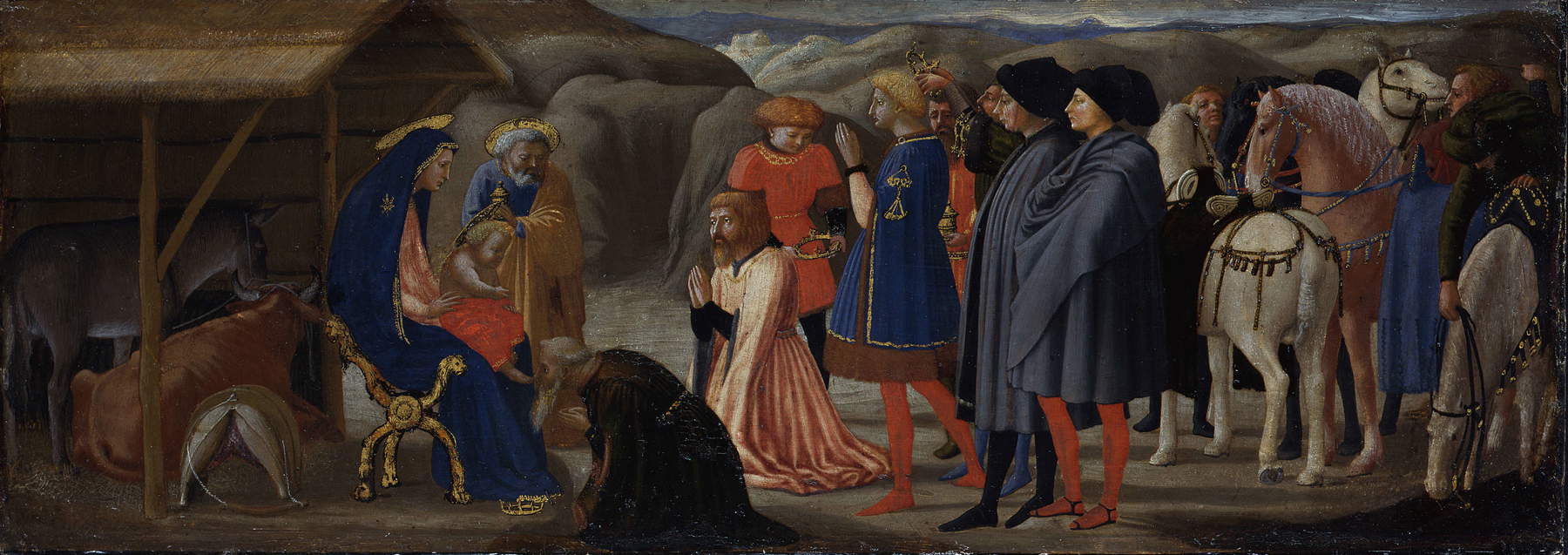
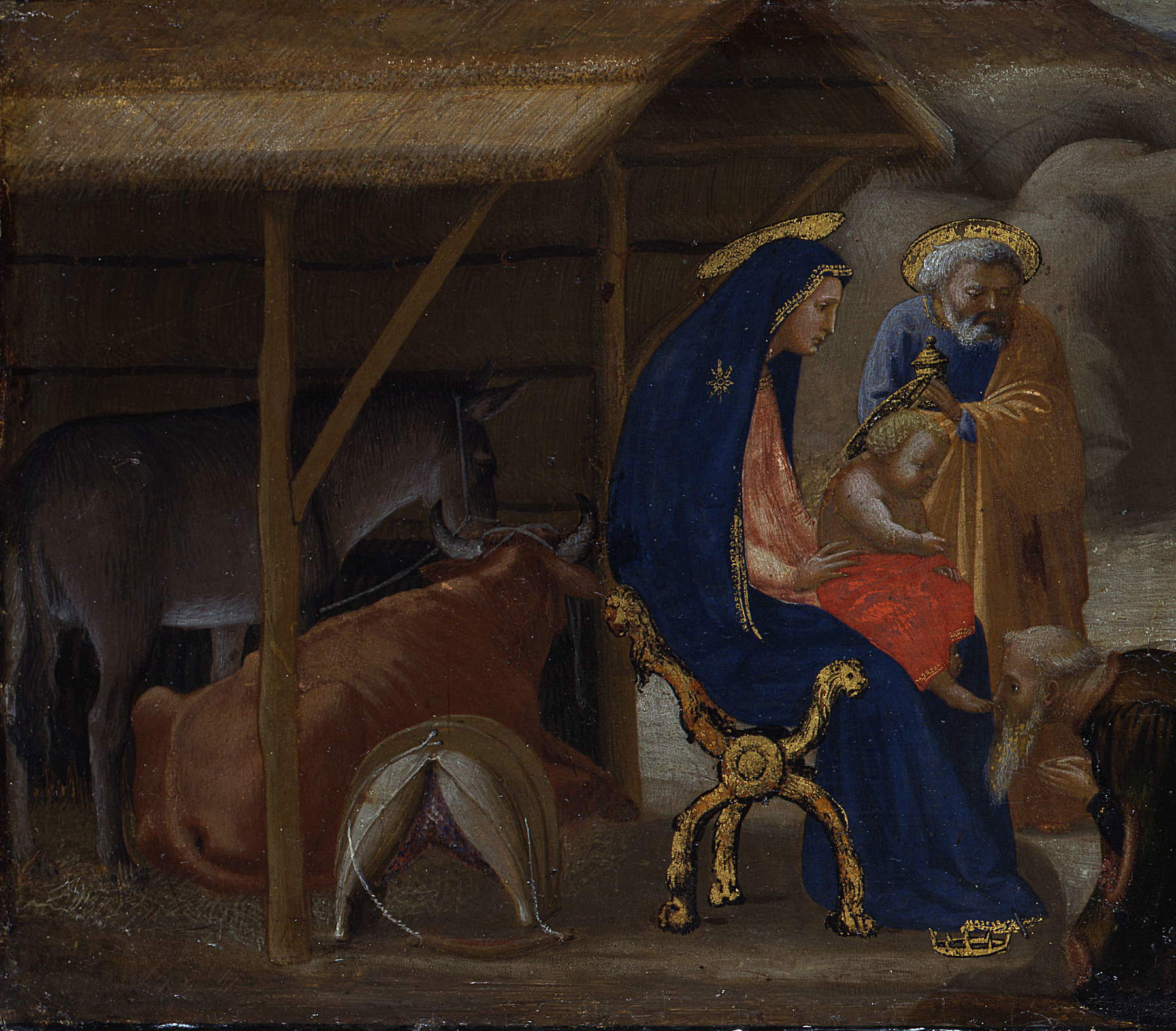
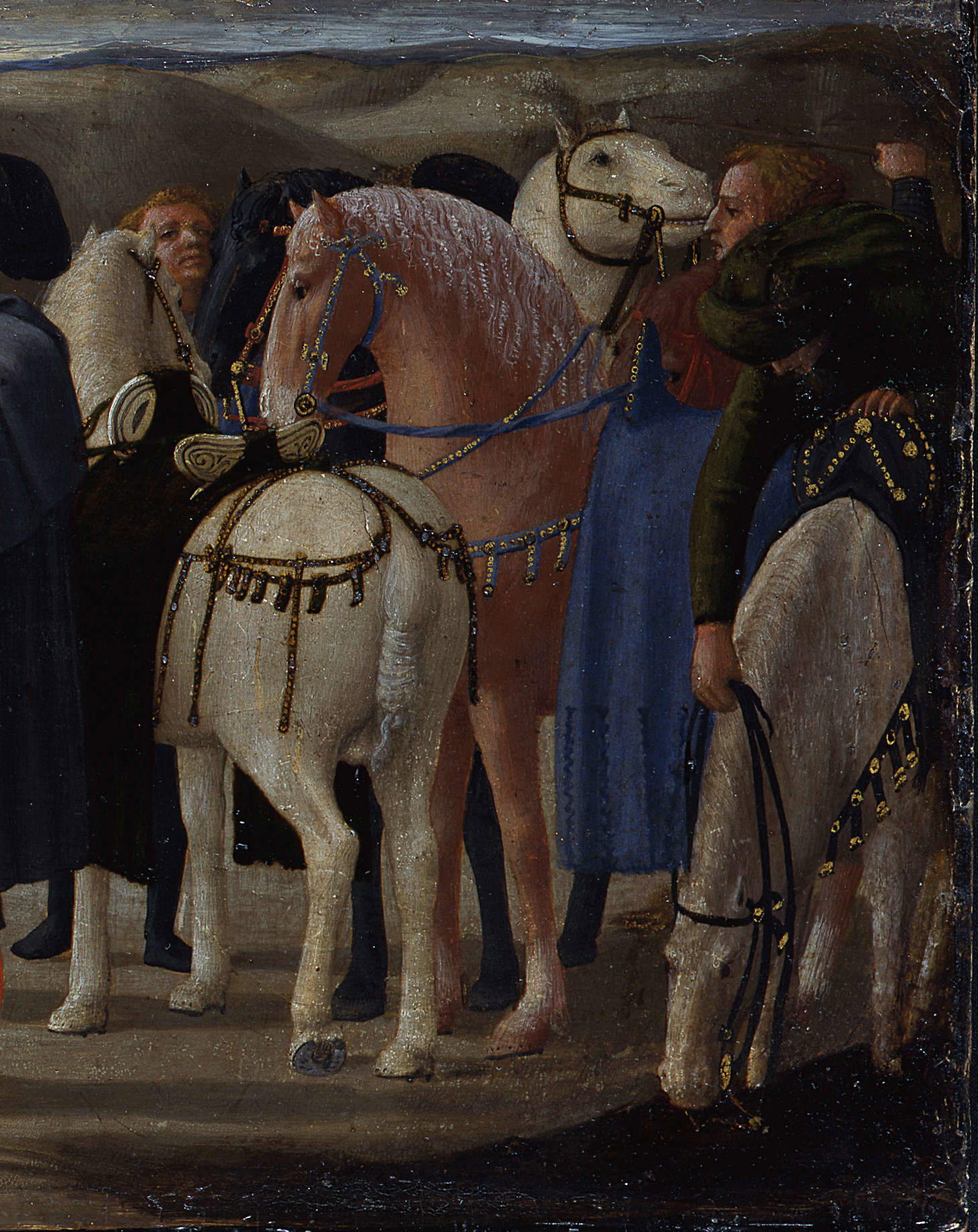
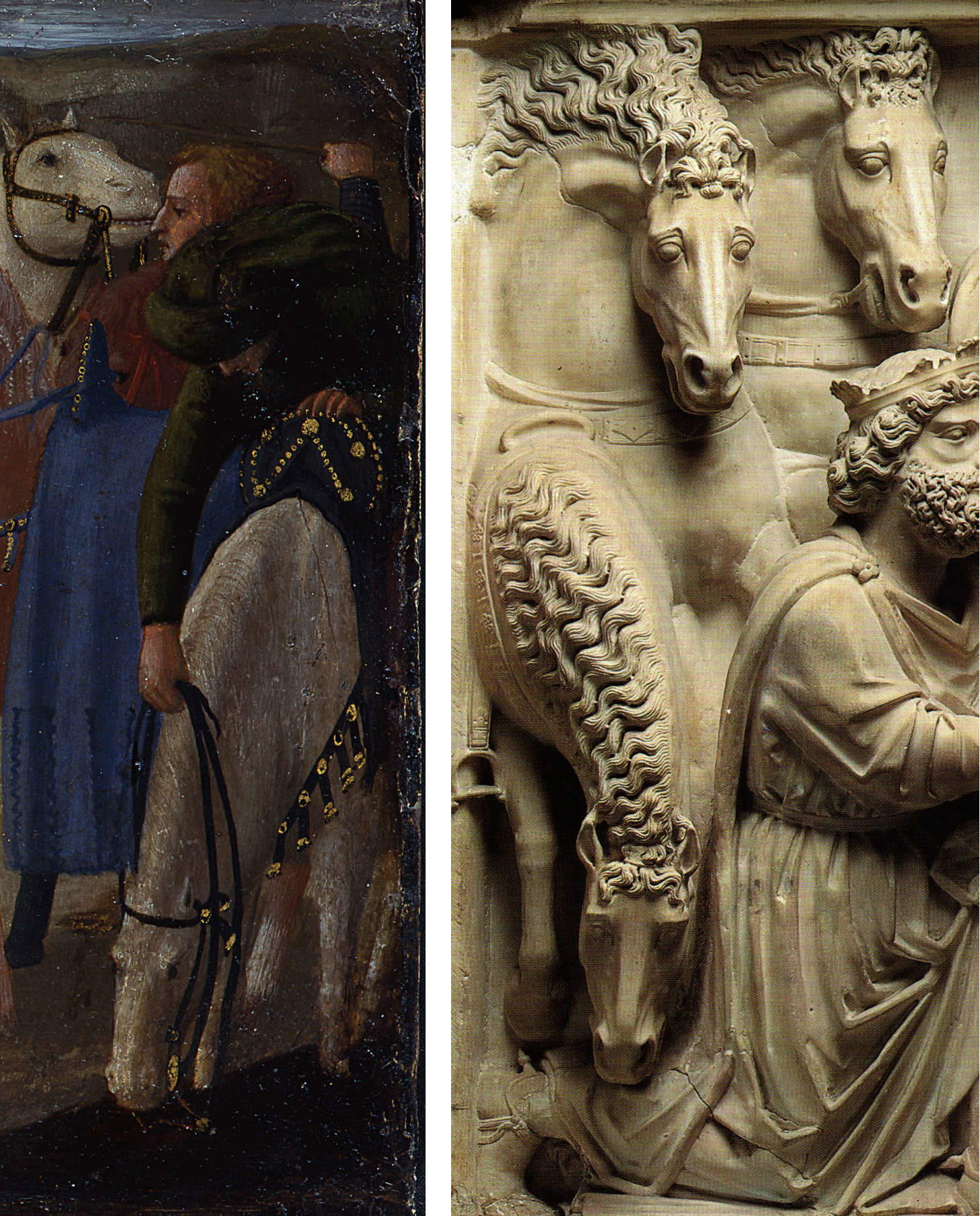
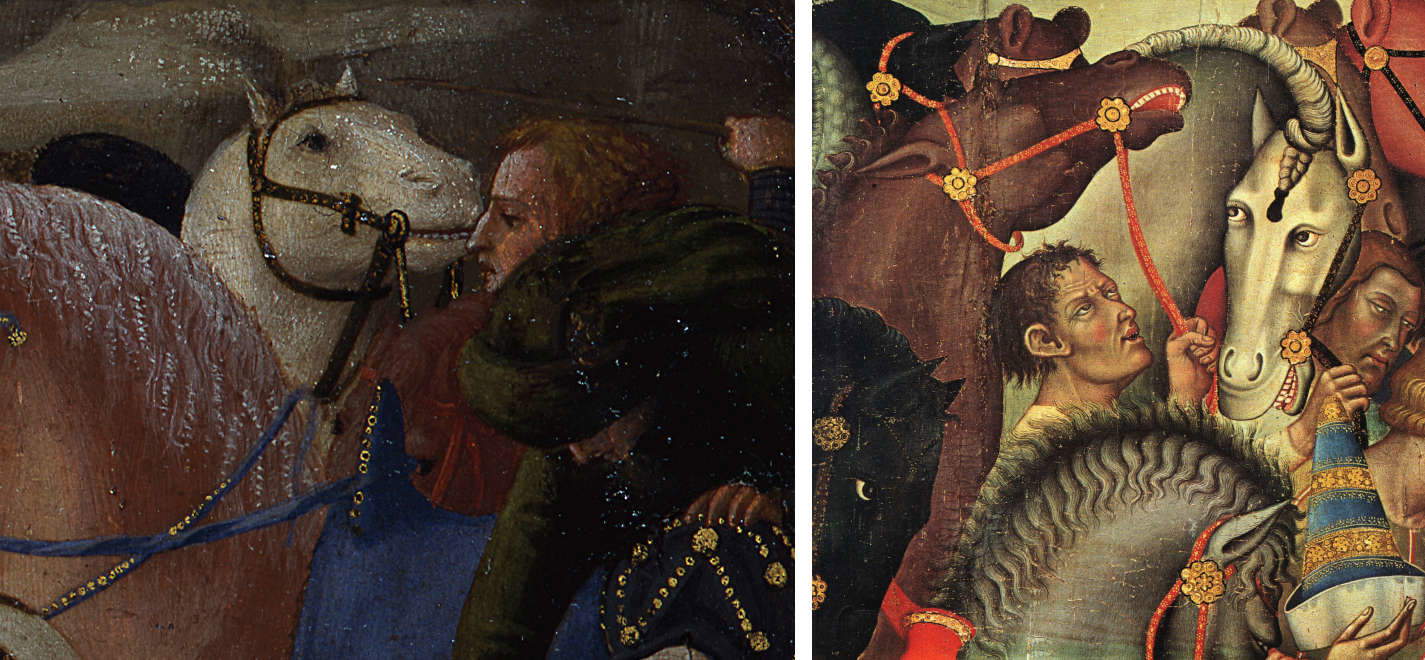
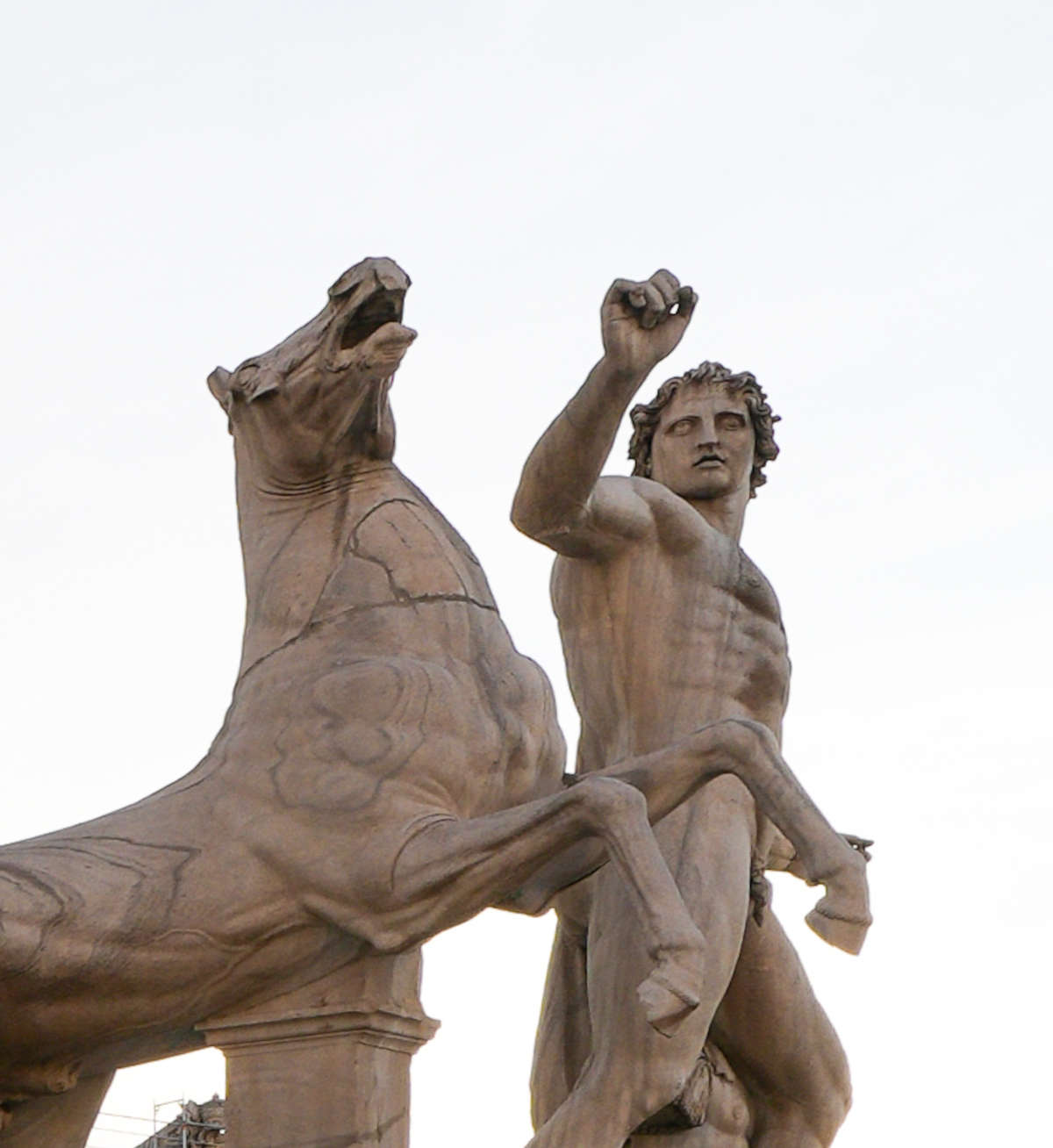
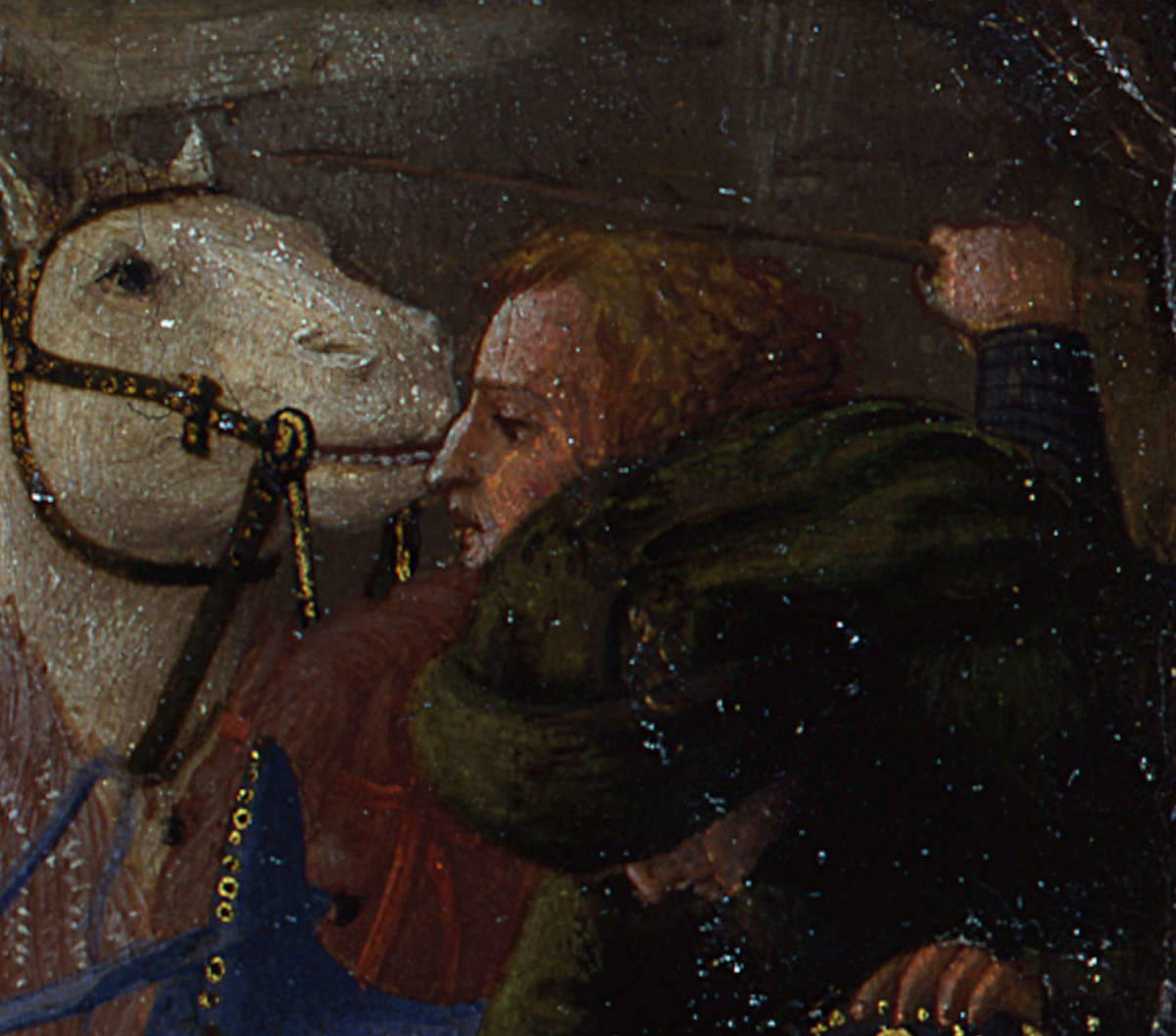
The panel’s compositional arrangement is organized horizontally to suit the format and directs the viewer’s gaze progressively from the left, where the space housing the scene is first concretely defined through the depiction of the stable and its contents (fig. 2): During the fifteenth century and in works related to the Nativity, the donkey and ox—as dictated by iconography—are often depicted in foreshortened perspective and serve to establish the depth ofthe scene,⁶ as is also the case here with the two animals; however, more significant is the stereometric saddle-pannier, placed in the foreground for no other reason than to articulate the narrative through perspective. The depiction continues with the protagonists of the event—the Virgin and Child, Saint Joseph, and several figures paying homage to the newborn: the Magi in succession, clearly distinguished from one another and identified by their fine garments, without the crowns which, with the help of their servants, are being laid onthe ground;⁷ behind them, a few heads peeking out from the more distant planes allude to the rest of the procession, which concludes on the right side of the panel where several horses with powerful limbs are gathered at rest (fig. 3). Themounts⁸ still bear the luxurious saddles and harnesses with which the Magi’s journey has just concluded, and in two white horses one can discern metaphorical nuances intended for connoisseurs: one bows its head to drink (an obvious reference to Nicola Pisano’s pulpit in the Baptistery, figs. 4, 5)⁹; another raises its muzzle, baring its teeth, while its handler restrains it, threatening it with a whip (a more profound allusion, a trace of a refined antiquarian culture); and both stretch their necks, pulling on their respective reins. In the iconographyof the Adoration and in the procession unfolding before the Holy Family, it is common to see depictions of animals that accompanied the Magi on their journey from the East to Palestine, and among these, a horse or a camel is sometimes shown being held back by a groom: a motif that critics believe is modeled on the Dioscuri of Monte Cavallo, one of the most famous monuments of ancient Rome, which was never buried and, despite suffering extensive damage, enjoyed enduring fame, as evidenced by the frequent presence of this motif in Adoration scenes dating from the 14th and 15th centuries (Giotto, Bartolo di Fredi, Gentile da Fabriano, Angelico, and Botticelli, to name a few)10; Masaccio now joins these names (figs. 6, 7), although the small size of the predella has delayed, until now, the recognition of the gesture of the squire armed witha whip.¹¹In the Adoration of the Magi, the series of iconic depictions featuring a wayward or distracted animal (horses, camels, dogs) highlights the obtuseness of those who, unlike humans, fail to recognize the miraculous event of Christ’s birth and the significance of his salvific mission; depictions which, moreover, from one work to another, from one master to another, lose any classical reference over time and settle into the role of descriptive accessories to the procession. As for the suggestion that the face of that servant depicts Masaccio’s younger brother, Scheggia (figs. 8–11), it should be noted that a masculine physiognomy characterized by a high forehead, a receding chin, and a pointed nose with a sharp bridge is widely present in the work of both painters—likely a family trait—and in any case attests to a predisposition to paint “from life.”
Another clue revealing a passion forantiquity¹² can be found in a valuable artifact, seemingly incongruous yet also laden with symbolic value: the gleaming gold plicatilis saddle on which the Virgin sits, featuring protomes and lion’s paws in its structure (fig. 2); a portable seat with a long history, part of the equipment intended to accompany those in power—princes, popes, military commanders—on their travels, helping to signaltheir authority wherever they went.¹³ The attribution of this emblematic seat to Mary is justified, at least in an evocative sense, since the birth of Christ occurs between two journeys: the departure for Bethlehem and, immediately after the birth, the flight intoEgypt14.
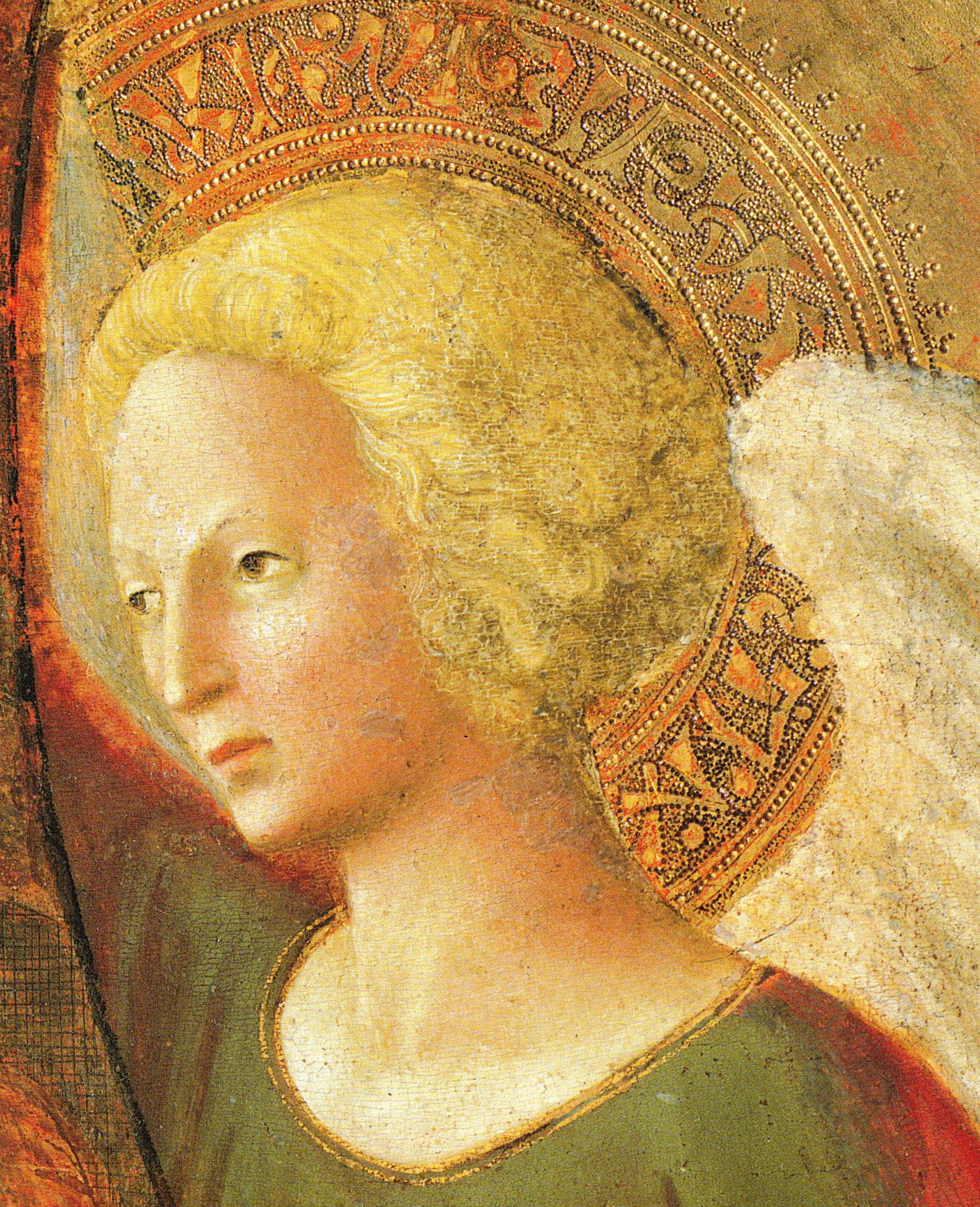
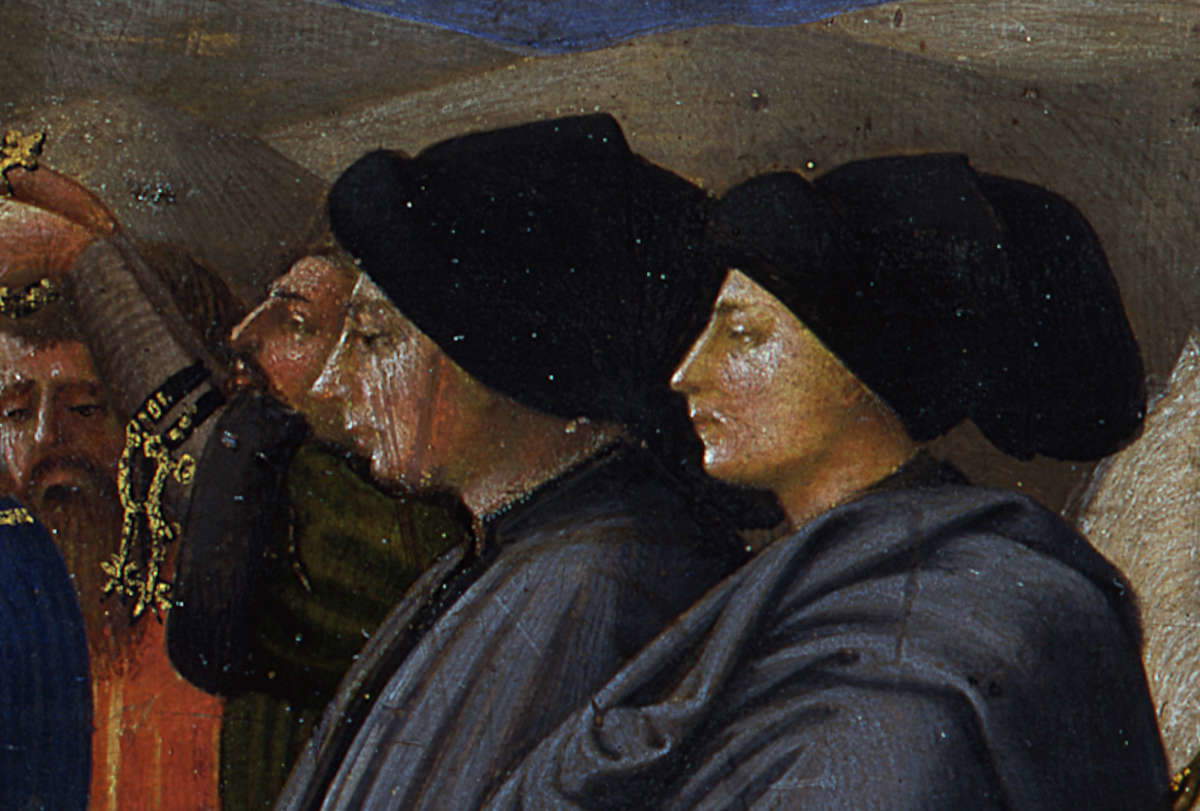
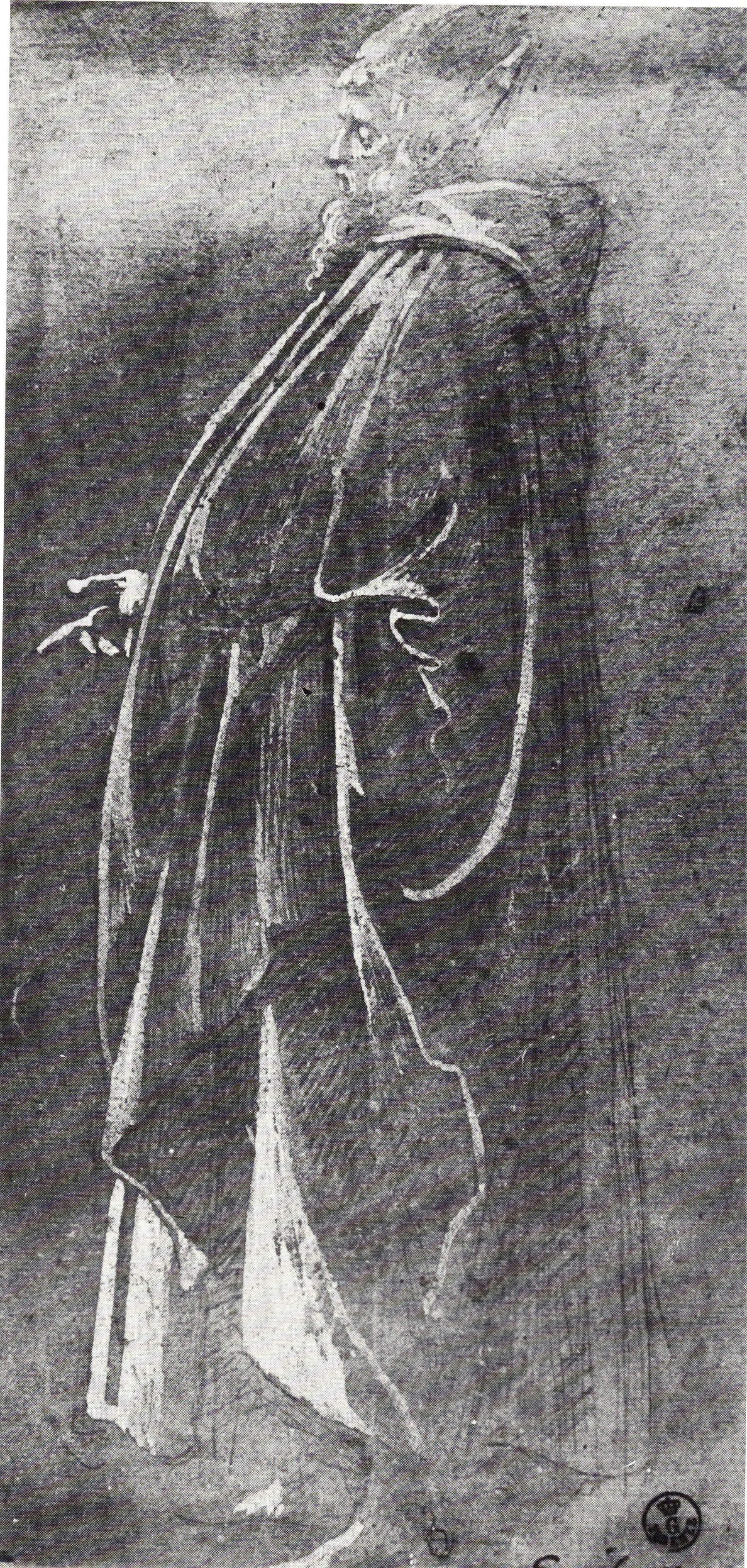
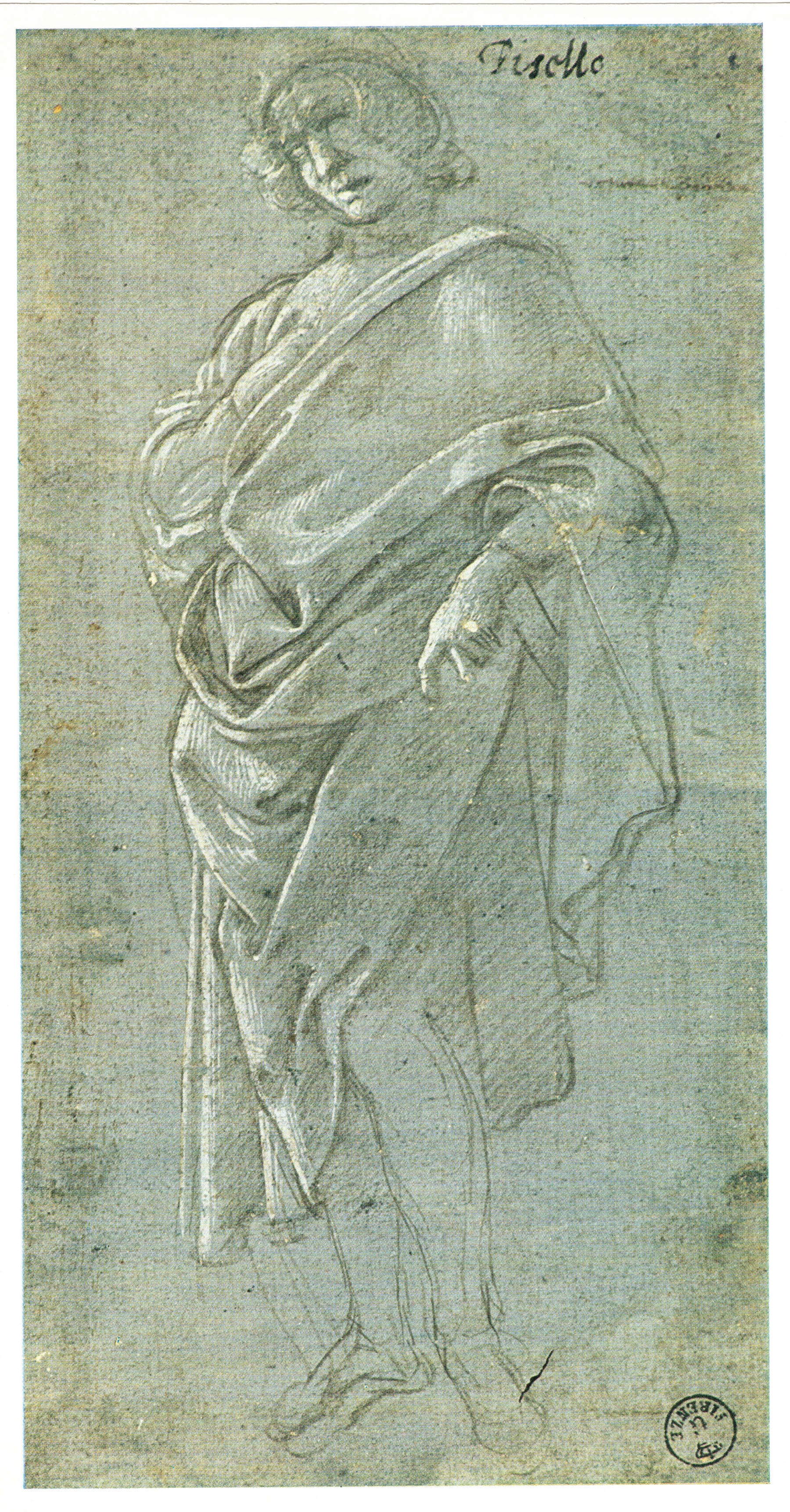
In my analysis of the image, I have so far set aside an important element of the procession: the figures of the two men in the foreground, who, although they appear to be close to the Magi and their servants, they differ from them—albeit only slightly—in terms of size and the quality of their clothing, which is of a “modern” style compared to that of the other figures: luxurious but lacking historically defined characteristics (figs. 12–13). The two men—one mature and one younger—are participating in the encounter with the Child, yet at the same time they seem to belong to a different era than that of the event depicted: they wear, with understated elegance, loose-fitting cloaks whose drapery highlights their quality—the younger man’s being shorter, and he wearsspurs on his feet¹⁵—and voluminous hats reminiscent of the mazzocchio style. Two bystanders—a type of male figure found in compositions crowded with characters, which in the fifteenth century was a common subject of study for artists— as attested by the numerous drawings—especially from the mid-15th century onward—depicting models standing in stable poses, clad in loose,draped garments¹⁶ (figs. 14–15). A case in point is the wall frescoes of the Sistine Chapel, where a rich repertoire of bystanders appears in the groups witnessing the stories from the Old and New Testaments.
Now, regarding the question of the identity of the two men—who are prominently placed in the foreground and whose presence the procession seems to ignore—Giuseppe Petralia now offers a well-founded explanation. He takes up a hypothesis briefly mentioned by JohnSpike¹⁷ and, supported by archival documents, identifies the two figures as the notary Giuliano di Colino degli Scarsi and, most likely, the son of one of his cousins, who appears on several occasions in the documentation examined bythe scholar¹⁸; although the figures are small, the resemblance between the two is striking. From a visual standpoint, this identification is confirmed by the fact that the two are not depicted in the manner of the Magi; they do not bow their heads or kneel: as influential figures associated with the creation of the polyptych, they are observing—out of context—the extraordinary event of the Nativity. As further evidence, I point to the two extremely elegant passersby (also out of context) that Masolino introduces into the scene depicting the miracles of Saint Peter in the Brancacci Chapel cycle.
Between the late Middle Ages and the early Renaissance, inscriptions occasionally appear at the base of paintings, stating the name of the artist and/or the patron of the work, or it is the patron’s own effigy that is depicted in prayer alongside the main figures, who stand motionless, occupying almost all the available space: in Masaccio’s predella, however, a rather rare solution for the early 15thcentury appears,¹⁹ namely, the inclusion of the patron not as a figure in prayer situated near the divine figure and any supporting characters—according to the “donateur in abisso” formula described by AndréChastel20—but rather as part of the narrative, in this case the epilogue of the journey that leads the Magi to pay homage to the infant Christ.
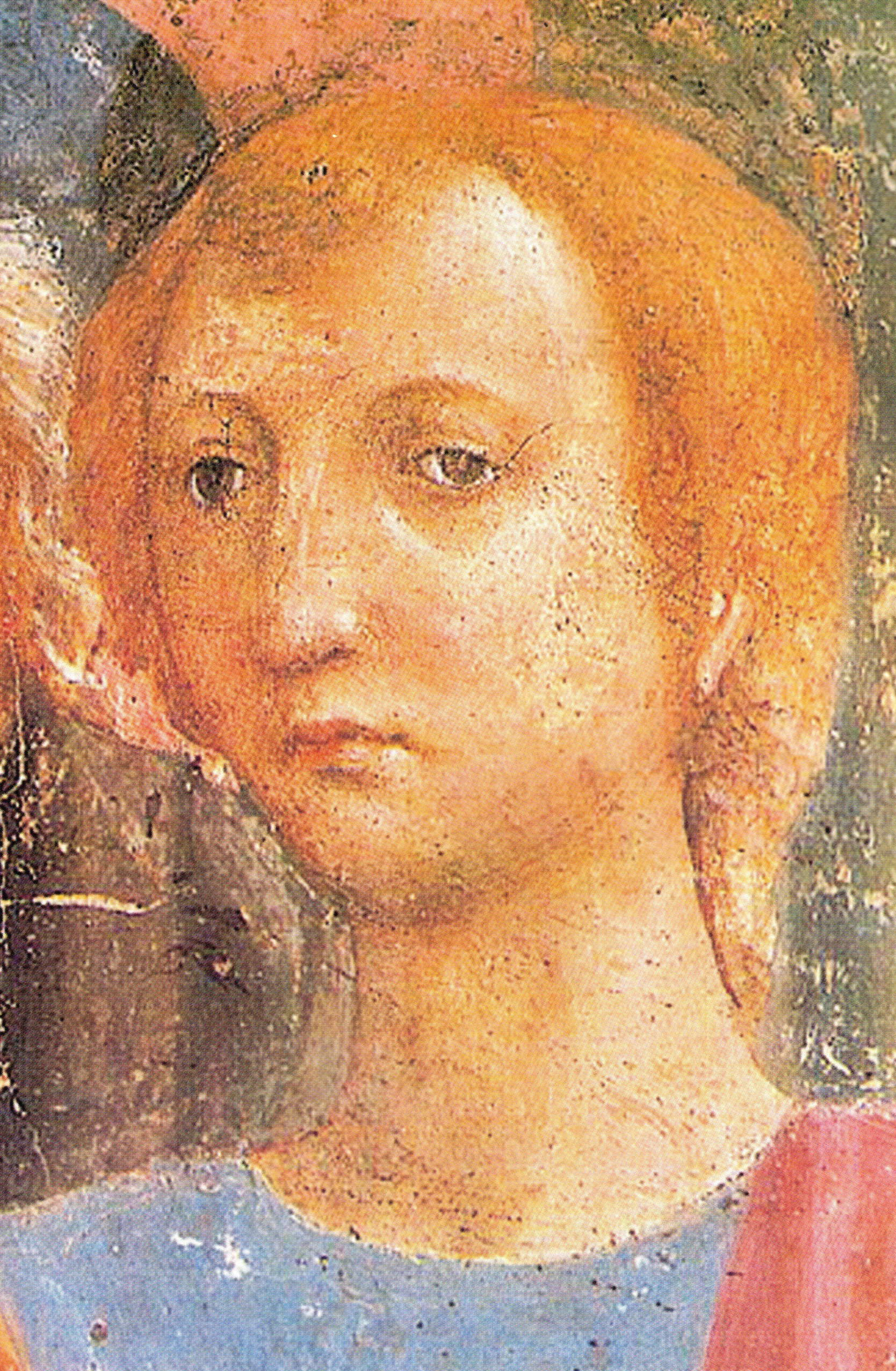
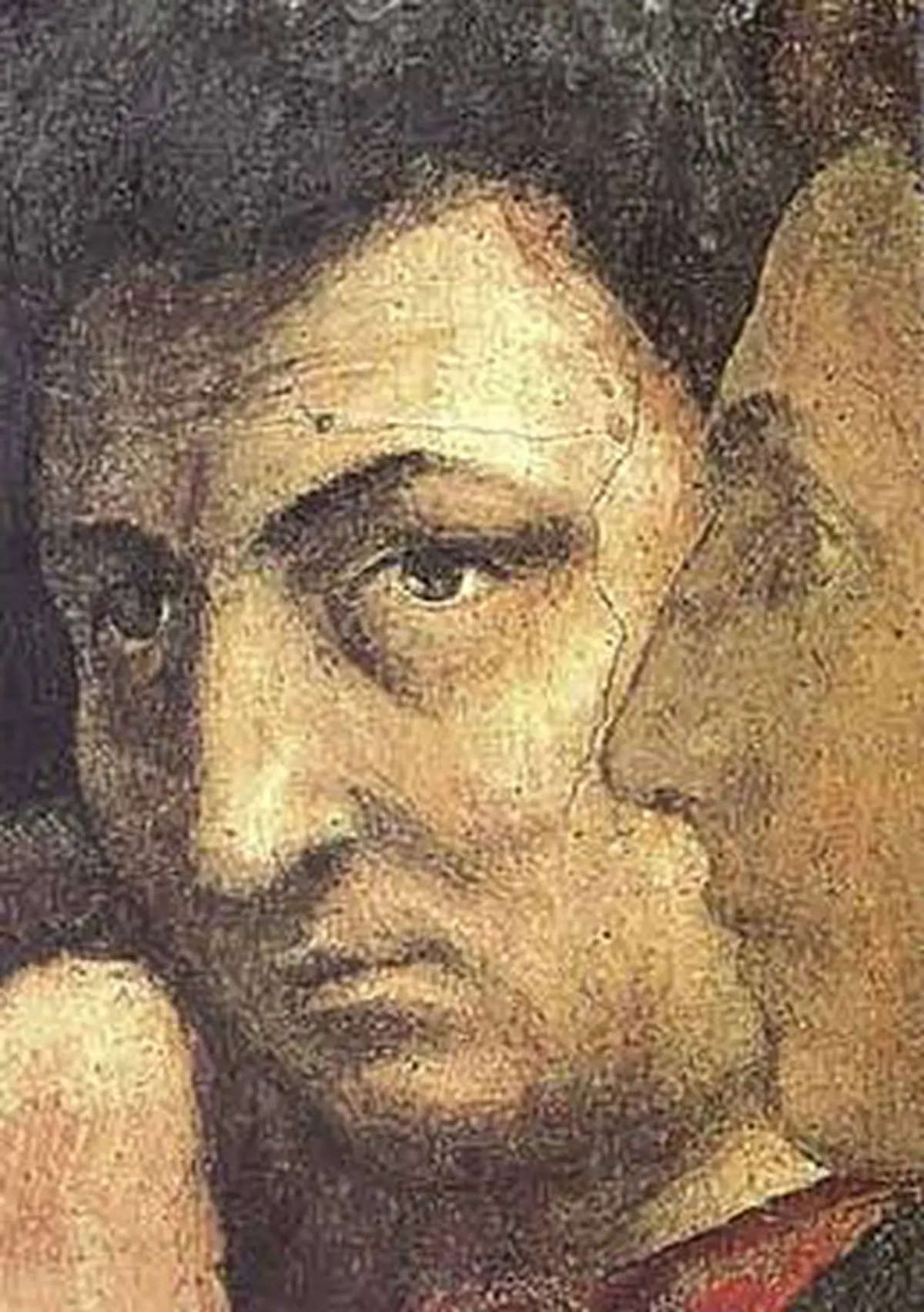
This attests to the ambitions of a prominent figure who, even in a Pisa subjugated by Florence and already on the verge of decline, maintained a high level of social standing, and for the decoration of the family chapel in Santa Maria del Carmine turned to a young but already esteemed artist like Masaccio, who brought a new visual language: a fact that, combined with the presence in Pisa of Donatello and Michelozzo precisely in the 1420s, helps to outline a context that was still vibrant from the standpoint of artistic production—a context that would later see the Pisans commission other Florentine masters.
We must, however, avoid the risk of overestimating its significance: originally, the effigies of the two “contemporaries” could only have been a discreet presence, reserved for those who entered the chapel and approached the polyptych—which was likely placed on an altar, though we do not know at what height; nevertheless, the predella was at the base of the polyptych itself, almost certainly within view of those looking at it, and in the area traditionally intended to inspire devotion but also curiosity: in fact, the band featured stories of saints and martyrs, and here, in the center, isthe Adoration, where the patron, as a privileged spectator, witnesses the encounter between the Magi and the Holy Family. It is therefore plausible that the two figures, members of the city’s upper class, were recognizable to most people.
I hope that this brief reexamination of the Berlin painting will serve to add some nuance to what critics have already said about the original composition (structural, stylistic, iconographic) of Masaccio’s work—and in particular of the Carmine Polyptych—despite the unfortunate circumstances of its fragmentation and some losses: even in the predella, in fact, there are indications of some of the outstanding qualities that Giorgio Vasari attributes to the painter: mastery in the depiction of foreshortening, the variety and proportioning of the figures, and the ability to portray “from life”... and thus, ultimately, what Giorgio himself emphasizes with a term that recurs several times in *The Life of Masaccio*, namely a substantial, innovative “modernity.”
A word of gratitude to Annarosa Calderoni Masetti for our exchanges of ideas, and sincere thanks to Neville Rowley, the helpful and knowledgeable curator ofthe Gemäldegalerie in Berlin.
1 Giuseppe Petralia presented the findings of his research during the conference *Il Carmine di Pisa and the 600th Anniversary of Masaccio’s Polyptych*, Pisa, May 27, 2026; proceedings currently in press, edited by S. Bruni.
2 It is not certain that this refers to the same family: regarding this issue, see A. Poloni, “Social Transformations and Changes in Political Structures in an Italian Commune: The Popolo of Pisa (1220–1330), ” Edizioni ETS, Pisa 2004, pp. 349–369; and especially the specific contribution by M. Battistoni, “Giuliano di Colino degli Scarsi, Worker at the Pisa Cathedral (1435–1456),” Pontedera, Bandecchi and Vivaldi 1999, Quaderni dell’Opera della Primaziale Pisana no. 13.
3 G. Vasari, *Le Vite* ( 1568), edited by R. Bettarini and P. Barocchi, Florence, Sansoni (later S.P.E.S.) 1966–1997, vol. III (text), pp. 123–134. For a concise bibliography on the life and work of Masaccio, see *The Age of Masaccio: The Early Fifteenth Century in Florence*, exhibition catalog (Florence 1990), edited by L. Berti and A. Paolucci, Electa, Milan 1990; P. Joannides, *Masaccio and Masolino: A Complete Catalogue*, London, Phaidon Press, 1993; U. Baldini, *Masaccio*, Milan, Electa, 2001; *In the Footsteps of Masaccio. The Invention of Perspective, exhibition catalog (Florence 2001–2002), edited by F. Camerota, Giunti, Florence 2001; A. De Marchi, “Norm and Variety in the Transition from the Polyptych to the Rectangular Altarpiece, ” in *History of the Arts in Tuscany: The Fifteenth Century*, edited by G. Dalli Regoli and R.P. Ciardi, Florence, Edifir 2002, pp. 199–222; J. T. Spike, Masaccio, Milan, Rizzoli Libri illustrati, 2002; Masaccio and the Origins of the Renaissance, exhibition catalog (San Giovanni Valdarno 2001–2002), edited by L. Bellosi, Skira-Milan 2002; A. Baldinotti, A. Cecchi, V. Farinella, *Masaccio and Masolino*(with a contribution by Linda Pisani), Milan, 5 Continents 2006; A. Tartuferi, “Masaccio,” in Dizionario Biografico degli Italiani, Rome: Treccani, 2008, vol. 71, entry; A. Cecchi, “Masaccio, ” Milan : 24 Ore Cultura, 2016. With an extensive historical-critical overview, Chiara Franceschini traced the history of the polyptych during the conference *Il Carmine di Pisa e i 600 anni del polittico di Masaccio*, Pisa 2026, op. cit., currently in press.
4 An entire issue of “Predella” is dedicated to the context in which Masaccio’s polyptych was situated: “The Arts in Pisa during the Early Renaissance,” no. 13/14, 2016, and within this issue, the topic is summarized in the rigorous essay by G. De Simone, “Between Decadence and Renaissance: Glimpses of the Fifteenth Century in Pisa,” pp. 287–305. See also the earlier, detailed study by R.P. Ciardi, “The Fifteenth Century,” in *Sculpture in Pisa from the Fifteenth to the Seventeenth Century*. The Fifteenth Century, in R.P. Ciardi, C. Casini, L. Tongiorgi Tomasi, Sculpture in Pisa from the Fifteenth to the Seventeenth Centuries, Edizioni ETS, Pisa 1987, pp. 12–112, with bibliography.
5 On the sensitivity Masaccio displays in his depictions of infants and the mother-child relationship, see G. Dalli Regoli, “Hands and Emotions, ” in *Essays on Art History in Honor of Sylvie Beguin*, edited by M. Di Giampaolo and E. Saccomani, Paparo Edizioni, Naples 2001, pp. 46–52; Ibid., *Il gesto e la mano. Convenzione e invenzione nel linguaggio figurativo fra Medioevo e Rinascimento*, Leo S. Olschki Editore, Florence 2000, pp. 33–35; on the central panel of the polyptych and the image of the Virgin, see L. Pisani, “Research on the Iconography of Masaccio’s Pisan Polyptych, ” in “Predella” no. 13/14, 2016, op. cit., pp. 163–171.
6 A representative example can be found in Benozzo Gozzoli’s frescoes in the Chapel of the Medici Palace, where the donkey and the ox—explicitly separated from the infant—appear as sophisticated exercises in foreshortened representation.
7 According to a meticulous arrangement: on the ground lies the crown of the Magus prostrate at the Child’s feet; that of the kneeling Magus is held in the hands of a page who is about to place it before the Holy Family; and the third, belonging to the Magus still standing, is raised above the group’s heads by a second page, who will lower it next to the others.
8 The distinction made by the three colors of the cloaks—white, chestnut, and black—facilitates the interpretation of the tightly grouped set of six animals (one each for the Magi and their pages); in this regard, the judicious choice of two white horses, on which the black bridles stand out, should be emphasized: an effective way to introduce, through their postures, suggestions that go beyond the narrative. Baldini (Masaccio 2001, cited p. 152) notes that the image’s simplicity does not preclude the presence of realistic details in the depiction of the horses, such as the shoeing and the tied tail—a typical “travel style” for these animals.
9 The similarity between the two horses, already noted by Joannides (Masaccio and Masolino 1993, cited on p. 395), is purely formal and stems from different motivations: Nicola’s horses show signs of unease (they have flared nostrils, two arch their necks and raise their heads, their manes billowing in the wind, and one sniffs the ground), expressing wariness and fear in the presence of the newborn Child who radiated light (“lux vera” in John 1:9, a theme taken up in the apocryphal Gospels); in another famous 14th-century Pisan monument,*The Encounter of the Three Living with the Three Dead* by r Buffalmacco (frescoes in the Camposanto), the horses are equally suspicious; one tends to turn its head backward, while another lowers its head to the ground, stretching its muzzle toward the uncovered tombs; by contrast, the same detail in Masaccio’s predella suggests a different meaning: here, the horse in the foreground dips its hooves into a puddle and thus lowers its head to drink: apparently a realistic touch, yet one that reveals an allusion to Nicola’s seminal work, thereby attesting to the painter’s mastery of a rich and deliberate visual language.
10 G. Dalli Regoli, “The Theme of the Adoration of the Magi: Differences in Interpretation between Gentile and Leonardo,” in *Art and Politics: Studies in Honor of Antonio Pinelli*, edited by N. Barbolani di Montauto et al., Florence, Mandragora 2013, pp. 15–20, with a summary of the relevant bibliography (p. 20, note 9).
11 To my knowledge, the detail highlighted in this note has not been noted in the past, but I do not rule out the possibility that there may be a precedent in the extensive Masaccio literature.
12 It is not the only one, since on the same predella, at the edge of the Crucifixion of Saint Peter, the Pyramid of Caius Cestius appears—another identifying feature of Rome already highlighted by Giotto.
13 F. Gandolfo, “Faldistorio,” in *Enciclopedia Arte Medievale*, Treccani, Rome 1995 , s.v. Nicola Pisano’s Mary inthe aforementioned Adoration of the Magi sits on a faldistory, a clear confirmation of Masaccio’s prolonged attention to the pulpit of the Pisan Baptistery,
14 G. Dalli Regoli, “The Holy Family in Egypt: The Flight and the Return, ” “Predella” online, 49, 2021, pp. 123–145
15 This is likely a sign of prestige associated with the young man, made evident by the black-on-red color scheme: for example, the young Magus does not have spurs, even though he appears to have just dismounted from his horse.
16 C . L. Ragghianti – G. Dalli Regoli, Florence 1470–1480. Drawings from the Model, University of Pisa, Pisa 1975.
17 J . T. Spike, *Masaccio* 2002, op. cit., p. 188.
18 G. Petralia, Proceedings of the Conference *Il Carmine di Pisa*, Pisa 2026, op. cit., in press. Among the records pertaining to the activities of the wealthy notary are purchases of fine cloth, which provide further support for the reconstruction of the figure’s identity.
19 Following in the footsteps of Masaccio and Masolino, the presence of patrons in narrative scenes would become more common later on: examples of this include the Adorations of the Magi by Botticelli and Domenico Ghirlandaio.
20 A. Chastel, “Le donateur in abisso dans les pale, ” in Festschriftfür O von Simson, ed. L. Grisebach and K. Renger, Berlin: Propyläen Verlag, 1977

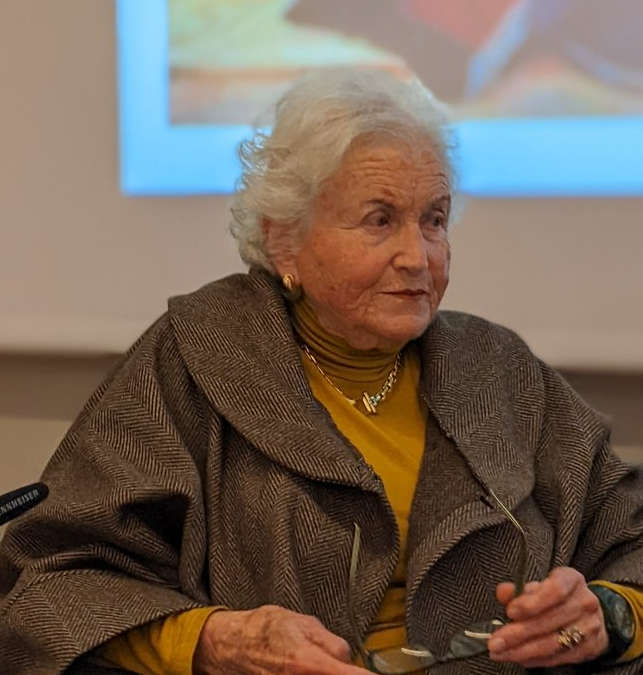
The author of this article: Gigetta Dalli Regoli
Gigetta Dalli Regoli è storica dell'arte specializzata in arte del Rinascimento, con particolare riferimento alla Toscana del Quattrocento. Si è formata all’Università di Pisa, laureandosi negli anni Sessanta. A lungo docente di Storia dell’arte medievale e moderna all’Università di Pisa e all’Università del Salento, ha al suo attivo numerose pubblicazioni (in particolare su Leonardo da Vinci, su Lorenzo di Credi, artisti di cui è tra gli esperti più riconosciuti, e poi sulla scultura medievale, sul disegno rinascimentale, oltre a diversi saggi su temi iconografici). Tra le sue pubblicazioni figurano la monografia dedicata a Lorenzo di Credi (1965), lo studio sui Disegni dal modello, in collaborazione con Carlo Ludovico Ragghianti (1975), il saggio sulla miniatura nella storia dell'arte italiana Einaudi (1980), e ancora Silvius Magister (1991), Il gesto e la mano (2000), Leda e il cigno: un mito per Leonardo (2001), la curatela, assieme a Roberto Paolo Ciardi, del volume Il Quattrocento. Storia delle arti in Toscana (2002), e i più recenti volumi L'attribuzione dell'opera d'arte. Itinerari di ricerca fra dubbi e certezze (2003), Pisa medievale e le arti (2013), Il gesto e la mano. Convenzione e invenzione nel linguaggio figurativo fra Medioevo e Rinascimento (2015) e Arti Belle/Belle Arti: la intitolazione delle Accademie e una riflessione sulla bellezza nell'arte (2025).Warning: the translation into English of the original Italian article was created using automatic tools. We undertake to review all articles, but we do not guarantee the total absence of inaccuracies in the translation due to the program. You can find the original by clicking on the ITA button. If you find any mistake,please contact us.






















 IT
IT FR
FR DE
DE ES
ES CN
CN


