





For several decades now, sharing one’s travel experiences in a wide variety of ways—from blog posts to Instagram Reels and live streams—has been all the rage, and talking about travel experiences is considered cool, but this isn’t a phenomenon unique to the new millennium: Of course, times and methods have changed, but travel writing originated when travel began to spread throughout Europe as an experience of education and pleasure, as well as a means of personal growth. How many writers, poets, philosophers, and intellectuals undertook the so-called Grand Tour between the 18th and 19th centuries, with Italy as an essential stop? Goethe’s *Italian Journey* is one of the most famous products of this flourishing period, which swept through art, literature, and music. But few know that among the pioneers ofmodern “ ” travel writing was a woman— a true explorer—born in the late 19th century: Freya Stark. The London Times called her “the last of the romantic travelers.” Her passion was always the East.
A key factor in this lifelong passion was a book—a classic of Eastern literature—that she received as a gift on her ninth birthday: *One Thousand and One Nights*. In her small hands, the pages of that book came to life in her child’s mind, and the stories told by Princess Shahrazād—the voyages of Sinbad the Sailor, Aladdin and the Magic Lamp, Ali Baba and the Forty Thieves, and so many other tales ignited her imagination and fueled her fascination with the distant and mysterious East—a world still largely unknown to Europeans. But above all, the journey she was able to undertake at that age—through the power of reading, using only her imagination, among the characters and exotic settings—had such a profound impact on her sense of self that the East would not remain merely a place imagined through books for long. And travel would eventually become a fundamental part of her life—partly due to the changes that took place within her family.
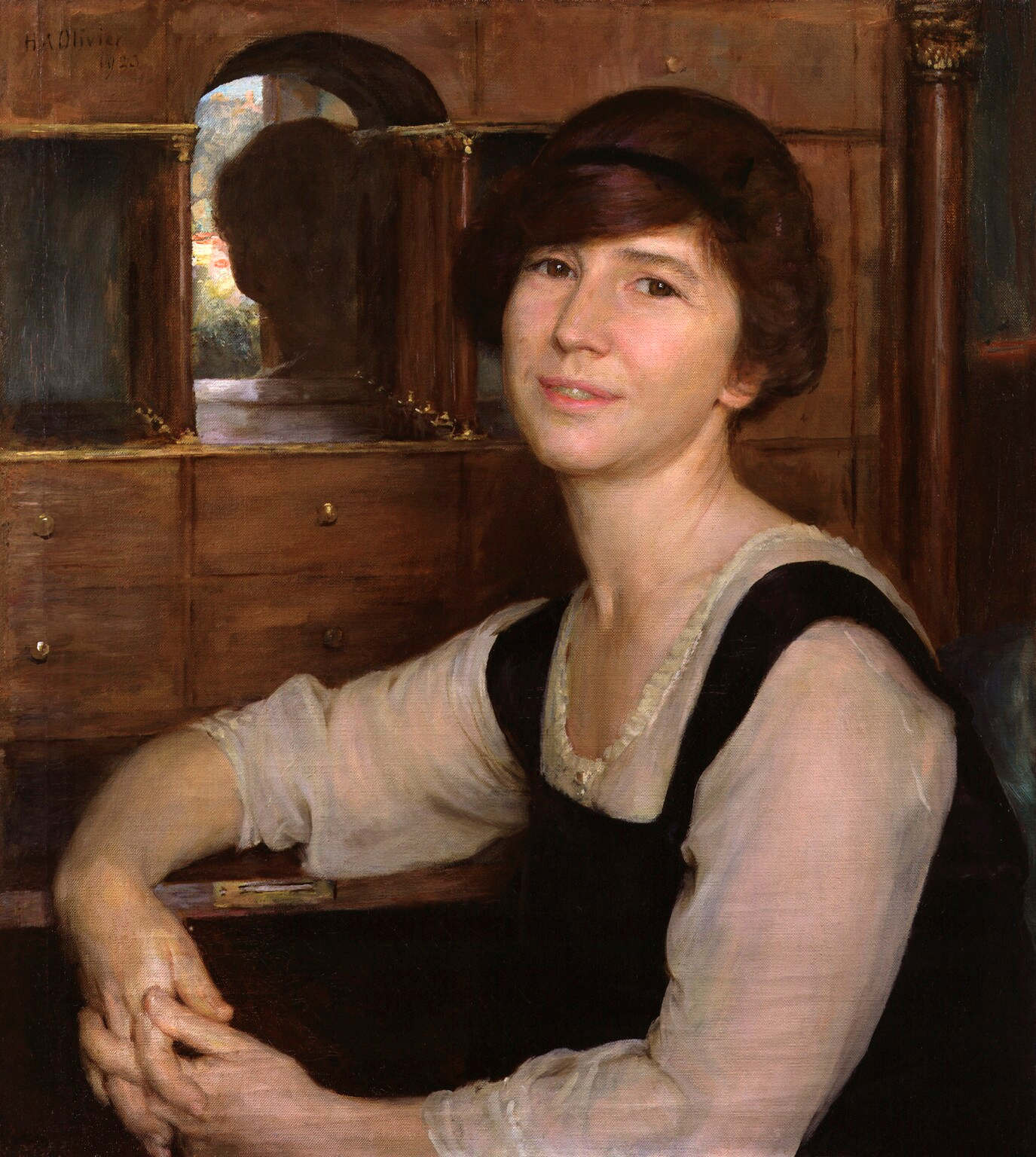
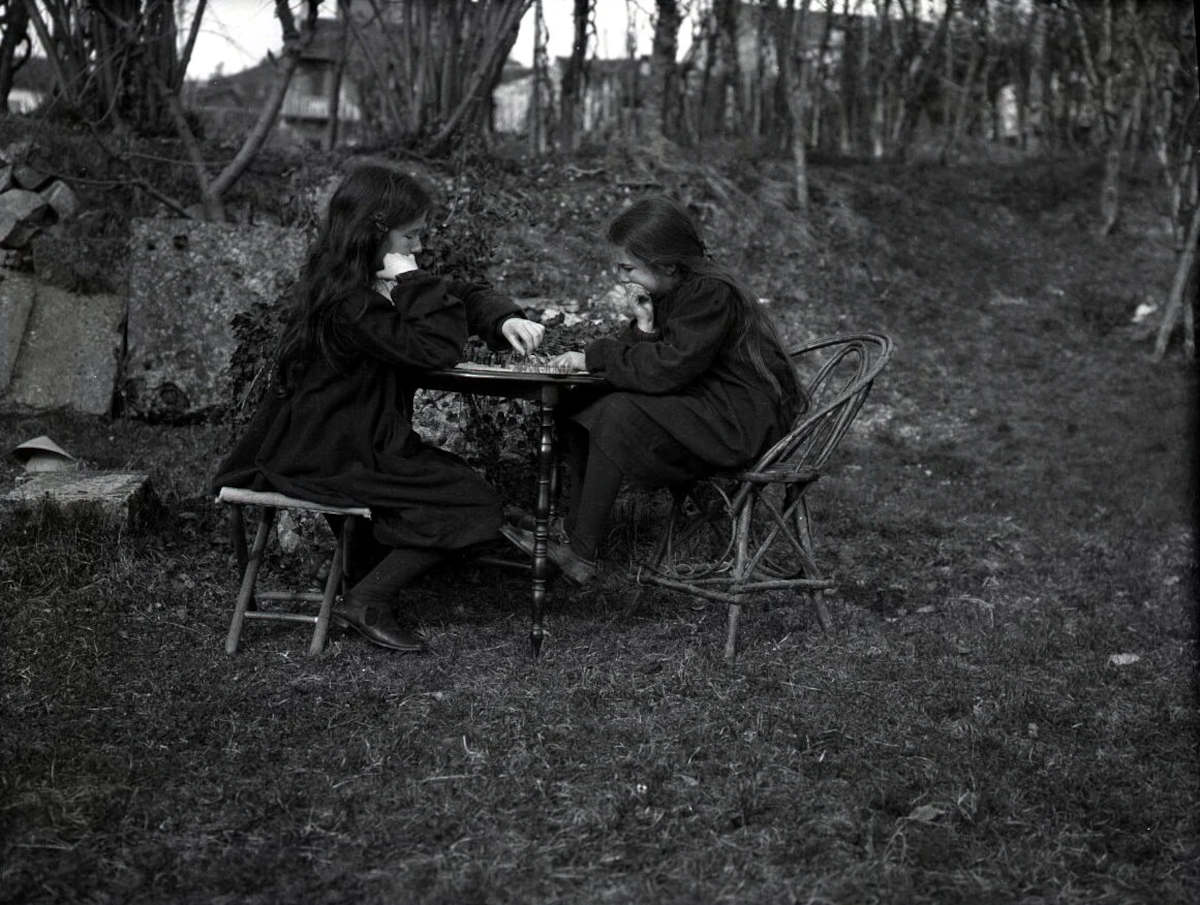
In fact, she began to move around frequently when her parents—both painters of British origin, even though she was born in Paris in 1893—separated, and her mother, along with her two daughters, Freya and Vera, moved to Italy, to Asolo, at the invitation of the landscape painter Herbert Young Hammerton. There, Flora, her mother, took overthe Antica Tessoria Asolana, where the girls wove precious fabrics still on wooden looms—a fact not to be underestimated, since Freya later inherited the workshop. At the age of thirteen, however, she was marked by a dramatic incident: during a visit to a textile factory, her hair became entangled in the gears of a moving machine, and the accident caused her very serious injuries to her head and face, leaving her with scars for the rest of her life—scars she constantly tried to hide with hats and all manner of head coverings. This, however, never stood in the way of her goal of one day finally experiencing the East firsthand.
She began studying Arabic and Persian at the School of Oriental and African Studies after attending Bedford College in London. The outbreak of World War I, however, interrupted her studies: the school was forced to close, and upon returning to Italy, Freya served as a volunteer with the British Red Cross. The long-awaited moment arrived in 1927: Beirut was her first city in that world she had imagined for years only through books. There she had the opportunity to devote a great deal of time to studying Arabic and learning about local customs. She had dreamed of that land so much that she did not want to limit herself to merely observing it; she wanted to engage with it and understand it firsthand. And for her, truly getting to know a place meant building relationships with the local people, so they could tell her about their traditions, their history, and their way of life—an approach that often led her to venture off the beaten path, inspired by another of her role models: British Lieutenant Colonel Thomas Edward Lawrence, better known as Lawrence of Arabia, who had crossed the desert on a camel. Her desire to explore and learn even led her to travel through places that did not yet exist on maps, which she then charted herself. She traveled through Syria, then Iraq; Baghdad, the capital, held a special fascination for her. The city evoked for her the world described in *One Thousand and One Nights*. Armed with maps, a survival kit, and Marco Polo ’s *Il Milione* , she set out for one of her most ambitious destinations: Alamut, the famous fortress linked to the history of the Order of the Assassins. It lay in ruins, but it was precisely here that one of the traits that would make Freya Stark famous emerged: her ability to observe the subject of her journey with extreme attention. She took notes, took photographs, and corrected maps: her journey was not only a personal experience but also helped document territories that, at the time, were still largely unknown to Westerners. She subsequently ventured into the most inaccessible areas of western Iran, and then toward the Arabian Peninsula, crossing the Red Sea to reach what is now Yemen. In 1934, she wrote her first book, *The Valleys of the Assassins*, the result of what she had observed, learned, explored, and experienced firsthand. Writing became inseparable from exploration: Freya traveled, explored, spoke with local people, learned about places and traditions, and transformed all of this into stories and testimonies. “If I were asked to list the pleasures of travel, I would say that this is one of the most important: that so often and unexpectedly one encounters the best of human nature, and seeing it this way, by surprise and often in such unlikely situations, leads one, with a pleasant sense of gratitude, to realize how widely scattered throughout the world are kindness, courtesy, and love for the intangible—qualities that flourish in every climate, on any terrain,” she wrote in her first publication.
She never tired of traveling; she never tired of writing. She wrote over thirty books after her first literary success. But it came naturally to her: putting her experiences down on paper meant, for her, extending the journey beyond the moment of departure and return. Through her writing, she described lands and communities with a keen and curious eye, seeking to go beyond what appeared on the surface. “The true wanderer, for whom travel is happiness, sets out not to flee but to seek. Like the painter at his easel, he moves constantly to find the right perspective, and even when faced with a vast landscape to depict—with the horizon far off—he feels he is still too close to his painting and must step back from time to time to view it with a detached eye. This need keeps him constantly alert. He touches up and refines the colors of his world as he sees them, and steps back from them to achieve more accurate proportions, only to return with a sharper, more rested eye,” he wrote in 1950 in an article published in the British magazine *The Spectator* [translation by Silvia Pio]. In her books, the accuracy of her observations is interwoven with sensitivity, irony, and narrative talent, giving particular prominence to the people she met along the way and capturing their complexity without succumbing to clichés.
Time seemed to have a peculiar effect on her: rather than deterring her from exploration, it seemed to make her even more determined. In fact, at the age of seventy-five, she undertook one of her last great expeditions, to Afghanistan. At eighty-four, she still had the courage to traverse the Euphrates on a raft, and at eighty-eight, she ventured even further, along the rugged trailsof the Himalayas, riding a mule. Her exploits earned her numerous honors from the Royal Geographical Society and the Royal Asiatic Society, which celebrated both her exceptional work as an explorer and her invaluable contribution to the geographical and cultural understanding of the Middle East. In 1972, she was also awarded the title of Dame of the British Empire by Queen Elizabeth II.
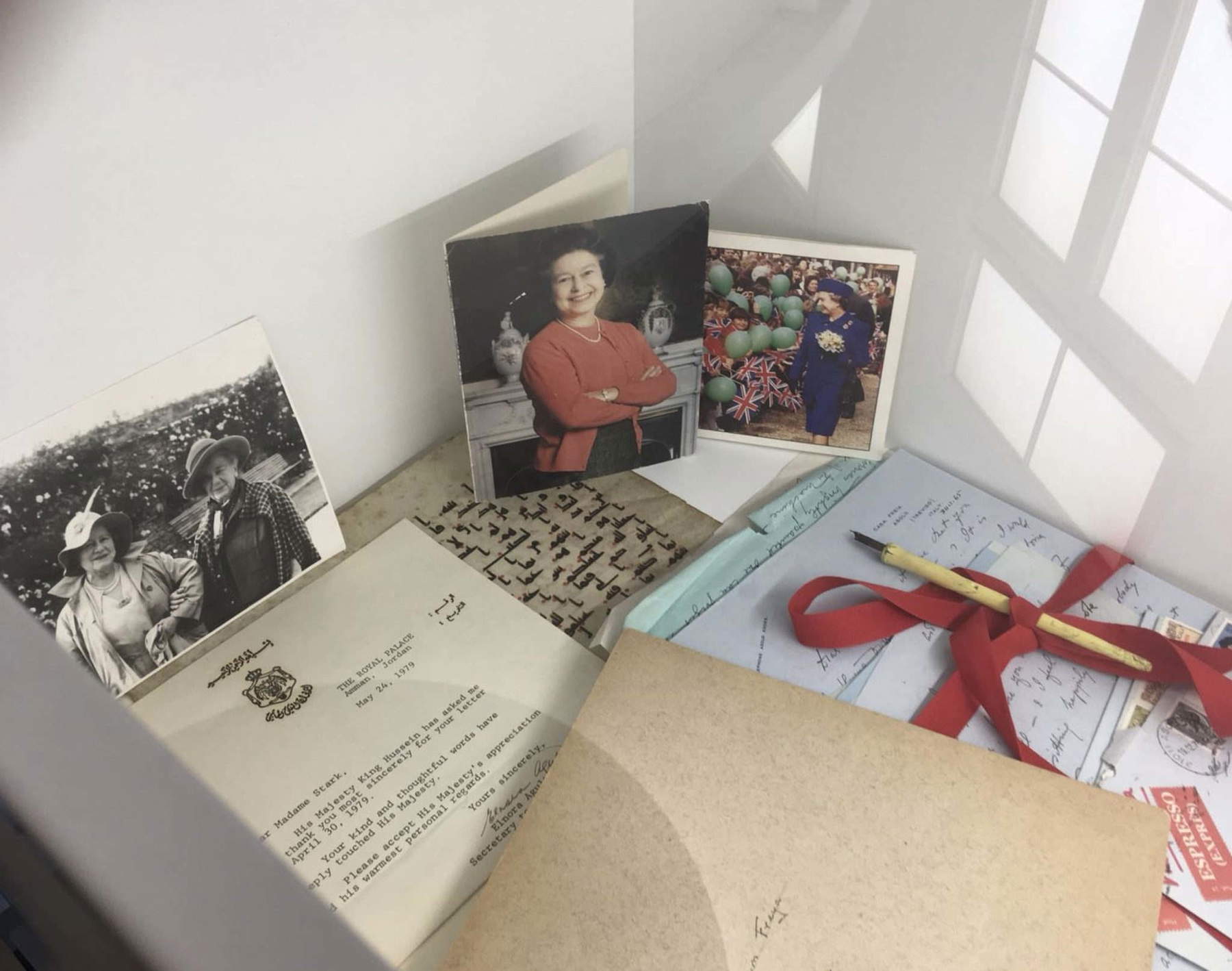
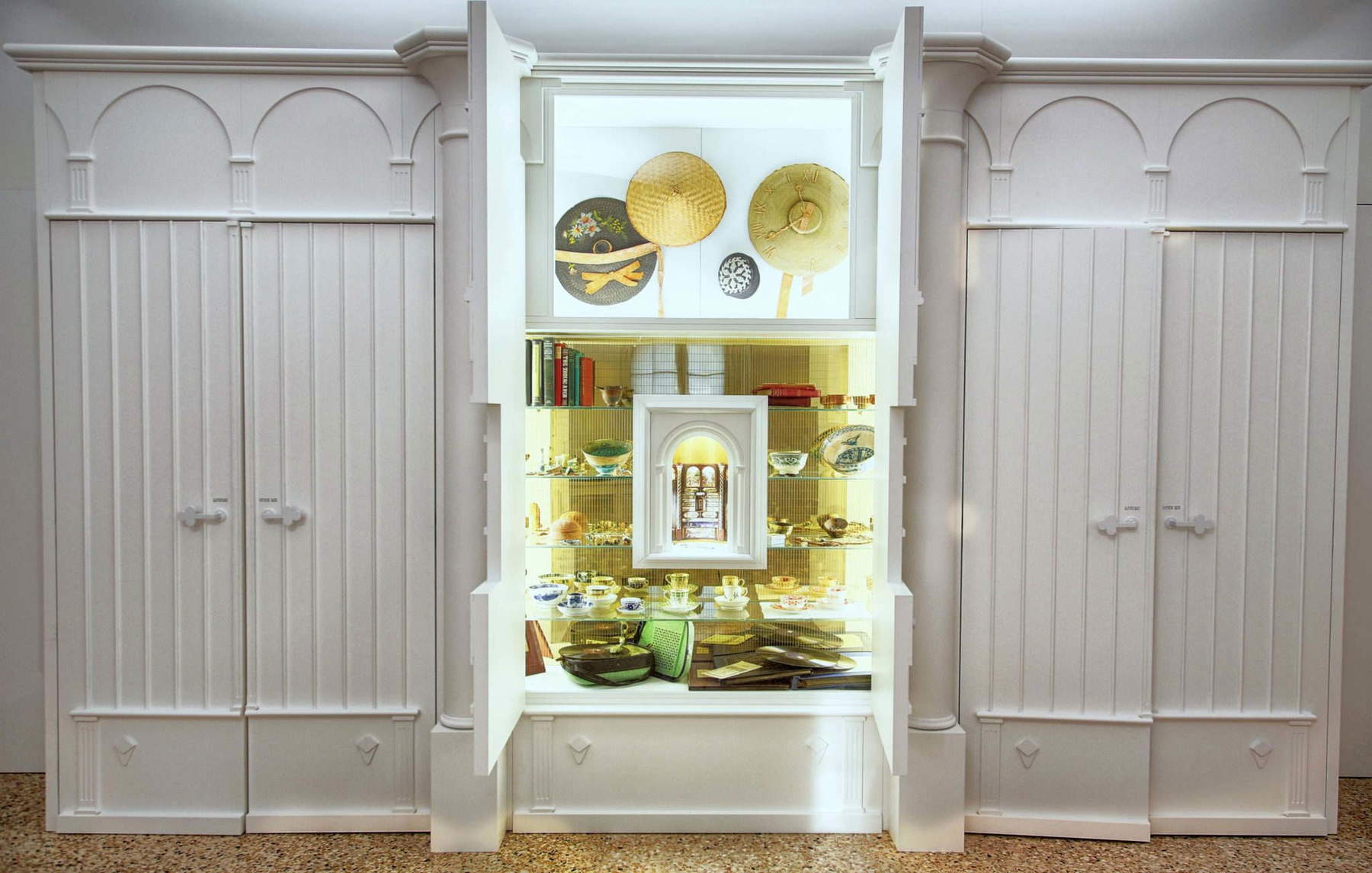
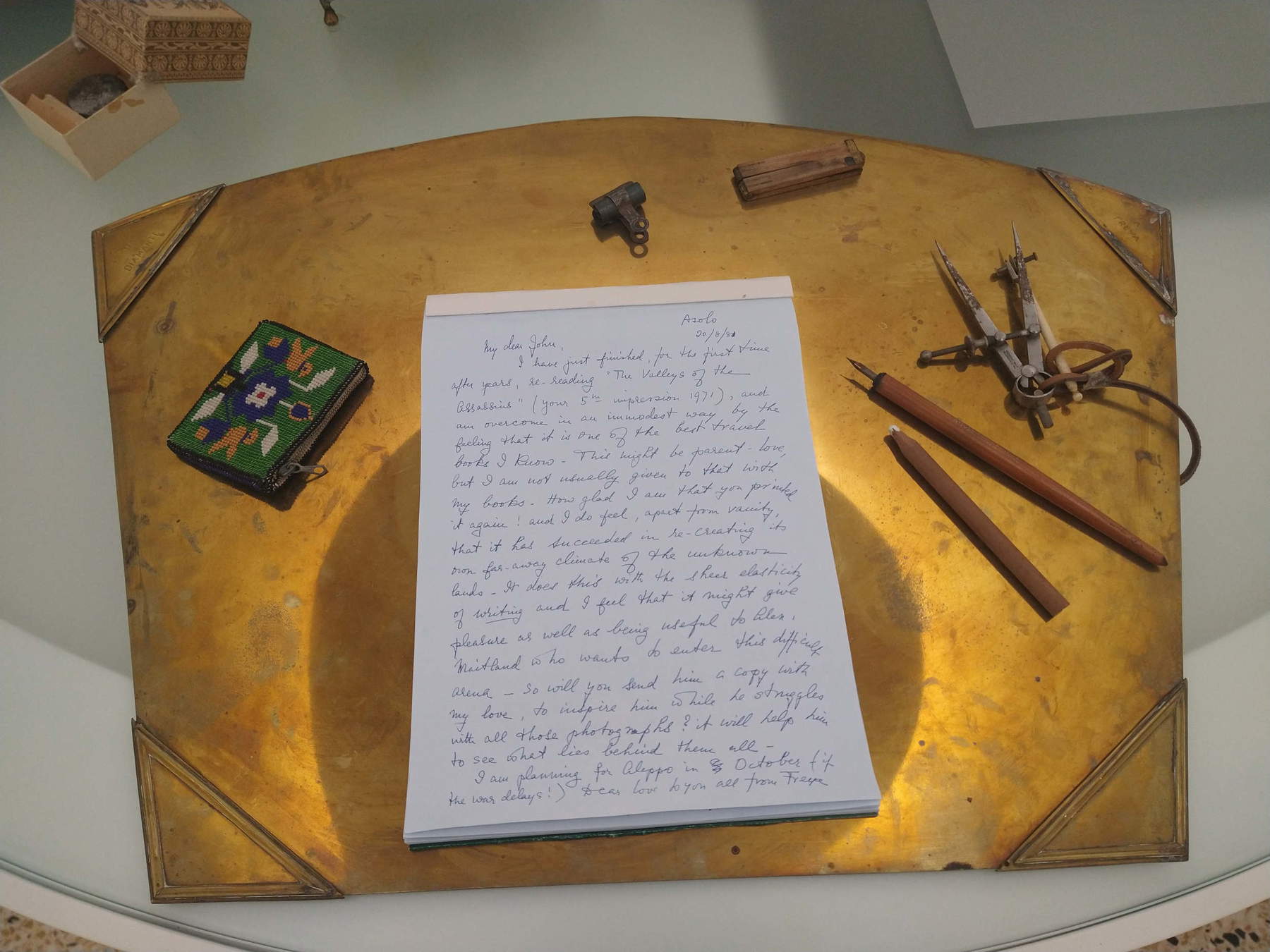
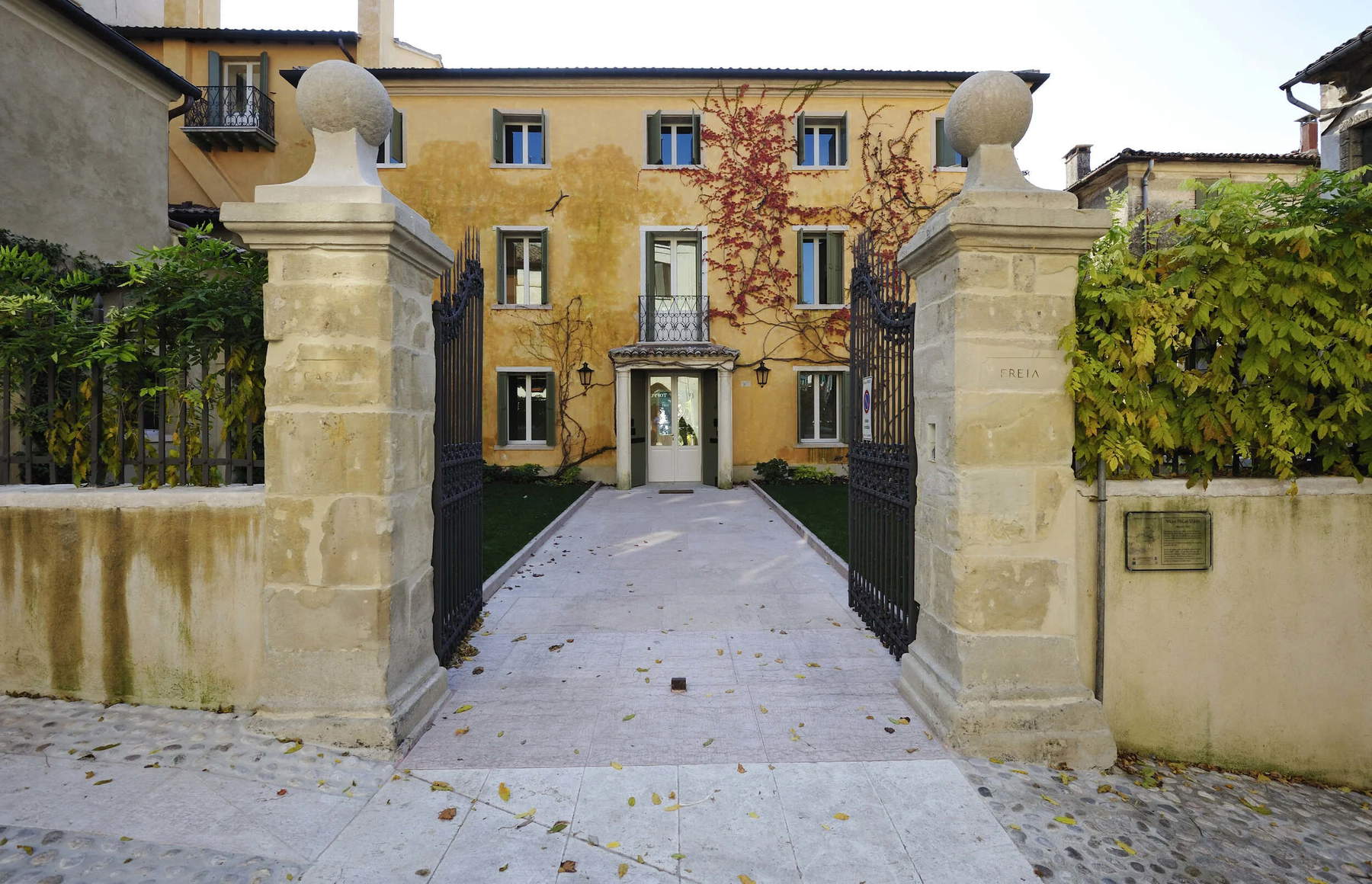
She spent the last years of her life in Asolo, the town to which she had always been deeply attached and to which she always returned after every long journey, bringing back new fabrics from the East that enriched the ancient textile workshop she had inherited from her mother (from which, whenever she set out on a new journey, precious fabrics were sent as gifts to sheikhs and other dignitaries Freya had the opportunity to meet). She lived in the villa that now bears her name; after a period in the United States, she remained there until 1966, when she left the town for a few years before returning to Asolo, where she settled until her death in 1993, just a few days before her 100th birthday. The villa was purchased by the Province of Treviso and today serves as a historic residence that hosts events and exhibitions.
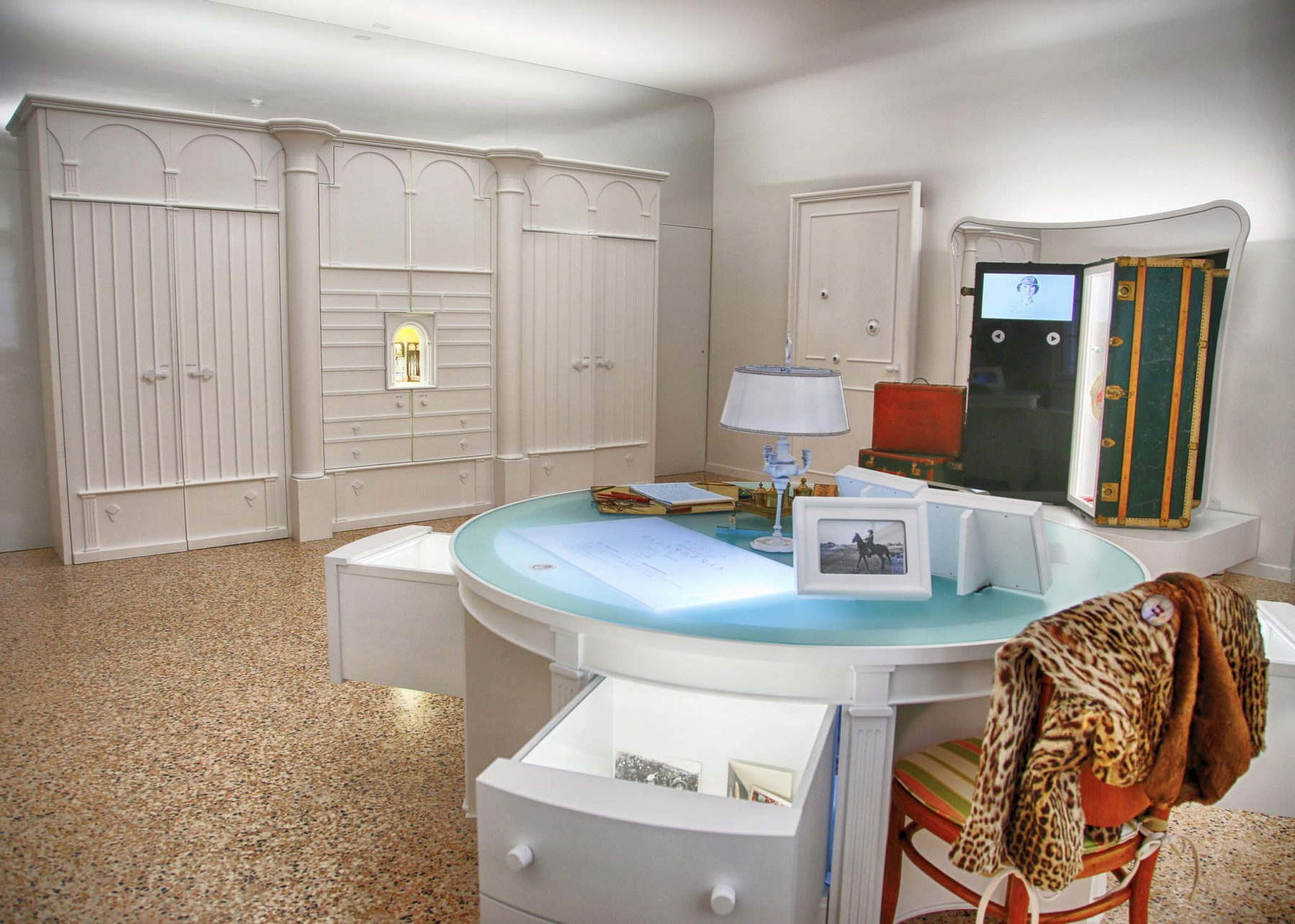
Since 2018, the Asolo Civic Museum has been honoring Freya Stark by dedicating “Freya’s Room” to her: Here, in a space designed to honor her, are displayed her travel journals, some of her dresses, personal items, her typewriter, and her photographs. A room dedicated to her serves as a tribute to an explorer and writer who made travel her reason for living. The East, which she had come to know as a child through the pages of books, became, over the course of her life, a real land to traverse, explore, and recount, laying the groundwork for a style of travel writing that aims to teach us to view the unknown with fresh eyes.

The author of this article: Ilaria Baratta
Giornalista, è co-fondatrice di Finestre sull'Arte con Federico Giannini. È nata a Carrara nel 1987 e si è laureata a Pisa. È responsabile della redazione di Finestre sull'Arte.
Warning: the translation into English of the original Italian article was created using automatic tools. We undertake to review all articles, but we do not guarantee the total absence of inaccuracies in the translation due to the program. You can find the original by clicking on the ITA button. If you find any mistake,please contact us.























 IT
IT FR
FR DE
DE ES
ES CN
CN


