





There are surfaces that embrace color, and then there are surfaces that put it to the test. When you stand before a painting by Michael Armitage (Nairobi, 1984), the first thing you realize is that the paint, there, had to carve out its own space. Born in Nairobi in 1984 and working between Kenya and the United Kingdom, Armitage paints on lubugo, a pounded bark from the Ugandan fig tree. It is neither a neutral canvas nor a decorative choice: lubugo is a living, irregular material, marked by seams, tears, and natural scars. Traditionally used in Uganda for ritual garments, shrouds, and ceremonial contexts, it carries with it a cultural and spiritual memory that predates the painted image.
Paint, on this surface, does not spread evenly: it adapts, glides, breaks off, and resumes. The folds and tears become part of the visual narrative. The work, therefore, does not emerge on a smooth surface, but on a skin that breathes and resists. When viewing a work like *The Conservationists* (2015), the lubugo is not merely a support; it becomes a territory. The scene, inspired by a British colonial sculpture that celebrated “dominion” over nature, is transported into an ambiguous African landscape, traversed by figures that seem to appear and dissolve amid vegetation, water, flesh, and dreams. The seams of the lubugo cut across the bodies, disrupting continuity and undermining any visual certainty. Colonial history, violence, and control over territory are not merely themes: they are physically embodied in the scarred surface of the painting.
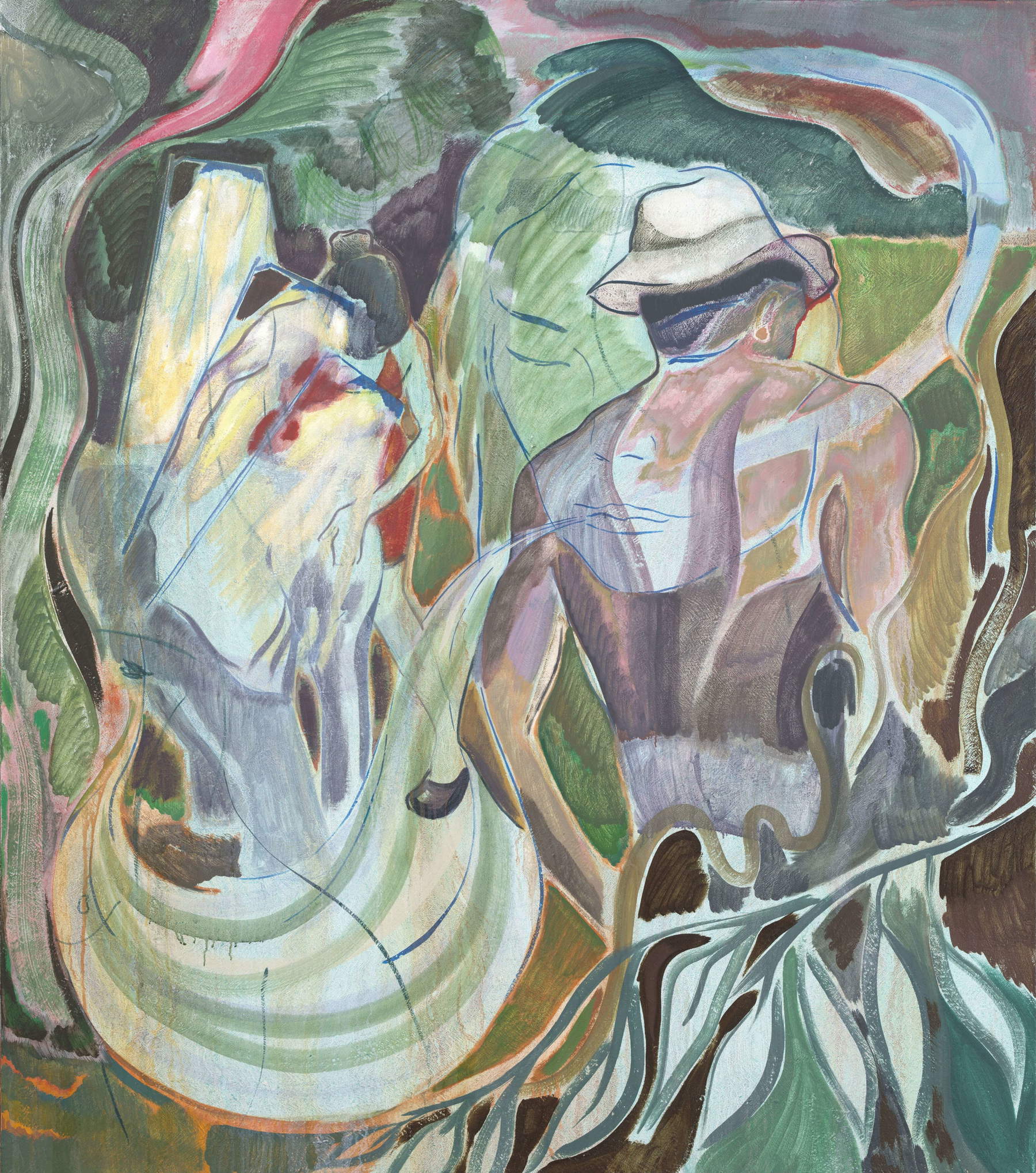
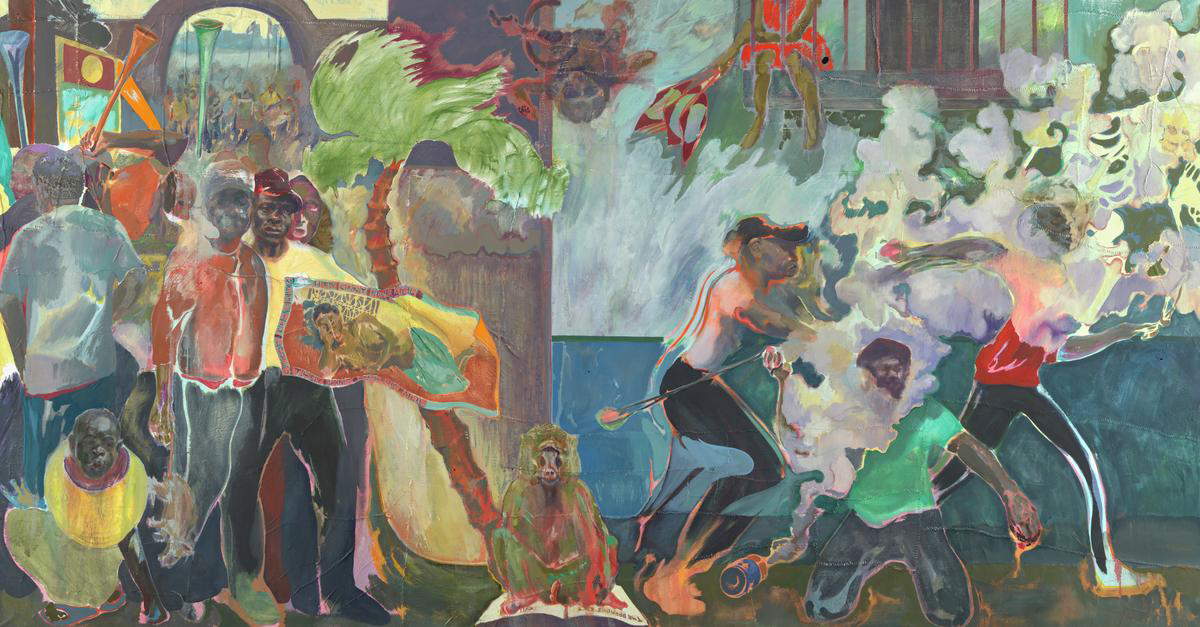
Armitage often draws on news photographs, personal memories, East African folklore, and contemporary Kenyan politics; yet his images never present themselves as direct illustrations. In *The Promised Land* ( 2019), for example, a group of figures moves through a chaotic scene. The references to migration, broken political promises, and journeys with no destination are perceptible, but the scene continually slips into dream, allegory, and nightmare. Here, the lubugo amplifies everything: it absorbs color unevenly, creating opaque areas and others that are more saturated, and allows glimpses of the plant fiber beneath the paint. It is as if the story itself were unstable, painstakingly pieced together.
Another key painting, *Pathos and the Twilight of the Idle* (2017), draws inspiration from a violent news event that took place in Kenya: the scene, however, unfolds in a suspended, almost theatrical space, where nude or semi-nude figures move in a twilight atmosphere. There is no documentary realism here; rather, there is an emotional tension that runs through the bodies, made even more intense by the surface of the lubugo, which bends, stretches, and at times seems to tear along with the figures depicted.
The material does not allow for perfect illusions, as each image remains conscious of its own nature as painting on bark. The seams—necessary to join multiple pieces of lubugo and achieve monumental formats—run vertically or horizontally like scars. They interrupt faces, divide landscapes, and cut across skies. Rather than hiding them, Armitage integrates them into the composition, transforming them into boundaries, political fractures, social divisions, and traumatic memories. Even in his most intimate works—such as certain nocturnal scenes or images related to East African rituals and dances—lubugo has a profound effect: the paint does not completely cover the surface, leaving breathing spaces, areas where the support emerges with its warm, earthy hue.
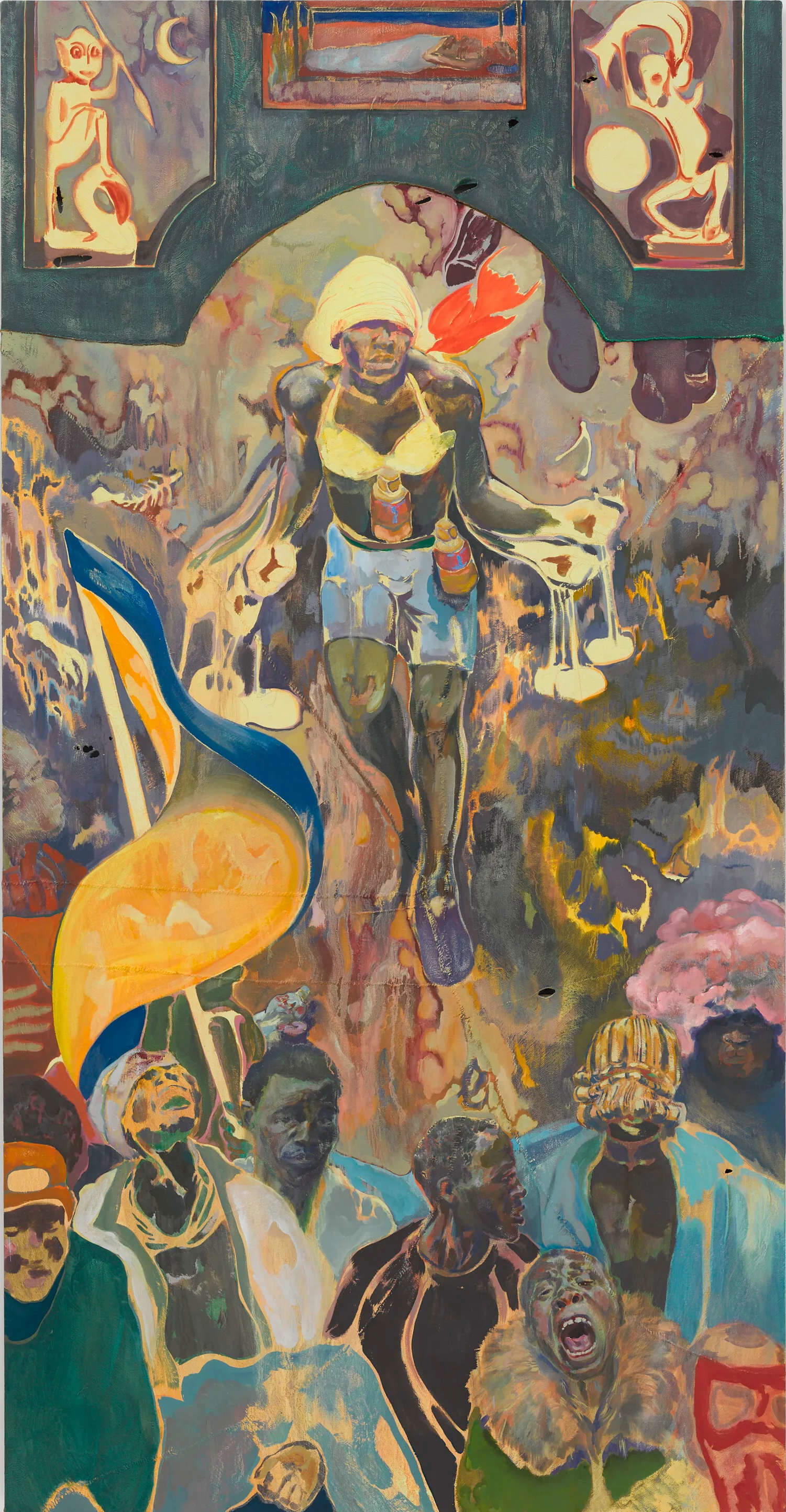
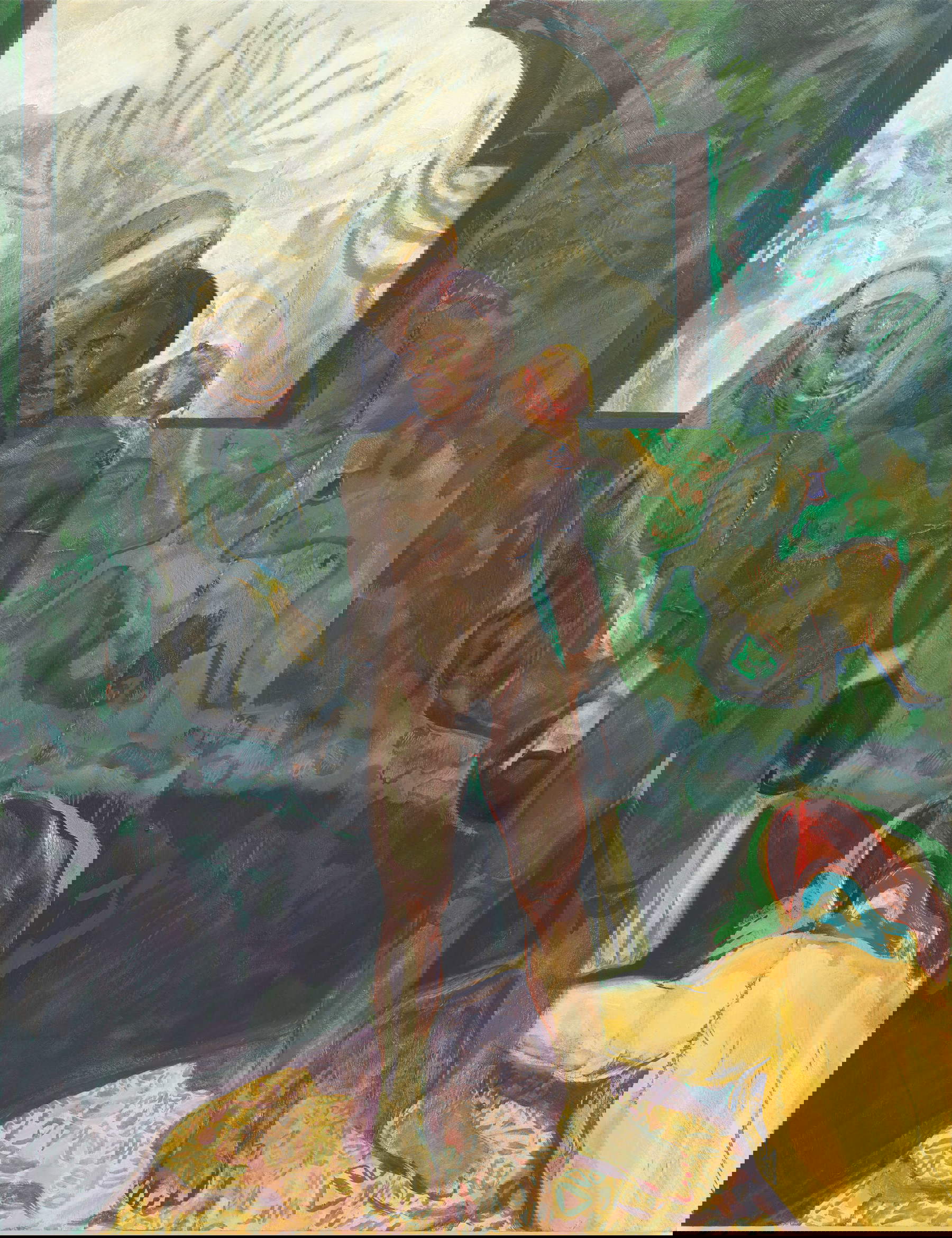
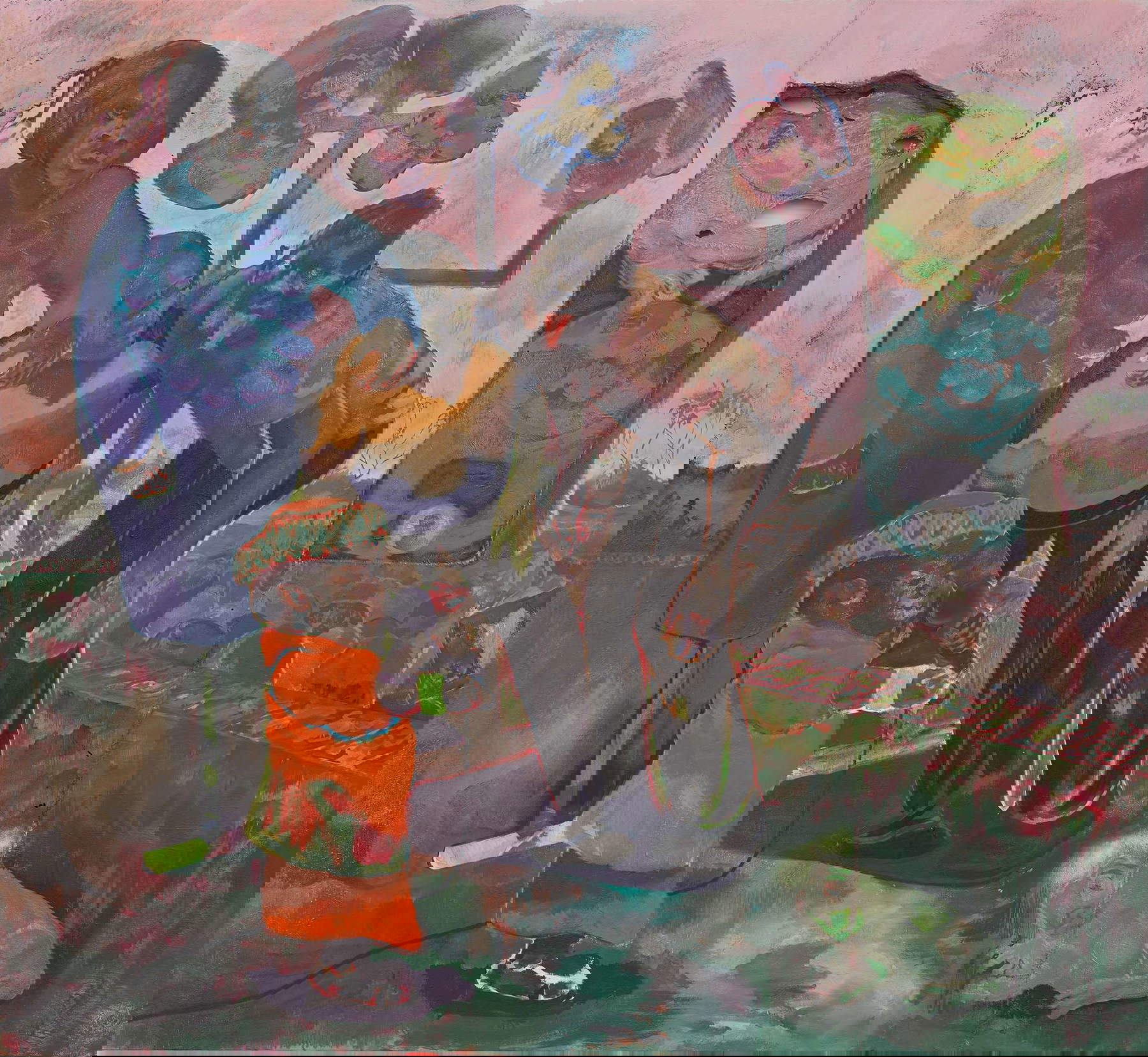
Viewing a painting by Armitage thus means experiencing an unstable form of painting that rejects the perfect surface of Western tradition. The lubugo introduces a different temporality: that of the tree’s growth, the manual process of beating the bark, and its ritual use. Each work carries this layering within it, even when it addresses urgently contemporary themes such as the violent elections in Kenya, inequalities, the weight of colonial legacies, or the tensions between modernity and tradition. There is also a physical, almost tactile aspect. Up close, the surface vibrates; the fibers cast small shadows; the stitching creates relief; and the thinner areas of the material allow light to filter through. The painting is never merely an image: it is an object, skin, a relic, a flag, a wound.
The stories Armitage tells—political, intimate, mythical—always pass through this material, which reminds us that every vision has a body, and every body bears marks. In the end, you stand before these works with the feeling that painting has rediscovered something both archaic and, at the same time, utterly contemporary: the direct contact between image and living matter. And you realize that, on the irregular surfaces of the lubugo, the world is not simply represented—it is traversed, with all its fractures, its shadows, and its sudden, stubborn flashes of beauty.


The author of this article: Federica Schneck
Federica Schneck, classe 1996, è una giornalista specializzata in arte contemporanea. Laureata in Storia dell'arte contemporanea presso l'Università di Pisa, il suo lavoro nasce da una profonda fascinazione per il modo in cui le pratiche artistiche operano all’interno, e in contrapposizione, alle strutture sociali e politiche del nostro tempo. Si occupa delle trasformazioni del sistema dell'arte contemporanea, del dialogo tra ricerche emergenti e patrimonio culturale, del mercato, delle istituzioni e delle fiere internazionali. Alla scrittura giornalistica affianca quella critica, con testi per artisti, gallerie e collezioni private.Warning: the translation into English of the original Italian article was created using automatic tools. We undertake to review all articles, but we do not guarantee the total absence of inaccuracies in the translation due to the program. You can find the original by clicking on the ITA button. If you find any mistake,please contact us.




















 IT
IT FR
FR DE
DE ES
ES CN
CN


