





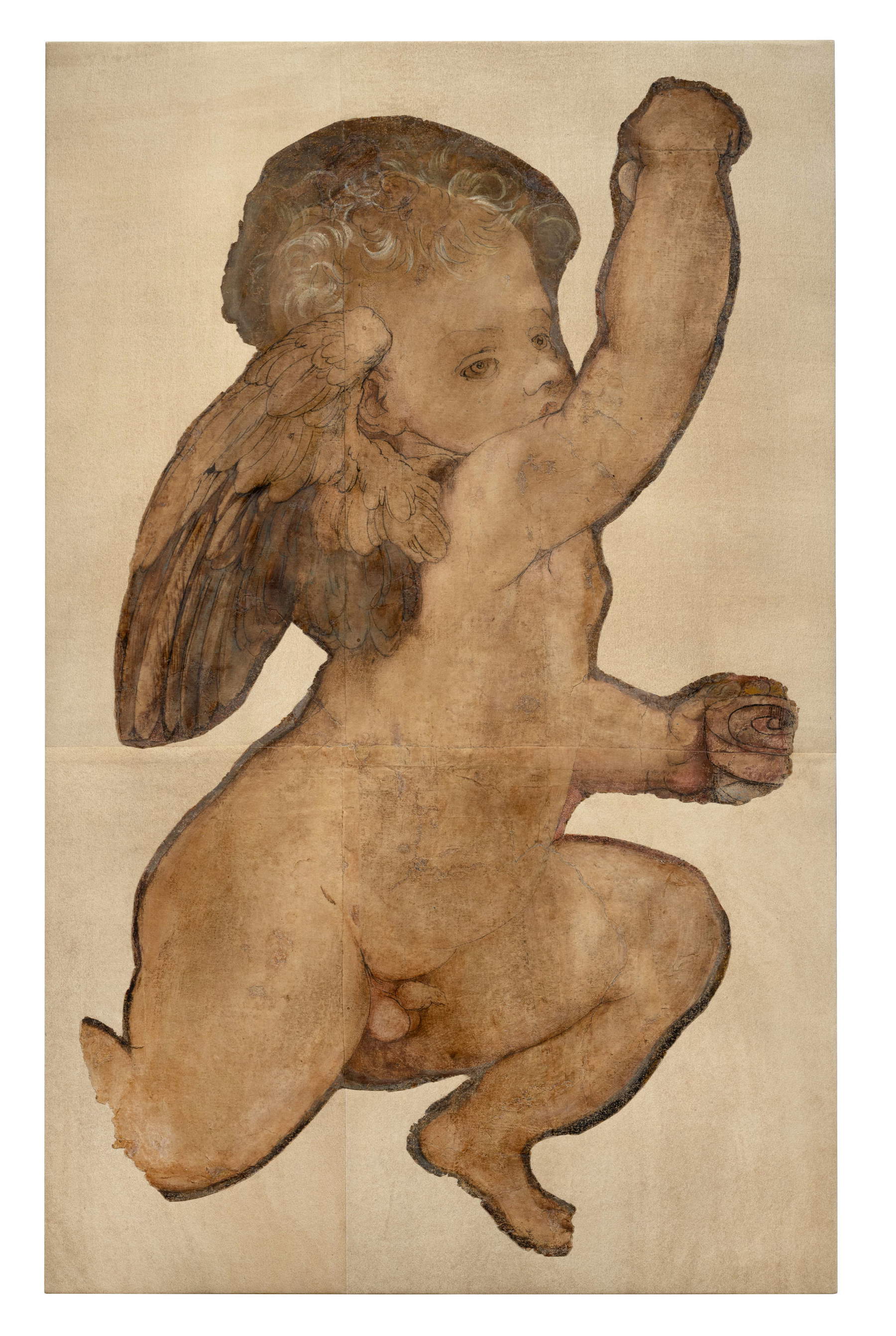
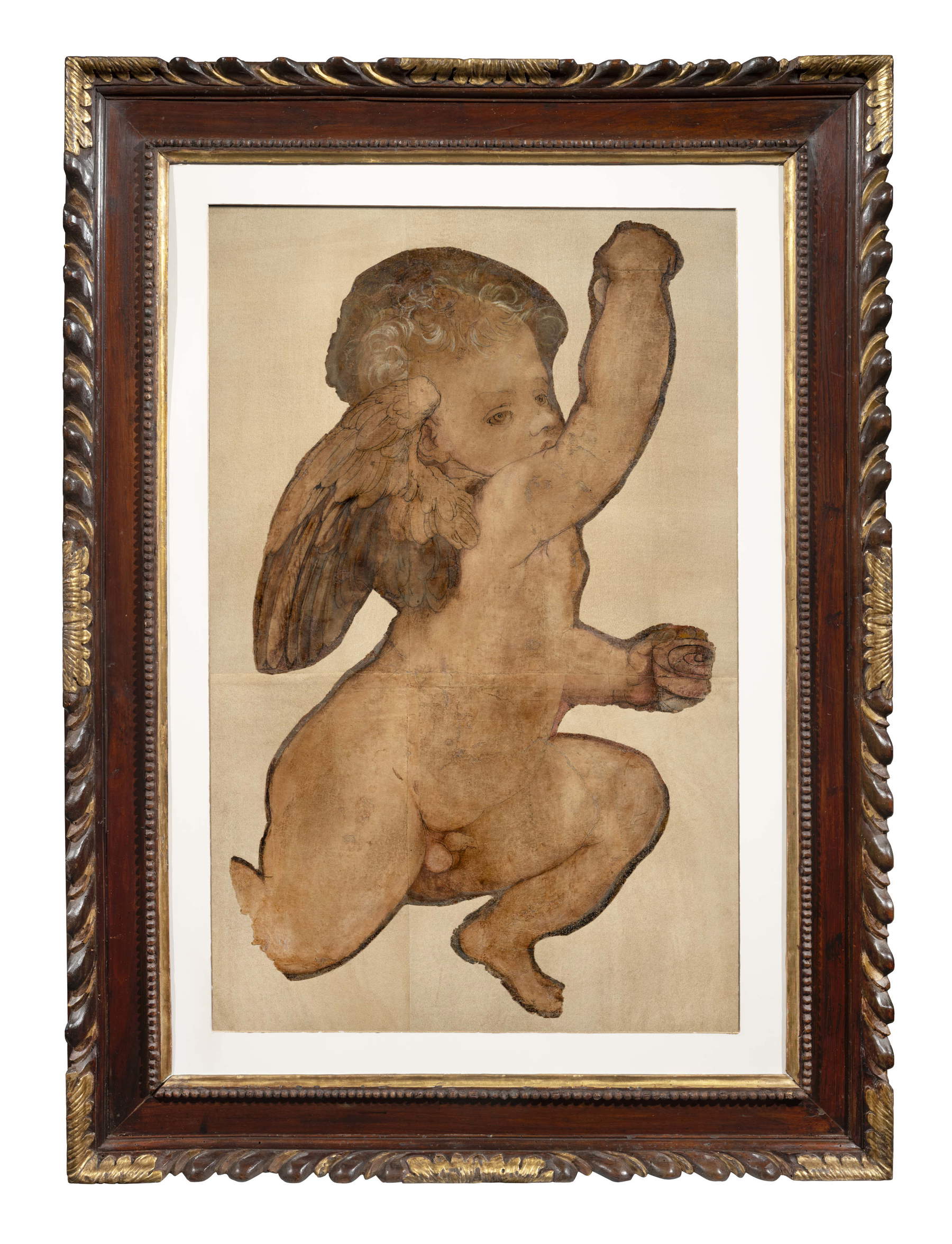
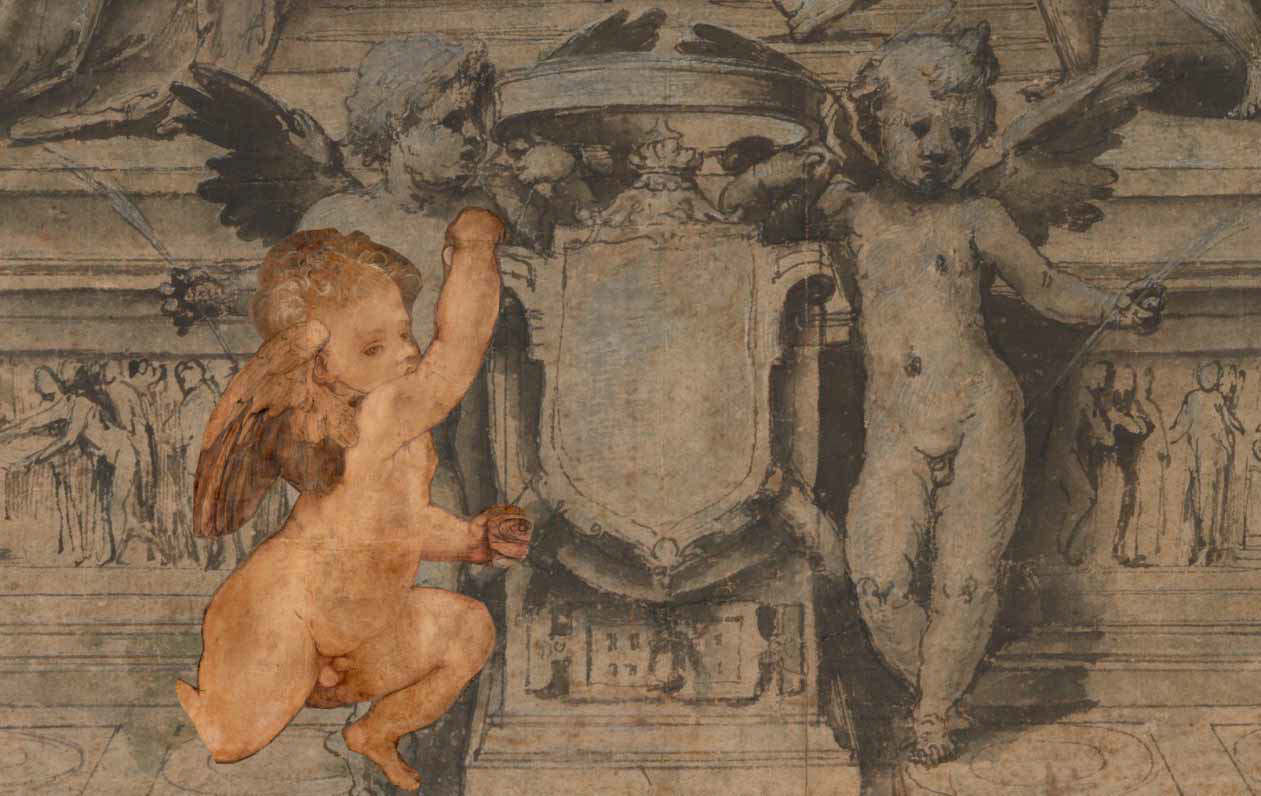
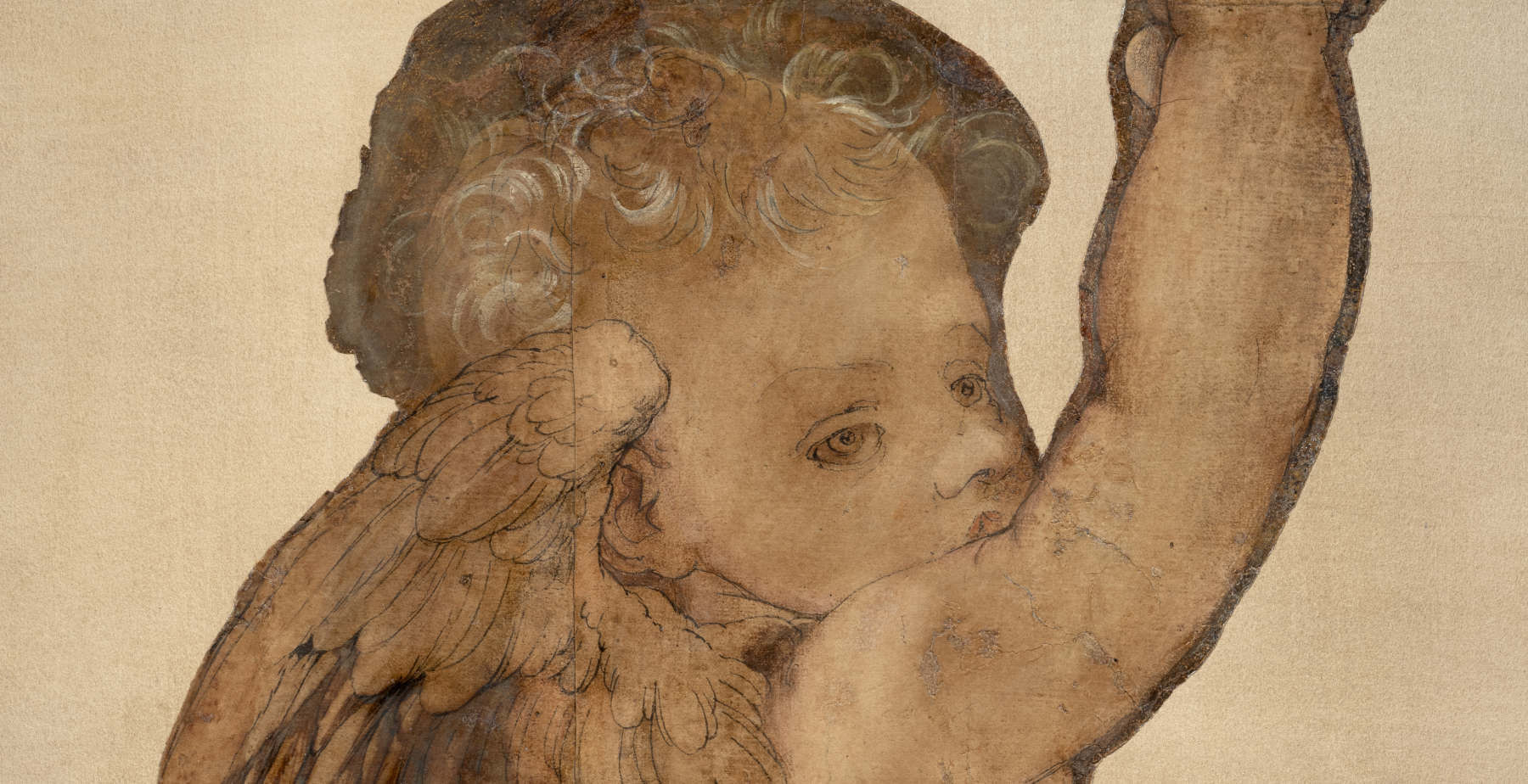
An extraordinary and rare drawing on paper by Perin del Vaga ( Piero di Giovanni Bonaccorsi; Florence, 1501 – Rome, 1547) has resurfaced on the market, brought to the Florence International Antiques Biennale by the Genoa-based gallery Goldfinch Fine Arts. A striking work that has remained hidden for a long time—in the literal sense—since Perin delVaga’s Cupid has, since the 17th century, continued for centuries to stand out against a dark background, a sort of 17th-century disguise devised to transform what was originally a fragment of a 16th-century preparatory cartoon into a reassuring gallery piece. The same fate befell other similar fragments: all the cherubs, moreover, had been given small bouquets of flowers to hold “in an attempt to give meaning to their gestures,” wrote art historian Piero Boccardo. However, beneath those later brushstrokes and beneath that black oil-painted background intended to hide the paper’s trimmed edges, the little putto continued to clutch something very different from a small bouquet of roses. This was only recently discovered, when the infrared reflectography performed by Mario Amedeo Lazzari penetrated the opaque pigments, revealing beneath theCupid’s left hand the unmistakable outline of a fragment of a volute curl—an ornament from Andrea Doria’s coat of arms—identified through a comparison with a similar Cupid preserved at the Metropolitan Museum of Art in New York. This revealing detail has mended a thread that had been severed for over three centuries, reconnecting this extraordinary drawing on paper by Perin del Vaga to its original context—namely, one of the most famous, admired, and ambitious tapestry series of the European Renaissance, the “The Thefts of Jupiter,” commissioned by Andrea Doria himself: the cherub from Goldfinch Fine Arts is the only one of the six known in the 17th century (and of these six, five are known today, all in private collections) to have become available again.
Behind the figure of this winged boy lies, therefore, the story of a magnificent decorative undertaking and a long journey through various collections. The history of this fragment begins in 1528, when Admiral Andrea Doria (Oneglia, 1466 – Genoa, 1560), at the time allied with Emperor Charles V and determined to transform his Genoese residence in Fassolo into a palace capable of rivaling European courts, commissioned Piero di Giovanni Bonaccorsi, known as Perin del Vaga: the Florentine artist, one of Raphael’s most talented pupils and thus soon to become the Urbino master’s collaborator, had just fled Rome in the aftermath of the dramatic Sack of 1527. In what was then the capital of the Papal States, Perino had worked with Giovanni da Udine in the Hall of the Popes in the Vatican, a pivotal project where, for the first time, the fresco and grotesque decoration of the vault had been conceived in close visual continuity with a series of precious tapestries intended for the walls.
Called to Genoa to oversee the construction of the Prince’s Palace, Perino applied the same creative vision to Fassolo: for each of the two main halls on the nobile floor, he designed tapestry cycles whose narratives continued and complemented the frescoed subjects on the ceilings. In the eastern hall, located in the apartment of Andrea Doria’s wife, Peretta Usodimare, the paintings depicting Neptune calming the storm unleashed by Aeolus against Ulysses thus interacted with the tapestries of the Stories of Aeneas and Dido, while in the western hall—that is, the main hall of the admiral’s apartment, where Emperor Charles V was hosted in 1533 (and for the occasion, the hall was transformed into a sort of throne room)— the impetuous “Gigantomachy” frescoed on the vault—with Jupiter striking down the rebellious giants, a clear allusion to Doria’s own power—found its ideal counterpart in the tapestries on the walls.
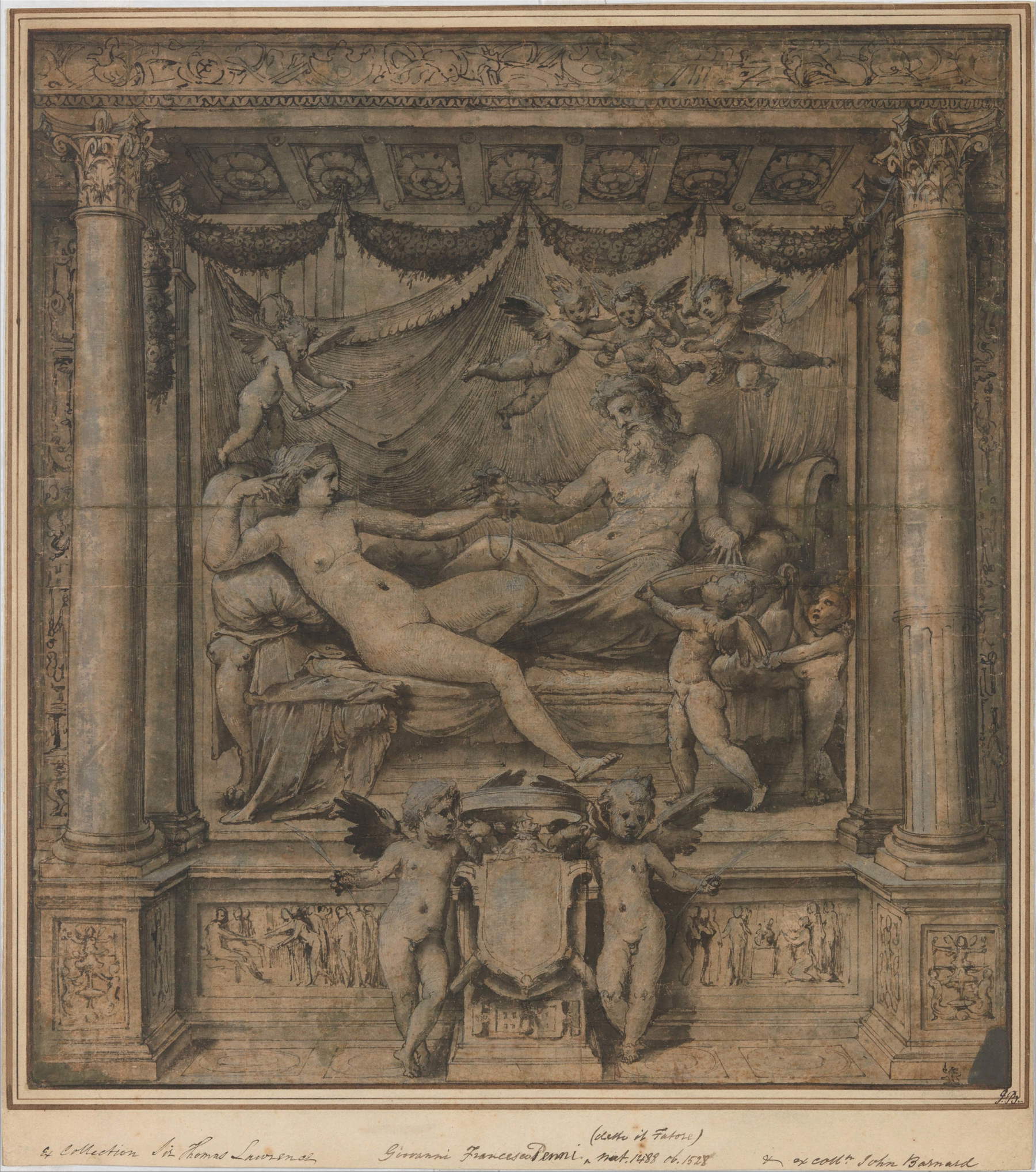
These tapestries, depicting the Loves of Jupiter ( and referred to in old inventories as “The Thefts of Jupiter,” in the etymological sense of “stealing in secret”), evoked the secret loves and metamorphoses of the king of the gods: six stories depicting Jupiter and Juno, Jupiter and Io, Jupiter and Semele, Jupiter and Callisto, Jupiter and Alcmene, and Jupiter and Danae (we know them from engravings that document the complete cycle). The series, consisting of seven enormous panels (one scene was divided across two tapestries), impressed visitors with its monumental scale: each scene was framed by a monumental architectural border painted in faux relief, featuring plinths, plinths, and columns, and right at the center of the plinth of each tapestry, two winged cupids were positioned to hold up Admiral Doria’s heraldic shield, bearing the family eagle superimposed on the Cross of Saint Andrew. To transfer these designs onto the Flemish looms in Brussels, Perino created monumental life-size preparatory cartoons on a 1:1 scale, since the practice of the time dictated that the cartoons be used, cut up, and often worn out in the tapestry workshops. However, Andrea Doria demanded and obtained the full return of the models to Genoa (a circumstance entirely unusual for that time, since cartoons were often discarded or, in any case, not returned to the patron) to prevent unauthorized replicas from being woven, and in this way succeeded in securing for his palace the absolute exclusivity of that figurative cycle. This was a prudent move that saved the cartoons from immediate destruction (although it is presumed this was not the objective): the inventory of the Prince of Genoa’s palace, drawn up in July 1561, just a few months after the admiral’s death, in fact precisely records “a chest containing the cartoons of Jupiter’s Thefts.”
From that moment on, a complex diaspora of the collection began: in the early decades of the seventeenth century, driven by the Doria heirs’ need to raise funds during a turbulent period (the death of Giovanni Andrea Doria in 1606 and the untimely death of his son Andrea II in 1612 had left the family without major sources of income, and the heir, Giovanni Andrea II, son of Andrea II, was a minor at the time: consequently, his guardians had to provide for the family’s upkeep through extraordinary means), the tapestries and their cartoons had to leave Genoa. The tapestries were purchased by the Spanish collector Juan Alfonso Enríquez de Cabrera, viceroy of Sicily and Naples (they were, however, returned to the family—though it is unclear how— in 1681, when they appear among the possessions of Giovanni Andrea III Doria, who nevertheless used them to partially pay for a dowry, after which all trace of them was lost). As for the cartoons, one left the Prince’s Palace in Genoa before 1606: at that time, the other five were still in the city, but they did not remain there long, since they were purchased between 1614 and 1622 by Thomas Howard, 2nd Earl of Arundel, one of the pioneers of English art collecting, who was visiting Genoa. After the death of the Earls of Arundel, the cartoons were taken to Amsterdam and acquired by Queen Christina of Sweden, who brought them to Rome to her palace on the Lungara. In Roman circles, however, the memory of Perin del Vaga’s authorship was lost, and the drawings were mistaken for works by Giulio Romano. With this erroneous attribution, they first passed to Cardinal Decio Azzolini, then to Prince Livio Odescalchi. In his 1703 inventories, they were valued at sums exceeding those of masterpieces by Correggio and Titian, and finally, in 1721, they were purchased by Regent Philip II of Bourbon-Orléans for the famous gallery of the Palais Royal in Paris. Engraved in the 18th century as masterpieces by Giulio Romano, the large cartoons were dispersed during the sales of the Orléans collection during the French Revolution. Only one of them—the one depicting Jupiter and Danae—made its way to the Louvre between 1869 and 1870, where it remained in storage for over a century under the name of Giulio Romano, before Dominique Cordellier identified it in 2001 and definitively attributed it to Perin del Vaga following a lengthy restoration.
If this was the fate of the large central figurative cartoons, what had become of the preparatory models for the borders and the cupid figures holding the coat of arms? It should be noted that the 1606 Doria inventory listed a total of forty-six paper cutouts, confirming that the Flemish tapestry makers had cut up the cartoons to position the fragments of the scenes beneath the looms. When the five main compositions were sold to Lord Arundel, the fragments of the minor borders (Perino had prepared only one model for the architectural elements) remained in Genoa or went their separate ways. Toward the middle of the seventeenth century, six fragments depicting individual Cupids were acquired by Marquis Francesco Maria Balbi, who was also overseeing the liquidation of the estate of the Admiral of Castile (the Spanish viceroy who, as noted, had once owned the same Doria tapestries), and who found himself in possession of these tempera panels. To adapt them to his own picture gallery at Palazzo Balbi, the marquis had the cartoons undergo a drastic makeover, as mentioned at the beginning: the outlines of the cherubs were cut out along the edges, glued onto canvas, framed by a heavy black background painted in oil, and embellished with bouquets of flowers—also painted in oil—held in their hands, to give full meaning to the original gesture of holding the heraldic shield.
Thus disguised as small paintings of cherubs, the cartoons survived in the Balbi collections until the nineteenth century, when they gradually began to disperse. Four of them were exhibited in 1892 at the historic exhibition at Palazzo Bianco; thereafter, in 1963, art historian Pietro Torriti attributed them to Perin del Vaga, though he erroneously hypothesized that they were studies for the fresco frieze on the exterior façade of the Palazzo del Principe. It was not until 1982, on the occasion of the “Genua Picta” exhibition, that Piero Boccardo—who is responsible for the most recent reconstruction of the fragments’ history— in a publication accompanying the discovery by Goldfinch Fine Arts, refuted the theory that they were intended for a fresco, highlighting the finesse of the execution and the absence of holes for the powdering technique. Subsequently, studies by Elena Parma and Bernice Davidson traced the cherubs back to tapestries commissioned for Andrea Doria, leading to definitive confirmation thanks to recent multispectral diagnostic examinations.
The rediscoveryof the *Amorino* and its recent restoration, entrusted to Julie Guilmette in preparation for the drawing’s presentation at the BIAF, now allow us to appreciate, in all its freshness, the central role that the drawing and the cartoon played in the art of Perin del Vaga. As Jonathan Bober points out, Giorgio Vasari recalledwith admiration how the young Perino had surpassed all his contemporaries in copying Michelangelo’s famous cartoon of the Battle of Cascina. For Bonaccorsi, the cartoon was not merely a technical tool serving as a stepping stone to the finished work, but an autonomous and complete expression of his own graphic invention: when he was criticized in Genoa for the slowness with which he was executing the frescoes in the Salone del Naufragio, Perino had the preparatory cartoon mounted directly on the vault, sparking the enthusiasm and amazement of the entire city.
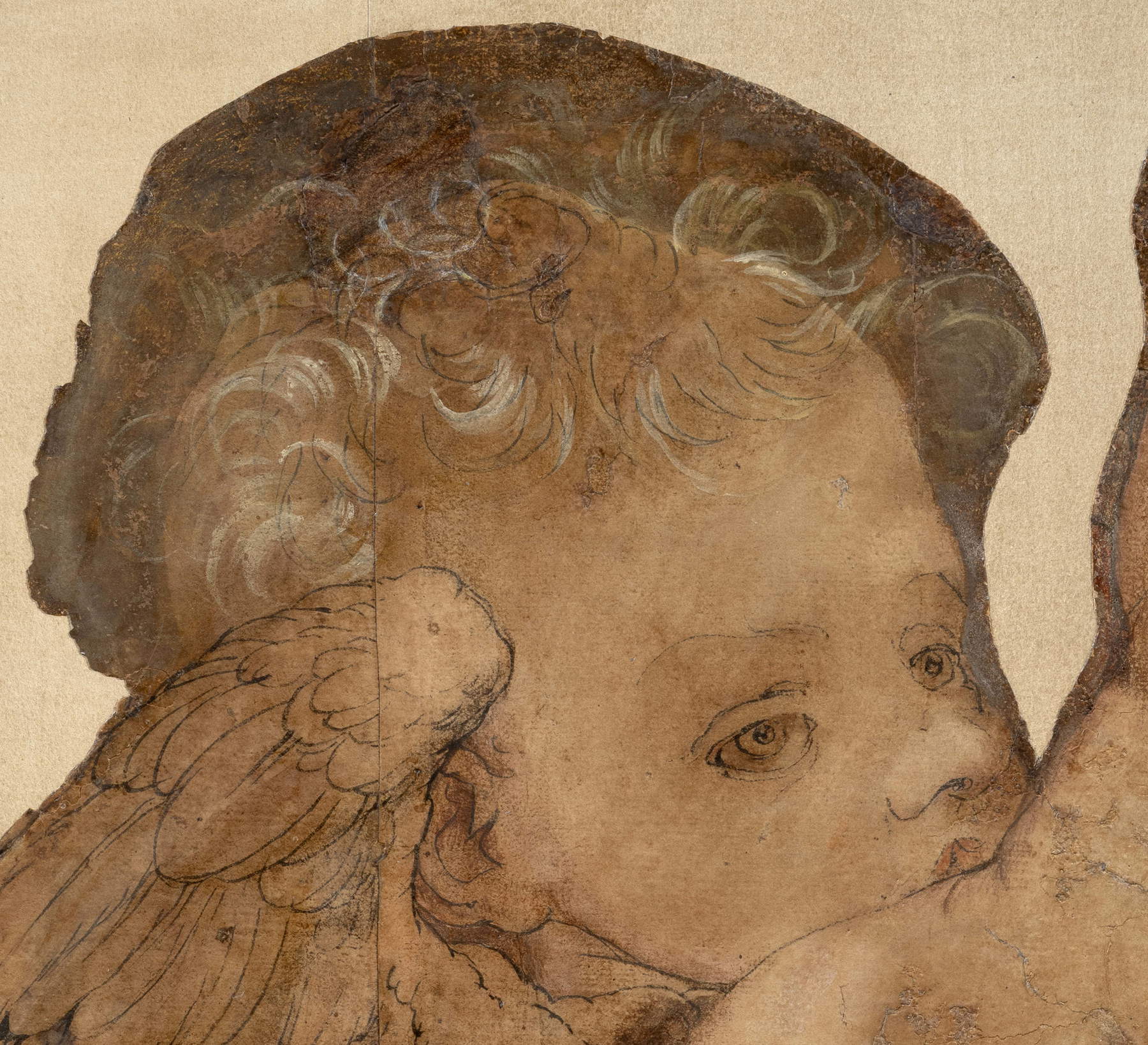
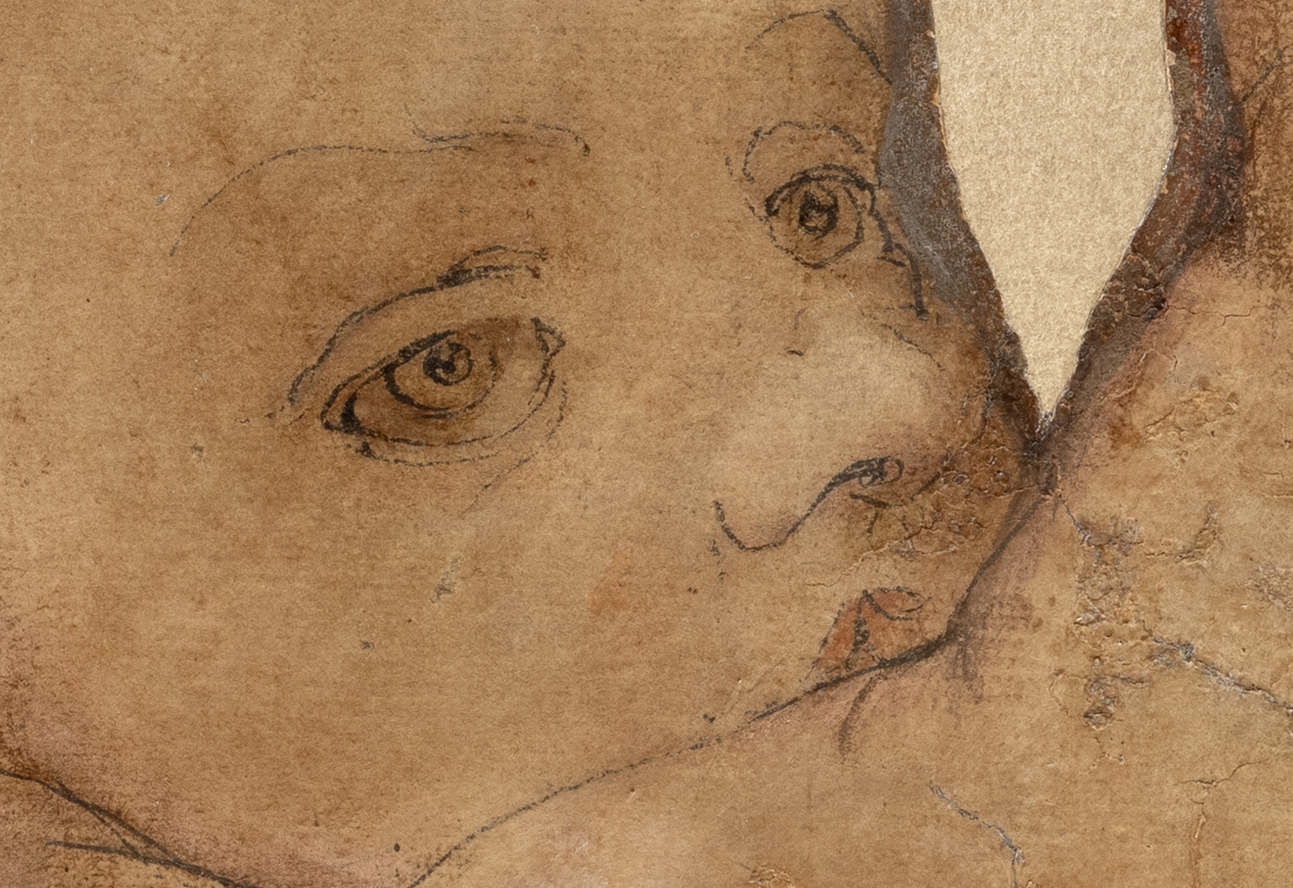
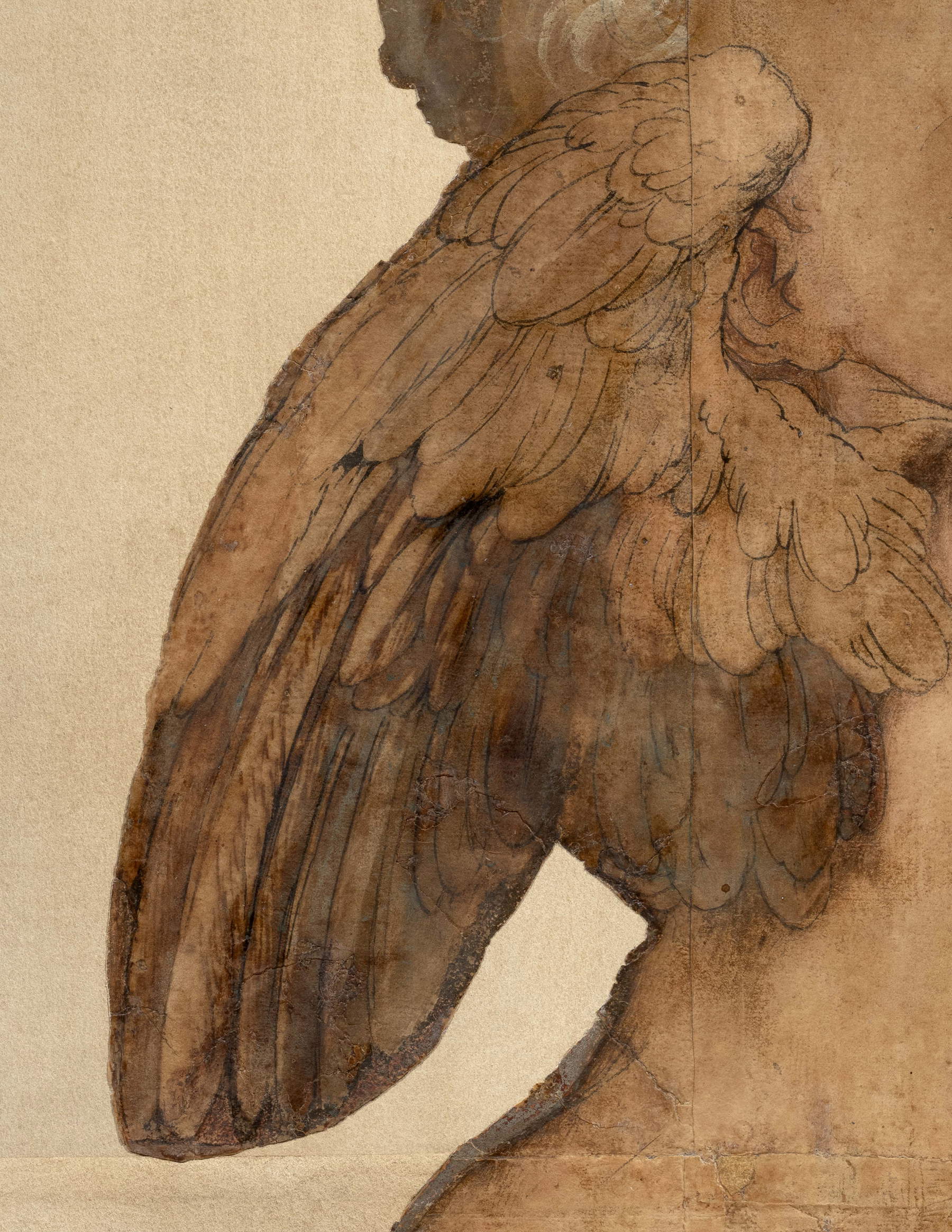
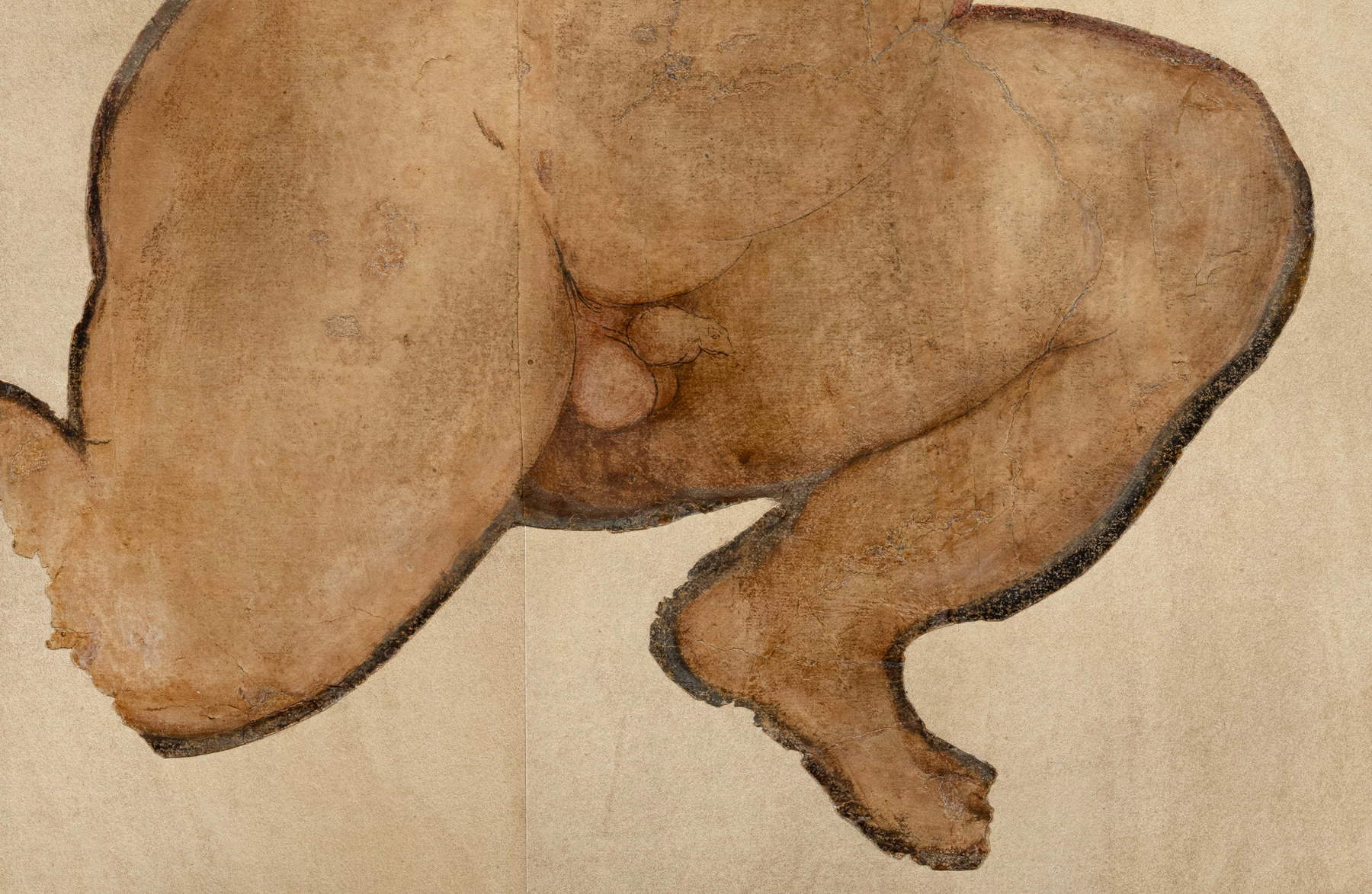
Unlike Raphael’s cartoons for the Sistine Chapel or those by Giulio Romano for the Triumph of Scipio—which are characterized by a dense, compact, and highly structured painting style—the Amorino showcases a subtle, fluid, and minimalist technique. The tempera, applied in very light layers on the laid paper support, behaves almost like the watercolor-like ink of a sheet drawing. “Although some parts of the surface of *Amorino* are not perfectly preserved,” writes Bober, “the extraordinary brushstrokes of the original tempera are still clearly visible: the deep brown of the wing; a rosy flush along the main contours, more saturated on the hand and genitals; and a subtly modulated flesh tone throughout the body. This color scheme, combined with the absence of the usual transfer marks (punctures or stylus marks), distinguishes a cartoon intended for tapestry production, as it served as a model to which skilled weavers—though culturally and geographically distant (specifically Flemish)— were required to adhere strictly to […]. Rendered with the tip of the brush, the outlines are precise, the facial features reduced to the essentials, and the extremities elliptical. At the same time, the brushwork of the magnificent wing becomes dense and rhythmic […]. Similarly, the accents of white tempera in the hair are identical, in texture and touch, to the highlights in a more elaborate study.”
The work also stands out for its complex exploration of posture: the Cupid is rendered in a pronounced contrapposto pose, with a twisted torso, outstretched arms, and legs spread apart, yet this is lightened by his childlike proportions and a weight centered toward the lower body. The expressive rendering of the face is extraordinary: as Bober notes, theCupid’s gaze, “personal and seemingly self-aware, contrasts with his childlike demeanor, yet also appears wary, elusive, almost suggesting a voyeuristic relationship with the erotic scene to which he alludes—if not a reflection of the artist himself, as Vasari describes him: handsome, elusive, lustful.”
A fundamental element that emerged during the studies concerns the non-hierarchical nature of Perino’s compositional language. In his figurative vocabulary, elements that appear secondary or decorative (such as grotesques, garlands, masks, and coat-of-arms-bearing cherubs) are not subordinate to the main narrative, but rival the historical or mythological scenes in scale and visual significance. This approach, which continually blends form and meaning, is said to have profoundly shaped the course of Mannerism in Europe. The most spectacular results, however, came from scientific examinations and the restoration work. The diagnostic campaign led by Mario Amedeo Lazzari employed ultraviolet (UV) luminescence, false-color infrared imaging, and infrared reflectography at 2,200 nanometers. While the UV imaging made it possible to precisely map the altered varnishes, restoration adhesives, and 17th-century oil retouches, the long-wavelength reflectography “penetrated,” so to speak, the surface pigments, bringing to light the original dark ink outline drawn with a pen, which defines the facial features of the eyes, the shading hatching in the genital area and along the back, and above all the curl of the scroll in the Andrea Doria coat of arms hidden beneath the repainting of the left hand.
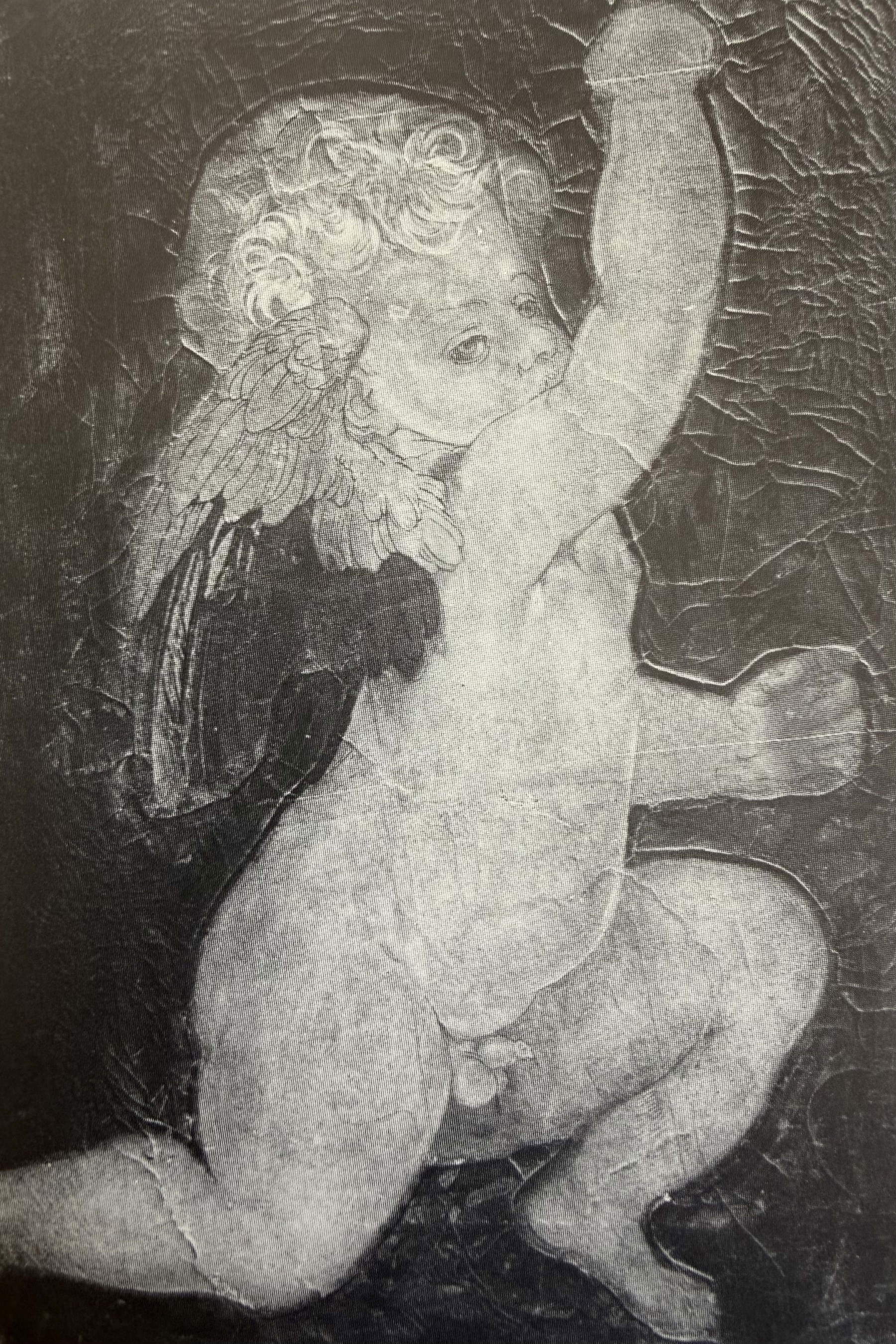
These discoveries provided the operational basis for the extremely delicate restoration carried out by Julie Guilmette. The work, which arrived at the laboratory in a state of severe structural and aesthetic deterioration, featured a 17th-century double stretcher that had completely rigidified the paper’s natural elasticity. After removing the work from its wooden stretcher frame, the conservator set about detaching the relining canvases using a gel that allowed the ancient animal glues to swell, enabling mechanical removal with spatulas and scalpels, without moisture penetrating the paper support or causing dangerous stains on the reverse. Once the original laid paper—handmade in the 16th century—had been freed, the painting’s surface was cleaned: the dark black oil ground and the oxidized varnishes that were yellowing the drawing were thus removed, and subsequently the numerous tears and abrasions were consolidated from the reverse side with layers of Japanese paper and methylcellulose adhesive.
In consultation with the owner, the restorer then chose to fill in the gaps along the contoured perimeter of the cherub using pure cotton paper that had been pre-toned with watercolor in a neutral shade. Four targeted patches were applied at the junctions of the four original sheets that made up the support; these patches made it possible to keep the original structural composition perfectly legible. Finally, the work was realigned and mounted on a new conservation stretcher, protected by an extremely thin layer of Klucel G—a type of transparent, neutral, and easily reversible adhesive—which serves to improve the conservation of the surface.
Freed from the overpaintings and alterations accumulated over the centuries, Perin del Vaga’s*Amorino* has thus regained its authentic status as a masterpiece of Renaissance printmaking: no longer, therefore, a curious genre painting featuring flowers and cherubs, but a living fragment of Andrea Doria’s great Genoese workshop, an irreplaceable testament to the primacy of drawing in sixteenth-century artistic culture.
 |
| A "Amorino" by Perin del Vaga Resurfaces: It Is a Fragment of a Major Achievement for Andrea Doria |

Warning: the translation into English of the original Italian article was created using automatic tools. We undertake to review all articles, but we do not guarantee the total absence of inaccuracies in the translation due to the program. You can find the original by clicking on the ITA button. If you find any mistake,please contact us.




















 IT
IT FR
FR DE
DE ES
ES CN
CN


