





A sophisticated diagnostic test, normally used in medical research, is now being applied to the world of art to investigate one of Giuseppe Arcimboldo’s most intriguing paintings. The painting in question is *L’Ortolano*(The Gardener), housed in the Pinacoteca of the Ala Ponzone Civic Museum in Cremona, which underwent a special computed tomography scan at Humanitas University. The goal is to look beyond what is visible on the surface and gather new information about the painting’s structure and history. The analyses should help determine, in particular, whether the work can be considered the first of Arcimboldo’s famous composite heads, in which natural elements and objects are assembled to create surprising facial features.
The CT scan was performed by a team led by Andrea Laghi, full professor at Humanitas University and director of the Department of Diagnostics at the IRCCS Istituto Clinico Humanitas. The use of technology originally developed for clinical applications allows the painting to be studied using a completely non-invasive protocol, without physically altering the paint layer. The examination represents the first phase of a broader research program, which will also involve the University of Pavia. The Department of Earth and Environmental Sciences, represented by Professor Maria Pia Riccardi and Dr. Maya Musa, and the Department of Physics, represented by Professor Maddalena Patrini, will participate in the project. Scientific coordination is led by Mario A. Lazzari, while operational coordination is managed by art historian Raffaella Poltronieri.
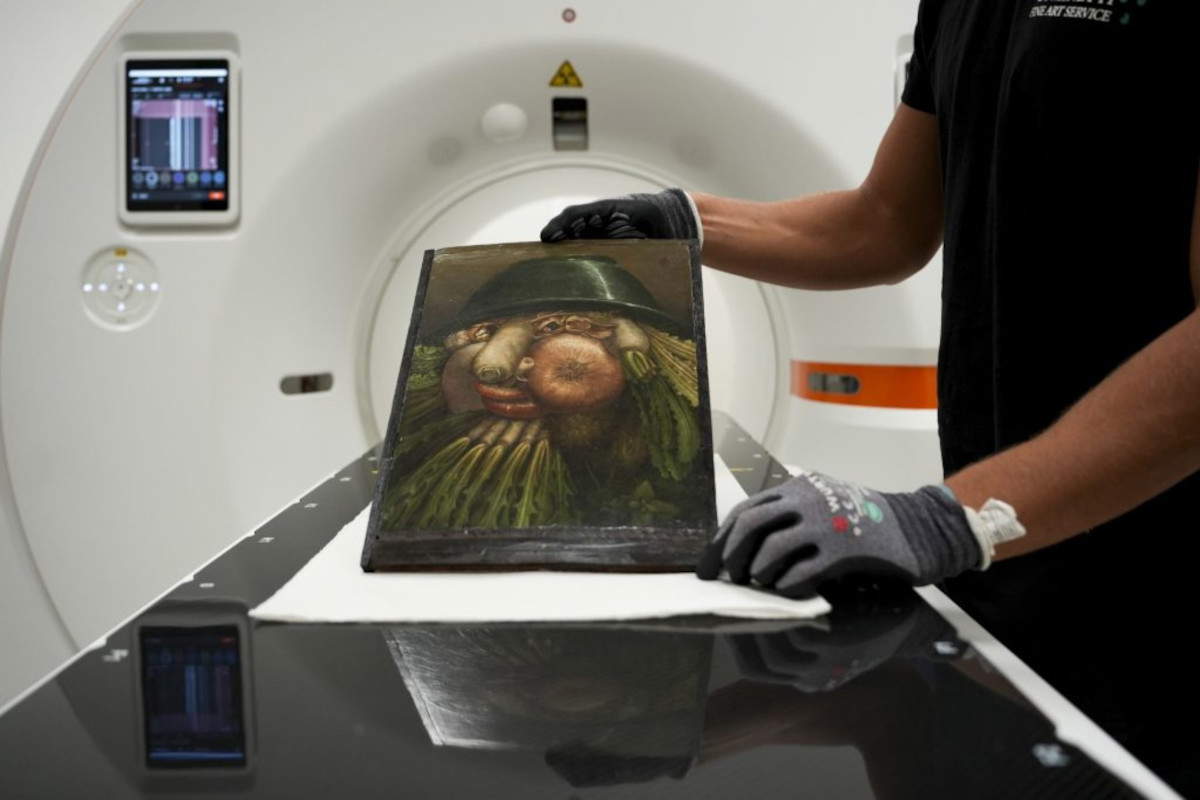
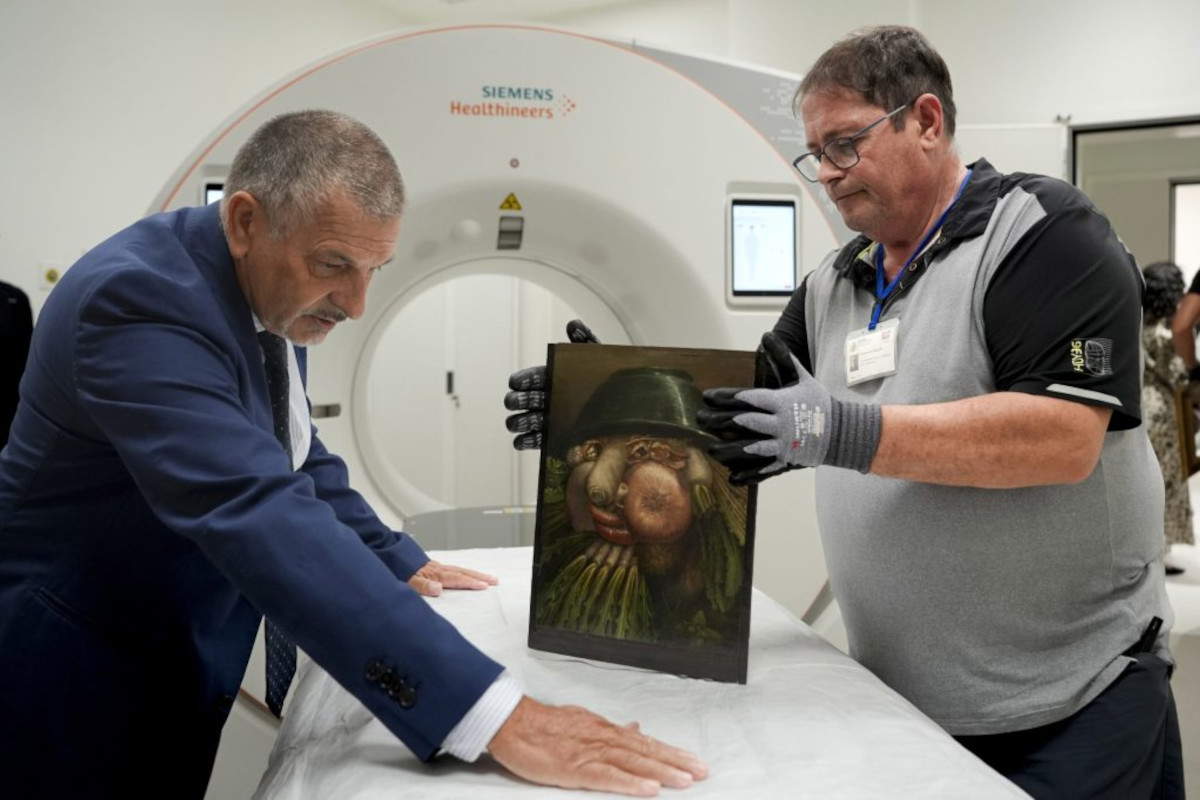
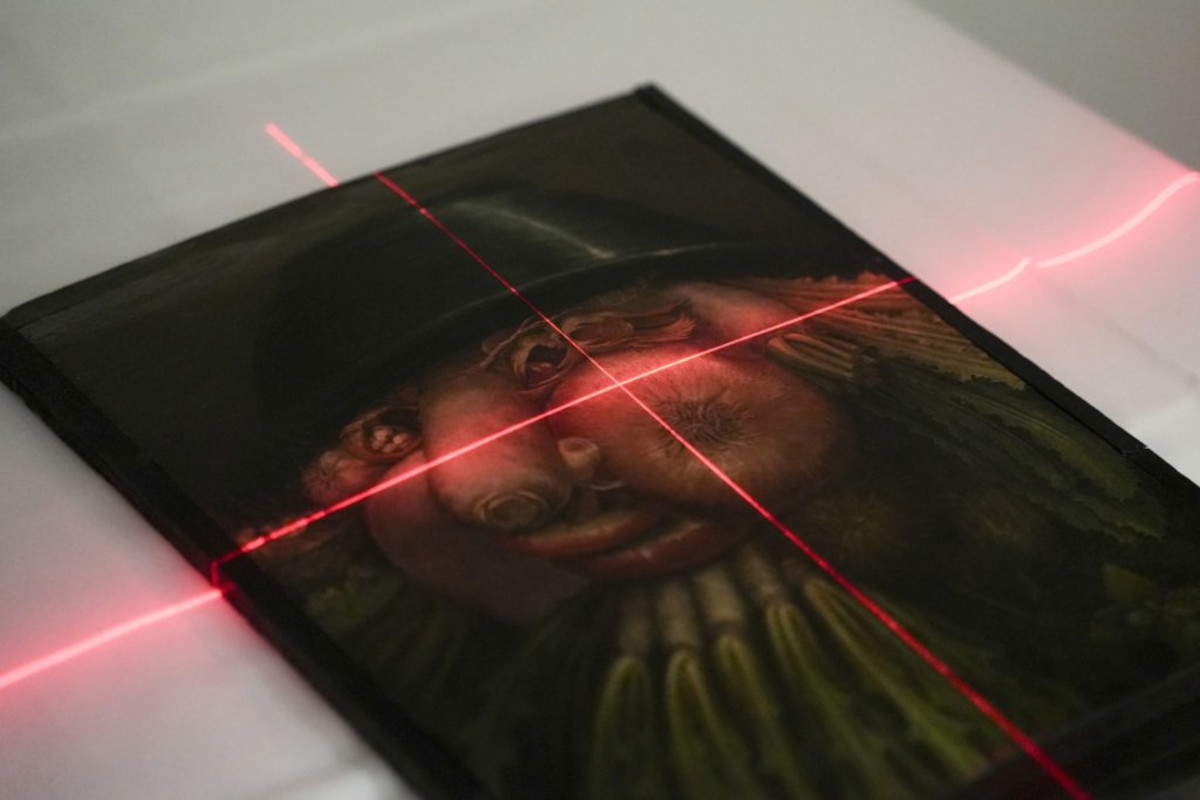
The new diagnostic campaign builds on the scientific studies initiated in 2007 by Mario Marubbi and Mario A. Lazzari on the occasion of the exhibition “Arcimboldo (1526–1593),” organized that same year at the Musée du Luxembourg in Paris, and subsequently continued in 2008 at the Kunsthistorisches Museum in Vienna. New technologies will now make it possible to expand those investigations and obtain further insights into the work.
The specialized equipment used to examine the painting was made available to Humanitas thanks to Humanitas University and funding from ANTHEM, a project supported by the Ministry of Universities and Research as part of the National Complementary Plan to the PNRR. This program was created to promote innovation in clinical research and the development of increasingly predictive and personalized medicine, focusing on four areas of major health significance: the heart, brain, lungs, and cancer. The computed tomography scanner used for the study is located inside the Proton Building at the IRCCS Istituto Clinico Humanitas, which was inaugurated earlier this year as part of the hospital’s 30th-anniversary celebrations. The building is dedicated to oncology and houses the Clinical Trial Unit, where studies using experimental therapies are conducted, as well as the Proton Therapy Center, one of the most advanced high-precision radiation therapy techniques for treating cancer. The use of such sophisticated technology to study a work of art demonstrates how methodologies developed in the medical field can offer new possibilities in the field of cultural heritage diagnostics as well.
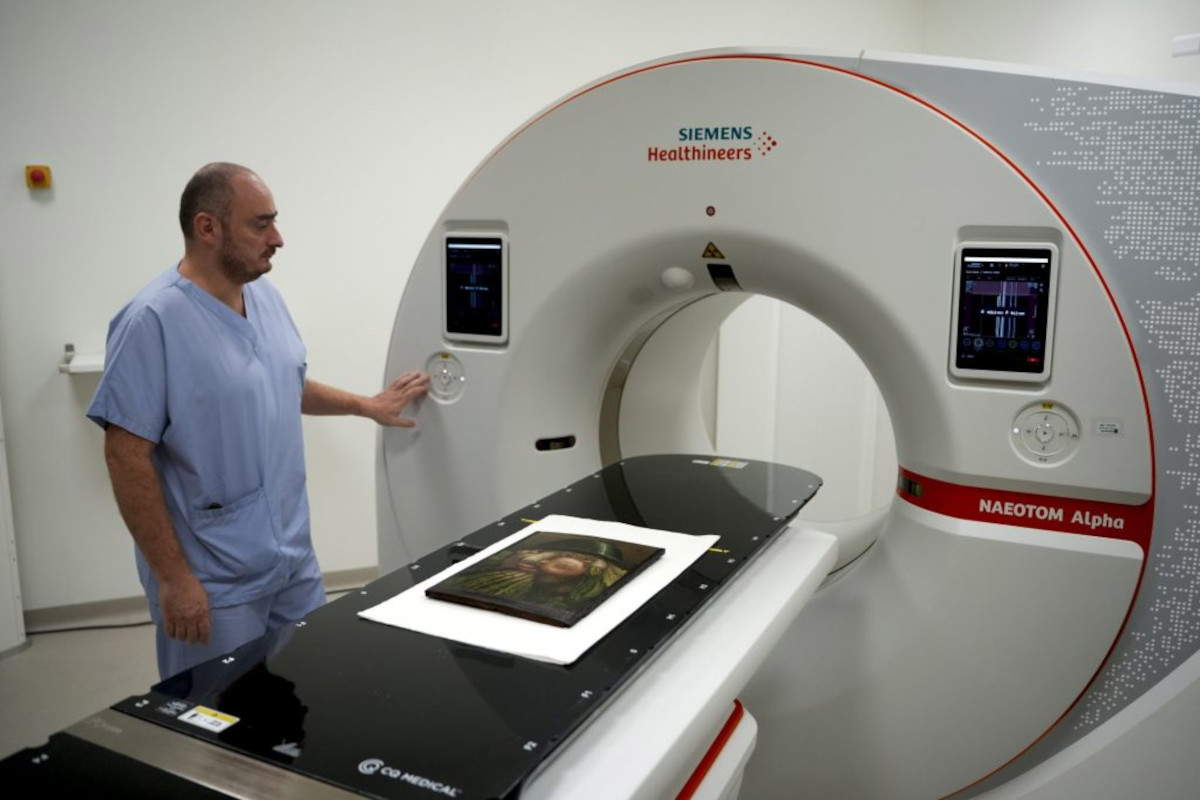
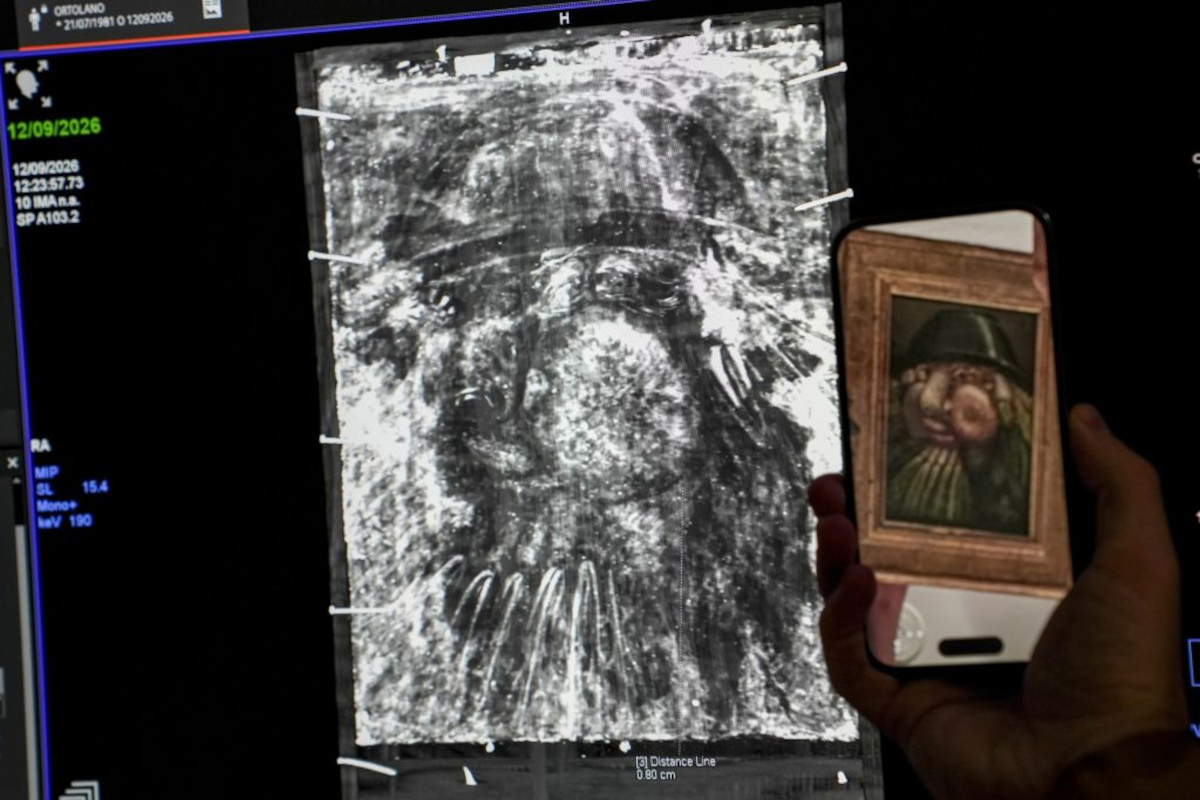
“The goal of the scientific investigations,” stated Mario Marubbi, Curator of the Ala Ponzone Art Gallery, “will be to determine the technical and executional procedures used in the creation of the work, in order to verify the hypothesis that *L’Ortolano* is the first composite head created by Arcimboldo. The examinations are also expected to resolve questions regarding the current stratification of the support, attributable to previous conservation interventions, analyze the color palette, and determine the nature of the materials used by the painter.”
“The examination the work underwent is a photon-counting CT (Photon-Counting CT), capable of converting the energy of individual photons that reach the detector—after interacting with the tissues—into an electrical signal,” explained Andrea Laghi. “In this case, with the paint layers and the panel. A key feature of the machine is its ability to achieve extremely high-precision resolution. This made it possible to capture images of the work’s layering, with a thickness of one-fifth of a millimeter.”
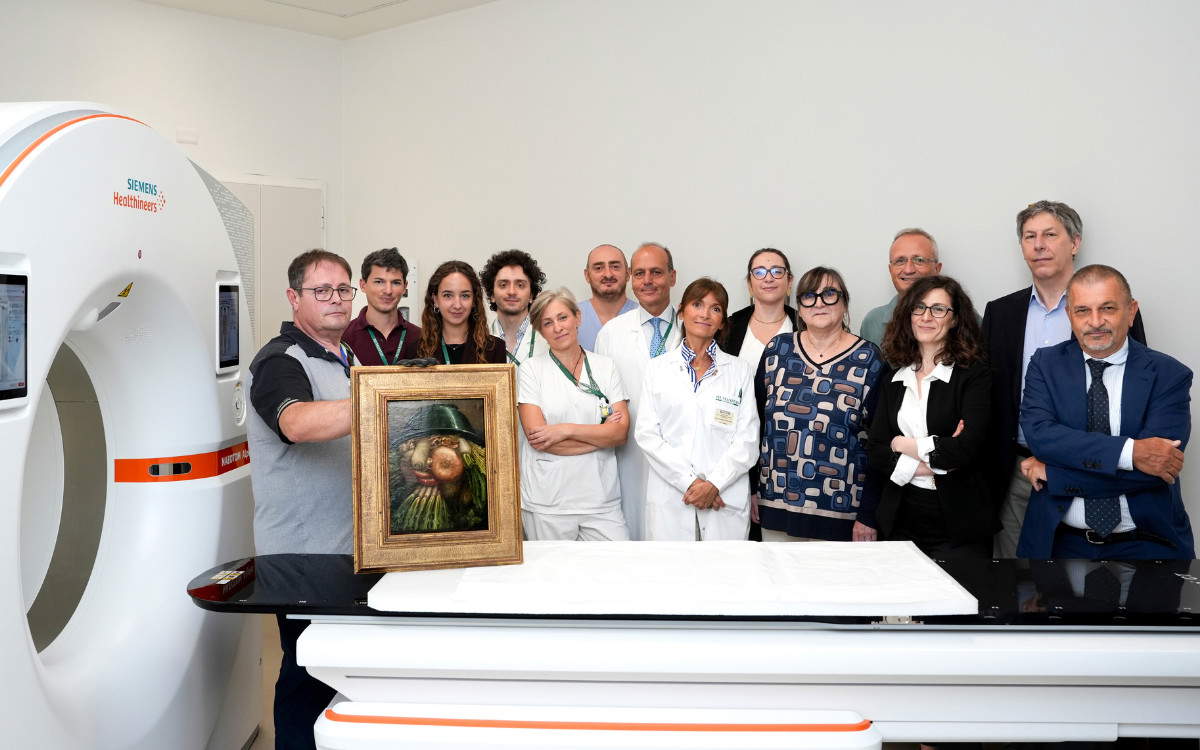
Painted by Arcimboldo between 1587 and 1590, *The Gardener* is a small-scale oil on panel (35.8 x 24.2 cm), yet it features one of the artist’s most original inventions. At first glance, the painting appears to be a still life composed of various vegetables arranged in a bowl. The surprise comes when viewing the work upside down: by rotating the painting 180 degrees, the same elements transform into the grotesque and ironic figure of a gardener. This particular type belongs to the repertoire of reversible heads, one of the most famous inventions associated with Arcimboldo’s work. His compositions, constructed by assembling fruits, vegetables, flowers, animals, and other elements, transform nature into surprising portraits and visual puzzles. The very origin of this invention is one of the central questions driving the new research. The examinations conducted on the Cremona painting could, in fact, provide crucial information for better understanding its creation and its relationship to the artist’s body of work. The diagnostic campaign will make it possible to analyze the structure of the work and collect data that, when considered alongside previous studies and existing knowledge of Arcimboldo’s technique, may help add a new piece to the puzzle of understanding *L’Ortolano*.
|
| Arcimboldo’s *The Gardener* Under the Microscope with a High-Resolution CT Scan: New Studies on the Famous Painting |

Warning: the translation into English of the original Italian article was created using automatic tools. We undertake to review all articles, but we do not guarantee the total absence of inaccuracies in the translation due to the program. You can find the original by clicking on the ITA button. If you find any mistake,please contact us.


























 IT
IT FR
FR DE
DE ES
ES CN
CN


