



by Redazione 18/11/2026


Categories: Ancient art / Disclaimer
After being loaned to Romania for the Festival of Sacred Art in Iași, Giotto’s masterpiece returns to the National Art Gallery in Bologna. It will be displayed in a renovated gallery, featuring new exhibition and lighting systems, as part of a redesigned exhibition itinerary that explores medieval painting.


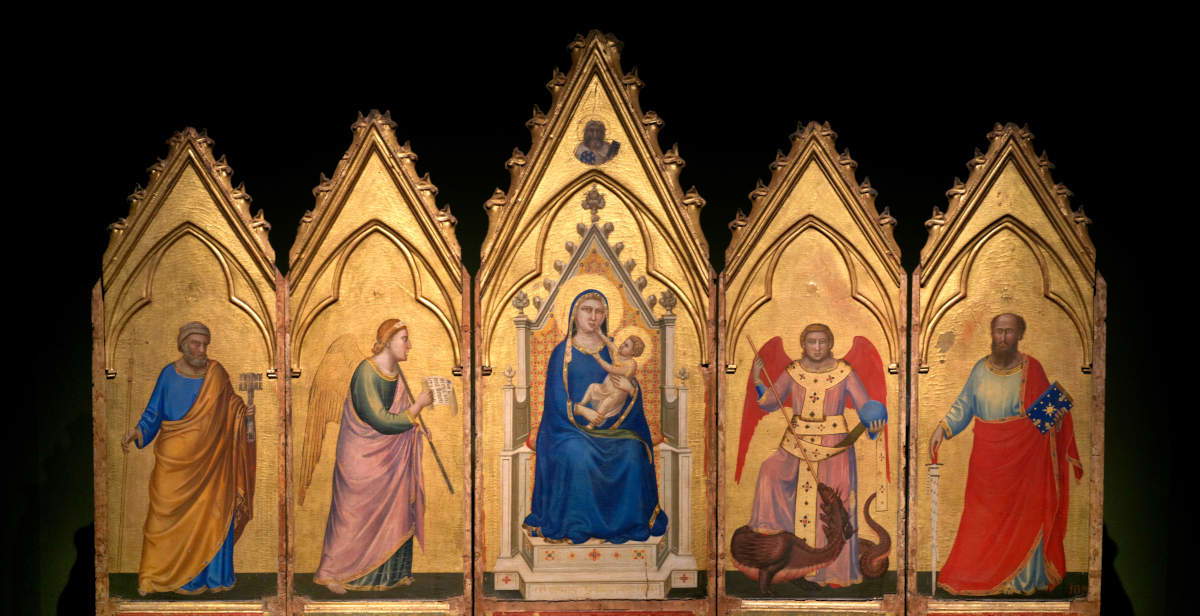
Giotto’s Bologna Polyptych has returned to the National Art Gallery after its loan to Romania, where a completely renovated gallery awaits it. The work, which left in early October to be featured in the exhibition that inaugurated the first edition of the Festival of Sacred Art in Iași, has returned to its home, where a renovation and redesign project—which also involved the adjacent rooms—has just been completed. Starting today, the only work definitively attributed to Giotto and preserved in Bologna is once again on view to the public within a space redesigned to highlight its stylistic and chromatic features. The return of this masterpiece will also be the focus of the second guided tour led by the director of the National Art Gallery, Luigi Gallo, scheduled for November 24, during which the Polyptych will be the subject of a dedicated in-depth discussion.

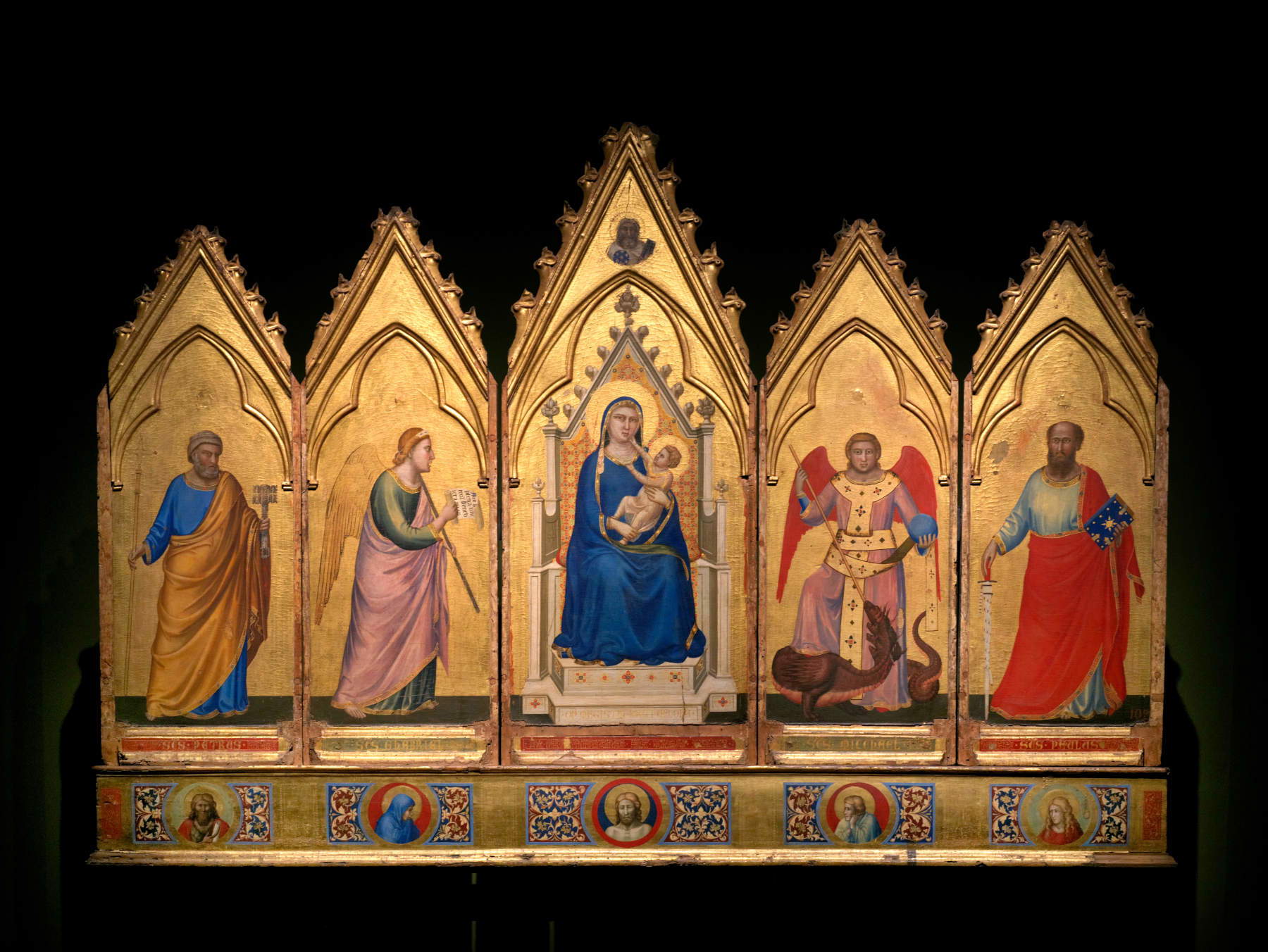
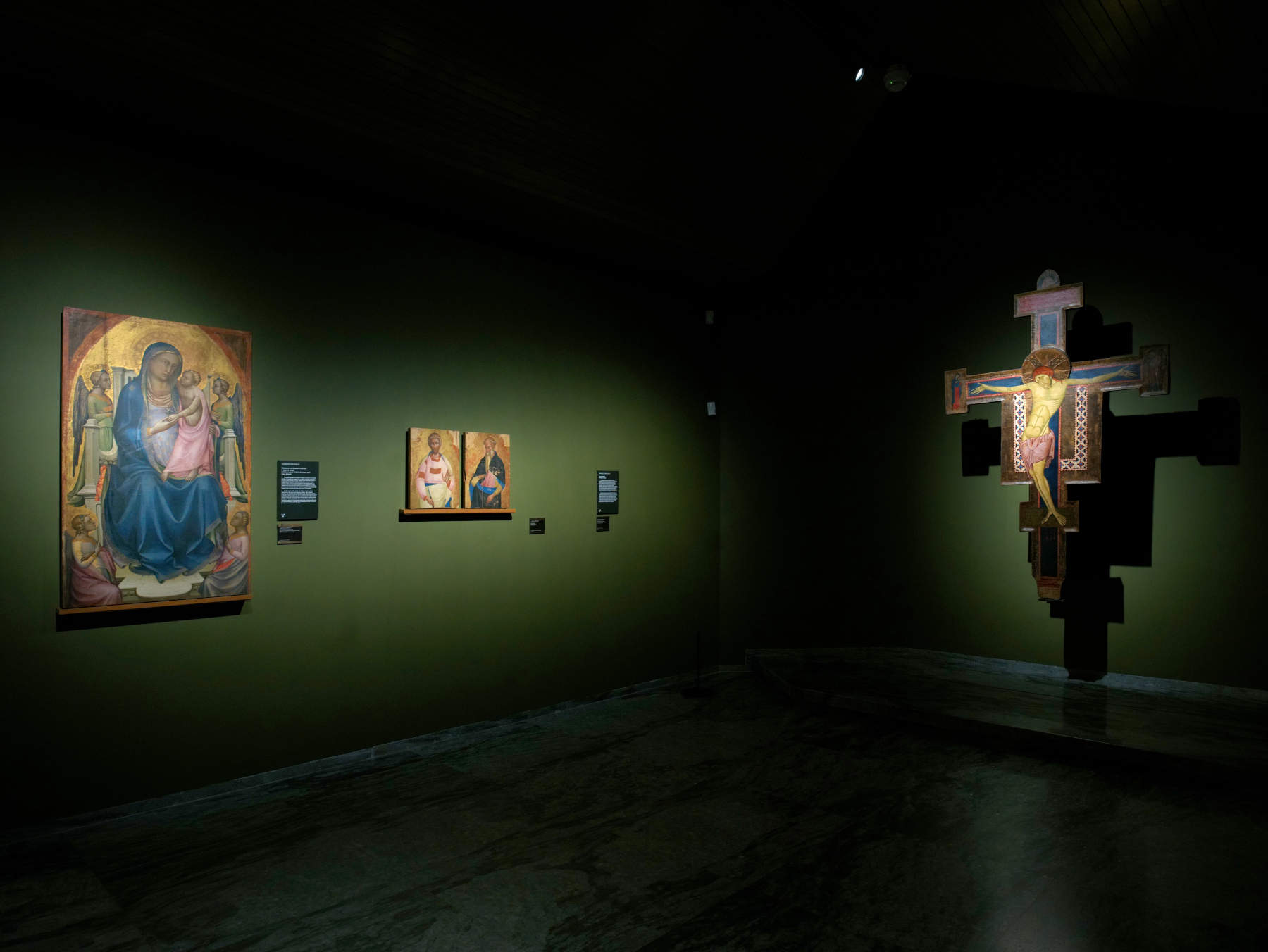
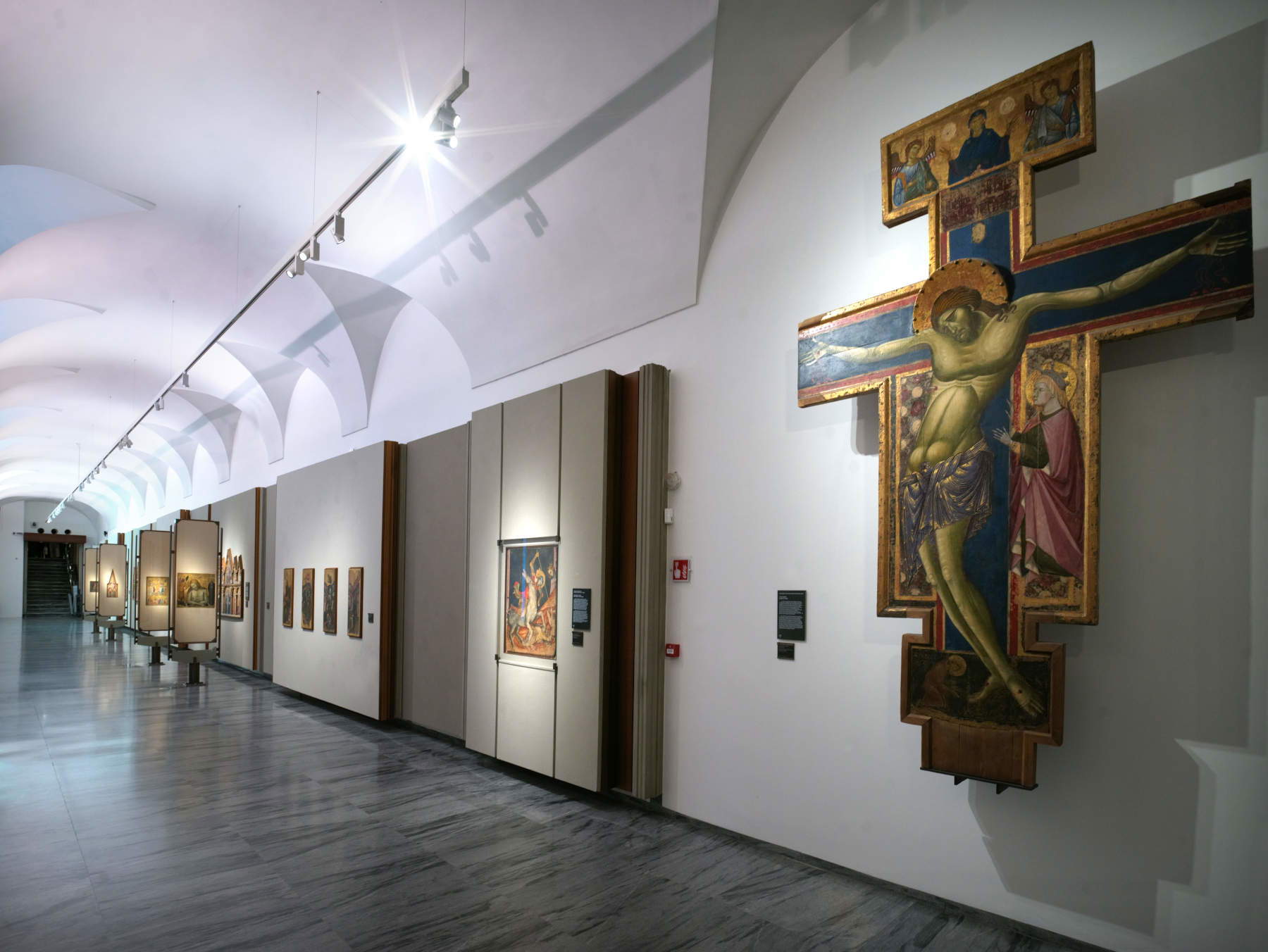
The Giotto Room is part of the medieval section of the National Art Gallery, where the influence of architect Leone Pancaldi—who designed the reorganization of the museum spaces on Via Belle Arti in the 1950s and 1960s—is still evident. The vertical display cases, the label holders, and the very layout of the rooms are some of the elements that bear witness to his work.


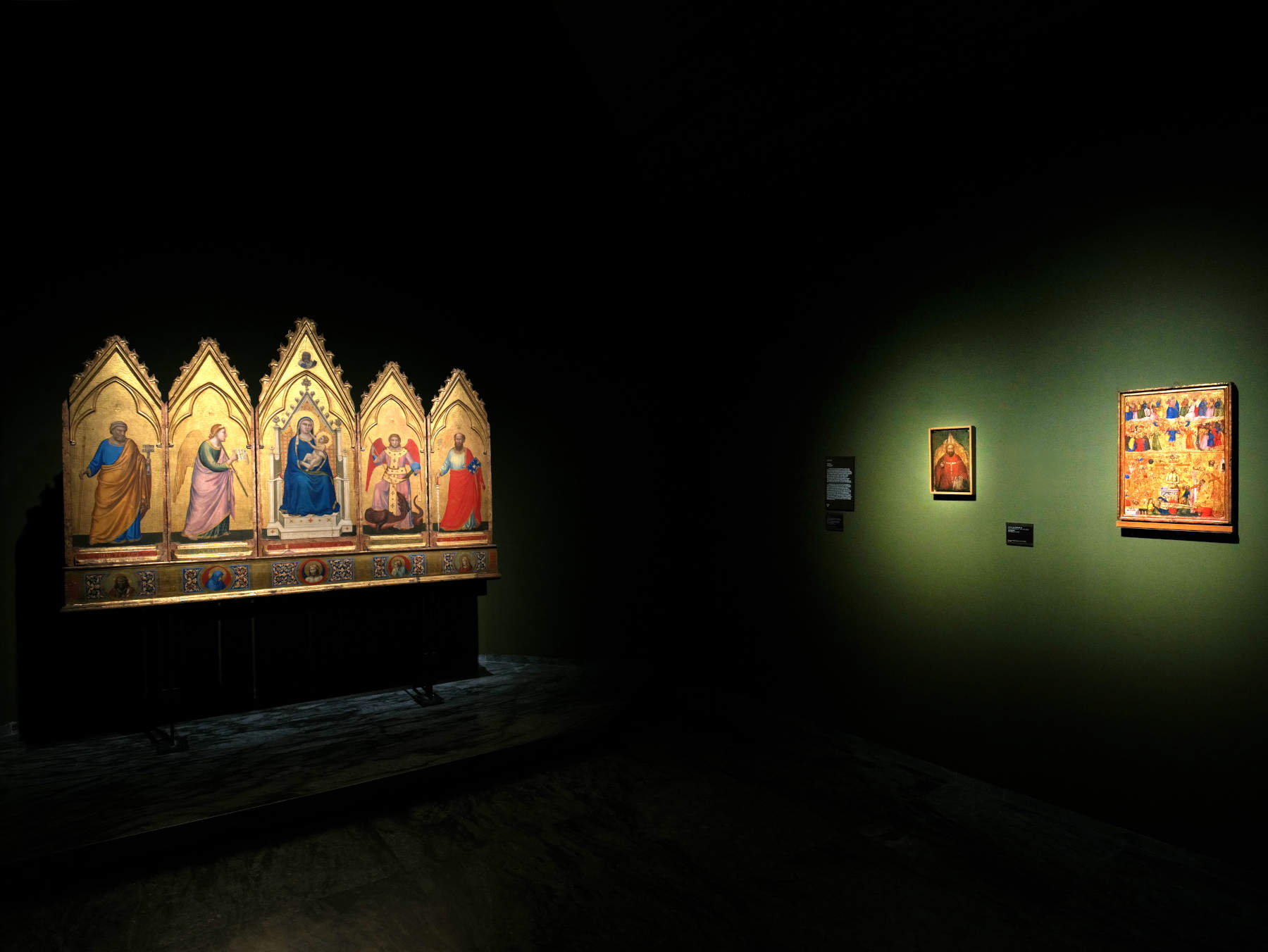
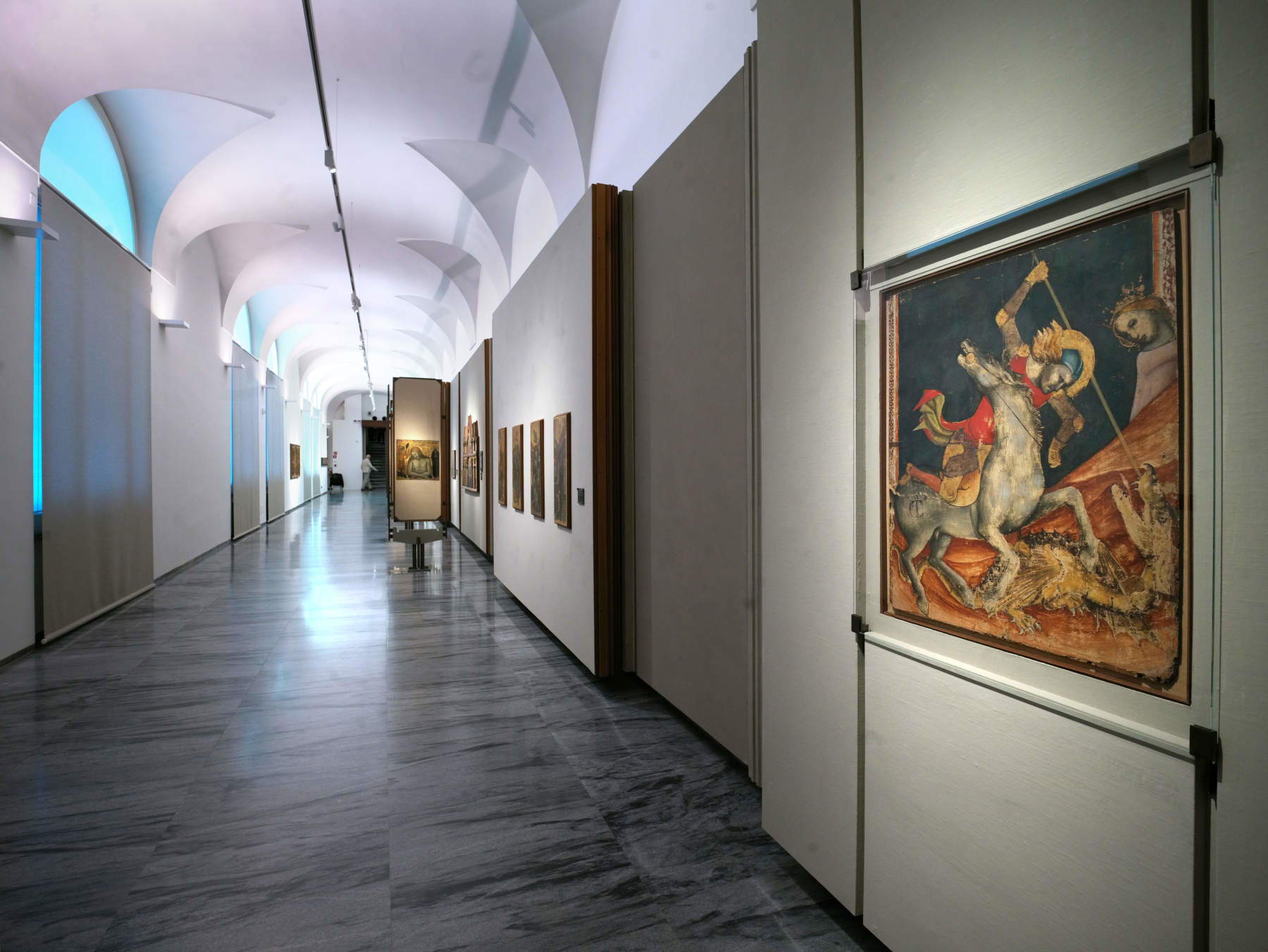
The new exhibition design was created in accordance with the original architectural plan, with modifications made to the museum’s communication systems, lighting installations, and natural light filtering system. The walls were also repainted to make the rooms brighter and to highlight both the architecture and the works on display. The changes also meet contemporary accessibility standards.


The return of the Polyptych offers an opportunity to retrace the history of a work of particular importance to Bologna’s artistic heritage. As Massimo Medica noted in the catalog for the 2005–2006 exhibition *Giotto and the Arts in Bologna*, regardless of its original intended use, the painting was the result of a commission from a patron of the highest caliber, capable of appreciating “those elements of courtly elegance and dazzling splendor that rightly make it one of the most significant examples of the Florentine master’s late work.”
The Bologna Polyptych is, in fact, one of only three works by Giotto that are definitively attributed to him and known to exist worldwide. It was commissioned by Cardinal Legate Bertrando del Poggetto for the Castello di Porta Galliera, which was destined to become the new papal residence. In 1334, the Rocca di Galliera was destroyed by an enraged mob, but the polyptych survived the devastation. Giotto’s other works in the city, however, have been lost; this piece is therefore the sole surviving testimony to his work in Bologna.
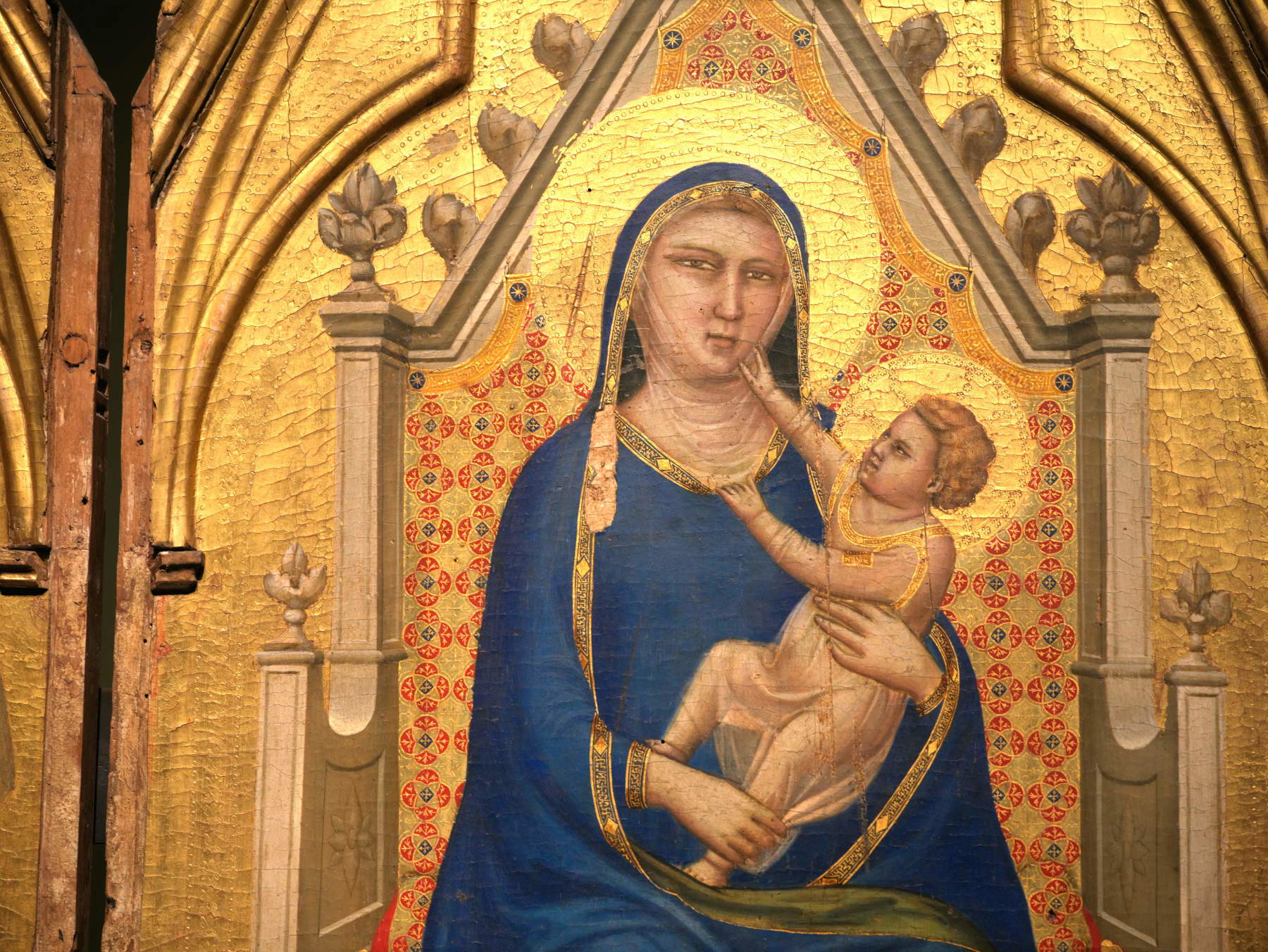
At the center of the composition stands the Virgin, depicted in an imposing and majestic pose, with the Child gently touching her face. On either side are the saints Gabriel, Michael, Peter, and Paul. The predella, meanwhile, features—within perfectly circular oculi—the figures flanking the Christ of the Passion placed at the center: Saint John the Baptist, the Virgin Mary, Saint John the Evangelist, and Mary Magdalene.
On the lower step of the Virgin’s throne appears the signature in gilded Gothic letters, “OPUS MAGISTRI IOCTI DE FLORENTIA,” meaning “work of Master Giotto of Florence.” The attention to detail, the elegance of the decorative elements, and the interplay of colors convey the refinement of the work, which was destined to exert a significant influence on local artistic production. Giotto’s artistic language, based on the solidity of the figures, their three-dimensionality, and the naturalness of their gestures, introduced a new way of representing bodies in space, endowing them with weight and humanity.
The new exhibition layout has also been organized to highlight this legacy. The works displayed alongside the Polyptych document the spread of Giotto’s influence in Italian painting, through works by Lorenzo Veneziano, Andrea di Bartolo, Giusto de’ Menabuoi, and Lorenzo Monaco.
The Pinacoteca’s medieval section opens with the Corridor of the Primitives, which brings together some of the most significant examples of Bolognese art. Among the artists featured are Vitale da Bologna, creator of *St. George and the Dragon*; Pseudo-Jacopino; an anonymous master also known as the Master of the Bolognese Polyptychs; and Simone dei Crocifissi, who led one of the city’s most active workshops and created important public and private commissions.
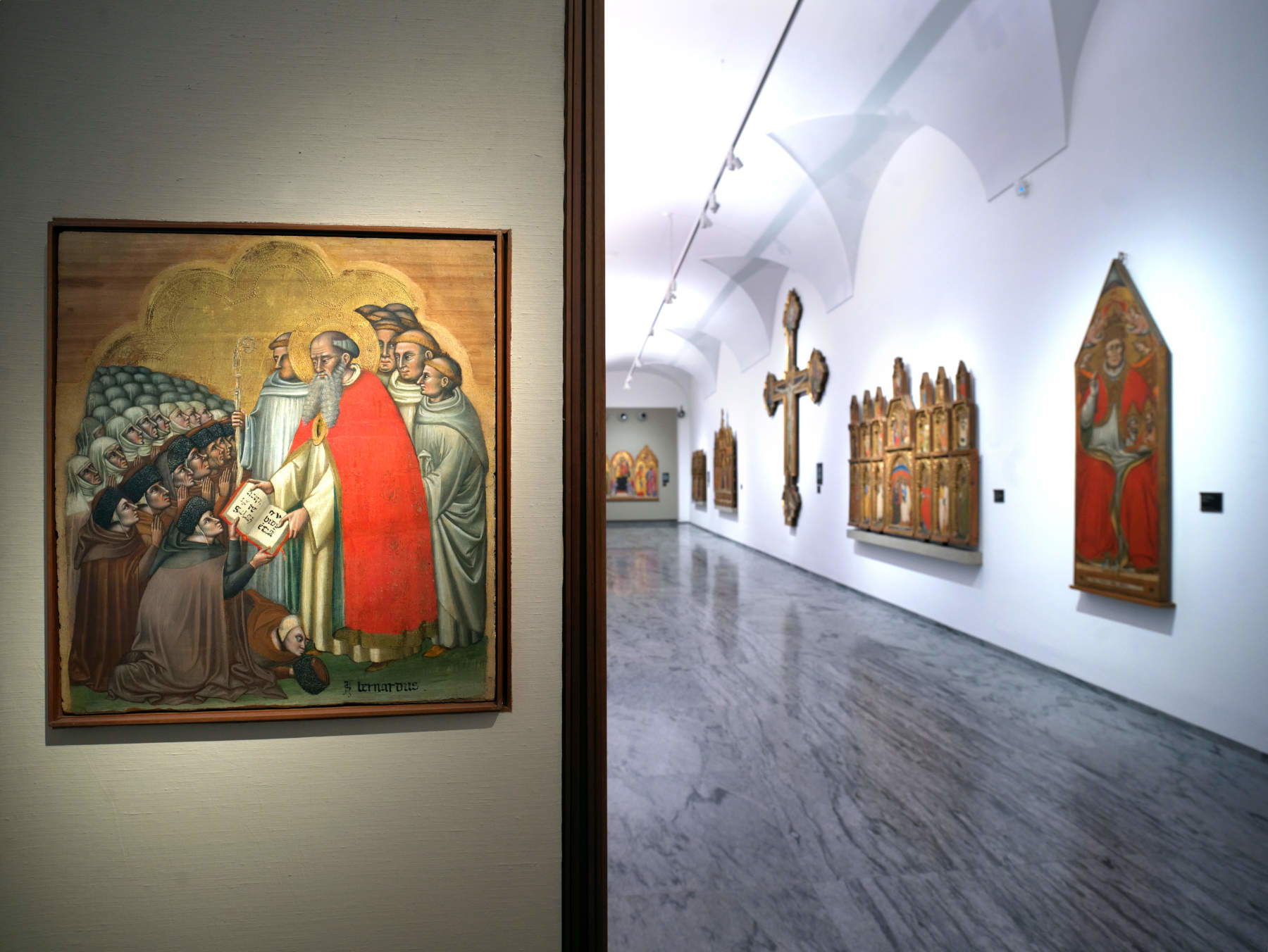
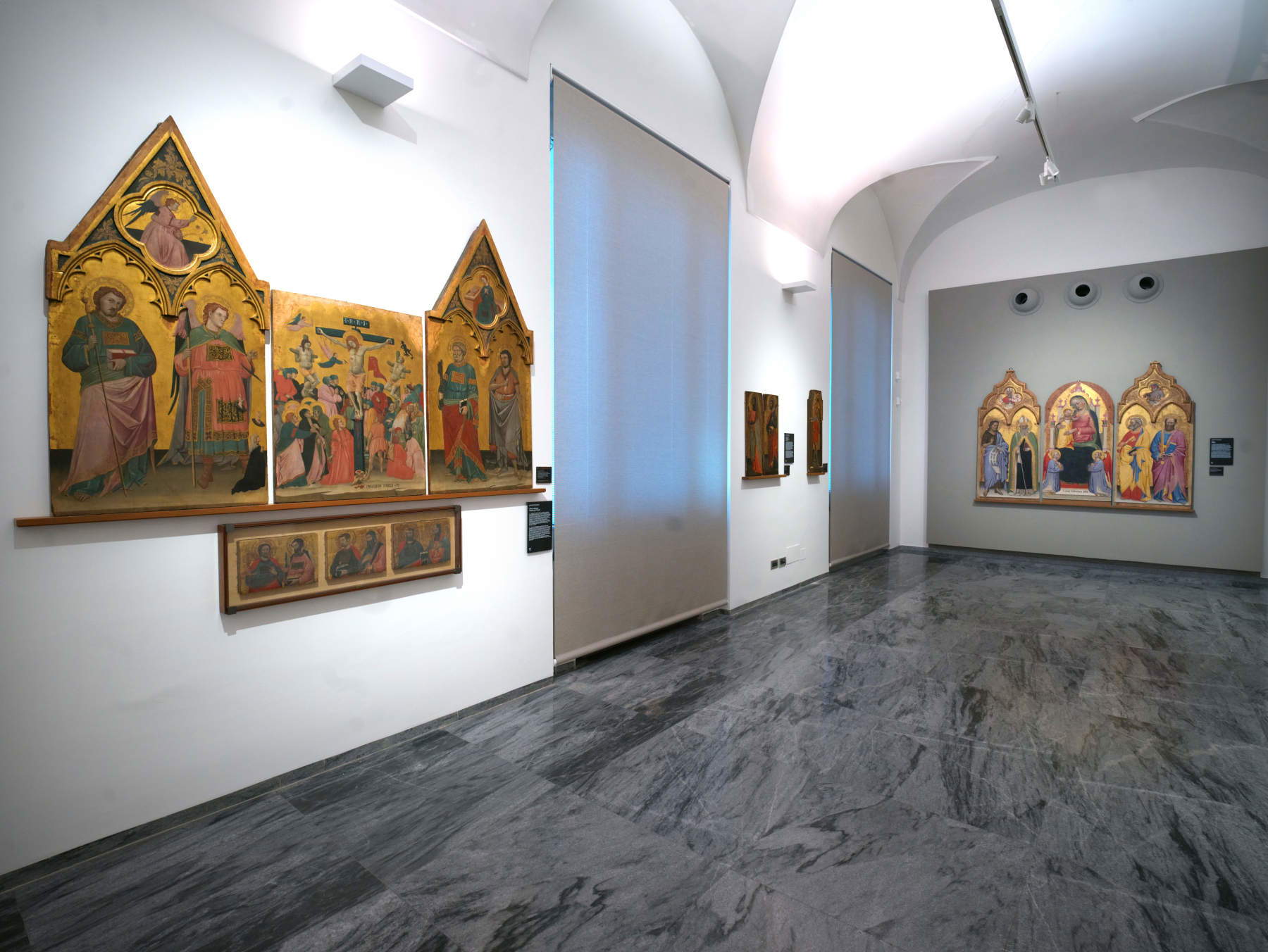
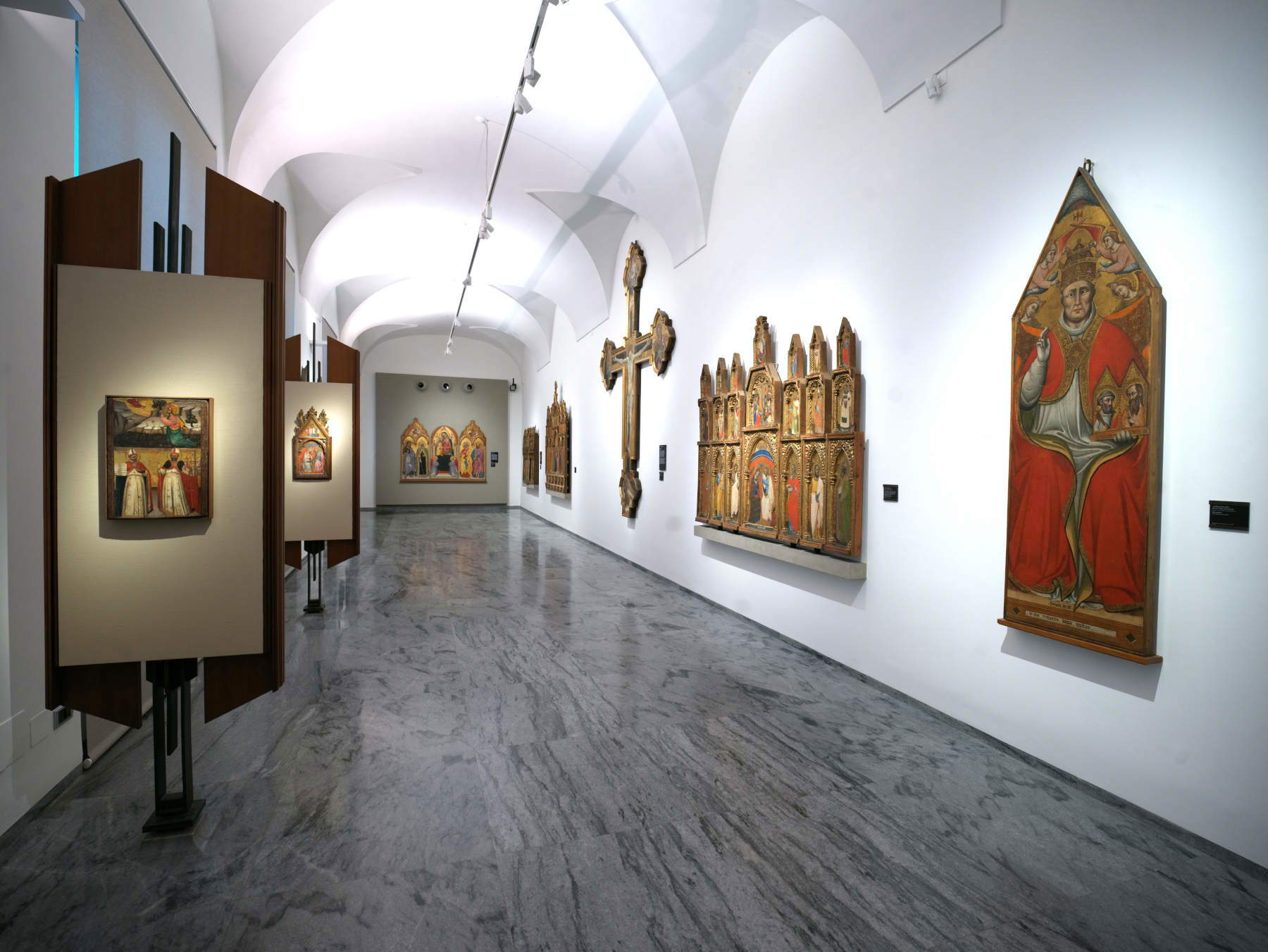
The tour continues with a renovated section dedicated to polyptychs from the Bolognese school. Among these, the work by Simone dei Crocifissi stands out; in the second half of the 14th century, he transformed the altarpiece into a narrative rich in everyday details, populated by figures with expressive faces, depicted in direct interaction with the faithful. Between the 14th and 15th centuries, Lippo di Dalmasio, on the other hand, developed a more intimate and elegant style, characterized by harmonious figures with sinuous lines, set against gold backgrounds enriched with exquisite punch-engraved designs.
The section is completed by the polyptych by Jacopo di Paolo, now on display once again in its original configuration. At the center is the Crucifixion, flanked on one panel by Saints James and Michael and on the other by Peter and John the Baptist. The predella consists of small panels depicting the Apostles in pairs. The work attests to the artist’s connection to Giotto’s school and represents one of the last examples of medieval Bolognese painting before the rise of the Renaissance.
Statements
“The return of Giotto’s Polyptych,” explains Director Luigi Gallo, “is an opportunity to present to the public one of the Pinacoteca’s most important treasures in a space that finally showcases all of its qualities. We have worked to renovate the gallery and the spaces dedicated to medieval painting, with the aim of making the exhibition layout more accessible, harmonious, and capable of guiding visitors on a journey of discovery through an extraordinary artistic period. The Polyptych is not only a precious testament to Giotto’s presence in Bologna, but a work that chronicles a fundamental turning point in art history and the fruitful dialogue that his legacy generated in the centuries that followed. Our goal is to ensure that the Pinacoteca’s heritage is not merely preserved, but continues to speak to people, offering new opportunities for learning and wonder with every visit.”
“The arrival of Giotto’s autograph polyptych at the Palace of Culture in Iași,” says Federico Mollicone, Chair of the Culture Committee of the Chamber of Deputies, “a work that, for the first time in its history, has crossed Italy’s borders—was not a chance occurrence, but an initiative I strongly championed and personally promoted as part of the cultural diplomacy with Romania that we pursue with continuity and passion. It is concrete proof of how Italy and Romania know how to work together and project culture as the strongest bridge upon which to build the future of Europe. Today, welcoming this masterpiece back into our renovated National Art Gallery means restoring to citizens and scholars a museum space worthy of its grandeur, where Giotto’s legacy once again engages with Bologna’s extraordinary medieval tradition within a modern, accessible, and deeply enhanced exhibition setting.”
“The new look of the Giotto Room and the Primitives section is not merely a simple redesign; it is a moment of reunion; it restores to us a fundamental piece of our history,” states Daniele Del Pozzo, Councilor for Culture of the City of Bologna. “With this project, the Pinacoteca reaffirms and renews its mission: to continue showcasing that extraordinary heritage of artworks, artistic history, and culture that is deeply rooted in Bologna’s legacy and very character. The improvement of the spaces and exhibition designs does not merely address an aesthetic need; rather, it is fully functional to the viewing of the works and to offering the public an increasingly rich, accessible, and engaging experience. At the same time, this redesign demonstrates the ability to establish an intelligent and ongoing dialogue between historical heritage, the contemporary world, and the sensibilities of the present. These galleries do not merely house masterpieces of the past; they are a living laboratory for research and a source of connection for our community. Reopening them means offering residents and visitors alike the opportunity to reinterpret the roots of Italian painting through a contemporary lens.”
 |
| Bologna: Giotto's Polyptych Returns to the Pinacoteca, in a New Exhibition Setup |
Warning: the translation into English of the original Italian article was created using automatic tools. We undertake to review all articles, but we do not guarantee the total absence of inaccuracies in the translation due to the program. You can find the original by clicking on the ITA button. If you find any mistake,please contact us.