



by Redazione 12/11/2026


Categories: Ancient art / Disclaimer
The Cenacolo di Sant’Apollonia in Florence is reopening, where restoration work is underway on the cycle of paintings created around 1447. A second scaffolding structure will allow visitors to view *The Last Supper* and the other scenes painted by the artist up close, discovering their technical details and conservation history.


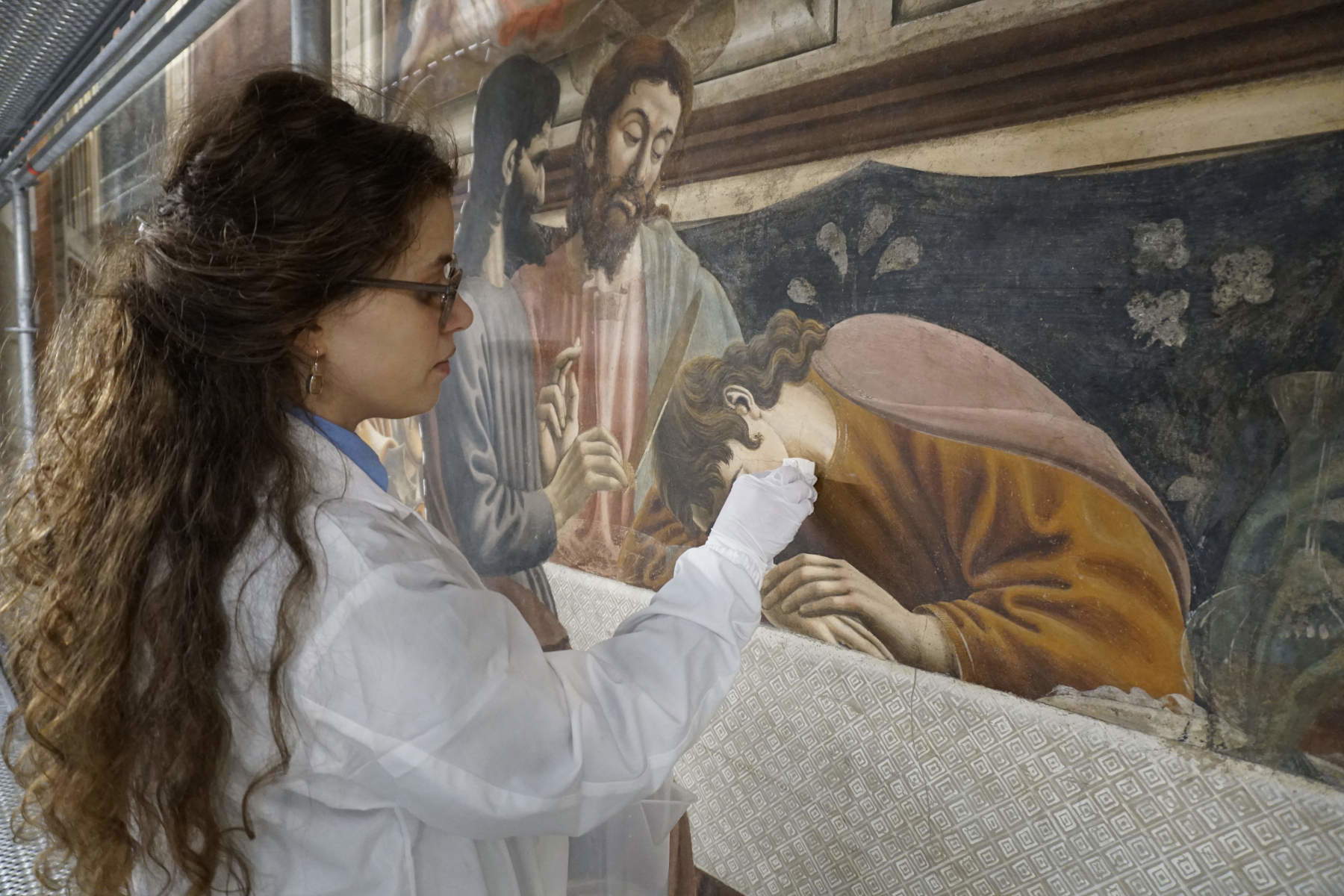
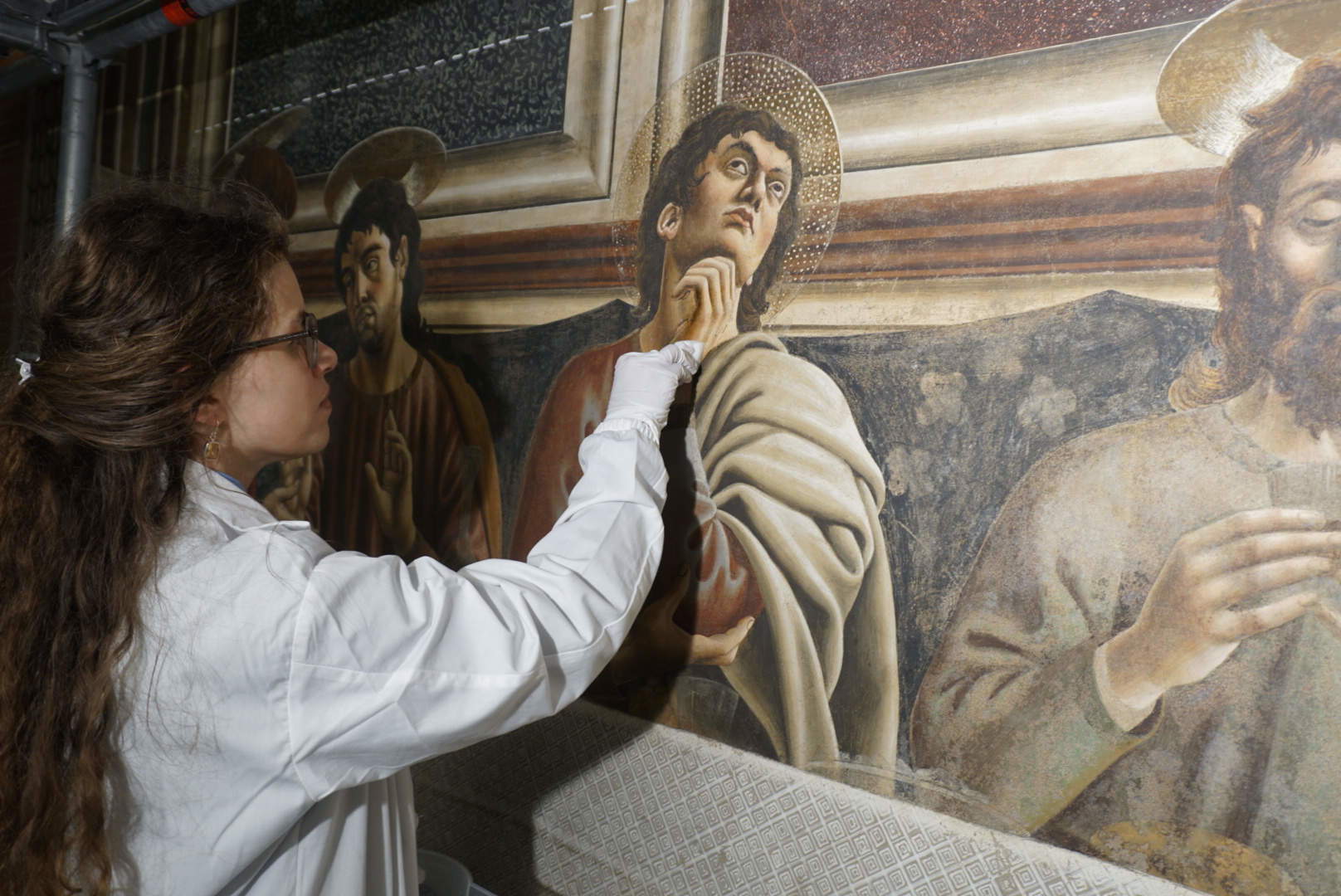
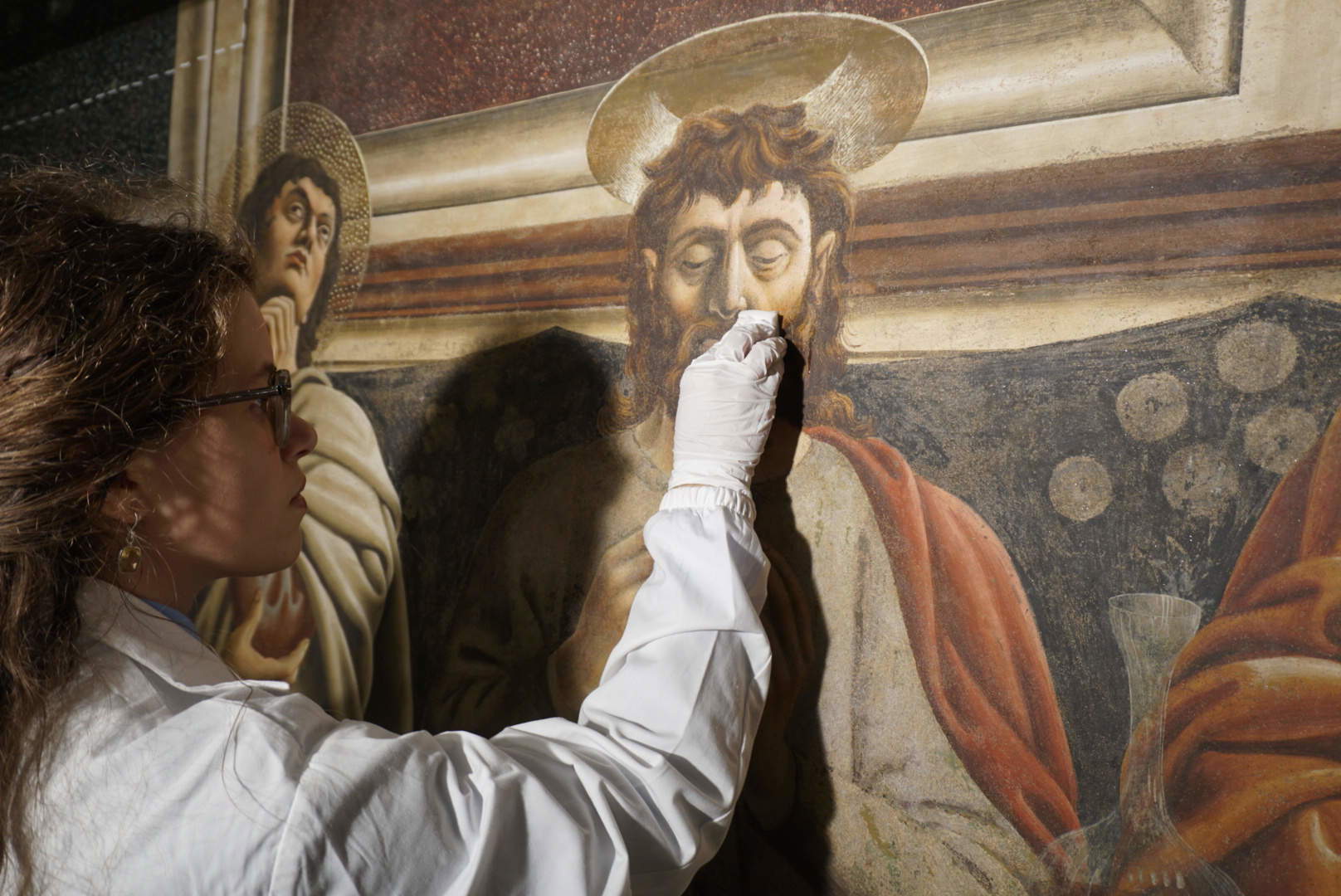
In Florence, visitors will be able to view Andrea del Castagno’s*The Last Supper* up close by climbing a scaffold specially set up for them. The Last Supper in Sant’Apollonia is reopening to the public while restoration work is underway on the monumental fresco cycle created by the artist around 1447. From November 15, 2026, to June 26, 2027, the exhibition route will allow visitors to get up close to the painted surfaces and appreciate details, perspective techniques, and artistic techniques that are normally difficult to discern from the usual viewing position.


The initiative offers an opportunity to learn not only about the work of the specialists but also about the history, technical execution, and material characteristics of the paintings. Under controlled conditions, the public will be able to focus on the details of the surface, the perspective techniques, and the quality of the drawing, observing the conservation work from a unique perspective. The restoration site is thus transformed into a space for research and public outreach, where restoration also serves as a tool for deepening our understanding of cultural heritage.
The experience is reminiscent of the one offered in Arezzo during the dusting of Piero della Francesca’s cycle of the Legend of the True Cross in the Bacci Chapel of the Basilica of San Francesco, when the proximity to the painted surfaces allowed visitors to observe aspects of the work normally hidden from view.



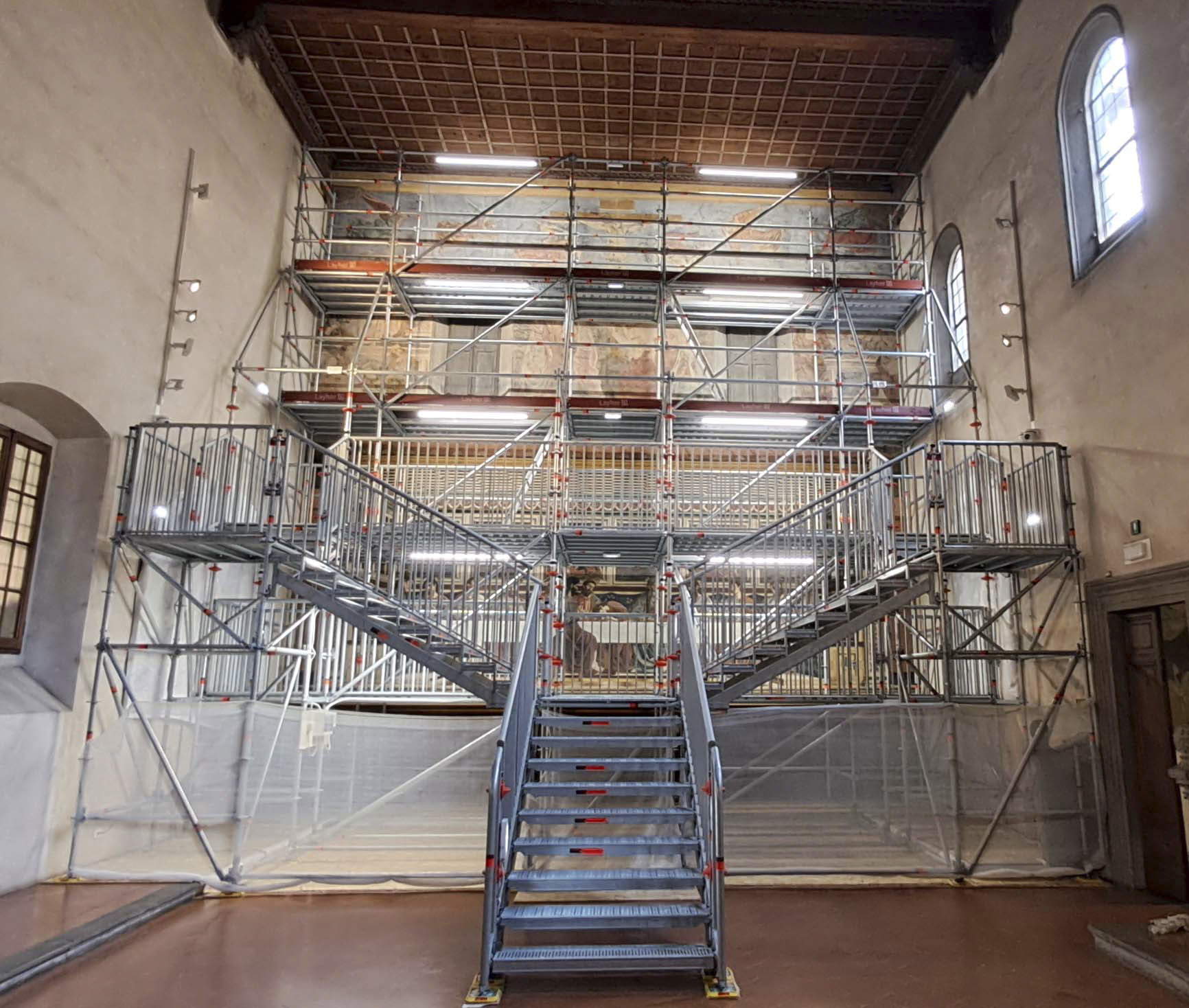
The project currently underway takes a comprehensive approach to the conservation of Andrea del Castagno’s complex, taking into account the varying conditions of the surfaces and its complex conservation history. The goal is to preserve the paintings and improve their legibility, complementing the conservation work with a campaign of scientific investigations focused on the study of materials, painting techniques, and interventions carried out over the centuries.
The work is based on a multidisciplinary approach that integrates expertise in conservation, art history, and scientific diagnostics. The project is directed and coordinated by the Regional Directorate of National Museums of Tuscany of the Ministry of Culture—Museum of San Marco and the Last Supper, with the support of the Opificio delle Pietre Dure, which was previously involved in earlier interventions, for diagnostic and methodological aspects. The activities are carried out in accordance with the Superintendence of Archaeology, Fine Arts, and Landscape for the Metropolitan City of Florence and the Province of Prato, with scientific input from the National Research Council (CNR). The project is also made possible by the support and operational collaboration of the Isabel and Balz Baechi Foundation, a private nonprofit organization dedicated to the conservation and restoration of historical and artistic heritage, with a particular focus on murals, stuccoes, and mosaics.
The Painted Cycle by Andrea del Castagno
The Last Supper of Sant’Apollonia is located in the former refectory of the monastery of the Observant Benedictine nuns, founded in 1339 and significantly expanded during the 15th century. The decoration was executed by Andrea del Castagno, likely between July and December 1447, and stands as one of the most significant examples of Florentine artistic innovation from the first half of the 15th century.
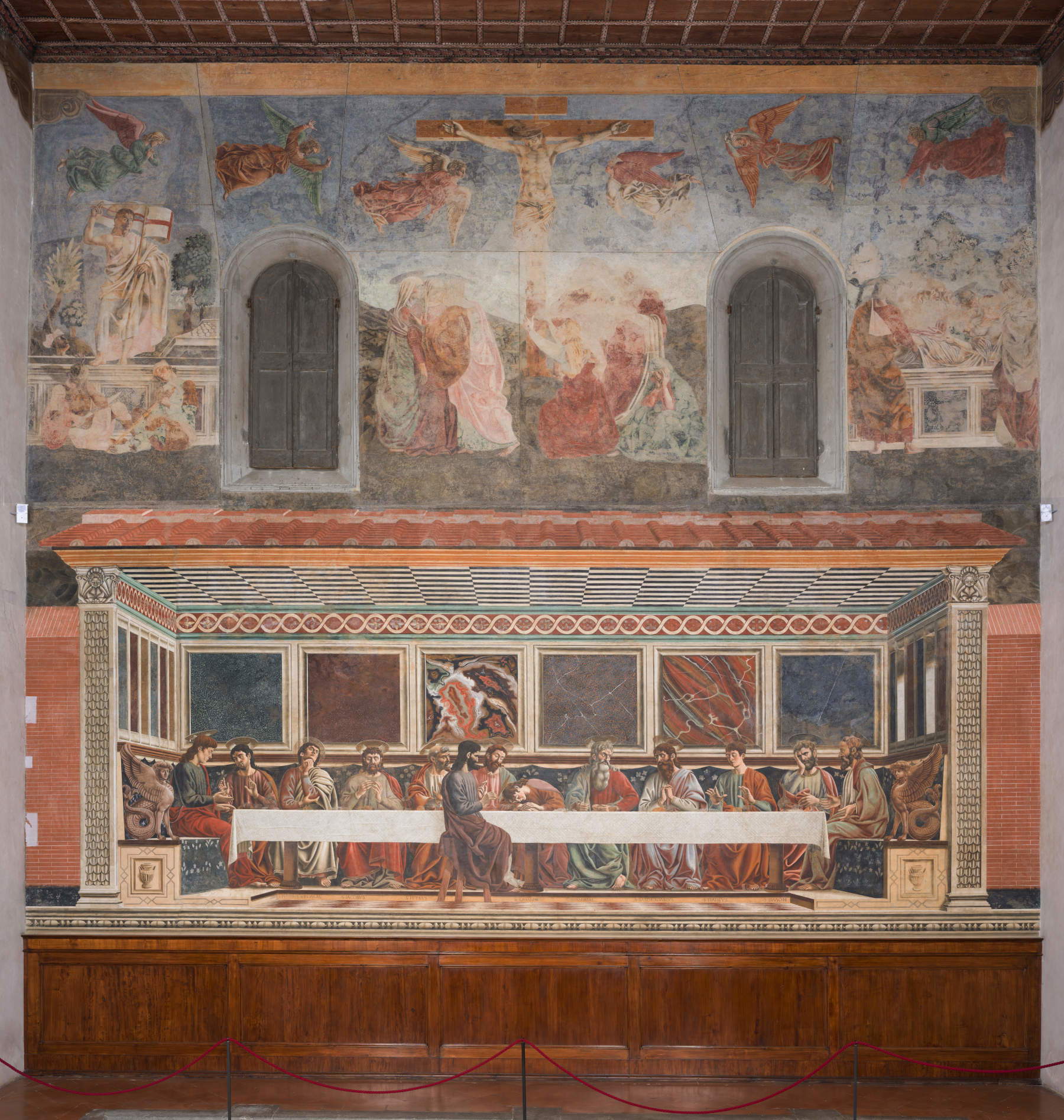
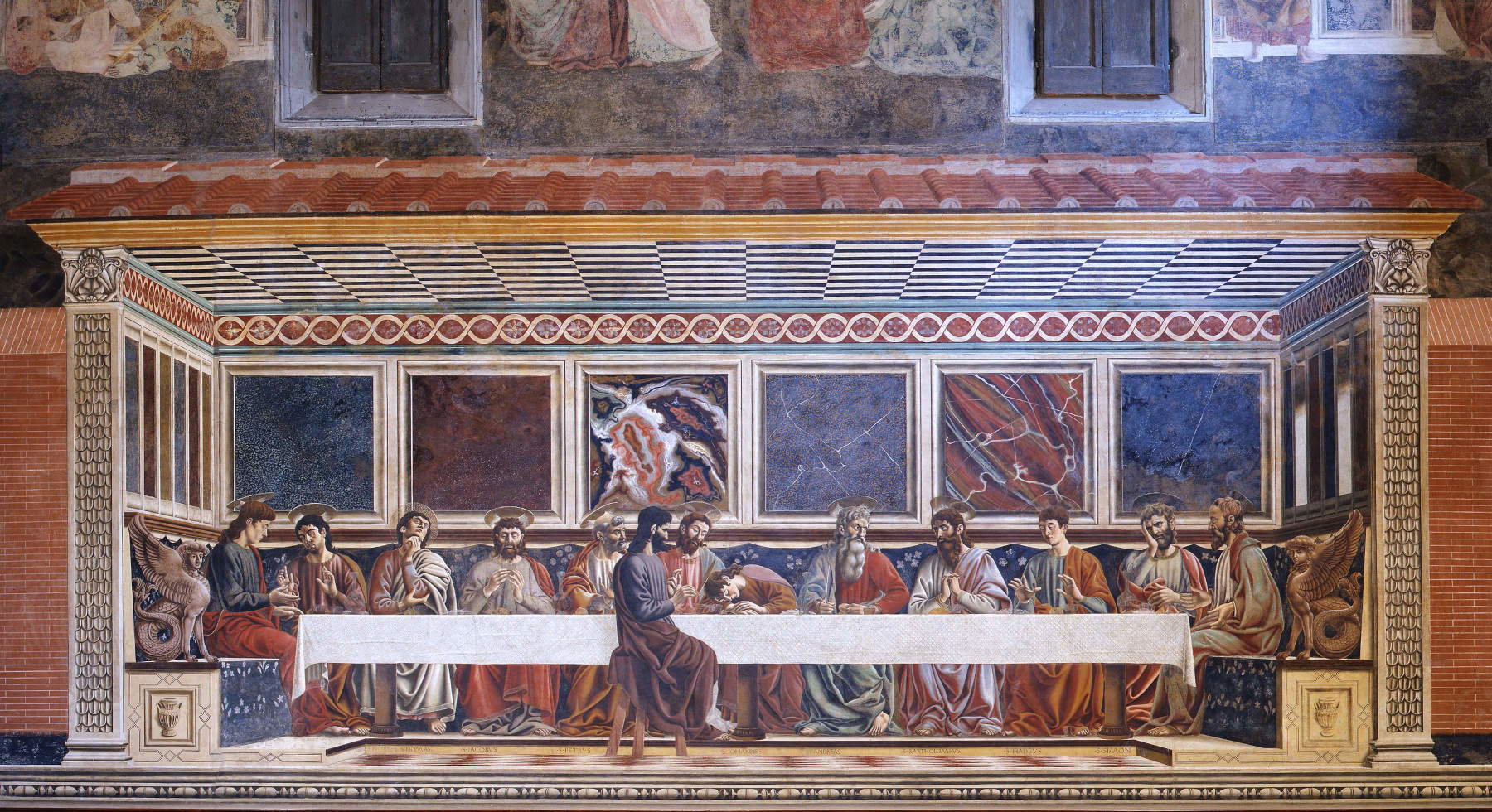
The artist conceived the back wall as a single figurative composition dedicated to the Passion and Resurrection of Christ. The lower section features the famous Last Supper, while the upper section is dominated by the Crucifixion in the center, flanked by the Resurrection on the left and the Entombment on the right. The three scenes are linked by the landscape and the presence of flying angels—elements that help create a unified composition in which space, light, and color guide the viewer’s gaze from one episode to the next.
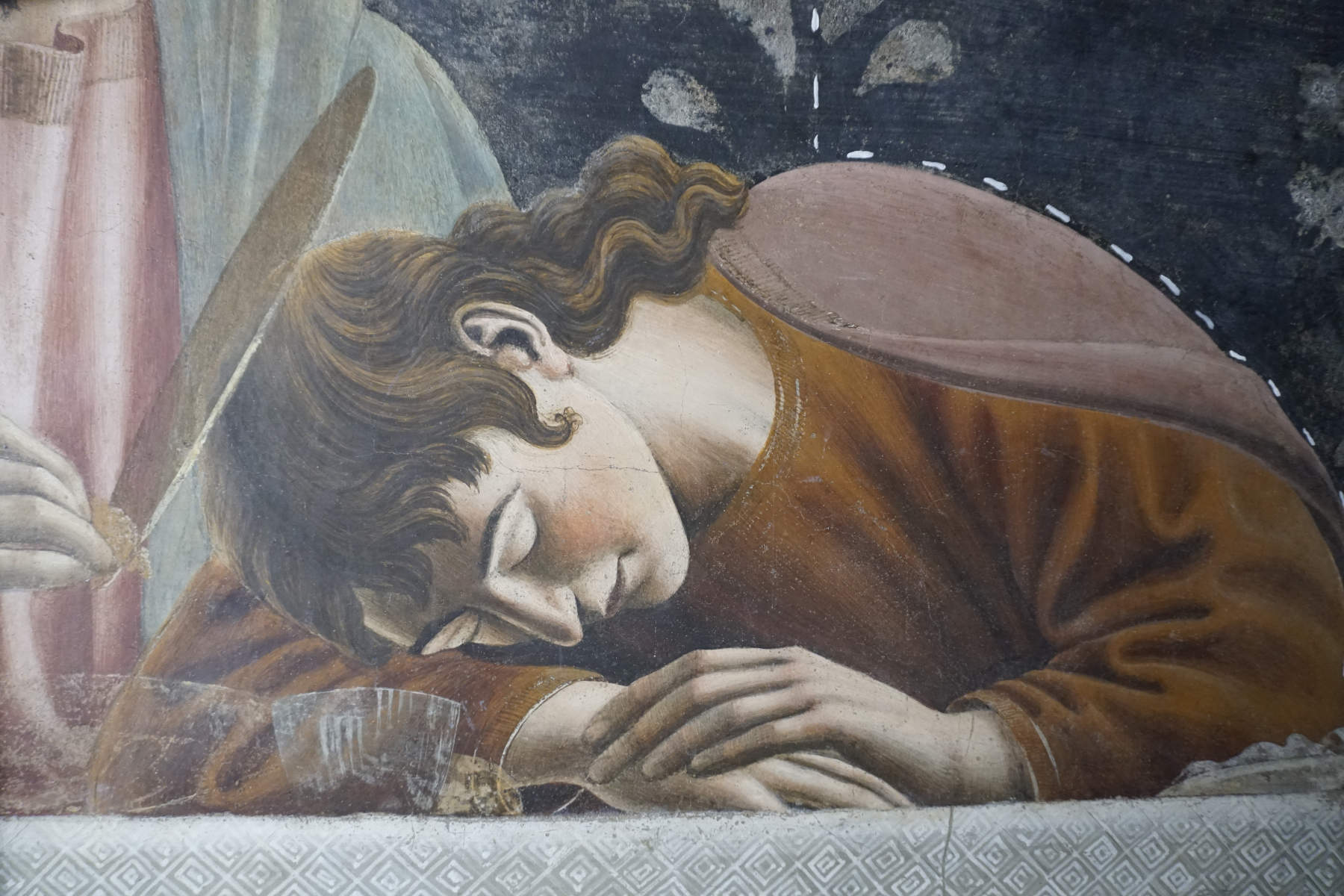
One of the most innovative features of the cycle concerns precisely the role assignedto the Last Supper. Unlike the traditional practice in Florentine refectories, where this subject was subordinate to the Crucifixion, Andrea del Castagno grants it a position of absolute prominence. The entire wall thus becomes a coherent visual whole, in which perspective and the landscape ensure continuity among the various depictions.
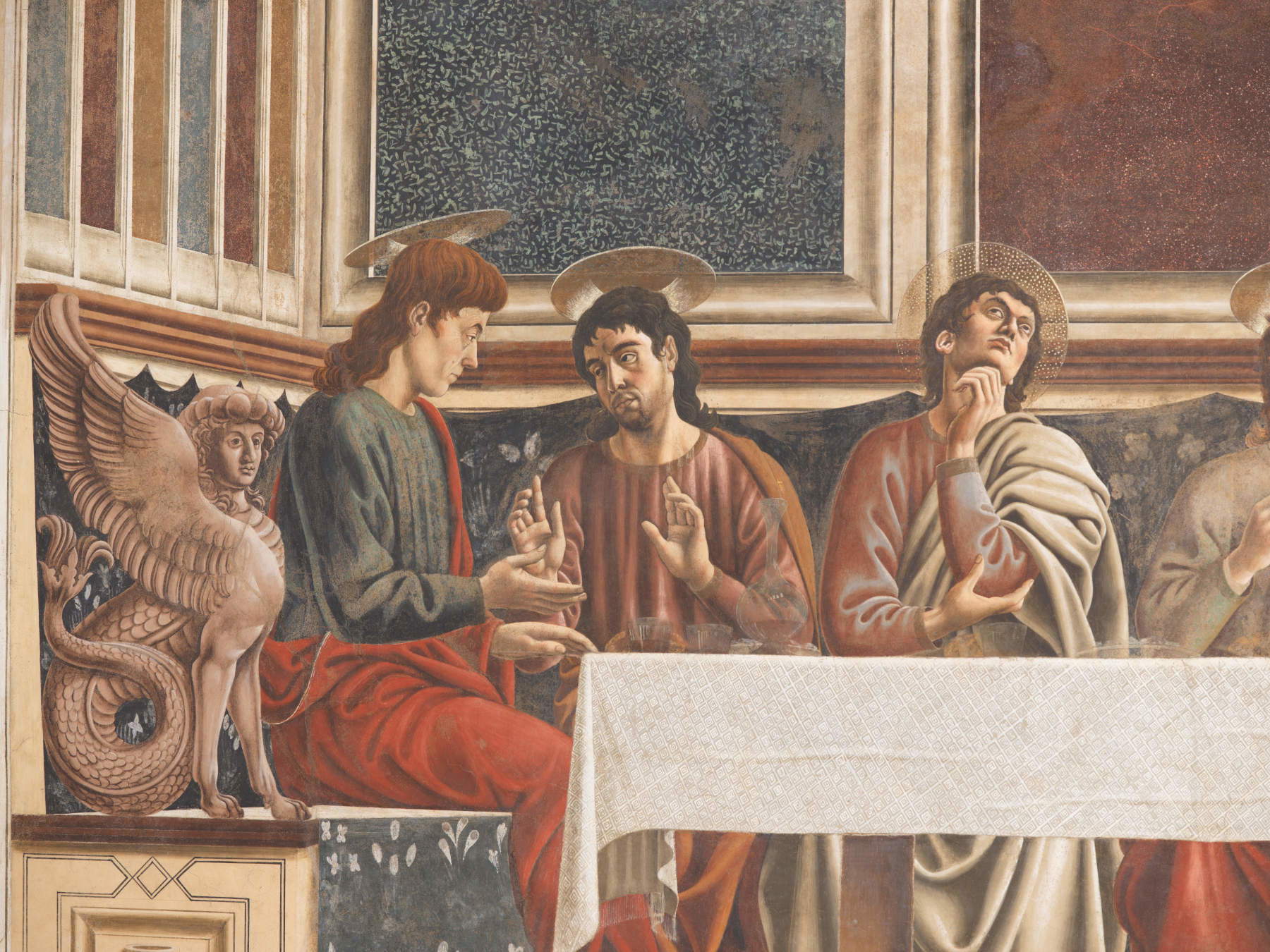
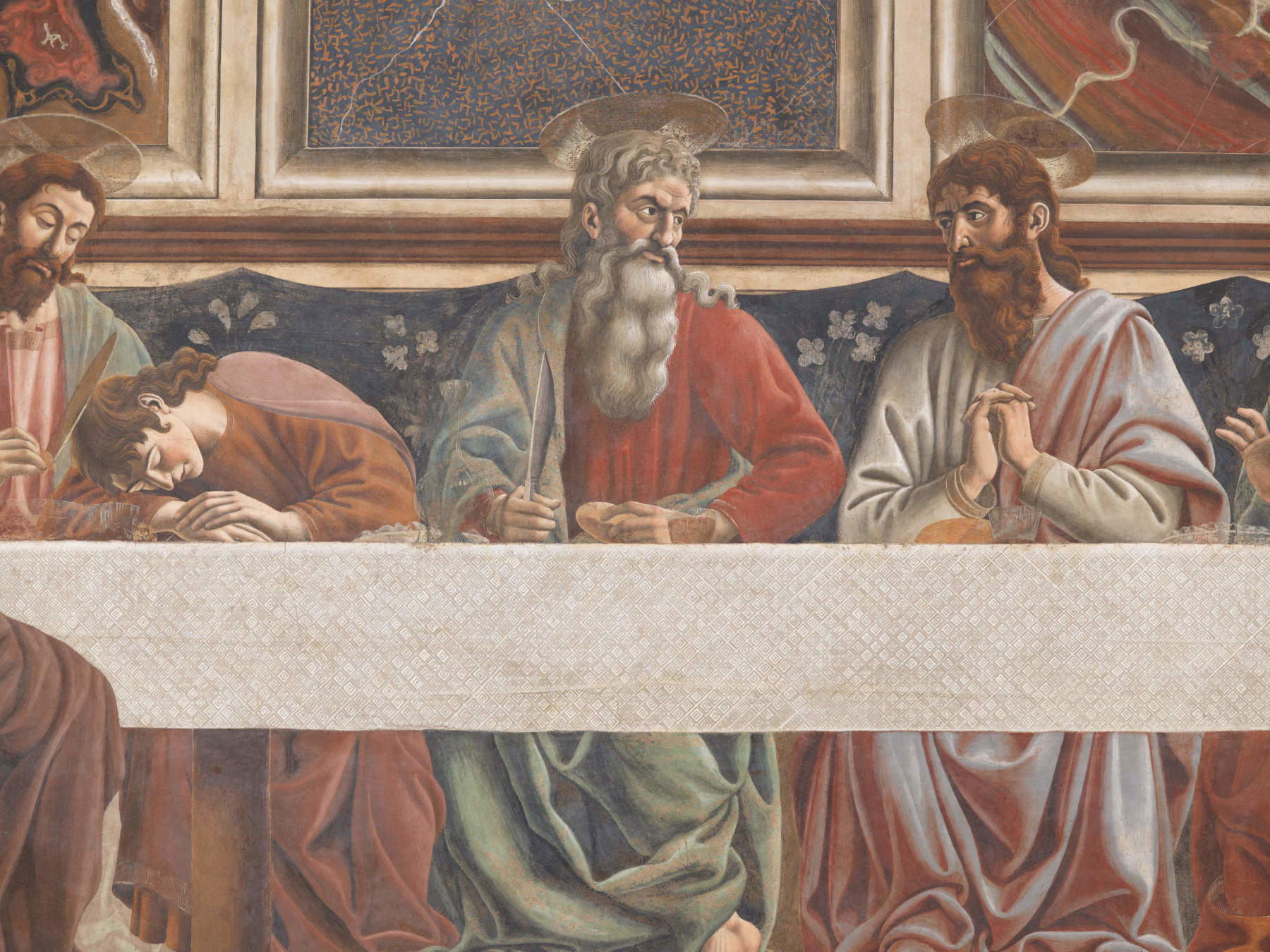
In the lower scene, Christ and the apostles are arranged within an illusionistic loggia of particular complexity. The floor, ceiling, and walls—clad in painted marble panels—follow a rigorous perspective composition. The strongly projecting panel and the foreshortened views of the architectural elements accentuate the depth of the space. The precise drawing, the sculptural solidity of the figures, the intensity of the expressions, and the rich color palette reflect the characteristic style of Andrea del Castagno’s painting. Light also contributes to the cohesion of the whole: from the darker, more dramatic tones of the Last Supper scene, the composition gradually transitions to the brightness of the upper scenes, culminating in the light of dawn in the Resurrection, associated with renewal and salvation.
The Rediscovery and Conservation History
For centuries, the cycle remained unknown outside the monastic community. The cloistered nature of the convent prevented access to the refectory and its paintings, which were not even mentioned by Giorgio Vasari in his biography of Andrea del Castagno in *The Lives*. The suppression of the monastery in the 19th century and the departure of the nuns made the rediscovery of the frescoes possible. Their importance prompted the Royal Galleries to promote the creation of a museum dedicated to the artist, which opened on April 1, 1891.
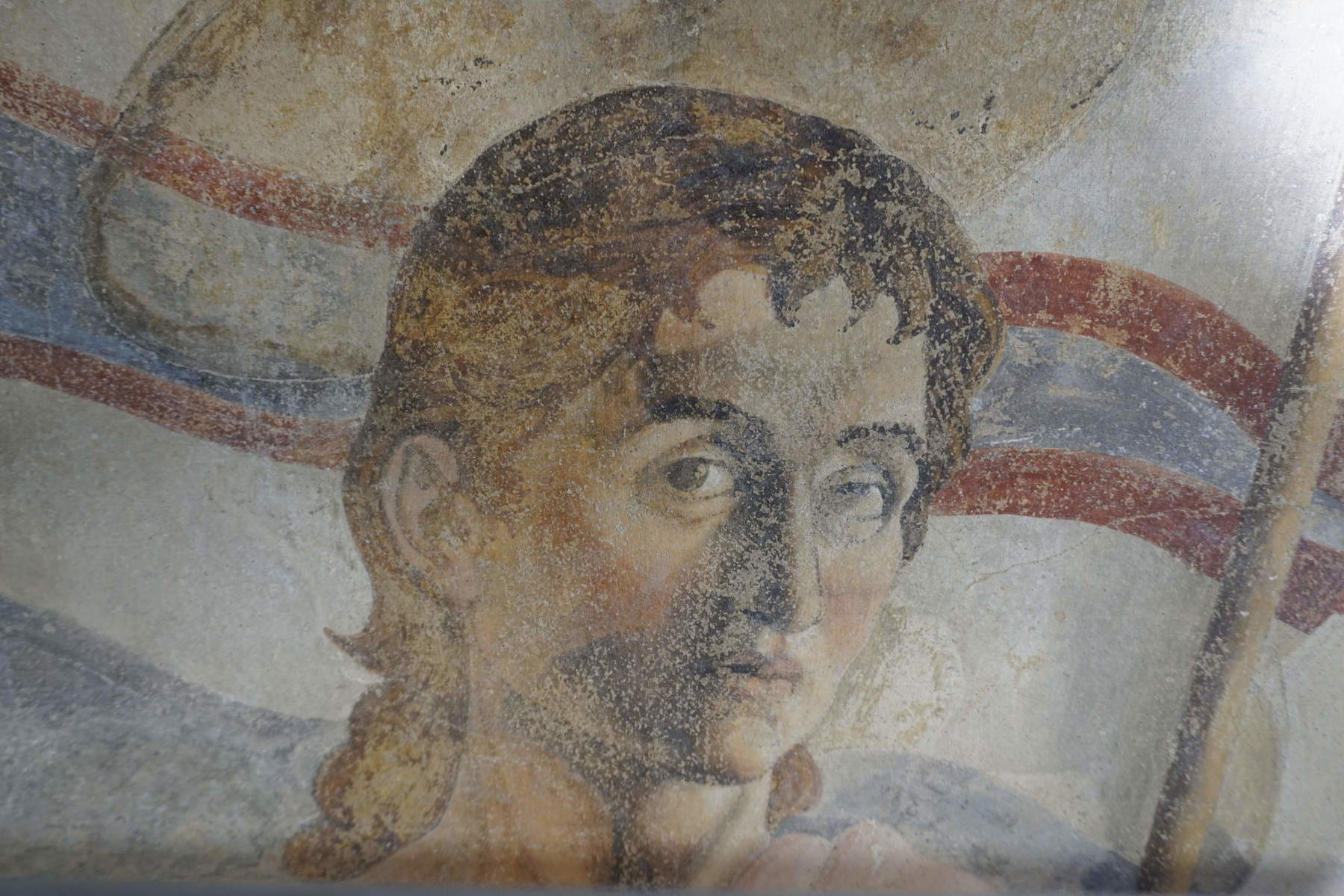
Conservation efforts have since altered the wall’s original layout.The Last Supper is still preserved in situ, on its original wall surface, while the three upper scenes were detached in 1953 for conservation reasons and transferred to secondary supports. During the restoration work, the sinopias—the artist’s preparatory drawings—were discovered; these were in turn detached in 1961 and are now on display on the opposite wall of the refectory. These are important artifacts for reconstructing Andrea del Castagno’s creative process, compositional planning, and painting technique.
The refectory also houses other works related to the artist and his career: the lunette depicting the Pietà and its corresponding sinopia, a Crucifixion from the cloister of the convent of Santa Maria degli Angeli, and the sinopia of the Vision of Saint Jerome between Saints Paula and Eustochius, created for the Basilica of the Santissima Annunziata. Finally, on the wall adjacent to the cloister is a polychrome wooden crucifix attributed to Raffaello da Montelupo, from the church of Sant’Apollonia.
Visitor Information
Starting October 30, 2026, the Last Supper can be viewed without scaffolding from Monday through Saturday and on the first and third Sundays of the month, from 8:30 a.m. to 1:50 p.m. The museum is closed on the Monday following a Sunday when it is open. Admission costs 3 euros; admission is free for visitors under 18 and for everyone on the first Sunday of the month, while the reduced rate is 2 euros for young people aged 18 to 25 and for other categories as provided by law.
Tours of the scaffolding will be available from November 15, 2026, to June 26, 2027, during the museum’s regular opening days and hours. Each tour lasts 30 minutes and costs 8 euros per person; reservations are recommended as space is limited. Groups also pay 8 euros, with reservations required and a maximum of 10 participants, including the guide. A reduced rate of 4 euros applies to children and young people up to age 25. For information and group reservations, please call 055 354135.
From November 21, 2026, to June 26, 2027, guided tours of the museum and the scaffolding will also be organized by the educational services every Saturday and on the first and third Sundays of the month at 10:00 a.m. and 11:30 a.m. The cost is 10 euros, reduced to 6 euros for children and young people up to age 25. Reservations are required, and groups are limited to a maximum of 10 people. The tour lasts approximately 45 minutes.
Access to the scaffolding is permitted only for children aged 7 and older. Helmets are required; children under 10 must be accompanied and held by the hand. The tour is not accessible to people with mobility impairments.
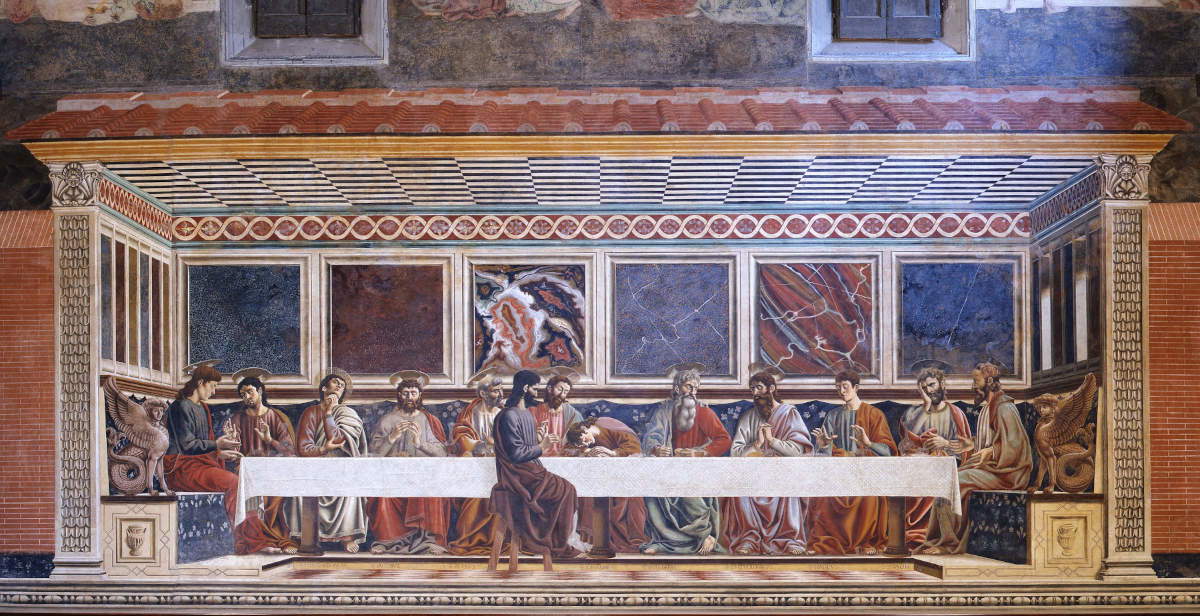 |
| In Florence, visitors climb up the scaffolding to get a close-up view of Andrea del Castagno’s *The Last Supper* |
Warning: the translation into English of the original Italian article was created using automatic tools. We undertake to review all articles, but we do not guarantee the total absence of inaccuracies in the translation due to the program. You can find the original by clicking on the ITA button. If you find any mistake,please contact us.