





Work to secure andpreserve the historical and artistic heritage of the Camera di San Paolo in Parma—one of the city’s most precious and iconic sites, famous for its frescoes by Correggio ( Antonio Allegri; Correggio, 1489–1534)—will begin on August 31. The project, sponsored by the City of Parma, aims to protect and preserve the decorated surfaces and historical-artistic elements that have characterized the monastic complex for centuries; it is recognized as one of the iconic sites of the Italian Renaissance.
The project will focus in particular on the apartment of Abbess Giovanna Piacenza, which returned to the management of the City of Parma in 2021 after having been a state-run institution, and is now an integral part of the current museum itinerary at the Camera di San Paolo. This space houses some of the most significant artistic works in the entire complex, making it a destination for visitors and scholars from all over the world who are interested in seeing up close the wall decorations created in the early 16th century.
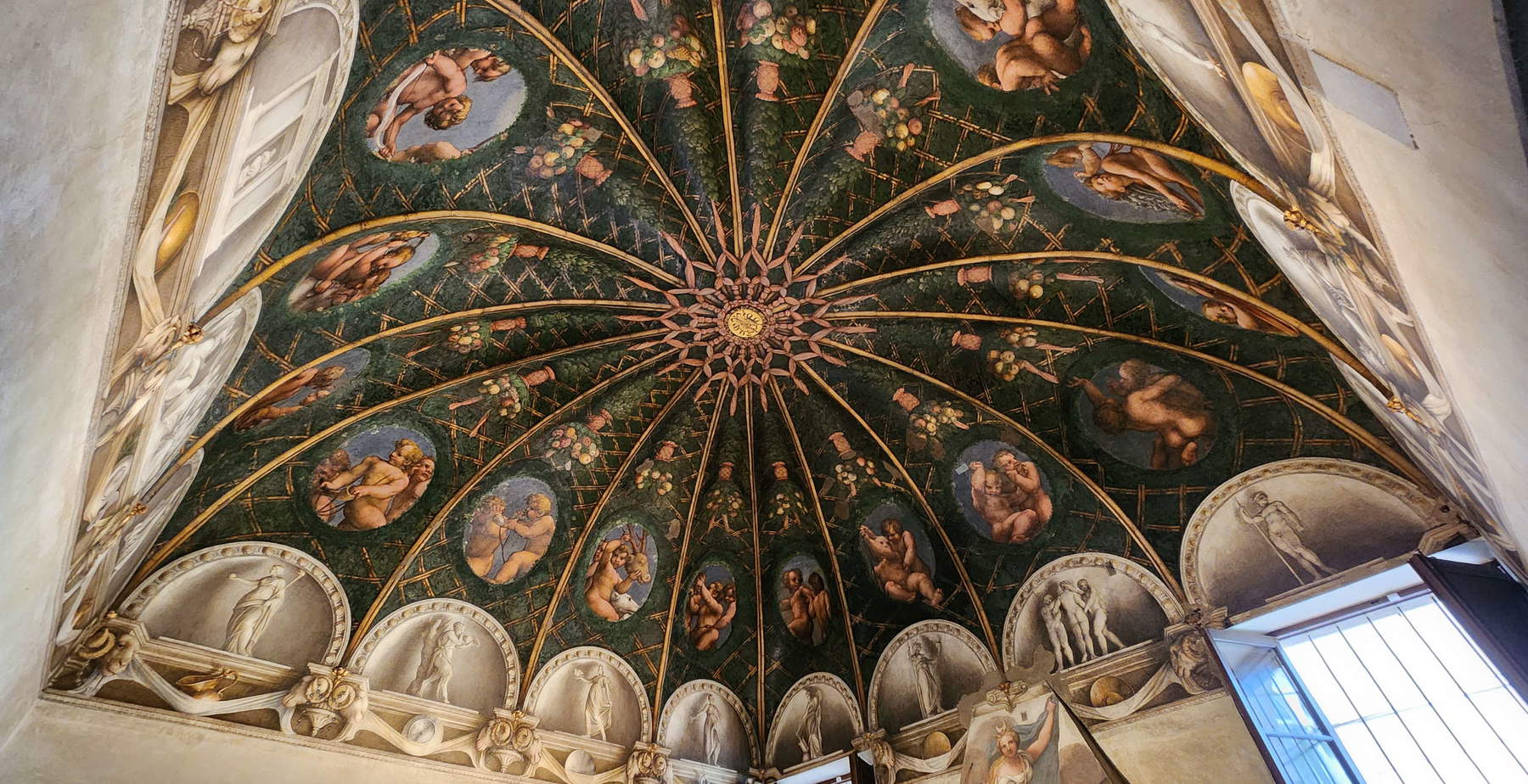
The restoration work will specifically focus on the frescoed surfaces, the wooden elements, and the stonework found along the museum itinerary. This is a complex and delicate undertaking that requires specialized expertise in the field of cultural heritage conservation, given that the works involved date back to a historical period of extraordinary importance for Italian and European art. Among the pictorial cycles being restored are the frescoes created by Alessandro Araldi in 1514 and those painted by Antonio Allegri between 1518 and 1519. These are works of extraordinary artistic value, considered among the finest examples of Italian Renaissance painting, and have attracted the attention of scholars, art historians, and enthusiasts from around the world for decades.
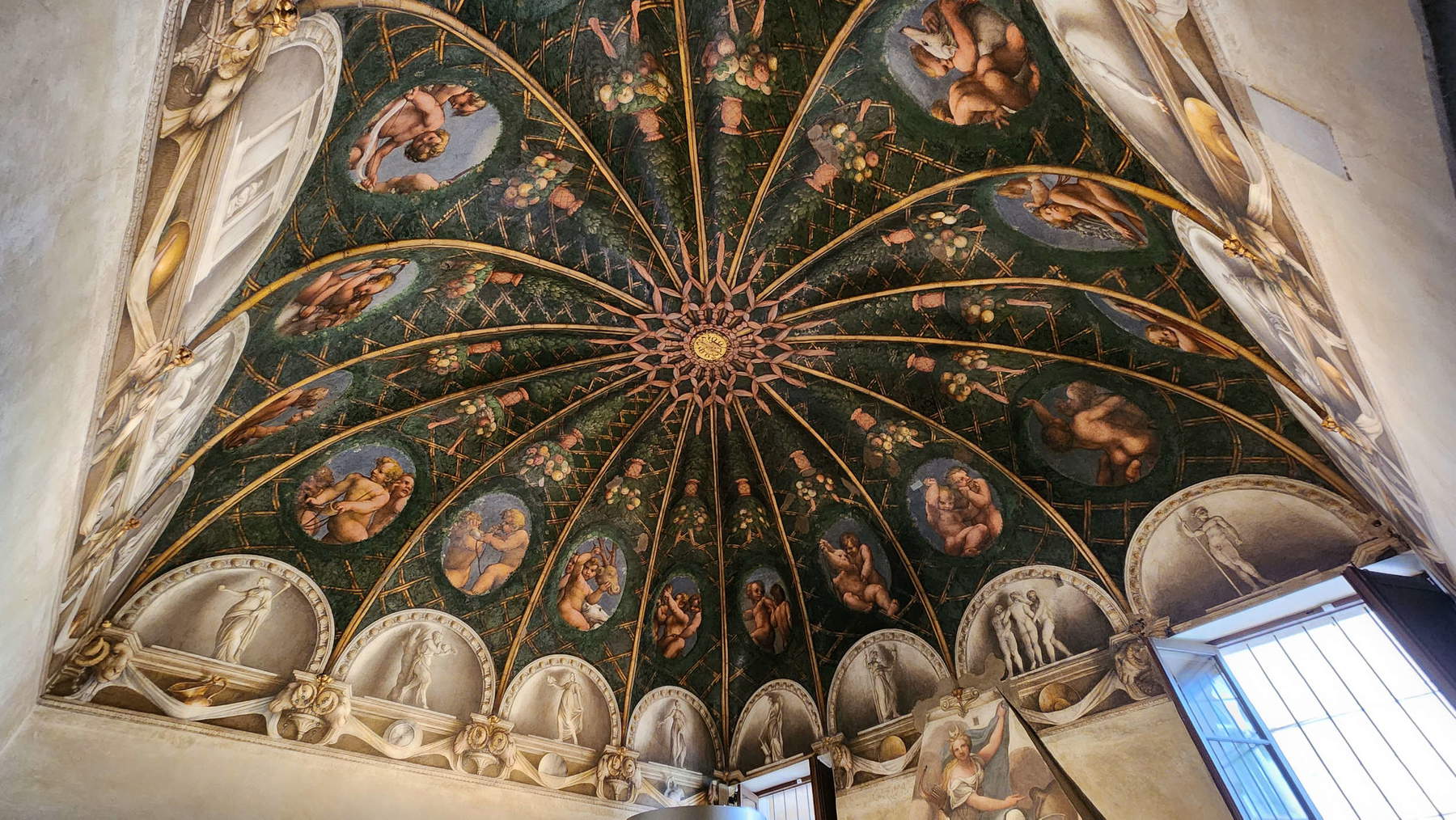
The uniqueness of the Camera di San Paolo lies precisely in the quality and complexity of its decorations , the result of the work of two of the greatest masters of early 16th-century Emilian art. The frescoes painted by Correggio in the abbess’s chamber represent one of the absolute pinnacles of Renaissance painting—a unique masterpiece that has made the site an essential stop for art historians and anyone wishing to admire up close the evolution of the Emilian artist’s style during the years of his full creative maturity. Alongside these works, the pictorial cycle created by Alessandro Araldi further enriches the overall value of the complex, serving as a precious testament to the artistic and cultural context in which these masterpieces were conceived and executed.
The restoration project, however, will not be limited to the abbess’s chamber alone but will also extend to other rooms that make up the monumental complex. Among these is the monastery’s ancient refectory, a space that over the centuries was subsequently transformed into a chapel and which today houses a fine wooden choir dating back to the 17th century. In this space as well, work will therefore be carried out to protect and highlight the historical and artistic elements present, with particular attention to the conservation of the wooden fixtures that characterize the space.
Another space included in the restoration project is the Cell of Saint Catherine, a small but significant room located on the edge of the garden of the former Benedictine monastery. In this room, conservation work will focus on the frescoes painted by Alessandro Araldi, which depict two episodes related to the life and veneration of the saint: on one side, the Dispute of Saint Catherine before Emperor Maximinus; on the other, a depiction of Saint Catherine together with Saint Jerome. Although these works are less well-known than the famous frescoes in the Abbess’s Chamber, they contribute significantly to the overall understanding of the artistic heritage preserved within the monumental complex.
From a financial standpoint, the total investment planned for the entire project amounts to 700,000 euros. Of this amount, a particularly significant portion—600,000 euros—was provided by the Culture Department of the Emilia-Romagna Region. The remainder of the total budget will be covered by funds provided by the municipal administration.
A competitive bidding process was followed to award the contract, at the conclusion of which the contract was awarded to Montanelli Restauri S.r.l., a company specializing in the restoration and conservation of cultural heritage. To ensure the work can be carried out under the necessary safety conditions, the Camera di San Paolo will be temporarily closed to the public starting August 31. The closure will last for a fairly long period, as the project is tentatively scheduled to be completed in the spring of 2027. This is therefore a large-scale project that will require several months of work to restore one of the city’s most precious artistic sites to the city and its visitors in a state of full safety and preservation.
Despite the closure of the Camera di San Paolo, city officials have clarified that the ticket office dedicated to this museum will remain open as usual throughout the entire duration of the work. This will allow visitors to continue purchasing admission tickets to the city’s other civic museums at the ticket office, thus ensuring service continuity even during the months when the Camera di San Paolo is closed to the public: Visitors will be able to purchase tickets for the Pinacoteca Stuard, the Castello dei Burattini – Giordano Ferrari Museum, the Casa del Suono, the Museo dell’Opera, and Arturo Toscanini’s Birthplace.
 |
| Restoration of the Camera di San Paolo Begins in Parma: Closed Starting August 31 |

Warning: the translation into English of the original Italian article was created using automatic tools. We undertake to review all articles, but we do not guarantee the total absence of inaccuracies in the translation due to the program. You can find the original by clicking on the ITA button. If you find any mistake,please contact us.





















 IT
IT FR
FR DE
DE ES
ES CN
CN


