





In Chleby, in what is now the Czech Republic, archaeologists led bythe University of Westminster (UWB) have unearthed one of the oldest monuments in Central Europe. The site, dating back about 6,500 years, consisted of a large, nearly circular enclosure with a diameter of about 230 meters, bordered by a ditch over 2.5 meters deep and featuring twelve entrances arranged in an apparently irregular pattern. However, research conducted in collaboration withthe University of West Bohemia in Pilsen,Charles University, andthe University of Hradec Králové has shown that the arrangement of the entrances was not random. In fact, the structure’s geometry appears to have allowed prehistoric communities to observe some of the most important moments in the solar and lunar cycles.
According to Petr Krištuf of the Department of Archaeology at the Faculty of Arts and Philosophy of the University of West Bohemia, who is leading the research, circular enclosures from this period are completely unknown in the area and make the site exceptional in and of itself.
Analysis of the entrances’ positions has identified two main observation points. The first appears to be linked to the Moon’s extreme positions on the horizon, which occur within a cycle of approximately 18 years. The second, on the other hand, correlates the sunrise on the summer solstice with the sunset on the winter solstice.
This layout bears striking similarities to that recognized at Stonehenge, but with one fundamental difference: the Chleby sanctuary is believed to have been built more than a thousand years earlier. Dating of organic materials found at the site has in fact placed the monument’s construction more than 6,500 years ago, during an era when agricultural communities likely attributed strong symbolic significance to astronomical phenomena. The sunrise on the summer solstice may have represented a time of new beginnings, while the sunset on the winter solstice may have symbolized an end. The same relationship between astronomical cycles and monumental architecture would also have been utilized, many centuries later, at Stonehenge.
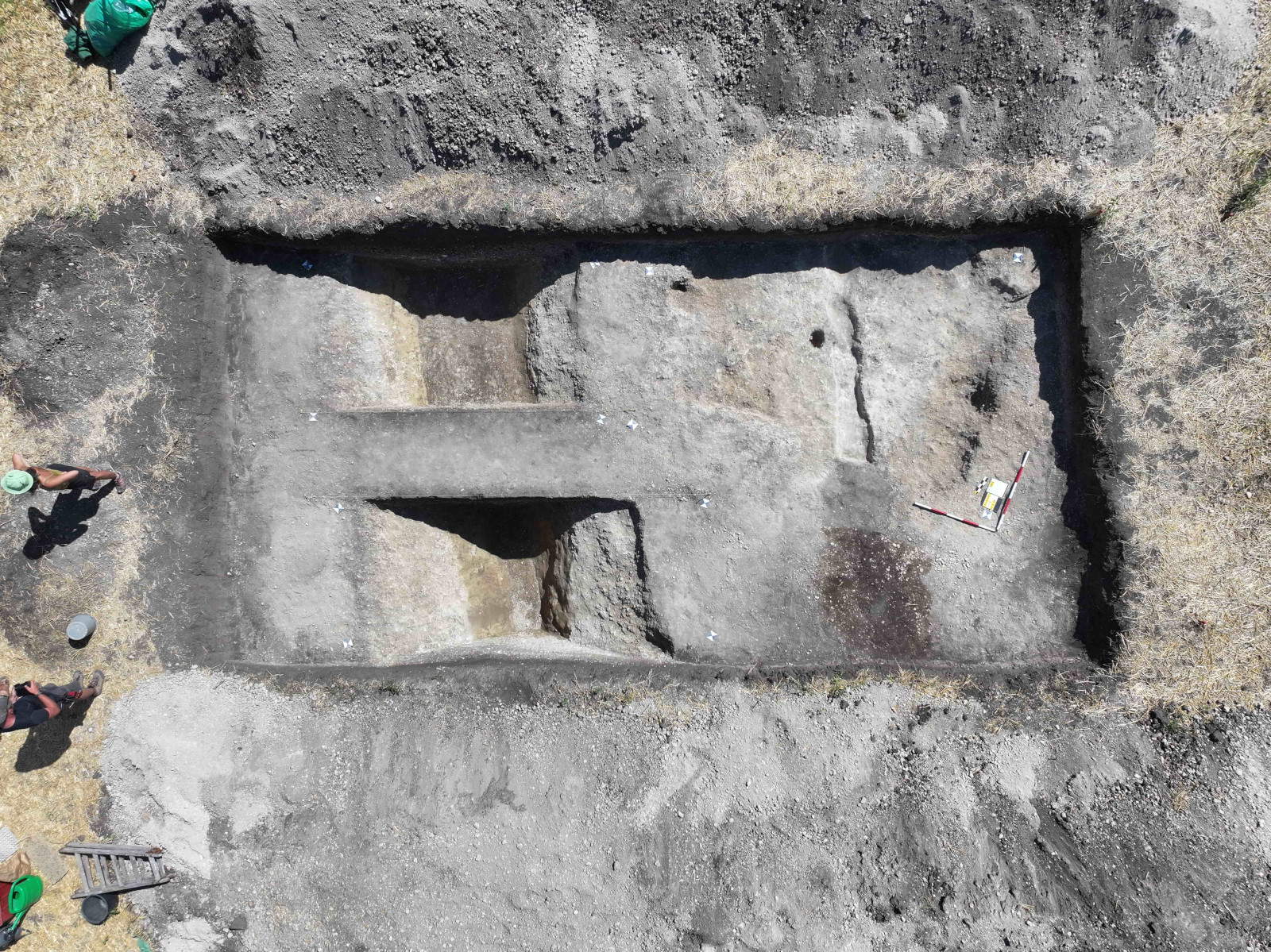
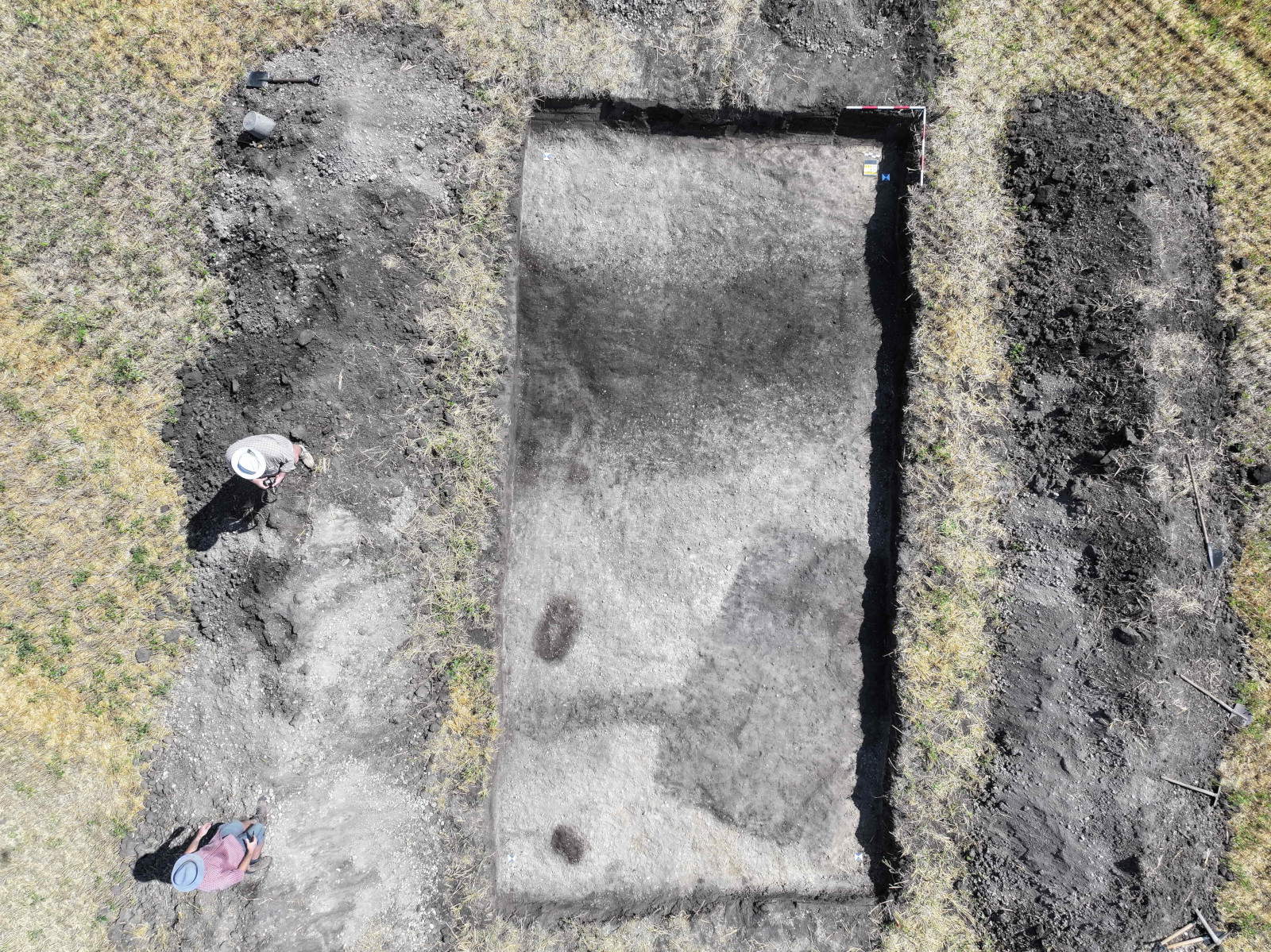
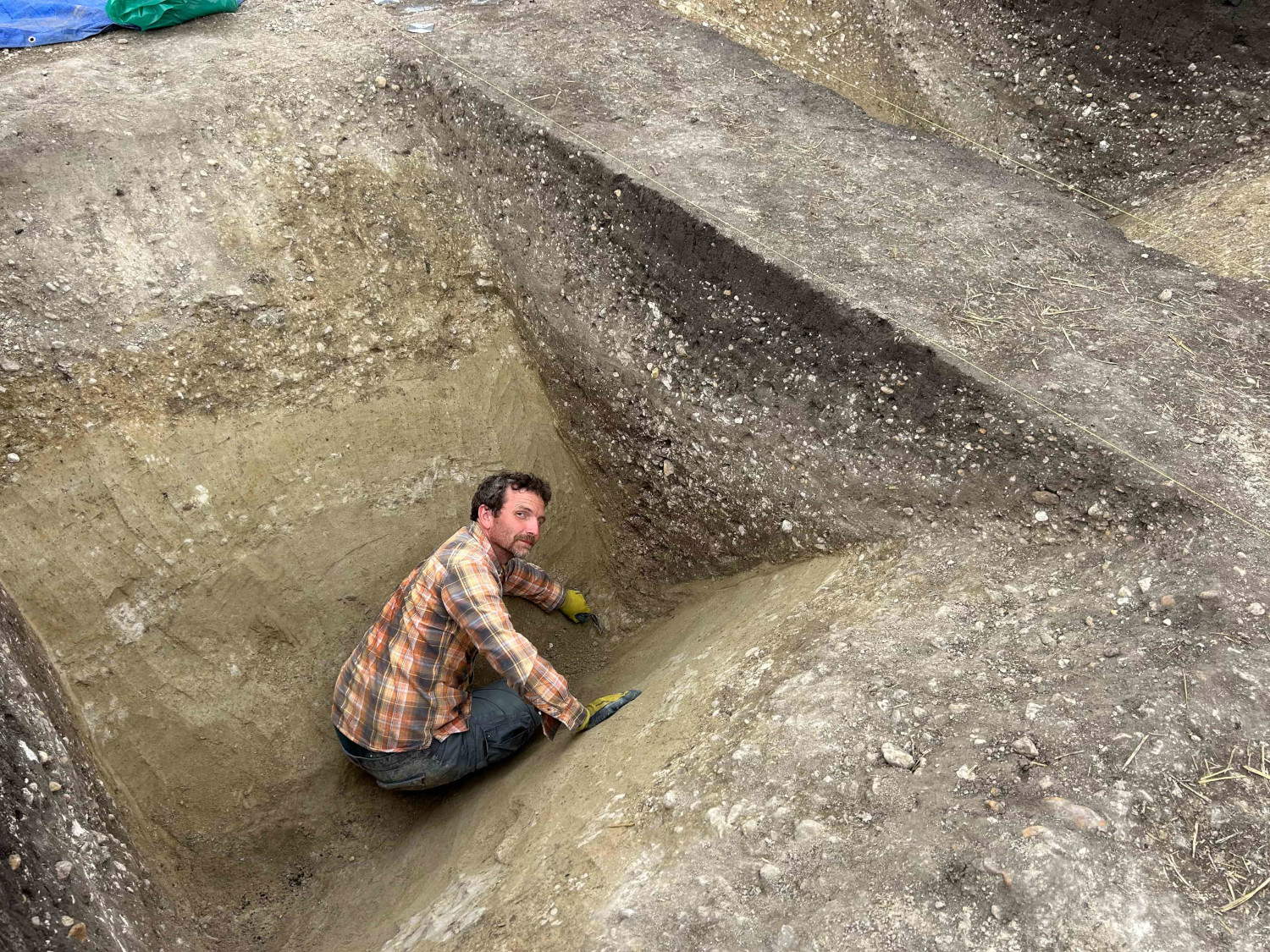
Archaeological evidence also suggests that Chleby was not only a site for observing the sky but also a ceremonial and ritual center. Bull skulls and horns were found in the moat, particularly near the entrances. According to archaeologists, these may have originally been placed on the monumental gateways leading into the enclosure. The bull held significant symbolic and religious meaning among early European agricultural communities and is documented in numerous prehistoric contexts across the continent. Human bones were also found in the moat, evidence that the site was used over an extended period and served various functions.
Previous research had already identified a burial at the site attributed to the Bronze Age Únětice culture, containing the remains of approximately 18 individuals interred successively over time.
More recent studies, however, seem to indicate a significant transformation in the monument’s function. Unlike Stonehenge, which underwent several phases of reuse and retained a strong symbolic dimension over time, the Chleby sanctuary appears to have gradually lost its original meaning. During the Iron Age, the ditch was gradually filled in, and an ordinary settlement arose on the area occupied by the ancient monument, likely marking the end of its ritual function.
The research is not yet complete. Archaeologists are now also focusingon soil analysis, in the hope of reconstructing with greater precision the activities carried out at the site during different eras. “In addition to artifacts and the remains of the deceased, humans leave chemical traces in the soil. These can help us understand how this exceptional site was used during different periods of prehistory,” said Jan Fišer of the University of Hradec Králové, who is analyzing soil samples from the enclosure and surrounding areas.
The discovery at Chleby thus adds a new piece to our understanding of the great monuments of prehistoric Europe and suggests that, long before the construction of Stonehenge, agricultural communities in Central Europe already possessed extremely sophisticated astronomical knowledge and design skills.
|
| Chleby: A 6,500-year-old sanctuary has been discovered—1,000 years older than Stonehenge |

Warning: the translation into English of the original Italian article was created using automatic tools. We undertake to review all articles, but we do not guarantee the total absence of inaccuracies in the translation due to the program. You can find the original by clicking on the ITA button. If you find any mistake,please contact us.






























 IT
IT FR
FR DE
DE ES
ES CN
CN


