



by Redazione 11/08/2026



Categories: Archaeology / Disclaimer
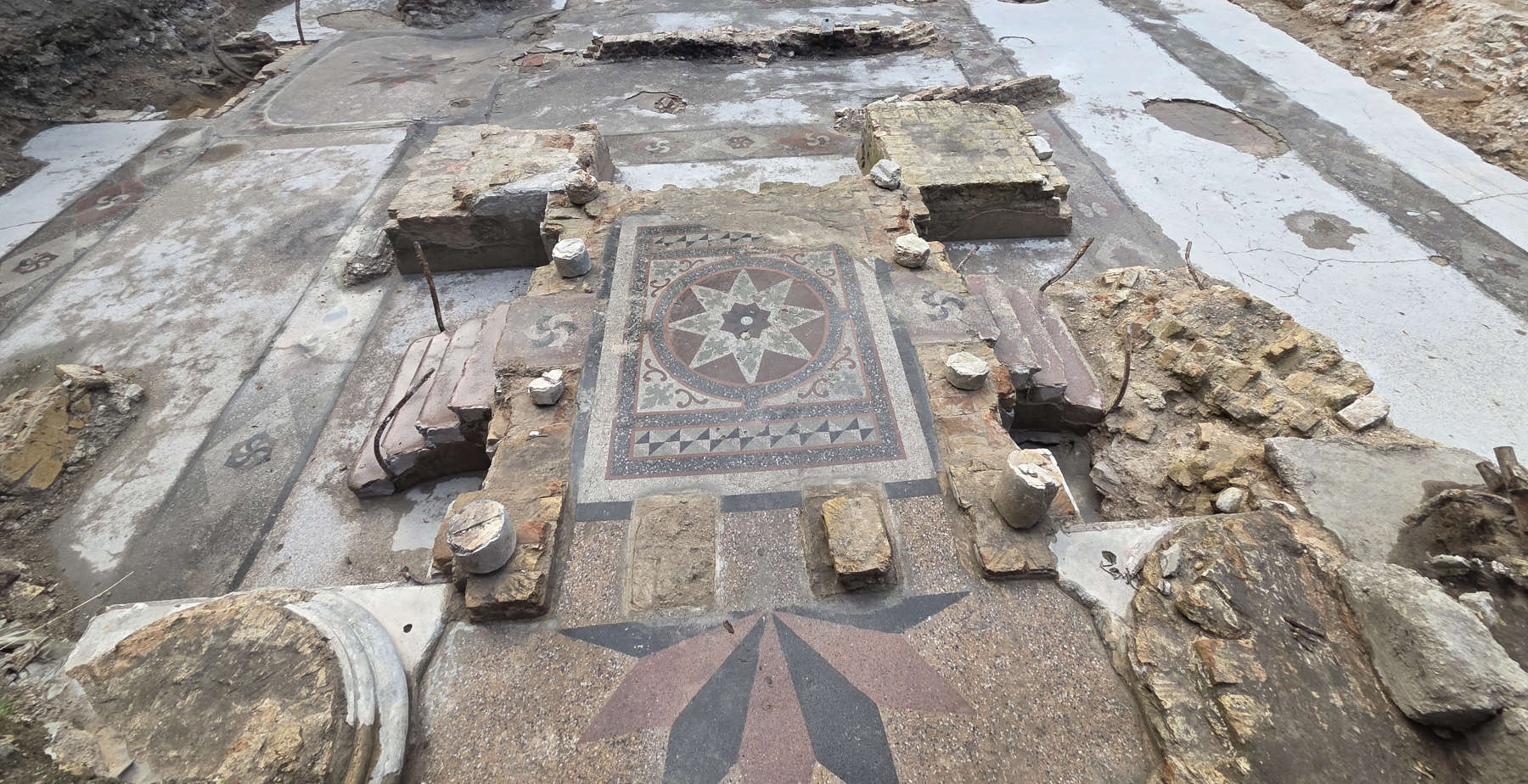
In Lithuania, archaeological excavations at the Great Synagogue of Vilnius have unearthed the central bimah, parts of the prayer hall and the women’s gallery, decorated floors, plaques bearing the names of worshippers, and a stone slab inscribed with the Ten Commandments.


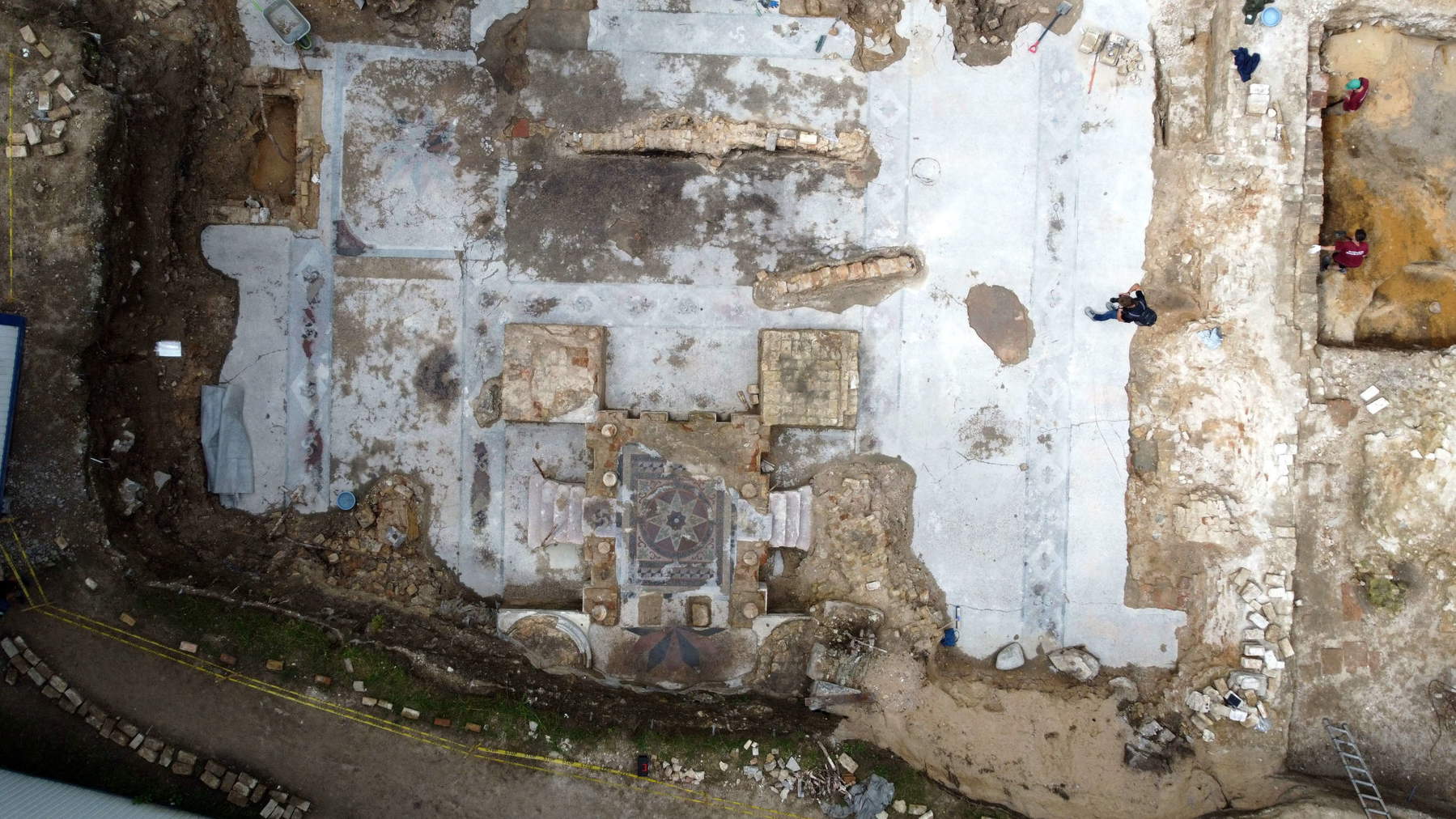
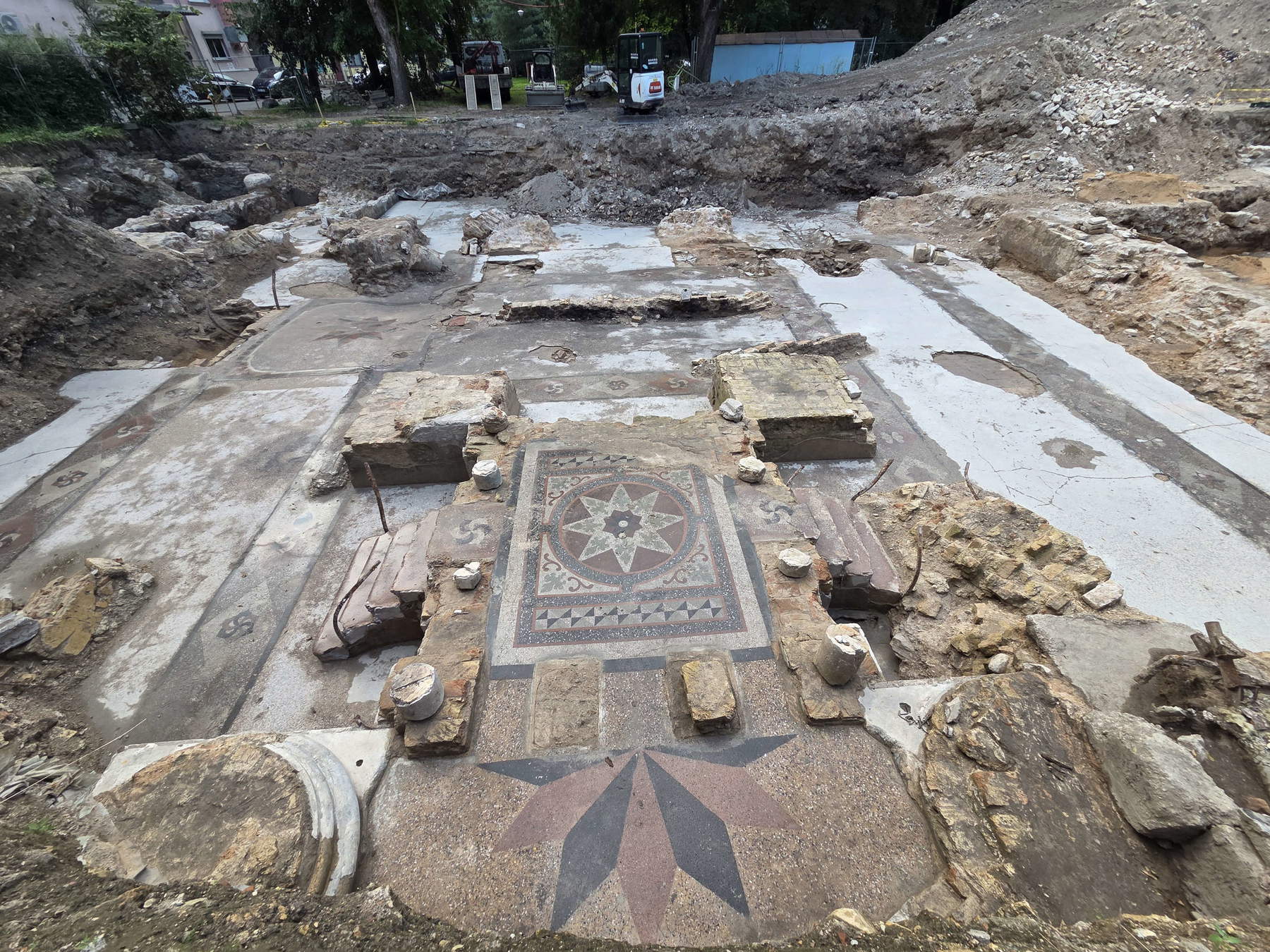
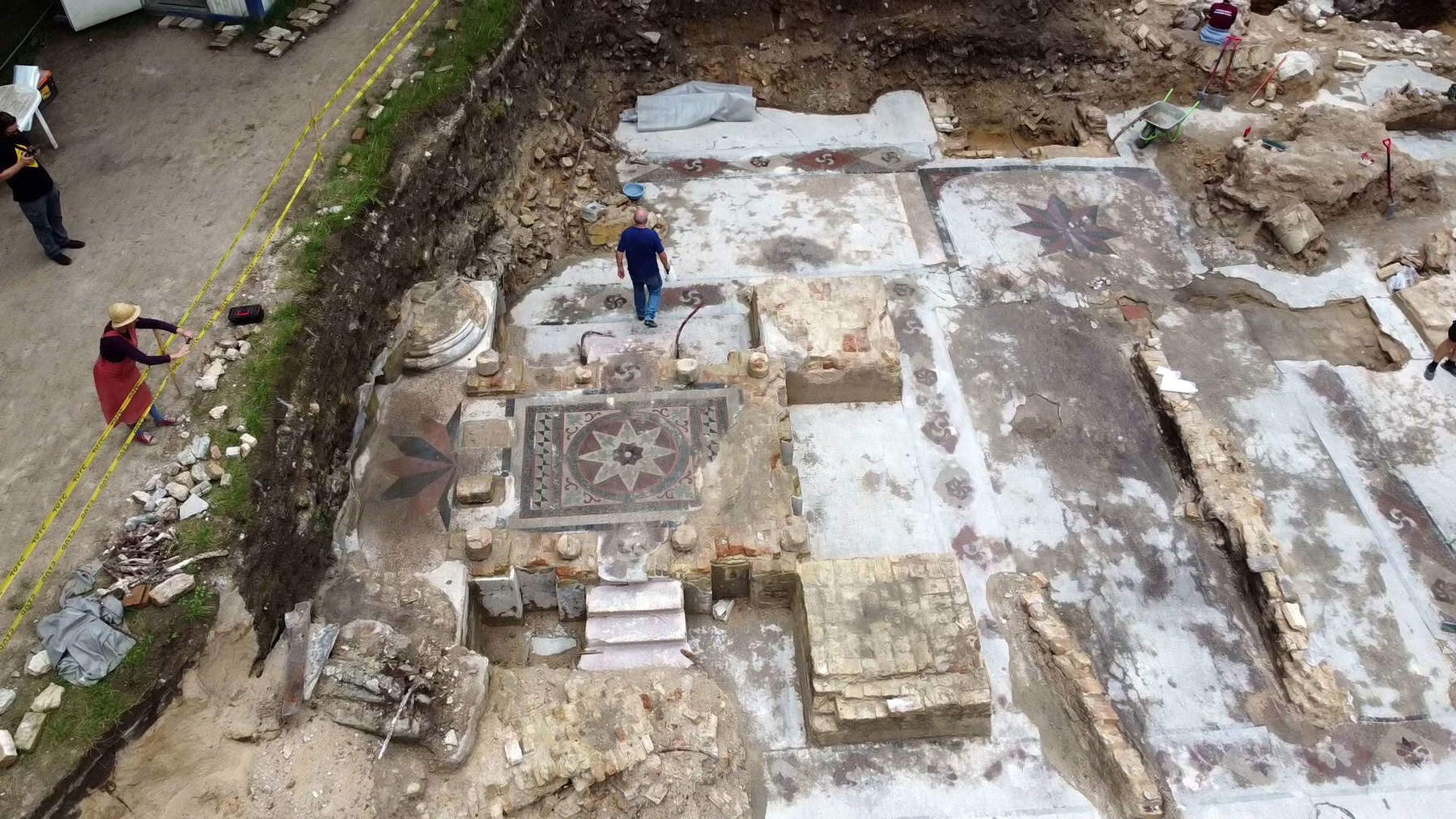
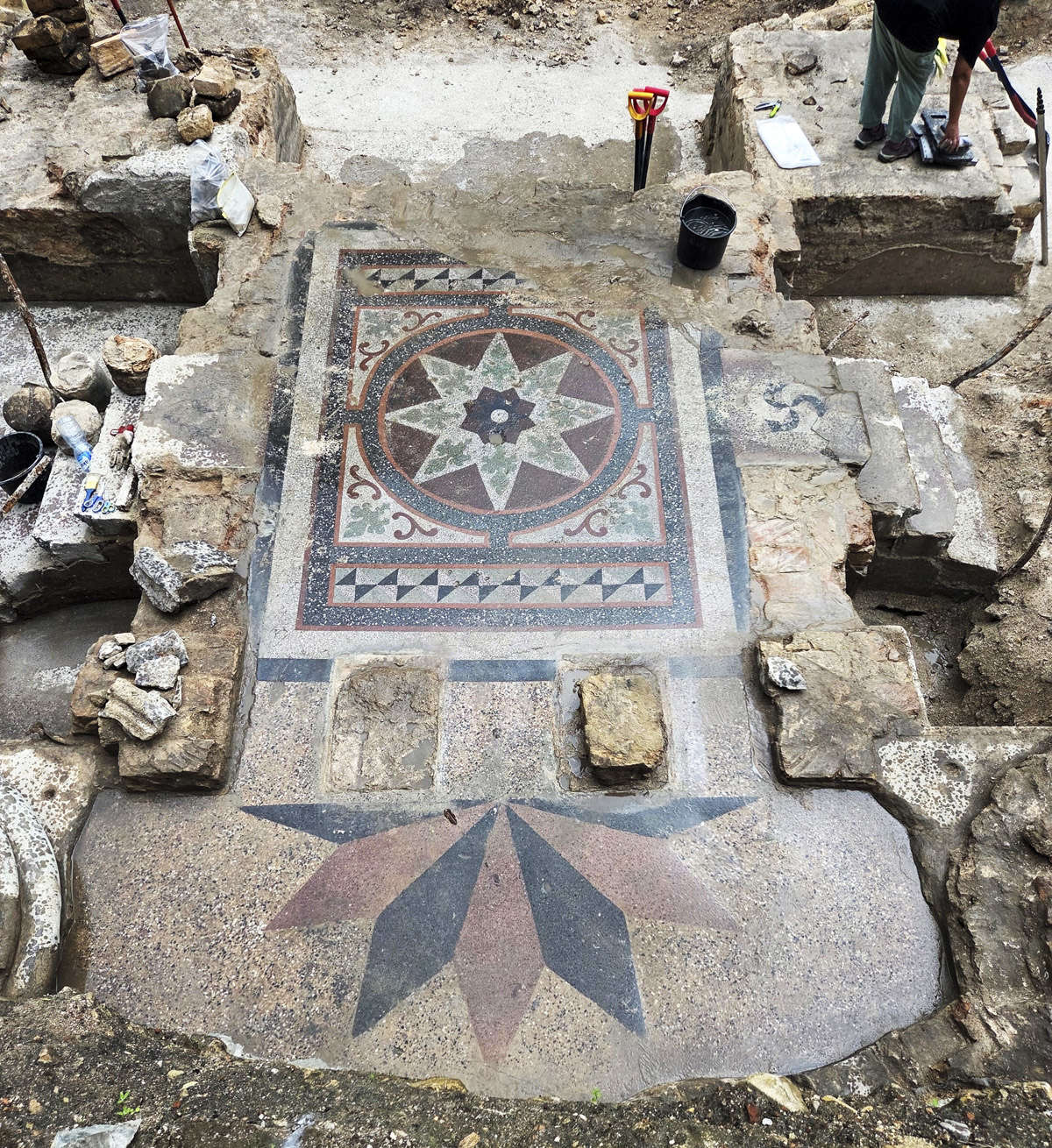
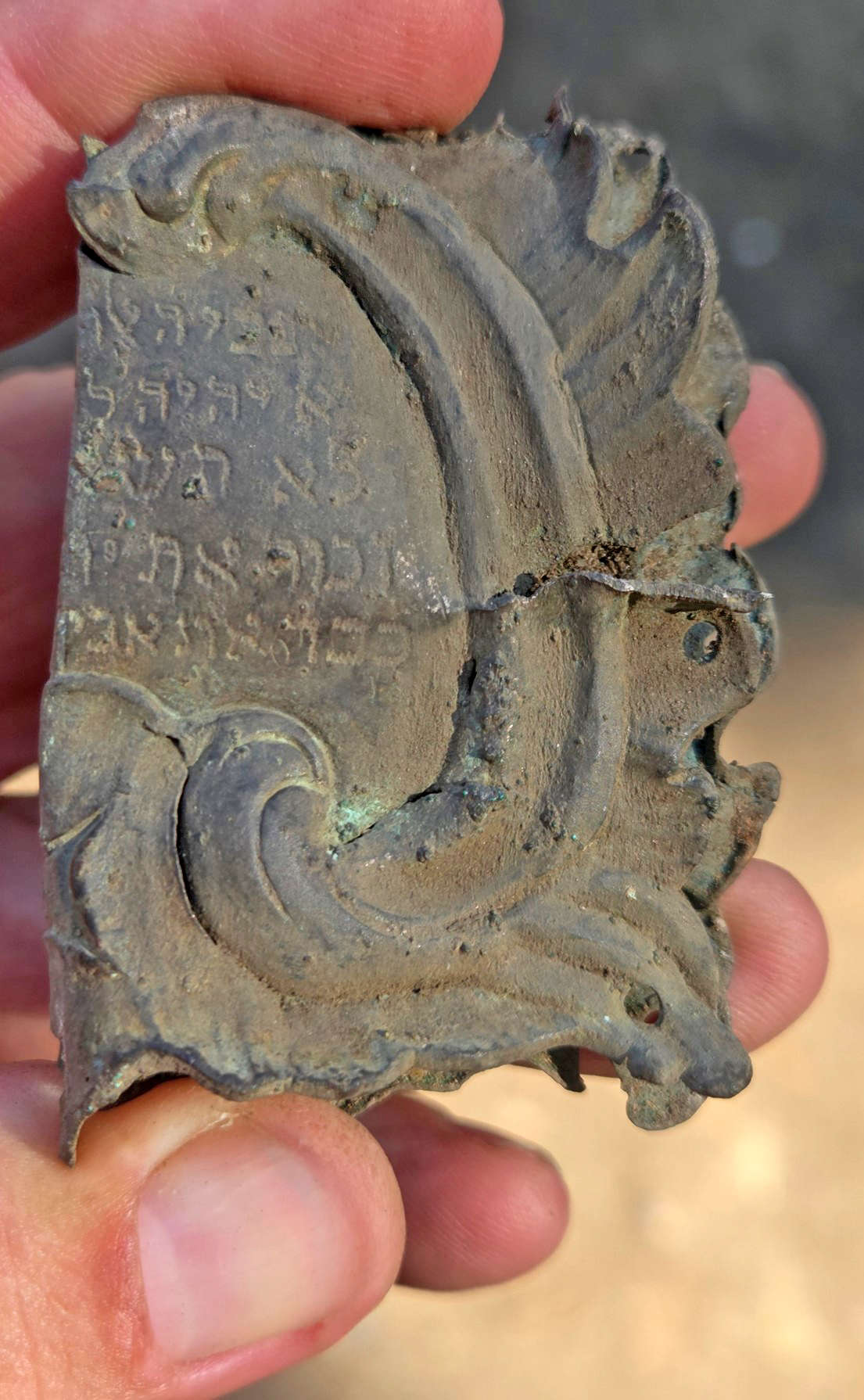
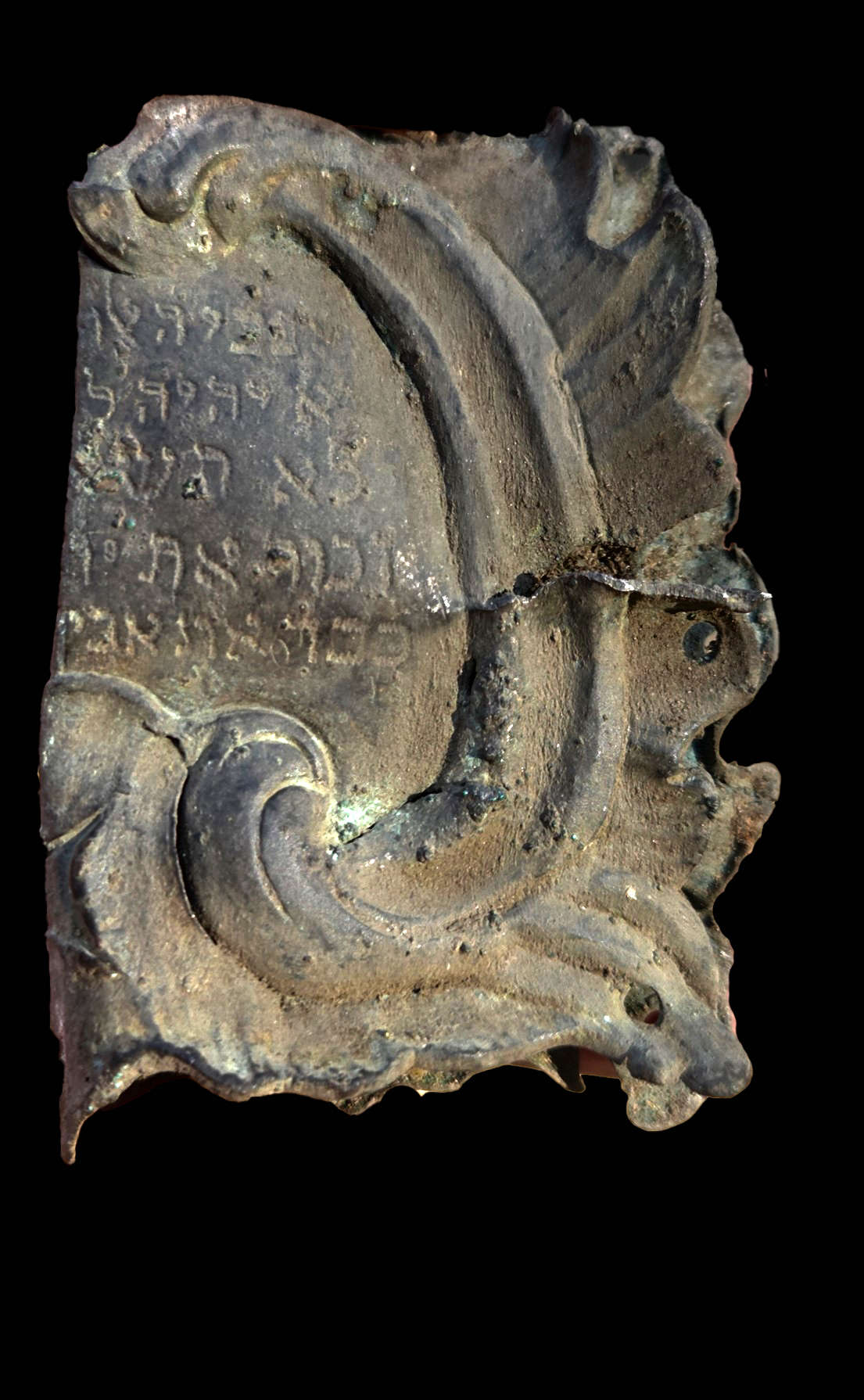
An important part of the Great Synagogue of Vilnius has been brought to light in the Lithuanian capital, thanks to a new archaeological excavation campaign that has made it possible to identify and document structures and artifacts capable of providing a concrete picture of the religious and community life that developed over centuries around one of the most important Jewish places of worship in Eastern Europe. Archaeologists have unearthed the synagogue’s large central bimah (the platform for readings), extensive sections of the main prayer hall and the women’s gallery, richly decorated floors, plaques indicating the seats assigned to worshippers, and a small metal plaque engraved with the Ten Commandments.
The new discoveries came to light during excavations conducted over the past month at the site of the Great Synagogue of Vilnius, a place closely linked to the figure of the Gaon of Vilnius (Elijah ben Shlomo Zalman; Sjalec, 1720 – Vilnius, 1797), one of the greatest rabbis of his time, and to the history of the city’s Jewish community. The building, devastated and destroyed by the Nazi regime and subsequently demolished by Soviet authorities some seventy years ago, is now the focus of an archaeological research project aimed not only at reconstructing its structure but also at preserving its remains and restoring visibility to a heritage that has remained hidden for decades.


The new campaign marks the sixth phase of an investigation launched in 2011. The research focuses not only on the synagogue building but also on the community complex that developed around it, known as Shulhoyf. The site is, in fact, a fundamental testament to the history of the Jewish community of Vilnius, a community for which the Great Synagogue served for centuries as one of its primary religious, social, and cultural landmarks.
The excavations are being conducted by the Israel Antiquities Authority and the Kultūros paveldo išsaugojimo pajėgos, the “Lithuanian Cultural Heritage Preservation Forces,” with funding from the Good Will Foundation and in collaboration with the Lithuanian Jewish Community, Litvak. The stated goal is to preserve the remains of the Great Synagogue, make them accessible to the public, and enhance the site so that it may become a place of significance for both the Jewish community and the broader public.
One of the most important elements uncovered during this sixth excavation campaign is the large central bimah: the bimah is the raised platform in the synagogue from which the texts of the Torah are read publicly and thus represents one of the fundamental architectural and liturgical elements of the place of worship. Its discovery provides a better understanding of the layout of the main hall and allows for the reconstruction, at least in part, of the interior configuration of the Great Synagogue.
This discovery is particularly significant because, for the first time, the excavations were able to cover extensive, continuous sections located at the heart of the historic building. This achievement was made possible by the removal of the old school building, which had long covered the synagogue’s remains. The demolition of this structure allowed archaeologists to access areas that previously could not be investigated as extensively or continuously.
The significance of the discovery is explained by the excavation directors, Dr. Jon Seligman of the Israel Antiquities Authority and Justinas Račas of the Cultural Heritage Conservation Forces. “The removal of the old school building that covered the historic synagogue has allowed us, for the first time,” they say, “to uncover additional extensive and continuous sections at the heart of the building: the main prayer hall, paved with colored terrazzo floors decorated with floral and geometric patterns; name plaques; and many other artifacts that offer us a moving, almost personal encounter with the people who prayed here and with the community life that developed around the synagogue over the centuries.”
Along with the floors, numerous plaques associated with the worshippers’ assigned seats have been identified. These are small elements that, while seemingly secondary to the large architectural structures, actually hold significant documentary value. Their names, in fact, allow us to connect directly with the people who attended the synagogue and to reconstruct, at least partially, the composition of the community that gathered within it. Some plaques bear the names of women who prayedin the ezrat nashim, the women’s gallery. Others, in turn, bear the names of men. Still others identify seats assigned to members of an important charitable association involved in the administration of the Jewish community of Vilna.
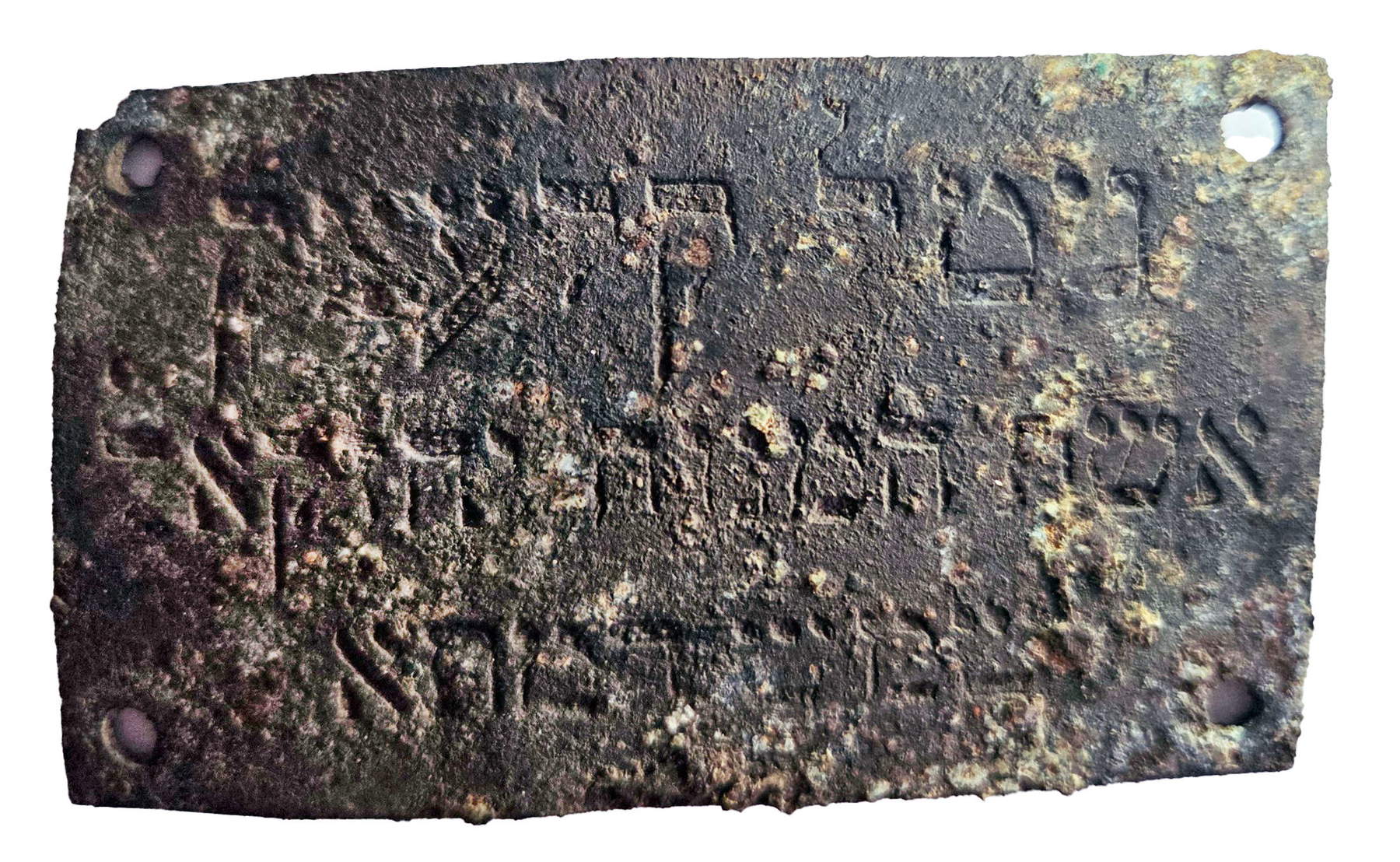
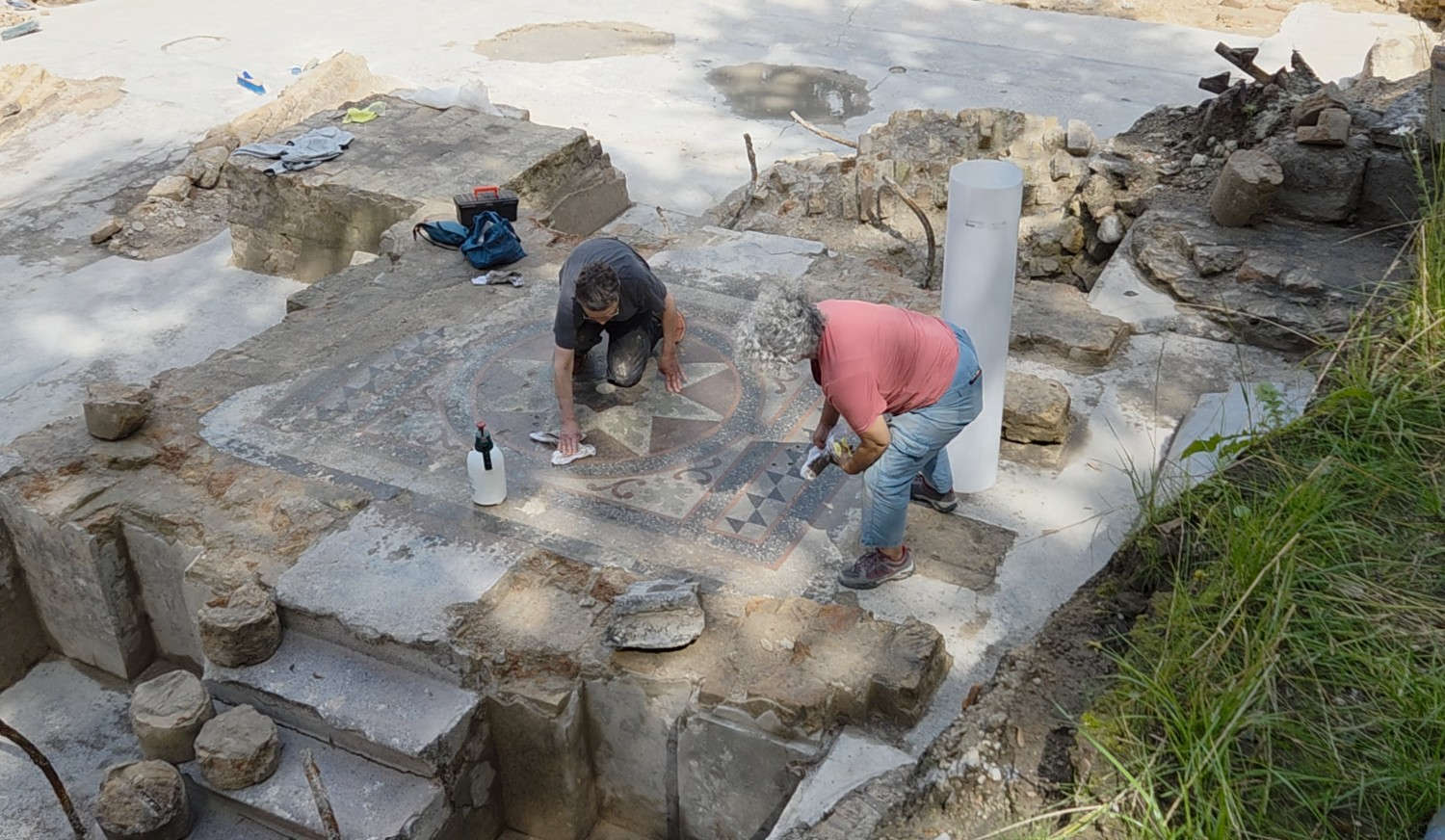
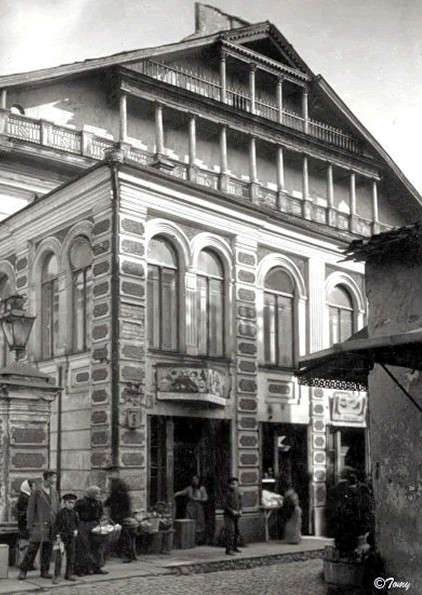
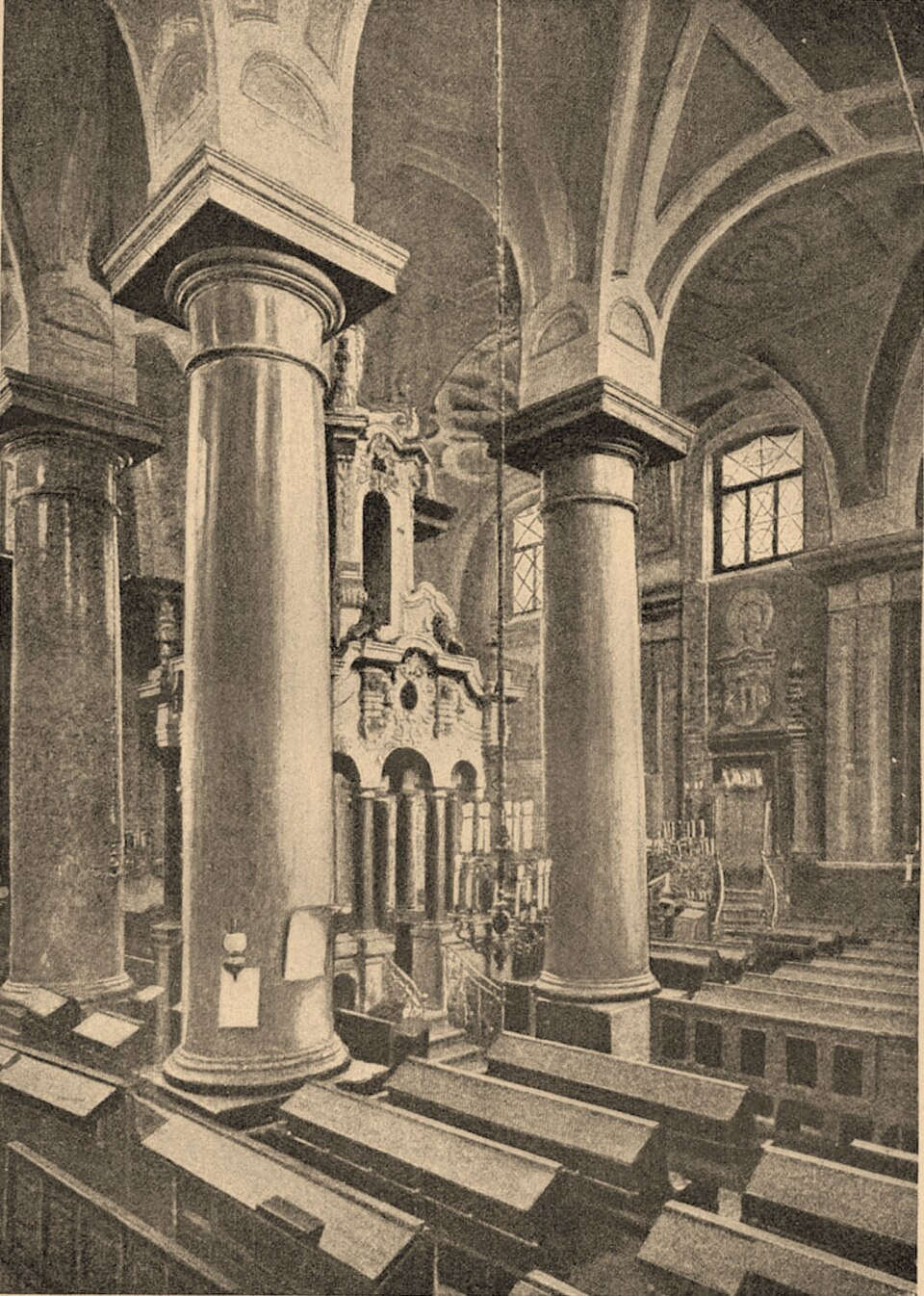
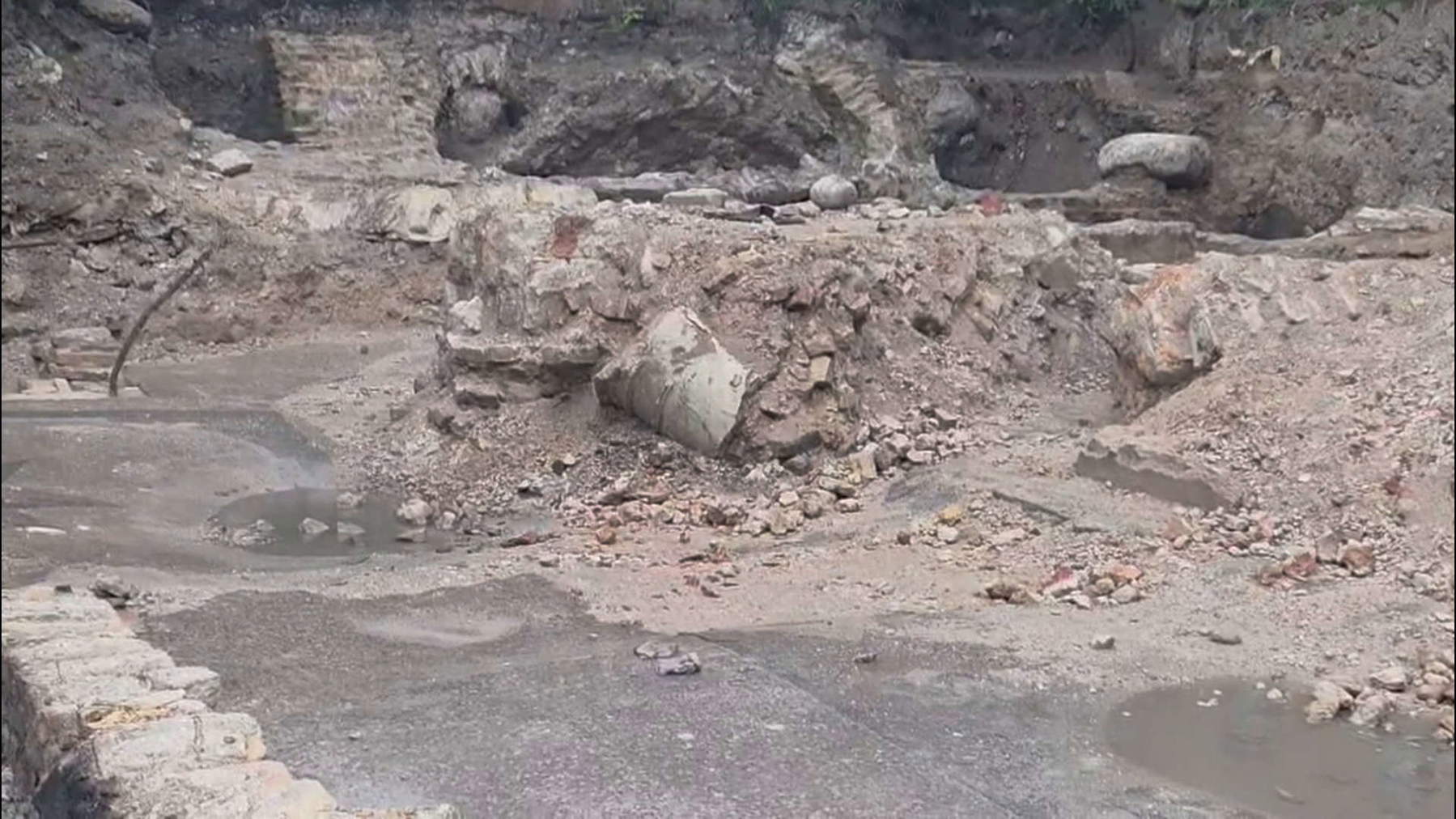
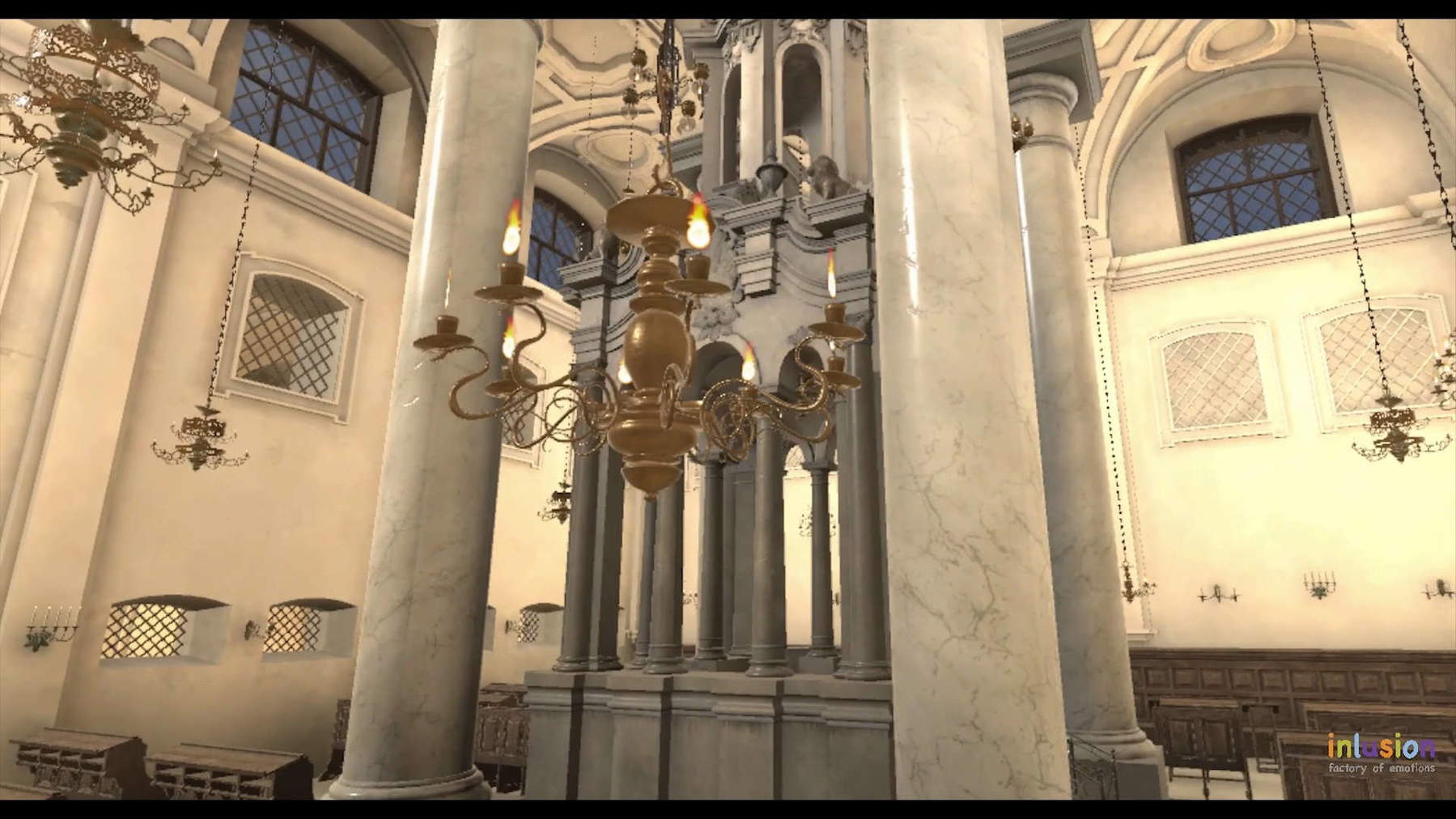
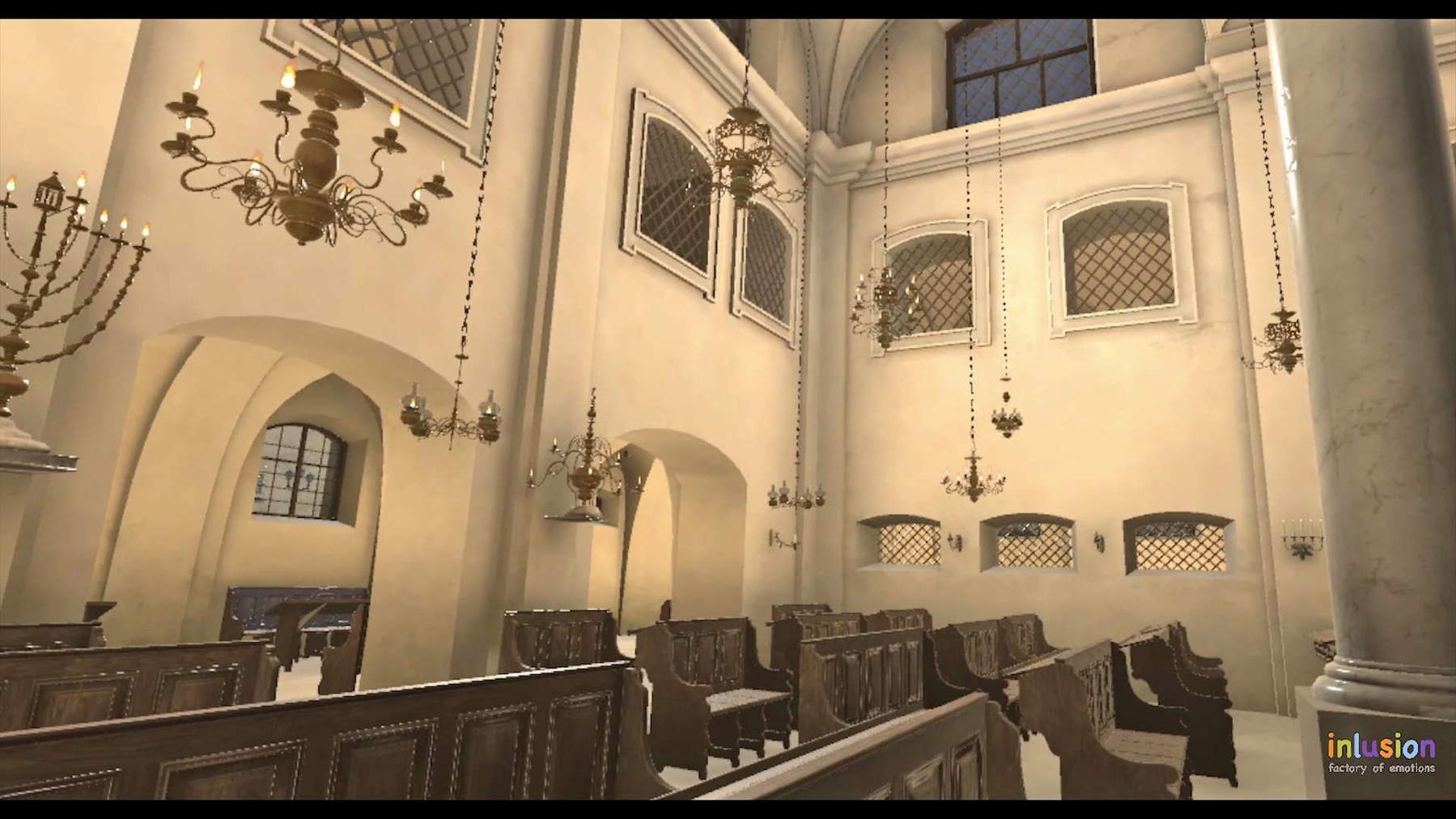
These objects thus allow us to connect the architectural space to the people who used it. The synagogue emerges not merely as a monumental building, but as a lived-in space, organized according to specific customs and frequented by a community in which roles, associations, responsibilities, and social relationships existed.
Among the plaques found, one is particularly significant. It indicated a seat donated by Gitel Klachek, wife of the late Yechezkel, Shamash d’Mata—a term referring to the city’s sacristan. The name allows us to directly link the artifact to a family that played a prominent role in the economic and social life of the local Jewish community. The Klachek family was, in fact, a wealthy and influential family that owned numerous businesses in the streets surrounding the Great Synagogue of Vilnius. The plaque thus provides a tangible record of the importance that certain families held within the community and allows us to connect the history of the building to the everyday lives of the people who lived and worked in its immediate vicinity. Yechezkel, Gitel Klachek’s husband, was apparently a public official serving the city’s Jewish community. His duties included a range of practical and organizational tasks: he handled day-to-day matters, announcements, and errands on behalf of the community. The plaque commemorating the seat donated by his wife thus serves as a small but significant testament to the network of relationships that revolved around the Great Synagogue.
It is precisely this intersection of architecture and individual memory that, according to the excavation directors, makes the new campaign particularly important. The surfaces, plaques, and other artifacts allow us to establish an almost personal connection with the people who prayed in the synagogue and with the community life that developed around the building over the centuries. Among the artifacts discovered is a small metal plaque engraved with the Ten Commandments. This object, too, serves as particularly significant evidence of the complex’s religious function. The plaque joins the other materials unearthed during the excavations and helps reconstruct the spiritual environment in which the Great Synagogue was situated.
 |
| Lithuania: Major Discoveries at the Great Synagogue of Vilnius—The Bimah Resurfaces, Artifacts Unearthed |
Warning: the translation into English of the original Italian article was created using automatic tools. We undertake to review all articles, but we do not guarantee the total absence of inaccuracies in the translation due to the program. You can find the original by clicking on the ITA button. If you find any mistake,please contact us.