





The Archaeological Park of Pompeii has employed artificial intelligence tools for the first time to create, in collaboration with theUniversity of Padua-Digital Cultural Heritage Laboratory, a digital reconstruction that is based on data from archaeological surveys conducted by archaeologists from the Ministry of Culture.
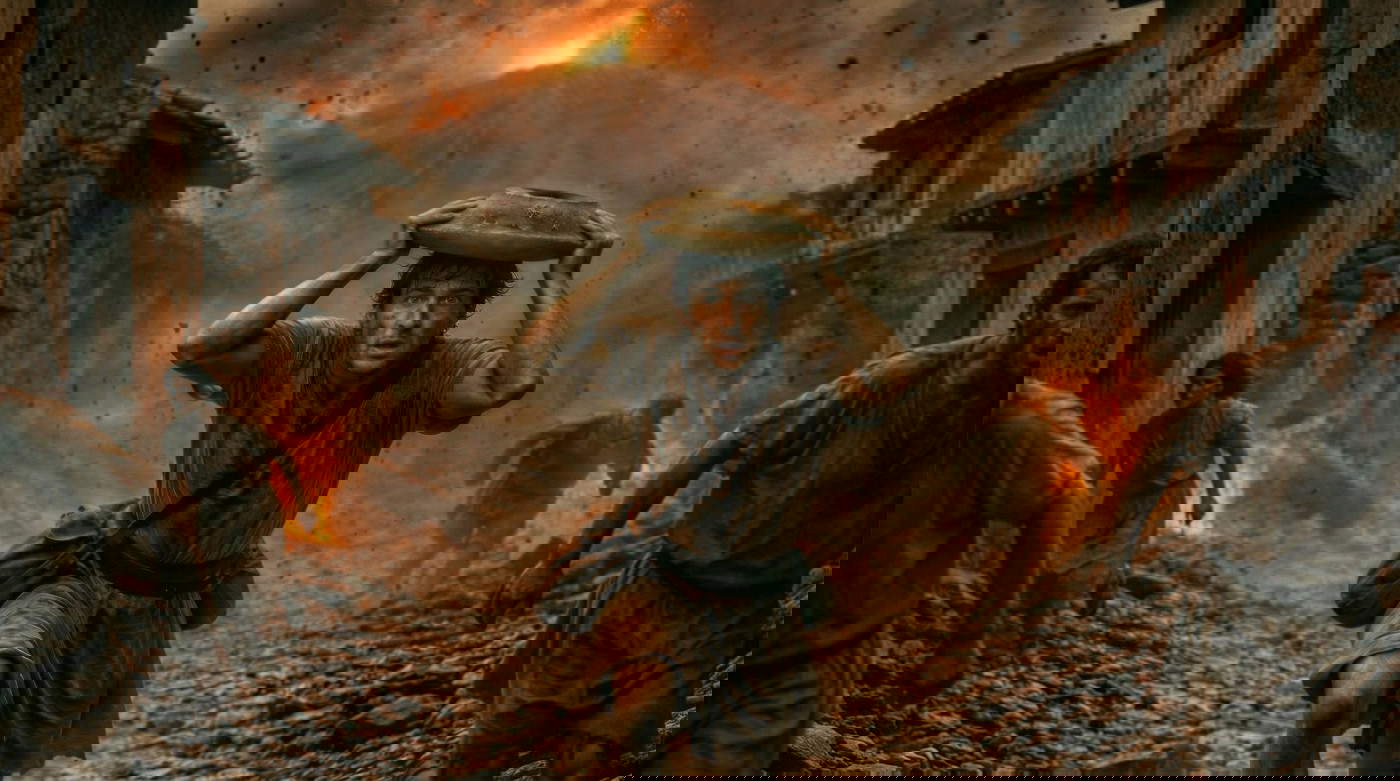
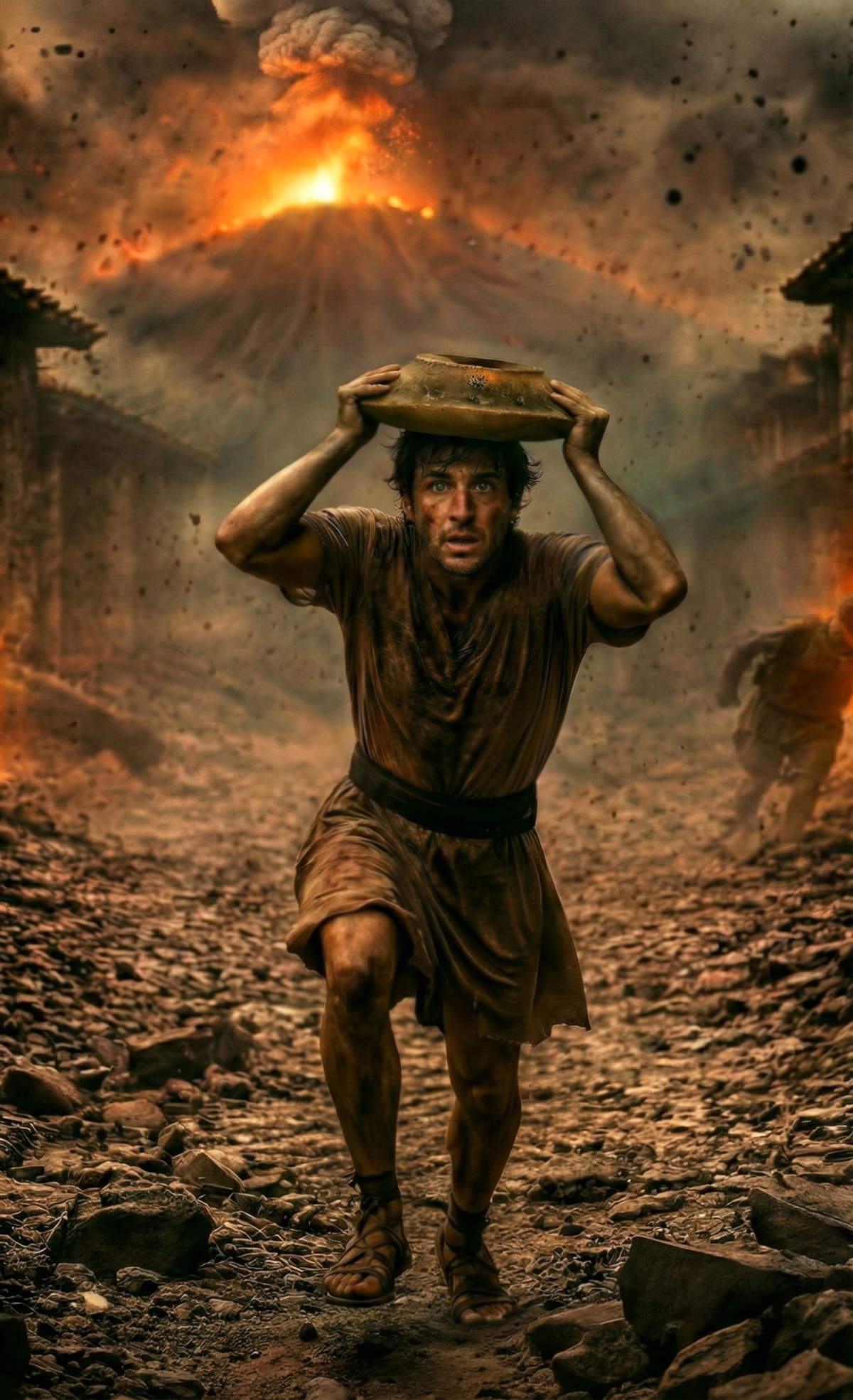
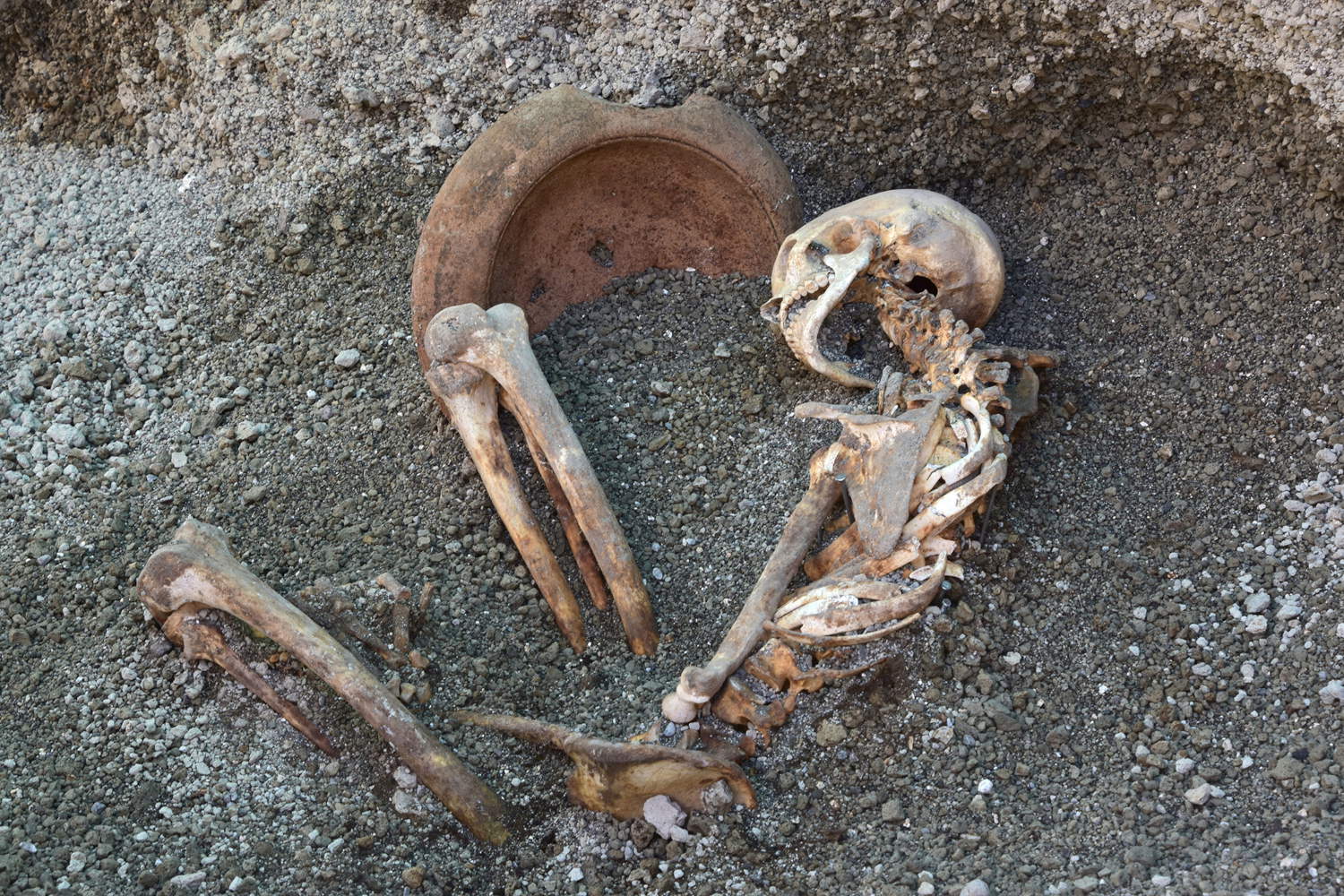
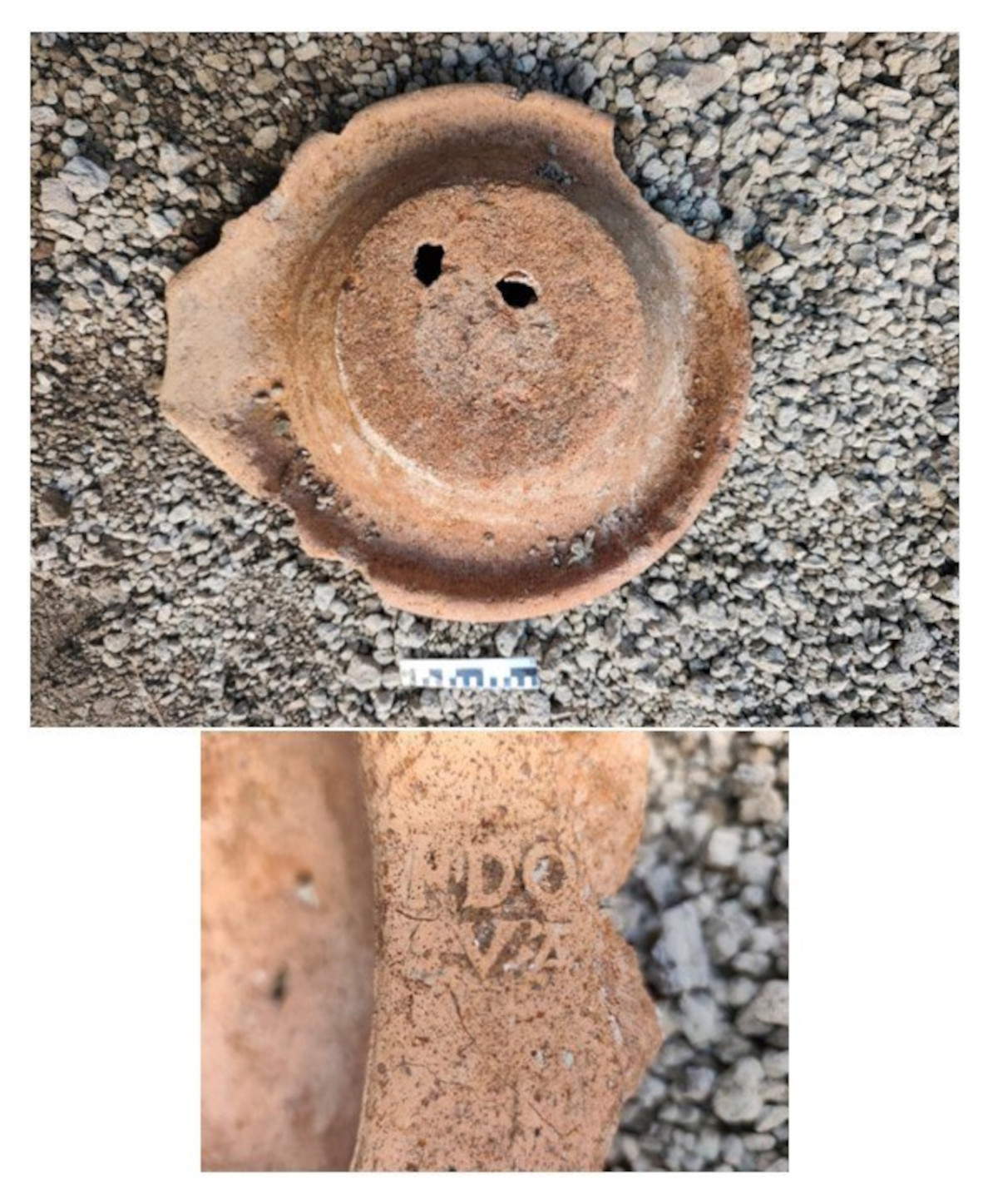
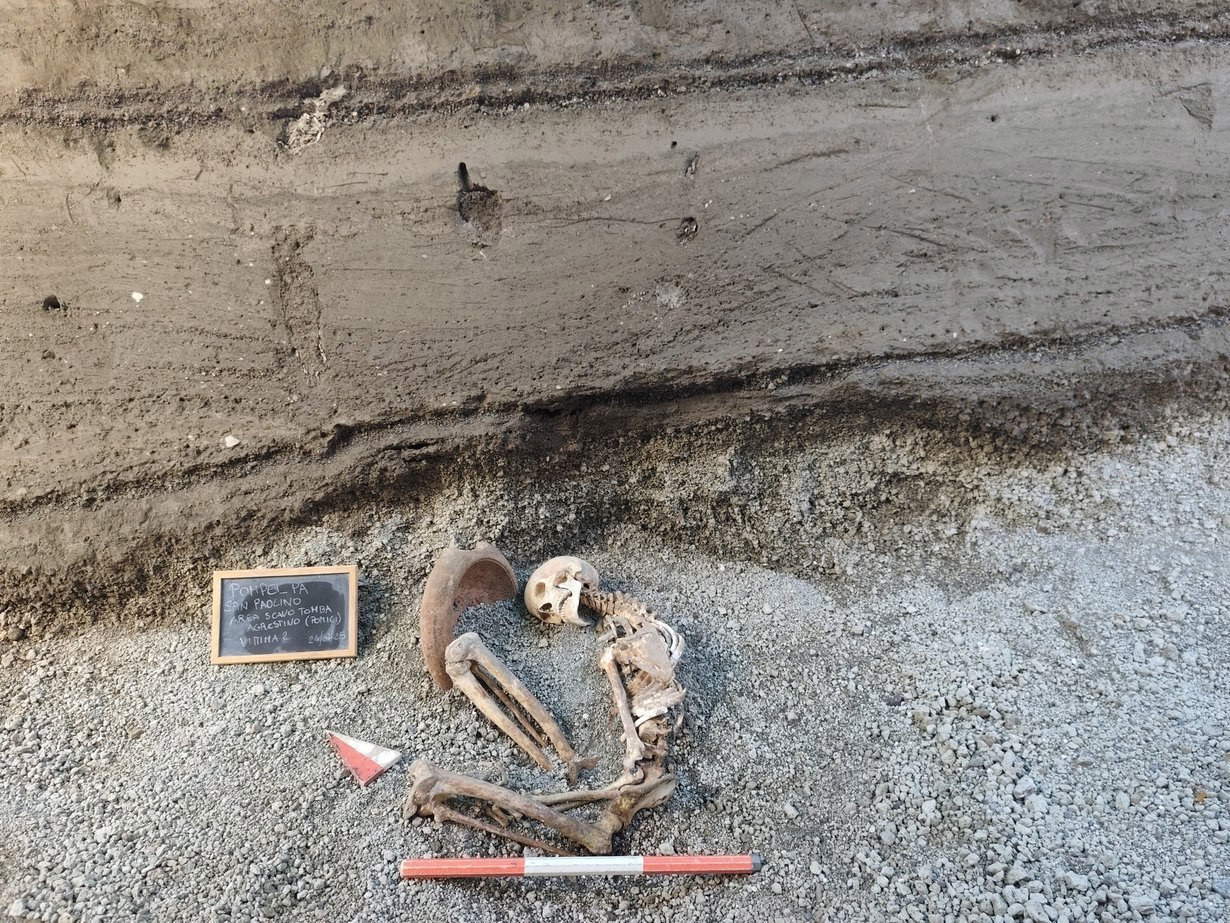
The reconstruction project concerns a man who died during the eruption of Vesuvius in 79 AD, an event that destroyed the city in less than 24 hours. The individual was found with a terracotta mortar, probably used as protection against falling lapilli and volcanic fragments. This gesture recalls what was recounted by Pliny the Younger, who in a letter describes how fleeing people sought shelter by using objects or pillows tied to their heads to defend themselves from the eruptive material.
The discovery came during recent excavations at the Porta Stabia necropolis, just outside the walls of ancient Pompeii, as part of investigations into the schola tomb of Numerius Agrestinus Equitius Pulcher. Archaeologists unearthed the remains of two men who attempted to flee to the coast during the eruption. Their deaths, which occurred at different times during the eruption, provide new elements for understanding the dynamics of the catastrophe and the difficulties faced by the inhabitants along the escape routes.
The younger of the two was probably hit by a pyroclastic current, a searing cloud composed of ash and toxic gases, while trying to get away from the city. The other, older, died a few hours earlier during a violent rain of lapilli as he tried to protect his head with the mortar found next to his body, which was visibly damaged. He also had with him a ceramic oil lamp, useful for orientation in low-visibility conditions, a small iron ring on his left little finger, and a hoard consisting of ten bronze coins.
The digital model, which offers a reconstruction of the second victim, was created by combining artificial intelligence software and photo editing techniques. The goal is to offer a scientifically based yet accessible representation for all. It is an experimental prototype, designed to make the results of archaeological research more understandable even to a non-specialist audience.
“Pompeii is perhaps the most prestigious place in the world for archaeological research,” said Minister of Culture Alessandro Giuli, “where each new discovery illuminates the texture of ancient life in an exciting way. The investigations conducted by these excavations show that innovative methodologies, used with rigor, can give us new historical perspectives. It is in this direction that the Ministry of Culture intends to continue: strengthening the study and Protection of our heritage, supporting research and expanding the ability to transmit knowledge in an increasingly effective way.”
“The vastness of archaeological data in Pompeii and beyond is now such that only with the help of artificial intelligence will we be able to properly protect and enhance it,” said Park Director Gabriel Zuchtriegel. “And it is important that we archaeologists take care of it ourselves, because otherwise others will do it instead of us who do not have the necessary humanistic and scientific background. If used well, AI can contribute to a renewal of classical studies, telling the story of the classical world in a more immersive way. Visiting Pompeii or learning Latin, essentially, means having a deep, unique and beautiful experience, and reconstructions help us engage more people in this adventure.”
“The project opens a broader reflection on the use of AI in archaeology,” added Jacopo Bonetto, professor at the University of Padua. “A technology that can contribute to the production of interpretive models and the improvement of communication tools, but that requires a controlled and methodologically grounded use, always in integration with the work of specialists.”
On the topic of artificial intelligence, the 2026 edition of Orbits - Dialogues with Intelligence is scheduled for July in the Pompeii Archaeological Park. Habitat - Designing the post-AI society, which aims to bring ethics and philosophy back to the center of the technological debate, promoting a conscious use of the digital. Among the protagonists is Luciano Floridi, founding director of the Digital Ethics Center at Yale. “The man of Pompeii fled with a mortar on his head, an oil lamp in his hand, and ten coins: he carried what seemed useful to him to orient himself in the dark. Two thousand years later, AI helps us reconstruct his final moments. The case speaks to all the humanities,” commented Professor Florii. “AI does not replace the archaeologist. Under its control, it expands and deepens its potential; and it makes accessible to many what was previously readable only for a few. Without AI, much of the heritage risks remaining unexplored for those who do archaeology, and mute for those who love it. Marguerite Yourcenar, in the notebooks of ”Hadrian’s Memoirs,“ described her ”exercise“ as ”one foot in erudition, the other in magic“: that magic which consists in transporting oneself with thought into someone else. This is exactly what archaeology has been doing all along: scientifically reconstructing from within a vanished world, and allowing us to imagine it. AI accelerates the yield of that reconstruction, but the magic remains human. Such powerful technology carries real risks. AI produces hypotheses, not truth. Hypotheses must be reviewed, discussed, corrected, supplemented, approved. Scientific responsibility is not delegated. But the risk is not that AI gets it wrong: it is that we stop thinking using it. The humanities teach us just that, to distinguish reconstruction from fantasy. Pompeii, once again, is the great laboratory that instructs us.”
All insights on the discovery of the victims and experimentation with artificial intelligence are published in the E-journal’s in-depth article of the Pompeii excavations https://pompeiisites.org/e-journal-degli-scavi-di-pompei/.
|
| Pompeii, artificial intelligence reconstructs for the first time the escape of an eruption victim |

Warning: the translation into English of the original Italian article was created using automatic tools. We undertake to review all articles, but we do not guarantee the total absence of inaccuracies in the translation due to the program. You can find the original by clicking on the ITA button. If you find any mistake,please contact us.























 IT
IT FR
FR DE
DE ES
ES CN
CN


