





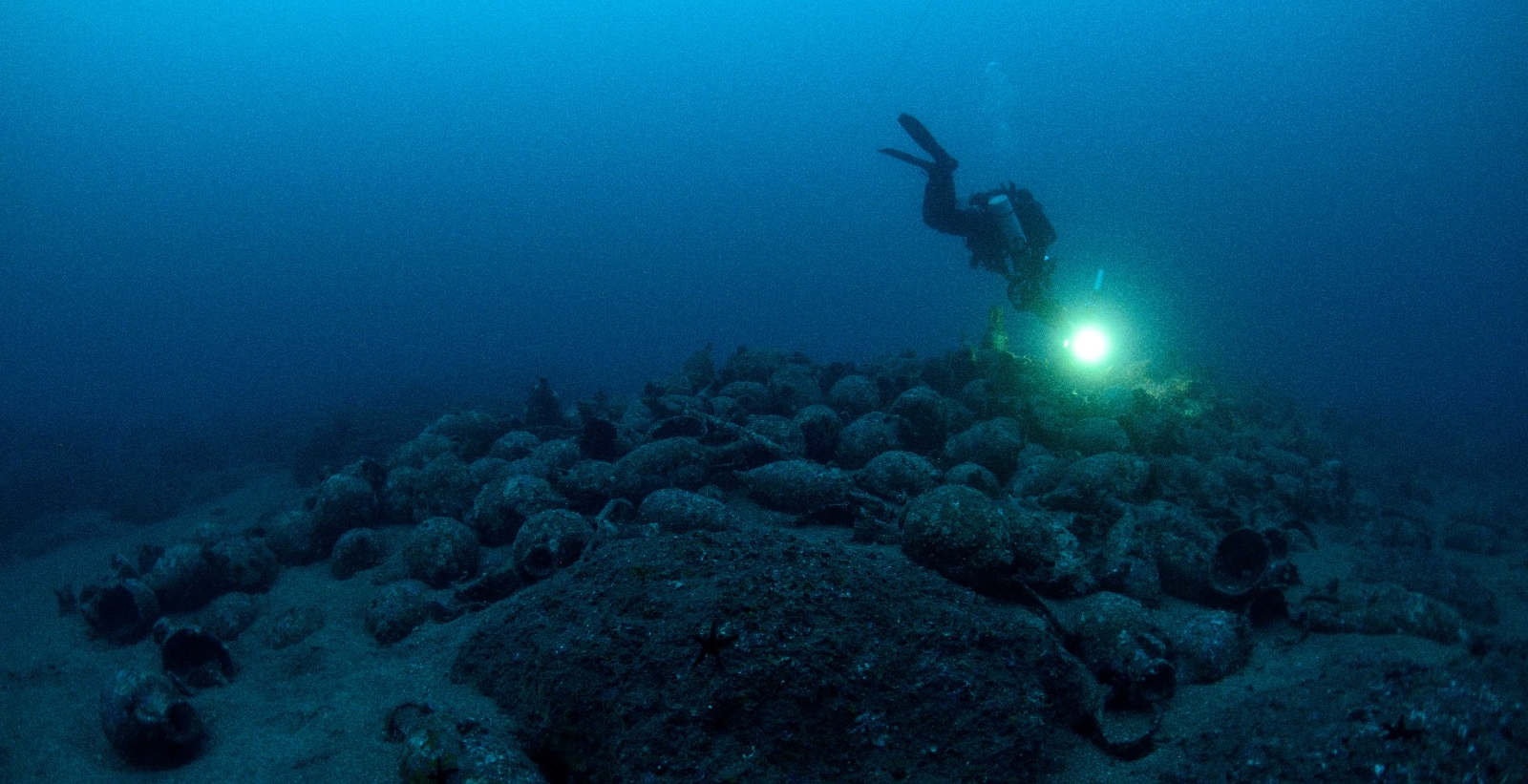
New findings are emerging from the monitoring and research campaign on the Roman shipwreck at Capo Mulini, in the stretch of sea between Acireale and Aci Castello. The investigations, conducted by the Sicilian Regional Superintendence of the Sea, have yielded data that could reshape our understanding of Mediterranean trade routes during the Roman Republican era. Archaeometric analyses indicate that a significant portion of the amphora cargo carried by the ship may have been producedin the Strait of Messina area.
The shipwreck, dating from the last quarter of the 2nd century to the middle of the 1st century B.C., is considered one of the Mediterranean’s most important archaeological sites for the study of trade during that period. Ten years after the initial investigations, the campaign included a three-dimensional photogrammetric survey of the site and the recovery of amphorae, brick fragments, and samples of lead from the anchors and bilge pipes, all of which will be subjected to further analysis. The operations were coordinated by archaeologist Roberto La Rocca with the support of the Coast Guard and honorary inspectors Giamichele Iaria, Leonardo Leonardi, and Fabio Portella.
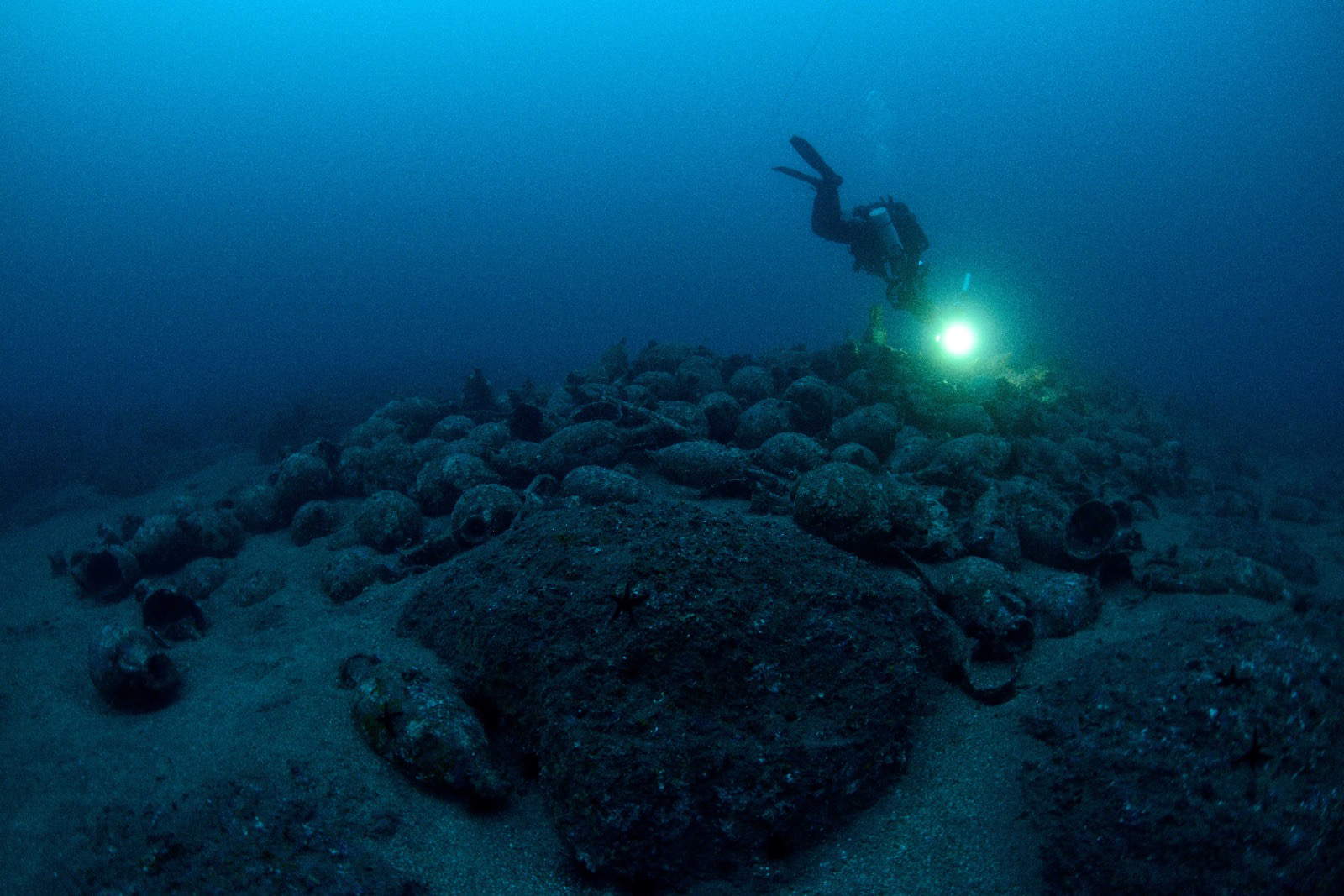
“The underwater archaeological research conducted so far,” said Francesco Paolo Scarpinato, Councilor for Cultural Heritage and Sicilian Identity, “opens up new possibilities regarding the origin of the cargo and the trade routes of Sicily during the Roman Republican era. Protecting our submerged heritage means generating new knowledge, highlighting our history, and strengthening the island’s cultural identity.”
“The success of this operation,” emphasized the Superintendent of the Sea, Emanuele Turco, “confirms the high operational capacity of the Superintendence of the Sea and the effectiveness of the collaboration between institutions and specialized professionals. The data collected will make a significant contribution to reconstructing the navigation and trade routes that involved eastern Sicily during that period.”
 |
| Sicily: Findings from an Analysis of a Roman Shipwreck Provide Insights for the Study of Trade in the Mediterranean |

Warning: the translation into English of the original Italian article was created using automatic tools. We undertake to review all articles, but we do not guarantee the total absence of inaccuracies in the translation due to the program. You can find the original by clicking on the ITA button. If you find any mistake,please contact us.





























 IT
IT FR
FR DE
DE ES
ES CN
CN


