





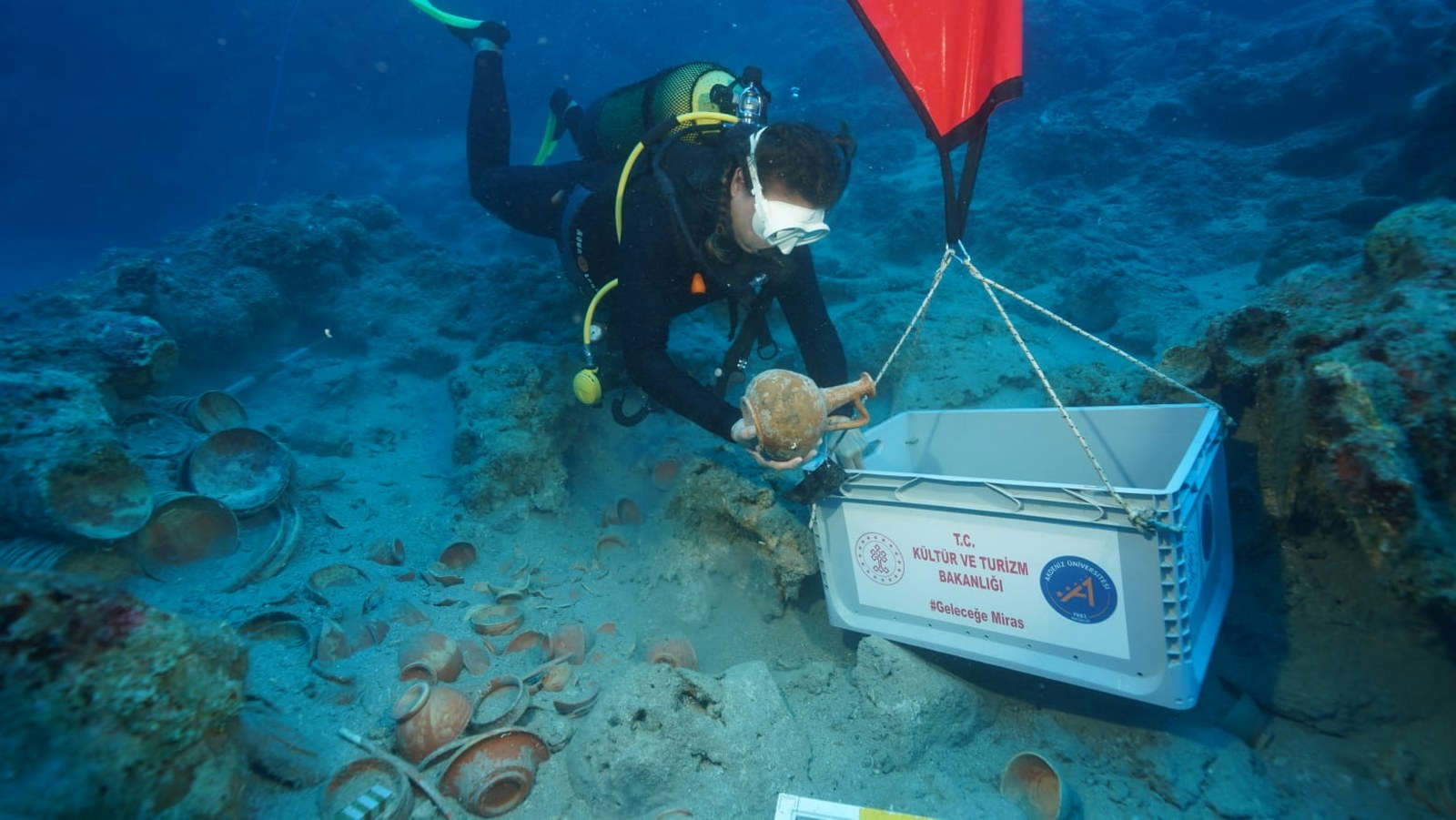
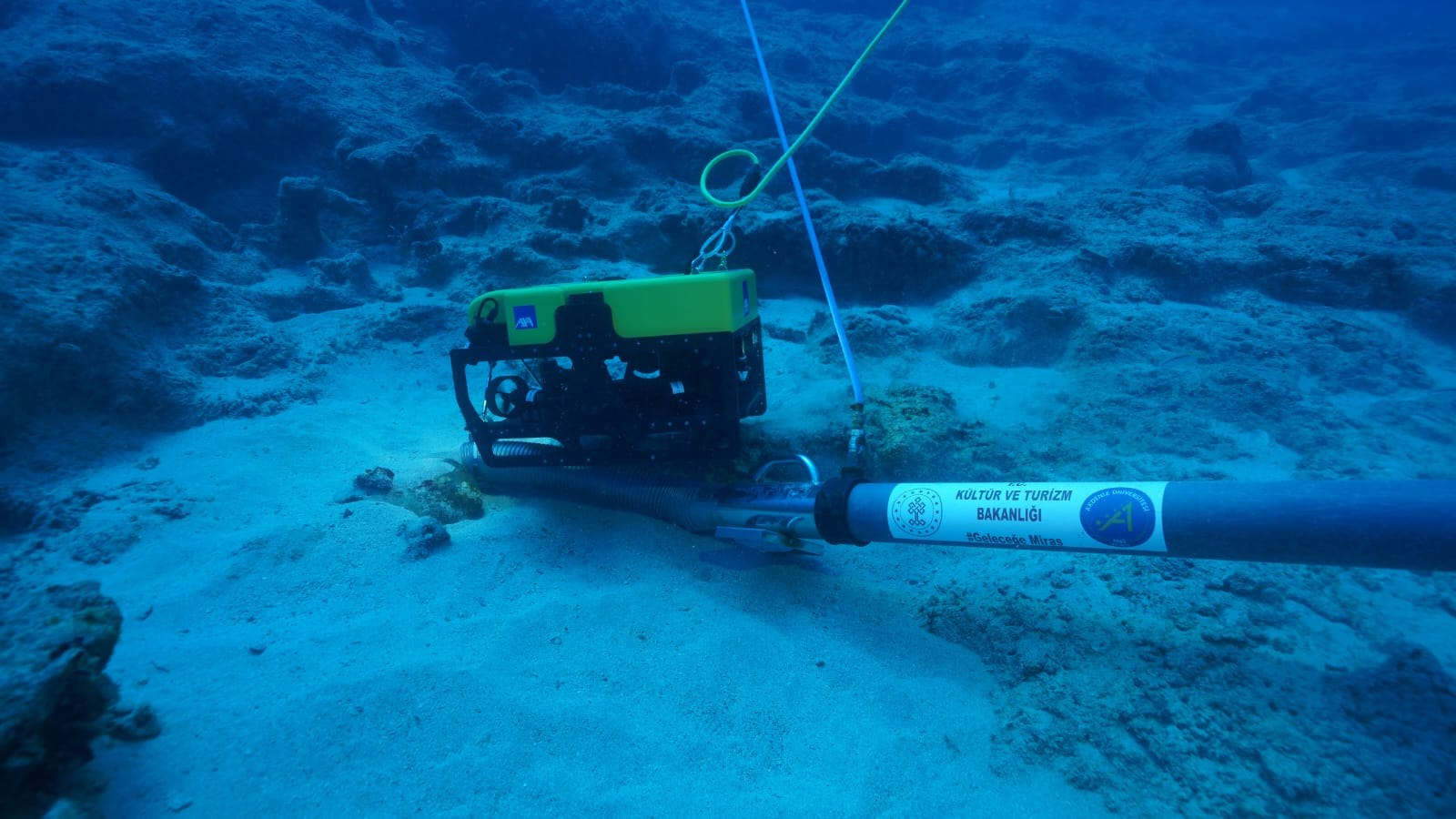
In the sea off the coast of Adrasan, on Turkey’s southern coast, thousands of plates and bowls that have lain on the seafloor for about 2,100 years are coming to light. They are part of the cargo of an ancient merchant ship that sank at a depth of between 42 and 55 meters and represent a particularly important record of the movement of goods in the Mediterranean on the eve of the Roman Imperial era. The main cargo consisted of pottery produced in the area of ancient Rhosus—now Arsuz—in Hatay Province, but amphorae likely originating from other production centers in the Aegean have also been identified in the wreck. The excavation campaign of the wreck, located off the coast of Adrasan, in the district of Kumluca, began in 2025 and is being conducted by the Center for Underwater Archaeology Research atAkdeniz University in Antalya, under the direction of Hakan Öniz, chair of the Department of Conservation and Restoration of Cultural Heritage at the same university, in collaboration with the Antalya Museum. Investigations are also continuing with the use of underwater robots.
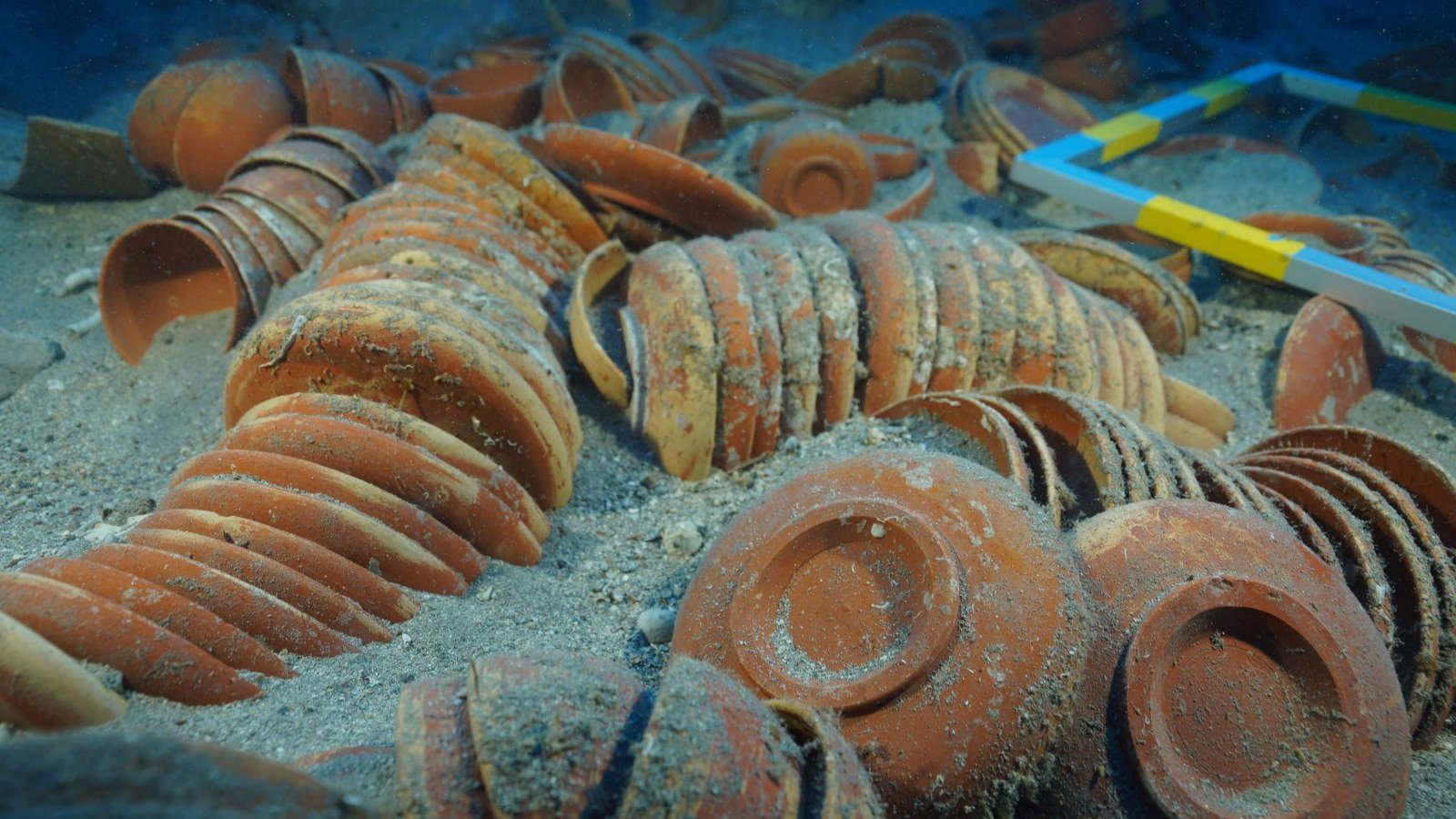
Above all, the shipwreck is offering a rare opportunity to directly observe the circulation of a type of pottery that ancient sources link to production in Rhosus. In fact, 122 different shapes and sizes have been identified in the cargo: plates for dried fruit, soup bowls, fish plates, and trays of various sizes. This collection allows us to reconstruct not only ceramic production but also certain aspects of dietary habits and table culture in the ancient Mediterranean. Pottery from Rhosus was considered a high-quality product and, according to information regarding the wreck, was in particularly high demand in Rome. The presence of such a substantial cargo aboard a ship likely bound for the west thus allows us to concretely trace one of the routes through which goods produced on the eastern shores of the Mediterranean reached the markets of the Roman world.
Furthermore, the name Rhosus is not unknown to ancient literary sources. In 50 B.C., Cicero, in a letter to his friend Atticus, wrote that he had ordered pottery from Rhosus. This reference in the letter takes on particular significance in light of the discoveries from the Adrasan shipwreck: the objects recovered from the seabed can in fact be linked to a production tradition also documented in written sources from that period. The comparison between archaeology and ancient sources thus allows us to give concrete substance to a commercial activity that would otherwise be documented only in a fragmentary manner. The pottery mentioned by Cicero is no longer merely a product recalled in a letter: a cargo of artifacts traceable to the same production area has been identified inside a ship that sailed the Mediterranean trade routes.
What makes the discovery even more significant is the variety of the cargo: alongside the products attributed to the Rhosus area, amphorae were in fact found that may have been manufactured in certain centers on the Aegean islands. The merchant ship was therefore not carrying a homogeneous cargo from a single location, but rather gathered products from different production areas, likely destined for various markets along the route. The composition of the cargo thus provides a concrete picture of the intensity of trade in the ancient Mediterranean: different goods could be collected and transported by the same ship, which consequently linked the coasts of Anatolia and the Levant with the Aegean, Greece, and finally Italy.
The state of preservation of the artifacts is also particularly interesting: a significant portion of the plates and bowls have survived to the present day in surprisingly good condition, and archaeologists believe that the method used to pack the cargo before departure played an important role. The pottery was, in fact, arranged inside wooden crates, with clay inserted between each object: this material likely helped prevent the vessels from bumping into one another during the journey. A packing technique designed to protect a commercial cargo has thus, two thousand years later, become one of the reasons for the objects’ good state of preservation.
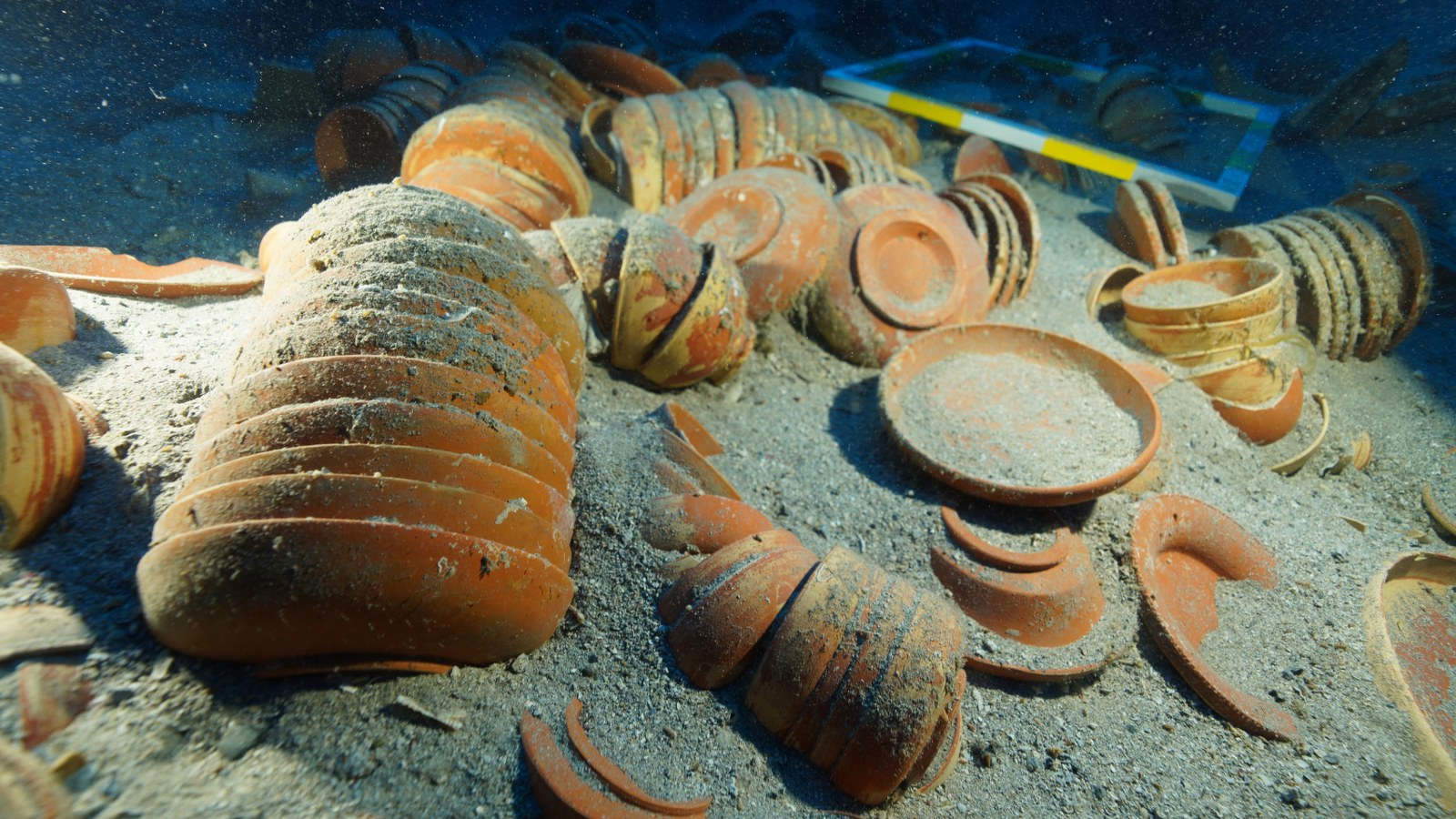
The artifacts thus allow us to observe various aspects of the economic and material life of the era simultaneously: the shapes of the vessels document the techniques and choices of the manufacturers; the variety of types provides insight into dining practices; while the concentration of tableware within a single ship attests to the commercial scale of production.
There is also another group of artifacts useful for establishing the chronology of the shipwreck: these are bronze coins produced in or originating from the Antioch region and dating to the 1st century B.C. Their presence is one of the elements used to date the shipwreck and the ship’s voyage to around the middle of the 1st century B.C. According to the interpretation proposed by archaeologists, the ship likely set sail from the Arsuz area and was part of a trade network connecting Antioch, the Aegean, Greece, and the Italian coast. The final destination may have been Rome; however, the voyage was cut short off the coast of Adrasan, where the ship struck a shoal during a storm and sank along with its cargo. The wreck thus preserves a sort of snapshot of a trade route that was suddenly interrupted: the shipwreck prevented the goods from reaching their destination, but at the same time preserved a collection of materials that, had they reached land and been distributed on the market, would be much more difficult to trace back to a single voyage today.
In any case, operations at the Adrasan wreck site are not yet complete: archaeologists from Akdeniz University, in collaboration with the Antalya Museum, are continuing their research on the seafloor with the help of underwater technology and robots, because every new find can help clarify the composition of the cargo and, through it, the route taken by the ship.
|
| Turkey: Thousands of 2,100-Year-Old Pottery Shards Found in the Adrasan Shipwreck—They Were Headed for Rome |

Warning: the translation into English of the original Italian article was created using automatic tools. We undertake to review all articles, but we do not guarantee the total absence of inaccuracies in the translation due to the program. You can find the original by clicking on the ITA button. If you find any mistake,please contact us.
























 IT
IT FR
FR DE
DE ES
ES CN
CN


