




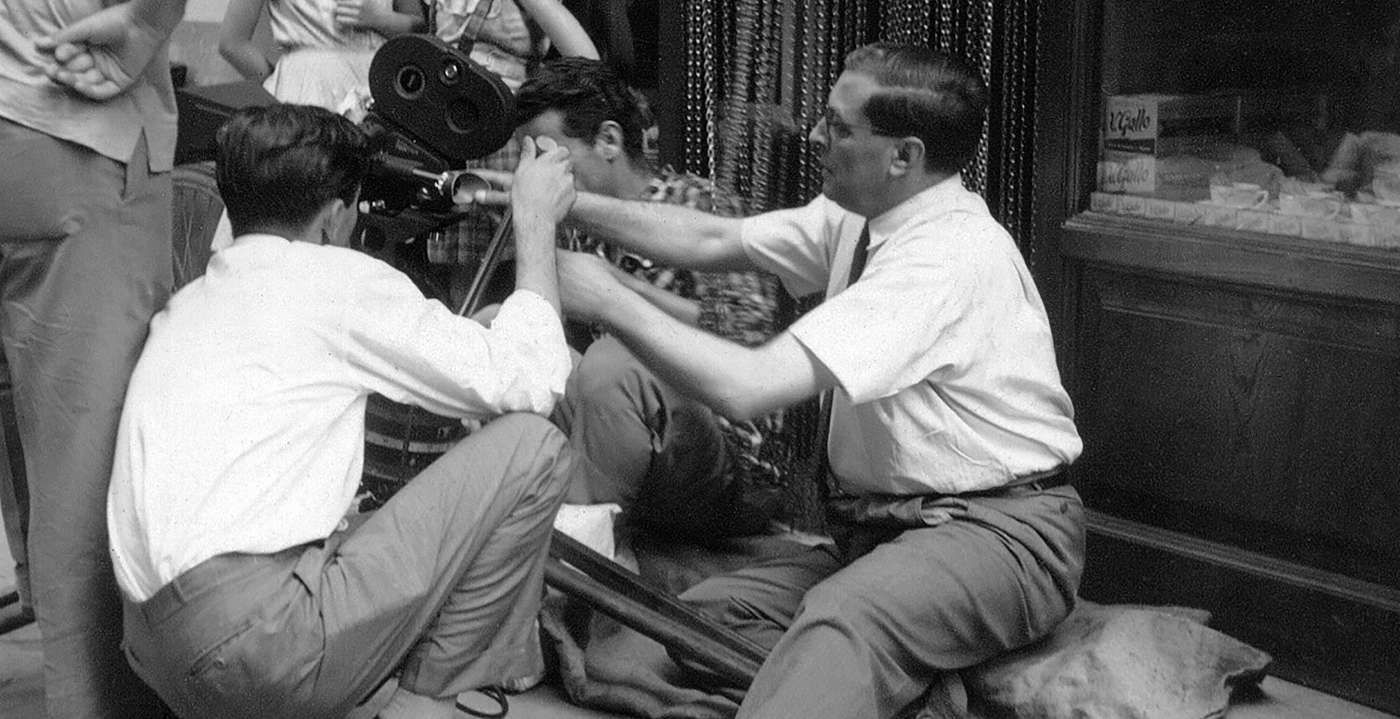
They weren’t simply films about art. Carlo Ludovico Ragghianti, one of the greatest art historians of the 20th century, believed that cinema could become a tool through which to analyze a painting, a sculpture, a building, or a city, making the frame, the movement of the camera, and editing equally valuable tools of criticism: hence the name “critofilm” that Ragghianti had given to his short films. It is this conception of cinema—one of the most original experiments in postwar Italian documentary filmmaking—that returns to the forefront of the Lucca Film Festival with a marathon screening of nineteen of Ragghianti’s critofilms.
The event will take place on Tuesday, September 29, at 9:00 p.m. in the “Vincenzo Da Massa Carrara” conference hall, located within the San Micheletto Complex in Lucca. The event, which is free to the public, is organized by the Licia and Carlo Ludovico Ragghianti Center for Art Studies Foundation, in collaboration with the National Archive of Corporate Cinema and the Olivetti Historical Archive Association of Ivrea. The films will be introduced by the director of the Ragghianti Foundation, Paolo Bolpagni. What makes this event unique is not only the number of works being screened. For the first time, in fact, Ragghianti’s “critofilms” will be presented in their entirety in restored versions, the result of work carried out in recent yearsby the National Archive of Corporate Cinema, where the film collection documenting the Olivetti experience is preserved. The program thus offers the opportunity to retrace almost the entire course of Ragghianti’s creative exploration through nineteen short films produced between 1948 and 1964.
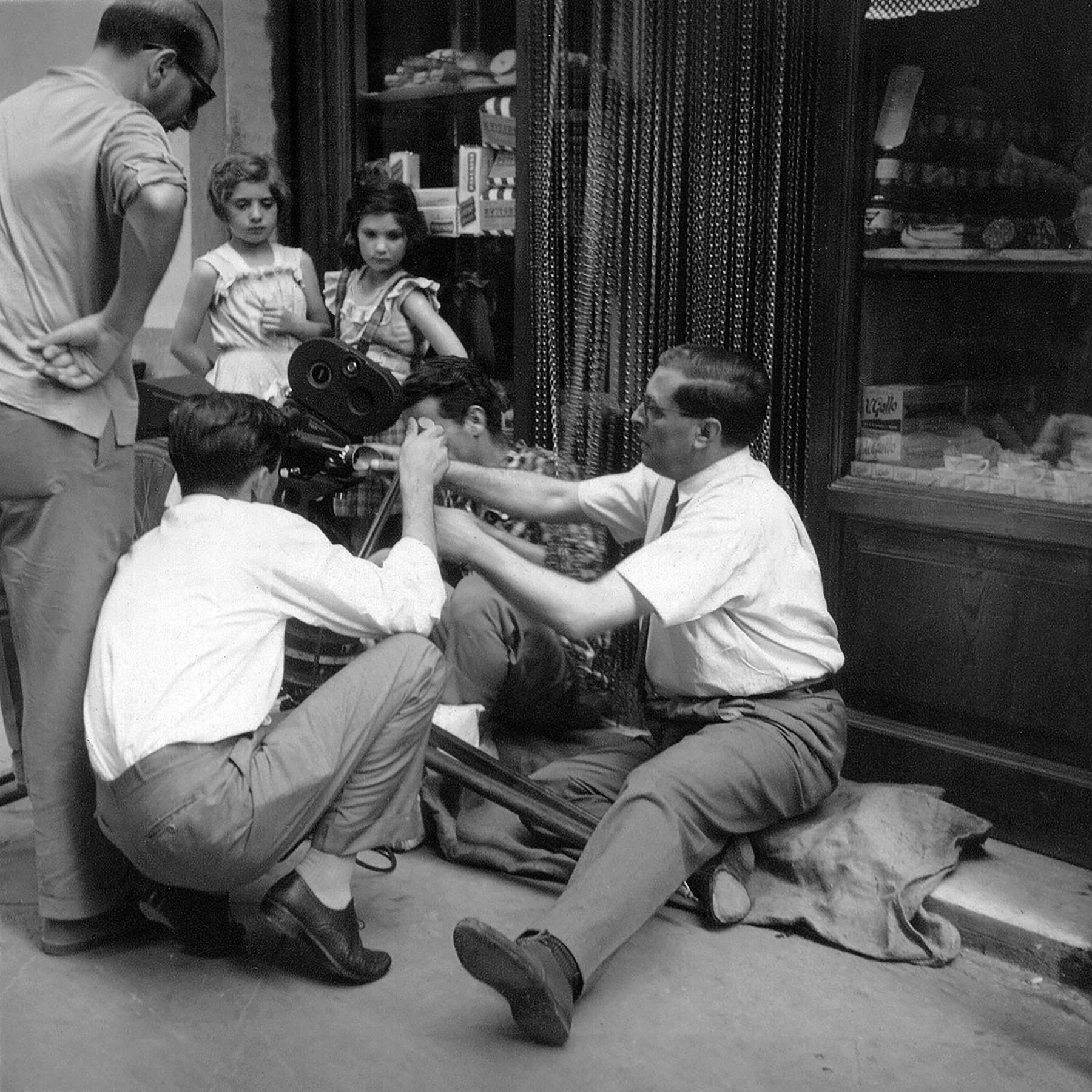
The journey begins with *La deposizione di Raffaello*(1948) and spans more than fifteen years of work, culminating in *Stupinigi*, made in 1964. In between are some of the themes and artists on which Ragghianti focused his attention: from Andrea del Castagno to Piero della Francesca, from Beato Angelico to Botticelli, from Rosai to Antelami. But the scope of his research is much broader and encompasses architecture, urban planning, urban history, archaeology, numismatics, and landscape. In particular, the following works will be screened: *The Deposition* by Raphael (1948), *Millennial Communities* (1954), *The Last Supper by Andrea del Castagno* (1954), *The Style of Piero della Francesca* (1954), *The Style of Beato Angelico* (1955), History of a Square: Pisa’s Cathedral Square (1955), Lucca: A Communal City (1955), Etruscan Urns of Volterra (1957), The Art of Rosai (1957), The Art of Coinage in the Late Empire (1958), Pompeii: Urban Planning (1958), Pompeii: City of Painting (1959), Botticelli’s Fantasy: “The Calumny” ( 1961), The Certosa of Pavia (1961), The Uplands of Tuscany (1961), The Malatesta Temple (1962), The Grand Canal (1963), Antelami, the Baptistery of Parma (1963), and Stupinigi (1964).
These titles point to a conception of art far removed from the idea of a mere visual catalog of works. Ragghianti—a critic, theorist, and art historian who ranks among the most important figures of 20th-century Italy—used the medium of film to construct a form of analysis that could not simply be transferred to the written page. The movement of the camera, in fact, allows one to traverse a work, to establish relationships between details and the whole, and to vary the distance from the subject. Editing then organizes this journey according to a sequence that itself becomes part of the interpretation.
A painting is therefore not merely shown: it is explored. The camera can linger on a figure, follow a line, zoom in on a detail, return to the whole, and establish new relationships between the parts. Cinema thus becomes a tool for making a way of seeing visible. It is in this sense that the “critofilms” constitute one of the most unique experiences of the relationship between art criticism and cinema in the postwar period. Ragghianti does not merely use the language of cinema to disseminate historical and artistic content: he exploits its specific possibilities to develop his own critical discourse.
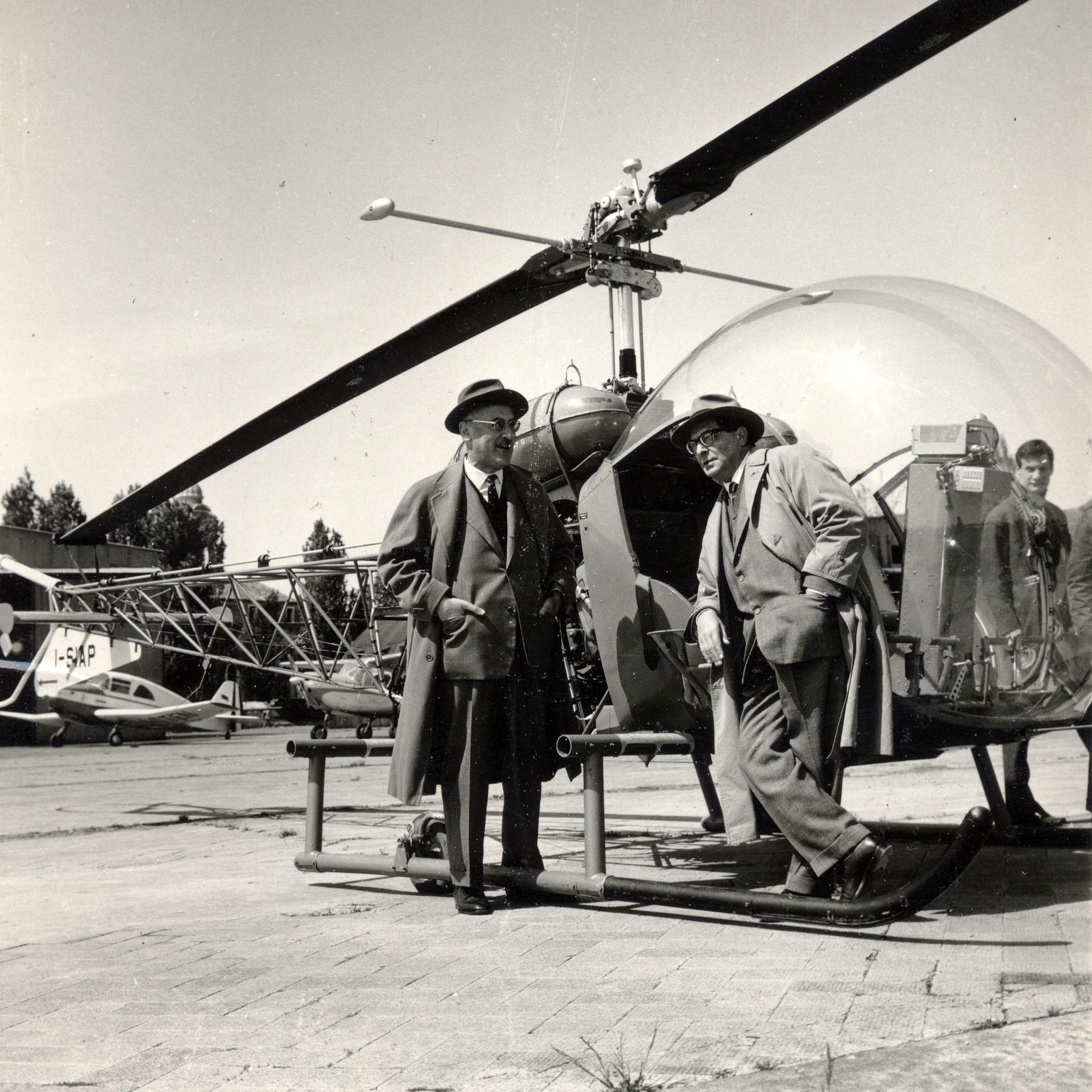
The cinematic endeavor proceeded in parallel with that of *seleArte*, the magazine founded in 1952 by Ragghianti together with his wife, Licia Collobi. The magazine, too, was launched with the goal of spreading knowledge of art, but through cinema, Ragghianti was able to tackle a different problem: how to transform the act of seeing into a narrative and analytical structure composed of moving images. His relationship with Adriano Olivetti is key to understanding the origins of this endeavor. In fact, nearly all of the films were produced by Olivetti’s SeleArte Cinematografica, as part of the cultural policy that made Adriano Olivetti’s company one of the most significant examples of 20th-century Italian culture.
The collection, now preserved at the National Archive of Corporate Cinema in Ivrea, also includes this group of short films and serves as a testament to the attention Olivetti devoted to culture and to experimenting with new tools for communicating it. Cinema thus became part of a broader cultural project. The goal was not merely to produce documents about works of art, but to find forms capable of helping the public better understand them. The choice of film was particularly significant because it allowed for work on the visual experience through a medium that, especially in the 1950s and 1960s, was assuming an increasingly important role in mass culture.
The “critofilms,” however, emerged at a time when the challenge was still relatively new: how to use cinema without reducing art to a cinematic illustration. Ragghianti’s response was shaped by the very form of the film itself. It was not enough to simply show a work; it was necessary to construct a visual journey capable of interpreting it. The Lucca Film Festival’s marathon screening now allows us to observe this experience in its entirety.
 |
| Ragghianti’s pioneering films on art return to Lucca in a marathon of 19 art films |

Warning: the translation into English of the original Italian article was created using automatic tools. We undertake to review all articles, but we do not guarantee the total absence of inaccuracies in the translation due to the program. You can find the original by clicking on the ITA button. If you find any mistake,please contact us.


















 IT
IT FR
FR DE
DE ES
ES CN
CN


