



by Redazione 24/10/2026


Categories: Contemporary art / Disclaimer
Uzbek trumpets, Chinese instruments, conductive fabrics, and electronic systems transform the Turbine Hall at the Tate Modern in London into an ever-changing soundscape. With *Hold*, artist and composer Tarek Atoui explores the relationship between sound, architecture, and the body in an installation designed to evolve over the course of six months.


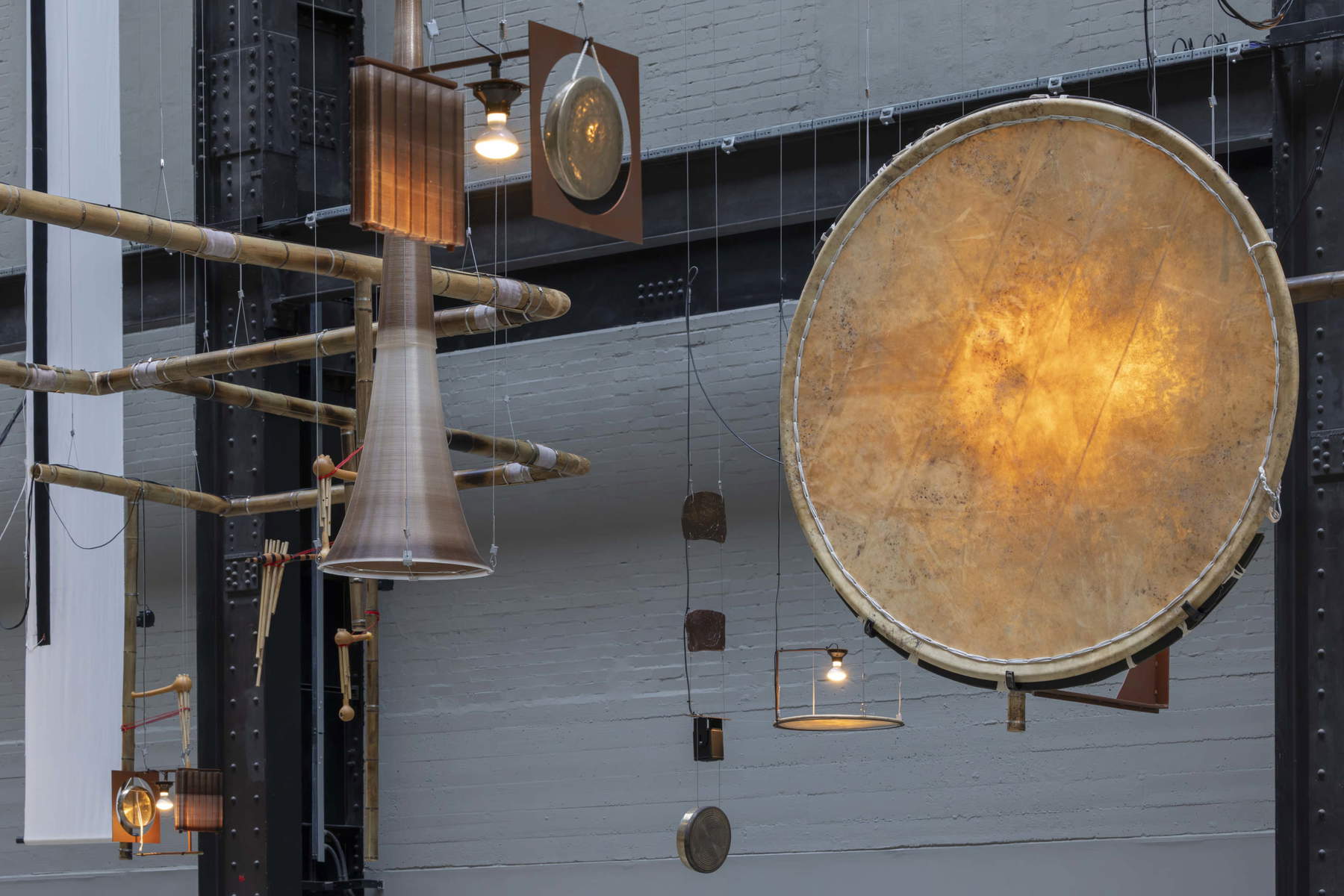
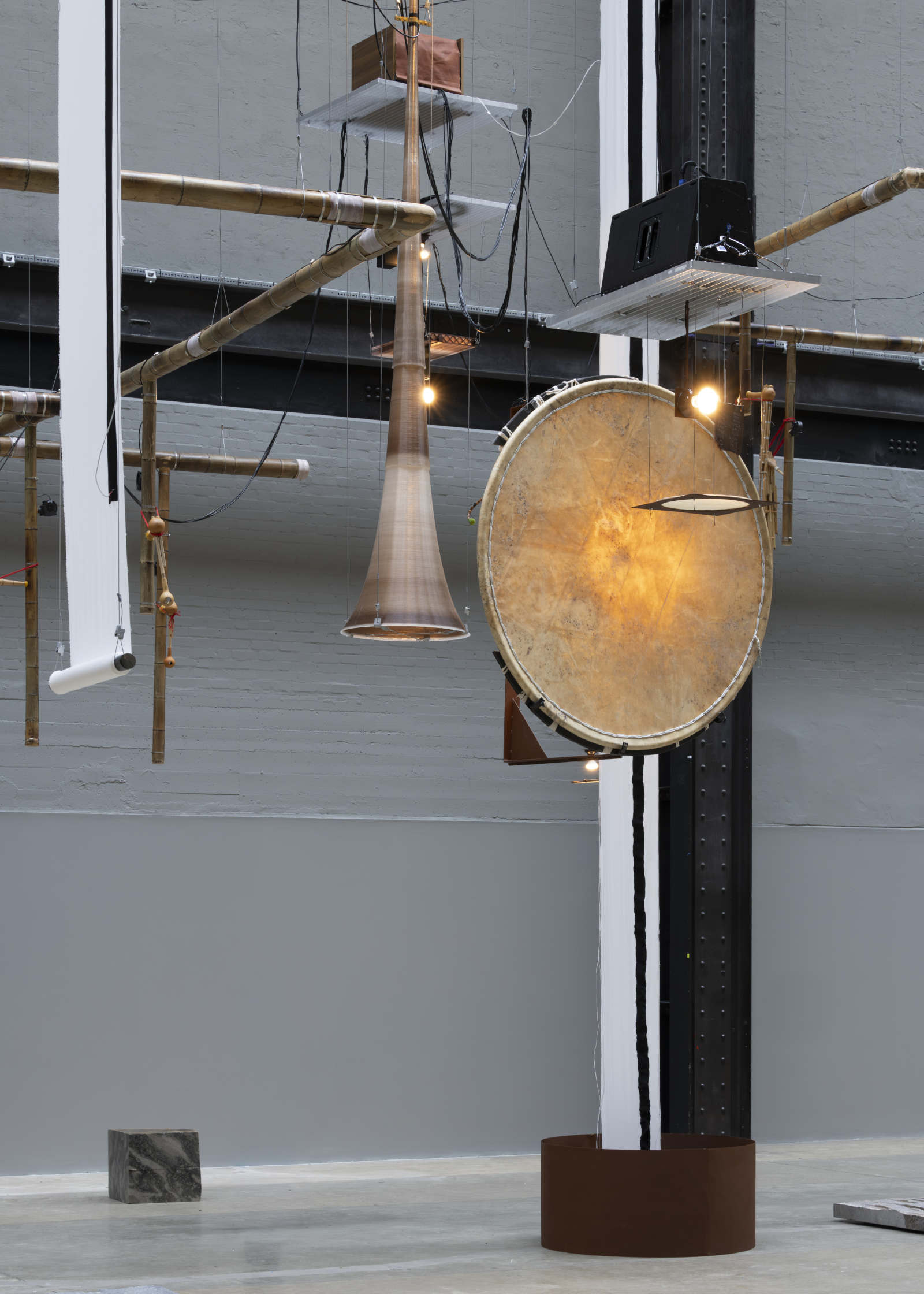
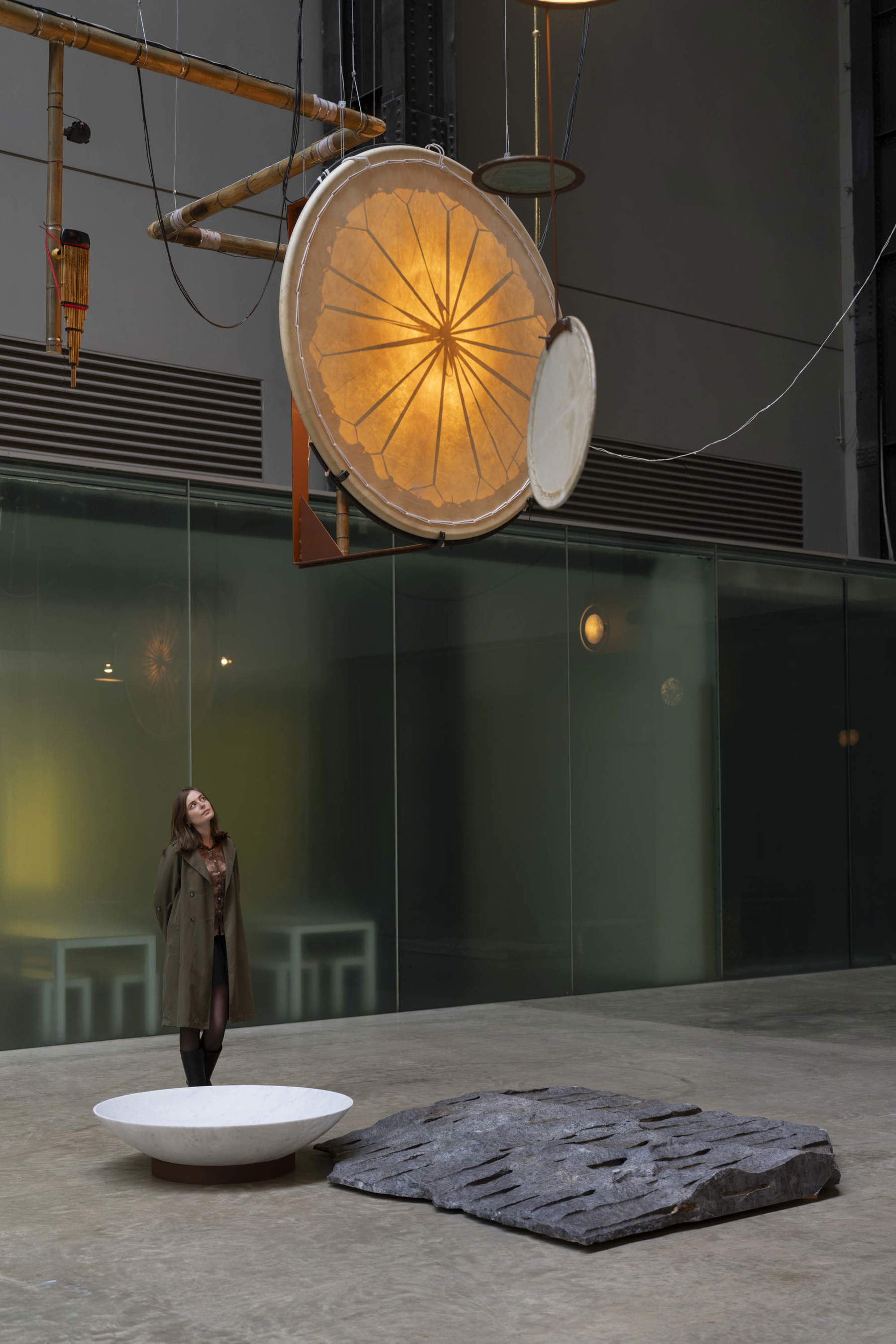
A ceremonial brass trumpet from Uzbekistan, Chinese and Southeast Asian wind instruments, gongs, drumheads, and twenty-meter-long pieces of fabric suspended in space. At the Tate Modern in London, sound takes shape through objects, materials, and air currents, transforming the Turbine Hall into an environment to be explored with the whole body. It is *Hold*, the new multisensory installation by artist and composer Tarek Atoui ( Beirut, 1980), created for the 11th Hyundai Commission and conceived as an ever-evolving orchestra that blends sculpture, music, technology, and social research.

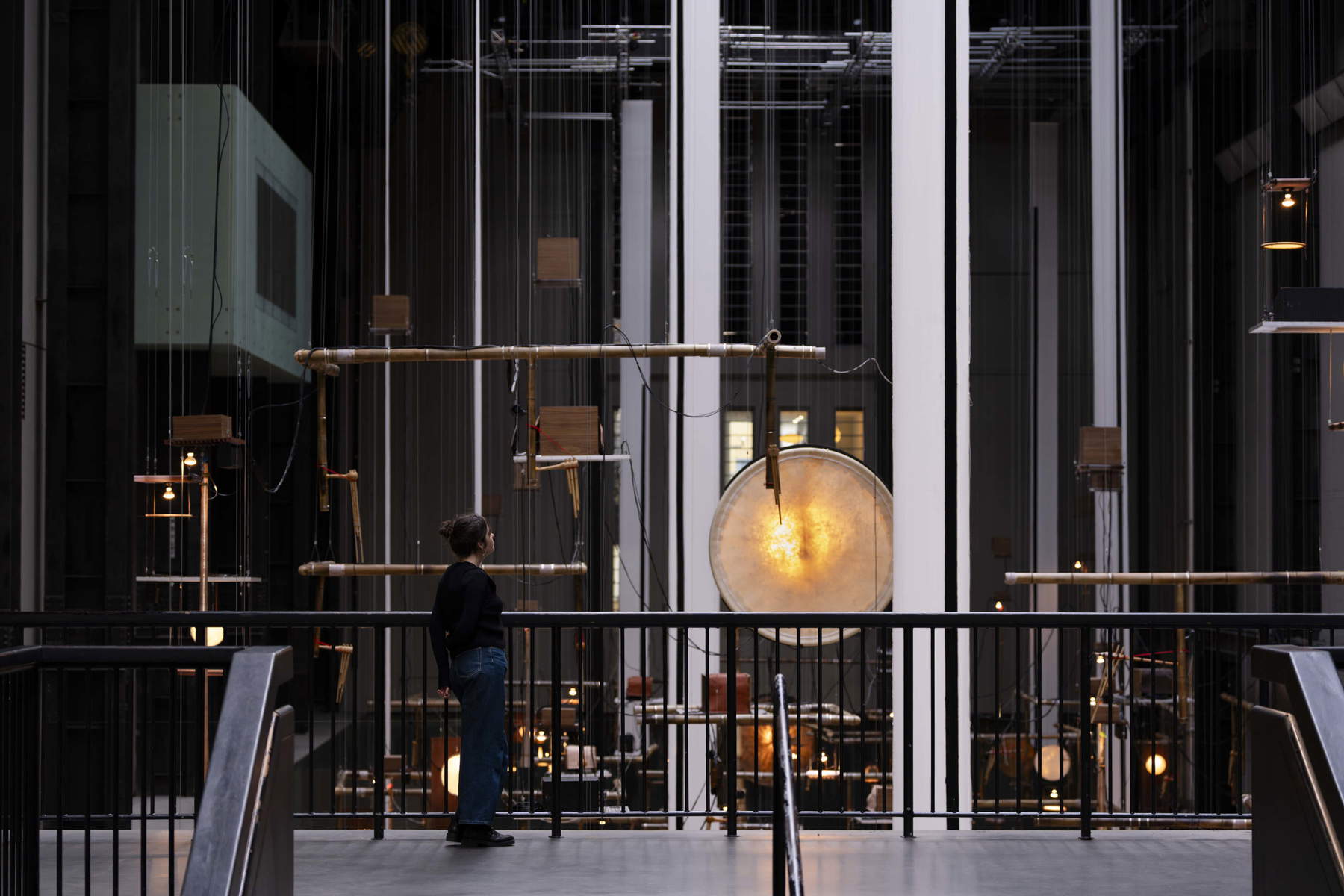
The project engages with the monumental scale of the Turbine Hall, the large industrial space at the Tate Modern that is entrusted to a different artist each year for a new commission. Atoui has created an environment in which the instruments are not simply on display but interact with the architecture, the air, and the presence of visitors. The result is a shifting soundscape, destined to evolve over the course of the six-month exhibition period, in part through live performances.
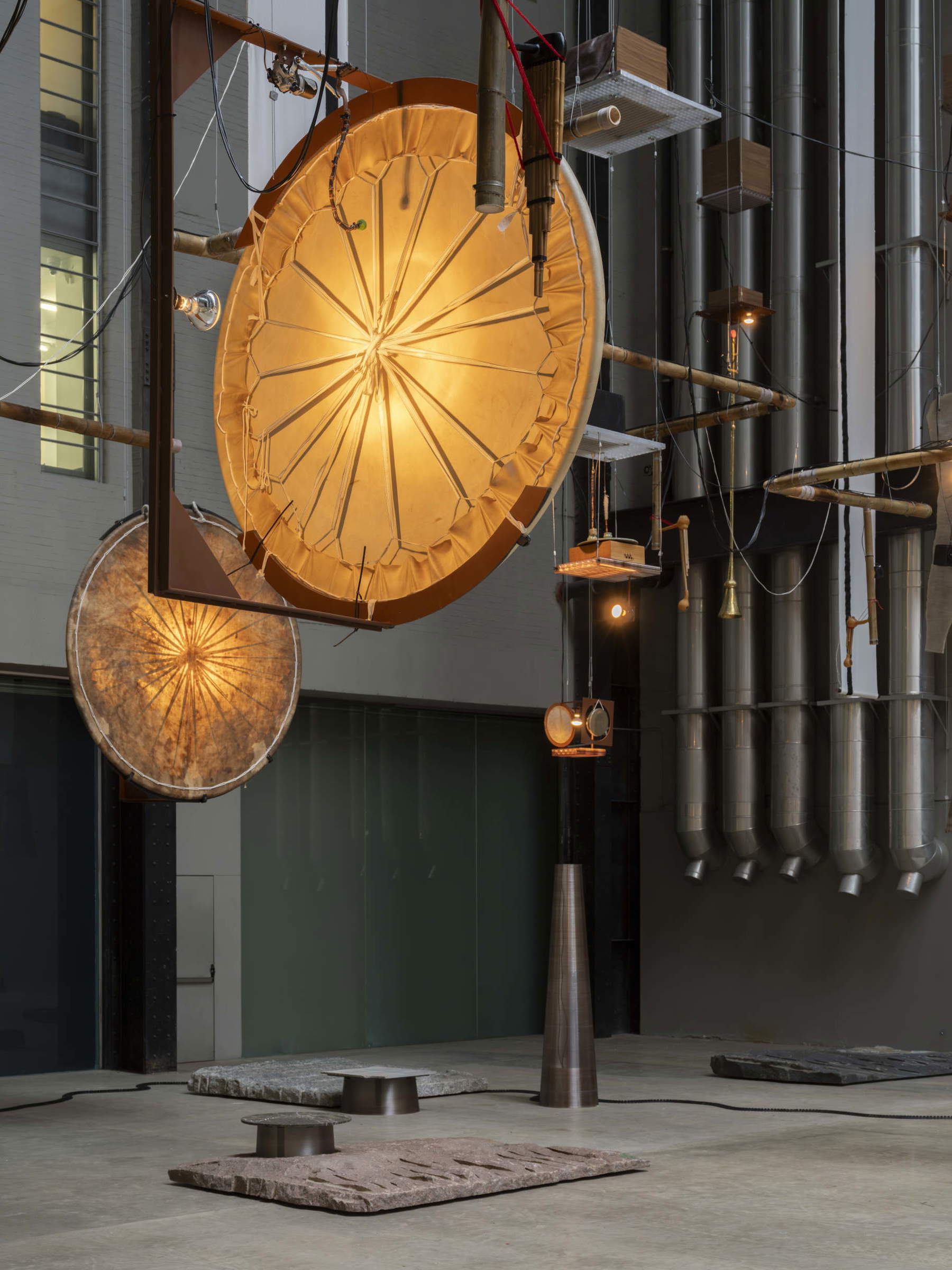
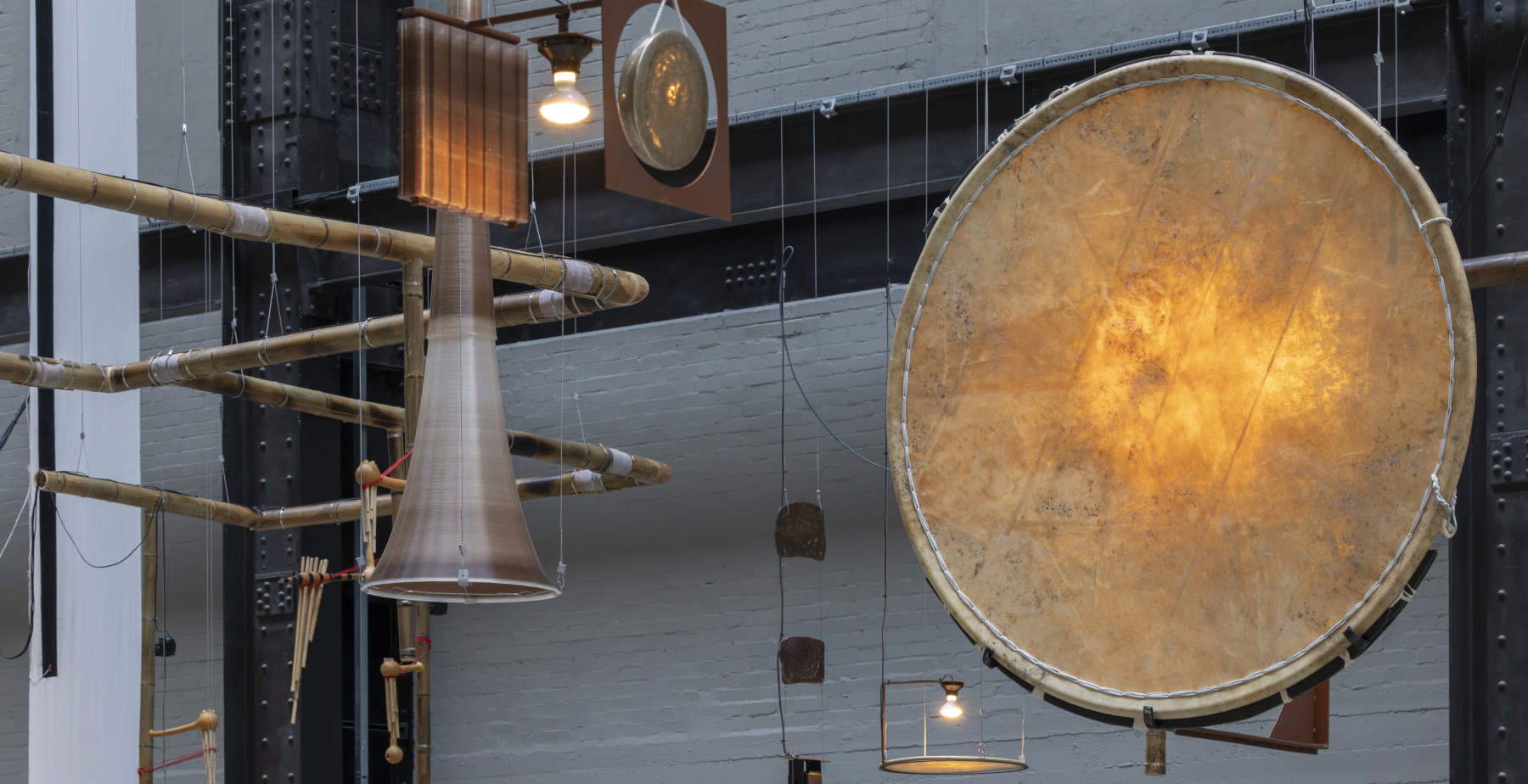
One of the most visible elements hangs above the Turbine Hall ramp: it is a metallic karnai —a long ceremonial brass trumpet from the Uzbek tradition—flanked by two 3D-printed horns that echo and amplify its elongated form. At the opposite end of the hall, drumheads, gongs, horns, and fabrics are suspended within a structure composed of bamboo and sheng—free-reed wind instruments common in China and other parts of Southeast Asia. A computer-controlled motor channels air through these instruments, contributing to the production of sound.


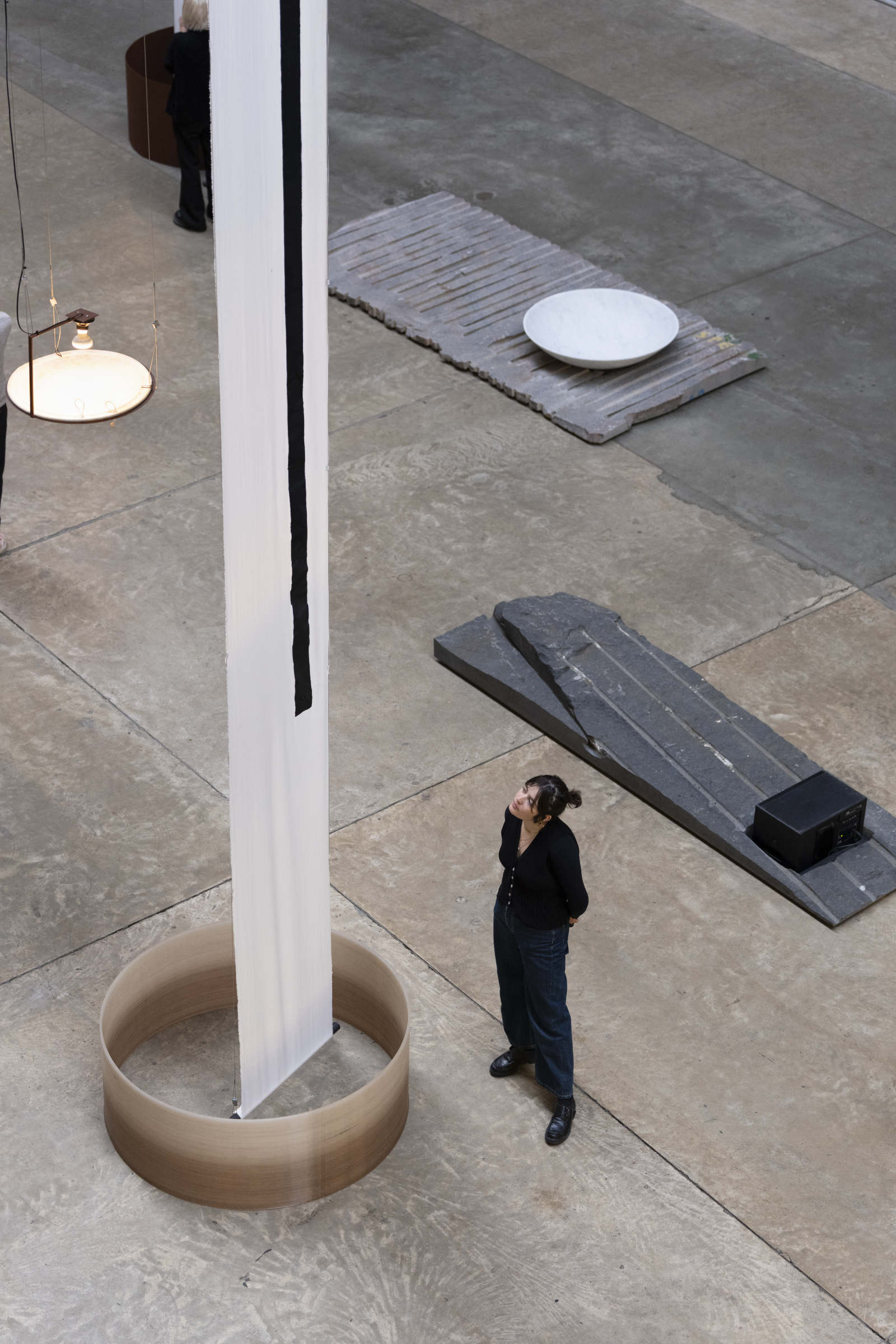
The installation was designed with the specific characteristics of the space in mind: the hall’s exceptional height, the air currents, and its acoustics. Stones reminiscent of lithophones—musical instruments that produce sound by striking stone elements—and warm lighting invite the public to stop, sit, or lie down, observing the suspended structures and paying attention to the vibrations. Listening is therefore not limited to auditory perception but becomes a physical experience, linked to matter and the architectural dimension: Atoui explained the project through memories of gathering places, from areas shaded by vine-covered pergolas to sheltered courtyards. The Turbine Hall, too, is reimagined as a space for gathering and exchange, where sound emerges from the relationship between instruments, the environment, and people.
Ancient Instruments and Experimental Technologies
Hold is the result of over twenty years of experimentation conducted by the artist in collaboration with musicians, instrument makers, engineers, and researchers in Asia and Europe. Throughout this process, Atoui has developed an approach that bridges traditional instruments and contemporary technologies, reworking—for this installation— the sheng, Korean drums, Uzbek horns, and custom-designed electronic systems. To create the two 3D-printed horns, the artist collaborated with the architectural firm Arthur Mamou-Mani. The instruments are made from a composite material based on sugar resin and bamboo powder—a solution that combines technological experimentation with the use of natural materials.
Another key element consists of the suspended fabrics, provided by Satoshi Kondo, designer of ISSEY MIYAKE’s women’s line. Atoui coated them with a conductive paint capable of transmitting a weak electric current to a synthesizer. When the fabrics sway in response to air currents and changes in humidity, the system generates low-pitched tones that evolve over time.
The sounds produced by the instruments and those of the surrounding environment also become part of the composition: microphones integrated into the installation pick up the vibrations of sound-producing objects and the noises of the Turbine Hall, including the buzz of visitors. Software developed specifically by the artist processes these signals and reproduces them, layering them into the overall composition.
The electronic component therefore serves not only to amplify the instruments but also helps create an open system in which sounds are continuously captured, transformed, and returned to the space. Improvisation, a central element in Atoui’s practice, thus takes on a tangible dimension: the work is not a fixed composition but evolves through the interactions between instruments, environmental conditions, and human presence.
Six Months of Music and Events
Throughout the six-month commission, the Turbine Hall will also periodically host sound-based performances. Musicians from the United Kingdom and other countries will be able to interact directly with the installation, playing instruments or connecting to its electronic systems. The program will involve instrumentalists, electronic artists, collectives, and record labels, featuring both Atoui’s long-standing collaborators and new partnerships.
The performative dimension is an integral part of the project: the elements of the installation are not merely a collection of objects to be observed, but a structure that can be used and transformed through the musicians’ interventions. The hall thus becomes a space for sound production, in which the composition unfolds through diverse contributions.
“Hold” is the eleventh Hyundai Commission, a program born from the collaboration between the Tate and Hyundai Motor in 2014. The partnership, initially conceived as a long-term commitment, has been extended through 2036, with the stated goal of supporting artistic innovation and public access to contemporary art. Since its inception, the commission has attracted over 21.6 million visitors to date and has commissioned various artists to engage with the industrial space of the Turbine Hall.
 |
| At the Tate Modern, an artist transforms sound into matter: Tarek Atoui’s installation |
Warning: the translation into English of the original Italian article was created using automatic tools. We undertake to review all articles, but we do not guarantee the total absence of inaccuracies in the translation due to the program. You can find the original by clicking on the ITA button. If you find any mistake,please contact us.