



by Redazione 25/11/2026



Categories: Contemporary art / Disclaimer
The Visitors’ Lions for the 2026 Art Biennale have been awarded, based on votes cast by visitors to both the Giardini and the Arsenale. The award for best artist in “In Minor Keys” goes to Nick Cave, and the award for best national participation goes to the Indian Pavilion.


The Venice Biennale has announced the winners of the Visitors’ Lions at the 61st International Art Exhibition, *In Minor Keys*, the exhibition curated by Koyo Kouoh that closed on November 22. The award for best participant in the International Exhibition goes to American artist Nick Cave. The award for best national participation goes to the Indian Pavilion, located at the Arsenale. The Visitors’ Lions are the awards that, for this edition, were established to replace the traditional jury Lions (Golden Lion and Silver Lion) following the jury’s en masse resignation during the opening days.


Not all visitors were eligible to vote. Voting was reserved for those who, between May 9 and November 22, 2026, had visited both exhibition venues—the Giardini and the Arsenale—with their own ticket. The award therefore reflects the preferences of those who saw the entire Biennale, rather than just part of the exhibition.


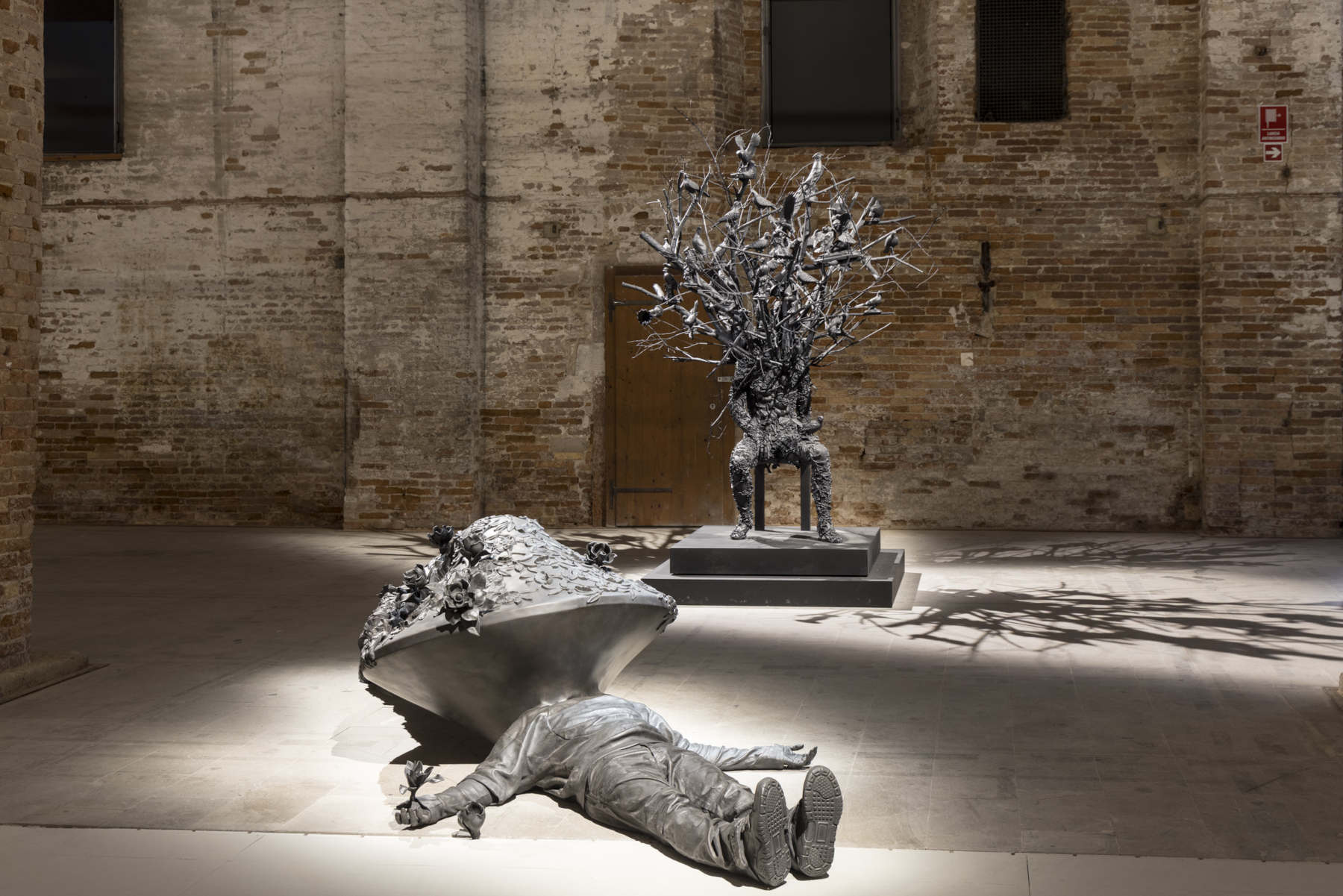
Nick Cave was born in 1959 in Chicago, where he still lives and works. Among the 109 artists invited to the international exhibition, he is the one the public chose to honor. “Nick Cave,” read the description of his work at the Arsenale, written by Denise Markonish, “is a messenger who reveals profound truths about the inextricable intertwining of beauty and pain. From Soundsuits —wearable sculptures creatively adorned with beads, buttons, fur, and brightly colored raffia—to bronze works, immersive installations, and performative activations, the artist reflects on how society is at once divided and interconnected, and exists in a liminal state between life and death. At the 2026 Art Biennale, the series *Two Points in Time – At Once* traces a processional route both inside and outside the Arsenale. The artist presents monumental bronzes and mixed-media installations that include vintage metal trays, flowers painted on household objects, and embroidered self-portraits. The seven stages of the series allude to the stages of grief. The juxtaposition of monumental and domestic registers and materials represents duality and the need to linger in a suspended space. The imposing *Amalgam (Origin) * overlooks the Arsenale basin. Intricate naturalistic designs adorn the body, culminating in a wreath of branches, flowers, and birds. As the series unfolds, the bronzes at the Corderie depict figures in poses of waiting, agony, or rescue, leading to a contemplative conclusion in the open air. “Two Points in Time – At Once” is permeated by a silence rich in meaning, yet it invites serenity. It embraces many layers of pain, but the perennial flowers blooming from the figures convey joy and remembrance.”


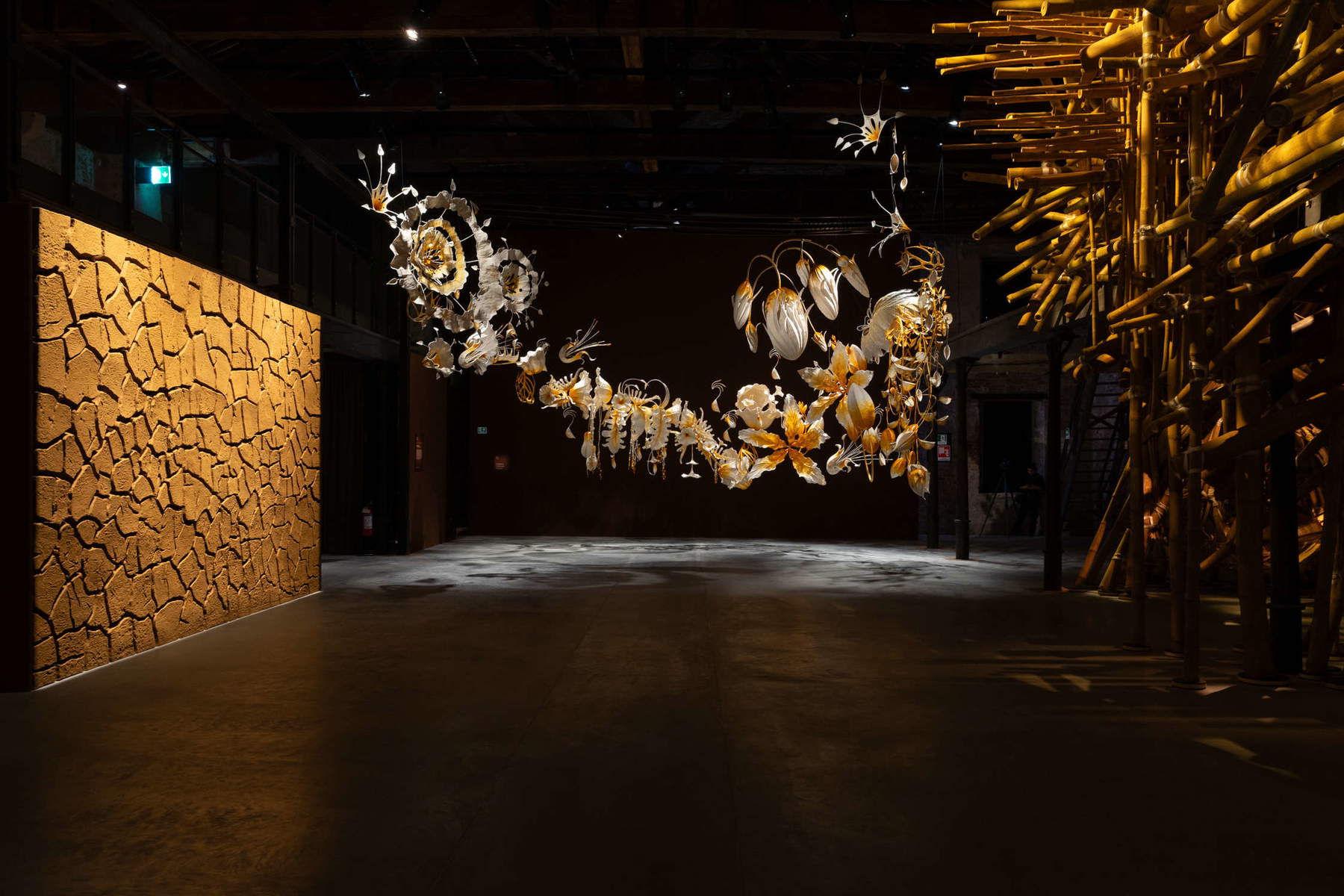
The Indian Pavilion is titled “Geographies of Distance: Remembering Home.” The commissioner is the National Gallery of Modern Art (NGMA), which is under the Indian Ministry of Culture, and the curator is Amin Jaffer. The project brings together five artists: Alwar Balasubramaniam, Sumakshi Singh, Ranjani Shettar, Asim Waqif, and Skarma Sonam Tashi. India stood out among the 100 national participations in this edition—the highest number in the history of the Biennale. India returned to the Venice Art Biennale after a seven-year absence with a project centered on memory, belonging, diaspora, and transformation. Through new monumental works and a comprehensive performance program spread throughout Venice, the project explored the meaning of the word “home” in a world marked by rapid change, constant mobility, and profound social and economic transformations. The underlying idea is that, for those experiencing geographical distance, migration, or transformation, home ceases to be merely a stable physical place and becomes a portable condition made up of memories, materials, rituals, and personal mythologies.
According to the Biennale, the Visitors’ Lions give voice to the public’s choices and honor the artists and countries that have won the public’s favor during the exhibition months. President Pietrangelo Buttafuoco commented on the result by referencing an idea of Picasso’s: “The exhibition’s audience seized the opportunity presented by this award—the Visitors’ Prize—to bring Pablo Picasso’s philosophy to life: a painting lives only through the person who looks at it. I can safely say that the Biennale is brimming with ever-renewed energy through the vibrant presence of everyone.” The award brings to a close this edition (here is our review), which, over its six-and-a-half-month run, welcomed 714,015 visitors.
 |
| Venice Biennale: Visitors’ Lions Awarded—The Public Honors Nick Cave and the Indian Pavilion |
Warning: the translation into English of the original Italian article was created using automatic tools. We undertake to review all articles, but we do not guarantee the total absence of inaccuracies in the translation due to the program. You can find the original by clicking on the ITA button. If you find any mistake,please contact us.