



by Carlo Alberto Bucci 13/11/2026


Categories: Exhibition reviews / Disclaimer
At Palazzo Braschi in Rome, an exhibition featuring 140 works traces the American artist’s relationship with Italy and captures the complexity of a body of work that has successfully blended underground culture, art history, and social activism. A review by Carlo Alberto Bucci.


One is struck by the vitality of the line and the joy of life that emanate from Keith Haring’s compositions of figures, letters, words, and concepts. It is a wave of lines, people, colors, and music, presented with organic precision in the galleries of Palazzo Braschi in Rome, thirty-six years after the American artist’s death. Curated by Kaoru Yanase, Ilaria Miarelli Mariani, and Claudio Zambianchi (open through April 11, 2027), this exhibition takes Haring’s relationship with Italy—and especially with the capital—as its starting point. From the perspective of its curatorial design alone, the exhibition appeals to the general public of hip-hop enthusiasts and fans of urban art forms. But the selection of the 140 works on display also caters to connoisseurs and scholars of contemporary art that has now become part of art history. For Haring—with just ten years of intensely productive work behind him before AIDS took his life in 1990, at the age of only 31—emerges ever more clearly as a cultured and well-versed artist, capable of blending high and low forms of expression, the refined and the vulgar, underground painting and literature. A painter, therefore, not merely a media or pop culture phenomenon.

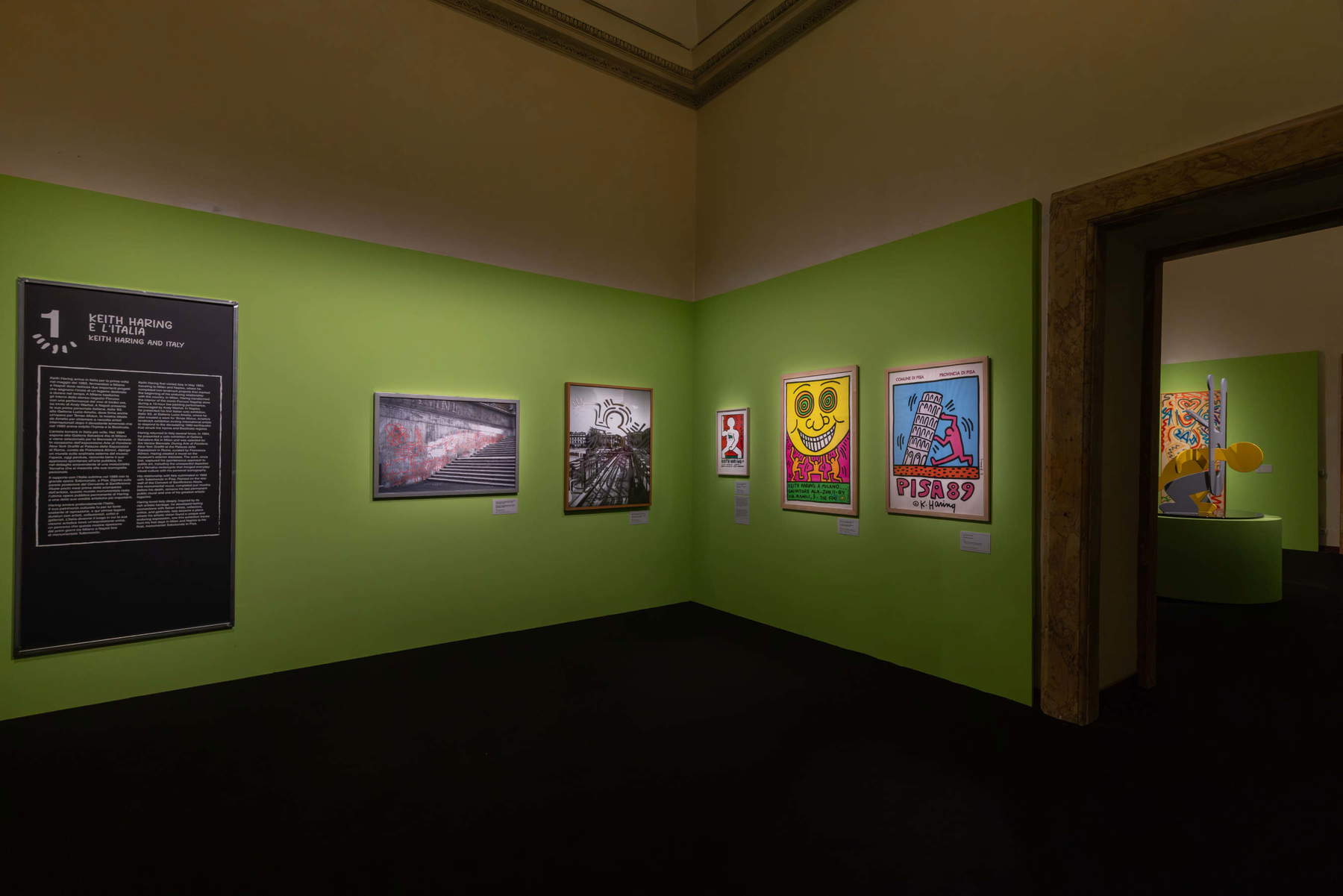
The first room of the 18th-century palace overlooking Piazza Navona—home to the Museum of Rome—takes us back to the early 1980s, when the painter, born in Pennsylvania, trained at the Ivy School of Professional Art in Pittsburgh, but who came into his own in the New York street art scene, arrived in Naples, Milan, Bologna, Venice, and Rome. Haring came to Italy to create works in stores; to paint on buildings and walls at the request of public commissions; and to participate in exhibitions, such as his 1983 solo show at Lucio Amelio in Naples or, the following year, at the Palazzo delle Esposizioni. In fact, in 1984, the Roman installment of *Arte di frontiera* took place on Via Nazionale . *New York Graffiti*, conceived by the late Francesca Alinovi, the first and most thorough scholar of that urban art phenomenon which, having originated in metropolitan suburbs, has come to interact with the global contemporary art system.


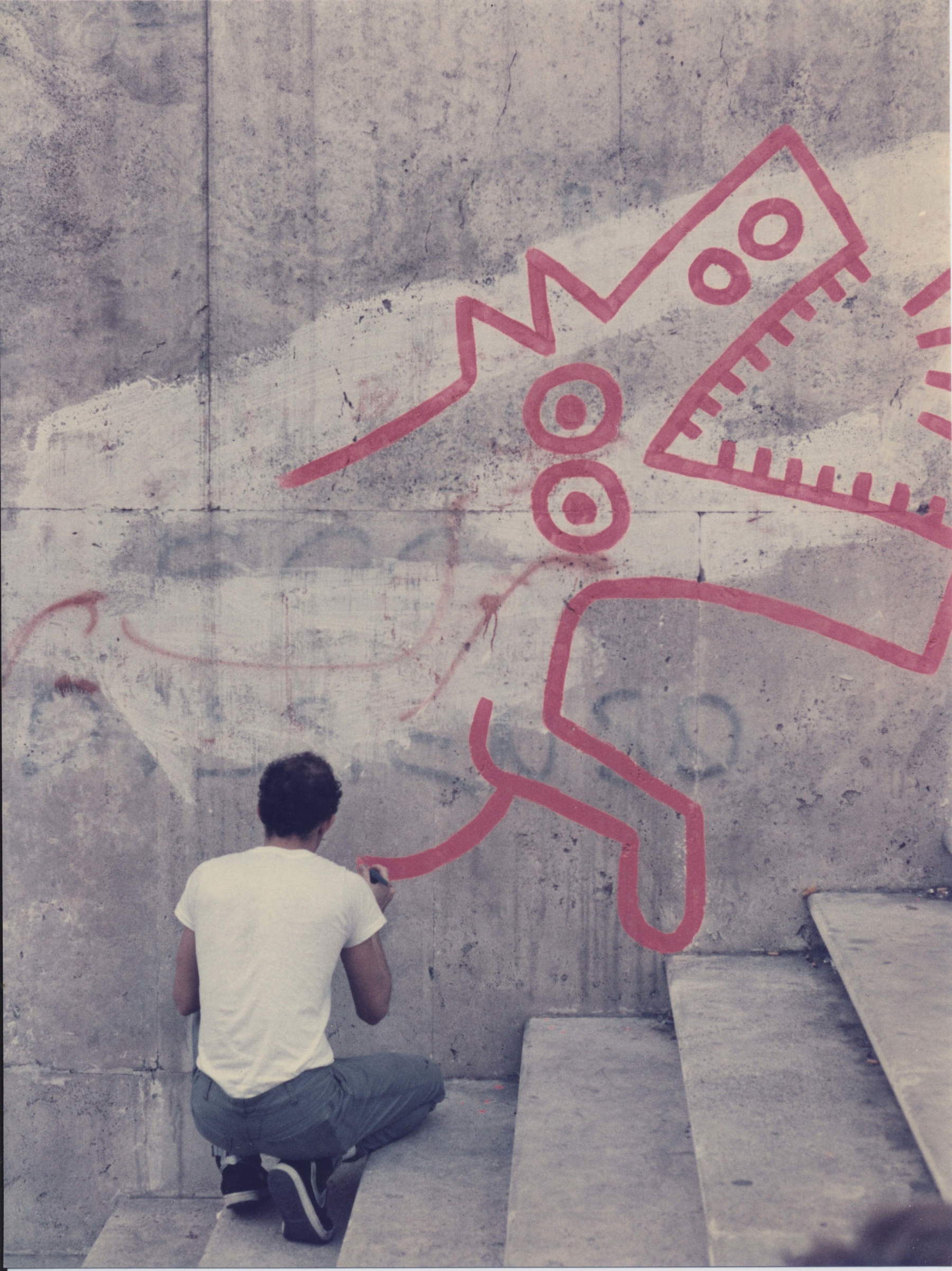
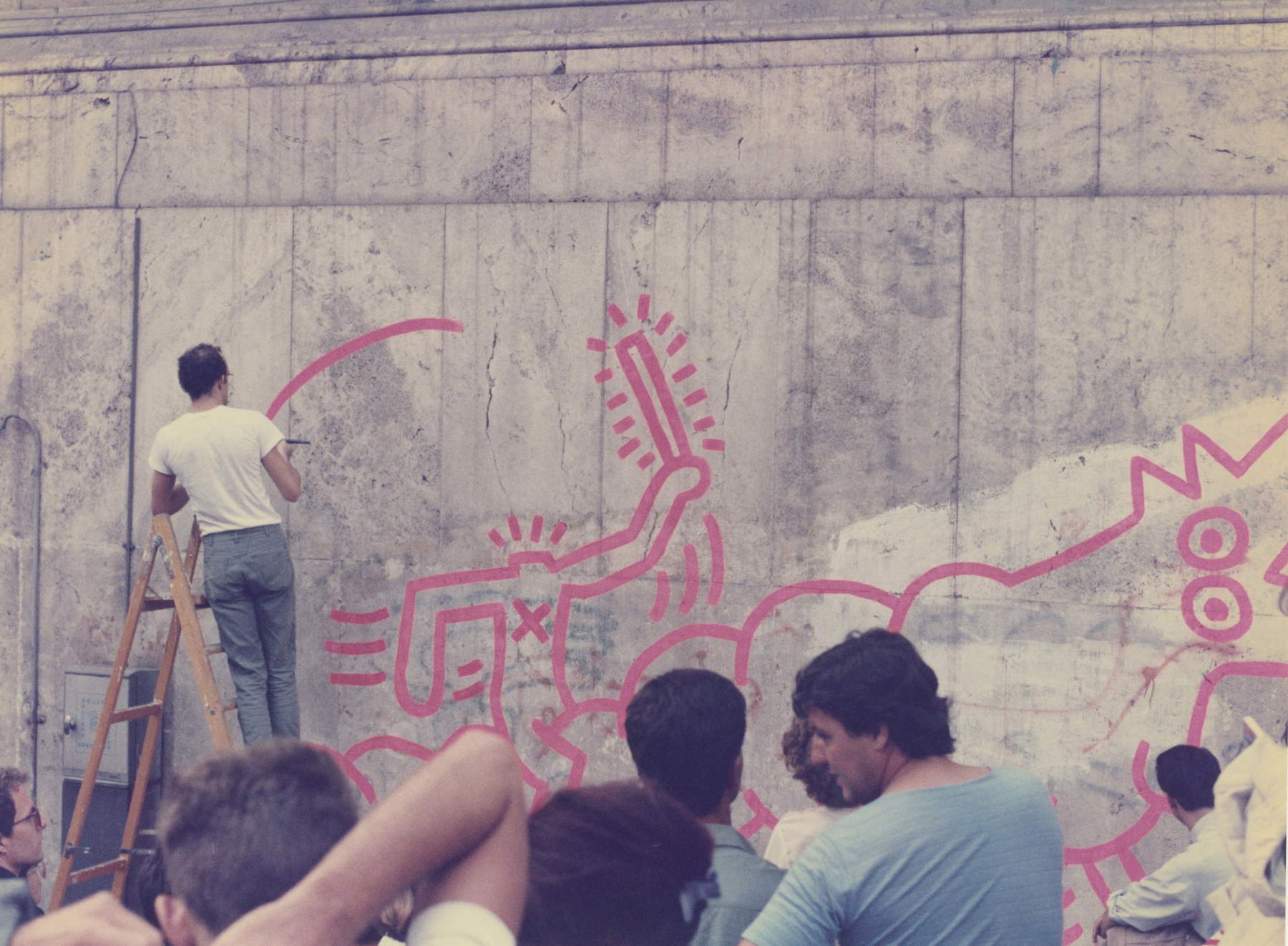
In her essay accompanying the exhibition in the booklet *Fuori dalle righe, Keith Haring e l’Italia* (Moebius publisher, featuring essays by the curators and Claudio Crescentini), Ilaria Miarelli Mariani focuses on Alinovi’s figure and thought. She also recalls how many Romans still have fond memories of the exhibition conceived by the curator from Emilia and, in particular, of the mural that Haring created on the exterior of the Palazzo delle Esposizioni. Removed in 1990 during the restoration (led by Costantino Dardi) of Pio Piacentini’s architecture, that ephemeral work by Haring—created in the Rome of Renato Nicolini, who had turned the word “ephemeral” the anthem of an exhilarating cultural battle destined to endure—left an indelible mark on the collective imagination. This is due to the originality and energy inherent in the beaming child, the bounding dog, the blaring televisions, and Haring’s other icons and tags; nor does it make sense today to rail against the decision to carry out a draconian cleaning of the Palaexpo wall, since the essence of street art interventions also lies in the mural’s planned transience (see, for example, the decision made by Blu on the industrial building on Via del Porto Fluviale, also in Rome, which has now been restored and designated for legal public housing after a long and fruitful occupation by the homeless).

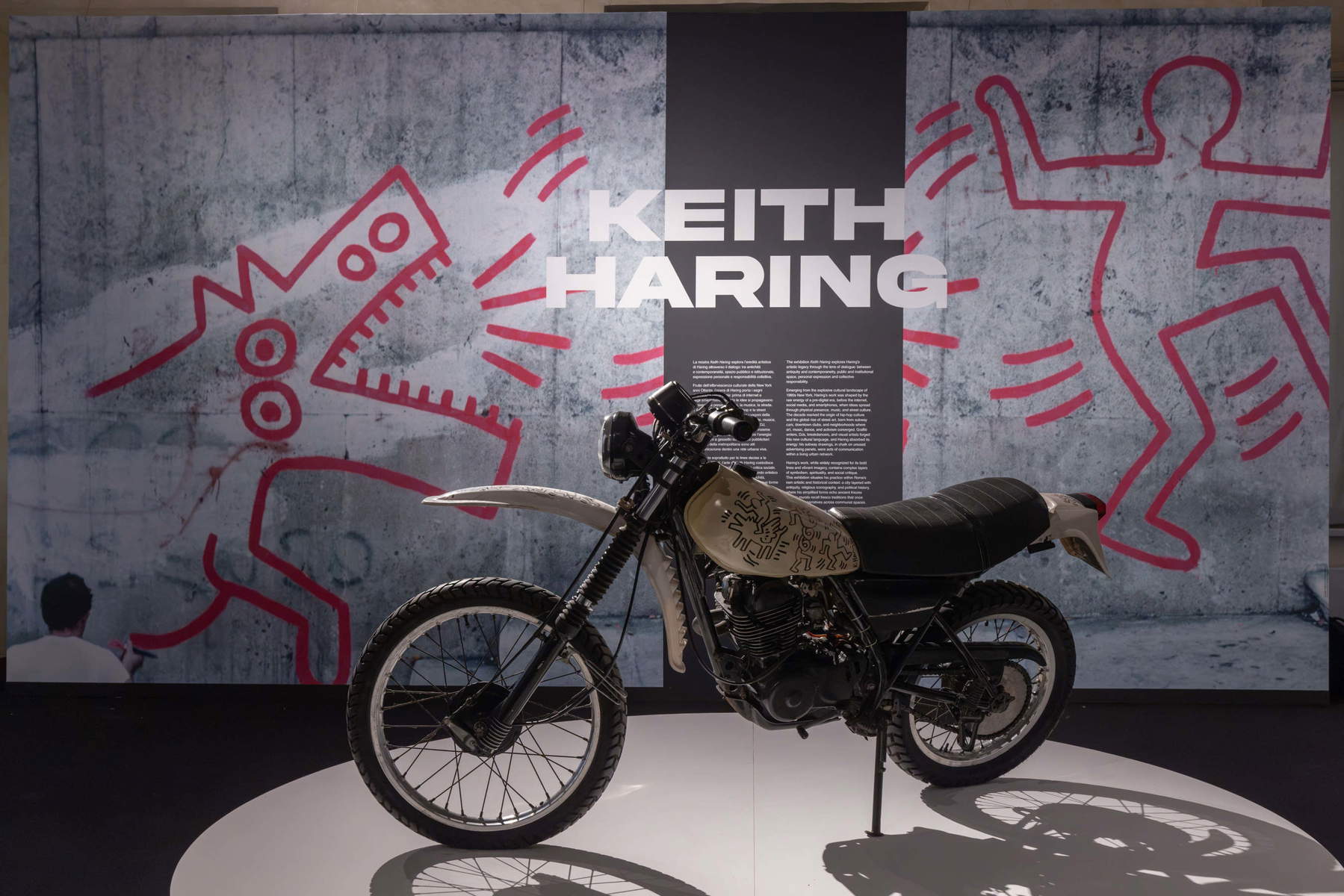
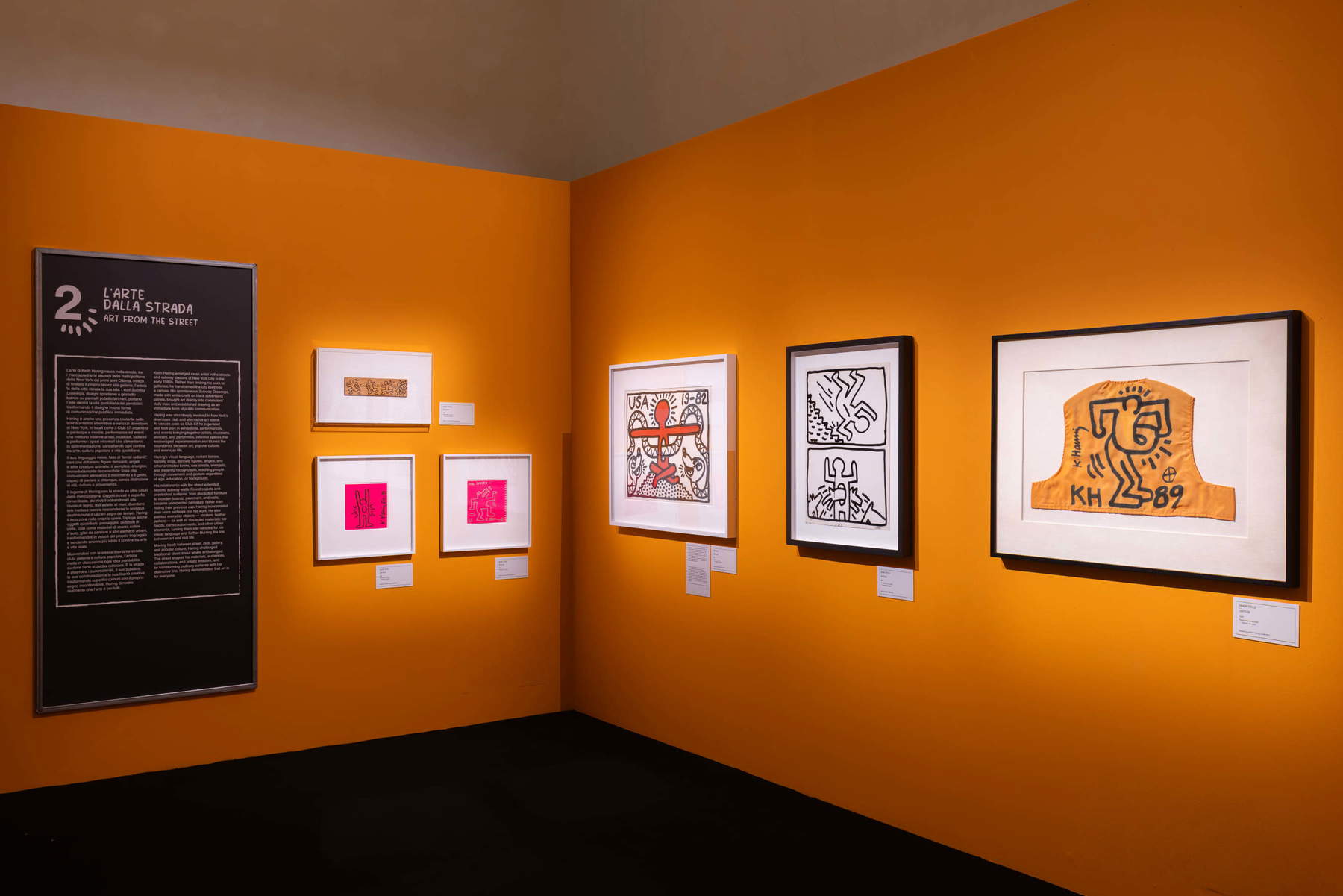
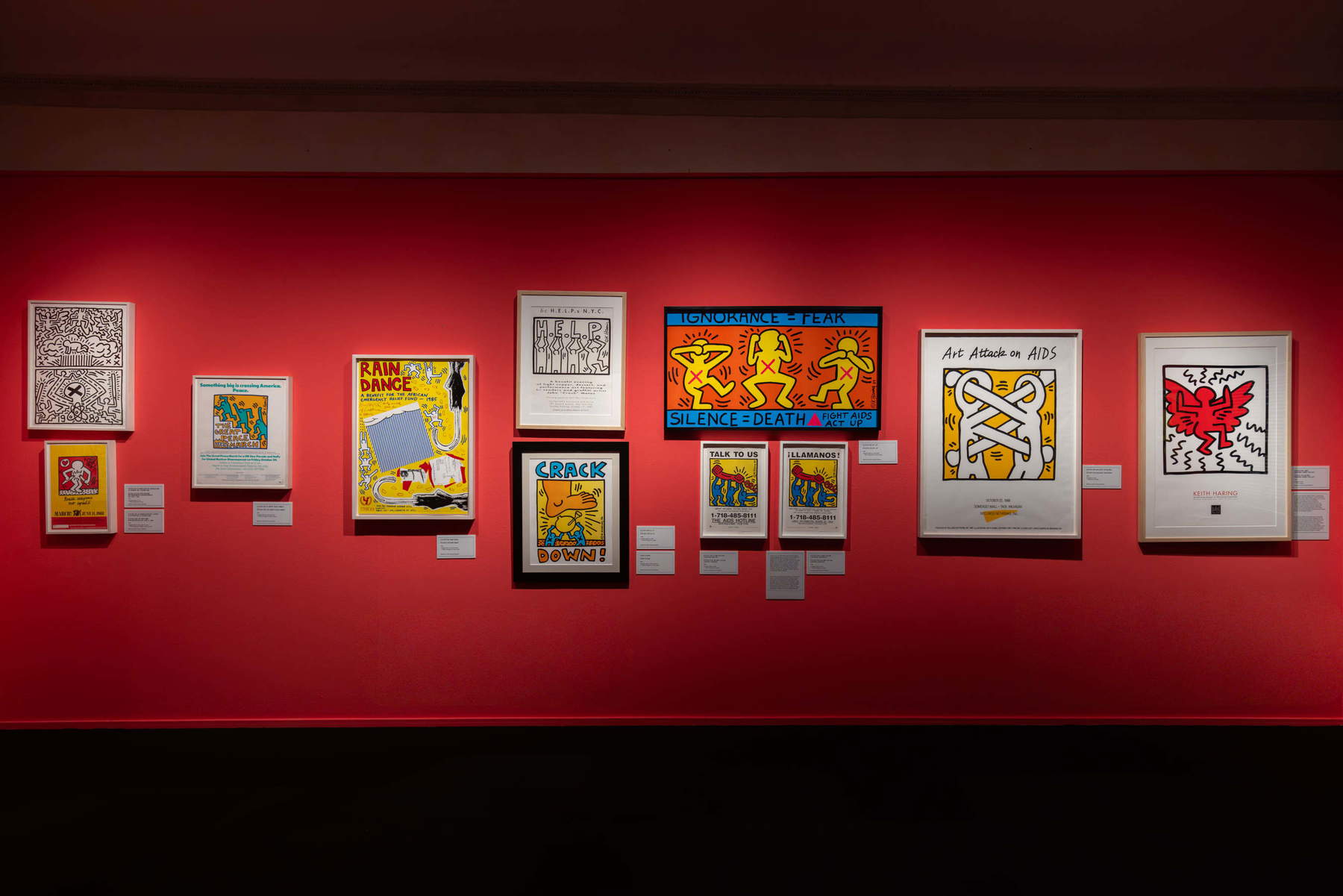
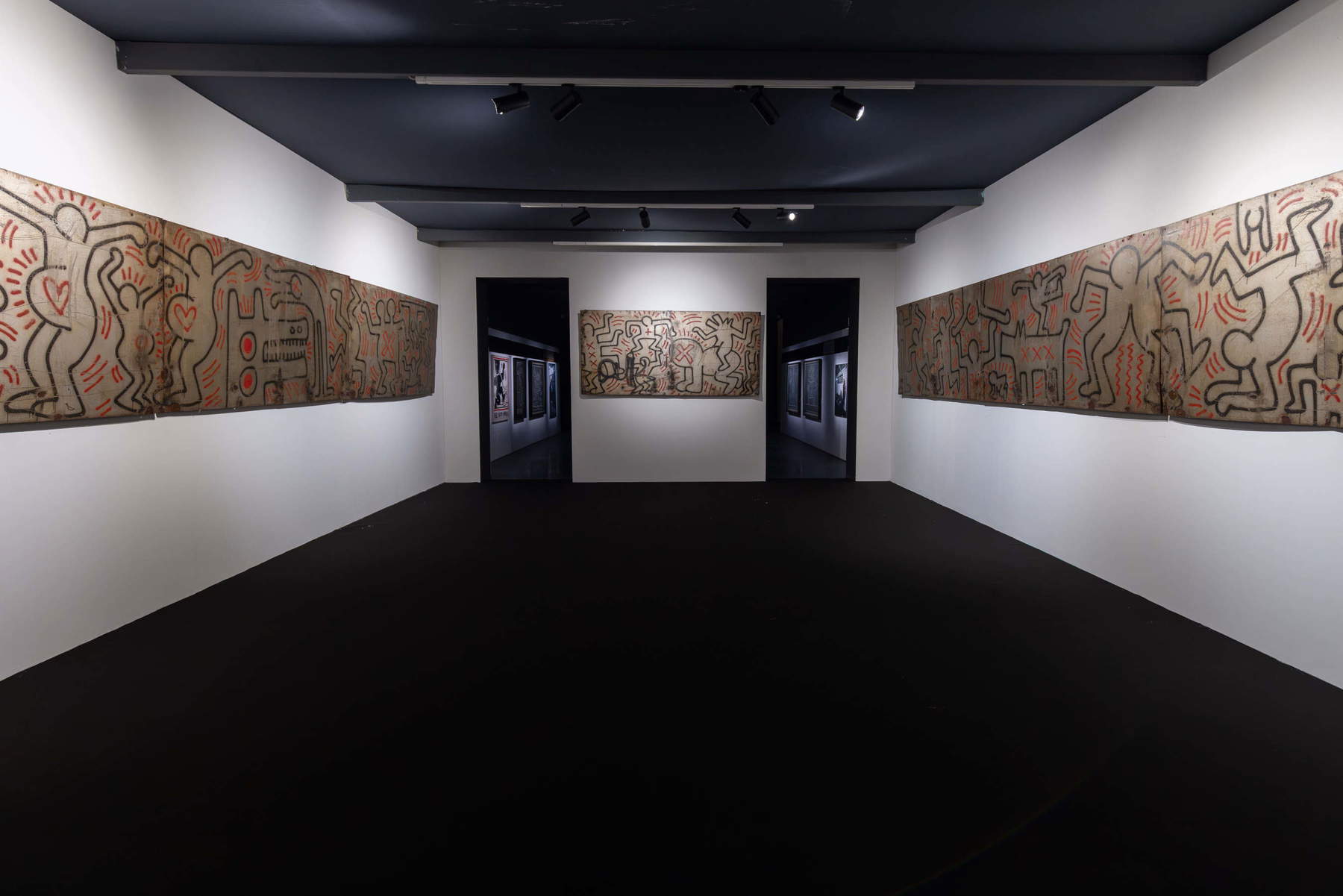
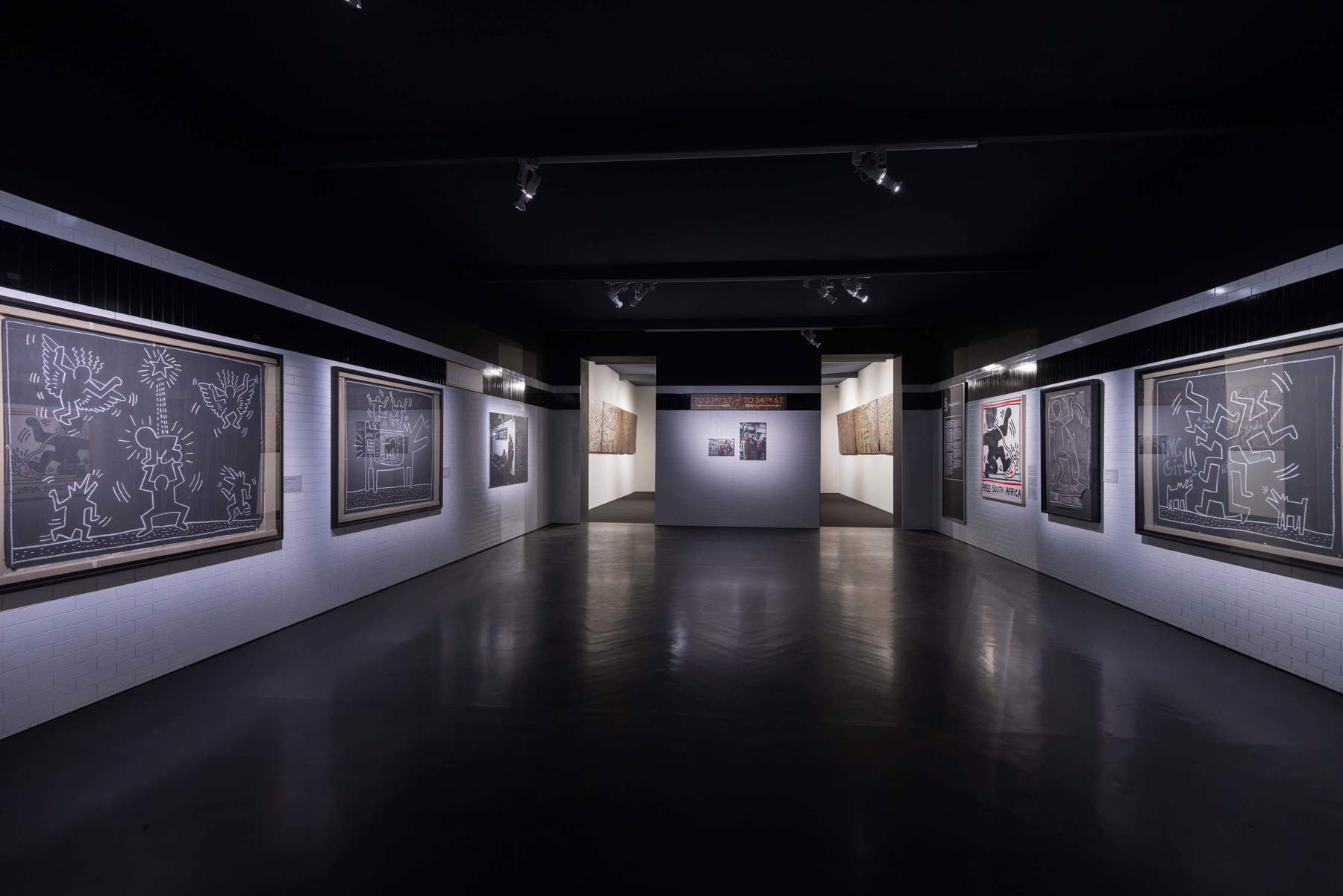
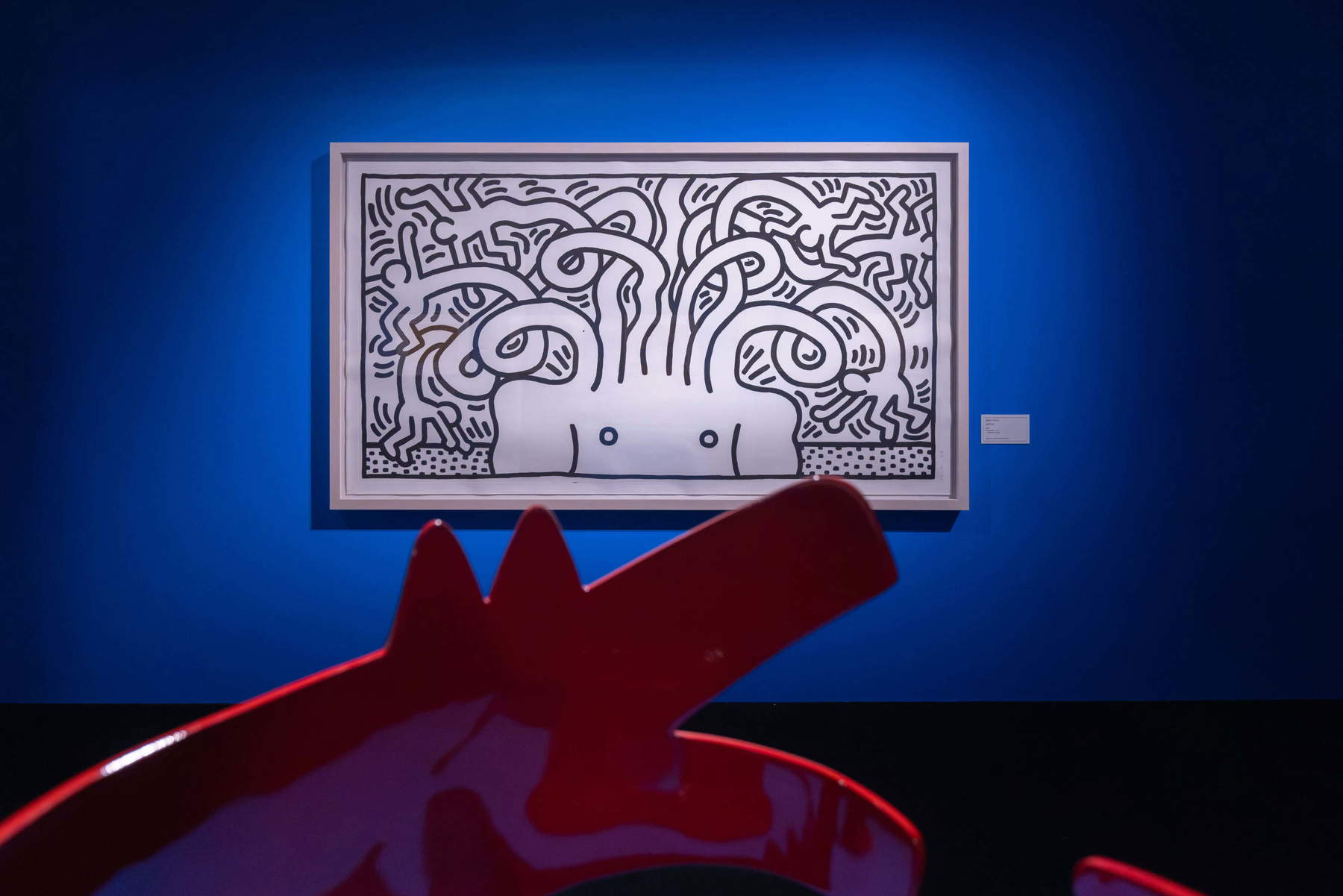
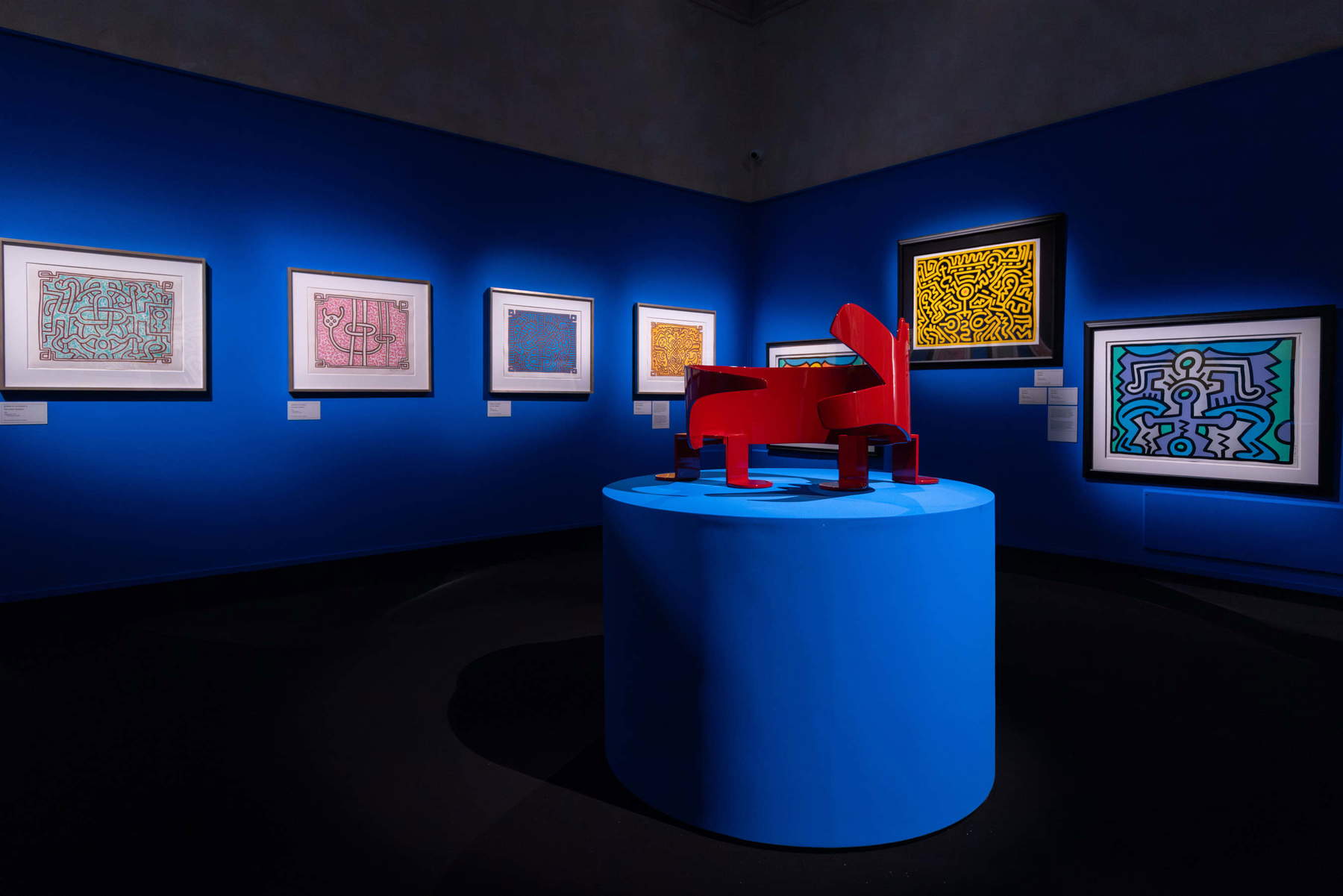
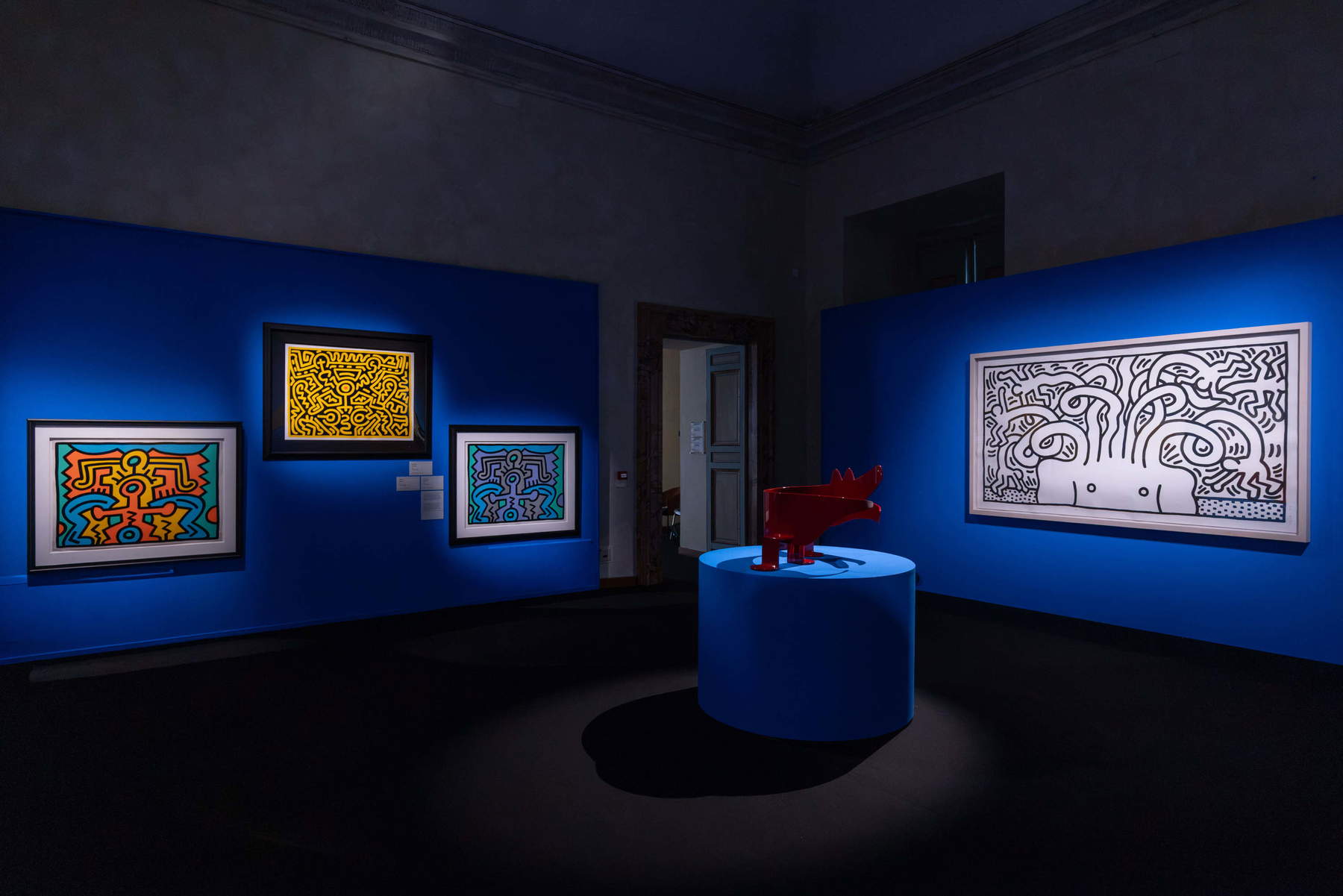
His vibrant repertoire of figures—inspired by the pop world of comics (Disney and beyond) and the popular culture of Native Americans—took over not only the walls of the subway and FDR Drive in New York —thousands of images created with white chalk on dark posters, the kind pasted over expired advertisements, until 1985, the year the artist put an end to his subway “blitz” practice. It also reached the Fiorucci store in Piazza San Babila in Milan (where Haring’s painting performance took place in ’84) and found its way onto humble materials such as car hoods, road signs, awnings, pieces of wood, and stones. But also strollers and motorcycles, such as the two examples now on display at Palazzo Braschi, which bear witness to the artist’s eclectic approach to mediums. Above all, his desire to create art for everyone and within everyone’s reach (more or less): “The public,” Haring wrote at age twenty in his diary, “needs art, and it is the responsibility of an artist who calls himself such to recognize that the public needs art—not to create bourgeois art for the few, ignoring the masses. Art is for everyone” (and this is the title of the exhibition’s concluding section at Palazzo Braschi).
Here, then, are the motifs of the winged man, the beating heart, or the pyramid (a 1989 silkscreen work, *Retrospective*, brings together 24 variations and metamorphoses drawn from his infinite repertoire) used to populate the posters (more than a hundred were created over the course of his life), album covers (one of the nine sections is dedicated specifically to works for clubs, discos, and record labels), T-shirts, and the uniforms of subway workers. In addition—if not first and foremost—there are the papers printed with silkscreen works (graphic design is, after all, the “impersonal” language chosen and celebrated by Andy Warhol, which he also passed on to Haring) and industrial tarps, right up to canvases tout court, used for full-fledged series of paintings, often large in scale.
A student in Pittsburgh of, among others, Joseph Kosuth (the father of Conceptual Art), the young man from Reading, Pennsylvania—where he was born on May 4, 1958—remained influenced by the works of Dubuffet (especially*Hourloupe*, that synthesis of the second and third dimensions) and by the neo-expressionist painting of the Cobra group. He and Jean-Michel Basquiat, bound by a brief but intense friendship and collaboration, “are not graffiti artists,” Claudio Zambianchi emphasizes in his essay, but rather painters who draw inspiration from the world and methods of graffiti artists to develop their own unmistakable style, first in the subway and then in the established venues of culture. And in doing so, they reconnect the vibrant essence of urban art with that of archaic cultures, metropolitan graffiti with that of prehistory. “Primordial styles bring us back to the world,” Haring declared, drawing a connection to indigenous cultures and the bodily imprints of cavemen precisely in the years 1984, when, as Zambianchi points out, the exhibition *Primitivism in 20th-Century Art* was held at MoMA in New York.
Having entered the world of contemporary art during the revival of figurative painting following the aniconic rigors of Conceptualism and Minimalism, Haring preferred the spray can to oil painting, though he also used a brush to apply industrial paints. And at times, as seen in the videos projected in the exhibition, he delegates the act of painting—mostly a matter of filling in space—to other people (as Sol LeWitt and, in Italy, Alighiero Boetti had also envisioned). Nor does his own brushwork stand out for particular mastery; he prefers the speed of the gesture and the immediacy of the image to the layering of color and time. And so the painter—who made his debut in 1980 as part of the “Times Square Show,” alongside, among others, Basquiat, Jenny Holzer, and Kiki Smith (the two American artists would later develop the same grassroots concerns in different ways)—improvises on the surface, outlining, thickening, or thinning out the figures according to a principle of spontaneity and freedom that, as Alinovi had already emphasized, “breaks the chains of meaning.”
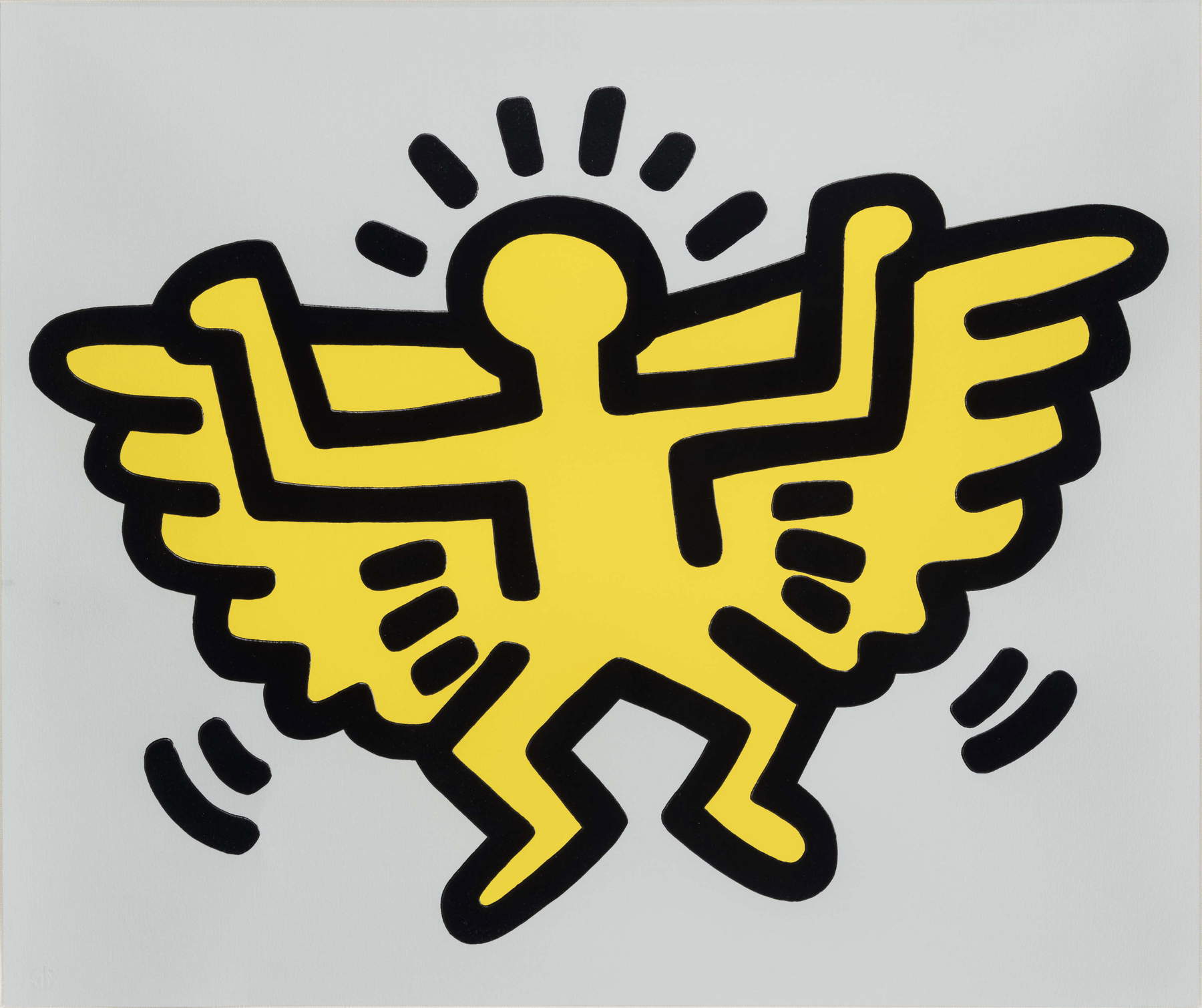
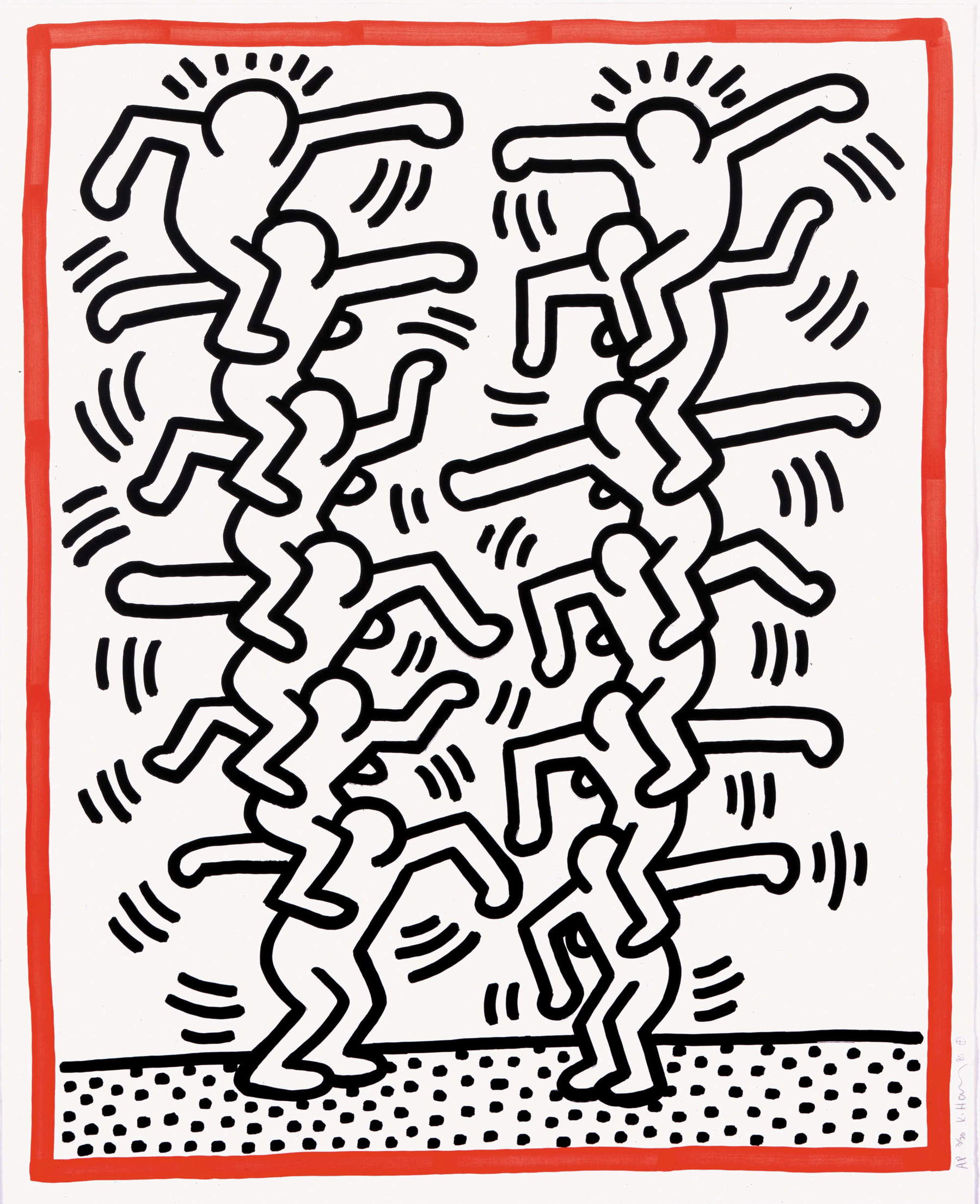
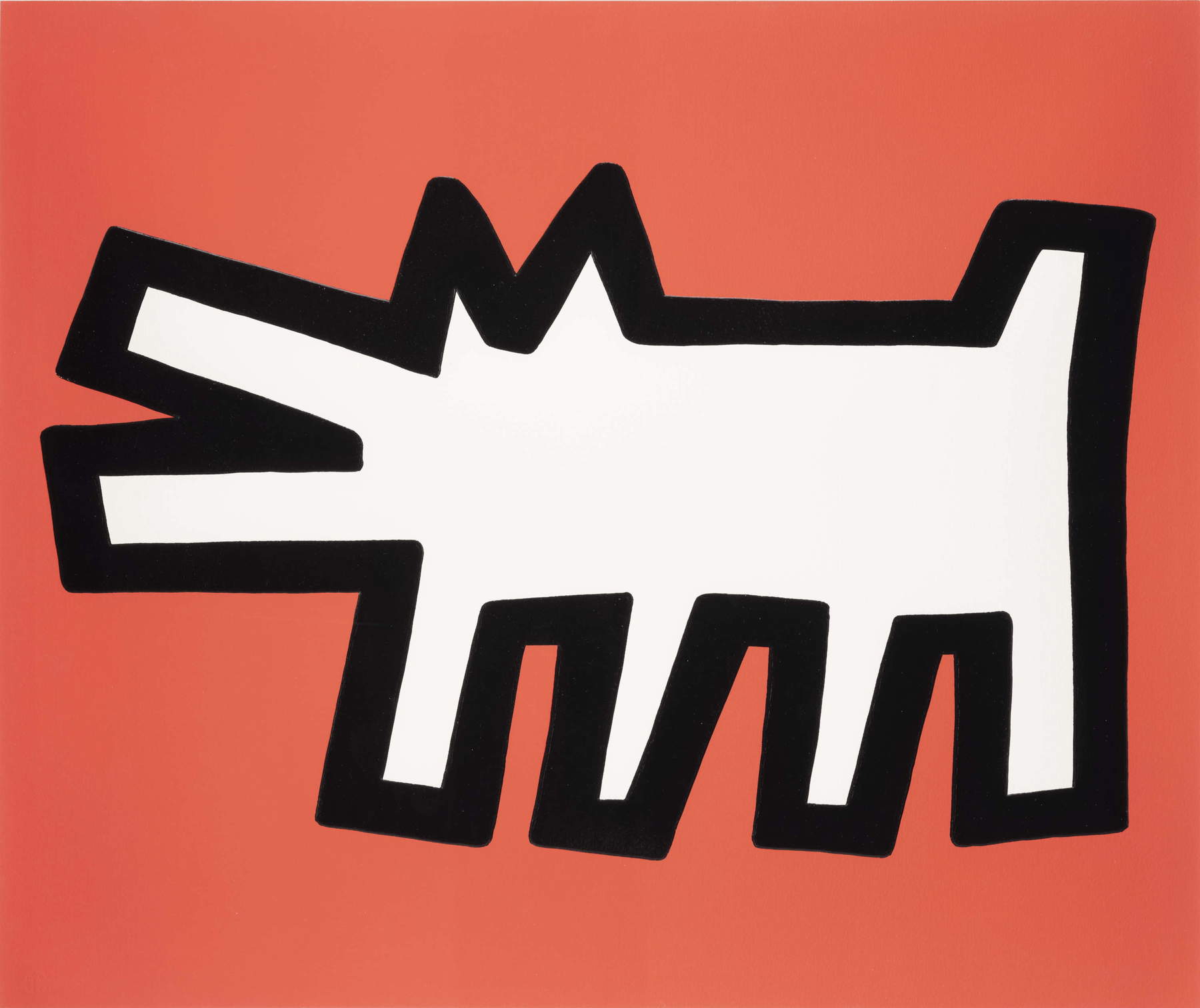
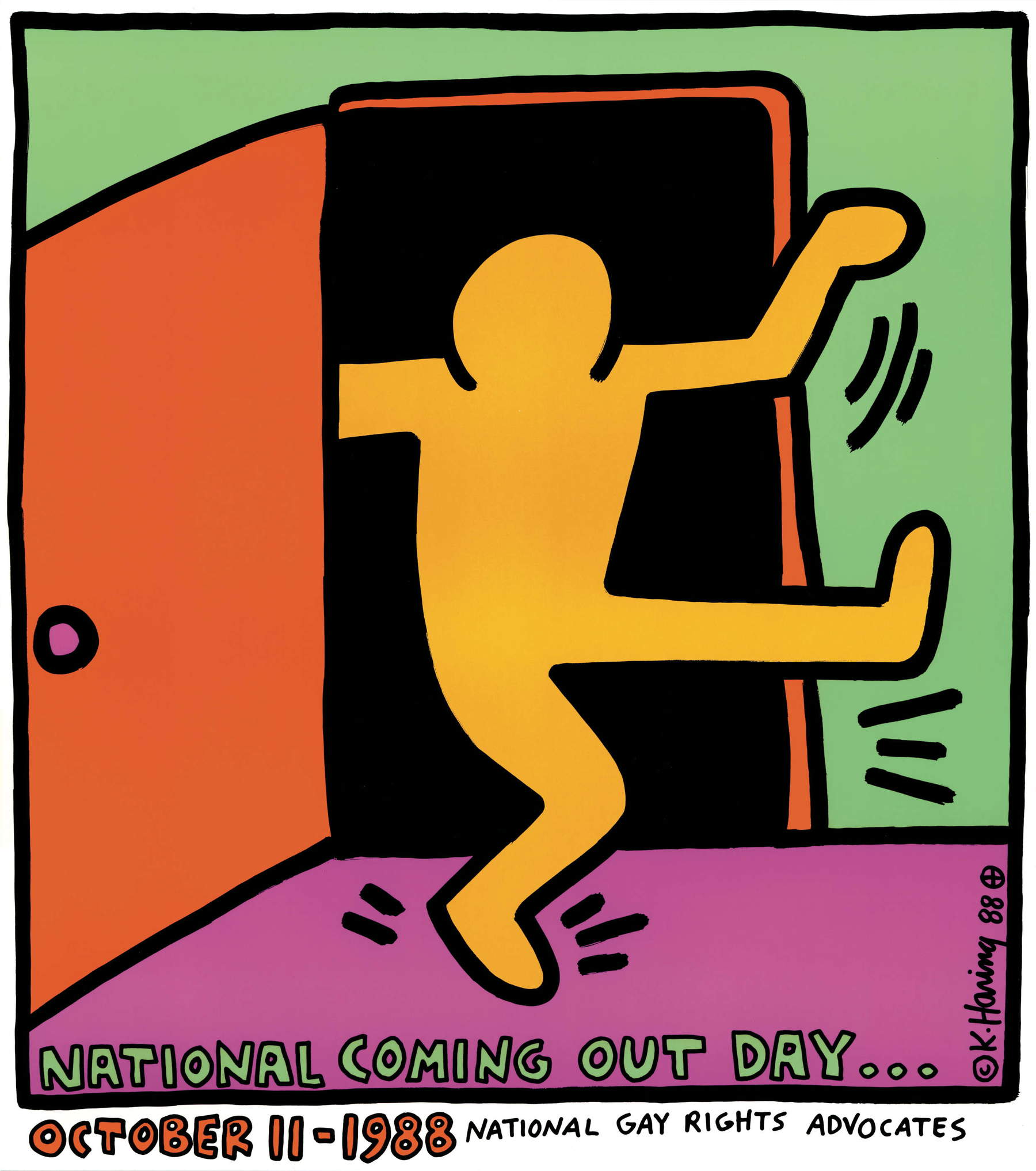
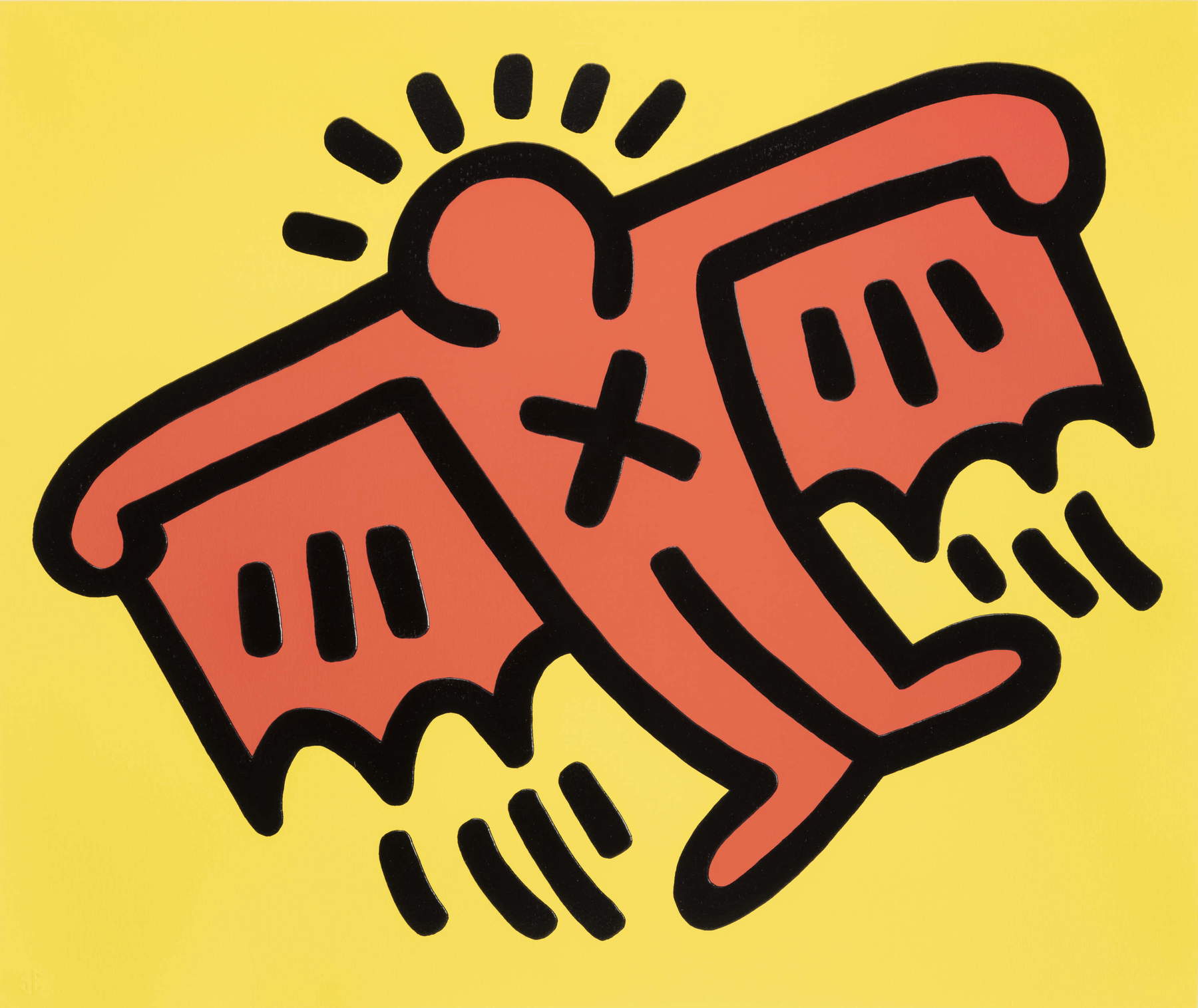
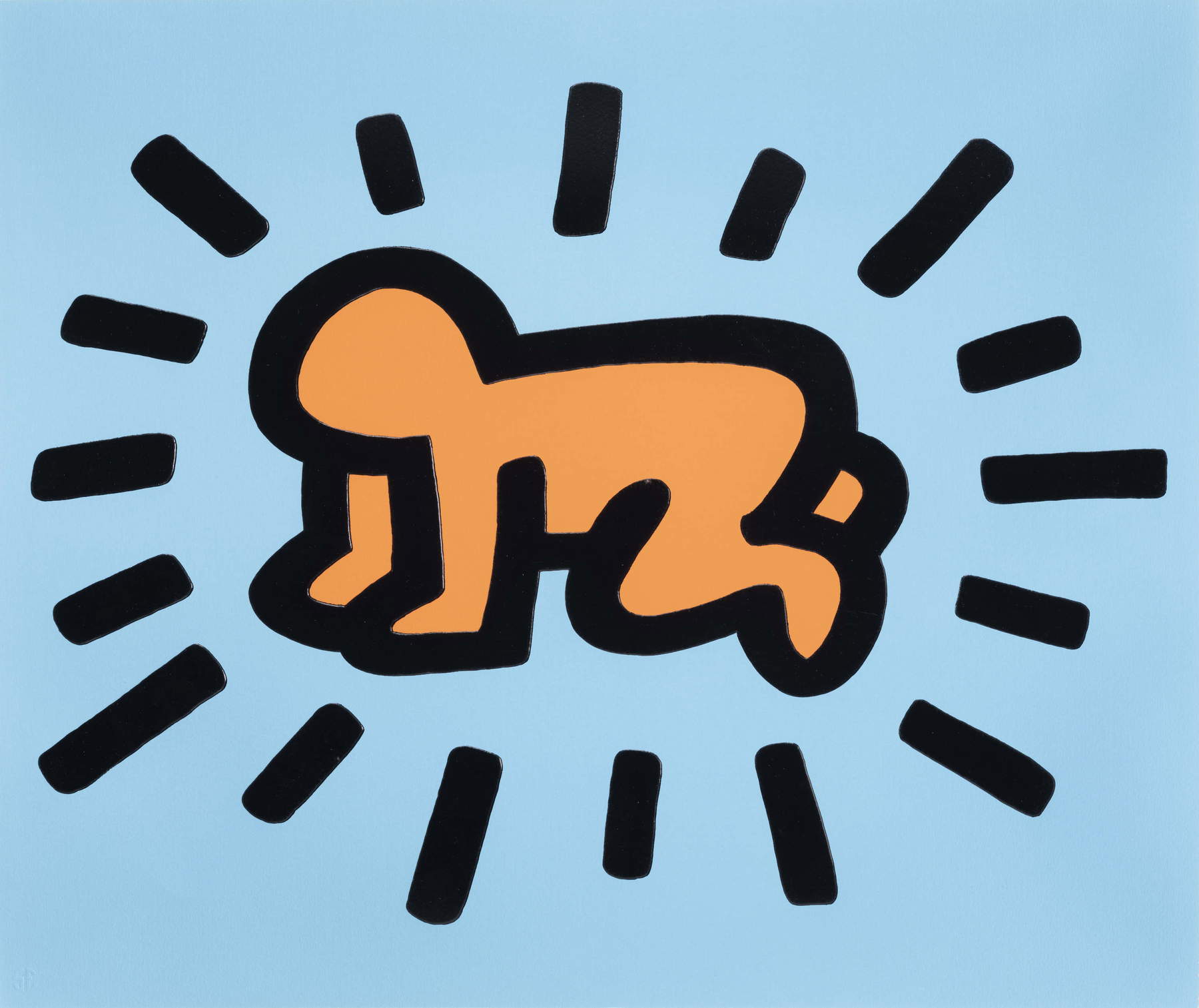
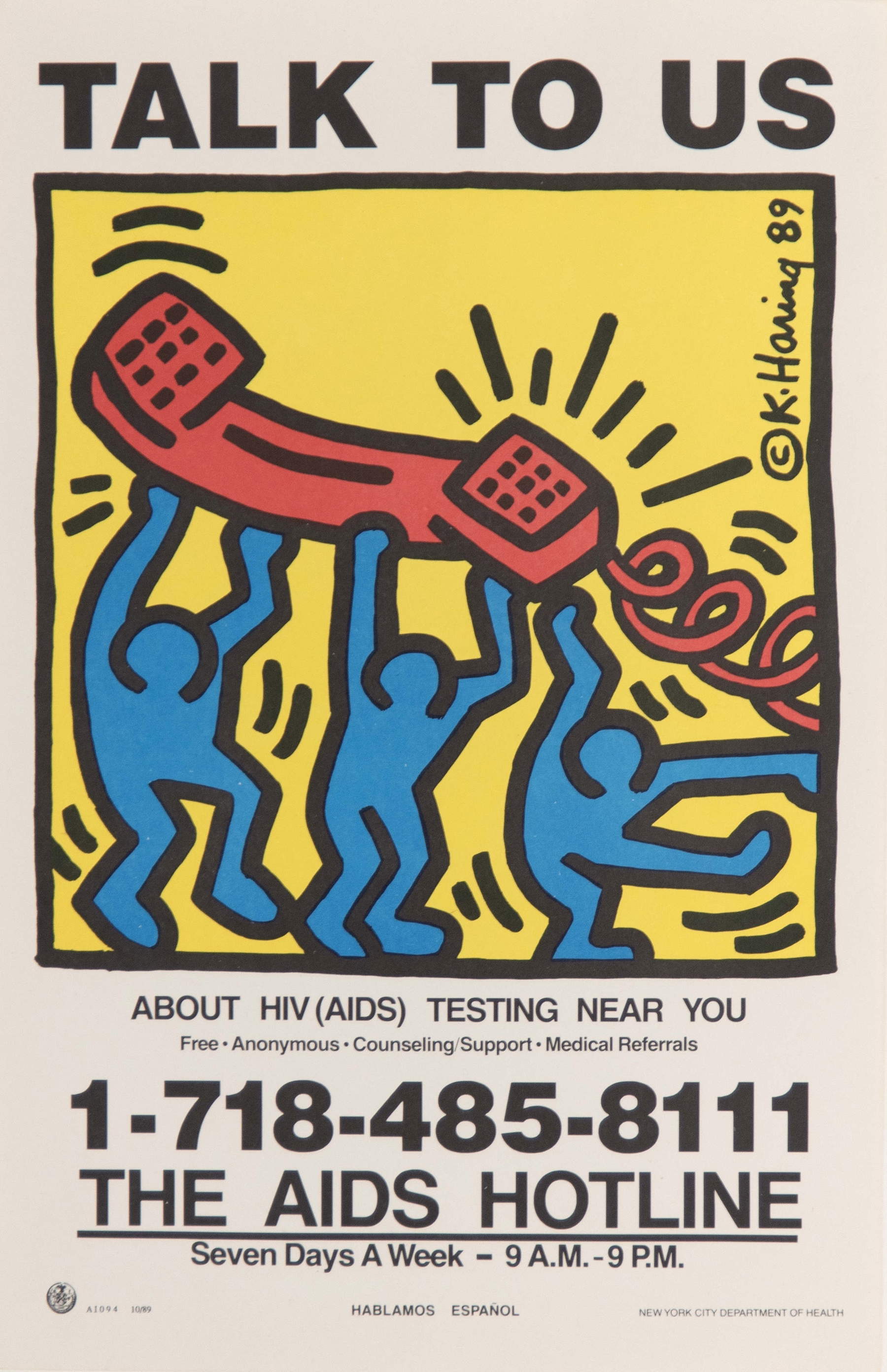
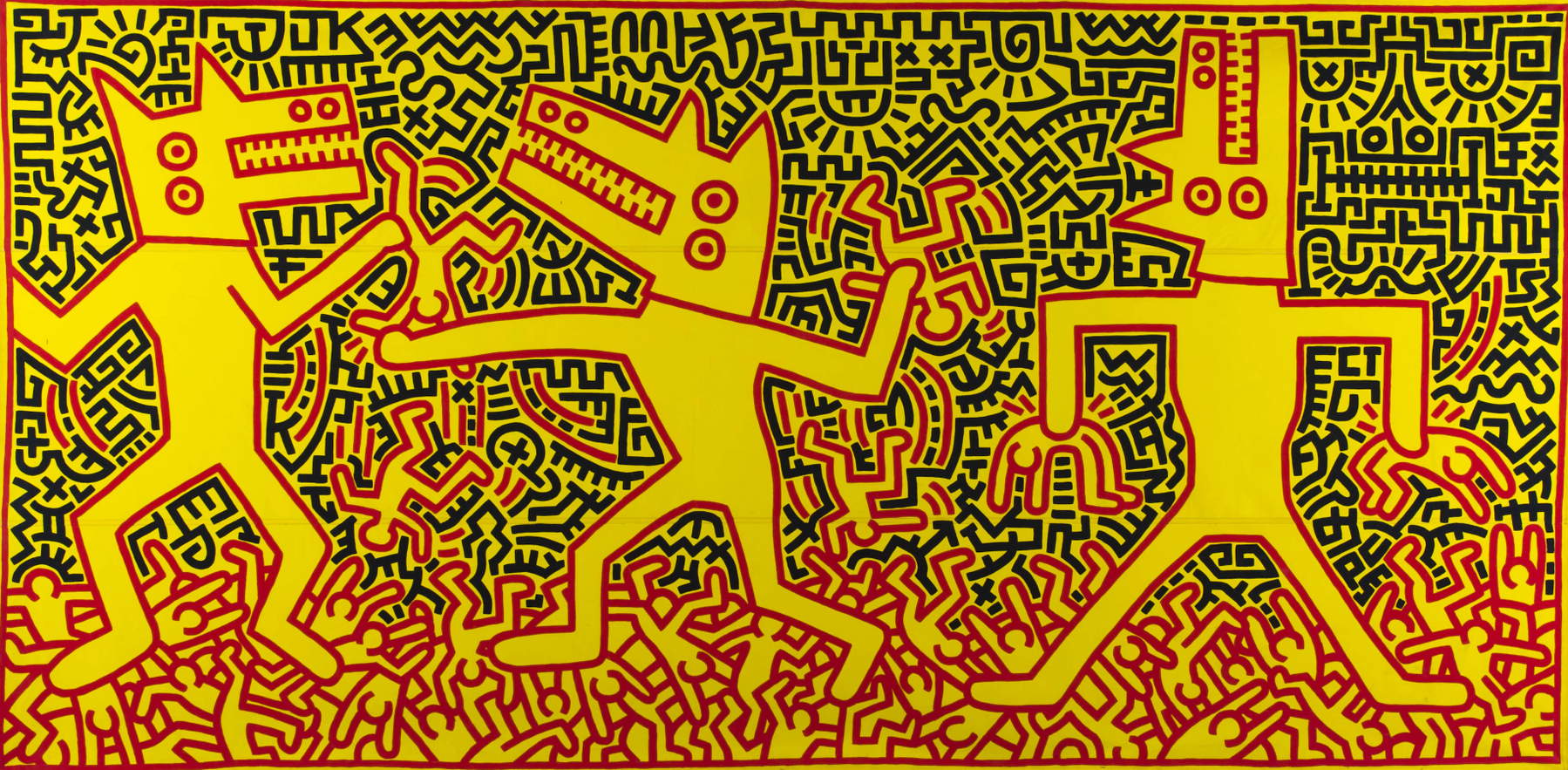
In the work of the artist who made the interpenetration of bodies—a distant echo of Futurist simultaneity— his signature style (the hole in the belly that allows one individual to be passed through by another like-minded being is found everywhere, including the metal sculptures placed at the center of the first rooms), no gesture, however, occurs by chance. There is a precise strategy in Haring’s approach to art, both within and outside the market system or the patronage that governs it. In *Tuttomondo*, the large mural created in 1989 for the friars of Sant’Antonio Abate in Pisa, the artist could and wanted to rely on the participation and enthusiasm of the local community (having been deeply struck by Christo’s accounts of participatory Land Art projects, which he heard during a meeting at the Pittsburgh School of Art). By contrast, the choice that led him to let the paint drip to break up the line, to fill the very outlines of the figures with additional marks, and to invade the bodies (for example, for the performance and the poster for his solo exhibition at the Tony Shafrazi Gallery in ’83, the nude figure of choreographer Bill T. Jones) with straight, curved, and broken segments, hooks, and forks—driven by a horror vacui that reflects a desire for complexity, liveliness, and totality rather than the depiction of a nightmare.
The creator of the “Radiant Child” (“the reason the child became my logo, my signature, is that it represents the purest and most positive experience of human existence,” Haring said) is the artist who—using posters as his weapon—fought against apartheid, against homophobia, against war, for peace, and for civil rights. And who championed safe sex to combat AIDS, which would ultimately claim his life in 1990. Haring is the painter who used his little figures in erotic images, mostly ironic, but also for the joyful mural (acrylic on vinyl wallpaper) created in 1986 for the children at Mount Sinai Hospital in New York, which, having been removed from the wall, is now on display again in Rome after thirty years. And he is the artist who knows how to choose lines and styles according to different contexts and codes. There is the immediate, lighthearted line of a graffiti tag. And there is the delicate, deliberate line of a painter, as in the 1988 “Untitled,” on loan—like the vast majority of the works on display—from the Nakamura Keith Haring Collection. The caption beneath the painting on display—like the others, featuring a text of a critical and curatorial nature, not merely didactic—reads: “Unlike his more spontaneous drawings, composition and color are planned here with extreme care. The inverted triangular canvas echoes Frank Stella’s Shaped Canvases from the 1960s, while references to Andy Warhol’s *Camouflage* series reveal Haring’s dialogue with art history. Rich in symbols of life, death, and spirituality, [the work] is a powerful synthesis of his vision and the culmination of his final solo exhibition in New York.”
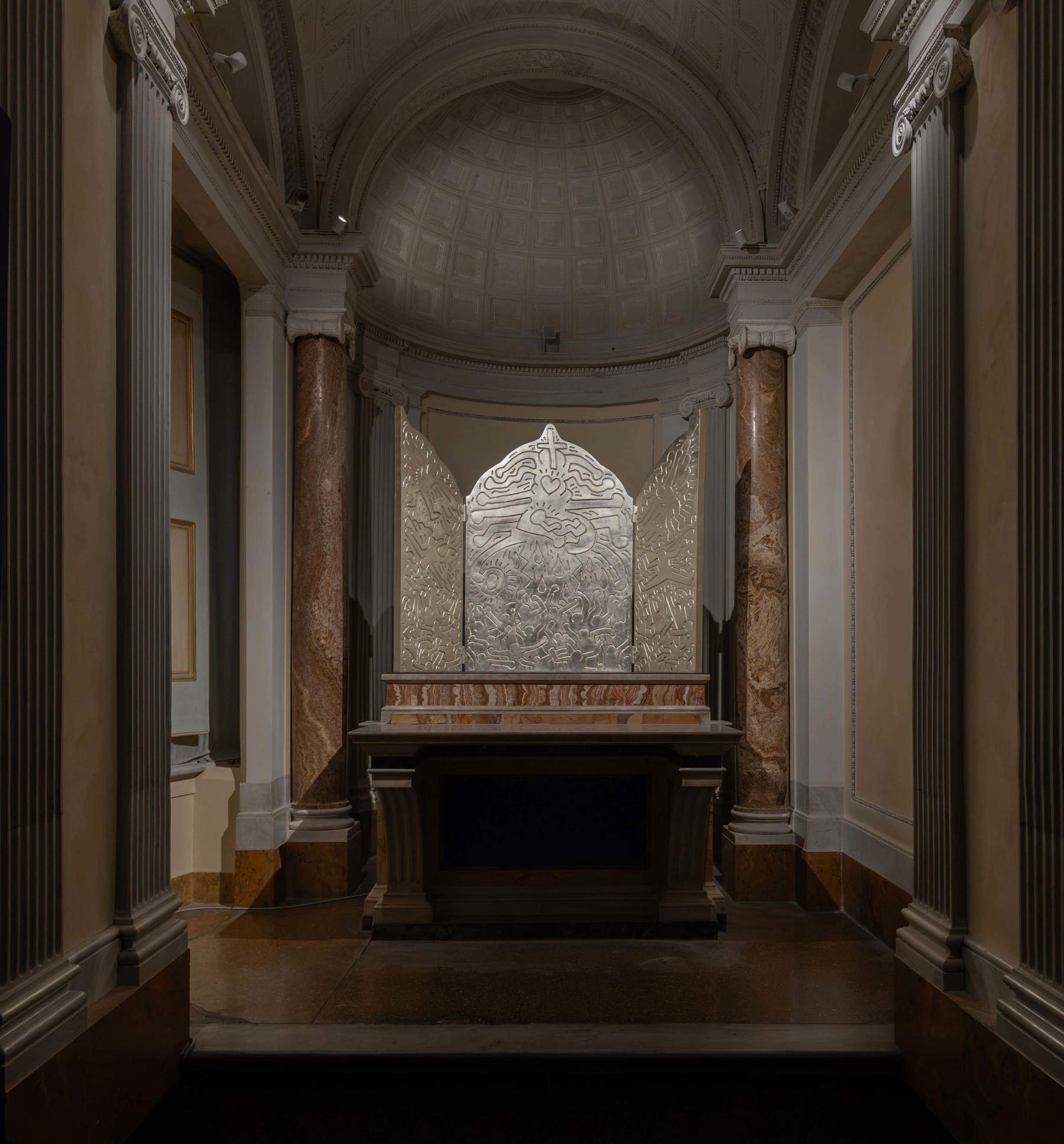
Keith Haring would die a year later, on February 16, 1990, in New York. From that period comes *Alterpiece: Life of Christ*, which would accompany him to his funeral. At the Museum of Rome, the triptych has been placed on the altar of the small chapel in Palazzo Braschi. Amid crosses, flaming hearts, and throngs of souls, it brings us back to the artist’s exuberant vitality, even as he dictated his spiritual testament.
Warning: the translation into English of the original Italian article was created using automatic tools. We undertake to review all articles, but we do not guarantee the total absence of inaccuracies in the translation due to the program. You can find the original by clicking on the ITA button. If you find any mistake,please contact us.