



by Redazione 11/11/2026


Categories: Exhibitions / Disclaimer
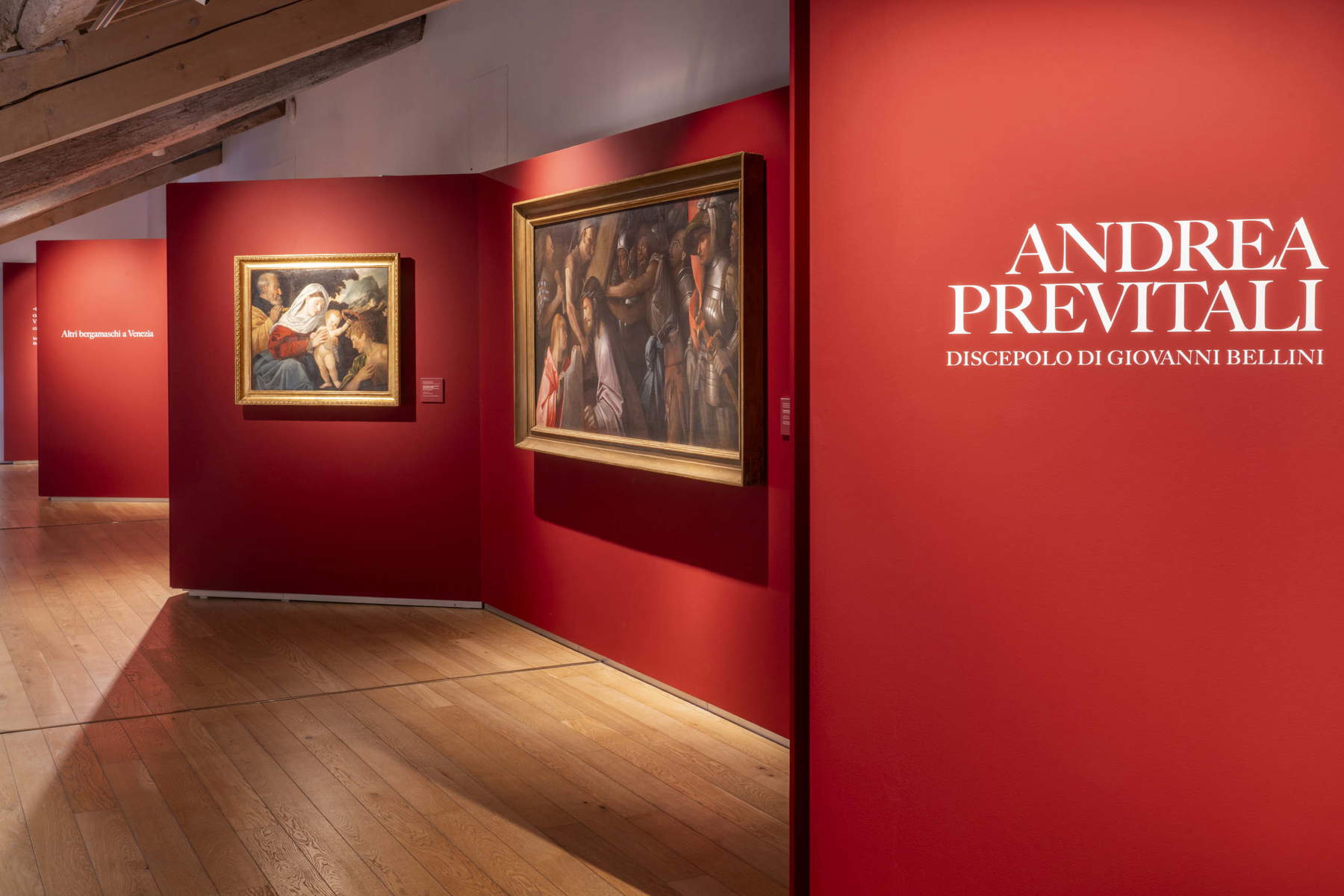
Through February 7, 2027, the Villa Bassi Rathgeb Museum in Abano Terme is showcasing the three panels painted by Andrea Previtali for the Church of the Annunciation in Serina. Accompanying the triptych is an exhibition on the Bergamo-born painter who described himself as a “disciple” of Giovanni Bellini.


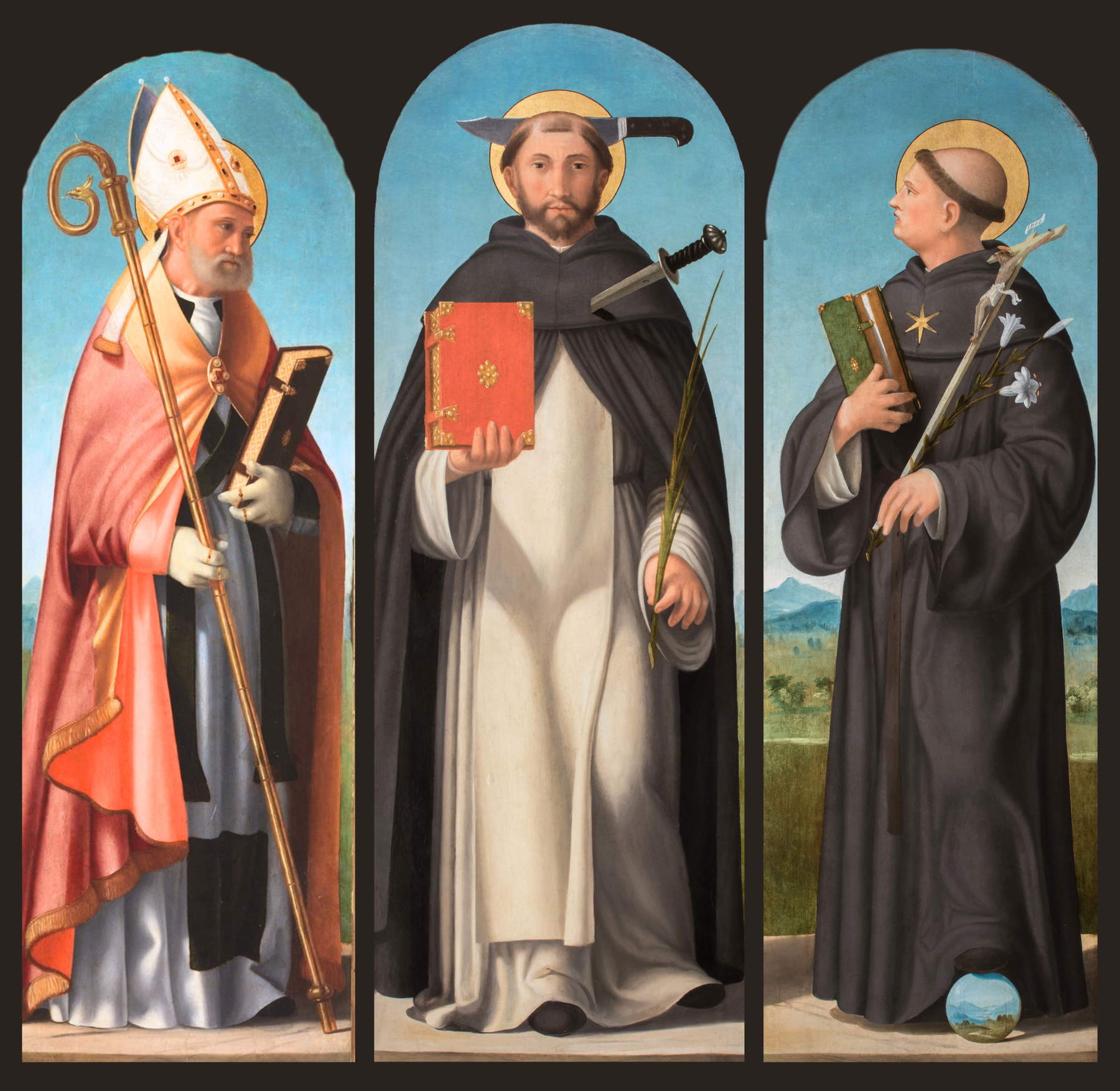
In the triptych of the Santissima Annunziata in Serina, Saint Nicholas of Tolentino holds a book and a cross in his hands and rests his left foot on a small transparent globe, an ancient symbol of the vanity of earthly things. The painter, Andrea Previtali (Brembate di Sopra, c. 1480 – Bergamo, 1528), also uses this attribute to shape the figure: the saint turns his body slightly, and this twist allows him to experiment with foreshortening, perspective, and light. If you look closely, a mountain landscape is reflected on the surface of the sphere, with a winding river and a twisting road climbing toward the horizon. This attention to detail, of Northern European origin, was something Andrea Previtali had already demonstrated in the landscapes he painted during his Venetian years. That globe also has another story: the same figure, based on the same cartoon, appears in an altarpiece the painter created in Bergamo for the Church of Santo Spirito. There, however, during the course of the work, the saint was transformed into another figure, James, Archdeacon of Bergamo: his robe was changed, and the globe was covered with a stone. In Serina, on the other hand, the globe and its landscape have remained.

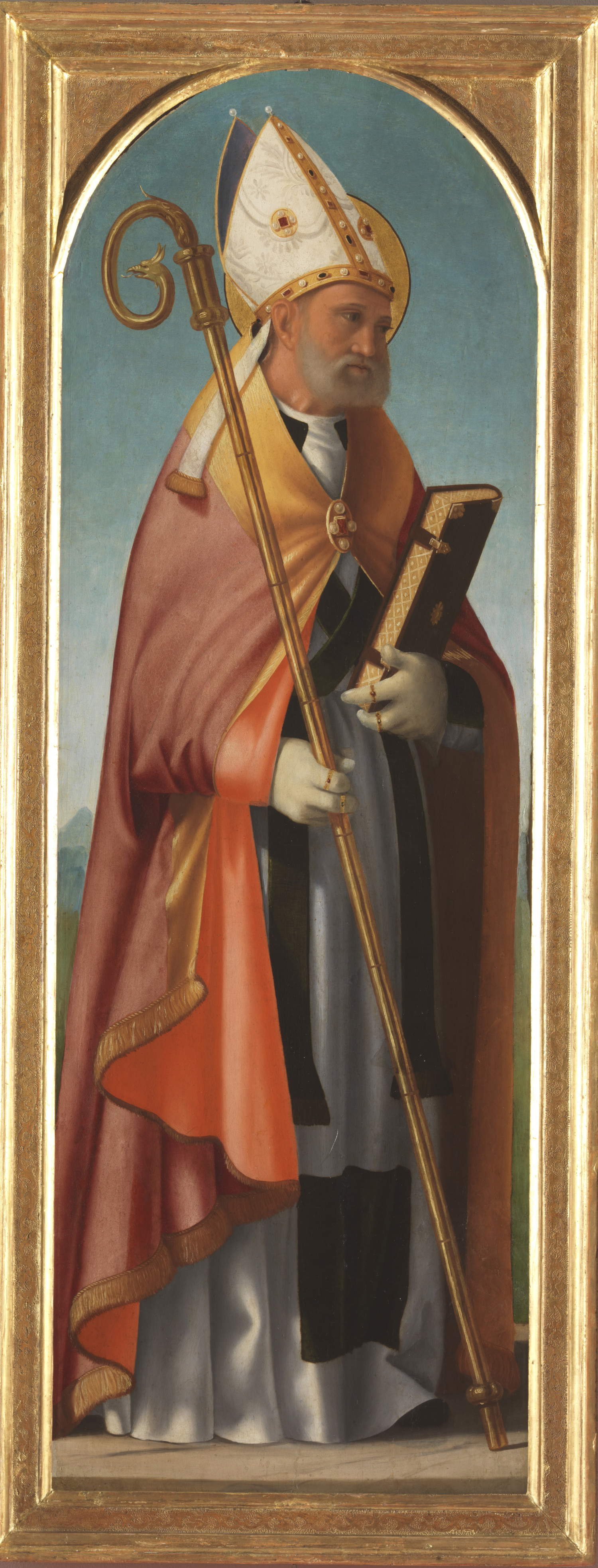
The panel depicting Saint Nicholas of Tolentino is one of three panels that, through February 7, 2027, can once again be viewed together at the Villa Bassi Rathgeb Museum in Abano Terme, as part of the exhibition *Andrea Previtali, Disciple of Giovanni Bellini*, curated by Raffaele Campion and Barbara Maria Savy. The triptych, dating from around 1515, was painted by Previtali for the Church of the Annunciation in Serina, in the province of Bergamo. In the center is Saint Peter the Martyr: a powerful, full-face figure standing on a stone pedestal, pierced by a sword and a knife, holding a book and the palm of martyrdom against a clear sky. To the right is Saint Nicholas. The third panel, depicting a holy bishop, has been separated from the other two—which remain in the church—for decades and is part of the Euganean Museum’s collection. Thanks to a collaboration with the Diocese of Bergamo, the two panels that remained in Serina have now reached Abano, and the three panels are reunited after nearly two centuries. According to the catalog entry, this is the first time the three panels have been exhibited together.


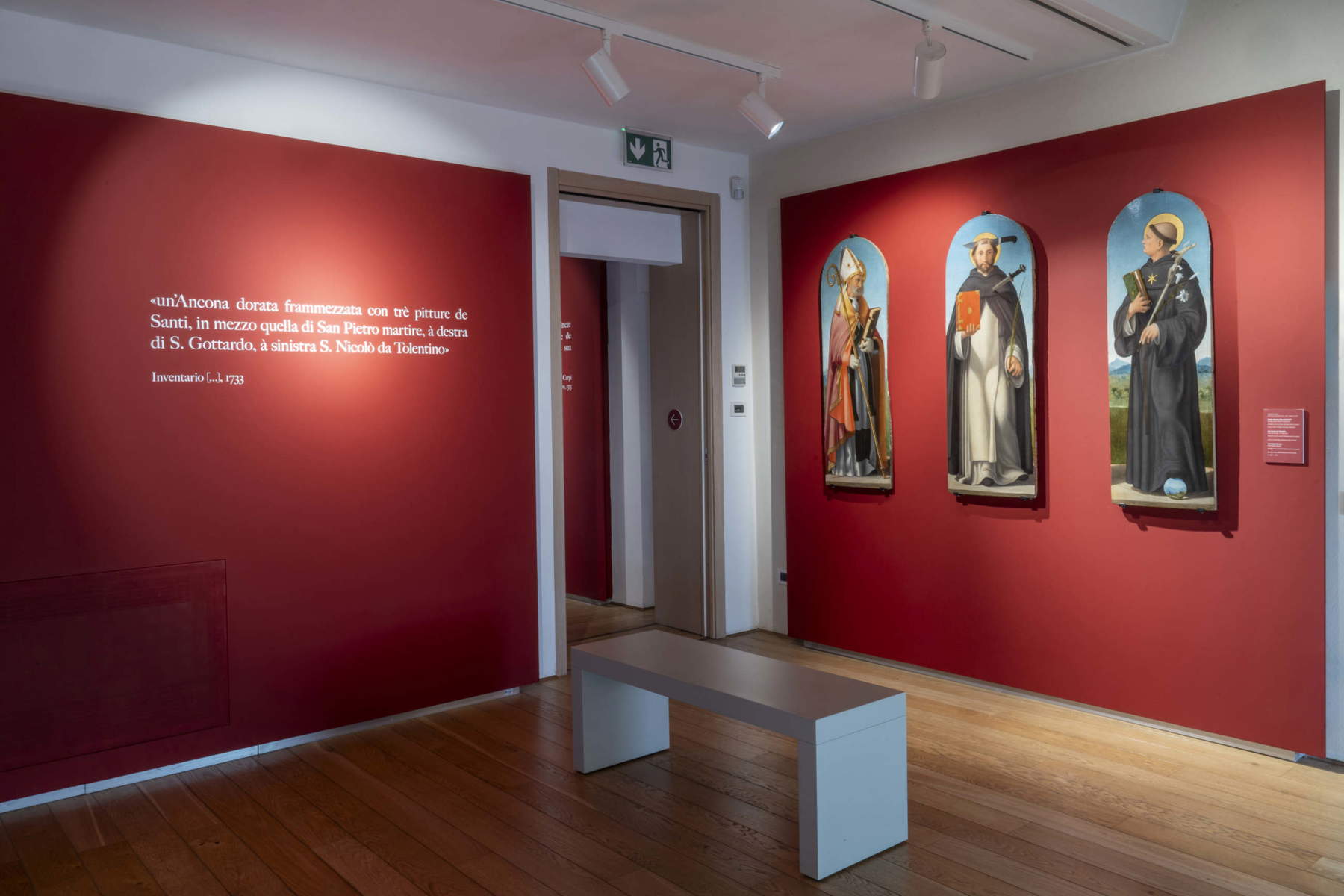
Sources explain how they came to be divided: in 1793, Francesco Maria Tassi saw in the church of Serina “three panels of equal size, that is, three narrow and tall sections.” According to him, they depicted Saint Peter the Martyr, Saint Augustine, and Saint Nicholas of Tolentino. The triptych was intended for the altar of Saint Peter the Martyr, the second altar to the right of the high altar. During the reconstruction of the building, the works were moved from their original altars and separated. The panels depicting Saint Peter and Saint Nicholas remained in the church’s sacristy. The saintly bishop remained out of the spotlight until 1955, when Roberto Bassi Rathgeb studied and published a work on him before acquiring the painting for his own collection. The idea that the three panels belonged to the same triptych is attributed to the scholar Jürg Meyer zur Capellen, who based his theory precisely on Tassi’s description. Other scholars later confirmed this by noting that the three figures are composed in the same manner, each within a narrow arched space.

Even today, it is not known with certainty who the holy bishop is. Tassi identified him as Saint Augustine, and most scholars have followed his lead. When it entered the municipal collections of Abano, it was displayed—with a question mark—as Saint Nicholas of Bari. However, two inventories from the Serina parish archive, dated 1665 and 1733, mention a Saint Gotthard alongside Saint Peter the Martyr. One clue supporting this interpretation is the Augustinian habit that can be glimpsed beneath the cope. In fact, the catalog presents it as “Holy Bishop (St. Gotthard?)”. The date has also been the subject of lengthy debate. Bassi Rathgeb initially suggested 1520 and later 1515. Others have proposed different dates, based precisely on its connection to the altarpiece of Santo Spirito, commissioned in 1512 by the Cassotti family and completed in 1515. In her essay in the catalog, Barbara Maria Savy dates the triptych to 1512–1513.
The triptych, explains museum director and co-curator Raffaele Campion, is at the heart of the entire project: “The reunification of the Serina triptych, the primary reason for the exhibition, represents a particularly significant achievement, because it allows us to view the three original panels together once again and to better understand their history.” From that core, the exhibition *Andrea Previtali, Disciple of Giovanni Bellini* was born. It has been open since October 17 and is sponsored and produced by the City of Abano Terme in collaboration with the Department of Cultural Heritage at the University of Padua and the Superintendence of Archaeology, Fine Arts, and Landscape for the provinces of Padua, Treviso, and Belluno. “This synergy, the involvement of the Superintendency, other museums, and cultural foundations has made it possible to expand the project beyond the initial plan for an event focused on a single work and its reunification with the other two panels of the Serina triptych from which it originates,” explains Savy, a professor at the University of Padua. This is not a comprehensive monograph on the painter, but rather a close look at his earliest works, beginning with those preserved in the Padua area.
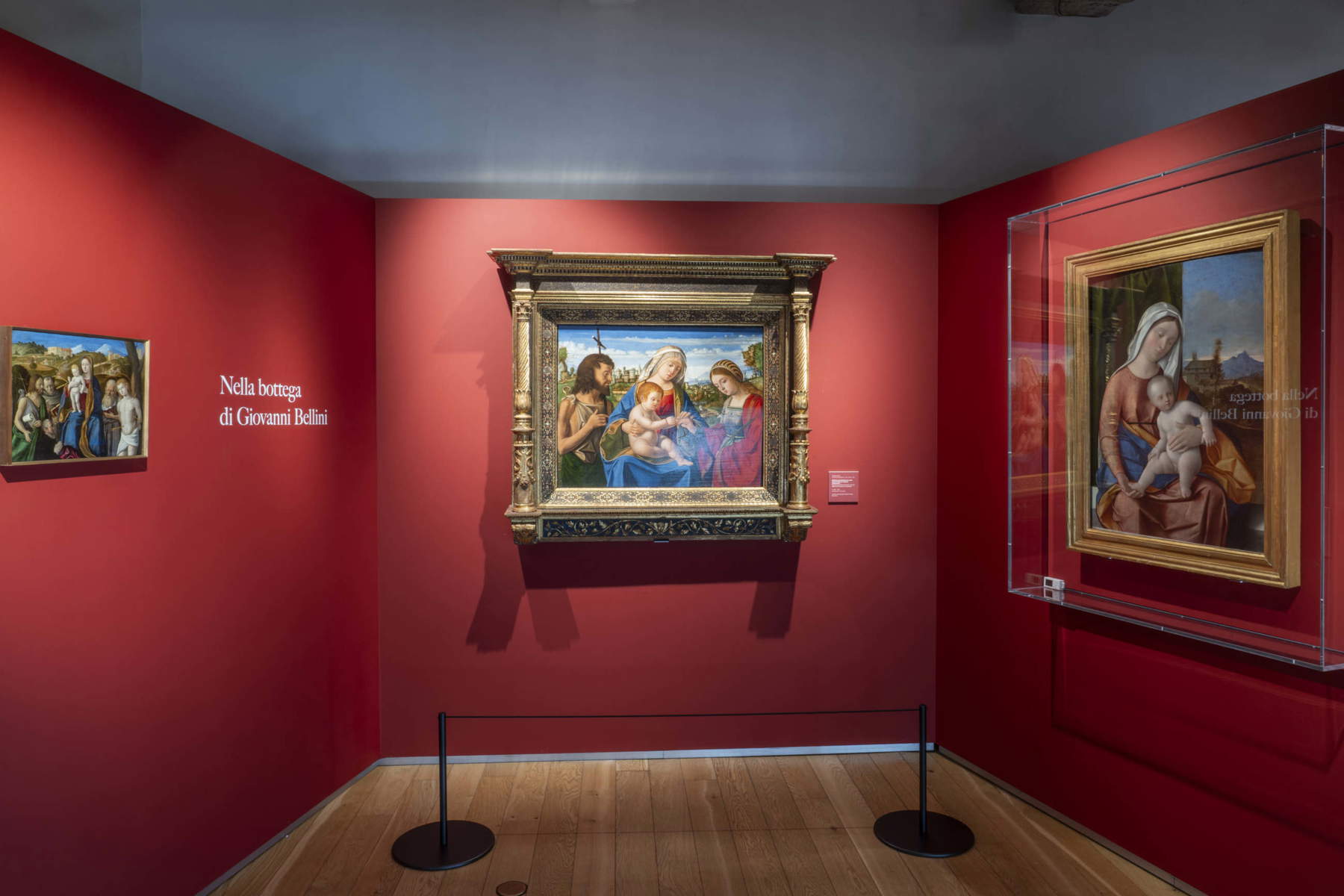
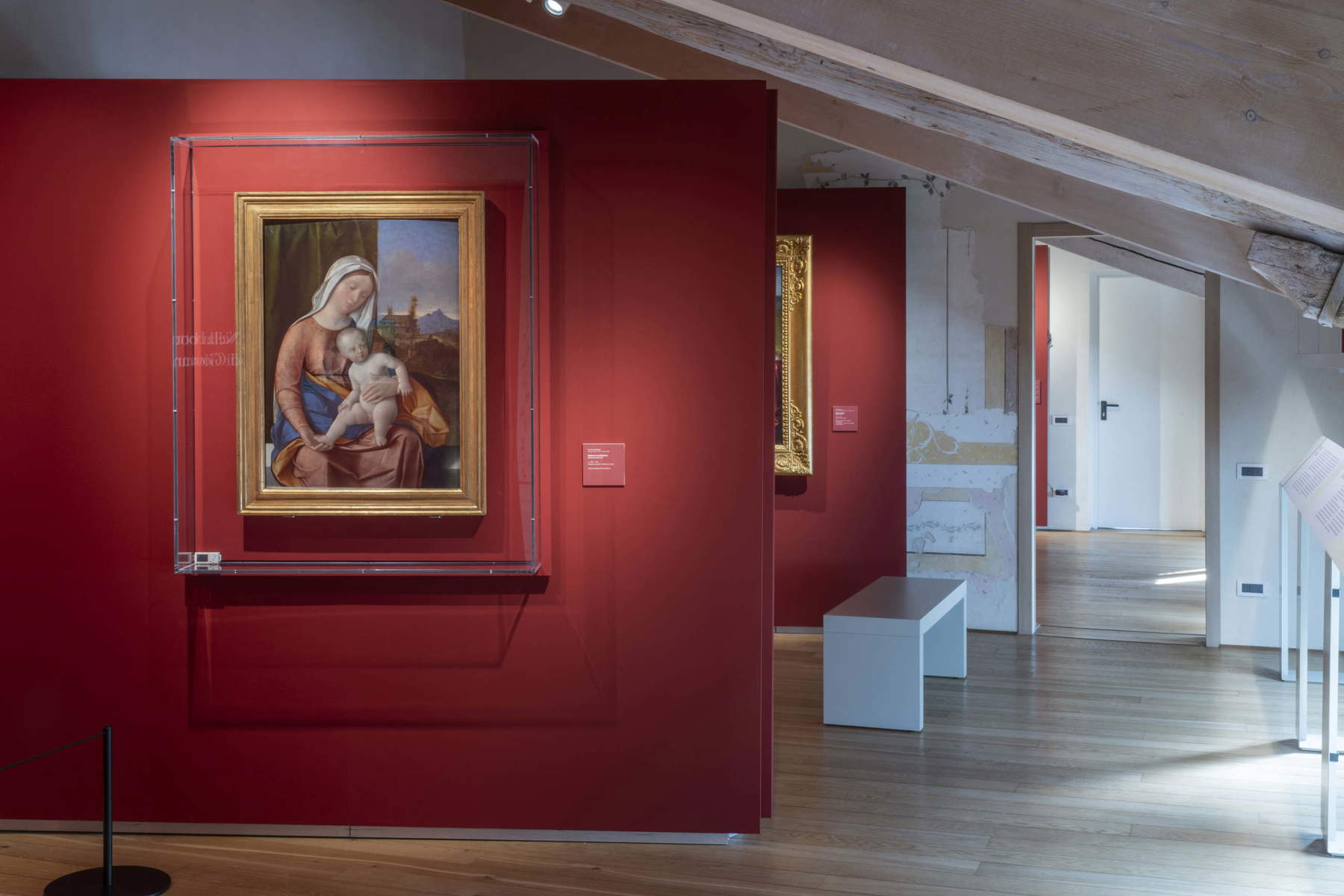
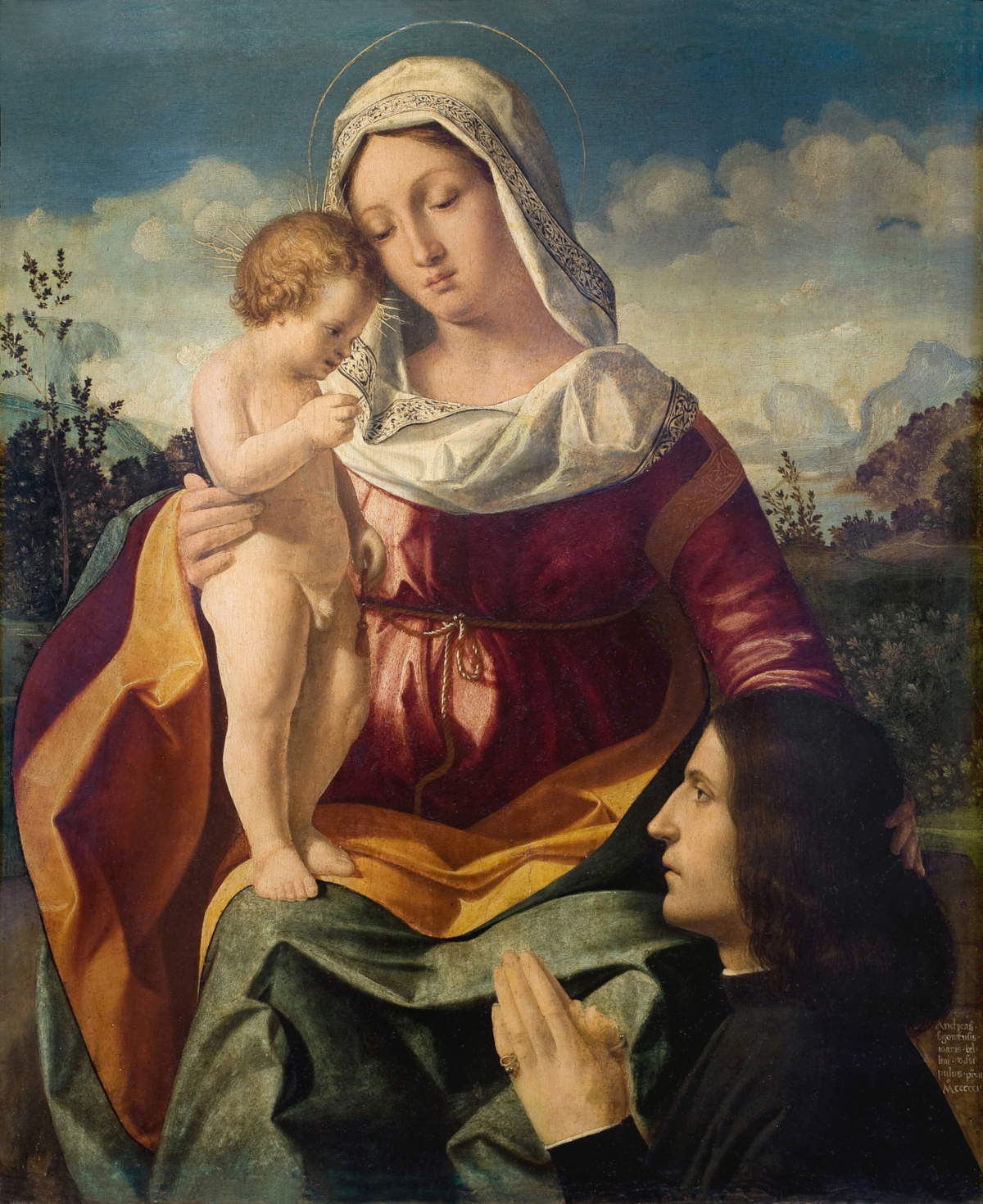
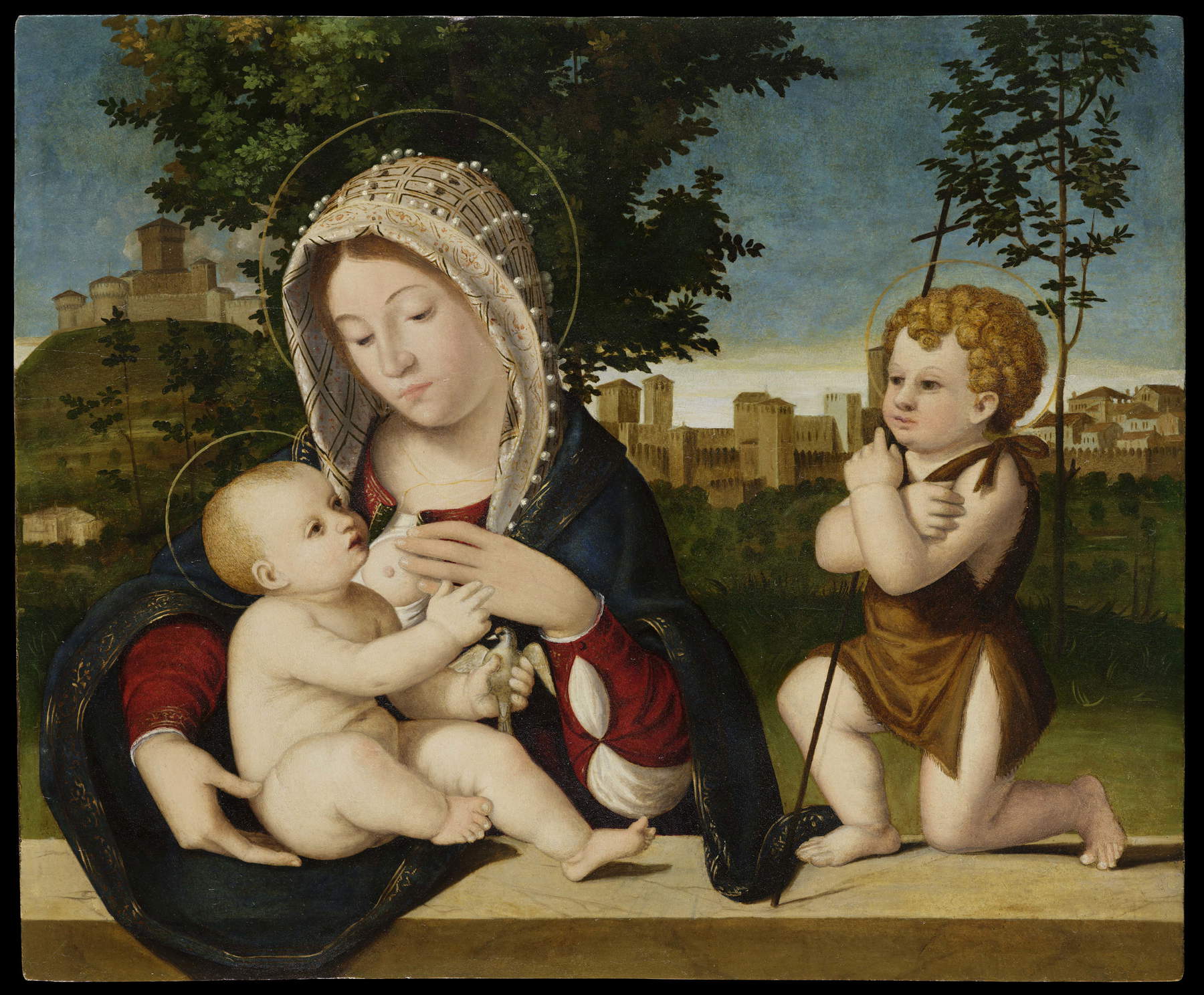
The most important of these works is the Madonna and Child with a Donor from the Civic Museums of Padua, which provides insight into the painter’s early training. Previtali, born in the Imagna Valley around 1480 and who died in 1528, moved to Venice at a very young age and entered the workshop of Giovanni Bellini, one of the great masters of the Venetian Renaissance. In 1502, on that panel, he proudly identified himself as “Ioanis Bellini dissipulus.” It is the earliest date in his catalog and the first definitive point in his chronology. The composition confirms his connection to his master. The Virgin sits on a natural step in the landscape, without the parapet found in Bellini’s 15th-century Madonnas, and derives from an idea Bellini had developed in the Madonna now in Poznań. Previtali’s painting thus also serves to date the master’s work, which is now considered an autograph and placed shortly before the Paduan panel.
For a long time, however, the painter was known by more than one name. As the catalog explains, 17th- and 18th-century sources recorded works signed “Andreas Privitalus,” “Andreas Bergomensis,” or “Andreas Cordelle Agi.” It was therefore believed that two artists had existed: a Previtali from Bergamo and a mysterious Andrea Cordella or Cordelliaghi, whom Vasari even referred to by the incorrect name “Giannetto Cordegliaghi.” It was the art historian Giovanni Battista Cavalcaselle who realized that they were one and the same person: depending on the context, the painter would emphasize his Bergamo origins, his apprenticeship with Bellini, or his family’s trade in ropes and needles. Gustav Ludwig’s documentary research definitively clarified the matter in the early 20th century. After returning to Bergamo, Previtali always signed his works “Privitalus.”
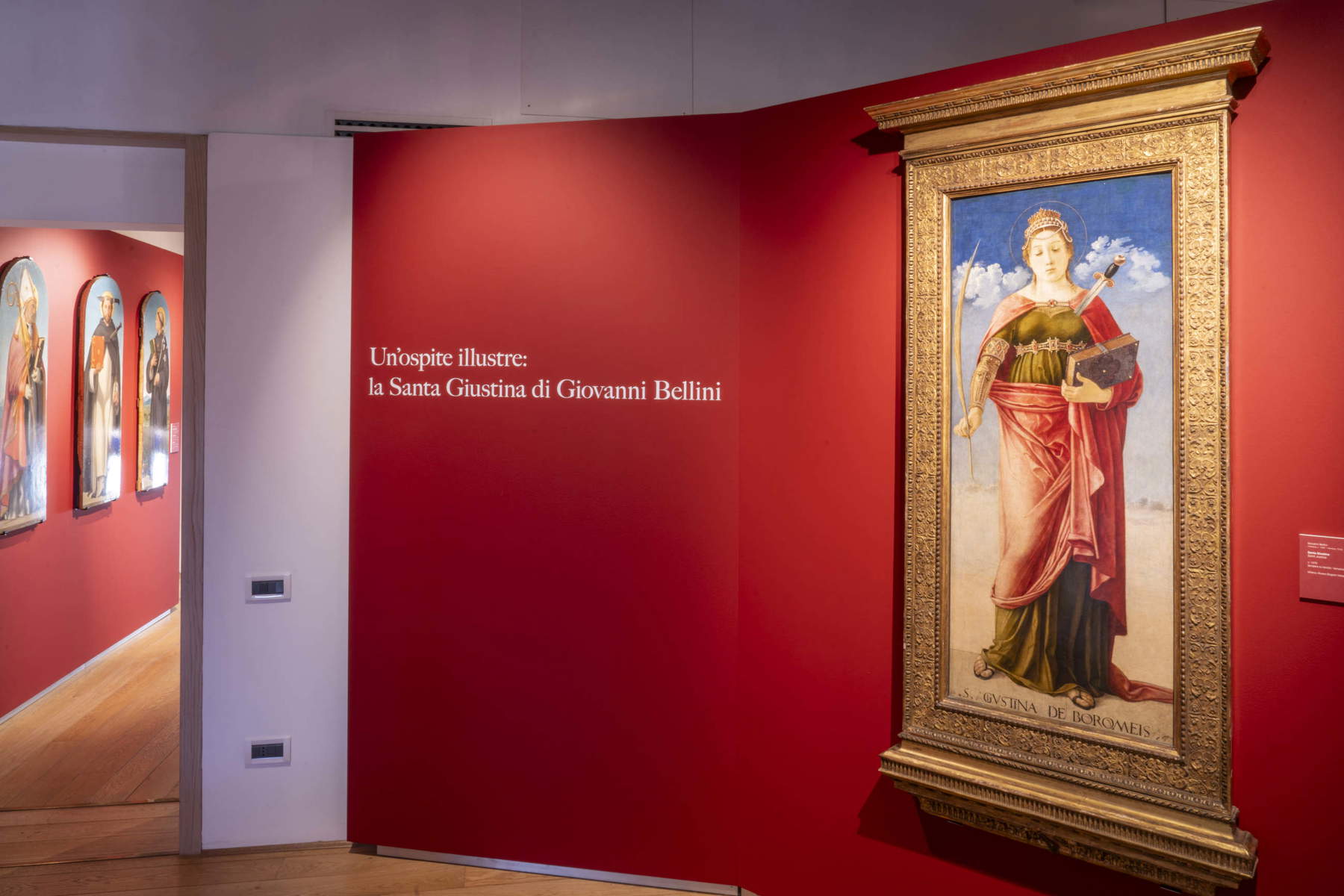
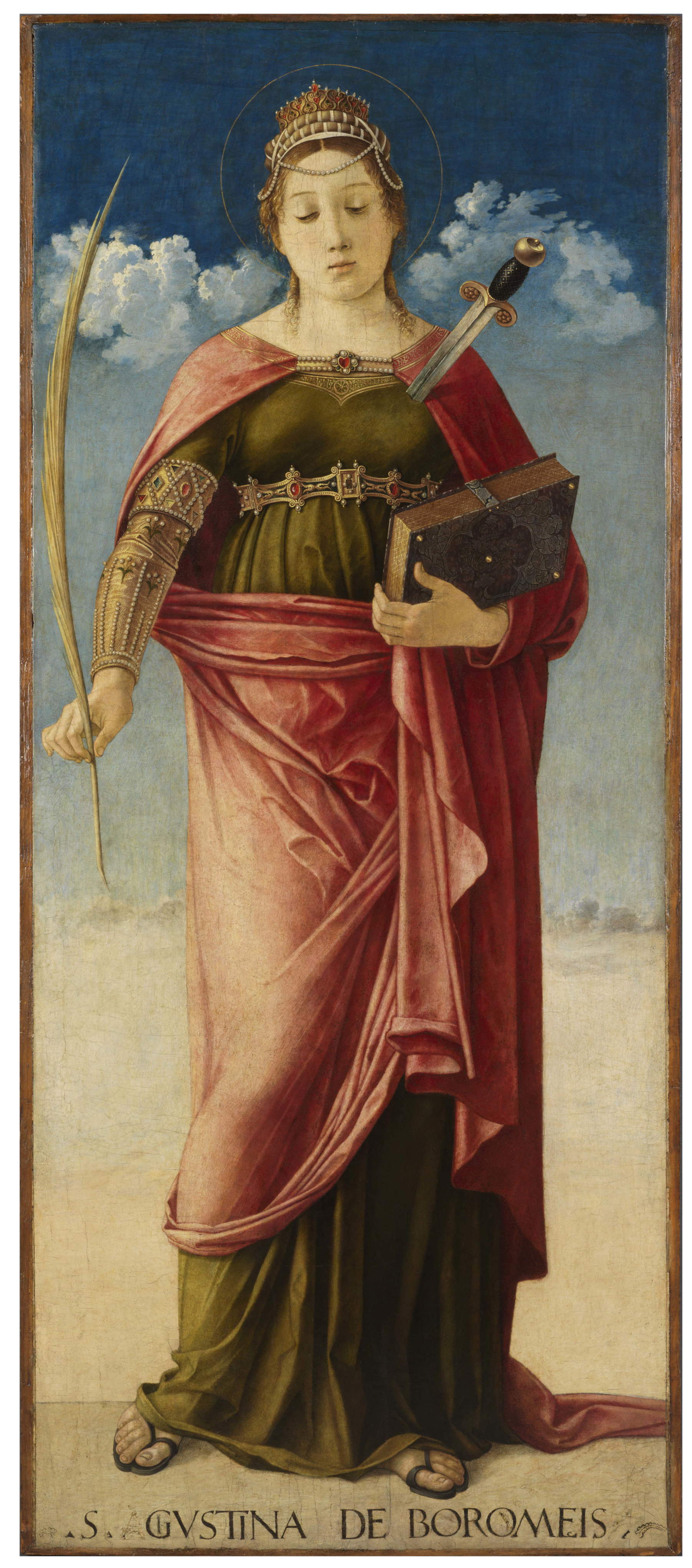
Alongside the student is the master. The Bagatti Valsecchi Museum in Milan has loaned Giovanni Bellini ’s *Saint Justina* , a panel painting with a unique family history. As Camilla Bagatti Valsecchi, president of the Bagatti Valsecchi Foundation, notes in the catalog, the work originated in the Borromeo family’s collecting tradition and entered the Milanese collection in 1882, following the marriage of Giuseppe Bagatti Valsecchi and Carolina Borromeo. It was hung in the couple’s bedroom—now the museum’s Camera Rossa—where it remains to this day. The panel predates Previtali’s formative years but clearly illustrates the kind of Bellinian inventiveness from which the student’s similar artistic solutions derive. The saint, solemn and monumental yet delicate at the same time, stands out against a sky streaked with soft clouds. The rendering of the colors, the light, and the details of the garment reflect the sensibility of the young Bellini, which would go on to influence subsequent generations.
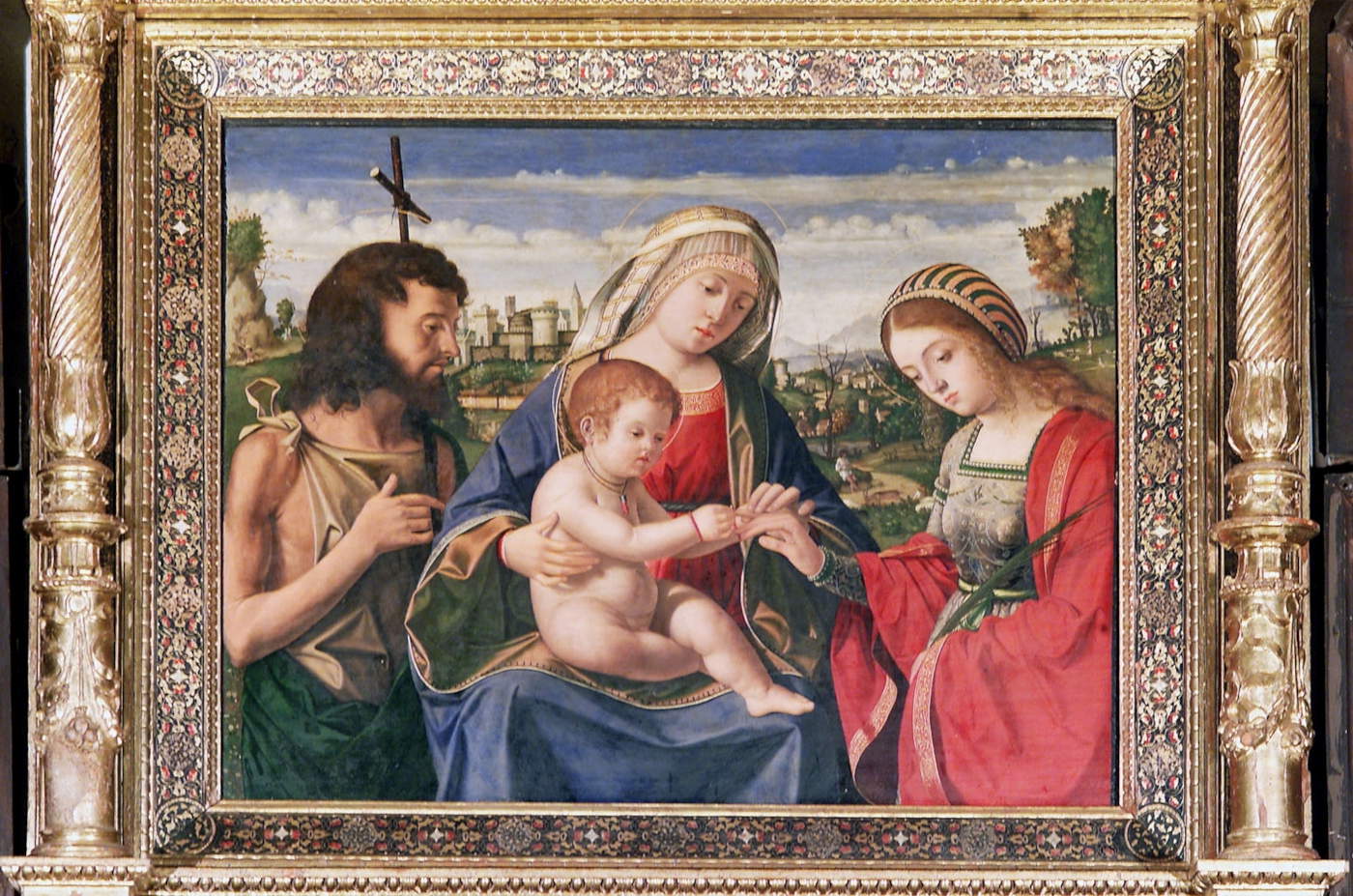
The exhibition then traces the development of a personal artistic language. Previtali’s Madonnas, Holy Conversations, portraits, and Arcadian-style landscapes reveal, alongside the influence of Bellini, that of Vittore Carpaccio, Giorgione, and Albrecht Dürer. The German painter stayed in Venice between 1505 and early 1507 and also visited Bellini’s workshop. According to the catalog, these innovations were only partially incorporated into Previtali’s style, as he remained essentially faithful to his own perspective choices. Also on display is the version of The Mystical Marriage of Saint Catherine from the Venetian church of San Giobbe. It is a replica, painted a few years later, of the panel signed and dated 1504 that is now in the National Gallery in London, and it echoes the half-figure composition with landscape found in Bellini’s so-called Giovanelli Sacred Conversation. Previtali’s artistic language emerged from the fusion of his early Lombard figurative tradition with his experiences in early 16th-century Venice, culminating in his return to Bergamo and his engagement with the modern style of Lorenzo Lotto.
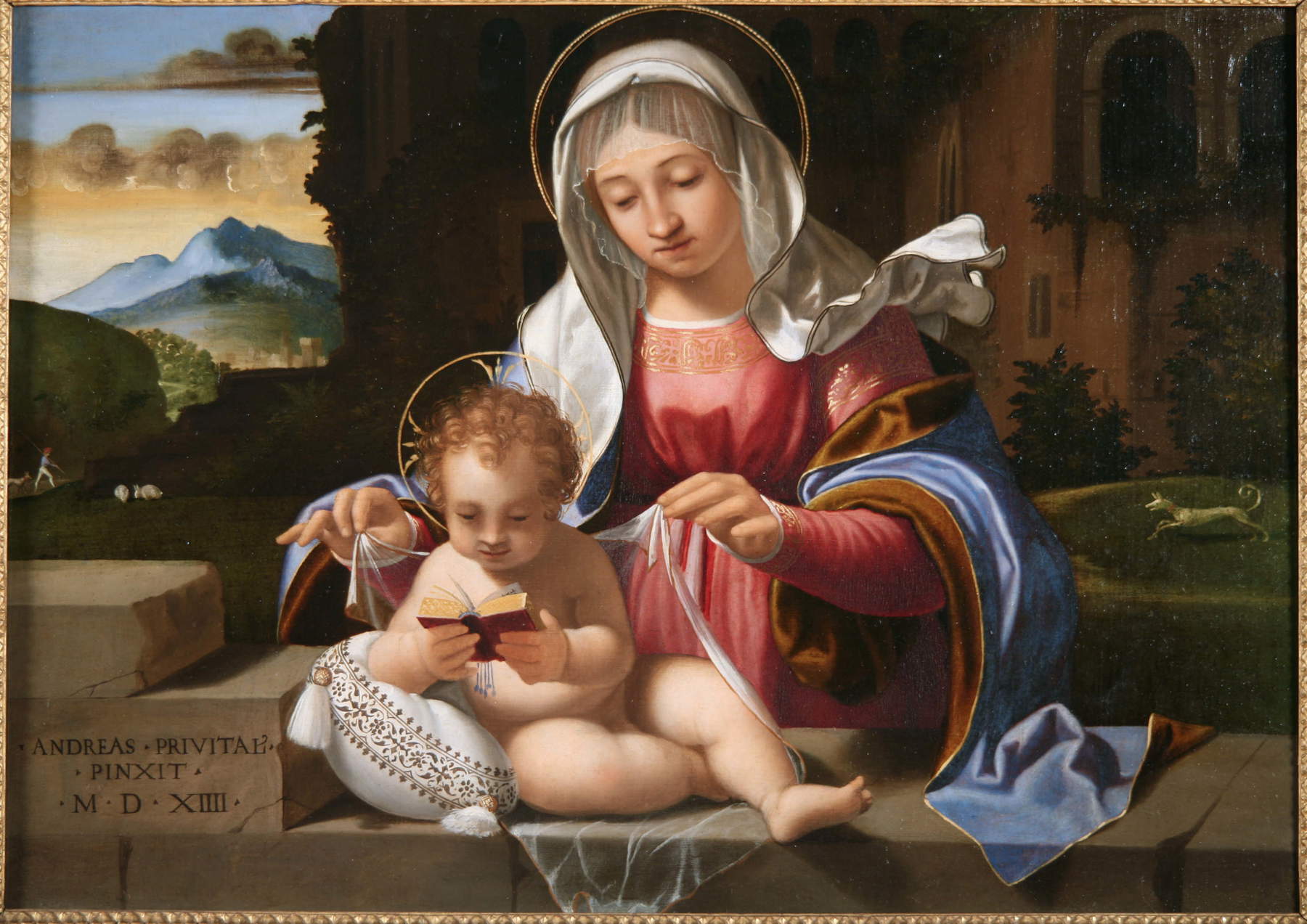
The Serina triptych belongs precisely to this phase. Having returned to Bergamo perhaps as early as 1511, Previtali found an artistic milieu still oriented toward Milan, with the works of Bergognone and Bernardo Zenale. Lorenzo Lotto arrived in the city in 1513, and according to the catalog, the Lottesque shift in Previtali’s painting is only evident from 1514 onward, as demonstrated in the exhibition by the *Madonna and Child Reading* from the Accademia Carrara. In the triptych, the exhibition label notes, the composition still recalls Bellini, but the work is “imbued with a light that is quintessentially Lottian.” The bright colors and intense light on the garments, on the other hand, evoke the Lombard sensibility. A technical detail also sets it apart: the saints’ halos, which stand out against the light sky, were executed using shell gold rather than gold leaf. During those years, the church of Serina was a bustling construction site. The parish priest Lorenzo Carrara, who served from 1509 to 1548, enriched it with paintings, also commissioning artists from the local area. Between 1515 and 1517, Palma il Vecchio painted the six panels of the Polyptych of the Presentation of the Virgin there.
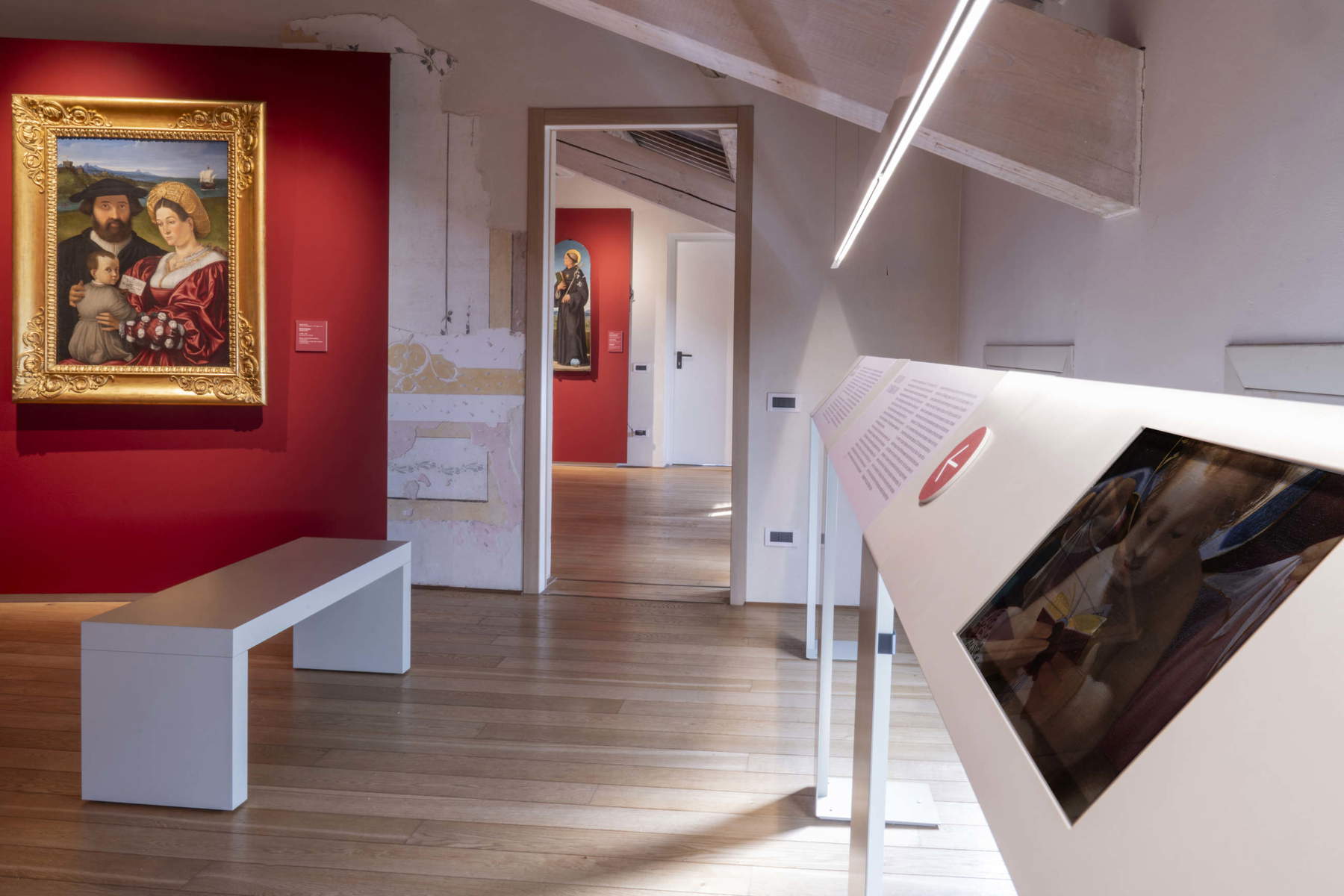
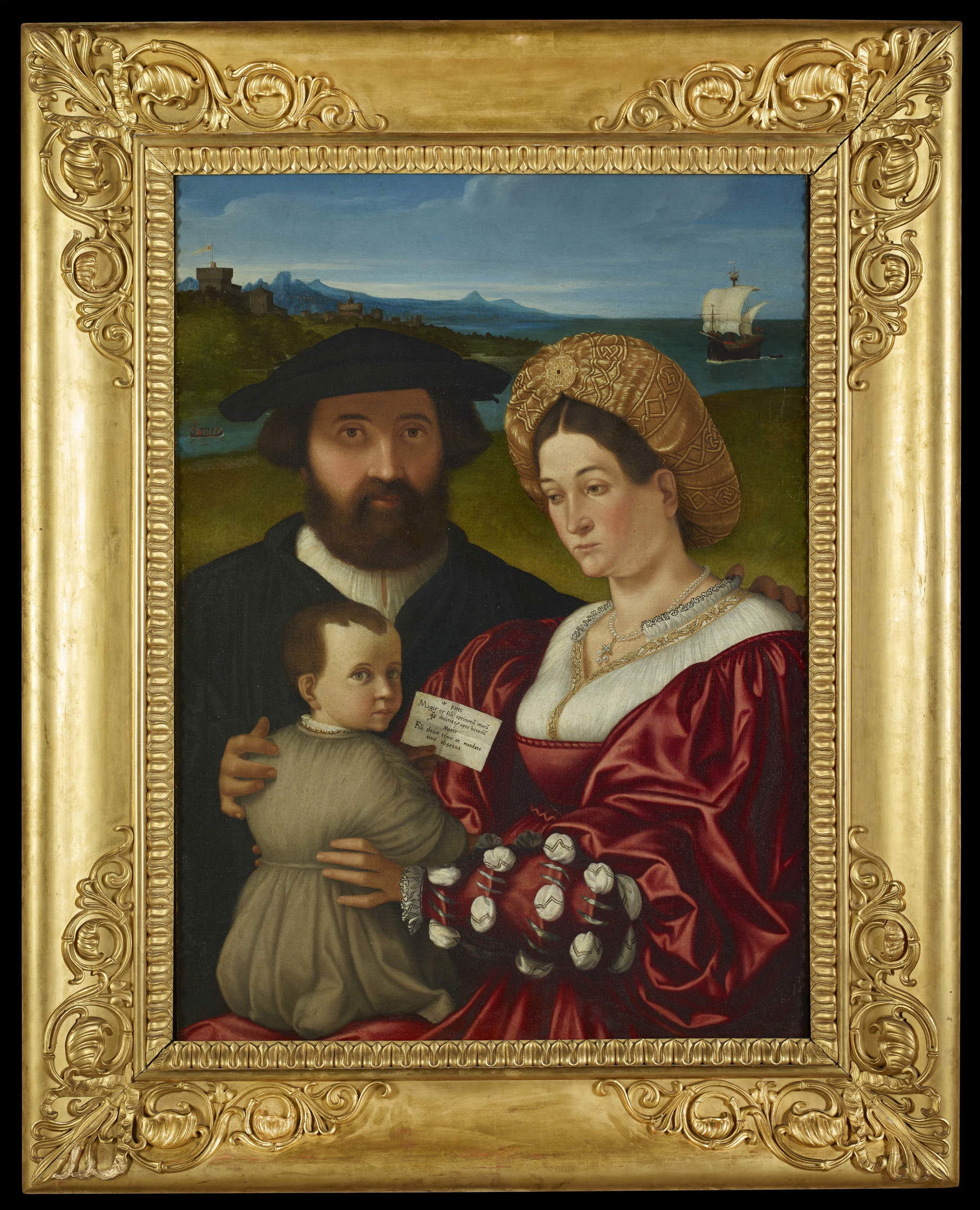
The central theme of the exhibition is the practice of the Renaissance workshop. For this reason, Previtali’s works are compared with those of other painters active in Venice, Bergamo, and Brescia, such as Francesco Bissolo, Girolamo da Santacroce, Palma il Vecchio, and Giovanni Busi, known as Cariani. The reuse of cartoons seen in the triptych—a practice that, according to the catalog, frequently occurs in Previtali’s work—is a concrete example of how a workshop of the time operated: the same drawing could become a different saint, with only minor changes, depending on the patrons’ requests. One section is dedicated to portraiture, featuring the Portrait from the Accademia dei Concordi in Rovigo and the Family Portrait from Palazzo Moroni in Bergamo, and showcases a genre that Previtali practiced throughout his career. An in-depth look at artistic techniques, featuring materials designed for the general public, explains how works were created in Renaissance workshops.
Behind the exhibition lies the story of a collector. Roberto Bassi Rathgeb, who lived from 1911 to 1972, studied physics and then medicine in college. He had inherited from his father what remained of his grandfather Alberto Rathgeb’s nineteenth-century collection, housed in the family palace on Via Pignolo in Bergamo, and from there he built his own collection. He was a self-taught connoisseur who developed his own method by examining the works directly, conducting research, and engaging with art-historical tradition. His interest in Previtali began with the purchase of a painting by the Bergamo master on the antiquities market. This was followed by studies, reports, and attribution proposals concentrated between 1955 and 1959, which contributed significantly to the critical rediscovery of the painter. Bassi Rathgeb participated in the debate on attributions and, on more than one occasion, purchased the works he himself had brought to the attention of scholars, such as the Holy Bishop of Serina. His collection, donated to the Municipality of Abano Terme between 1972 and 1980, includes important works from the Brescian and Bergamasque schools. He is also credited with attributing to Previtali the altarpiece from the Church of San Prosdocimo in Villanova di Camposampiero, now housed at the Diocesan Museum of Padua. For conservation reasons, the altarpiece is not on display, but the catalog includes an essay on its recent restoration.
The exhibition is part of a series through which the museum, beginning in 2024, is studying and highlighting its permanent collections, following *Donna musa artista. Portraits by Cesare Tallone from the 19th and 20th Centuries* (2024–2025) and *Leonor Fini and the Bassi Rathgeb Print Collection. Signs and Inventions from the Renaissance to the 20th Century (2025–2026). In addition to the curators, the scientific committee includes Elisabetta Gastaldi (Padua Civic Museums), Marta Mazza (ABAP Superintendency of Padua, Treviso, and Belluno), Antonio Carlo Mazzotta (University of Milan), Paolo Plebani (Accademia Carrara in Bergamo), and Alessia Vedova (Cassa di Risparmio di Padova e Rovigo Foundation). The catalog, published by Sagep Editori, brings together the results of research conducted for the exhibition, featuring essays and entries by scholars and specialists in Renaissance art. The exhibition is sponsored by the Veneto Region and the University of Padua and is supported by the Lions Club Abano Terme Gaspara Stampa, the Rotary Club Abano Montegrotto Terme Euganee, and A.F. Energia Srl.
|
| Andrea Previtali’s triptych is being reassembled in Abano, on display at Villa Bassi Rathgeb |
Warning: the translation into English of the original Italian article was created using automatic tools. We undertake to review all articles, but we do not guarantee the total absence of inaccuracies in the translation due to the program. You can find the original by clicking on the ITA button. If you find any mistake,please contact us.