



by Redazione 25/10/2026


Categories: Exhibitions / Disclaimer
In Ferrara, at the Palazzo dei Diamanti, over 120 works—mostly from the Museum Boijmans Van Beuningen—show how the Macchiaioli, Divisionists, Futurists, and many other Italian artists drew inspiration from French painting, the Barbizon School, Impressionism, and the avant-garde, often forging their own paths.


In 1875, Giovanni Fattori spent a month in Paris—the only time he ever set foot there. He wrote two long letters to his brothers-in-law, brimming with wonder: streets as wide as squares, steamboats crisscrossing the city, carriages and omnibuses weaving through the traffic nonstop, cafés lit up like daytime on the boulevards. The French capital reminded him of “Florence on a grand holiday,” and then of a grand Milan. Yet, upon returning to Italy, the Livorno-born painter left not even a single visual record of that month. This detail serves to measure a distance: when, in the early 1880s, Fattori painted Viale Principe Amedeo in Florence, the city appeared quiet, almost motionless, as if struggling to surrender to the rhythms of modernity. It is one of the episodes that best explains what it means to view 19th-century European painting from an Italian perspective. At the Palazzo dei Diamanti, from September 19, 2026, to January 10, 2027, the exhibition *From Monet to Van Gogh to Kandinsky: New Perspectives on Nature and Modernity brings together over 120 works—including paintings, drawings, and engravings—displayed across fourteen galleries. Most of the works come from the Museum Boijmans Van Beuningen in Rotterdam, which collaborated with the Fondazione Ferrara Arte and the Gallerie d’Arte Moderna e Contemporanea di Ferrara; these works are complemented by paintings and drawings from Italian public and private collections, including the Museo Giovanni Boldini in Ferrara. The exhibition, curated by Sandra Kisters and Vasilij Gusella, traces the transition—spanning just under eighty years—from the direct observation of nature to the dissolution of reality, with the natural and urban landscape and modern life serving as the terrain of exploration.

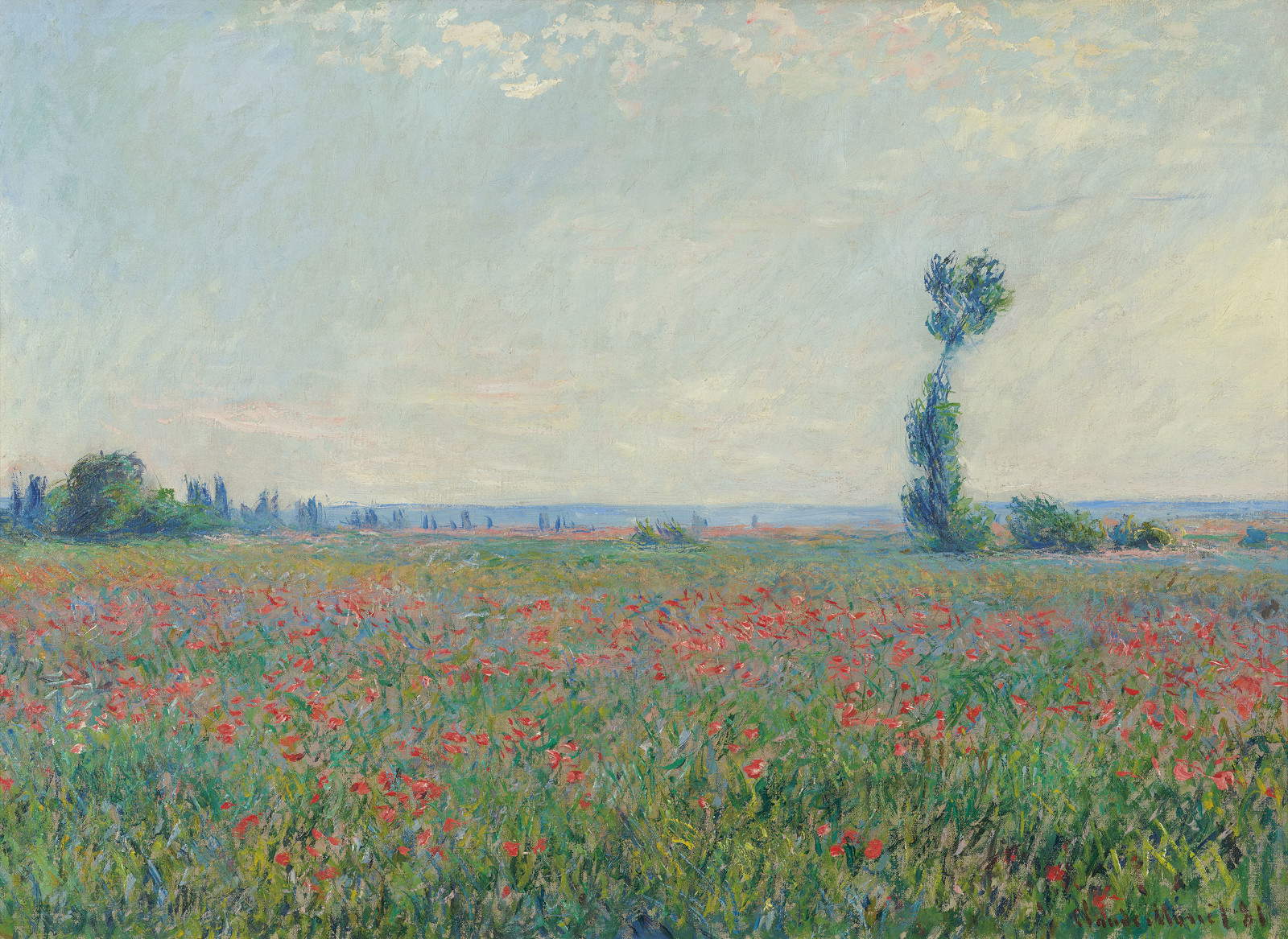
The first chapter focuses on France and opens with the forests around Fontainebleau. In Barbizon, beginning in the 1830s, Théodore Rousseau, Constant Troyon, and others painted en plein air, aided in part by the spread of tube paints, moving away from both neoclassical idealization and Romantic emphasis. The influence of this movement reached Italy around the middle of the century, partly because some young painters went to see it for themselves. Giuseppe Palizzi moved to France in 1844 and shortly thereafter settled in the forest, where he built a cabin-studio called “La Gobba”; his brother Filippo, in turn, frequently visited the region. Giuseppe’s works exhibited in Ferrara depict forested masses captured in the foreground that dominate the figurative scene, featuring earthy tones and backlighting effects. Then there is Alberto Pasini from Parma, who had been in Paris since 1851 and was closely aligned with the artistic explorations of Daubigny, Dupré, and Rousseau. In the catalog, Elisa Maria Gervasi adds that Pasini’s artistic path soon diverged from the premises shared by the Macchiaioli, as his discovery of Fromentin’s Orientalist painting led him toward a different genre and imagery.


Even before Barbizon, Gusella notes, something had already begun to take shape in Naples. From the mid-1820s, the Posillipo School, led by the Dutch painter Anton Sminck van Pitloo, promoted a realist style of landscape painting, “imbued with the very latest European trends,” particularly those of Corot and Turner. During those years, the first Italian course dedicated specifically to landscape painting was established at the Institute of Fine Arts in Naples, and painters such as Gabriele Smargiassi and Giacinto Gigante emerged from that school. The decisive turning point for many Italian artists was the 1855 Paris World’s Fair. Domenico Morelli, Francesco Saverio Altamura, and Serafino De Tivoli traveled there, and it was on that very occasion that the scandal surrounding Courbet’s Pavillon du Réalisme unfolded—a pavilion that the master from Ornans had built at his own expense after the jury refused to exhibit *The Painter’s Studio*. The Italian painters, however, seemed more interested in other European influences: Corot, the Barbizon landscape painters, and Constable. Upon his return to Florence, Altamura spoke to his companions at the Caffè Michelangiolo about the “ton gris,” then in vogue in Paris, and the black mirror—a tool that strips away the colorful appearance of nature and allows one to grasp chiaroscuro as a whole, the “macchia.” Altamura himself, in a 1855 essay, acknowledged that the Exhibition offered young Italians “new ways of seeing reality, different criteria for giving form to an idea.” The following year, at his villa in Pratolino, Prince Demidoff opened his collection—now dispersed—to the public, featuring works by Ingres, Delacroix, Corot, Troyon, and Decamps: an opportunity for direct engagement that, as Gervasi notes, no longer required traveling.

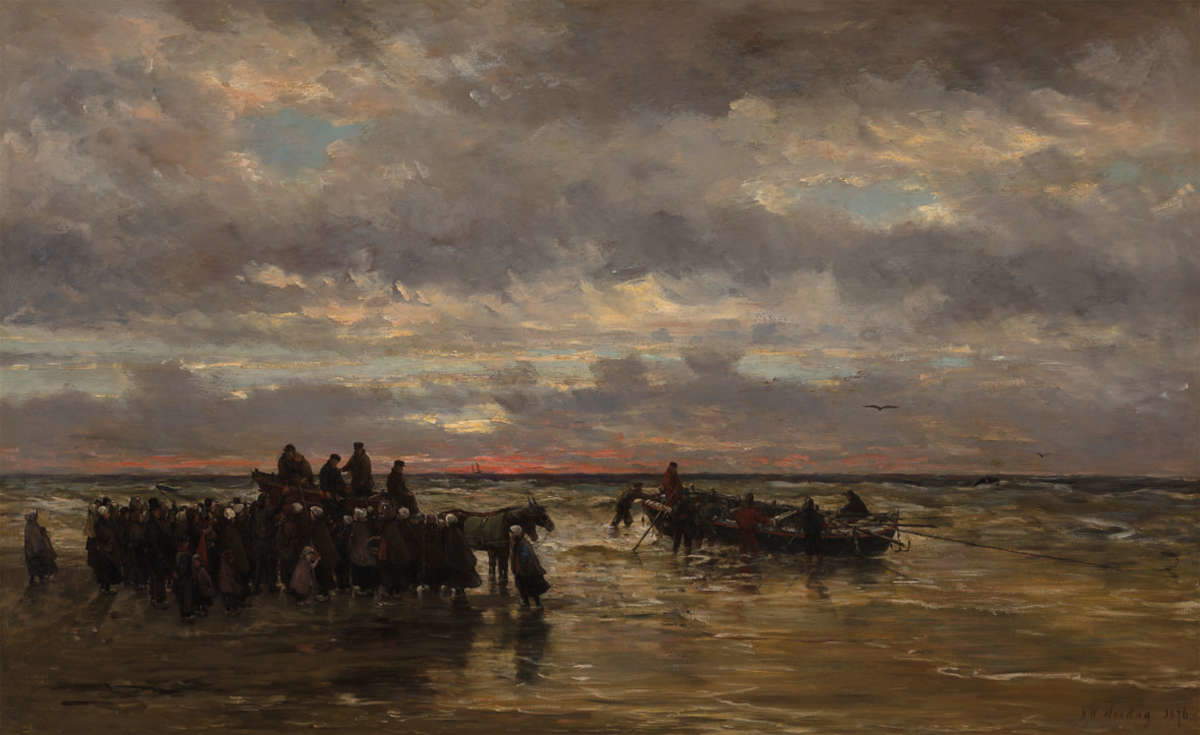
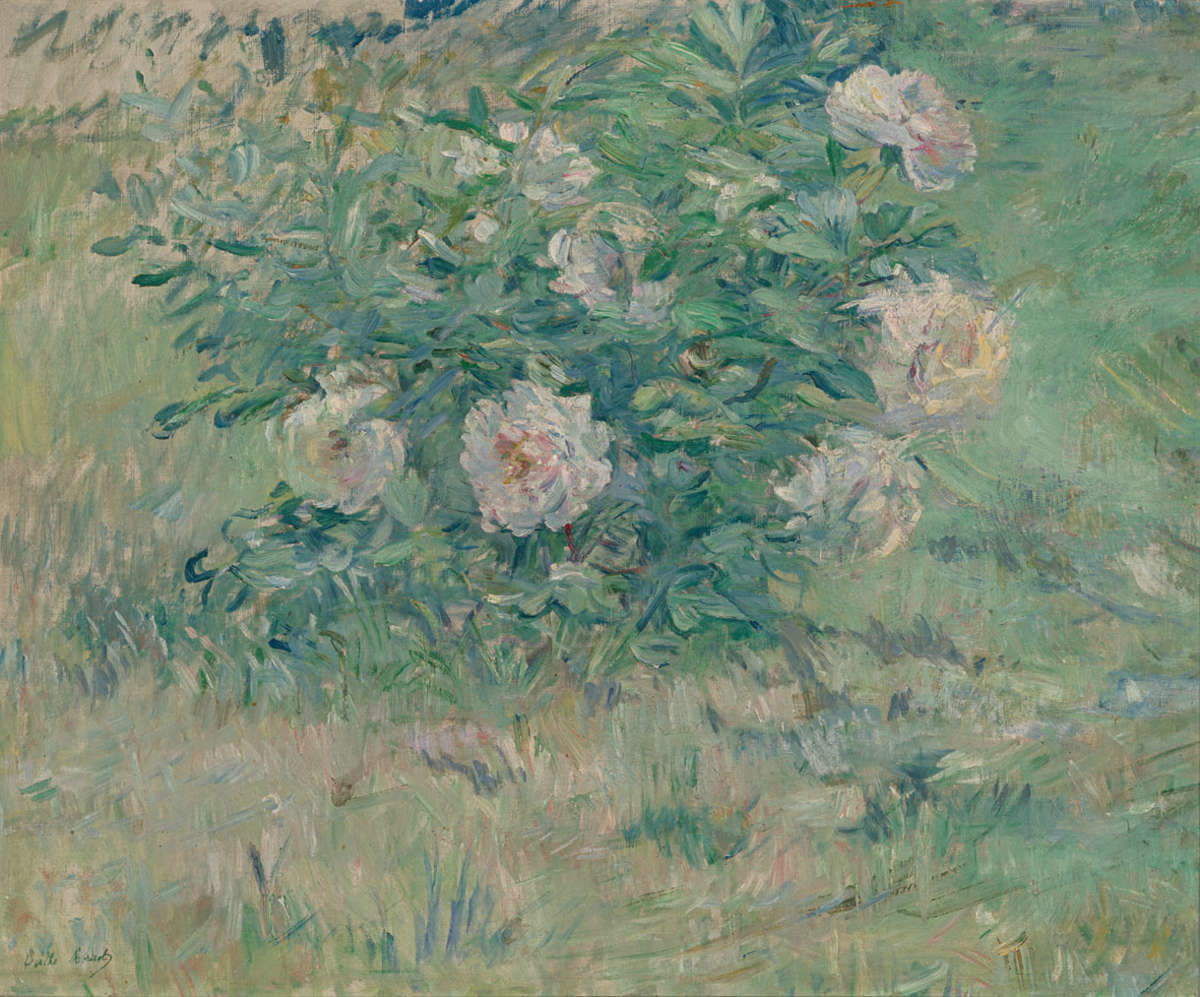
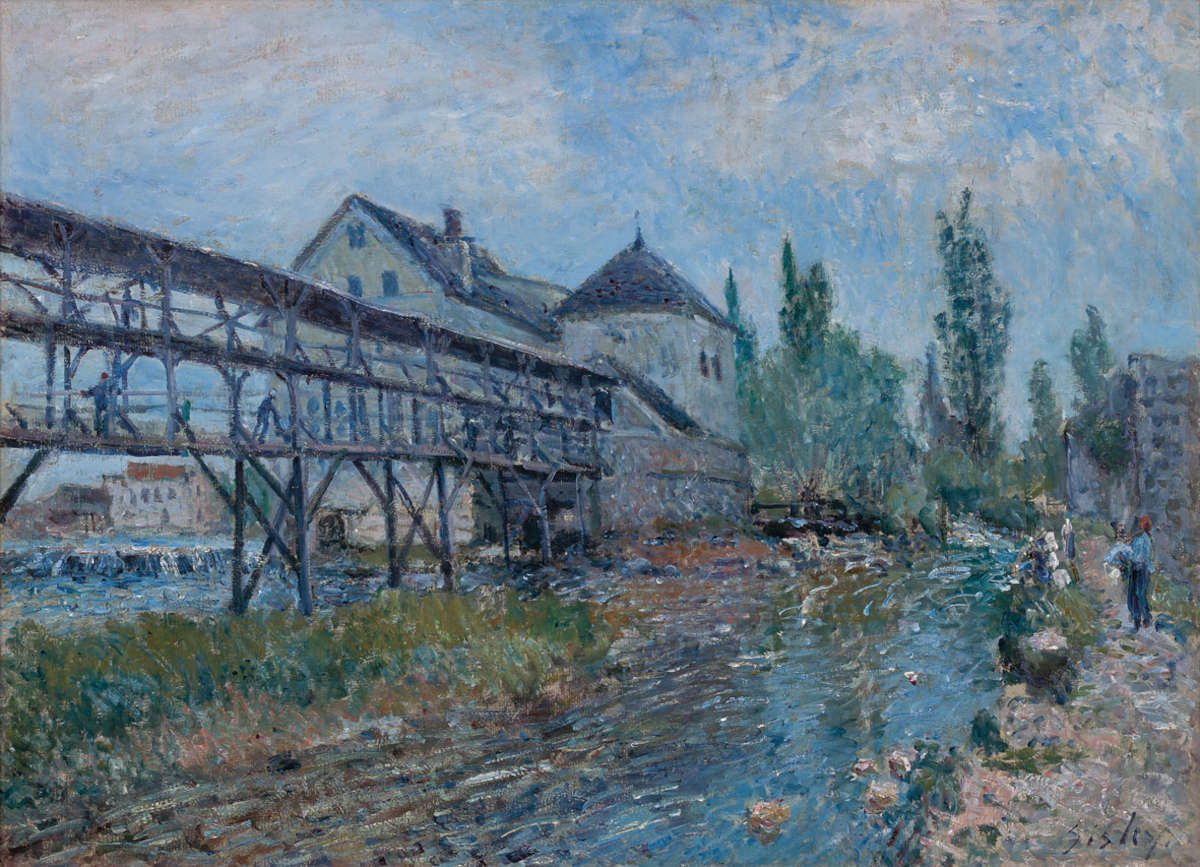
This marked the beginning of the Macchiaioli period: at the tables of Caffè Michelangiolo, the young artists replaced the primacy of drawing with the juxtaposition of chromatic masses, the interplay of light and shadow, and strong tonal contrasts. In Castiglioncello, where Diego Martelli had been hosting Sernesi, Borrani, and Fattori at his estate since 1861, nature became the focal point of minimalist compositions and broad swaths of color; in Piagentina, on the outskirts of Florence, artistic exploration turned toward a more domestic dimension, as in Silvestro Lega’s *Villino Batelli*, and Telemaco Signorini brought the sensibility of the *macchia* to a scene of private life in *Luna di miele*.
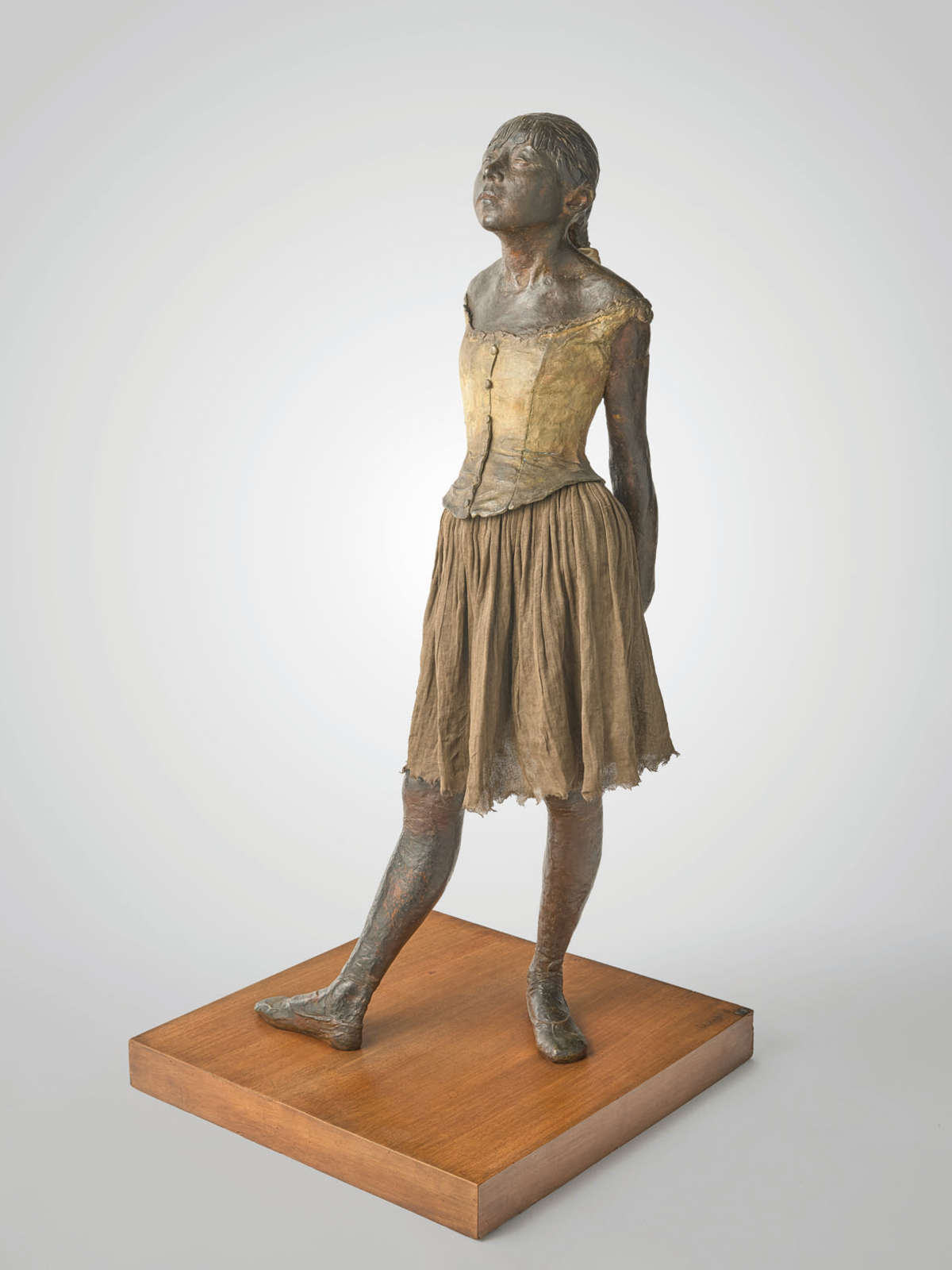
These exchanges, after all, were not one-sided. Between the late 1850s and 1860, Edgar Degas stayed in Florence, staying with the family of his aunt, who had married the Neapolitan Bellelli, and the lucid realism of *The Bellelli Family* left a profound mark, writes Bosi, on painters sensitive to the poetics of interiors, such as Borrani and Lega. When Degas returned to Florence in 1875, he admired Signorini’s *Sala delle agitate* in the San Bonifacio hospice; and the exaggerated perspective of *Absinthe*, Bosi further notes, seems to evoke the sequence of tables pressed against the wall in that Florentine painting. Meanwhile, Giuseppe De Nittis, Federico Zandomeneghi, and Giovanni Boldini moved to Paris: thanks to them, their friends who remained in Italy closely followed the birth of Impressionism. It was Zandomeneghi, in particular, who guided Martelli’s extended stay in Paris, from April 1878 to April 1879, from which the Tuscan critic drew his understanding of Impressionism, as evidenced in the lecture he delivered in Livorno in 1879 and published in 1880.
Boldini, who was born in Ferrara, is the case in which belonging to one context and choosing another intersect in the most direct way. Having arrived in Paris in 1871, from 1873 onward he engaged—alongside the Impressionists—with life in the capital, capturing its fragments with pencil and brush: In the Gusella catalog, he quotes those who described these drawings as “the spectacle of cafés, theaters, and squares,” translated into increasingly restless impressions of horses and carriages crossing paths and chasing one another.
Impressionism was born with the 1874 exhibition in photographer Nadar’s studio, featuring Monet, Renoir, Degas, Morisot, Pissarro, Cézanne, and Sisley, and in their independence from the Salon; at the time, the major Italian cities—despite their territorial and industrial development—could not be considered comparable to Paris: the degree of transformation achieved by the French capital belonged to a far more advanced dimension. Haussmann’s Paris—which, beginning in 1853, redesigned boulevards, bridges, and views along the Seine—served as a testing ground for artists that found only a distant echo in Milan, Florence, or Genoa, consisting of new urban plans, demolished walls, stations, and railroads.
At this point, the discussion shifts to light. Since the mid-1880s, a network of European artists has been questioning the immediate relationship between vision and representation, drawing inspiration from scientific theories of perception: Seurat beginning in 1884, followed by Signac, and in Brussels, the group Les XX, founded that same year, which—through its exhibitions and the magazine *L’Art moderne* —helped spread these ideas throughout the Netherlands, Italy, and the rest of Europe. On display, Signac’s 1885 work, View of the Harbor, Saint-Briac, is still rooted in Impressionist immediacy but is already marked by juxtapositions of complementary colors. Chiara Vorrasi, however, emphasizes in her essay the autonomy with which Italian Divisionism interprets this artistic juncture. It emerged in a Lombard milieu distinct from the Parisian scene: Milan was an industrial and commercial metropolis, the site of a lively scientific and technological debate, but art there did not participate in the dynamic and ephemeral experience of the contemporary as it did in the Paris of Impressionism. The Divisionists often worked in rural settings and chose the landscape as a mirror of a subjective dimension, in harmony with the Symbolist poetics of the “mood” landscape. The technical difference is also stark: while the Neo-Impressionists, at least initially, rigorously applied the decomposition into complementary touches with the aid of a color wheel, the Divisionists generally adopted a freer approach, juxtaposing brushstrokes of predominantly pure tones to lend radiance to natural forms and evoke a psychological resonance in the viewer.
The results vary. Vittore Grubicy, one of the movement’s leading proponents, achieves a vibrant, luminous texture in *Sensazioni gioiose* that conveys the vitality of nature. Segantini, in *Testa di vacca*, brings to life a pulsating pictorial texture thanks to the free interweaving of brushstrokes and the use of gold leaf. Previati, in *Landscape*, transfigures nature into a symbolic vision, and Pellizza da Volpedo explores the infinite vibrations of twilight in *Evening Clouds over the Curone *. In the same section, the exhibition juxtaposes these works with those by Jan Sluijters, Marquet, and Dufy, who developed the Post-Impressionist legacy in other directions.
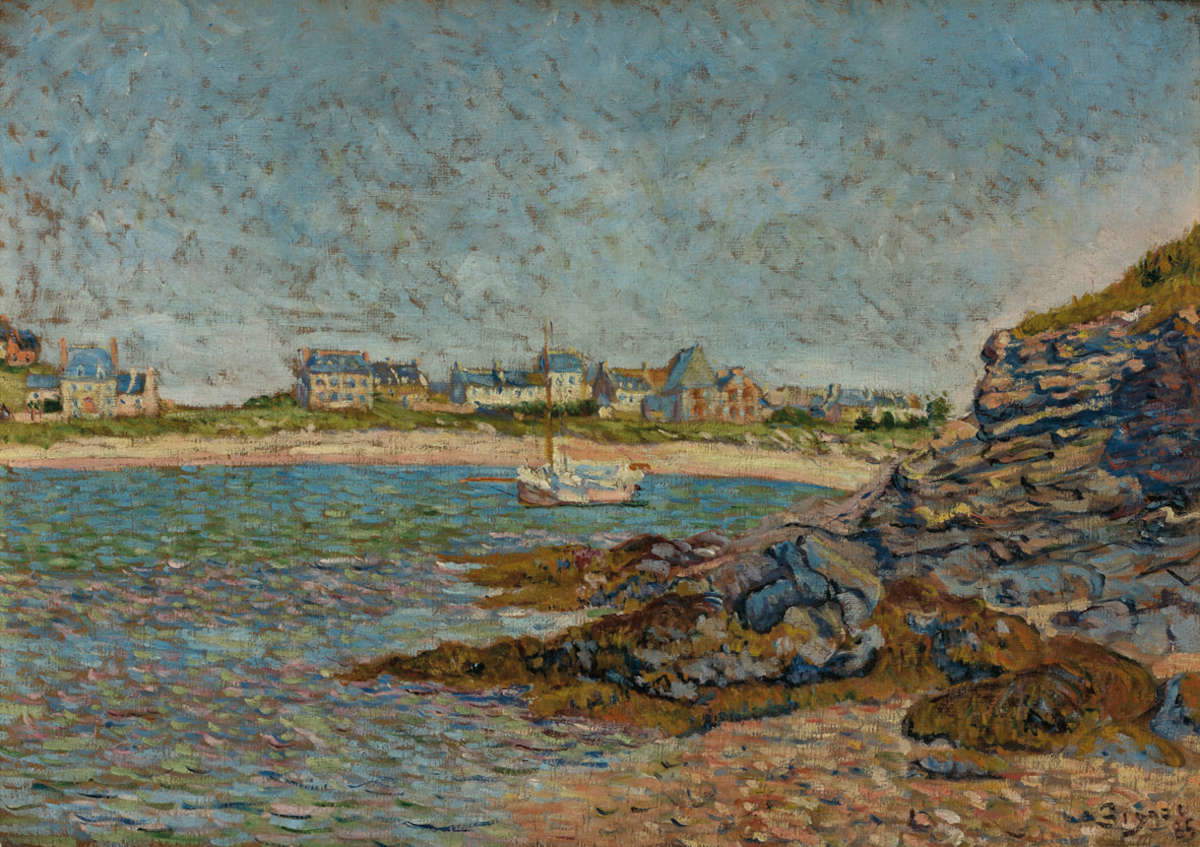
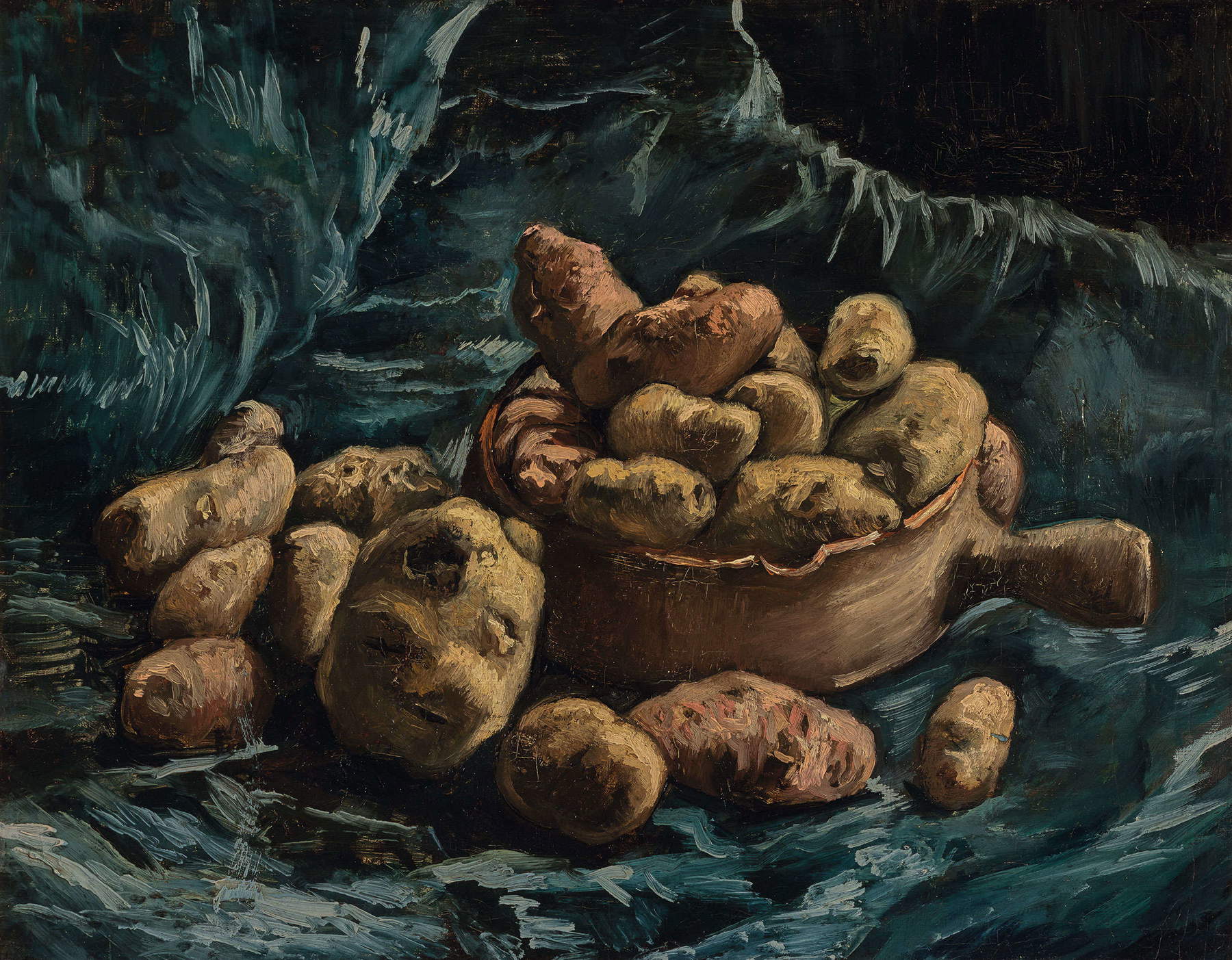
With the advent of the 20th century, the rural landscape became a problem for many Italians. Elena Pontiggia recalls that Futurism began with a declaration of war against the traditional landscape: In the 1910 Manifesto of Futurist Painting, signed by Carrà, Boccioni, and Russolo—with contributions from Marinetti and Decio Cinti—the “lake painters” and “mountain painters” were branded as “impotent vacation painters.” As early as 1907, Boccioni had noted in his diary: “The fields, the tranquility, the little house, the woods... all this display of modern sentimentality has worn me out.” His *Meriggio, or Workshops at Porta Romana* (1910), however, is still a transitional work: the city appears essentially still, even though smoking chimneys and construction sites can be glimpsed in the background. Gusella describes it as something that almost takes on the “romantic and evocative” form of “a farewell to the countryside.” Later, Anselmo Bucci, in *L’addio*—the only explicit homage to Futurism in his career—makes the urban landscape the setting for contemporary dramas: a woman waves from her balcony as the train carrying recruits departs for the front. In Tullio Crali’s *Incuneandosi nell’abitato* , the airplane penetrates the urban space and transforms it into a swirling visual field, observed from a dizzying perspective.
From 1920 onward, dynamism gave way to order. Mario Sironi’s *Periferie* (Suburbs) depicts a compact and austere architecture that expresses the desire to reconstruct forms and volumes following the deconstructions of the avant-garde movements. Here, too, the context is European: the “Return to Order” swept across Europe from the mid-1910s onward—partly due to the influence of metaphysical painting—and the dynamic city of the Futurists gave way to the image of a still and silent city.
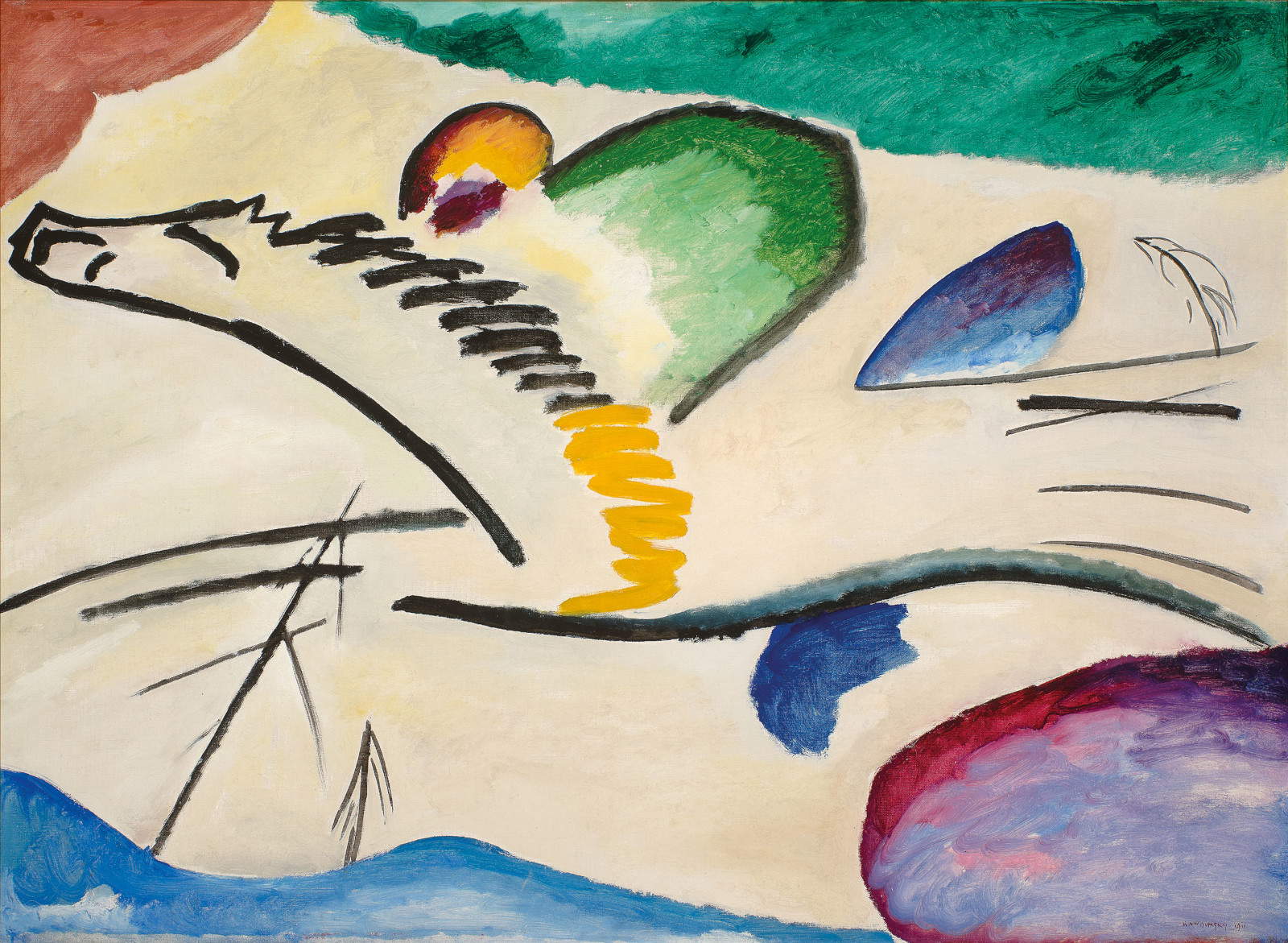
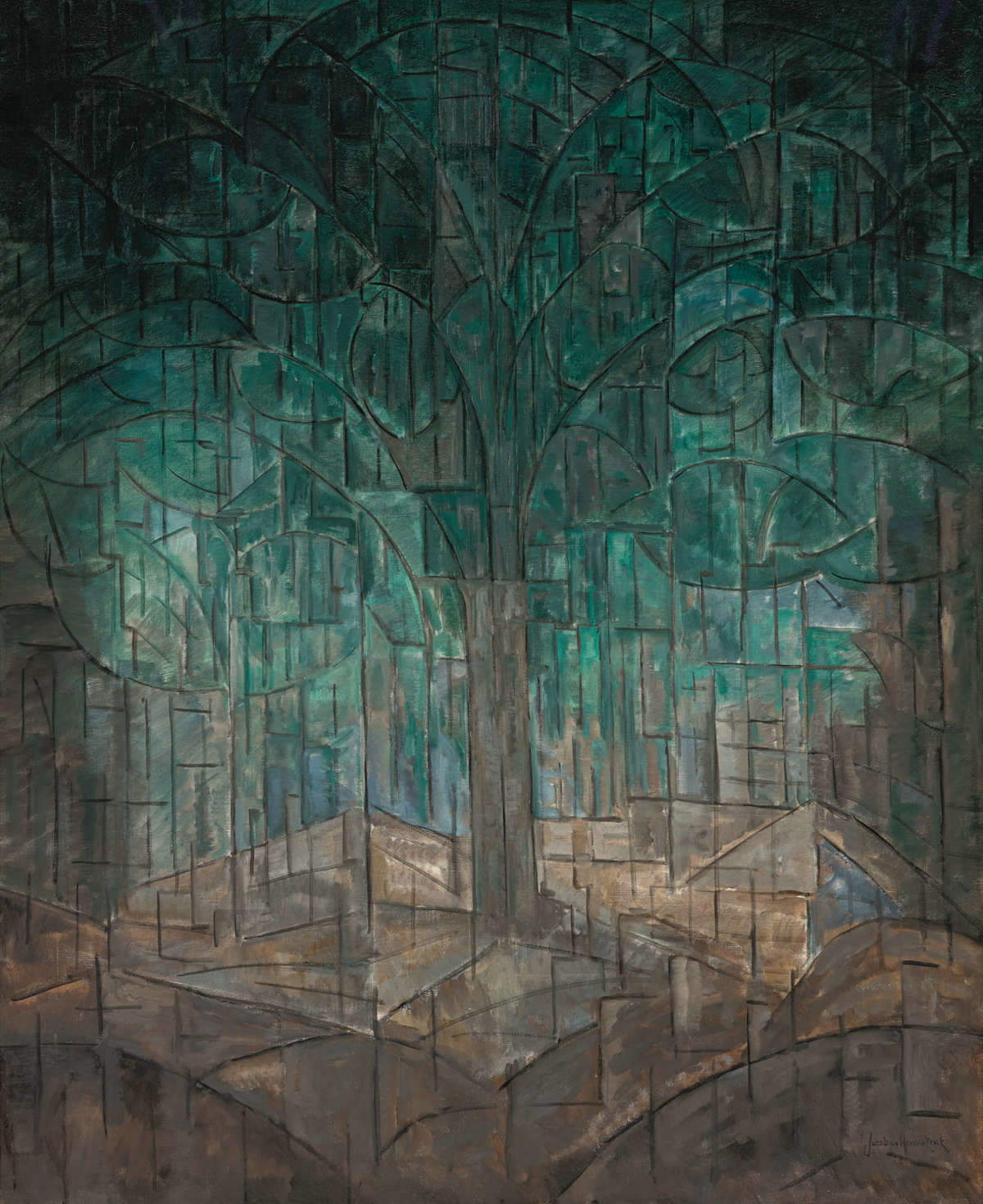
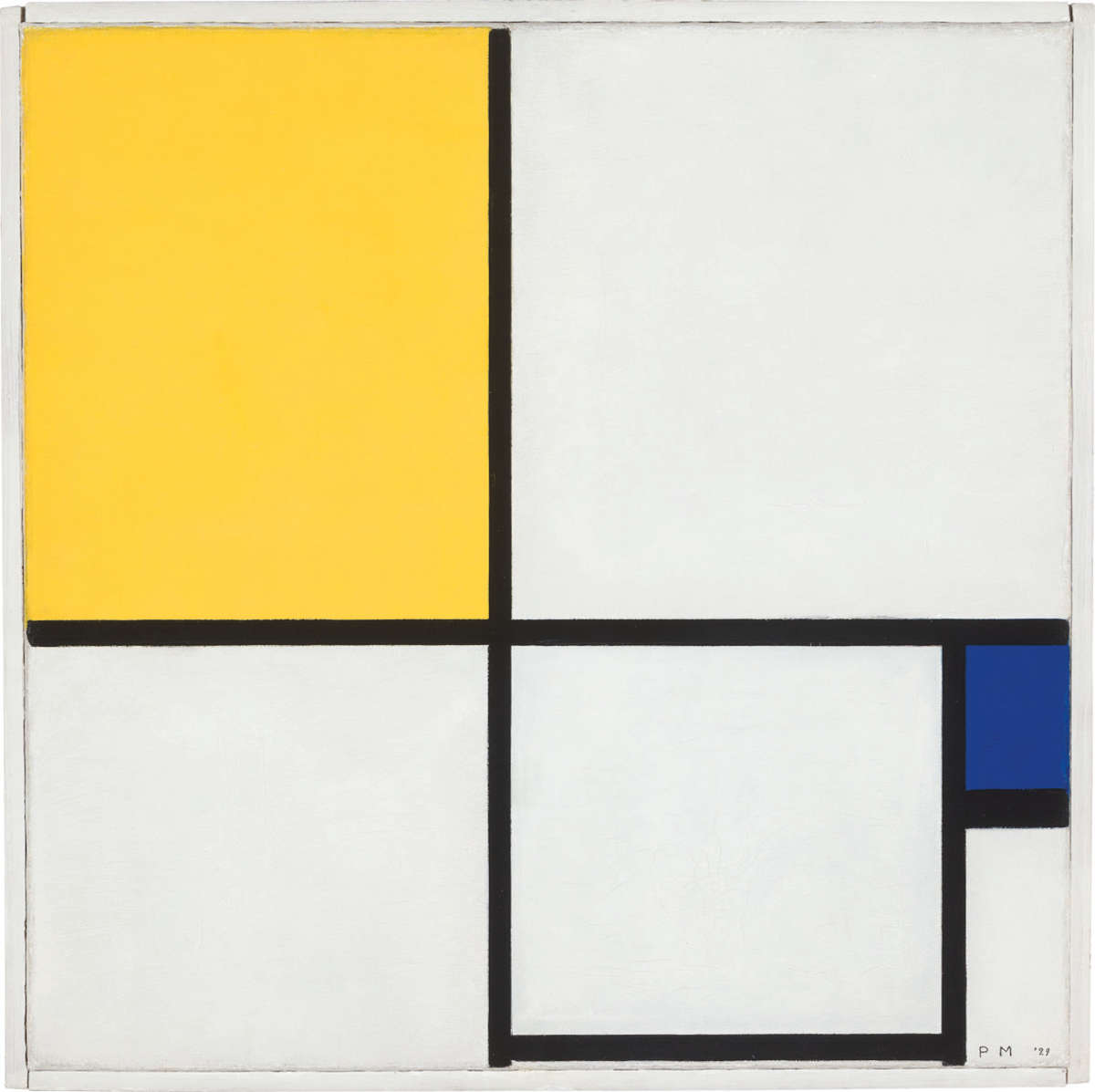
The final galleries return to the names in the title. In Kandinsky’s *Lirico*, the horse and rider are still recognizable but rendered with essential strokes and vivid colors; Franz Marc, in *The Sheep*, fuses animal and landscape into a single substance; Lyonel Feininger constructs *Weimar Alta* as a geometric structure with a Cubist influence; Jacoba van Heemskerck conveys the relationship between nature and spirit through shapes, colors, and black lines in a work accompanied by a stained-glass window and several drawings. The exhibition concludes with a painting by Mondrian, *Composition No. II*: a grid of horizontal and vertical lines with white, yellow, and blue squares. According to the press release, Mondrian takes the avant-garde’s aspiration—not to imitate reality but to seek, through art, “the foundations of things”—to its extreme conclusion.
The exhibition is accompanied by a multisensory project, *From Experienced Nature to the Inner Landscape*, which engages visitors in four galleries with sounds and scents. In the Macchiaioli room, visitors can hear the wind rustling through tall grasses, seagulls, footsteps on clay, and the sound of the sea, accompanied by scents of damp earth and grass; in the room dedicated to the Hague School, windmills and windy plains with notes of wet grass and fresh water; in the room titled “Between Spectacle and Intimacy,” conversations, the clinking of glasses, footsteps on hardwood floors, and fragments of piano music with hints of rice powder. In Room 13, Schönberg’s *Drei Klavierstücke, Op. 11* engage in a dialogue with Kandinsky’s *Lyric*: the transcendence of traditional tonality becomes the musical counterpart to the growing autonomy of form and color. The “Within the Landscape ” room brings the paintings to life and extends them beyond their frames, while the walls transition through a spectrum of browns to the white of the final room, punctuated by five luminous portals. The exhibition, sponsored by the Emilia-Romagna Region and the Embassy of the Kingdom of the Netherlands in Italy, supported by COPMA, and declared to be of significant cultural interest by the General Directorate of Museums of the Ministry of Culture, is on view at the Palazzo dei Diamanti in Ferrara through January 10, 2027.
|
| From Monet to Van Gogh, via Fattori and Previati: an exhibition in Ferrara exploring the dialogue between Europeans and Italians |
Warning: the translation into English of the original Italian article was created using automatic tools. We undertake to review all articles, but we do not guarantee the total absence of inaccuracies in the translation due to the program. You can find the original by clicking on the ITA button. If you find any mistake,please contact us.