




From October 10, 2026 , to January 17, 2027 , the Chiostri di San Pietro in Reggio Emilia will host Gregory Crewdson: *Eveningside*, an exhibition curated by Jean-Charles Vergne and organized in collaboration with Gallerie d’Italia – Intesa Sanpaolo. The exhibition brings together in a single narrative the photographic trilogy on which American photographer Gregory Crewdson has worked over the course of a decade, including the series *Cathedral of the Pines* (2012–2014), *An Eclipse of Moths * (2018–2019), and the most recent *Eveningside*.
The project thus allows visitors to trace the formal and conceptual evolution of Crewdson’s work through three bodies of work created at different times but linked by a reflection on the languages of photography and the possibilities of narrative image construction. Rounding out the exhibition will be a screening of* Making * *Eveningside*, a film dedicated to the creation of the series of the same name, which documents the development of the images and the complex production process that precedes each of the artist’s individual shots.
The exhibition originated from an original commission by Gallerie d’Italia – Turin, realized in October 2022 as part ofthe museum’s “Travelling Exhibition” series. Since then, the project has embarked on a comprehensive international tour, now arriving at the Chiostri di San Pietro with the entire trilogy brought together in a single exhibition.
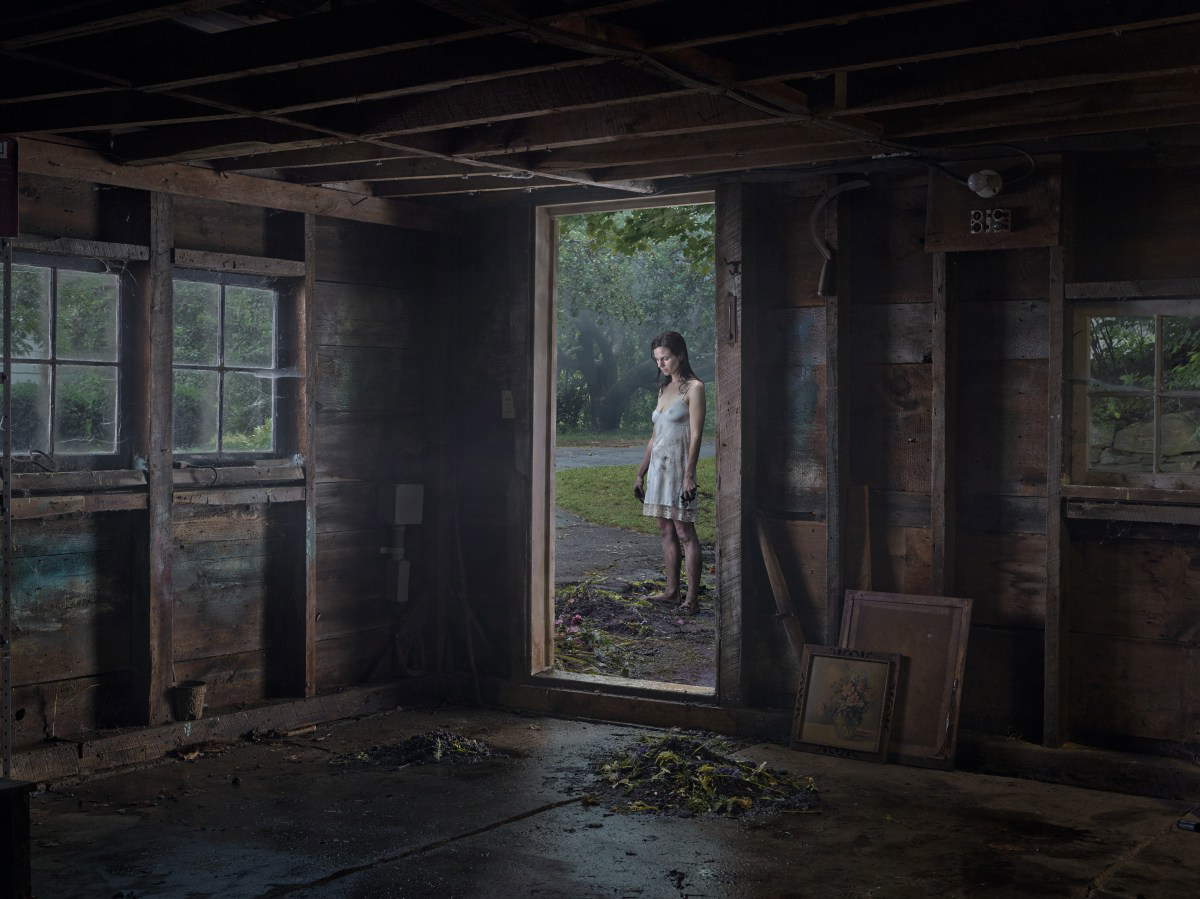
The first two series presented in the exhibition are characterized by wooded landscapes, isolated clearings, and post-industrial settings marked by solitude and mystery. *Cathedral of the Pines* focuses primarily on natural environments and human figures immersed in secluded spaces, while *An Eclipse of Moths* expands the scale of representation to broader, more desolate landscapes. In *Eveningside*, however, Crewdson shifts his focus to the ordinary spaces of daily life, particularly workplaces and commercial environments.
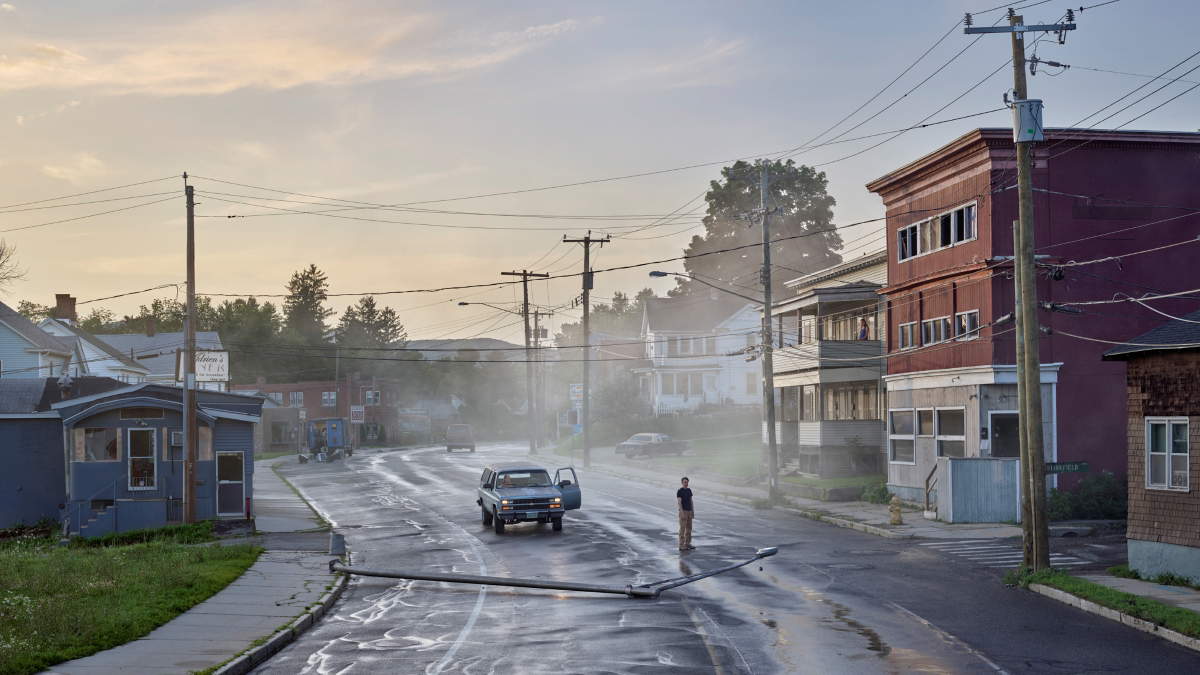
The most recent series introduces moments of suspension and contemplation within ordinary urban contexts. The figures appear sparse and isolated, observed through store windows, reflected in a bar’s mirror, or placed within situations reminiscent of daily routines. Railroad bridges, entrance gates, arcades, and the canopy over an ATM coexist in the images alongside a dairy, a neighborhood market, or a hardware store. Recognizable elements of everyday life thus become the spaces in which the artist constructs scenes characterized by stillness and anticipation.
There is also a shift in the viewpoint and the color palette. In *Eveningside*, Crewdson brings the camera closer to his subjects and, for the first time, employs a strictly monochromatic color palette. The composition of the images is further based on a careful interplay between light and shadow and the use of artificial atmospheric effects, including fog, rain, smoke, and mist.
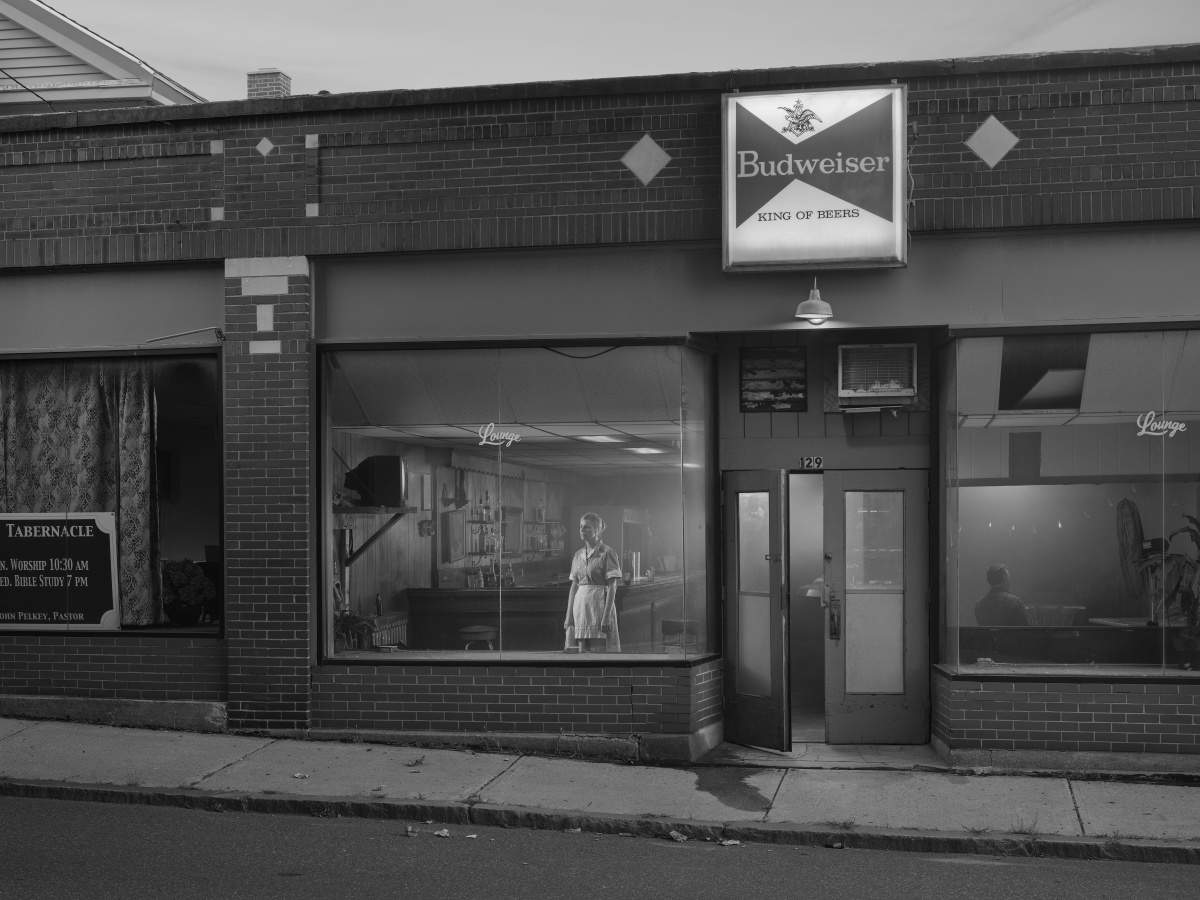
The works in the series are produced as large-format pigment digital prints. Their visual style evokes classic cinema and film noir, references that contribute to the creation of Gothic atmospheres. Everyday spaces are thus transformed through lighting, composition, and scenic interventions, taking on a narrative dimension that diverges from their ordinary function.
Taken as a whole, the three series represent distinct stages in Crewdson’s artistic exploration and interweave personal dimensions, existential themes, and collective observation. Photography becomes the starting point for a visual construction in which elements drawn from the history of painting and cinema are reworked and recomposed. The dialogue with the history of photography, painting, and cinema is, in fact, one of the central aspects of the American artist’s work. Crewdson uses these references as tools to deconstruct and reinvent, constructing photographic narratives in which everyday reality undergoes a process of formal and scenic transformation.
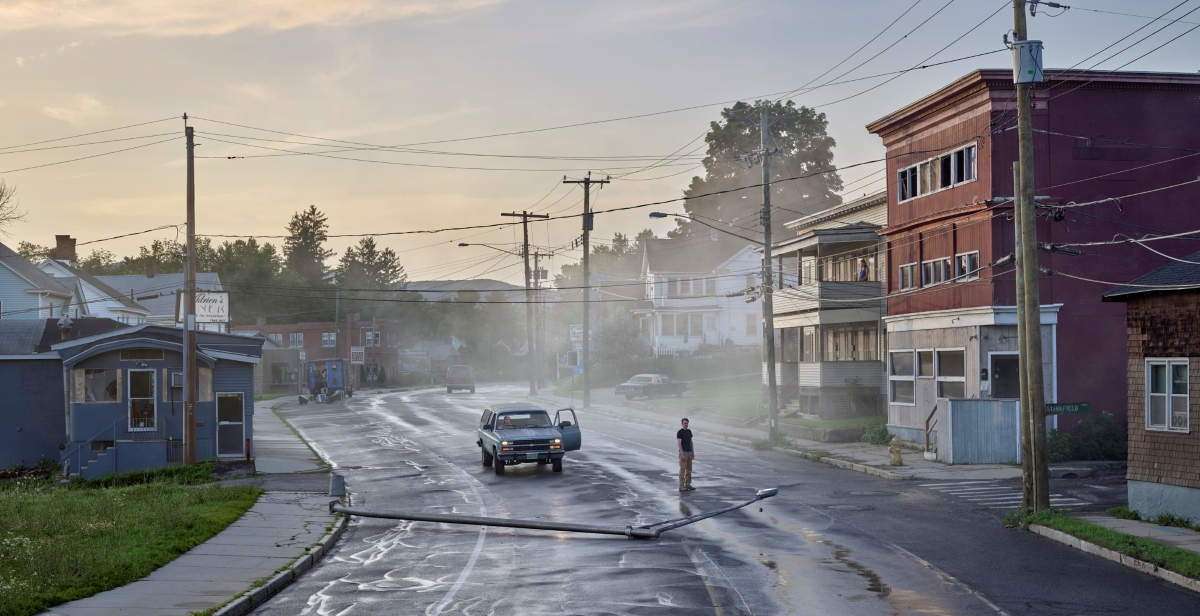 |
| Gregory Crewdson in Reggio Emilia with his photographic trilogy, created over the course of ten years |

Warning: the translation into English of the original Italian article was created using automatic tools. We undertake to review all articles, but we do not guarantee the total absence of inaccuracies in the translation due to the program. You can find the original by clicking on the ITA button. If you find any mistake,please contact us.




















 IT
IT FR
FR DE
DE ES
ES CN
CN


