



by Redazione 22/07/2026



Categories: Exhibitions / Disclaimer
From September 6, 2026, to January 10, 2027, the Museo d’arte della Svizzera italiana will host the first major posthumous retrospective dedicated to the American artist Kaari Upson, featuring over fifteen years of her work, including sculpture, video, drawing, and installation.

From September 6, 2026, to January 10, 2027, the Museo d’arte della Svizzera italiana in Lugano presents *Kaari Upson. Dollhouse*, the first major posthumous retrospective dedicated to the American artist Kaari Upson (1970–2021). Curated by Francesca Benini and Taisse Grandi Venturi, the exhibition traces the artist’s entire body of work. She is best known to European audiences for her participation in the 58th Venice Biennale in 2019, where she presented the imposing installation *THERE IS NO SUCH THING AS OUTSIDE*.
Through sculpture, video, drawing, and installation, Upson developed a complex and layered artistic language over the course of just over fifteen years, focusing on themes such as relationships, the body, illness, and loss. Her works explore the relationship between the private sphere and collective space, transforming everyday objects and environments into places capable of preserving traces of trauma, memories, and obsessions. The artist’s practice, deeply rooted in her personal history and hometown of San Bernardino, California, thus takes on a dimension focused on representing the contemporary psyche.
The exhibition, housed in the LAC’s underground gallery, is organized into five chapters that follow a predominantly chronological progression and illustrate the gradual shift in Upson’s work toward increasingly intimate issues tied to her personal and family history: When Kaari Meets Larry, The Life of Things, Dollhouse—a Giant Miniature, Inner Cartographies, and Body, Memory, and Fallibility.


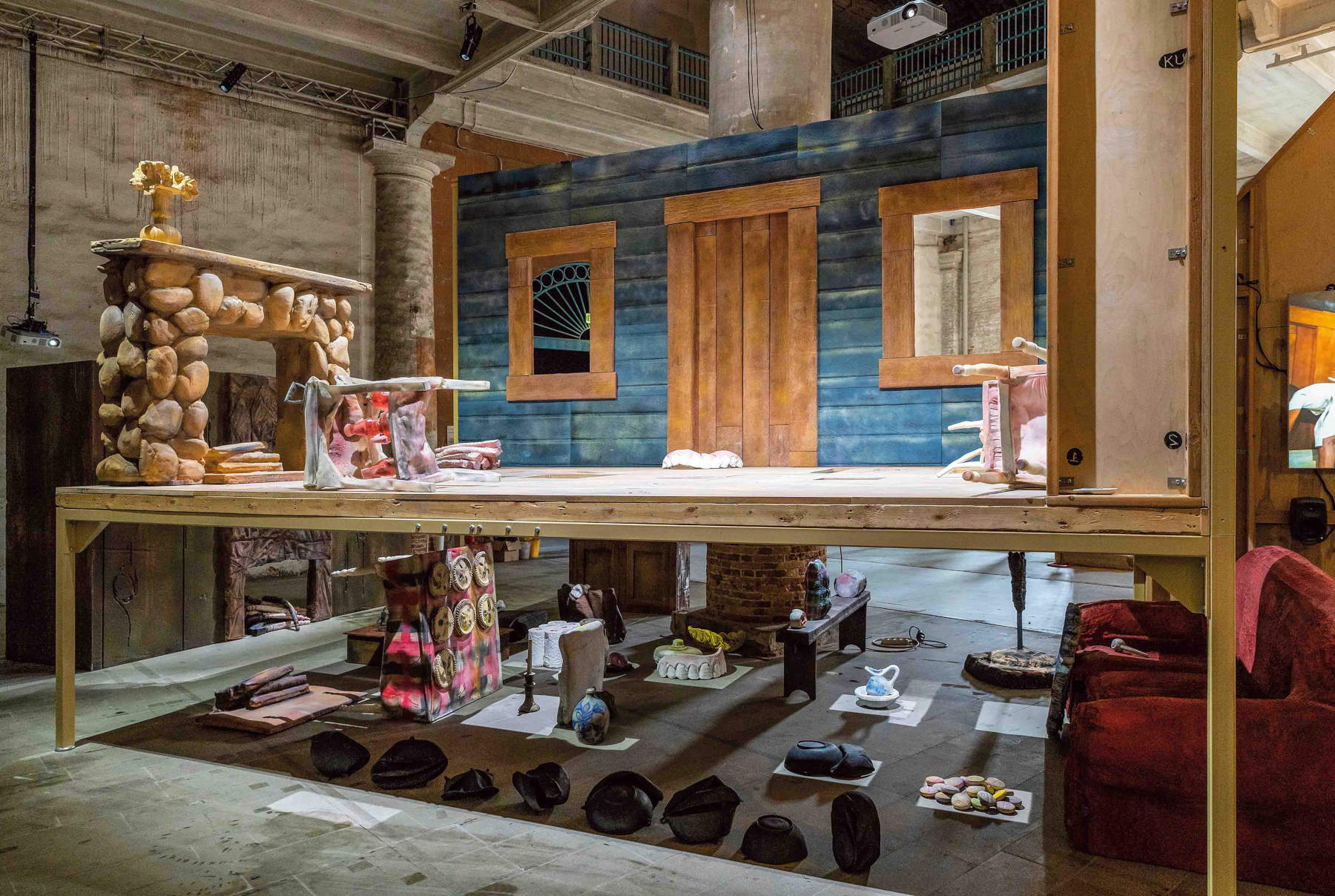
The exhibition begins with the famous Larry Project (2005–2012), one of the most representative series in the artist’s body of work. At the heart of the project is the real yet imaginary figure of Larry, a neighbor of Upson’s parents in San Bernardino, whose abandoned house the artist began entering in 2003. Through an almost forensic approach, Upson attempts to reconstruct his life and identity, transforming him into a sort of alter ego and projection surface for an exploration suspended between obsession, role-playing, and transgression.
The section opens with the large-scale installation *Recollection Hysteria* (2012), a reproduction of a room from Larry’s house created through a complex process using liquid latex. The space appears almost identical to the original, but the floor, ceiling, and walls are inverted, creating a disorienting space where material inversions, duplications, and reflections become a mirror of complex psychological dynamics.
The figure of Larry also reappears in the *Kiss Paintings* (2007–2008), in which the portrait of the neighbor is superimposed on the artist’s face in a process of merging identities. In the video *As Long as It Takes – Part 1: The Head* (2008), Larry, on the other hand, becomes a body to be dissected, hollowed out, and worn like a second skin, while in *Untitled (Charcoal figures)* ( 2009) he takes the form of a charred presence, suggesting the artist’s attempt to consume and overcome the obsession that had fueled her practice for years.
Another key section of the exhibition is dedicated to the relationship between bodies and household objects. The section *The Life of Things* features several sculptures created in the early 2010s using polyurethane and silicone, cast from old mattresses found on the streets of Los Angeles. Upson uses these objects as repositories of physical traces and memories, subsequently altering their surfaces without seeking to create a faithful reproduction. Inthe mattress sculpture 192, for example, large black marks created with charcoal and pigments accentuate the imprint left by two bodies. For the artist, meaning emerges precisely from the distortions and imperfections of the copying process.
The theme of the double and the transformation of domestic space recurs in the installation *THERE IS NO SUCH THING AS OUTSIDE* (2017–2019), presented at the Venice Biennale and at the heart of the *Dollhouse* section —a giant miniature that lends its name to the exhibition. To create the work, Upson digitized and reconstructed her mother’s dollhouse on a monumental scale, transforming a model associated with play and family intimacy into a somber, theatrical setting in which to question family and gender roles passed down through generations.
The final section of the retrospective focuses on the relationship between the body, memory, and illness. In the later years of her career, Upson progressively shifted her focus toward her own history and body, in a continuous process of analysis and transformation. The body is fragmented and superimposed onto her mother’s, becoming a site of memory and dissolution.
Among the most significant works of this phase is *Mother’s Legs*, an environmental installation consisting of a sort of forest of suspended legs, modeled from casts of the artist’s knees and the trunk of a tree that grew in her parents’ garden and was later cut down. As the viewer walks through these forms suspended from the ceiling—which evoke carcasses in a slaughterhouse—they are confronted with an unsettling dimension where childhood memories coexist with the search for a lost sense of protection.
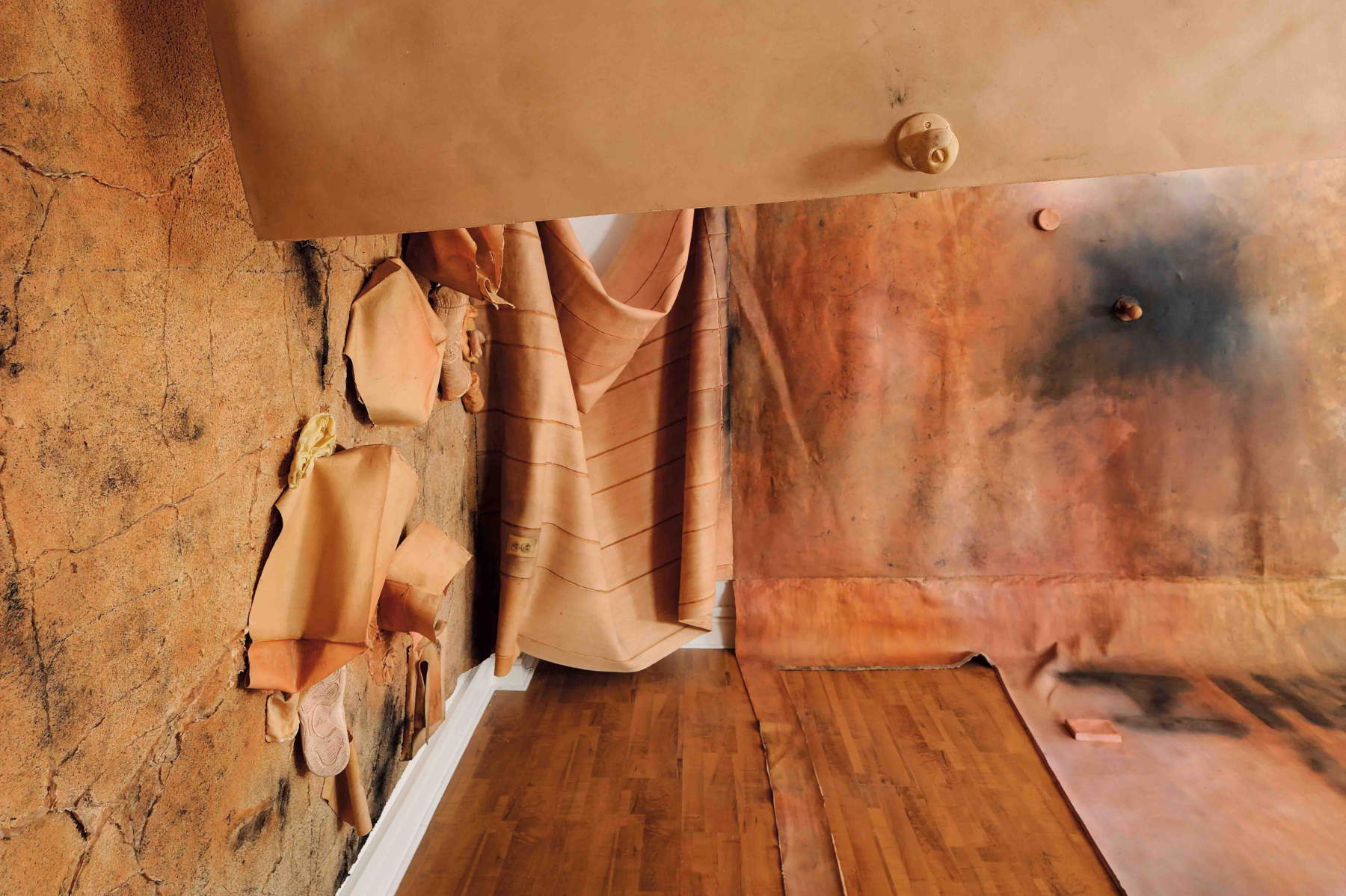
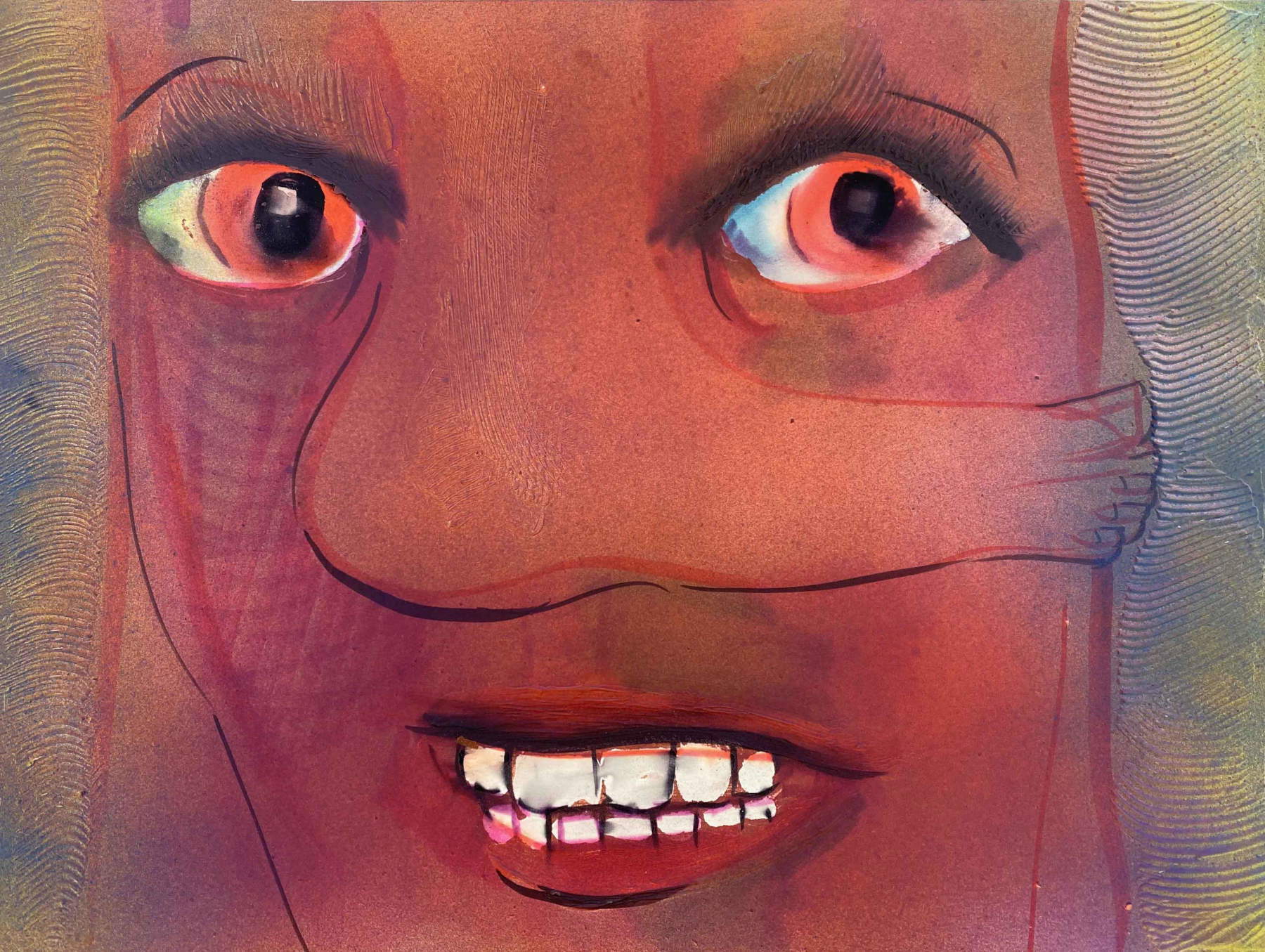
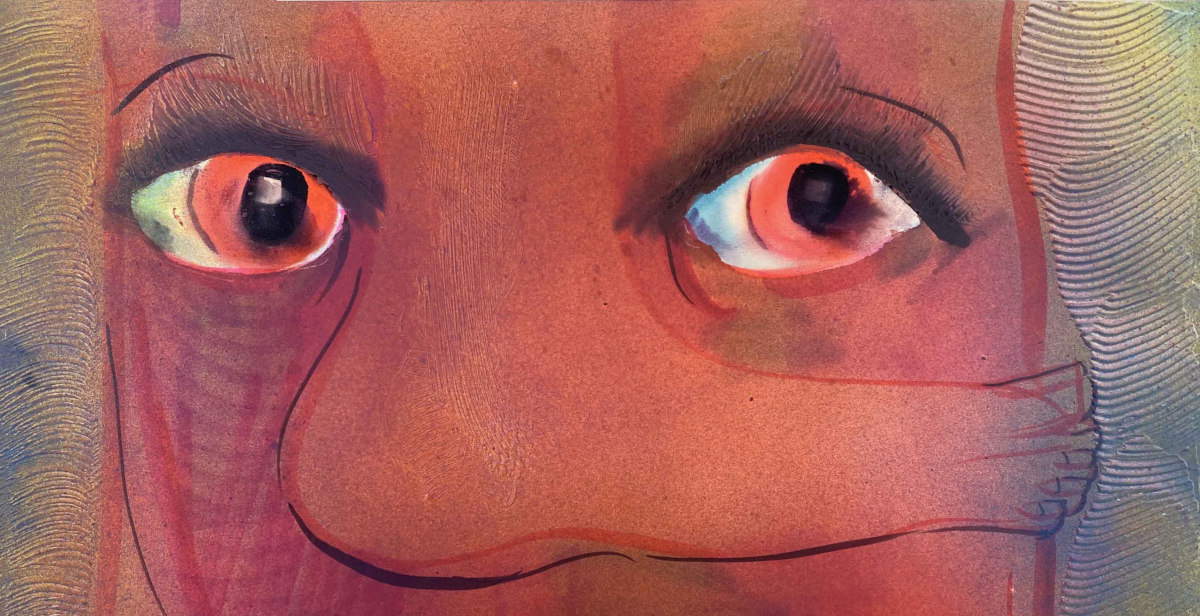
The exhibition also presents Upson’s latest series,the *Foot Face Paintings* ( 2020–2021), to the public for the first time. The paintings on paper repeat a single subject: a face with wide-open eyes partially covered by a foot. The project was intended to involve creating one drawing a day for a year, but remained unfinished due to the artist’s untimely death. The 140 paintings on display today constitute a sort of visual diary of the final months of her life. Among the emblematic works included in the exhibition are several series from the Larry Project, the installation *THERE IS NO SUCH THING AS OUTSIDE*, the environmental work *Mother’s Legs*, and the final series of *Foot Face Paintings*.
The exhibition at MASI Lugano marks the final stop of the exhibition project *Kaari Upson. Dollhouse*, produced by the Louisiana Museum of Modern Art in Humlebæk in collaboration with the Swiss museum and the Kunsthalle Mannheim.
The exhibition is accompanied by an illustrated catalog published by DISTANZ Verlag and edited by Francesca Benini and Taisse Grandi Venturi. The volume features critical essays by Francesca Benini, Tobia Bezzola, Elena Filipovic, Michael Ned Holte, Johan Holten, Nanna Stjernholm Jepsen, Anders Kold, and Paulina Pobocha. The Italian edition is based on the first English-language publication produced by the Louisiana Museum of Modern Art and edited by Laerke Rydal Jørgensen, Kaspar Thormod, and Anders Kold.
“Kaari Upson. Dollhouse, the first major posthumous retrospective dedicated to her, invites viewers to encounter an artist whose work continues to resonate even after her untimely death: unsettling, moving, and extraordinarily relevant,” state curators Francesca Benini and Taisse Grandi Venturi.
 |
| Kaari Upson: MASI Lugano is dedicating a retrospective to her exploration of the body and memory |
Warning: the translation into English of the original Italian article was created using automatic tools. We undertake to review all articles, but we do not guarantee the total absence of inaccuracies in the translation due to the program. You can find the original by clicking on the ITA button. If you find any mistake,please contact us.