





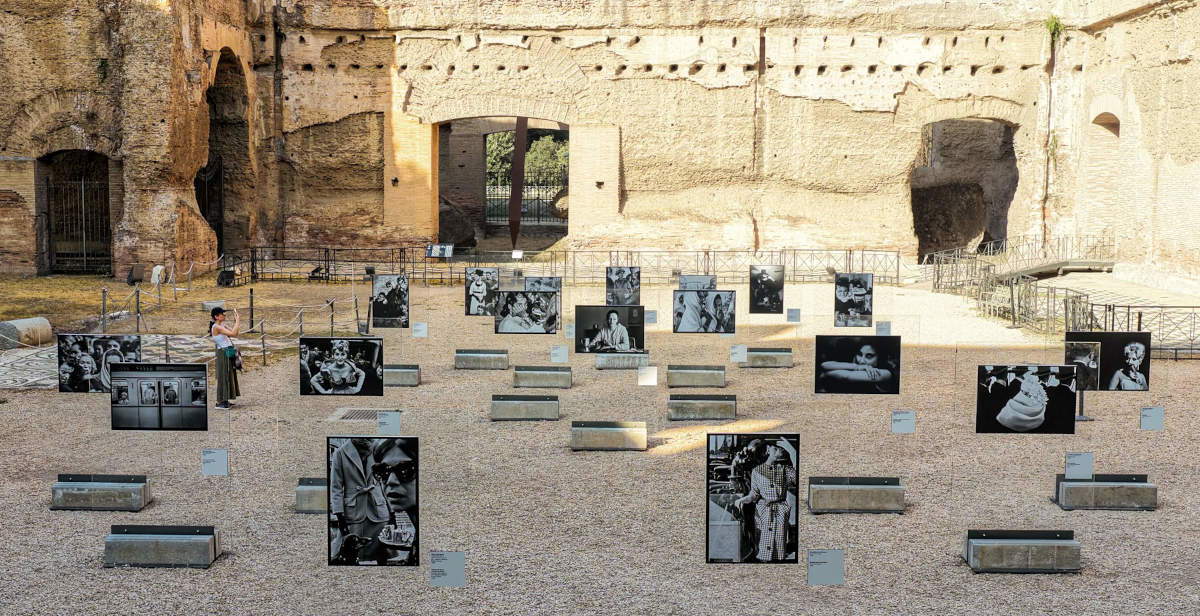
At the Baths of Caracalla in Rome, an exhibition traces the work of Frank Horvat (1928–2020) through 72 photographs organized into three sections. The exhibition, titled “Frank Horvat,” will run from September 11, 2026, to January 10, 2027, and is housed within one of the monument’s gymnasiums and vaulted rooms. Sponsored by the Special Superintendency of Rome, directed by Daniela Porro, and organized by Electa, the exhibition is curated by Fiammetta Horvat and Mathilde Oudin of Studio Frank Horvat, together with Nunzio Giustozzi.
The selection explores some of the key moments in a career spanning more than seventy years. Horvat worked in fashion—the field that made him famous—as well as in social and travel reportage, landscape photography, portraiture, and his relationship with art. His work has evolved through different approaches and visual languages, while maintaining a particular focus on the freedom of the gaze and the everyday lives of his subjects. A central part of the exhibition is dedicated to portraits of women. In this section, Horvat engages with fashion photography, challenging some of its established conventions. The models, with whom the photographer established relationships of friendship and complicity, are freed from conventional poses and photographed even on the street, using a Leica and natural light alone.
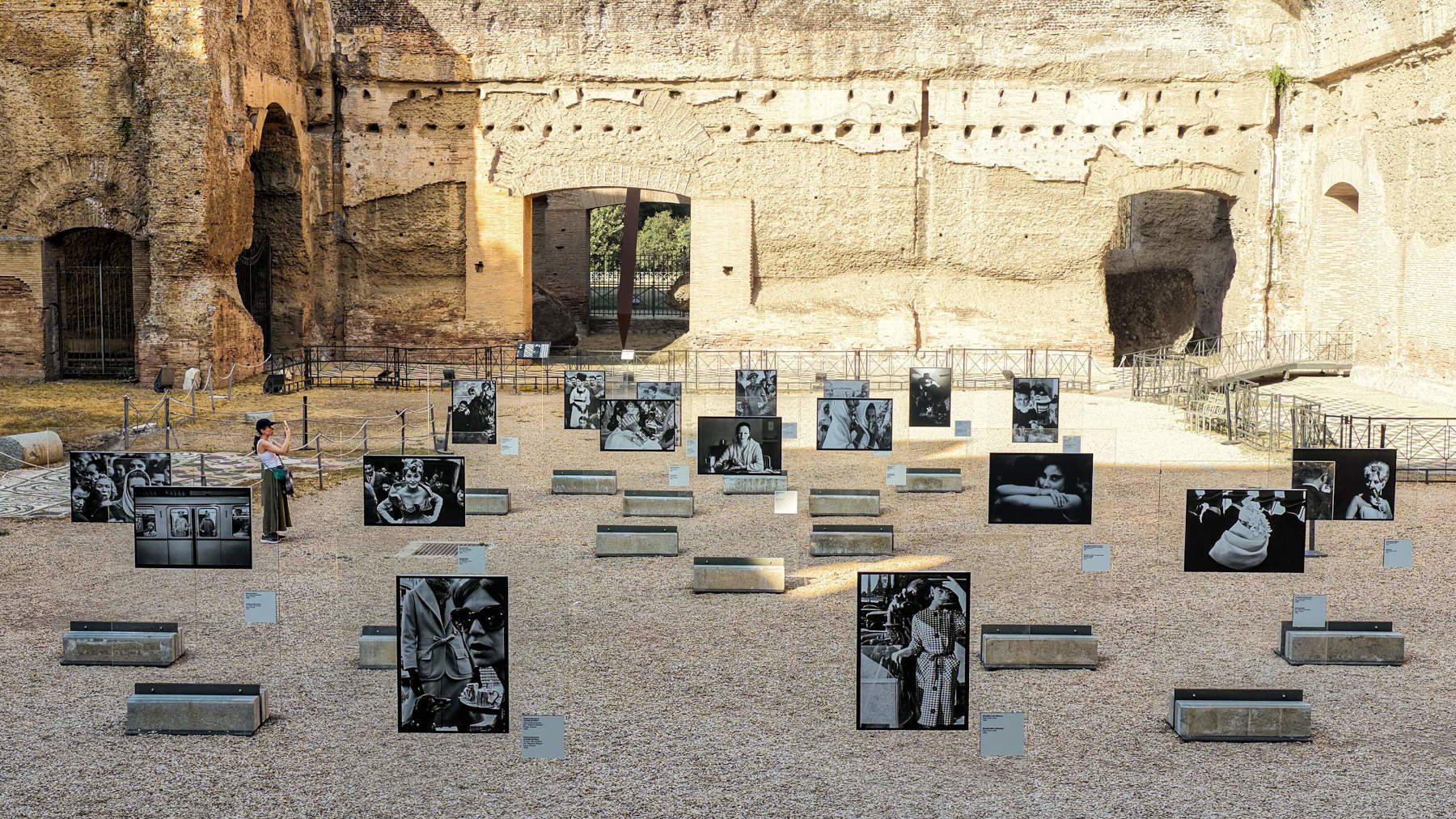
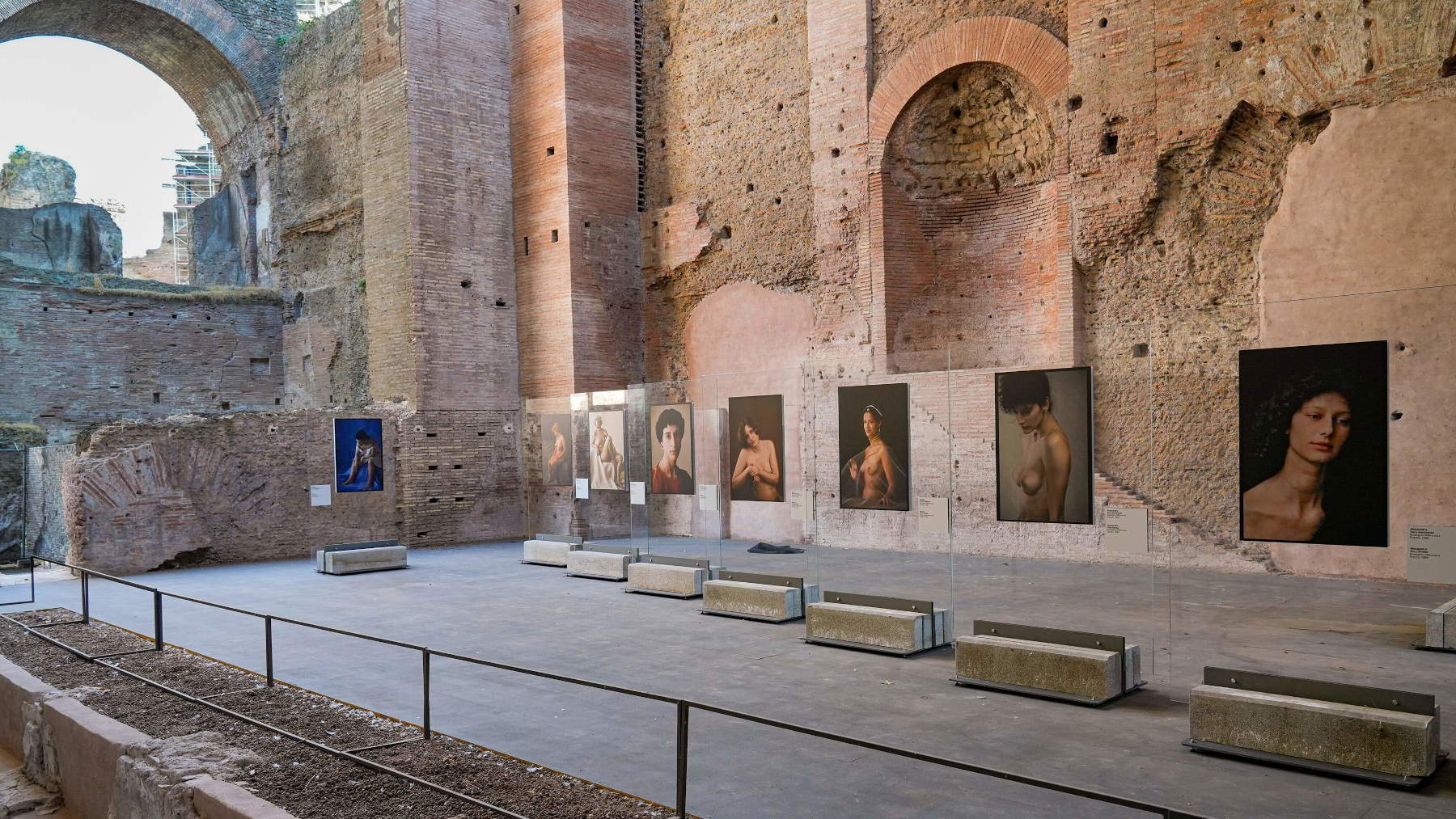
The shift in Horvat’s perspective coincides with a broader transformation of the concept of elegance and the status of women. Beginning in the late 1950s, ready-to-wear fashion gradually became accessible to middle-class women, while the social roles attributed to women also underwent change. Actresses, dancers, writers, and intellectuals coexist in his work alongside mothers, working women, and women demanding greater independence, freedom, and the opportunity to be represented beyond established stereotypes.
The theme of the “real woman” also emerges in the documentary photo essays Horvat produced in various countries, from Pakistan to India, from Brazil to Senegal, and from Egypt to Japan. Special attention is also given to the photo shoots she conducted in Rome in the early 1960s for *Harper’s Bazaar*. Horvat arrived in the capital at the invitation of Irene Brin and Gaspero del Corso of the Galleria L’Obelisco and photographed some of the era’s famous models alongside cultural and film figures, including Alberto Moravia, Luigi Barzini, and Marcello Mastroianni.
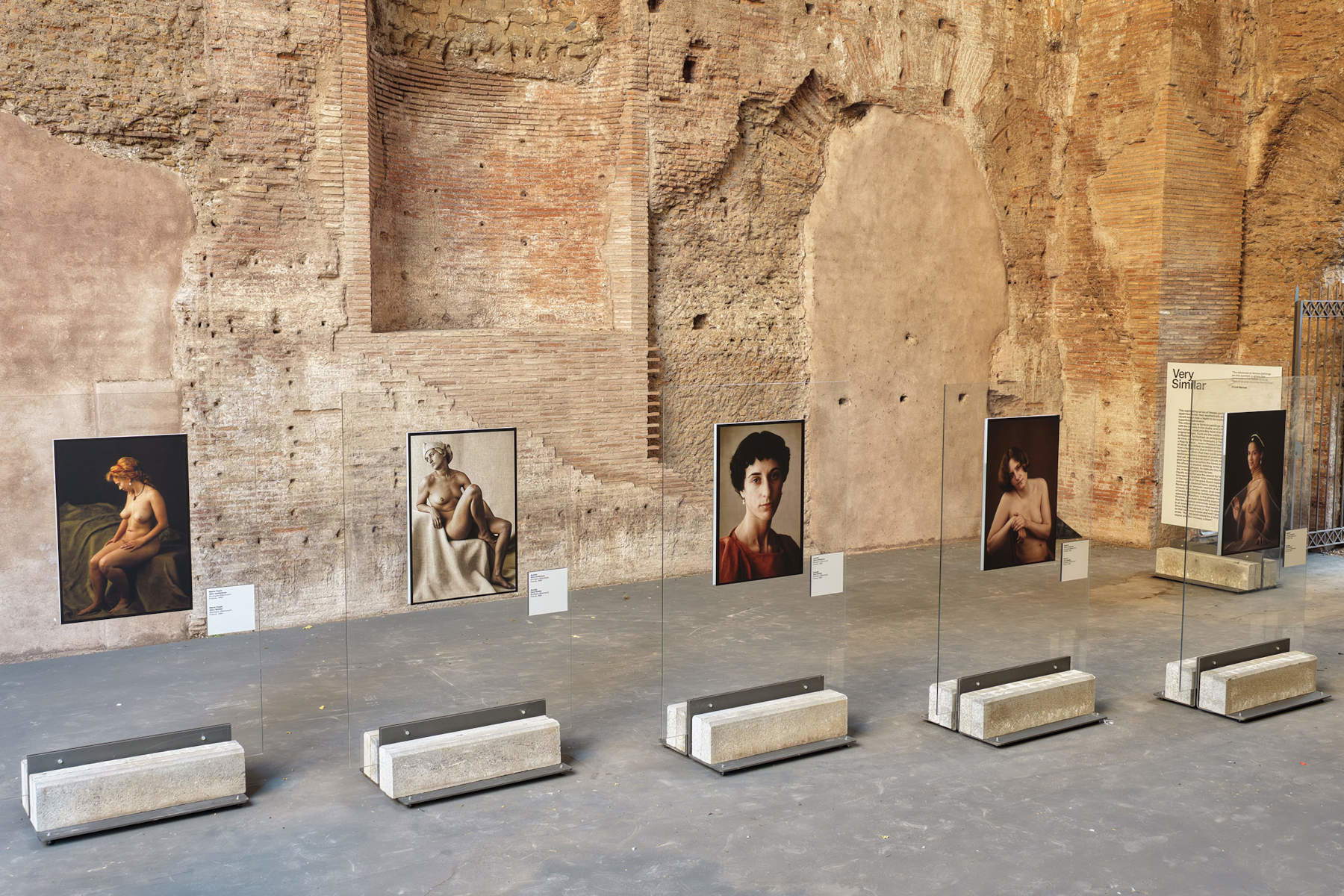
The female figure takes center stage again in the second section of the exhibition, dedicated to the series *Vere sembianze*. The photographs are displayed in the vaulted spaces of the monument and connect Horvat’s artistic exploration with the tradition of painting. The photographer engages in an ideal dialogue with the great portraitists of the past, establishing an aesthetic exchange through which to explore the identities and most intimate dimensions of modern women.
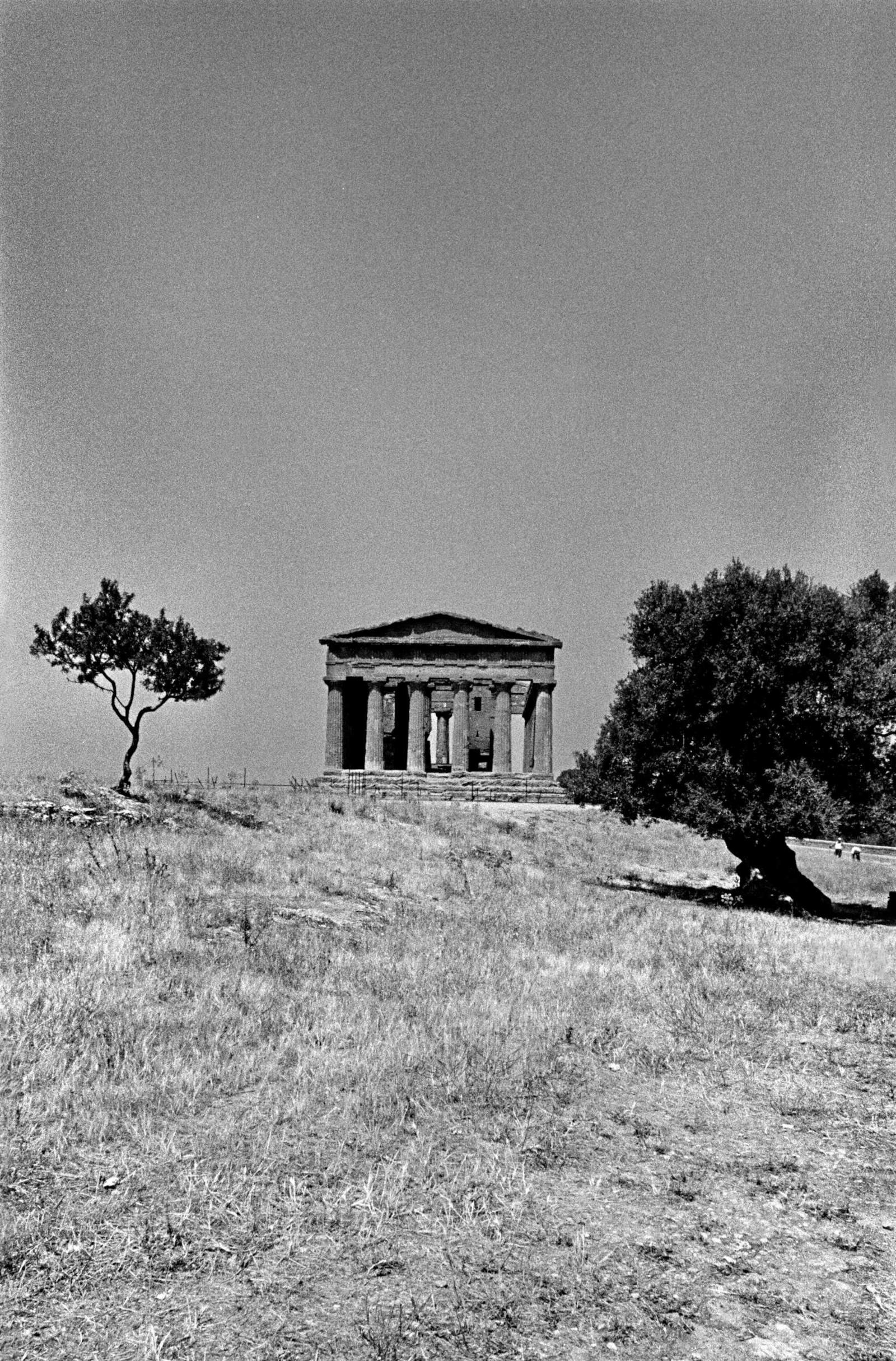
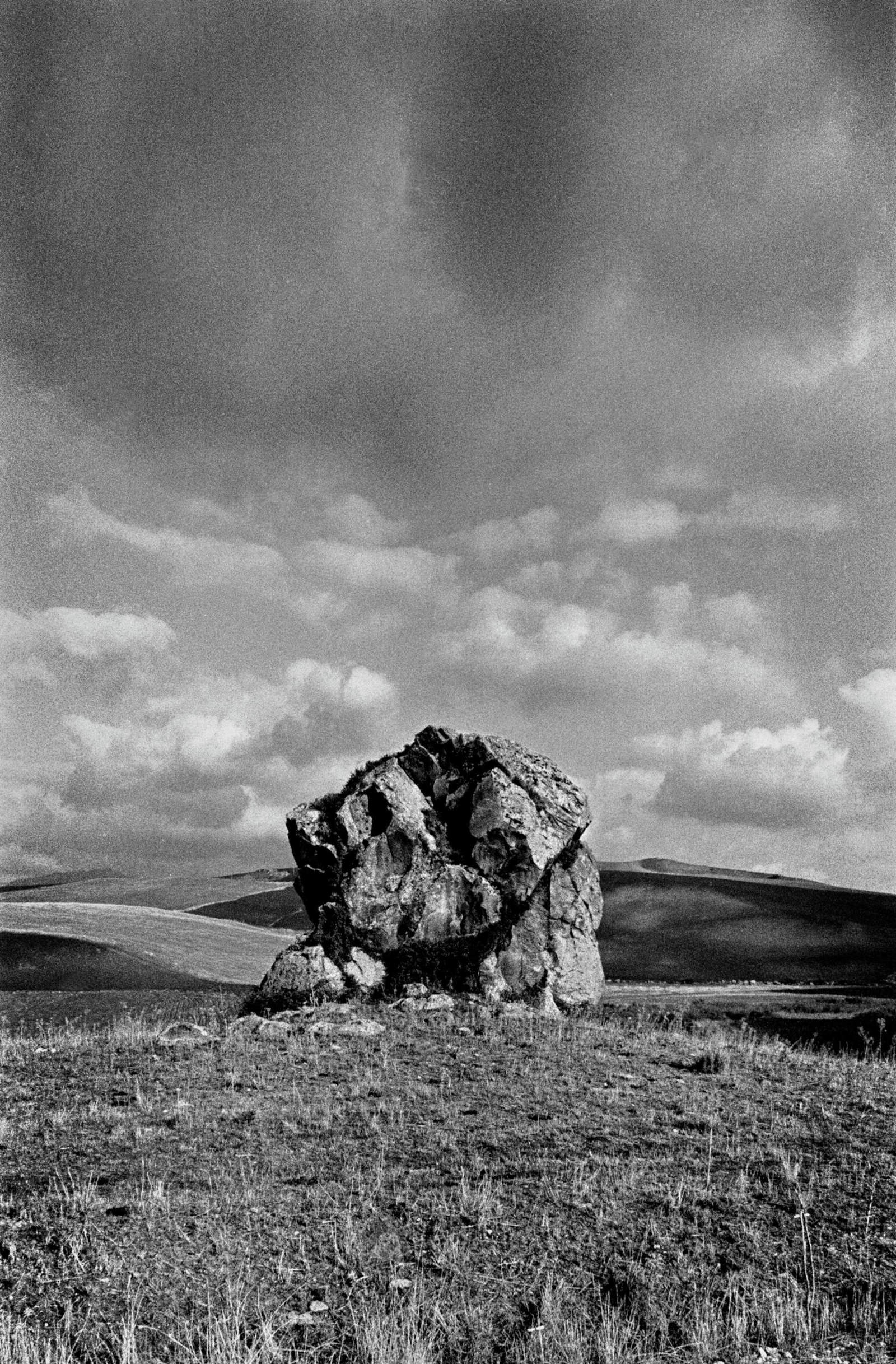
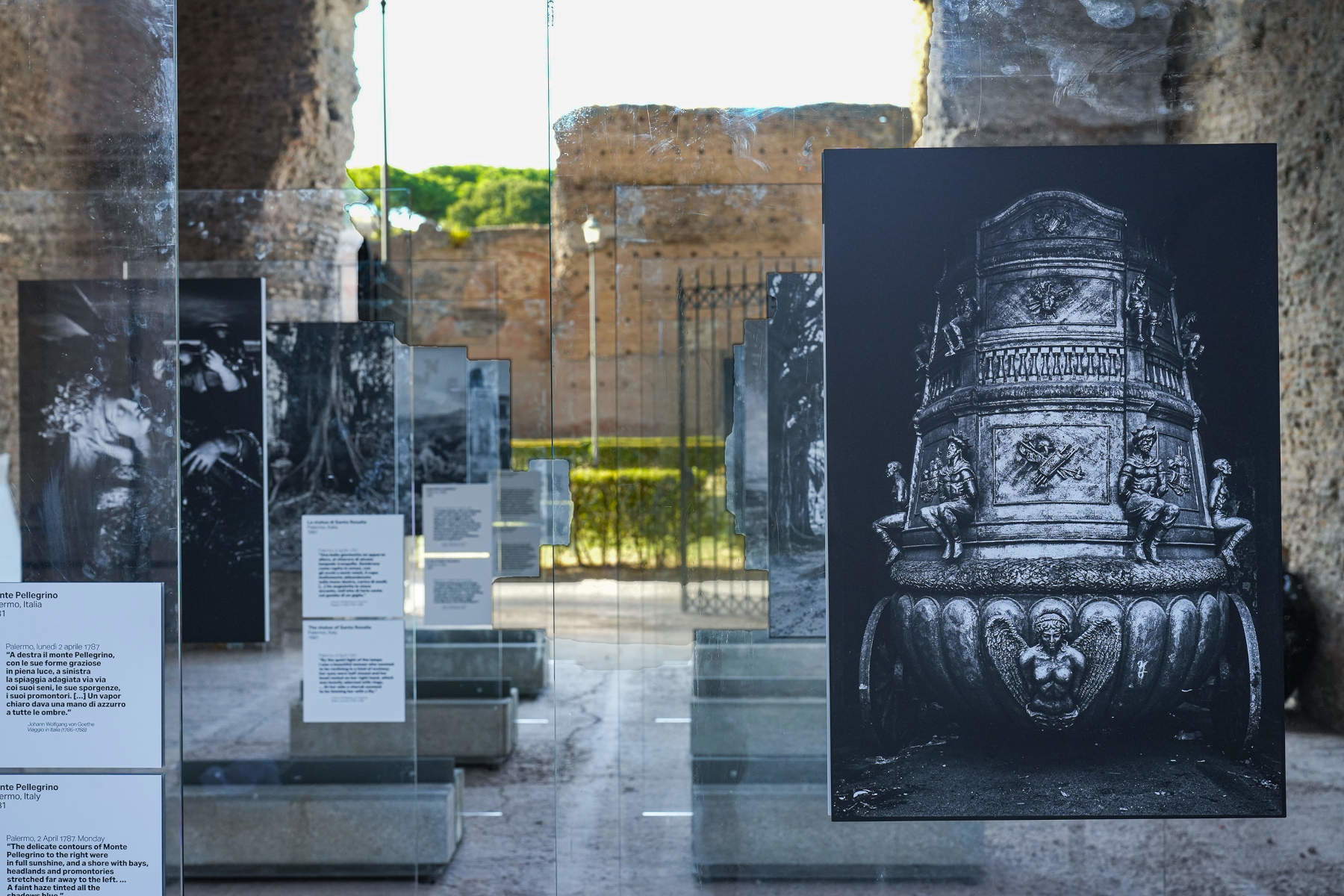
The third section, on the other hand, is dedicated to the series *Goethe in Sicily*, created in the early 1980s. The project emerged from an engagement with the pages of Johann Wolfgang Goethe’s *Italian Journey* and from the affinity Horvat identified with the German writer’s Romantic vision. In Sicily, the photographer observed the Greek culture of the temples, Rococo architecture, and folk traditions, focusing primarily on the island’s nature and landscapes.
The exhibition at the Baths of Caracalla is also part of the complex’s ongoing effort to open its doors to contemporary photography. In recent years, the site has hosted exhibitions such as *Narciso: Photography in the Mirror* and *Letizia Battaglia: Endless*, helping to bring the language of photography—and, more broadly, contemporary art—into the Baths. Today, the photographer’s complete archive, which remained intact in his home, is preserved and managed by his daughter Fiammetta Horvat together with Mathilde Oudin, his last assistant. The exhibition in Rome is accompanied by a book published by Electa, which traces the three sections of the exhibition and also includes a selection of Horvat’s writings, through which her reflections on photography emerge. The book opens with a tribute by Ferdinando Scianna.
“Horvat was a cosmopolitan figure,” says Daniela Porro, Special Superintendent of Rome, “an Italian born in Abbazia—now in Croatia—who lived in Lugano, Milan, London, and Paris, and who traveled the world far and wide, refining his vision and eye for detail. His images at the Baths of Caracalla pay tribute to an intellectual who traversed the entire universe of photography: from fashion to photojournalism, to artistic exploration, to the discovery of digital image processing, and to the exploration of distant or nearby lands—as in the case of Sicily, to which a section of the exhibition is dedicated.”
““We’ve chosen to exhibit three series that are characteristic of Horvat, illustrating his curiosity and blending perfectly with this ancient site, created to celebrate the human body and beauty,” explains his daughter Fiammetta Horvat, who curates the archive alongside Mathilde Oudin, the photographer’s former assistant.
Horvat’s life story began in 1928 in Abbazia, now Opatija, Croatia. In 1939, at the outbreak of World War II, his Jewish family emigrated to Lugano. There, at the age of fifteen, Frank acquired his first camera, a 35mm Retina, which he obtained in exchange for his stamp collection. In 1947, he returned to Italy and began attending the Brera Academy in Milan. Crucial to his development was his stay in Paris in the early 1950s, where he met Henri Cartier-Bresson and Robert Capa. In 1952, he embarked on a journey through India and Pakistan, an experience that helped shape his photographic practice and launch his career. Some of the images taken during that expedition were included in 1955 in the historic exhibition *The Family of Man*, curated by Edward Steichen at MoMA in New York. The exhibition brought him his first international recognition and a collaboration with *Life*.
After settling first in London and then in Paris, Horvat continued to photograph everyday life, often using a telephoto lens to capture intimate moments and creating dynamic compositions that challenged conventional rules of composition. Toward the end of the 1950s, he briefly joined the Magnum Agency and continued his travels to various countries around the world. In the following decades, he worked in the fashion and advertising sectors for major magazines, balancing these assignments with personal research projects published in photography books and experimenting with color even before its widespread adoption in photography. In the 1980s, Horvat established his ideal studio in Boulogne-Billancourt, near Paris. He continued to write about photography and work with the camera, also devoting himself to experimenting with new digital technologies. He exhibited his work until his death in October 2020 at the age of 92.
 |
| Rome, Frank Horvat at the Baths of Caracalla: Fashion, Portraits, Landscapes |

Warning: the translation into English of the original Italian article was created using automatic tools. We undertake to review all articles, but we do not guarantee the total absence of inaccuracies in the translation due to the program. You can find the original by clicking on the ITA button. If you find any mistake,please contact us.




















 IT
IT FR
FR DE
DE ES
ES CN
CN


