



by Redazione 13/11/2026


Categories: Exhibitions / Disclaimer
From November 14, 2026, to April 18, 2027, Villa Groppallo in Vado Ligure (Savona) will host Arturo Martini. “I Am the True Etruscan”: Sixteen Etruscan works from Italian museums are juxtaposed with the artist’s sculptures, exploring one of the fundamental roots of his artistic practice.


“I am the true Etruscan”: with these words, Arturo Martini asserted the deep connection between his sculptural work and the art of an ancient civilization. This relationship will be the focus of the exhibition *Arturo Martini. I Am the True Etruscan, opening Saturday, November 14, 2026, at Villa Groppallo in Vado Ligure (Savona). Through April 18, 2027, sixteen Etruscan works from Italian museums will be juxtaposed with the artist’s sculptures in an exhibition that explores the influences of antiquity on his work.


Curated by Carla Bracco and Magda Tassinari, the exhibition brings together Etruscan works from Italian museums and collections, juxtaposing them with Martini’s sculptures. In addition to the works already housed in the Museum of Vado Ligure, the exhibition includes loans from other institutions and private collections, archaeological finds, photographs, and documents. The exhibition thus explores a connection that, while significant for the development of the artist’s work, has not yet been sufficiently examined in its entirety.
The dialogue between the works unfolds through a series of juxtapositions that highlight formal affinities and shared influences. Martini’s benefactor is presented in relation to two Etruscan sarcophagi from Tarquinia and Tuscania, while the original plaster models of the War Memorial and the “Blind Man” group are juxtaposed with several heads from Cerveteri and Chianciano.



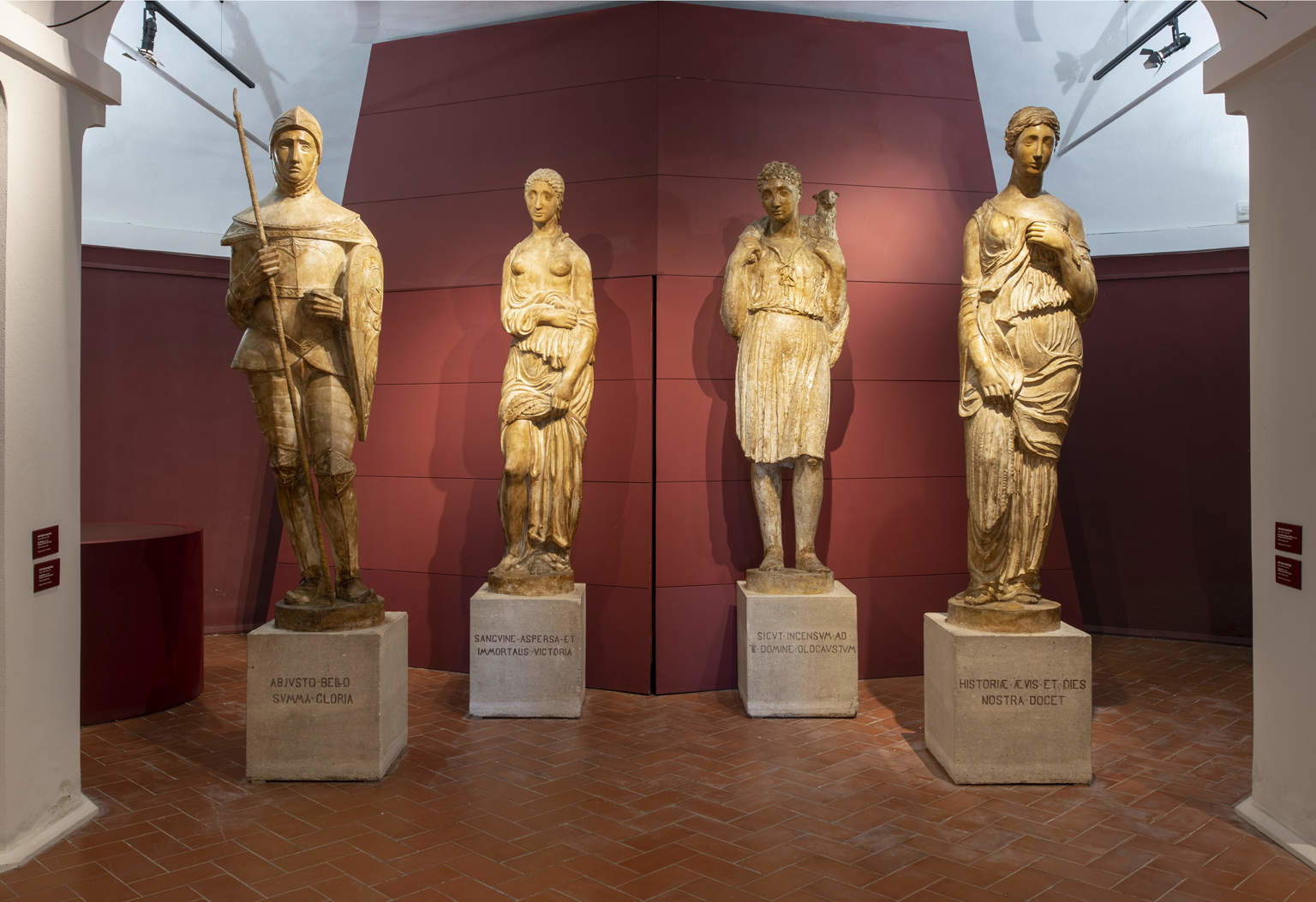
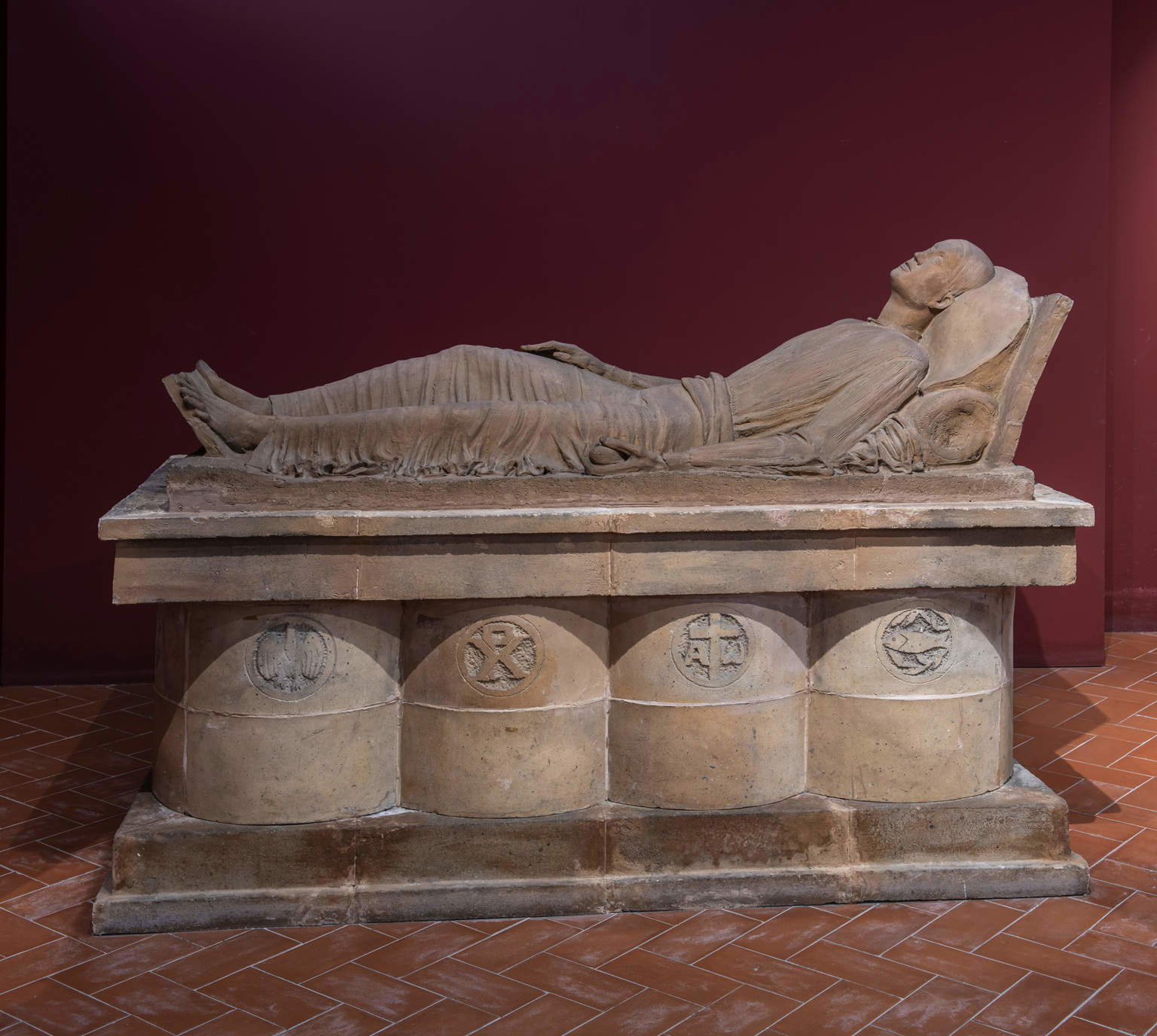
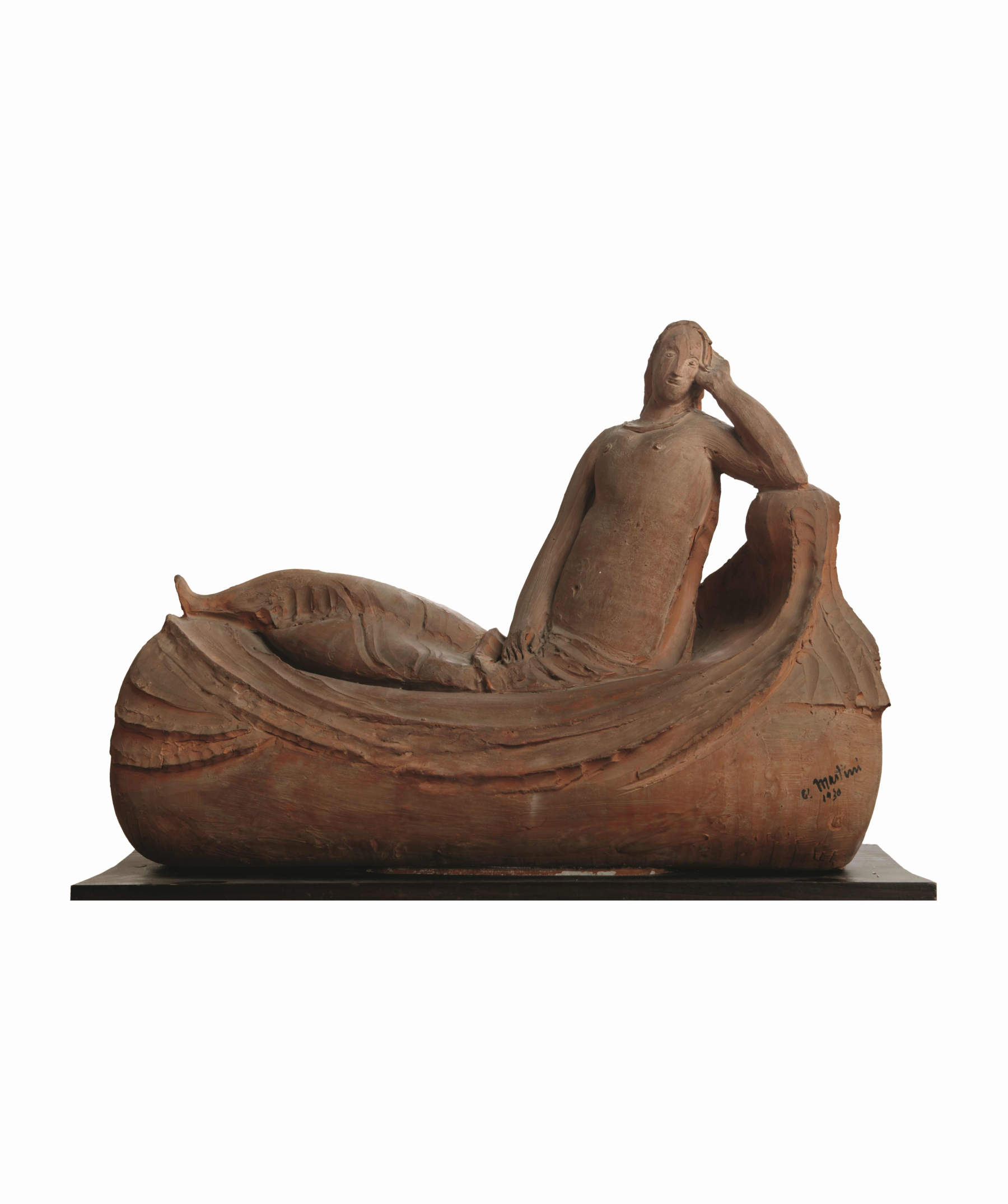
Another section juxtaposesthe Self-Portrait and the bust of his daughter Nena with two female heads housed at the Museo del Paesaggio in Verbania, in a comparison with Etruscan portraits and their characteristic smile. Also of particular interest is the juxtaposition ofthe *Odalisque*, from the collections of the Cassa di Risparmio in Bologna, with the small cinerary urns from Chiusi depicting semi-reclining female figures. These works are linked by certain similarities in the softness of their forms and their sculptural sensibility, allowing visitors to closely examine the possible connections between the two sculptural languages.
The exhibition is set within a cultural context in which the rediscovery of Etruscan art played an important role in the early decades of the 20th century. New archaeological discoveries and artistic and critical debate fueled a growing interest in this civilization, leading to the rise of the “modern Etruscans” phenomenon. Martini’s artistic exploration also fits into this context; he did not view Etruscan art merely as a repertoire of models to be replicated, but as a tradition to be assimilated and transformed into an autonomous form of expression.
The sculptor’s own words, recorded in Gino Scarpa’s *Colloqui con Arturo Martini*, shed light on his relationship with this culture: “For two years I studied Etruscan sculpture, and for five I recreated it. I am the true Etruscan; they gave me a language, and I made them speak—I expressed them. I could have made a thousand statues just as they would have imagined them.” This statement, from which the exhibition’s title is derived, conveys the awareness with which Martini viewed his own relationship with antiquity. His study of Etruscan models had resulted in a process of appropriation and reworking, through which the artist had made an ancient language his own, giving it new expression.

The exhibition is organized by the Lino Berzoini Association—Center for the Study and Promotion of Art, in collaboration with the Municipality of Vado Ligure, with support from the Liguria Region and the De Mari CR Savona Foundation, and sponsored by Vado Gateway. Scientific collaboration is provided by the Superintendence of Archaeology, Fine Arts, and Landscape for the provinces of Siena, Arezzo, and Grosseto; the Superintendence of Archaeology, Fine Arts, and Landscape for the Metropolitan City of Bologna and the provinces of Modena, Reggio Emilia, and Ferrara; the Superintendence of Archaeology, Fine Arts, and Landscape for the provinces of Parma and Piacenza; the Regional Directorate of National Museums of Lazio; and the Regional Directorate of National Museums of Tuscany of the Ministry of Culture.
Among the lending institutions are the National Archaeological Museum of Tarquinia, the Civic Archaeological Museum of Chianciano Terme, the Cerite National Archaeological Museum in Cerveteri, the National Archaeological Museum of Tuscania, and the National Etruscan Museum of Chiusi. For modern and contemporary works, additional participants include the MART—Museum of Modern and Contemporary Art in Rovereto, the Landscape Museum in Verbania, the CaRisBo Foundation in Bologna, the BPER Banca Gallery, and several private collections.
The exhibition will be accompanied by a program of related events that will also involve other cultural venues in the region. The program includes lectures, presentations, guided tours led by the curators, and educational workshops for children, with the aim of exploring the themes of the exhibition and the relationship between Martini’s sculpture and Etruscan civilization. The catalog, edited by Carla Bracco and Magda Tassinari, will be published by Sagep Editori.
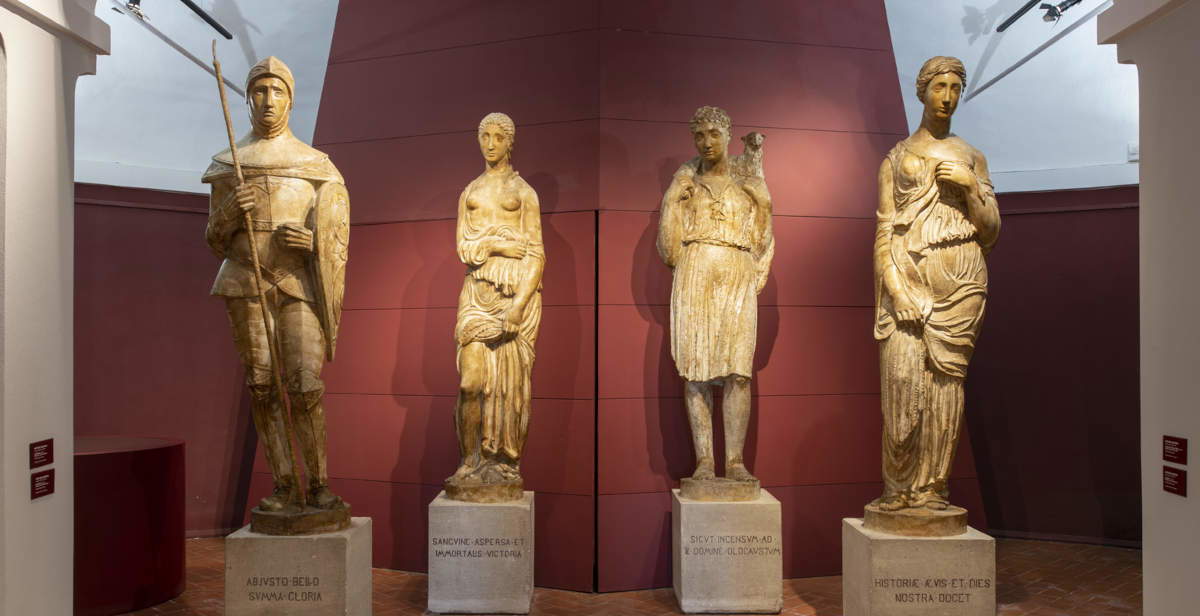 |
| Savona: Sixteen Etruscan works illustrate the influence of Etruscan civilization on Arturo Martini’s sculpture |
Warning: the translation into English of the original Italian article was created using automatic tools. We undertake to review all articles, but we do not guarantee the total absence of inaccuracies in the translation due to the program. You can find the original by clicking on the ITA button. If you find any mistake,please contact us.