





In mythological tradition, the chimera is a creature composed of parts belonging to different animals: it is, therefore, a hybrid organism in which disparate elements cease to be merely separate fragments and become something new. It is precisely this idea of coexistence and transformation that lies at the heart of *Chimera*, the third solo exhibition by Stanislao Di Giugno (Rome, 1969) at the Galleria Tiziana Di Caro in Naples, located at Piazzetta Nilo 7, from October 3 to December 23, 2026.
The exhibition presents a body of work created by the artist throughout 2026 and includes a series of paintings of various sizes—continuing the painterly exploration developed in previous years—alongside a new cycle of bronze sculptures: it is precisely these sculptures that represent a new direction in Di Giugno’s practice and introduce a different approach to the relationship between form, material, and transformation. The title, in fact, does not merely allude to the figurative meaning of the word “chimera,” commonly associated with a desire or a project that is difficult, if not impossible, to realize. Di Giugno chooses to focus primarily on the composite structure of the mythological creature, on its nature as an organism formed by the coming together of different elements. It is a principle that runs through both the paintings and the new sculptures, linking two seemingly distinct artistic languages through a shared theme: hybridization.
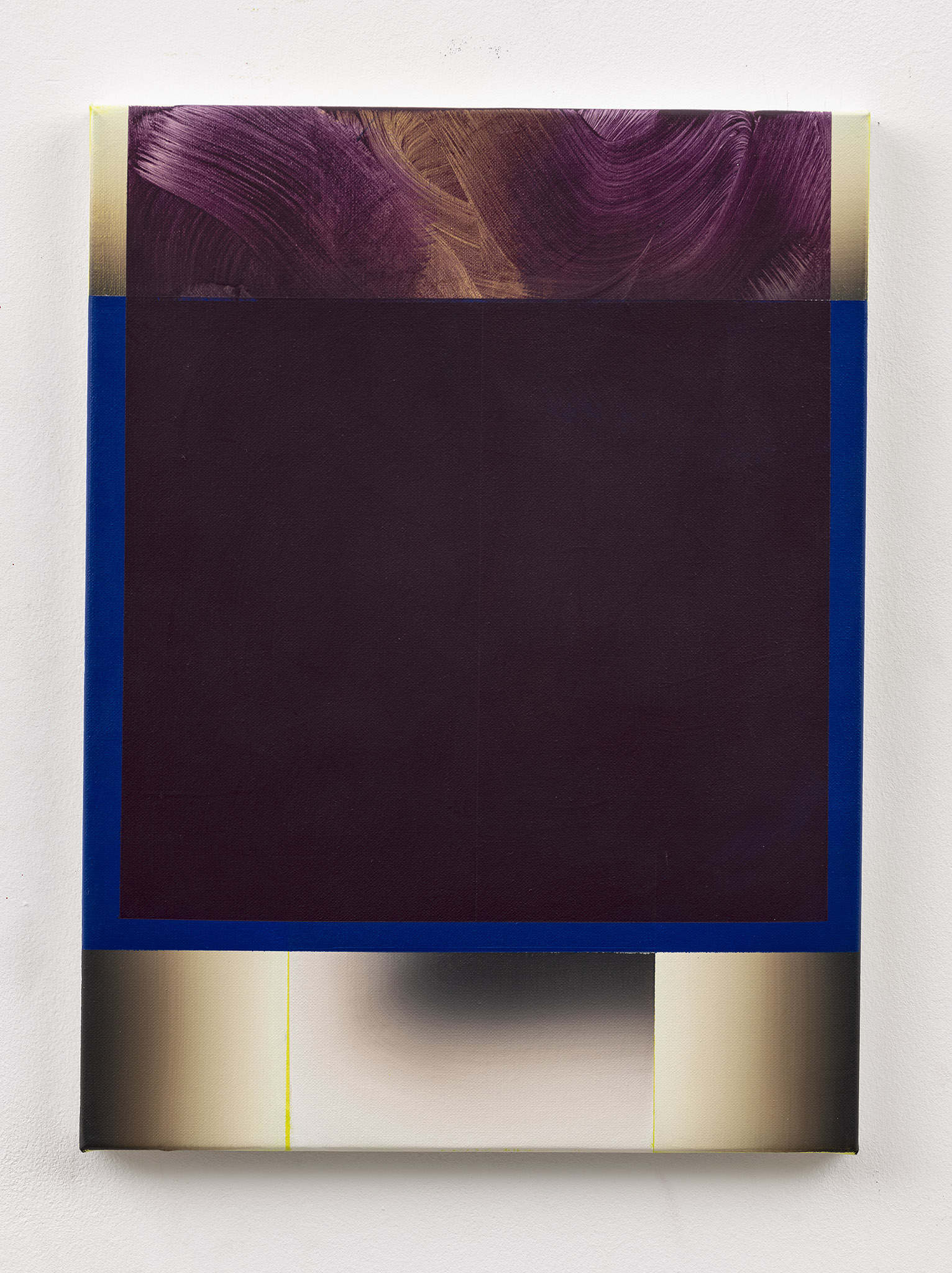
“Figuratively speaking, a chimera refers to an idea, a desire, or an illusory project that is very difficult to achieve,” explains Di Giugno himself. “At first glance, many will think of an ‘illusion’ or an ‘impossible dream.’ The exhibition, however, aims to highlight the chimera’s composition of heterogeneous elements: different painterly languages that, rather than repelling one another, find a balance. Here, the chimera is not a symbol of the unattainable, but of coexistence.”
Di Giugno’s painting, in fact, arises from the encounter of different elements that are gradually brought together into a common form. The artist, born in Rome in 1969, works with essential geometric structures and a chromatic exploration aimed at investigating the perception of space, light, and formal balance. His is a form of abstract painting that eschews narrative intent: the surface becomes the space where forms, colors, and geometric relationships can construct an autonomous perceptual experience. In this process, the reduction of visual elements plays a central role: the compositions are not conceived as closed systems, in which each element has a predetermined function, but as spaces in which geometric order can open up to perception. Constructive precision, visual depth, and chromatic intensity thus coexist within an essential style of painting, in which geometry does not necessarily coincide with a rigid structure.
Chimera, however, introduces a new material dimension into the artist’s work. The bronze sculptures, in fact, are created from small elements that once belonged to various automobiles, found by chance and collected by Di Giugno. Parts that originally had a specific function—related to the structure and use of a car—are removed from their context and combined with other components. The next step is casting in bronze: this process radically alters the relationship with the original objects—the components are no longer simply assembled but become the matrix of a new sculptural organism. The original function is lost, and what remains is the form, with the memory of the previous object still recognizable but transformed.
“There will also be bronze sculptures created by joining small parts from different cars, found by chance and collected. For example, two side mirrors from different cars joined together,” says the artist. “In this case, the chimera sculptures make the concept almost literal: they are organisms constructed from the union of parts coming from different ‘bodies.’ It is not a random collage, but the birth of a new identity.” The connection to the practiceof assemblage—already present in Di Giugno’s earlier work—remains recognizable, but the bronze casting brings about a substantial change. Assemblage typically preserves the ability to recognize individual elements and their former status as objects; bronze, on the other hand, makes them part of a definitive form. The original components are transformed into an entity that no longer seems to belong to the categories from which they originated.
This is where sculpture meets painting. In paintings, stylistically different elements can interact to produce a visual balance; in sculptures, fragments from different objects are stripped of their original function and reassembled into an autonomous form. In both cases, the starting point is a difference that is not erased but transformed into a state of coexistence. “There is a very strong common thread between the two media, paintings and sculptures. Both speak of hybridization, transformation, and coexistence,” says the artist.
The process also explores the relationship between recognizability and transformation: the works do not completely erase the origins of their elements, but they do alter their meaning. The fragment continues to retain something of its original identity, even as it enters a structure in which that identity is no longer sufficient to define it. “The chimera is a form born from the encounter of heterogeneous elements. It is not the sum of its parts, but a new organism whose identity emerges precisely from the coexistence of differences,” observes Di Giugno.
The exhibition’s title can thus be read as a statement on the very nature of the artist’s work. “The exhibition explores the moment when what belonged to different systems ceases to be a fragment and becomes a unified presence. Here, the chimera is not a symbol of the impossible, but proof that seemingly incompatible elements can generate a new coherence.”
Stanislao Di Giugno, born in Rome in 1969, has developed a multidisciplinary practice focused primarily on the expressive possibilities of abstract painting. His work has been presented at institutions and exhibition spaces including MACRO in Rome, the National Gallery of Modern and Contemporary Art in Rome, the Triennale di Milano, the Italian Cultural Institutes, the Hammer Museum in Los Angeles, and the American Academy in Rome. He has also participated in international residencies, including Art Omi in Ghent, New York State, and the Sammlung Lenikus in Vienna. The artist is represented by the Tiziana Di Caro Gallery.
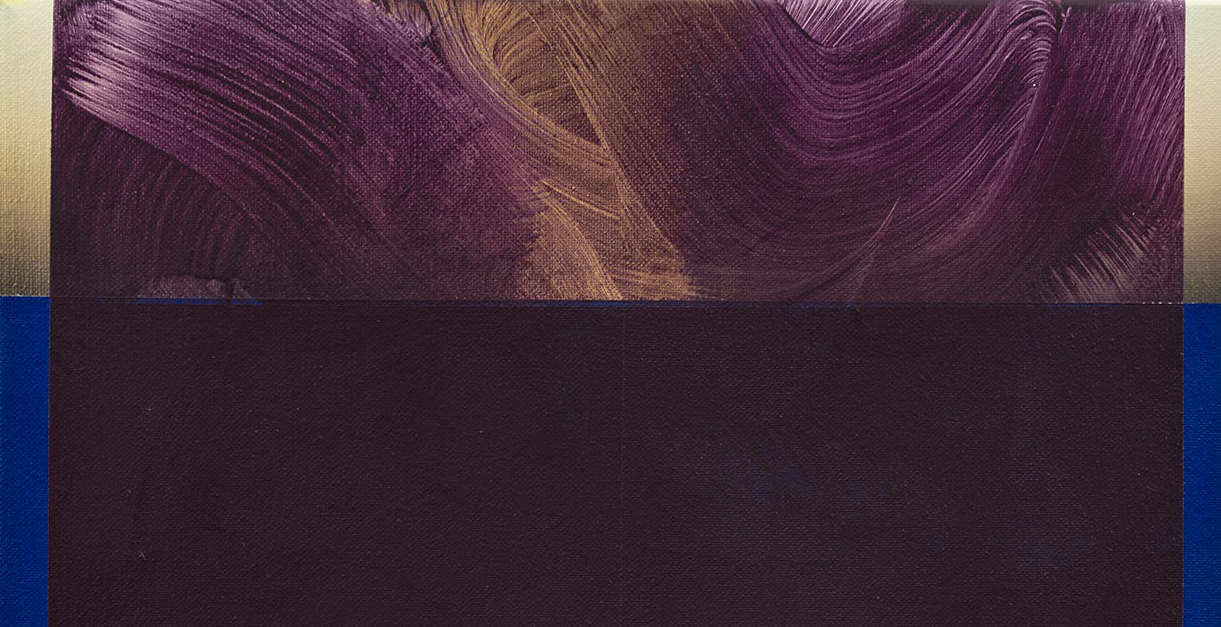 |
| Stanislao Di Giugno transforms the chimera into a new entity made of paint and bronze |

Warning: the translation into English of the original Italian article was created using automatic tools. We undertake to review all articles, but we do not guarantee the total absence of inaccuracies in the translation due to the program. You can find the original by clicking on the ITA button. If you find any mistake,please contact us.





















 IT
IT FR
FR DE
DE ES
ES CN
CN


