





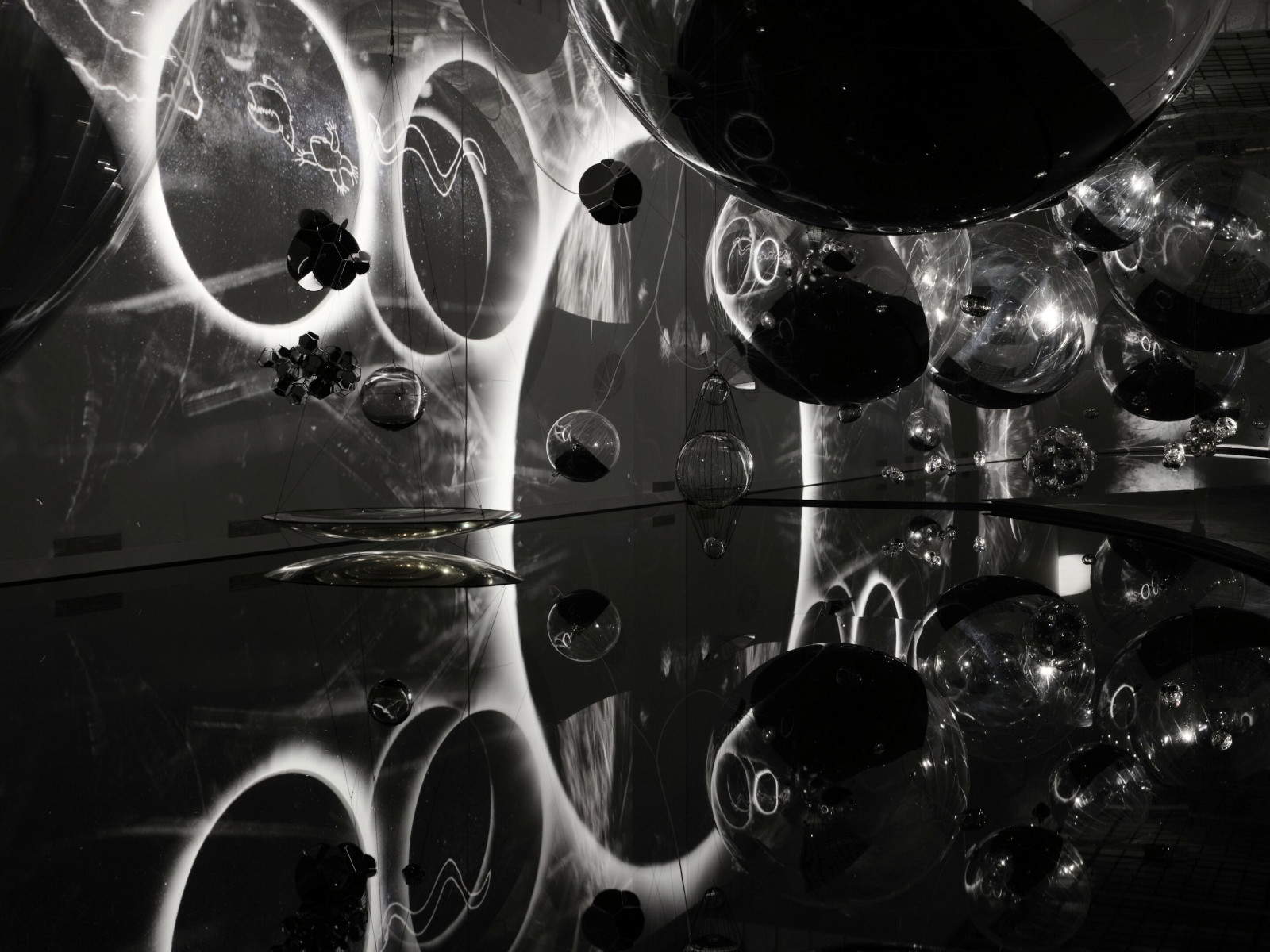
Through February 7, 2027, Munich’s Haus der Kunst presents “Tomás Saraceno in Collaboration: Ancestral Futures,” a comprehensive exhibition project that traces some of the fundamental themes of Tomás Saraceno’s artistic practice. Curated by Sarah Johanna Theurer and Andrea Lissoni, the exhibition invites reflection on the connections between art, ecology, society, and the future. The exhibition marks a significant milestone in the artist’s career, as it offers a new perspective on his practice through two central strands of his research: Aerocene and Arachnophilia. These are complemented by a major new permanent land art installation, *El Santuario del Agua* (The Sanctuary of Water).
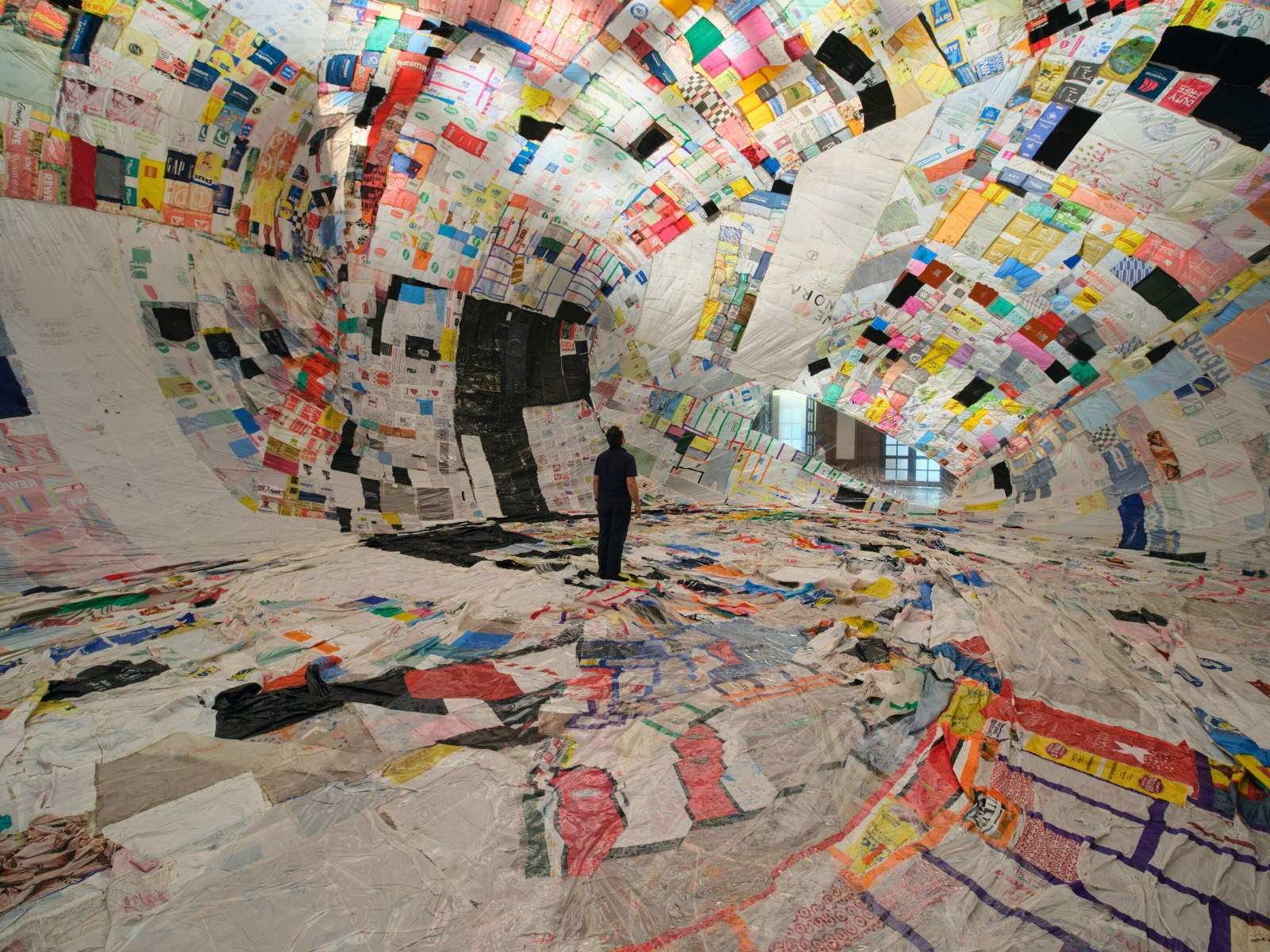
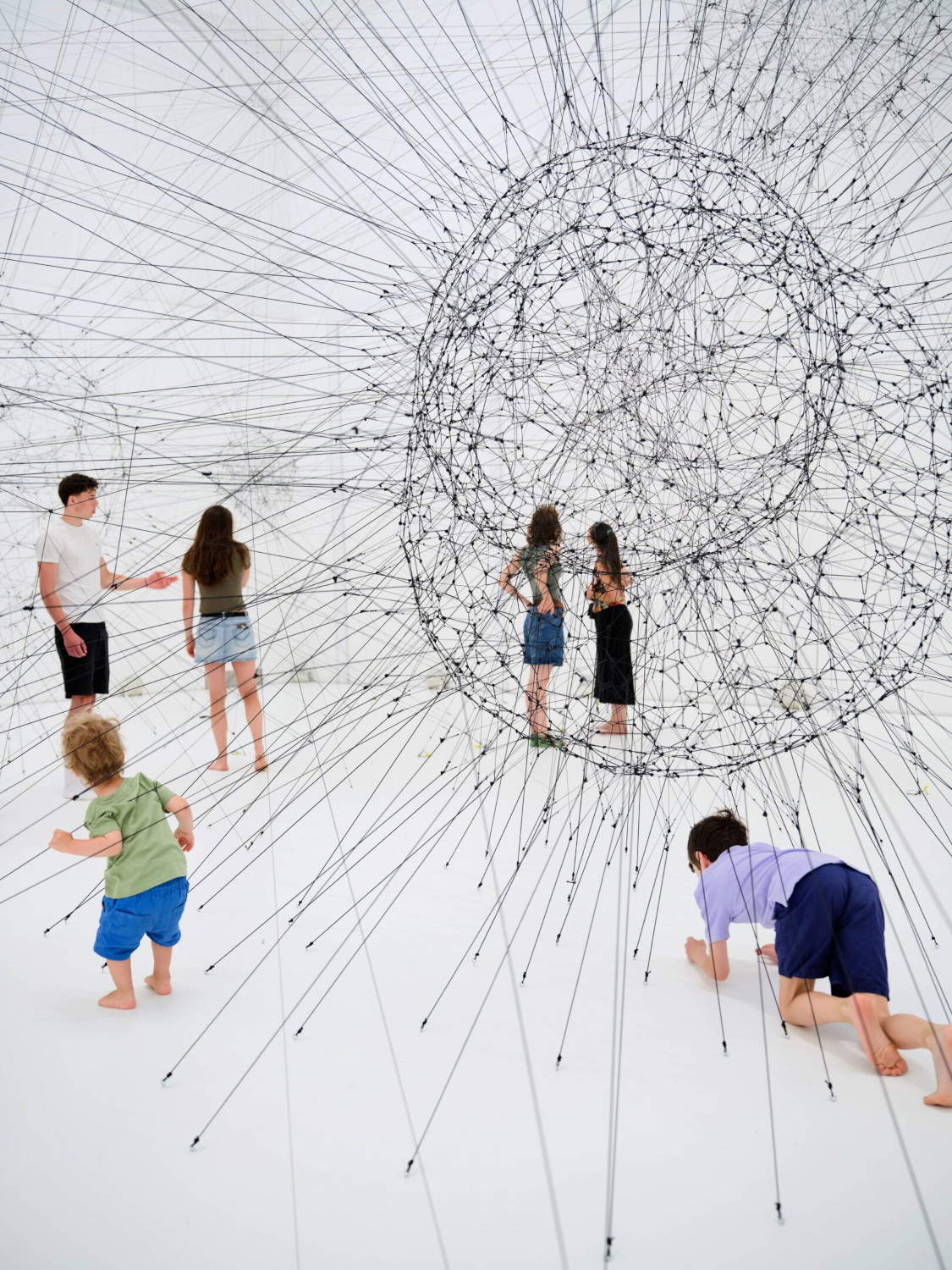
The exhibition brings together two areas that have characterized Saraceno’s work for years and that explore different ways in which humans, the environment, and other forms of life relate to one another. Aerocene reflects on the possibility of envisioning a future free from dependence on fossil fuels, exploring forms of mobility and habitation based on the energy of the air and natural forces. Arachnophilia, on the other hand, draws inspiration from the world of spiders and their sophisticated architecture, transforming them into a starting point for questioning the relationships between species and the possibility of building new forms of coexistence. The works presented at the Haus der Kunst thus invite the public to question their habitual ways of perceiving space and to consider the complex interactions between living beings, ecosystems, and social systems.
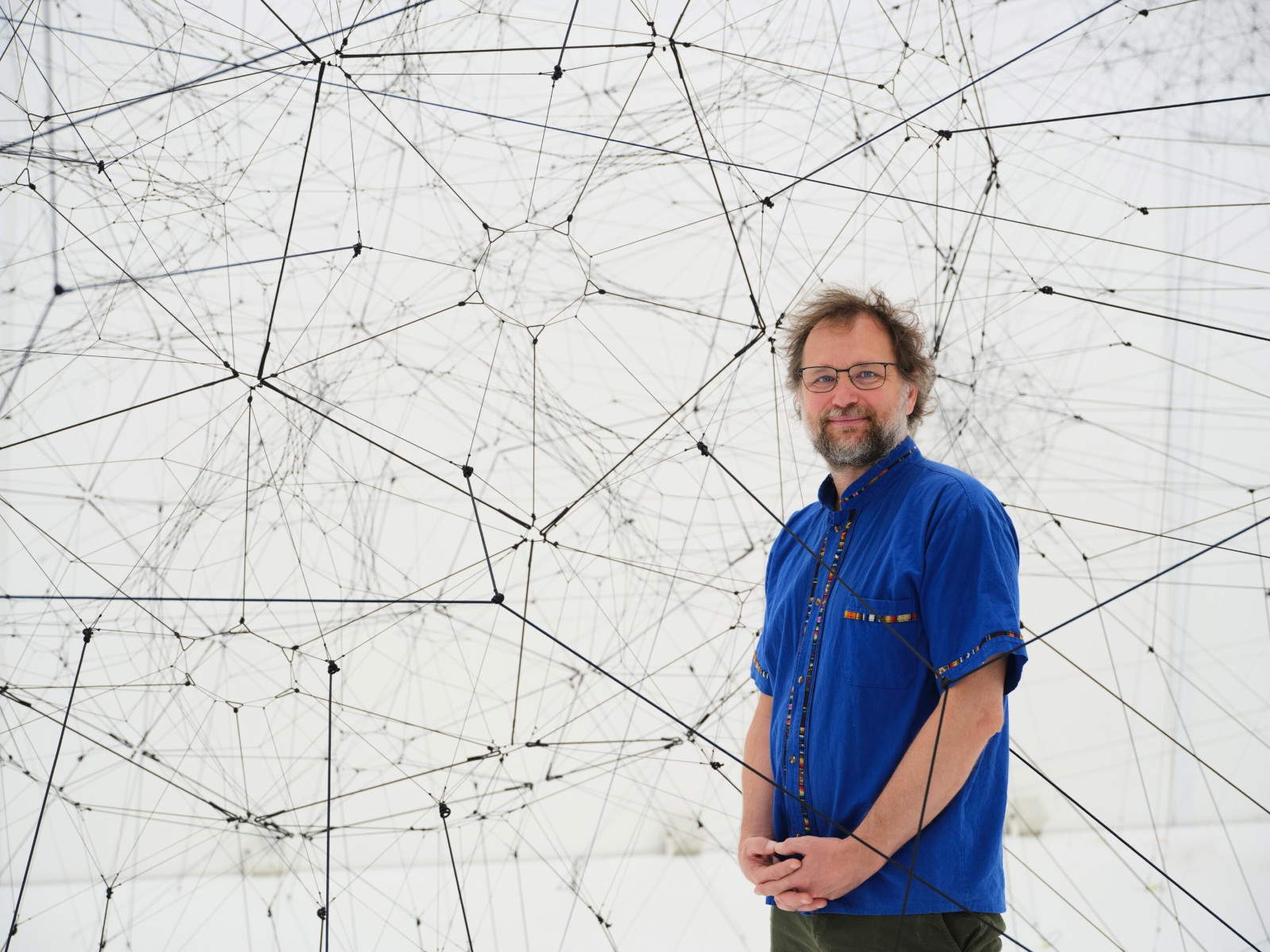
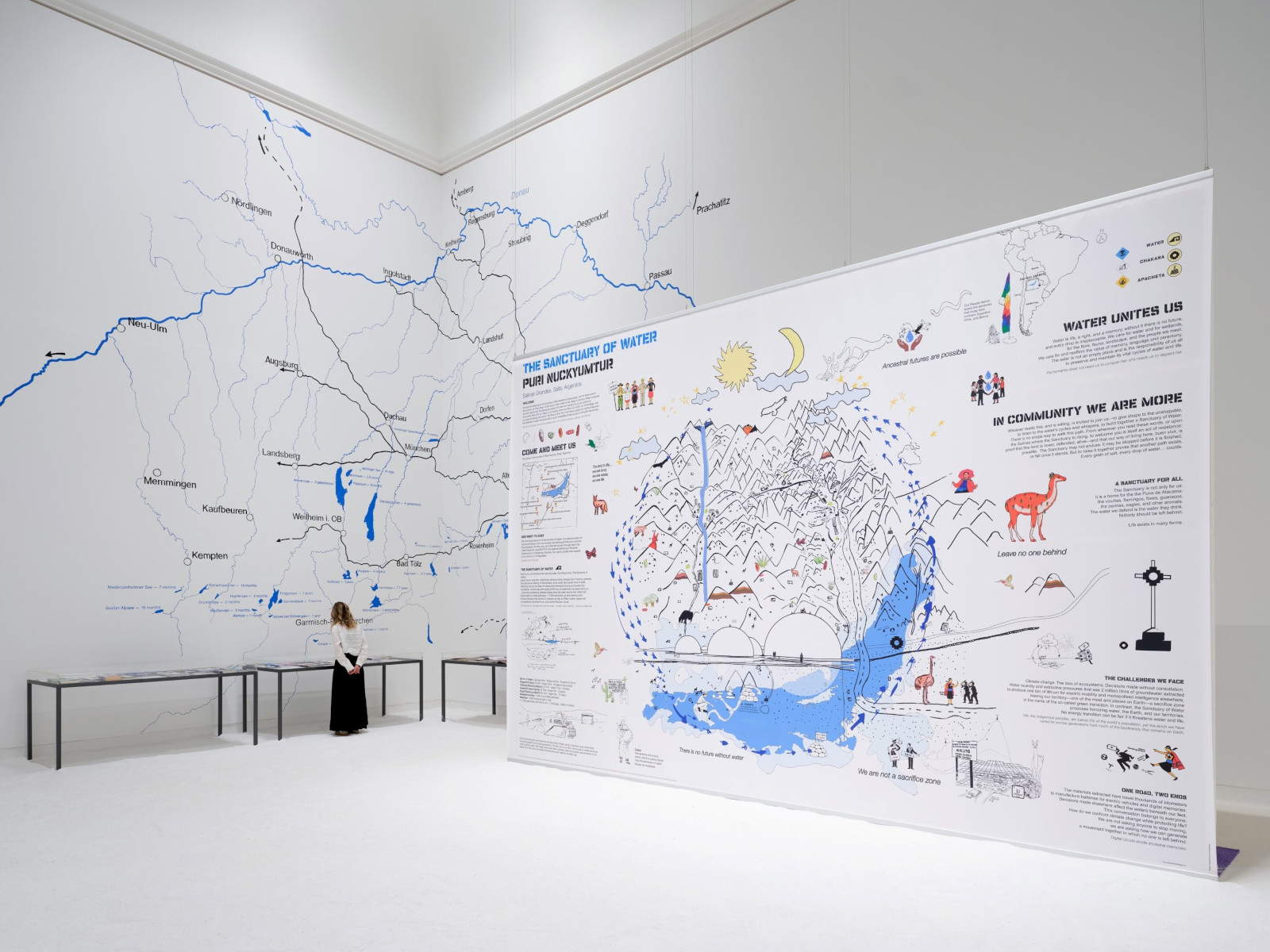
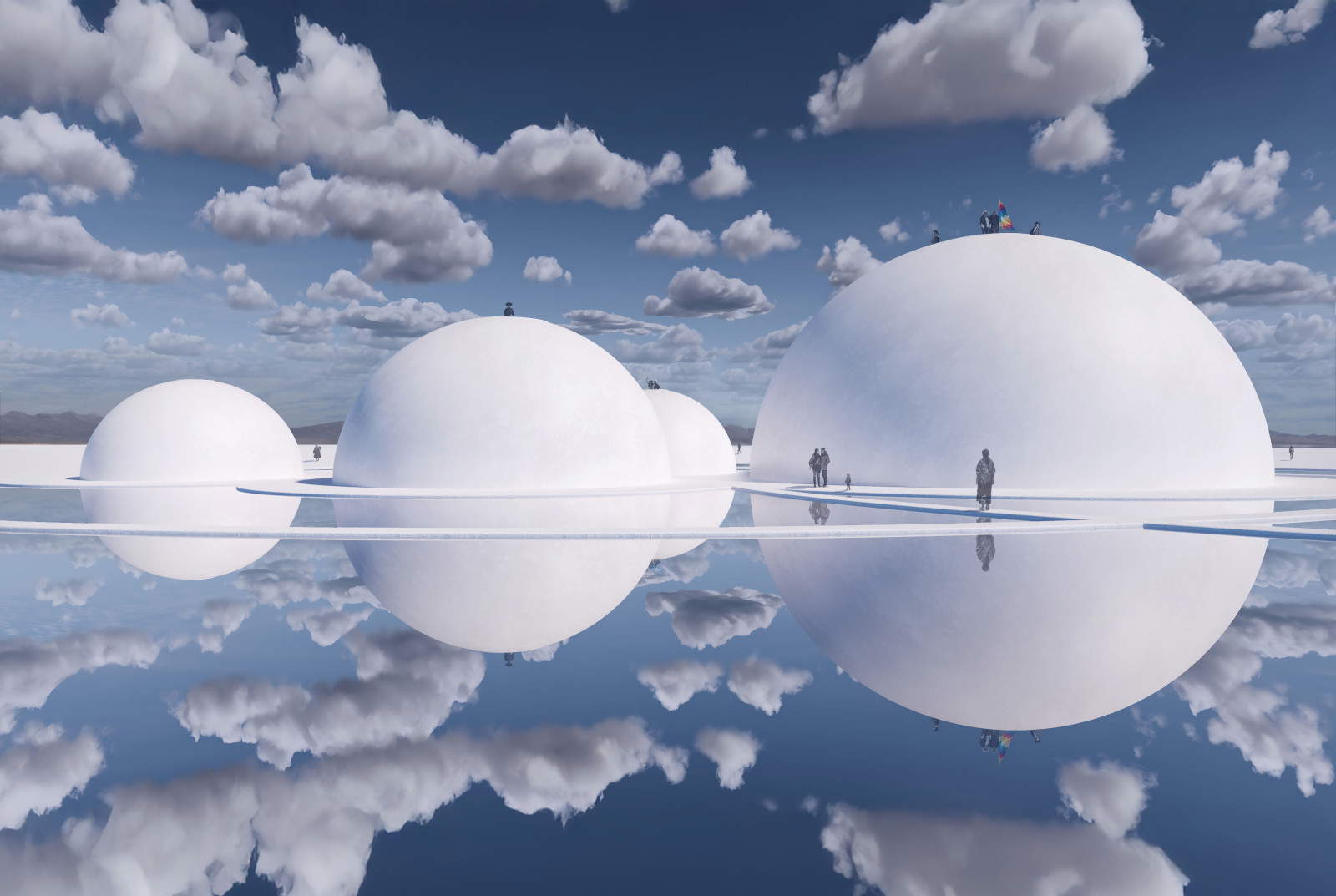
One of the exhibition’s most important focal points is *El Santuario del Agua*, a new permanent land art installation created by Saraceno through close collaboration with the indigenous communities of Red Atacama and Las Salinas Grandes in northern Argentina. The project stems from the need to defend the region’s ancestral territories and addresses the theme of water as a fundamental resource, a natural element, and a common good. Collaboration with local communities thus plays a central role in the creation of the work and in the artist’s research process. Through this project, Saraceno’s practice directly engages with contemporary environmental and social issues, highlighting the relationship between land conservation, the rights of indigenous communities, and the future of ecosystems.

The exhibition project spans the entire Haus der Kunst building and engages the museum’s spaces through a collection of sculptures, installations, and immersive environments. The works include air-powered sculptures, shared habitats for various species, and spatial environments that radically alter the perception of museum spaces. The public is thus invited not only to observe the works but also to engage with new ways of experiencing and interpreting space.
“Haus der Kunst collaborates with contemporary artists to chart new paths in art history and rethink how exhibitions are experienced today. With Saraceno, the building becomes a space for engaging with ecological and social issues that extend beyond the exhibition itself. At Haus der Kunst, everything is part of the program—a living network of exhibitions, performances, concerts, and events that amplify one another and shape a shared experience of art and ecology,” stated Artistic Director Andrea Lissoni.
|
| Tomás Saraceno at the Haus der Kunst in Munich: an exhibition traces the central themes of his work |

Warning: the translation into English of the original Italian article was created using automatic tools. We undertake to review all articles, but we do not guarantee the total absence of inaccuracies in the translation due to the program. You can find the original by clicking on the ITA button. If you find any mistake,please contact us.























 IT
IT FR
FR DE
DE ES
ES CN
CN


