




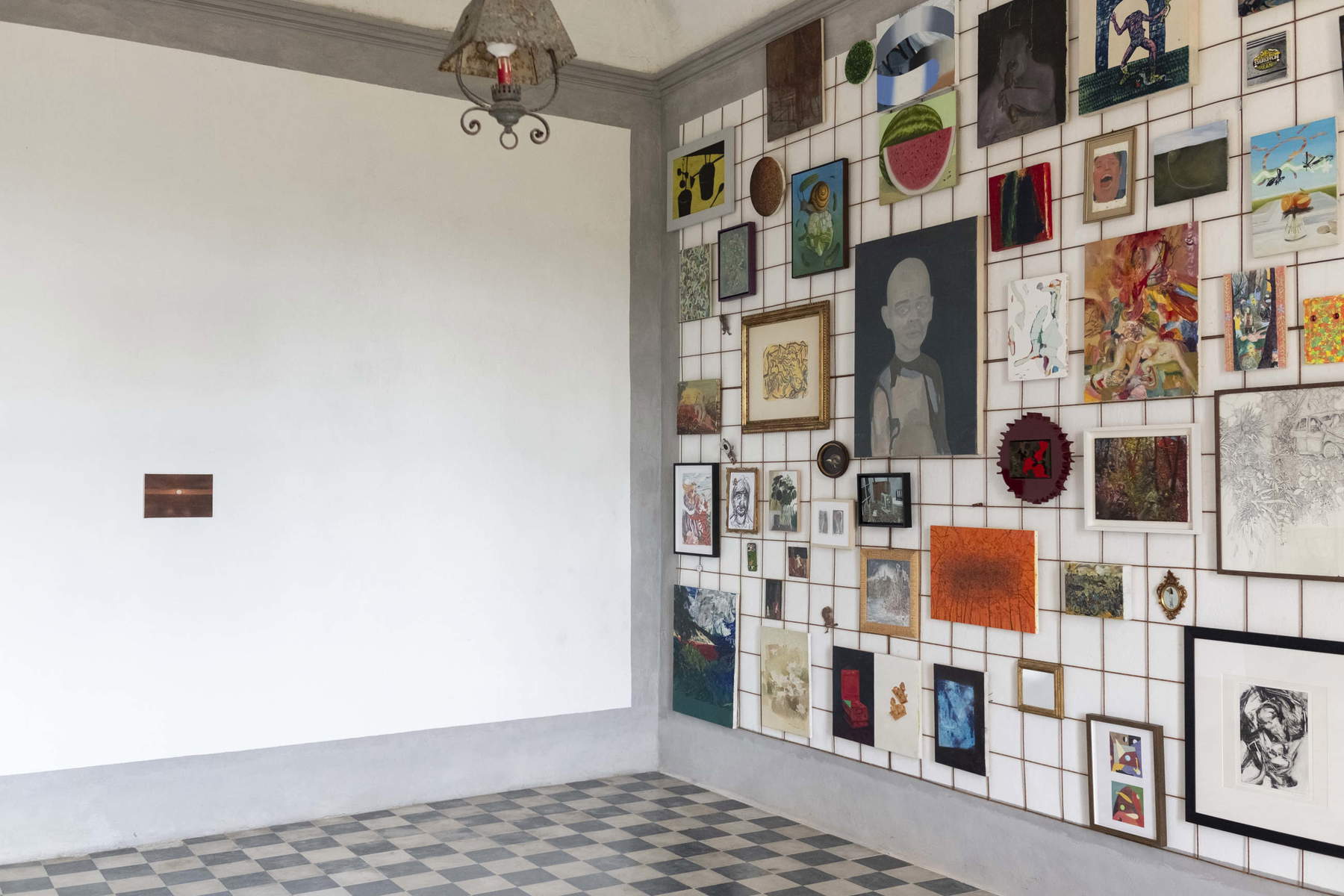
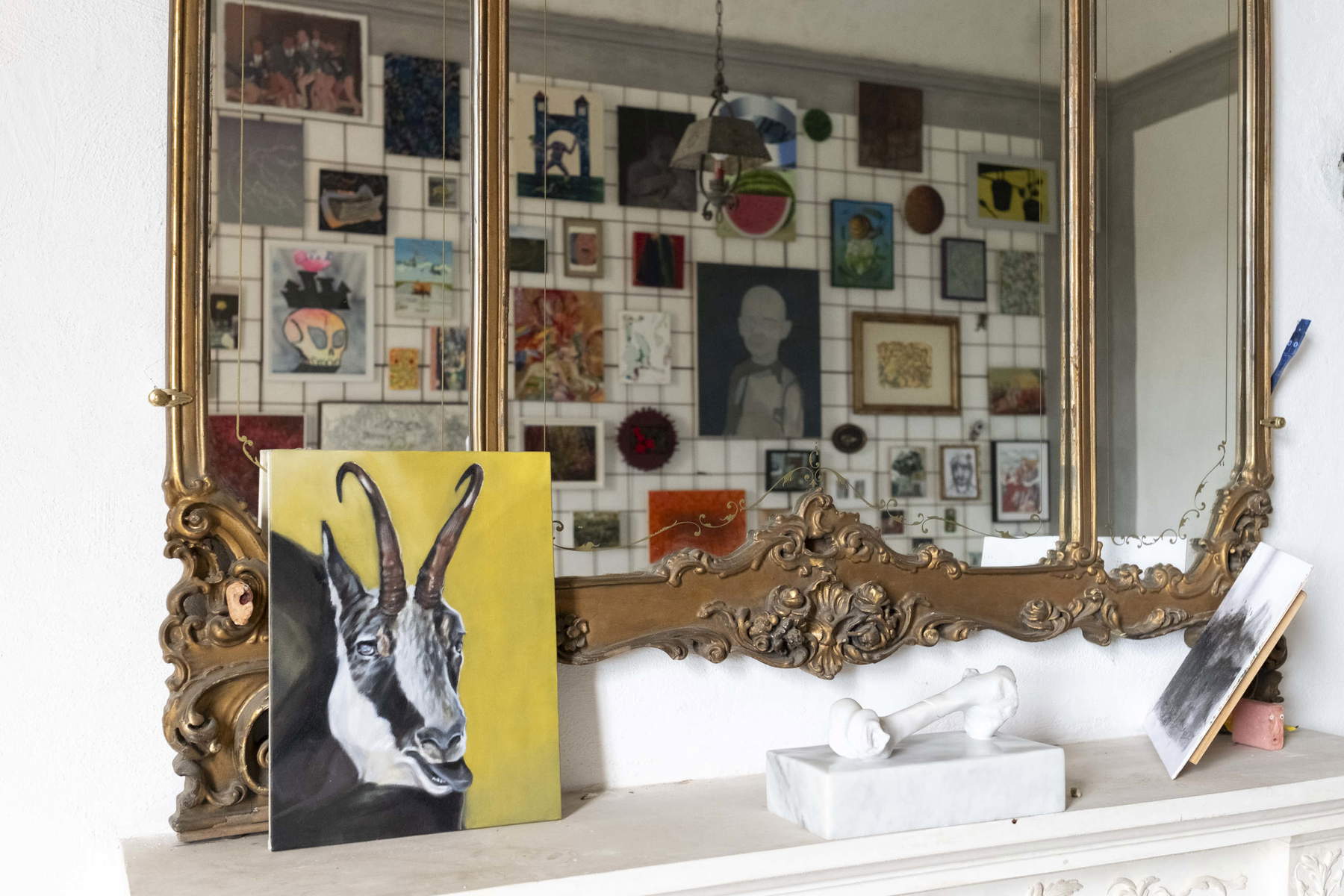
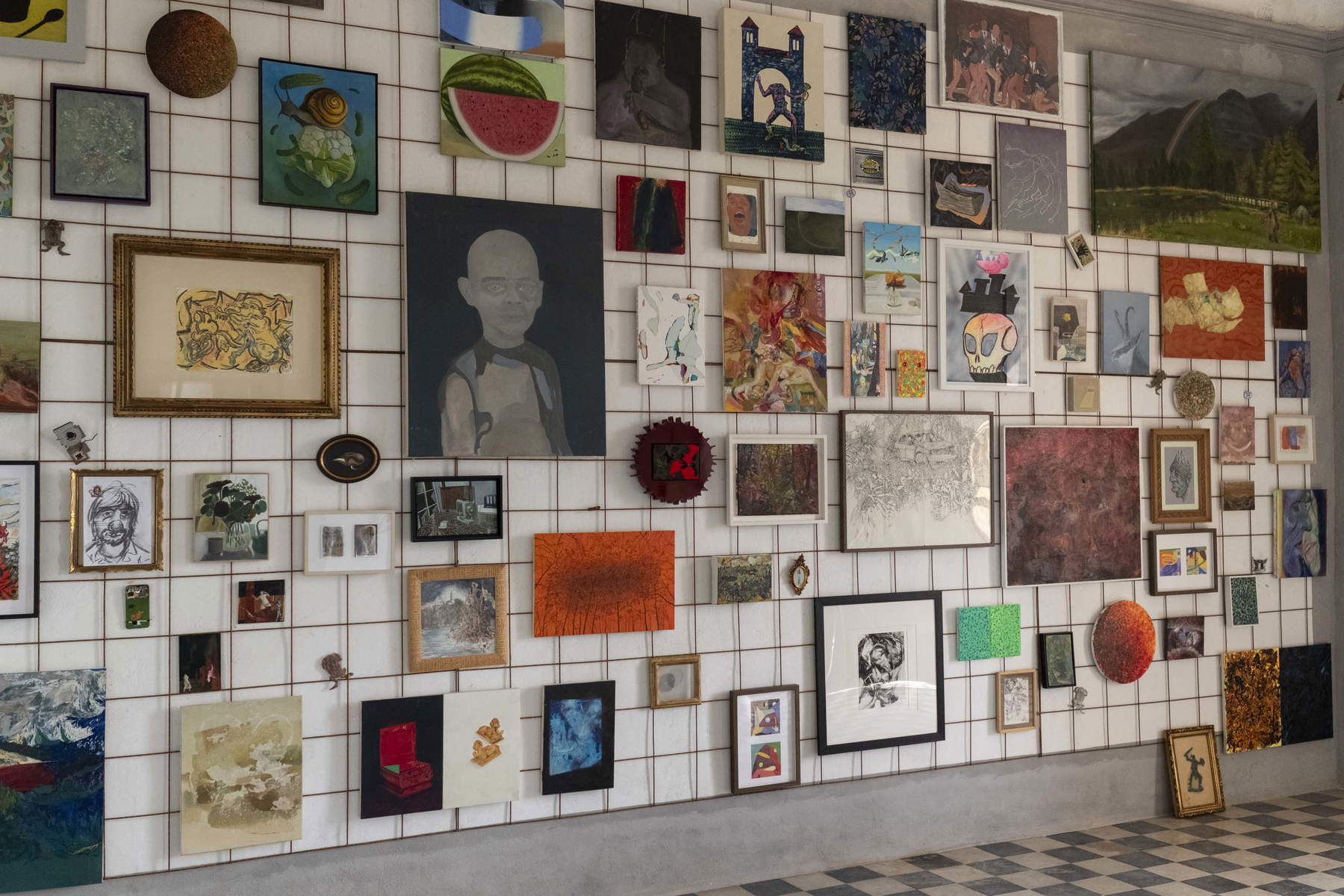
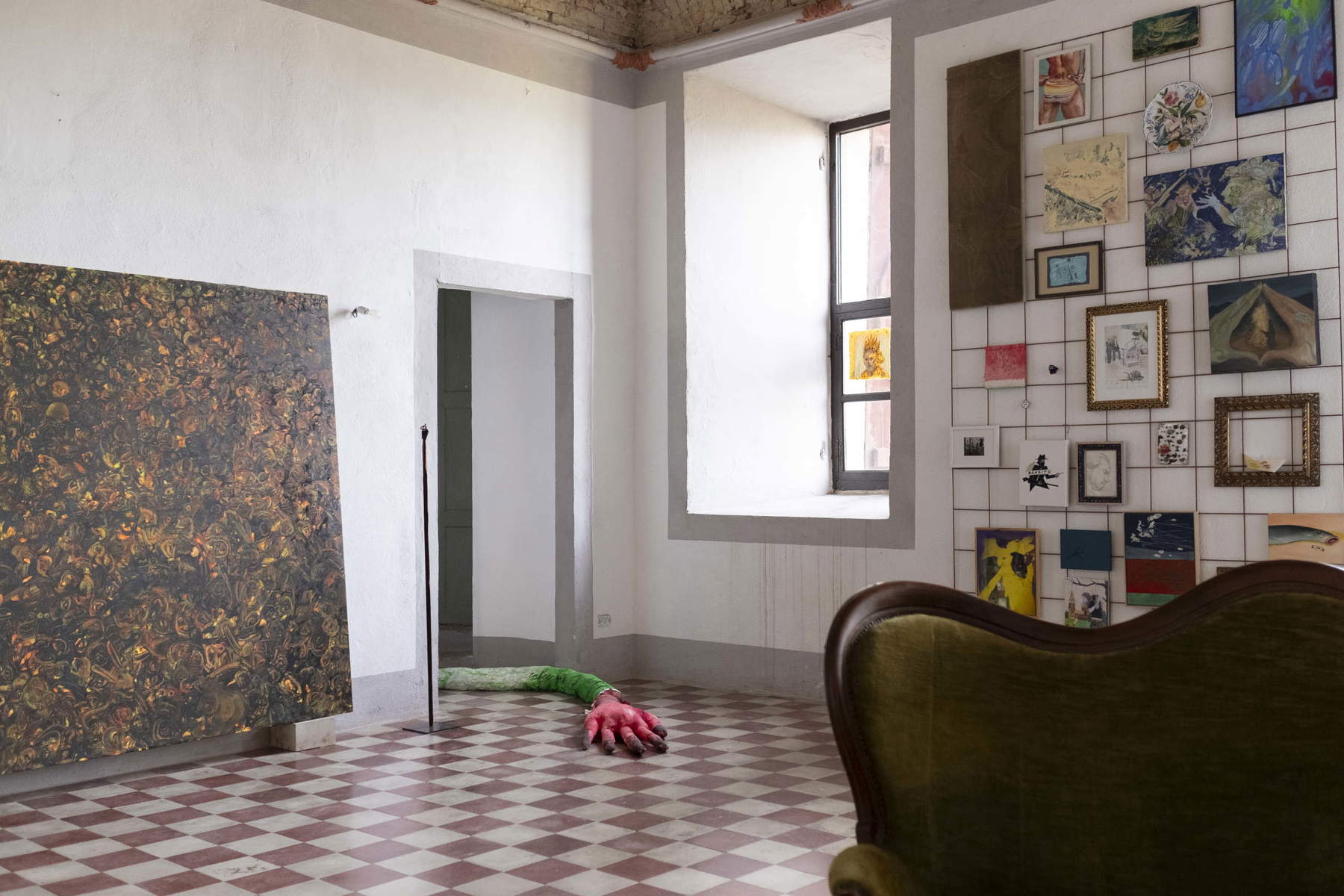
For the artist Bruno Fantelli (Cles, 1996), painting does not seem to have come about as a sudden choice, but rather as the continuation of an inclination cultivated since childhood: drawing, building, and modifying whatever was in front of him. Trained at the Academy of Fine Arts in Venice, in Carlo Di Raco’s Atelier F, Fantelli has developed a body of work that spans painting, sculpture, and installation, constructing an imaginary world populated by monsters, hybrids, and fleeing figures. It is a universe where references from art history—from Bosch to Goya, from Ensor to Bacon—converge with seemingly disparate influences, ranging from landscape to technology, from consumerism to mass tourism. After his years in Venice, along with residencies and exhibitions in Italy and abroad, he arrived in Frinco in 2025 for a residency and subsequently decided to settle in this small Piedmontese town. It is here that *RADICI* takes shape . *Genealogy of a Monster*, an exhibition on view at Frinco Castle (Asti) from September 19 to October 19, 2026, is constructed around the works of over one hundred artists who, at different times and in different ways, have influenced his artistic journey. A deliberately personal and non-definitive genealogy, which also serves as a way to reflect on an artist’s development and the relationships that shape their artistic practice. In this interview with Noemi Capoccia, Fantelli discusses the figures who have shaped him, the relationship between the center and the periphery, the opportunities offered by residencies and collaboration, as well as the contradictions of the Italian art system—from competition to the economic conditions of artists. At the heart of it all remains the idea of building, in Frinco, an independent space capable of hosting artists, exhibitions, gatherings, and projects: a place that can become an integral part of his artistic practice and take the name Kunsthaus Fantelli.
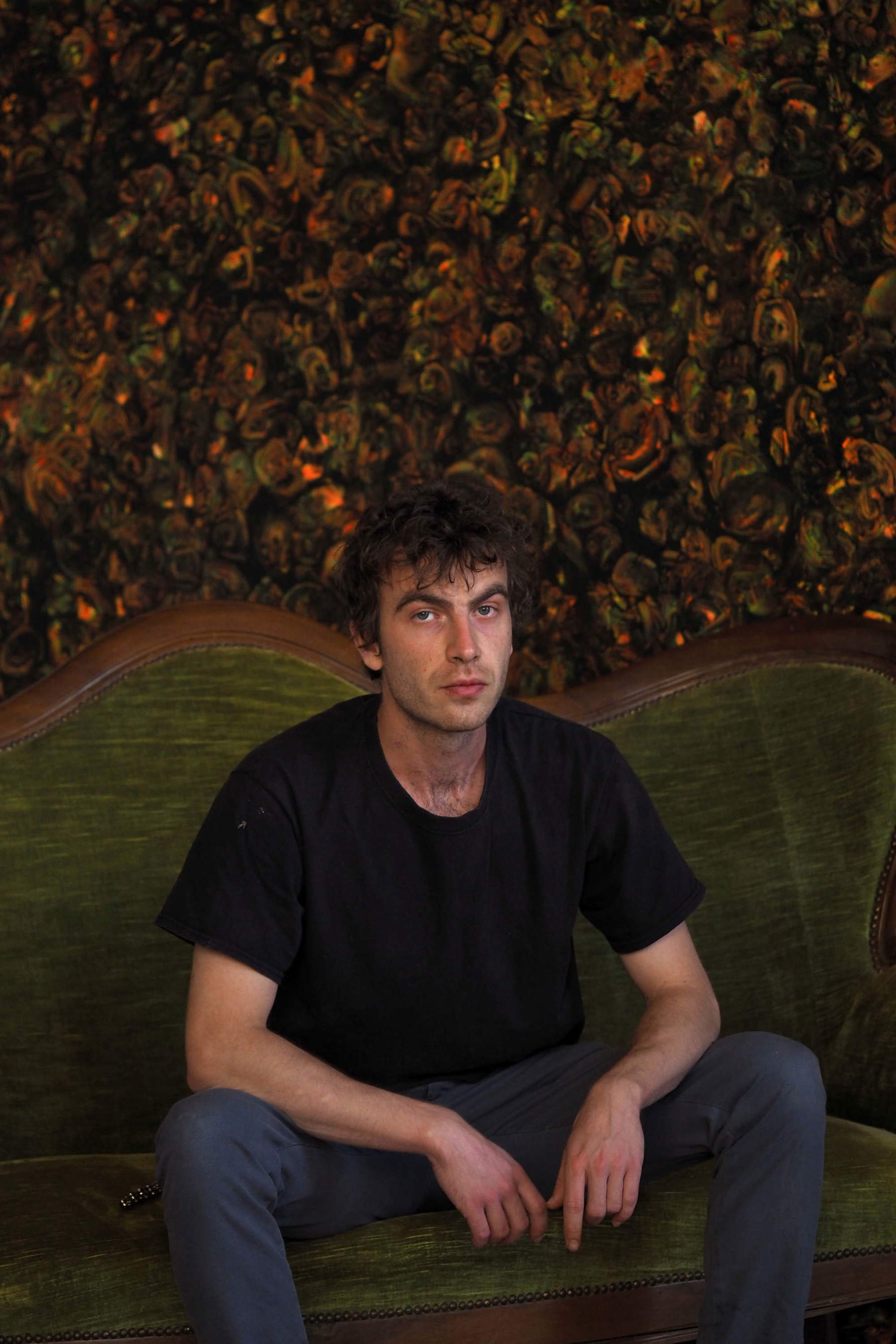
NC. How did your artistic journey begin? What experiences and encounters helped steer you toward art?
BF. I think it began long before I truly realized it could become a life’s path. I’ve always drawn, built things, and modified objects—I’ve always had a hard time leaving what was in front of me just as it was. Even before art school, some of my high school teachers were influential, particularly Fabio Seppi, Massimo Parolini, and Nicola Loizzo. When you’re very young, all it takes is meeting someone who can see something in what you’re doing—perhaps even before you can see it clearly yourself—to significantly change the course of things. Each of them, in their own way, helped me take what I was doing more seriously. Then came the Academy of Fine Arts in Venice. I studied painting, and meeting Carlo Di Raco and the Atelier F was pivotal. There I realized that training isn’t simply about learning to paint. It means observing a great deal, engaging with others, discussing, making mistakes, seeing how others work, and above all, understanding that there isn’t just one “right” way. Venice, then, was like a second academy. Exhibitions, studios, Biennales, and works I witnessed taking shape. Many of the things that shaped me didn’t come from a lecture, but through conversations, late nights in the studio, or mistakes that seemed like catastrophes at the time but suddenly became useful a few years later. In the end, I believe my journey began this way—doing many things without knowing exactly where they would lead me. And perhaps I still work the same way today.
After studying at the Academy of Fine Arts in Venice and spending several years in the lagoon city, you arrived in Frinco in 2025 for an artist residency, eventually deciding to move to the area. What role has this place played in your journey and your artistic practice?
I arrived in Frinco in 2025 for an artist residency. If someone had told me that a year later I’d buy a house here and move in, I probably would have laughed in their face. But that’s exactly what happened. I’d been coming to Venice for many years—an extraordinary but incredibly dense city, where you’re constantly surrounded by images, people, art, history, and inspiration. Frinco is almost the opposite, and perhaps that’s precisely why it struck me so deeply. Here I’ve found space, silence, and a very direct connection to the land and the people. The castle certainly played a key role. Working in a place with such a strong history and identity immediately made me want to envision something bigger. I probably have a tendency to take on projects that are disproportionate to the resources I have available, so I’d say the castle just happened to be in the right place at the right time. I’m also fascinated by the castle’s history. During World War I, it was used as a prison for hundreds of Austro-Hungarian soldiers. Even in such harsh conditions, forms of exchange developed between the prisoners and the townspeople. Some crafted small wooden objects, including carved boxes and snuffboxes, which then found their way into the hands of families in Frinco. I like to think that even today the castle can continue to foster this exchange between those who come to work here, the town, and its visitors. I’m also deeply struck by the castle’s recent history. After the collapse in 2014 and the difficulties that followed for the historic center, Luigi Ferrero fought to ensure the municipality could purchase it. The process was completed in 2019, just as he was elected mayor, and from there, work began to restore the castle and return it to the town. I find it truly wonderful that a place that was in danger of becoming nothing more than a problem has instead been transformed back into a vibrant space. Today, together with Deputy Mayor Davide Riva, he leads an administration that I consider very forward-thinking and supportive of culture. They believed in the projects and gave me a freedom that I don’t take for granted at all, especially in such a small town. This, too, made me realize that I didn’t want to simply pass through Frinco, do an artist residency, and then leave. I began to think it could become a place from which to continue creating works, but also to organize exhibitions, gatherings, and opportunities for others. For me, Frinco hasn’t become a refuge outside the art world. I’d like it to be exactly the opposite—a small place from which to try to launch very big things.
You’re thirty years old and feel the need to explore your roots through the work of over a hundred artists featured in the exhibition *RADICI. Genealogy of a Monster*, on view at Frinco Castle in the Asti region of Monferrato. Where does this need come from?
The idea of organizing a major group exhibition had been on my mind for a while, even though I didn’t yet know exactly what form it would take. This year, the mayor of Frinco suggested that I use the same spaces in the castle as the previous year for a new artist residency. It was a wonderful opportunity, but I thought it would be even more interesting to take advantage of it to do something different. Instead of returning to those spaces alone, I wanted to try bringing in the people who, directly or indirectly, had helped shape who I’ve become. That’s really where RADICI came from. I wanted to pause for a moment and try to understand where what I do comes from. That’s also where the subtitle, *Genealogy of a Monster*, comes from. I imagine my artistic journey as a creature built over time from countless different pieces. Some are still perfectly recognizable, while others have blended and warped to the point where I probably couldn’t even say where they came from anymore. RADICI also emerged as a way of expressing gratitude. Some of the people featured here may not even realize how deeply they’ve influenced the way I work or think. The exhibition is also a way to tell them that. Ultimately, it’s a sort of self-portrait created through the works of more than a hundred other people—which, put that way, is also a subtle form of appropriation.
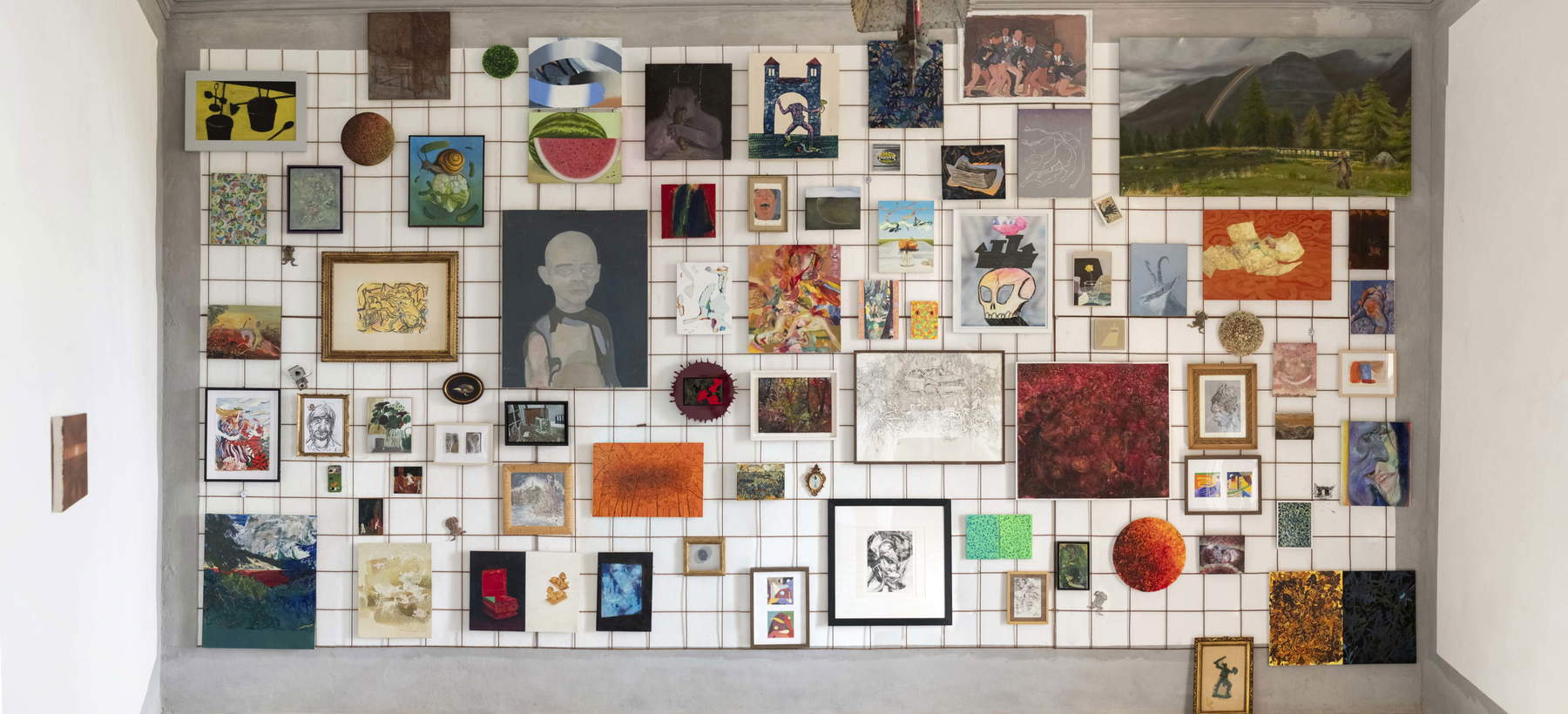
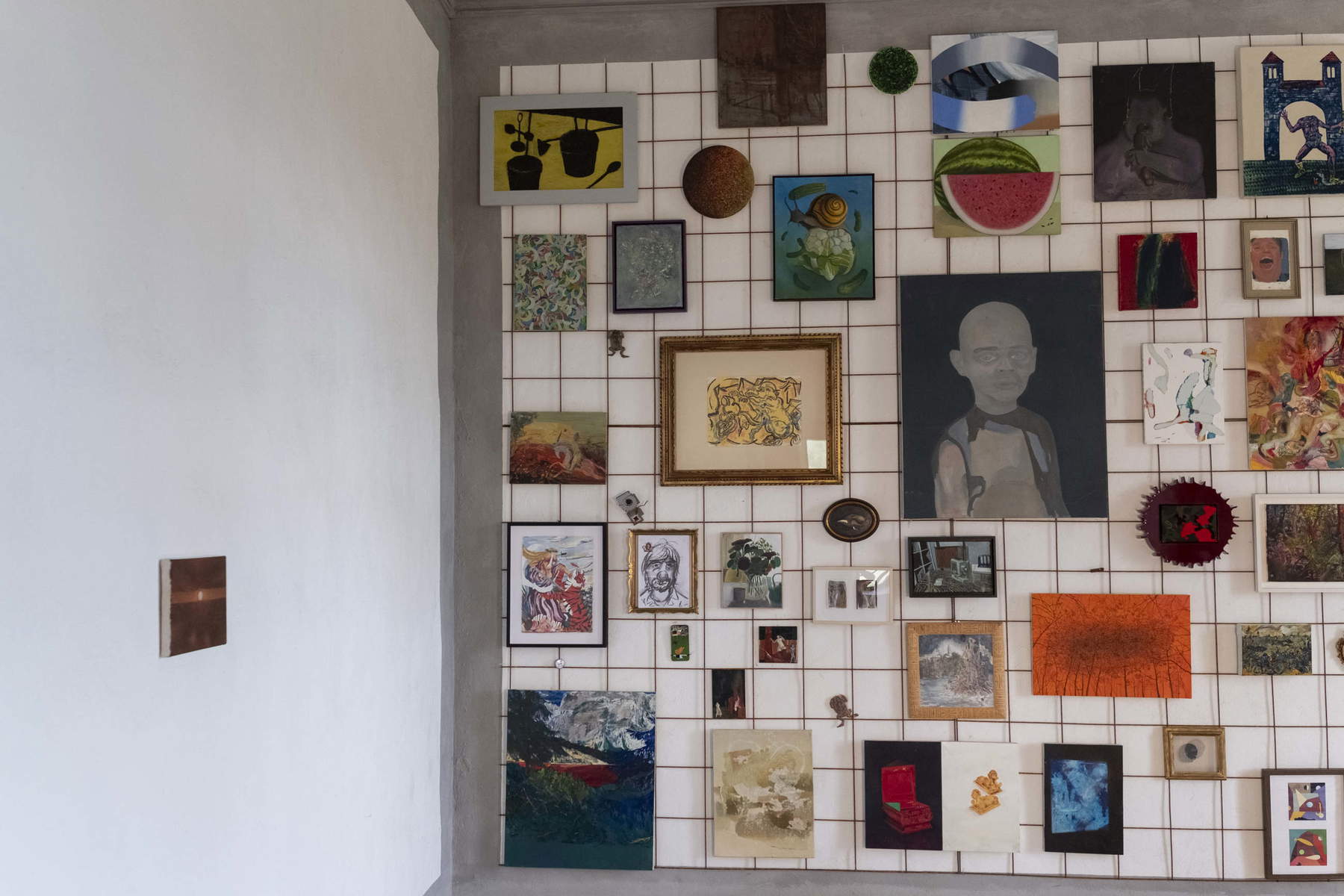
Based on what criteria did you choose the one hundred artists who make up this genealogy of yours? What determined your decision to include one person rather than another?
The criterion was very simple: did this person leave a mark on my artistic journey? I didn’t seek out the hundred best artists, nor the most famous ones, nor those who might make the exhibition’s lineup more impressive. If I had thought that way, it would have been a completely different exhibition—and above all, it wouldn’t have been RADICI. I chose connections that are very different from one another—some obvious, others much more subtle. In some cases, the connection to my own journey is recognizable; in others, perhaps only I recognize it. And it doesn’t even mean that artistically we’re always on the same page or that I like everything they do. A lineage composed solely of people with whom you completely agree would be rather suspicious. I also wanted to include a child from Frinco. For me, this wasn’t a provocation or a presence thrown in just for color. On the contrary, I believe children possess something that we artists then spend our entire lives trying to recapture. They work without worrying too much about boundaries, they have boundless imagination, and above all, they still know how to dream without immediately wondering whether what they’re doing belongs to the “right” artistic language, is contemporary enough, or might interest anyone. From a certain point of view, I think they are the true artists. Then we grow up and start complicating everything. I was particularly interested in having people with completely different experiences, ages, and backgrounds come together in the exhibition. Of course, this isn’t a definitive lineage. It’s a snapshot of a moment. In ten years, it could be completely different, and maybe I’ll end up with two hundred artists. In that case, I just hope that someone else will curate the next RADICI: this time I did almost everything on my own, and I realized that, more than an exhibition, at times it felt like an endurance test.
How much of an impact have the artists you’ve met and gotten to know throughout your artistic journey had on you? Are there figures you consider particularly important to who you’ve become as an artist?
A great deal—probably more than I can even recall myself. But before I even talk about artists, I have to start with my parents. They’ve always supported me, even at times when continuing as an artist might have seemed like the least reassuring decision possible. Having someone who believes in what you do when things are going well is wonderful. Having that support when things are going badly is far more important. Part of the journey I’ve taken is possible thanks to them. Among the figures who have had the greatest impact is certainly Carlo Di Raco. Rather than prescribing a specific way to paint, he created an environment at Atelier F where there was constant dialogue and where you learned a great deal simply by watching others work. This idea of the studio as a living space—and not just a classroom—was fundamental for me. The older students also influenced me greatly. When they returned for the summer workshops at Forte Marghera—for events like Antares—or when they involved us younger students in their projects, you could actually see what was possible outside the Academy. That very spontaneous intergenerational exchange shaped me more than the classes ever did. Then came a variety of other encounters. Luca Massimo Barbero, for example, is one of the people I feel I must thank. Being involved as a young artist in a project like Venice Time Case and engaging with someone of his experience gave me a different perspective on the possibilities of my work. I met Francesco Antonio Lepore, director of the Civic Museums of Asti, last year during a discussion about artist residencies and the possibility of breathing new life into places through art. Since then, he has been a great support, giving us a tour of the Civic Museums, helping to raise awareness of RADICI, and putting me in touch with people. These are gestures that may seem small, but for an artist, they make all the difference. And then I certainly have to thank the Raffaelli family and the entire staff of their galleries [Ed.: Studio d’Arte Raffaelli and Cellar Contemporary Art]. They have supported me both artistically and personally, even during difficult times. In the art world, there’s a lot of talk about exhibitions when they go well and much less about the relationships behind the scenes, especially during the most challenging times. For me, that support really made a difference. These are just a few examples, not a ranking. Each person entered my journey at a different time and for different reasons.
Who inspires you today in the creation of your works? Which artists, aside from those featured in RADICI, do you feel are closest to your artistic exploration?
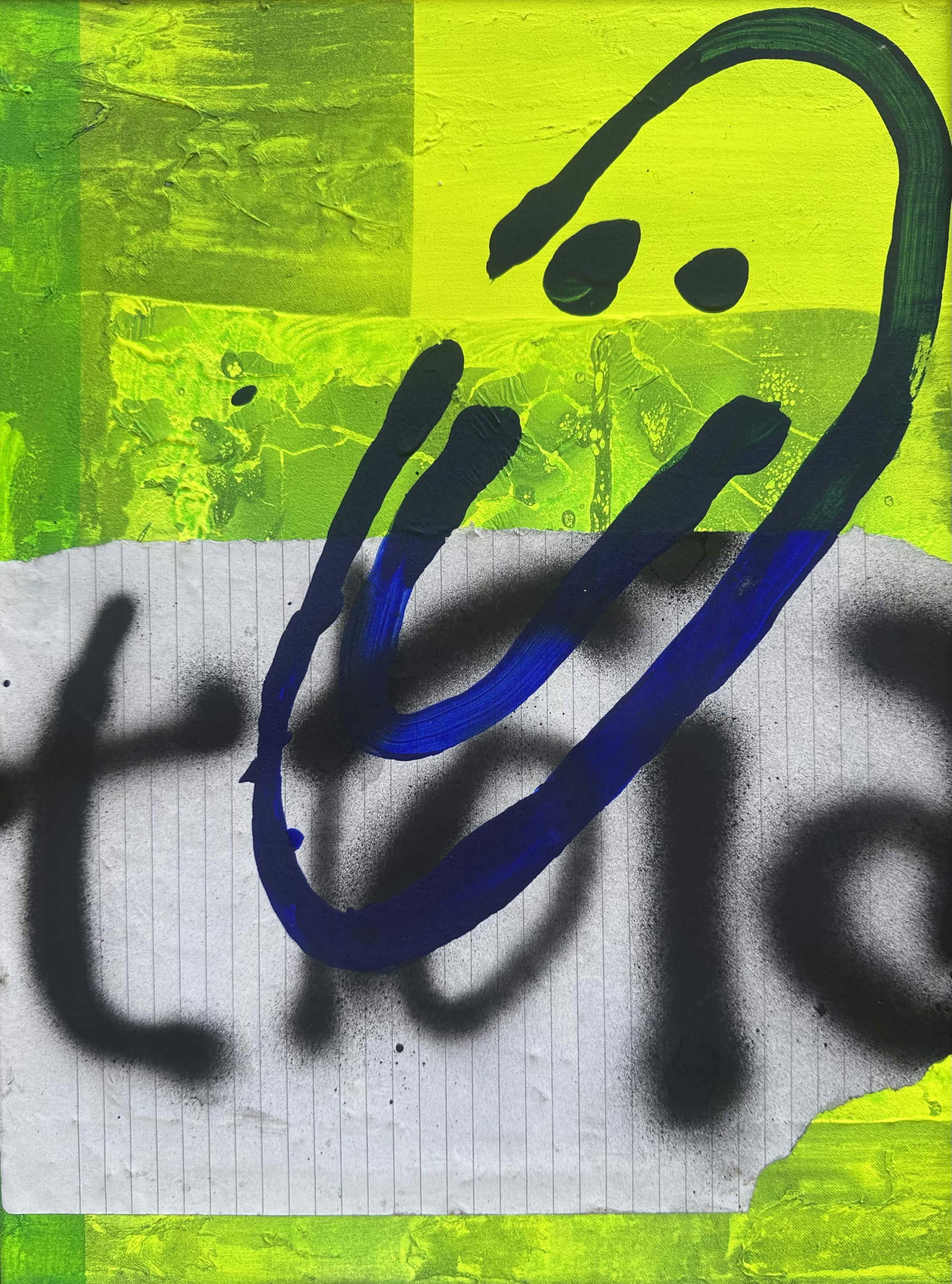
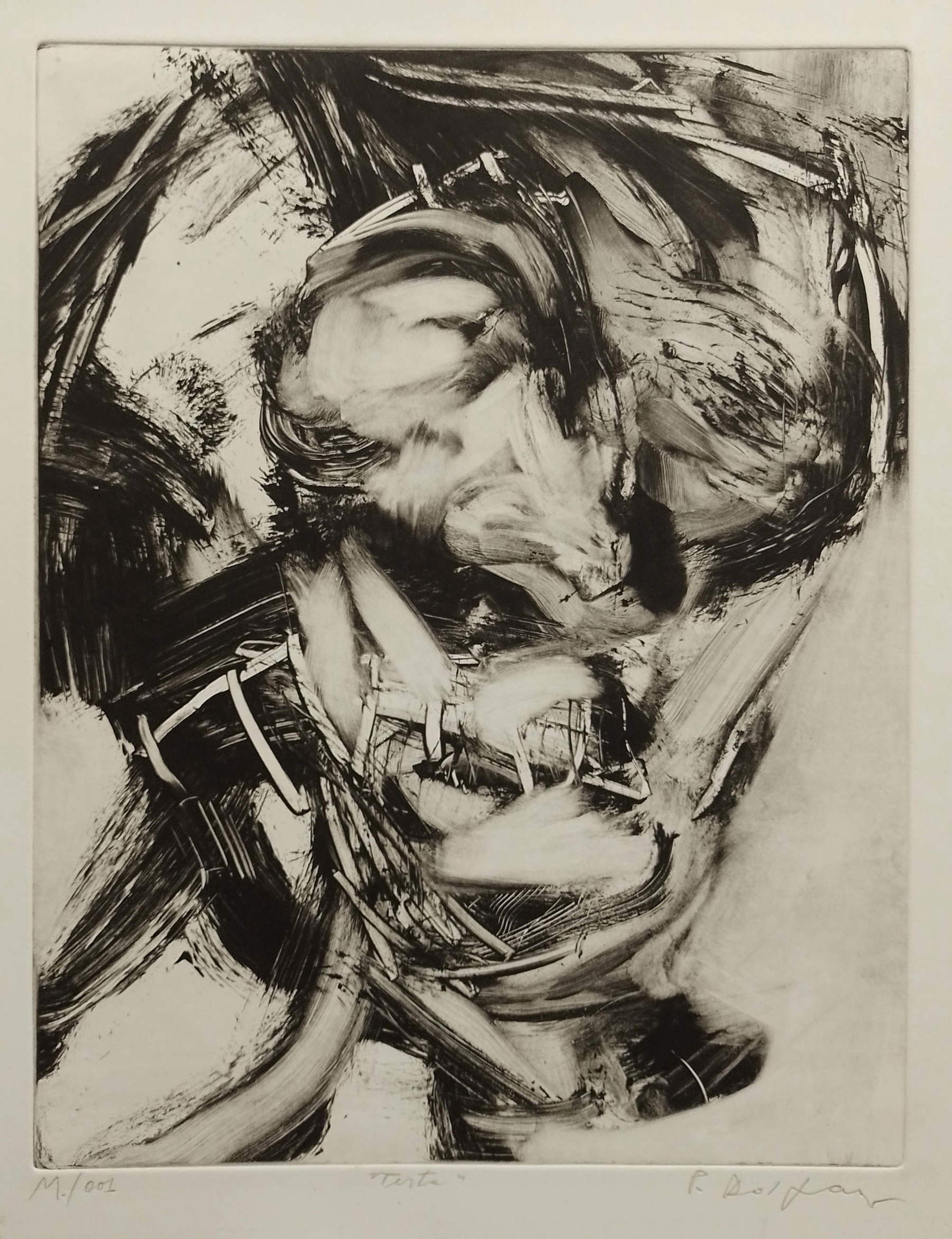
There are artists I’ve been following for a very long time. Goya, Bosch, and Ensor are probably among those I feel closest to because of their ability to blend irony, violence, the grotesque, chaos, and humanity. Among my key influences, I’d also include Bruegel, especially for his ability to construct crowded scenes where a multitude of things happen simultaneously. I feel a particular affinity with Rosso Fiorentino, especially for his use of color, while Grünewald resonates with me for the exaggerated and almost unnatural physicality of his figures. Then, of course, Francis Bacon, for the flesh, the distortion, and the violence of the image, and Max Ernst, for the freedom of the imagination and the ability to create images that seem to come from a world with its own rules. I also look closely at Picasso and Lucio Fontana, but for different reasons. I’m interested in freedom, continuous transformation, the physical relationship with the material, and above all, the possibility of not remaining trapped within a single artistic language. For me, influences must enter the work, be assimilated, and perhaps become almost unrecognizable. If you look too closely at an artist and end up simply repeating their style, you risk falling into a tedious mannerism. The point isn’t to resemble your influences, but to take something from them, transform it, and make it part of a personal language. That said, I practically never work thinking, “Now I’m going to do something inspired by this artist.” Images can come from anything—from mountain landscapes, animals, technology, mass tourism, consumerism, an electronic component, a cruise ship, a toy, or something absurd I saw on the street. I’m really interested in subverting hierarchies. Within a single work, Bosch, Bacon, or Bruegel can coexist alongside some silly thing I saw on my phone five minutes earlier. In fact, sometimes that silly thing can be even more useful.
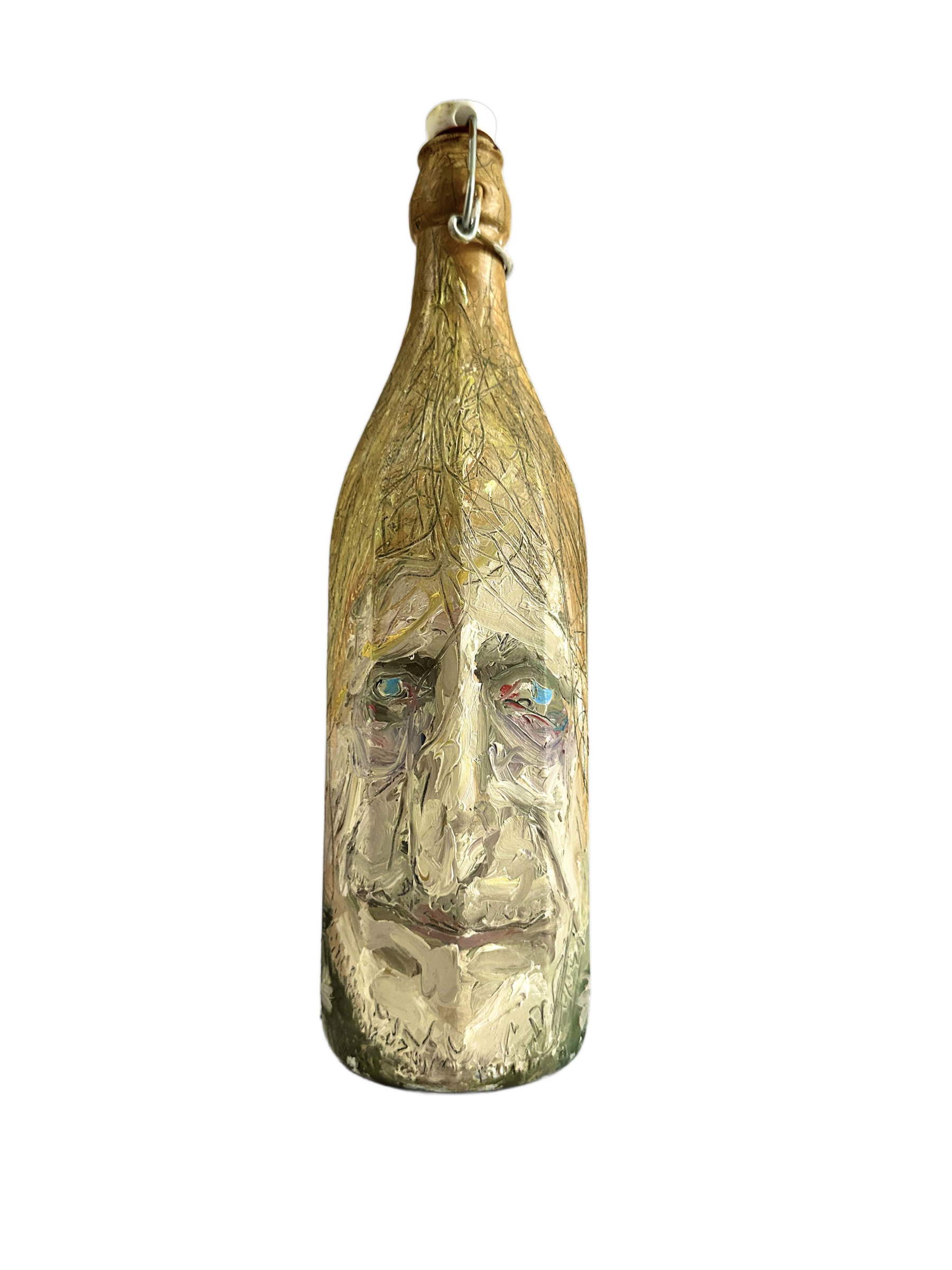
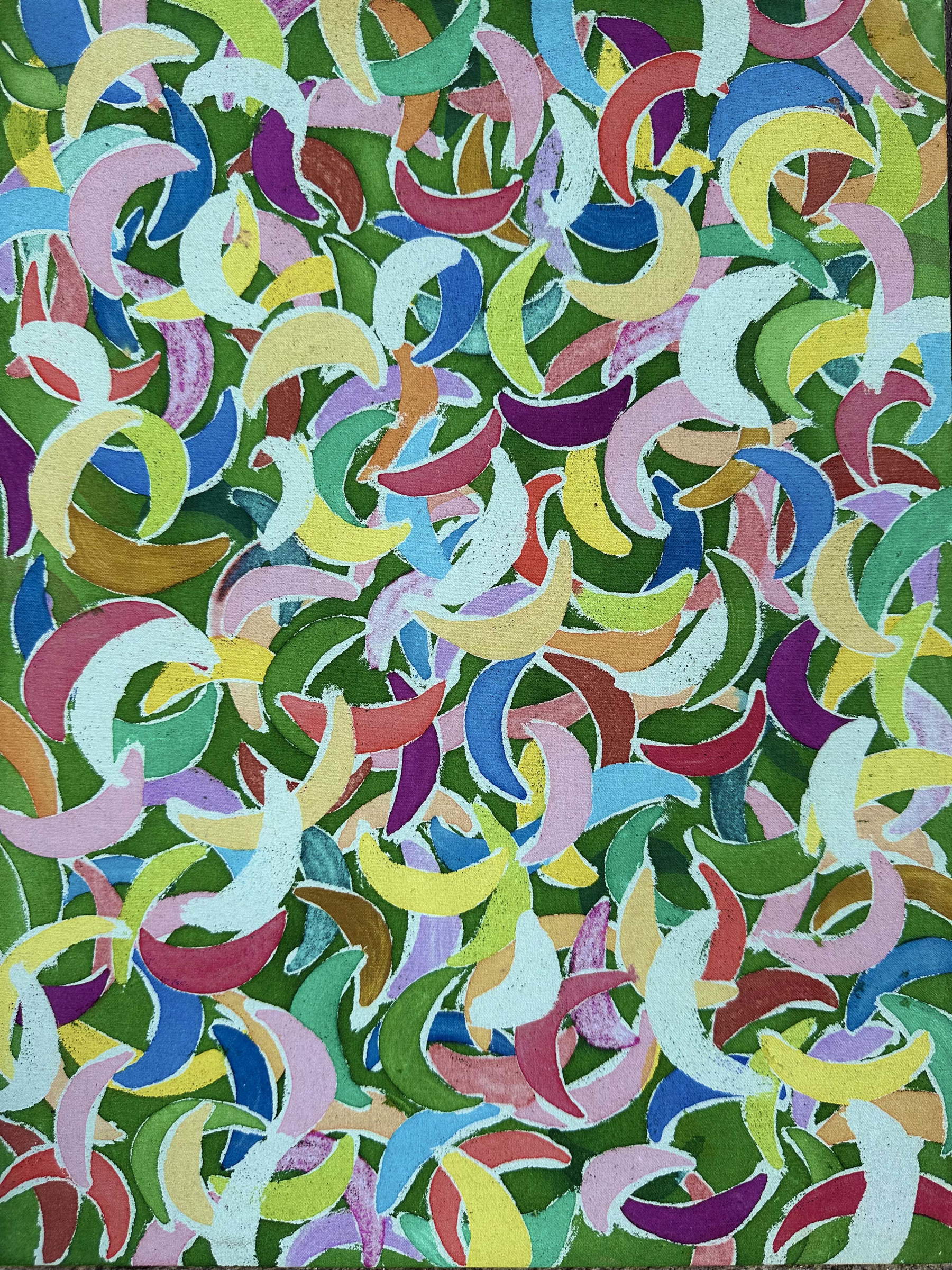
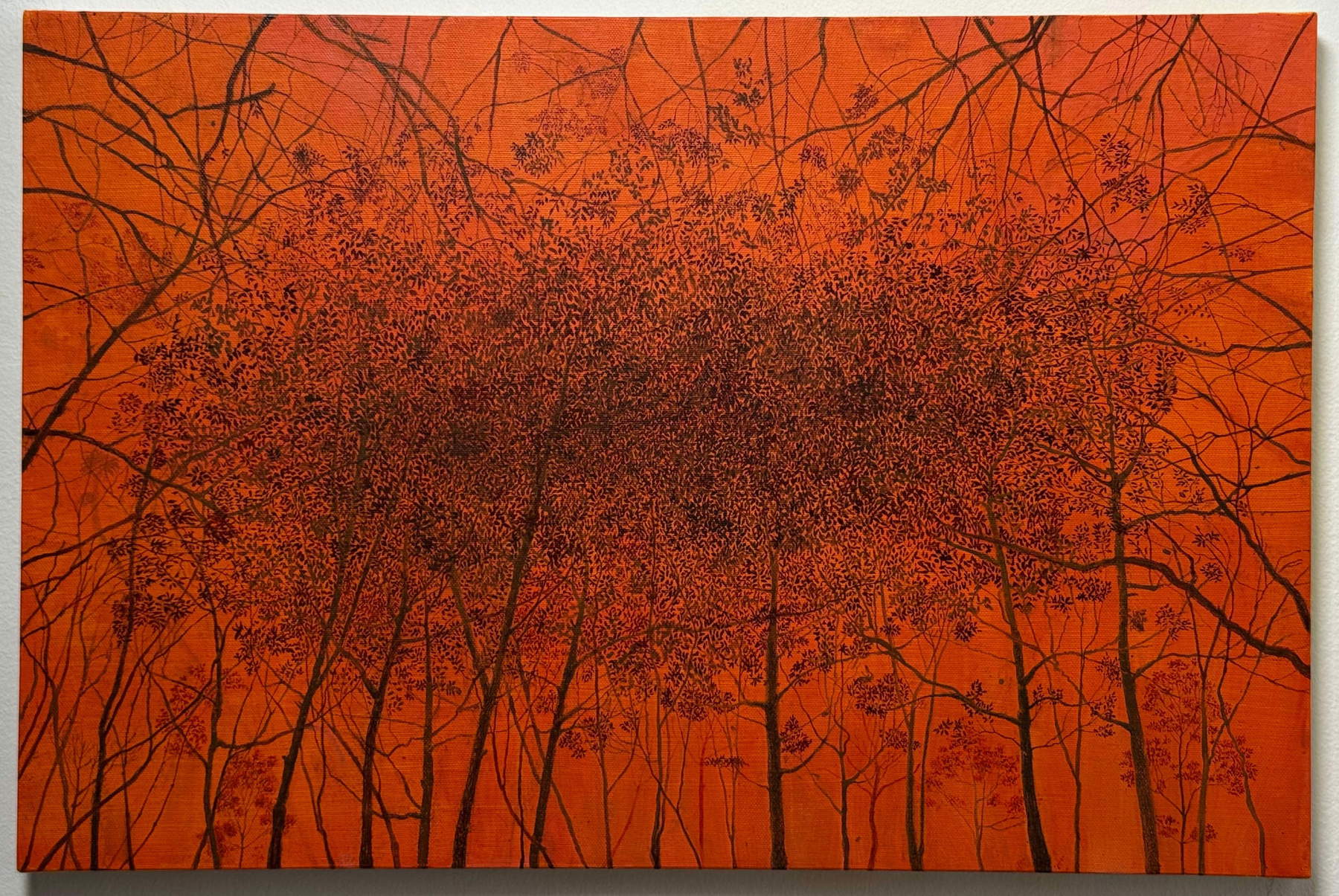
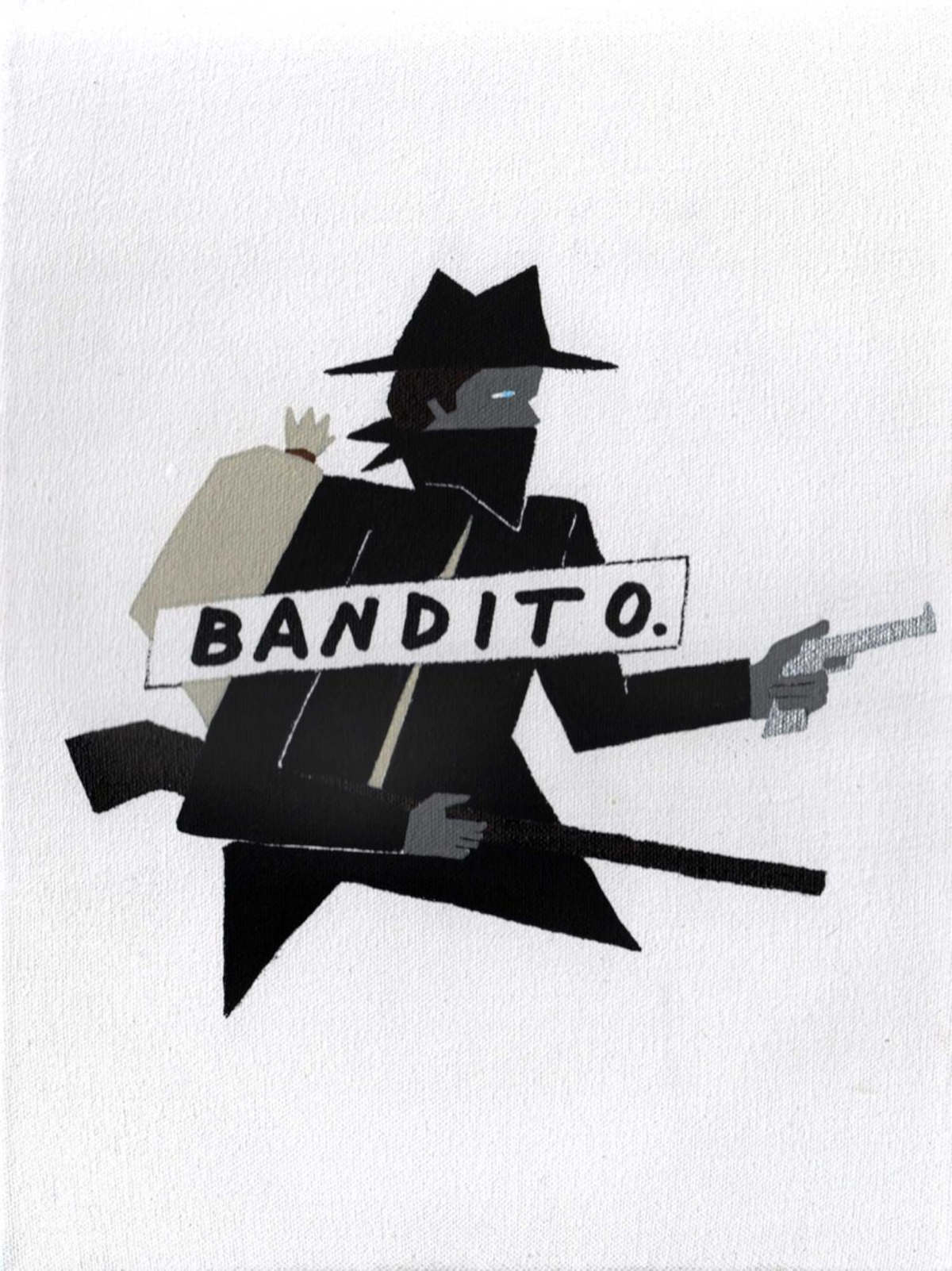
What trends do you see in contemporary Italian painting today? Are there directions you find particularly interesting, or, conversely, aspects of the Italian art system that you find less compelling?
I see a lot of interesting experimentation and a wide variety of artistic languages. I don’t think there’s a single dominant direction in Italian painting today—and thank goodness, because that would be quite depressing. I’m particularly interested in artists who manage to build a personal visual language without worrying too much about following the trends of the moment. The problem, if anything, is the system that revolves around the artists. Today there are so many artists—perhaps even too many—and I don’t believe that everything that’s heavily promoted is necessarily artistically strong. There are incredibly talented artists who remain almost invisible, and others who are suddenly hyped up, sponsored, and showcased everywhere simply because, at that moment, they perfectly align with a certain aesthetic or cultural trend. Of course, I don’t believe there can be a supreme committee tasked with determining who is a true artist. That would be terrifying. However, I still think that talent, research, skill, necessity, and dedication carry weight, and sometimes I get the impression that the system forgets this. Then there are small cliques that legitimize themselves. I jokingly call them the “Maionesi”: artists, curators, and gallery owners who constantly back each other up and end up creating a kind of very thick sauce where you’re either in or it becomes difficult to even taste the dish. Another thing I notice a lot in Italy is jealousy. Among artists, but also between artists, gallery owners, and curators—sometimes it seems like more energy is wasted defending little fiefdoms than on building something together. It’s an attitude I struggle to understand. If an artist I know succeeds, it doesn’t mean I automatically have to lose out. I believe exactly the opposite: a cultural scene becomes stronger when people help each other, pass along opportunities, discuss ideas, create projects, and circulate possibilities. We grow much more together than by constantly trying to hinder one another. Then there’s an economic issue that, in my opinion, is still discussed far too little. Very often, the artist is the most vulnerable link in the chain: they produce work, advance their own money, pay for materials, studio space, and transportation, devote months or years to their work, and bear virtually all the risk. And it can happen that the artist is the one who has to chase down information about their own works, financial reports, or the compensation they’re owed, while others involved in their work seem to have far more free time. Because, after all, artists don’t live on little hearts, “likes,” or “congratulations, great work.” They need money to live and to keep working. And unfortunately, most artists are forced to have another job. There’s nothing wrong with that—on the contrary: other jobs can teach you a great deal, and that’s been my experience. The problem arises when they take you away from your artistic practice or prevent you from pursuing it consistently. In Italy, especially when it comes to young artists, I believe there’s still far too little investment. I find this to be a rather grotesque contradiction. Of course, this doesn’t apply to everyone. I’ve met curators, gallery owners, and people who are extremely serious and generous, and that’s precisely why I know that another way of working is possible. In fact, there are initiatives in which I have great faith. I’m thinking of Dolomiti Contemporanee, with whom I’ve had the opportunity to work both in Casso and at the former ENI Village in Borca di Cadore. There I’ve found an approach to contemporary art that resonates deeply with me: not simply exhibiting works within a space, but using art to revitalize places, forge connections, and bring together artists, the local community, and people. I’m also thinking of the Malutta Foundation, of which I’m a member. It’s an organization I’m very attached to precisely because it was founded by artists and driven by the desire to collectively create opportunities, exchanges, and projects. In a system where individualism and competition often prevail, experiences like these demonstrate that collaboration isn’t just a nice-sounding word—it can actually become a different way of working. One thing that has struck me deeply about residency experiences is seeing artists who, even starting from experiences like these, have gone on to build their own initiatives: independent spaces, meeting places, and shared projects. I like the idea that a residency doesn’t simply end when you return home, but can continue to generate other places, relationships, and possibilities. And finally, I’m not convinced by the artist turned brand. You paint a picture that works, and suddenly it seems like you have to produce it in twenty-five variations for the next forty years. Personally, I’d rather risk creating a few flawed works than become a factory churning out version number 73 of myself.
What space do you feel your work occupies within the Italian art scene?
I haven’t the faintest idea—which is perhaps an answer in itself. And honestly, right now I don’t even feel much of a need to find a specific box to squeeze myself into. One of the things I’ve realized in recent years is that waiting for someone else to decide where to place you can become a trap. An artist’s journey is still often described according to a fairly precise sequence: art school, curator, gallery, exhibitions, recognition, and maybe—after several years and a fair amount of waiting in the wings—someone officially certifies that you exist. Of course, I want to continue working with galleries, curators, and institutions when there are serious and interesting relationships. I’m not against the art system. I simply don’t want the possibility of doing something to depend entirely on someone else’s approval. RADICI also stems from this. No one would probably have come to me and said, “Bruno, how about taking a castle in a village in Monferrato and filling it with more than a hundred artists who have crossed your path?” So I did it myself. I no longer think that the center and the periphery depend simply on geography. You can be in the center of Milan and yet be completely on the periphery in your ideas, or you can be in Casso or Frinco and still manage to inspire people who come from far away. My artistic practice began with painting, but over the years it has expanded into sculpture, installation, and a wide variety of materials. That’s another reason why I struggle to imagine myself within a definition that’s too precise. If I really had to say what kind of space I’d like to occupy, I’d say a space free enough to allow me to continue being an artist while simultaneously creating opportunities, inviting other people, collaborating, and perhaps helping something grow around me. And that’s what I’m trying to do right now, physically as well. I bought a house in Frinco, and I’d like it to become much more than just my home over time: a place for artist residencies, gatherings, music, theater, workshops, conversations, and people who come and leave something behind. Ultimately, I’m trying to actually build the little world in which I’d like to work. That world already has a name: Kunsthaus Fantelli.

The author of this article: Noemi Capoccia
Originaria di Lecce, classe 1995, ha conseguito la laurea presso l'Accademia di Belle Arti di Carrara nel 2021. Le sue passioni sono l'arte antica e l'archeologia. Dal 2024 lavora in Finestre sull'Arte.Warning: the translation into English of the original Italian article was created using automatic tools. We undertake to review all articles, but we do not guarantee the total absence of inaccuracies in the translation due to the program. You can find the original by clicking on the ITA button. If you find any mistake,please contact us.

























 IT
IT FR
FR DE
DE ES
ES CN
CN


