



by Ilaria Baratta 21/10/2026


Categories: Interviews / Disclaimer
At the Ducal Palace in Mantua, frescoes, gardens, and fantastical creatures become clues in an adventure inspired by Harry Potter: art historian and tour guide Lorenzo Bonoldi has devised a series of Harry Potter-themed guided tours to explore the history and art of the Gonzaga family without compromising on historical accuracy. Bonoldi discusses them in this interview with Ilaria Baratta.


A bezoar on display , a starry ceiling reminiscent of the Great Hall at Hogwarts, a hippogriff born of Ariosto’s imagination five centuries before Fierobecco: at the Ducal Palace in Mantua, Harry Potter fans will discover that the magic was already all there, hidden among the frescoes, gardens, and courtly settings. This insight gave rise to the “Guided Tours Forbidden to Muggles,” an adventure that combines a guided tour with a treasure hunt inspired by the magical world of Harry Potter. And it does so without sacrificing historical accuracy, because it is precisely the information on history and art that provides the essential tools for solving the puzzles. Lorenzo Bonoldi, an art historian and tour guide with twenty years of experience in the city of the Gonzagas, conceived and leads these special tours. He is convinced that the Harry Potter universe can serve as a bridge to bring adults and children— Potterheads and Muggles alike—closer to cultural heritage. We interviewed him to find out how the Potter-themed tours came about, how he manages to combine and balance the playful and narrative elements with historical accuracy, and what participants take away once they’ve put away their magic wands. The interview is by Ilaria Baratta.

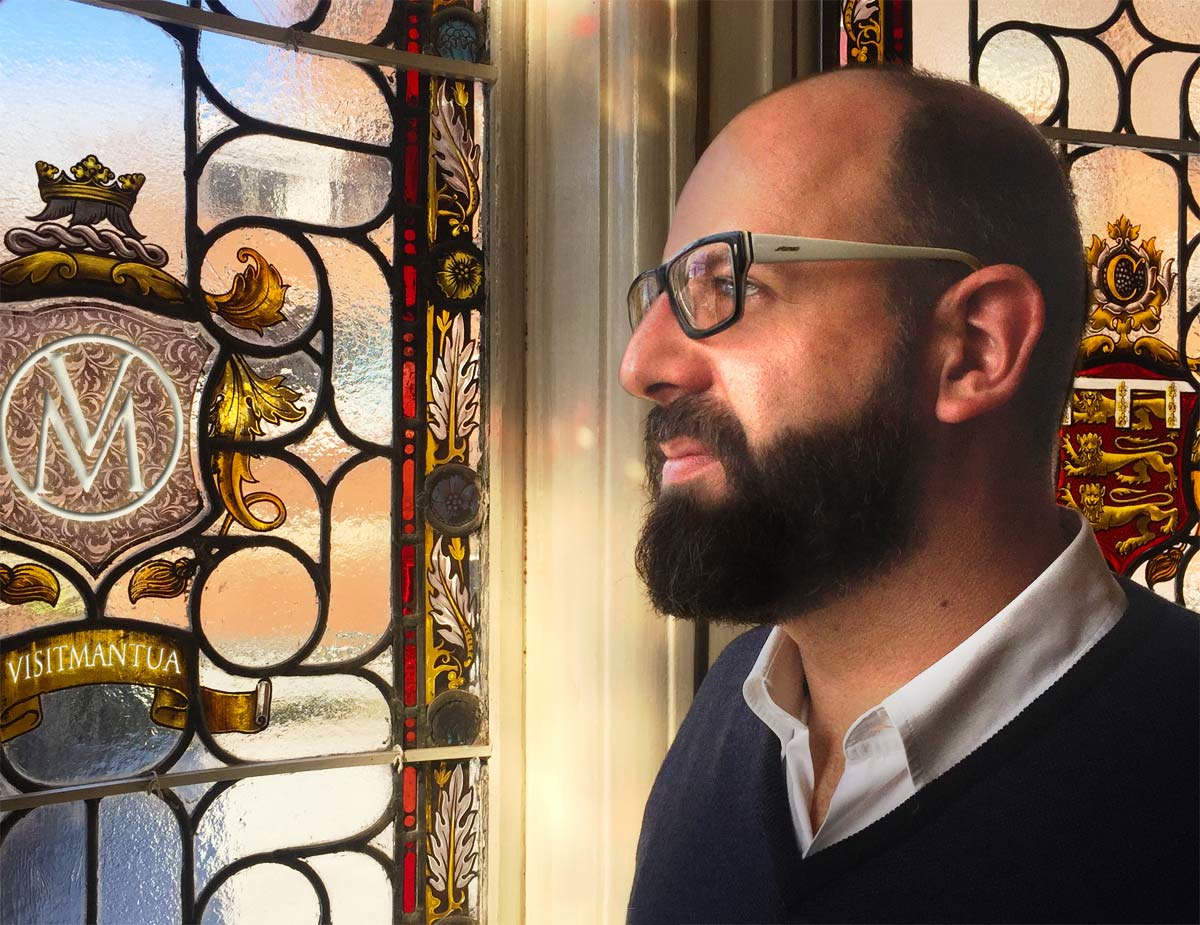
IB. You’ve been an art historian and tour guide in Mantua for twenty years, and I imagine you’re a huge fan of the Harry Potter universe. How did you come up with the idea of combining the universe created by J.K. Rowling with the history and settings of the Ducal Palace in Mantua through guided tours inspired by the world of the most famous young wizard?


LB. Within the vast and diverse world of Potterheads—that is, Harry Potter fans—I’m among those who first entered the Wizarding World through the movies, only later moving on to reading the books. When the first film in the series was released in Italian theaters in 2001, I was still a student enrolled in the Department of Cultural Heritage Conservation, and thanks to my studies, I already possessed a cultural background that allowed me to immediately appreciate the numerous references to historical, artistic, and literary traditions present in the universe born from the enchanted pen of J.K. Rowling. I was particularly fascinated by how many seemingly fantastical elements actually had deep roots in European culture. I remember, for example, how much fun I had discovering that among the Chocolate Frog cards still missing from Ron Weasley’s collection were Agrippa and Ptolemy—two historical figures who actually existed! But it wasn’t just J.K. Rowling who drew on the cultural heritage of the past. MinaLima, the graphic design duo that helped create the films’ visual identity, also found numerous sources of inspiration in artistic and figurative traditions. One of the examples I find most fascinating is the famous Marauder’s Map, whose design is reminiscent of a woodcut depicting the New Jerusalem, published in Cologne in 1485 in Nicola da Lira ’s *Postillae *. I find it extraordinary that an image created over five hundred years ago could have helped shape one of the most iconic objects in the Wizarding World! The idea of incorporating references to Harry Potter into my guided tours first took shape in my imagination in 2022, when the Ducal Palace in Mantua inaugurated the permanent exhibition *Naturalia e Mirabilia* in the Gallery of Metamorphoses. The exhibition evokes the Gonzagas’ ancient chamber of wonders, where rare objects, natural curiosities, and artifacts—often believed to possess extraordinary properties—were collected. Among the objects on display is a bezoar, a concretion that forms in the digestive tract of certain animals and which, for centuries, was believed to possess antidotal properties against poisons. Now, any Potterhead knows exactly what a bezoar is! It appears several times in Rowling’s novels and is even the subject of one of the first questions Professor Snape asks Harry during his first Potions class at Hogwarts: “Where would you look if I told you to find me a bezoar?”. So I began sharing this anecdote during my guided tours and noticed something interesting: whenever I mentioned Harry Potter, the faces of many tourists would suddenly light up with curiosity, interest, and amazement. That object, which just moments before had been unknown and mysterious, suddenly became familiar, and visitors wanted to learn more about it. It was precisely by observing those reactions that I began to wonder how many other connections might exist between the Harry Potter universe and the history of the Palazzo Ducale—and, above all, whether those references could become a tool to spark the public’s curiosity about our cultural heritage. If J.K. Rowling had drawn heavily on the cultural, literary, and artistic heritage of the past to create the world of Harry Potter, perhaps it was also possible to do the opposite: to draw on the Harry Potter universe to invent new ways of narrating our historical and artistic heritage. It was precisely this reversal of perspective that gave rise to my “Guided Tours Forbidden to Muggles” [Editor’s note: In the Harry Potter universe, Muggles are people outside the Wizarding World and generally unaware of its existence].

Which features of the Ducal Palace are best suited to evoking the mysterious atmosphere of the Harry Potter universe? Can you give some examples of elements that recall the world of the young wizard?
The Ducal Palace in Mantua is a veritable treasure trove of inspiration for anyone familiar with the world of Harry Potter. The similarities are so numerous that, when I began looking for them, I realized I was spoiled for choice! Take, for example, the Zodiac Room, with its extraordinary vaulted ceiling painted in 1579 by Lorenzo Costa the Younger, depicting the starry sky and the constellations. How can one not think of the enchanted ceiling of the Great Hall at Hogwarts? Although, I must admit, there are no flying candles! And this is certainly not the only reference: astrological decorations abound in the Gonzaga palace, where—just like at Hogwarts—astronomy and astrology played an important role at court. And just as the paintings hanging on the walls come to life at Hogwarts, something surprisingly similar happens in the Hall of Mirrors at the Ducal Palace! The frescoes, created around 1618 by a team of painters as part of Antonio Maria Viani’s decorative project, feature extraordinary illusionistic effects. In one of the lunettes, for example, a female figure holds a golden crown: when the viewer moves to the side, it seems as though the arm holding the crown is following their movements. This magic is achieved without wands or spells, but solely through the skill of 17th-century painters in the art of optical and perspectival illusion. Then there is the Giardino dei Semplici, an authentic botanical garden laid out around 1603 by Fra’ Zenobio Bocchi at the behest of Duke Vincenzo I Gonzaga. Here we can find some plants well known to Potterheads: aconite, used in the preparation of the Anti-Wolf Potion; rue, an ingredient in Felix Felicis, the famous Liquid Luck; and roses, whose petals are among the ingredients of Amortentia, the most powerful love potion in the Wizarding World. And then there are yew trees: the very wood from which He-Who-Must-Not-Be-Named’s wand is made! In short, a place that seems tailor-made for a Herbology lesson. One of my favorite connections, however, involves the monumental Hall of Manto. I like to imagine it as a giant box of Chocolate Frogs: instead of a trading card featuring the portrait and biography of a famous witch, here we have an entire cycle of paintings that tells the story of Manto, the legendary prophetess to whom tradition attributes the origins of Mantua. It’s like a giant illustrated sticker, capable of telling a story that blends myth, magic, and the city’s origins. And how could we not mention the fantastical creatures? Unicorns, dragons, centaurs, and tritons populate the decorations of the Ducal Palace. Creatures that every Potterhead recognizes immediately, but which belong to a mythological and symbolic repertoire far older than J.K. Rowling’s novels. In this regard, one of the connections I find most fascinating involves the hippogriff, the fantastical creature that all Harry Potter fans know thanks to Buckbeak. It was Ludovico Ariosto who invented this creature for his *Orlando Furioso*, a poem closely tied to the court of Mantua. As early as 1507, Ariosto had told Isabella d’Este about the work he was writing, and in 1516, he personally brought her a copy of the first edition. Isabella was thus one of the very first readers of that masterpiece, which also featured a brand-new fantastical creature born of Ariosto’s imagination. In short, nearly five centuries before Buckbeak entered the Harry Potter universe, the hippogriff had already made an appearance at the Gonzaga court! The surprising thing is that these connections don’t require us to invent anything: they’re all already there, in works of art, in gardens, in stories, and in the records of the past. You just need to know how to recognize them. And sometimes, looking at our historical and artistic heritage through the eyes of a Potterhead allows us to discover details that we might otherwise miss.
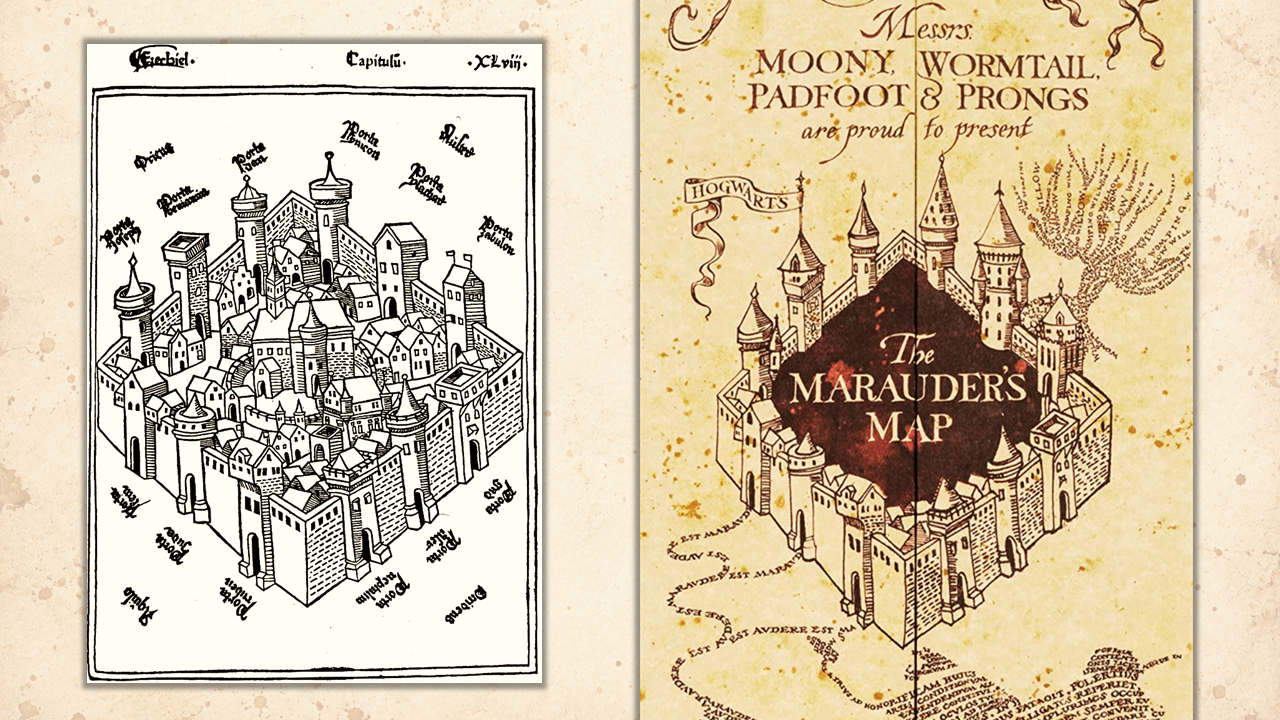
On the left, the “New Jerusalem,” a woodcut from Nicola da Lira’s *Postillae*, printed in Cologne by Ulrich Zell in 1485. On the right, the famous “Malandrino Map,” created by the duo MinaLima for the Harry Potter film series. The comparison reveals surprising similarities between 15th-century iconography and the visual imagery of the Wizarding World.
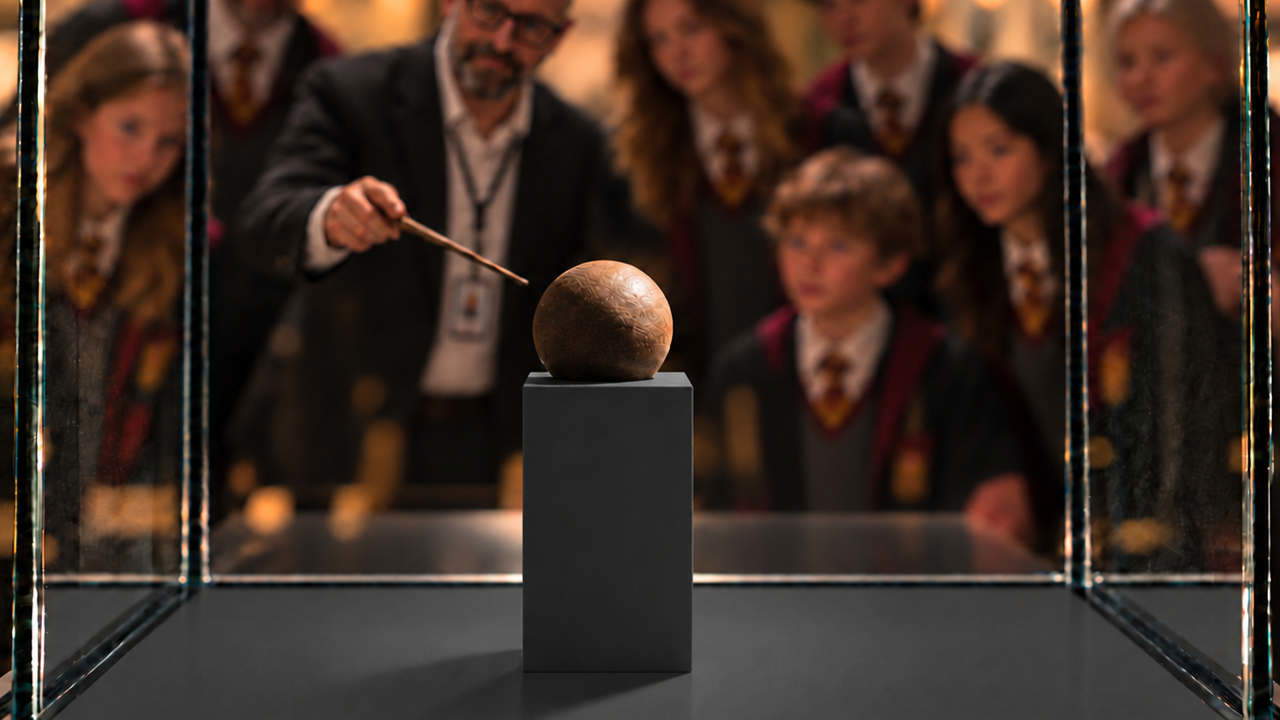
The bezoar, a concretion of animal origin to which antidotal properties against poisons were attributed for centuries. Mentioned several times in the Harry Potter series, it is also featured in the “Naturalia e Mirabilia” exhibition at the Ducal Palace in Mantua.
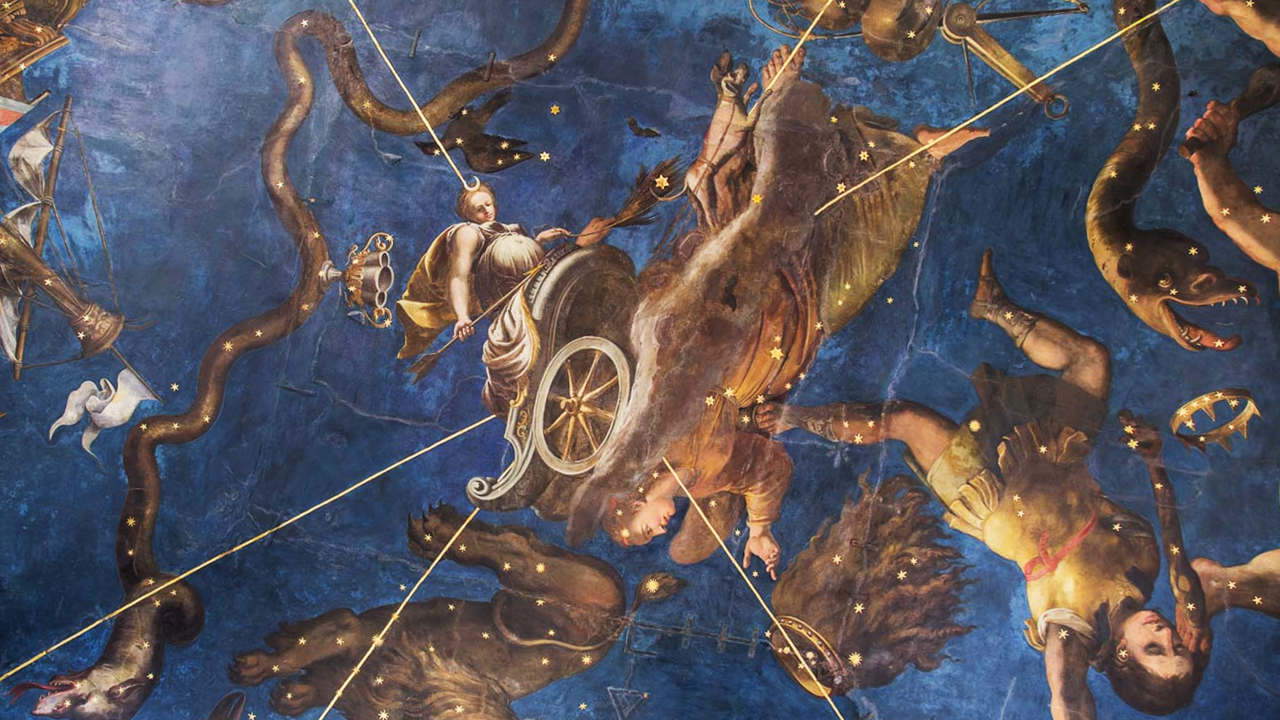
Lorenzo Costa the Younger, ceiling of the Chamber of the Zodiac, 1579. Mantua, Ducal Palace. Diana’s Chariot traverses a sky filled with stars and constellations, reminiscent of the enchanted ceiling of the Great Hall at Hogwarts.
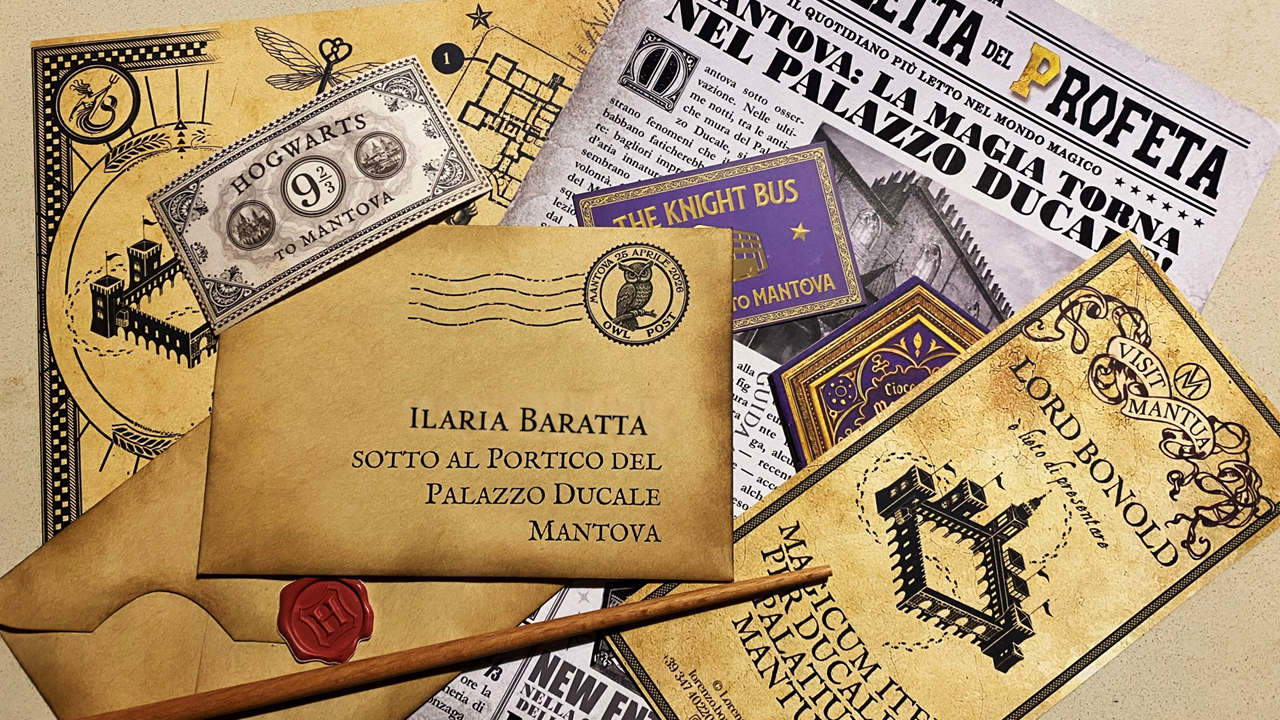
A personalized letter with a wax seal, a train ticket, a map of the palace, a magic wand, and other materials from the “Guided Tours Forbidden to Muggles.” These items accompany participants on their adventure in search of the Gonzaga Horcruxes.
The “Guided Tours Forbidden to Muggles” turn into a real treasure hunt: how does the tour actually unfold, and what challenges await participants? How many Harry Potter-themed tours do you organize each month?
My “Guided Tours Forbidden to Muggles” are an experience in which the traditional guided tour is intertwined with a real treasure hunt. Participants aren’t mere spectators; they become the protagonists of an adventure set within the halls of the Gonzaga Palace. It all begins even before crossing the palace threshold. Upon arrival, each participant receives a personalized envelope, securely sealed with a wax seal. The envelope bears the recipient’s first and last name and a decidedly unusual address: “under the arches of the portico of the Palazzo Ducale, Mantua.” Inside, they’ll find a letter from the Headmaster of Hogwarts inviting the recipient to take part in a secret mission, a ticket to Platform 9 2/3 (not to be confused with the more famous Platform 9 3/4!), a Mantua Chocolate Frog figurine, and, most importantly, the badge that assigns the participant to one of the four temporary houses: “Golden Triton,” “Black Dragon,” “Fiery Salamander,” or “Silver Unicorn.” Each participant also receives the “Map of the Ducal Malandrino,” which features a floor plan of the Gonzaga Palace, and a disposable magic wand, crafted by the renowned manufacturer Tigris Volantis of Copenhagen (known to Muggles by the brand name Flying Tiger). Unfortunately, Ollivander’s wands are definitely out of our budget! Once equipped, participants can finally begin their mission. Each team receives an initial rhyming riddle, the solution to which is linked to a specific detail, work of art, or object to be found inside the palace. Once the riddle is solved, the team receives a new clue, and so on, in a series of challenges that require keen observation, intuition, and, of course, a touch of magic. The historical and artistic information I share during the tour becomes essential to solving the riddles and continuing the adventure. But there’s another unique feature: at the end of the tour, each family finds itself in possession of a fragment of a grand final puzzle. Only by gathering all four fragments and pooling their knowledge will they be able to solve it and discover where the treasure is hidden. In short, even in the Magical World, teamwork is essential! And I can’t say any more, so as not to spoil the surprise. Tours are generally organized once a month, on the first Sunday of the month, when admission to state museums is free. This is a deliberate choice that allows me to keep the cost of participation as affordable as possible. However, reservations are still required, for two key reasons. The first is organizational: the tour includes Andrea Mantegna’s famous Camera degli Sposi, which can only be accessed during predetermined time slots and with a limited number of visitors, for conservation purposes. The second concerns the preparation of the experience. Each letter is personalized and individually sealed, and the same design and production process applies to the maps, tickets, stickers, badges, clues, and prizes. It’s an almost artisanal process that takes a lot of time and couldn’t be improvised at the last minute. I pay particular attention to these details because I want every participant, from the moment they receive their letter, to feel as though they’ve truly entered the Magical World and are taking part in an adventure designed specifically for them.
How do you balance the playful and narrative elements with the need to convey accurate historical and art-historical information? And how does your work as a tour guide change when the historical narrative intertwines with play and imagination?
Actually, the guided tour unfolds along a dual narrative track, in which history and fantasy continually proceed side by side. The mechanism is quite simple and is based on a phrase I often use during the tour: “Muggles think that… but we, who are anything but Muggles, know that…”. On one hand, there’s the historical version—the one we know through documents, works of art, and accounts from the past; on the other, there’s an alternative interpretation, inspired by the Harry Potter universe, which reimagines the same places, characters, and events as if they also belonged to the Wizarding World. Here’s an example of how I might describe an episode during the tour: “The Gonzagas ruled Mantua and lived in this palace for nearly four centuries. That’s an incredibly long time! Muggle historians have often wondered how this family managed to hold onto power for so long—even longer than the Medici in Florence or the Este in Ferrara. Various theories have been put forward: they were more skilled, they were more cunning, they were stronger… All nonsense spouted by a stammering, childish, babbling band of Muggle baboons! We, who know the true story, know full well that the answer is something else entirely: the Gonzagas were more magical! In fact, they had discovered a way to bind fragments of their own souls to the works of art housed in their palace, thereby ensuring a sort of immortality. A bit like Voldemort did with his Horcruxes. With one fundamental difference, though: the Gonzagas’ aren’t dark Horcruxes to be destroyed, but precious magical objects to be preserved through special protective spells. And it is precisely around this mission that our treasure hunt unfolds.” Of course, it’s all a game of imagination, and the distinction between historical reality and fiction always remains clear. It’s not about replacing authentic history with a fantastical version, but about pairing it with an alternative narrative that makes the visit more engaging. Historical accuracy is never sacrificed for the sake of the game: on the contrary, it is precisely my knowledge of history and art that provides the foundation upon which I build the narrative. The puzzles and clues of the treasure hunt, in fact, stem from the historical and artistic information that is shared. To locate the magical objects, you must listen, observe, recognize details, and recall what you’ve learned along the way. This approach also changes my role as a tour guide. I am not merely the one who recounts the palace’s history; rather, I become a sort of storyteller and accomplice to the participants, with whom I share a secret that—at least for the duration of the tour—remains unknown to Muggles. The result is a constant interplay between knowledge and imagination, in which the game never replaces the historical narrative but rather accompanies it, enriches it, and, above all, helps visitors remember it—because I believe that one of the most effective forms of learning is precisely that which comes through curiosity, active participation, and fun.
The initiative is aimed at Potterheads, but you say you also welcome “Muggles.” Who makes up the majority of the audience on these tours? Fans of the series, families with children, or even people who simply want to discover the Palazzo Ducale in a different way? And since the world of Harry Potter manages to engage both children and adults, do you think this narrative reference helps bring people closer to art who might otherwise find it distant or inaccessible?
From the very beginning, I envisioned this experience to be engaging for people of all ages, without catering exclusively to children or the most die-hard fans of the series. After all, it’s been twenty-eight years since the first Harry Potter novel was published in Italy and twenty-five since the first film came out. The first generation of Potterheads is now grown up and, in many cases, has passed this passion on to their own children, helping to nurture new generations of fans of the Wizarding World. I generally recommend a minimum age of ten for participation, simply because that’s how old Harry is at the start of the series. This doesn’t mean, however, that younger wizards are excluded! I’ve had participants of all ages: families with children, groups made up entirely of adults, grandparents and grandchildren. They range from a four-year-old girl to a hospital chief of staff! And it’s precisely this variety that makes every tour different from the others. Of course, Muggles are also welcome! You don’t need to know the seven novels by heart or have seen all the movies to take part in my “Guided Tours Forbidden to Muggles.” In fact, I often meet families where one of the parents is clearly a Muggle—and I have to say that, in most cases, it’s the dad! But even they end up getting swept up in the adventure, perhaps discovering for the first time a universe they’d previously known only through the passion of other family members. As for the ability to bring new audiences to art, I’m absolutely convinced of it. I believe that one of the obstacles to engaging with cultural heritage is sometimes the feeling of being faced with something distant, difficult to understand, or reserved for experts. The world of Harry Potter, on the other hand, offers familiar ground on which to build new knowledge. When a visitor recognizes something in a painting, a map, or an antique object that reminds them of a story they love, the desire to explore it further arises spontaneously. And perhaps this is precisely what gives me the greatest satisfaction: seeing people who have come to the Palazzo Ducale to take part in a Harry Potter-inspired adventure and who, almost without realizing it, end up becoming fascinated by the history of the Gonzaga family and the artistic wonders of their palace.
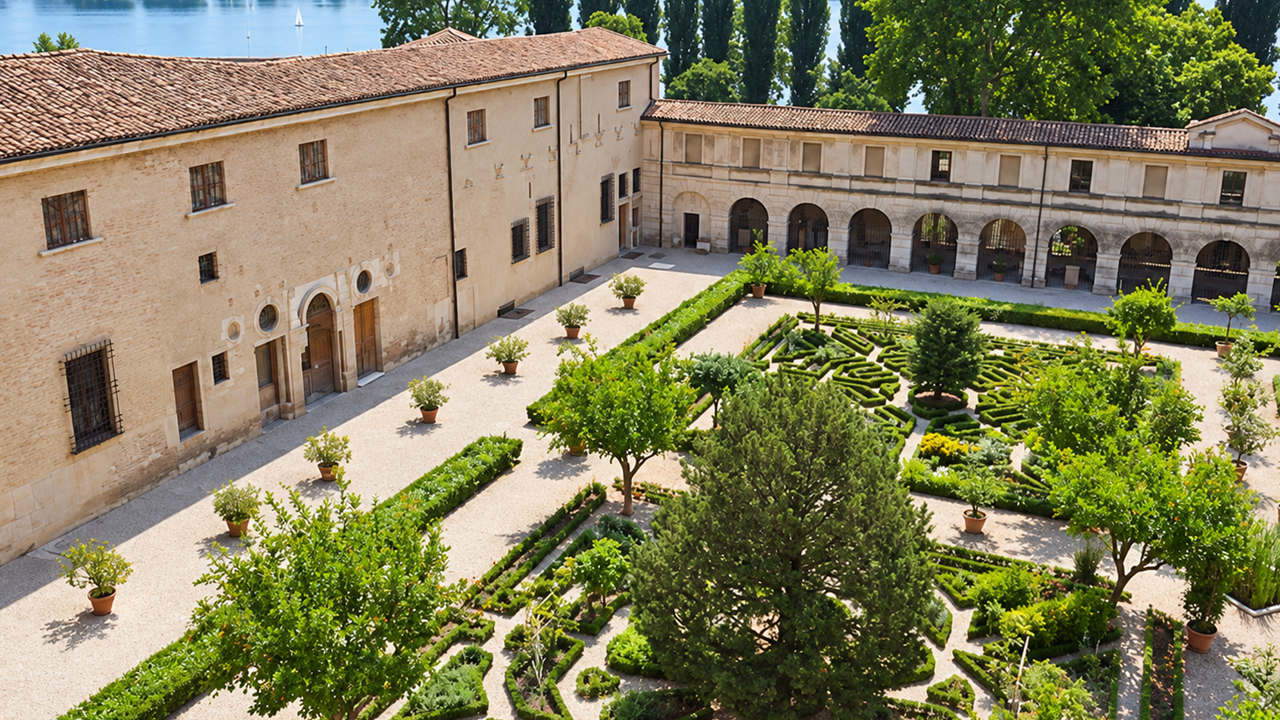
Mantua, Palazzo Ducale, Giardino dei Semplici. The botanical garden laid out in 1603 by Friar Zenobio Bocchi for Duke Vincenzo I Gonzaga. The medicinal and aromatic plants evoke Herbology lessons and the ingredients of potions from the Wizarding World.
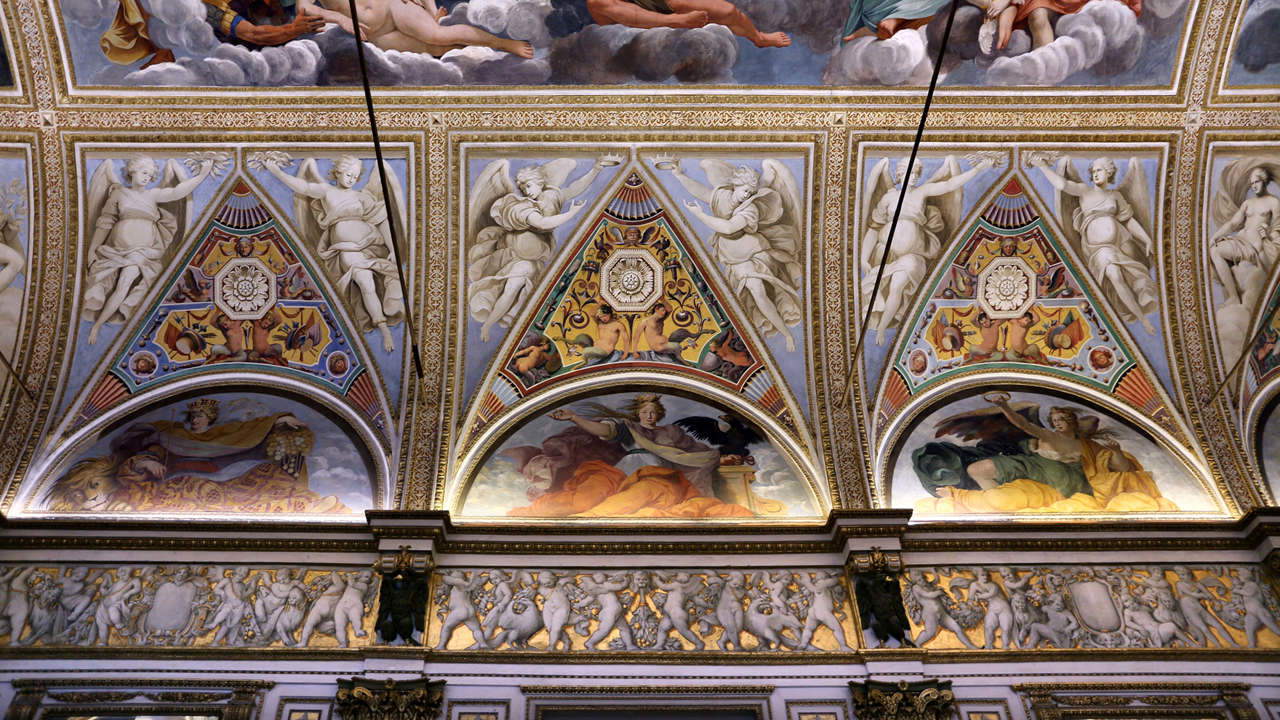
Mantua, Ducal Palace, Hall of Mirrors. Detail of the 17th-century painted decoration, created as part of Antonio Maria Viani’s design. The extraordinary illusionistic effects evoke the animated paintings at Hogwarts Castle.
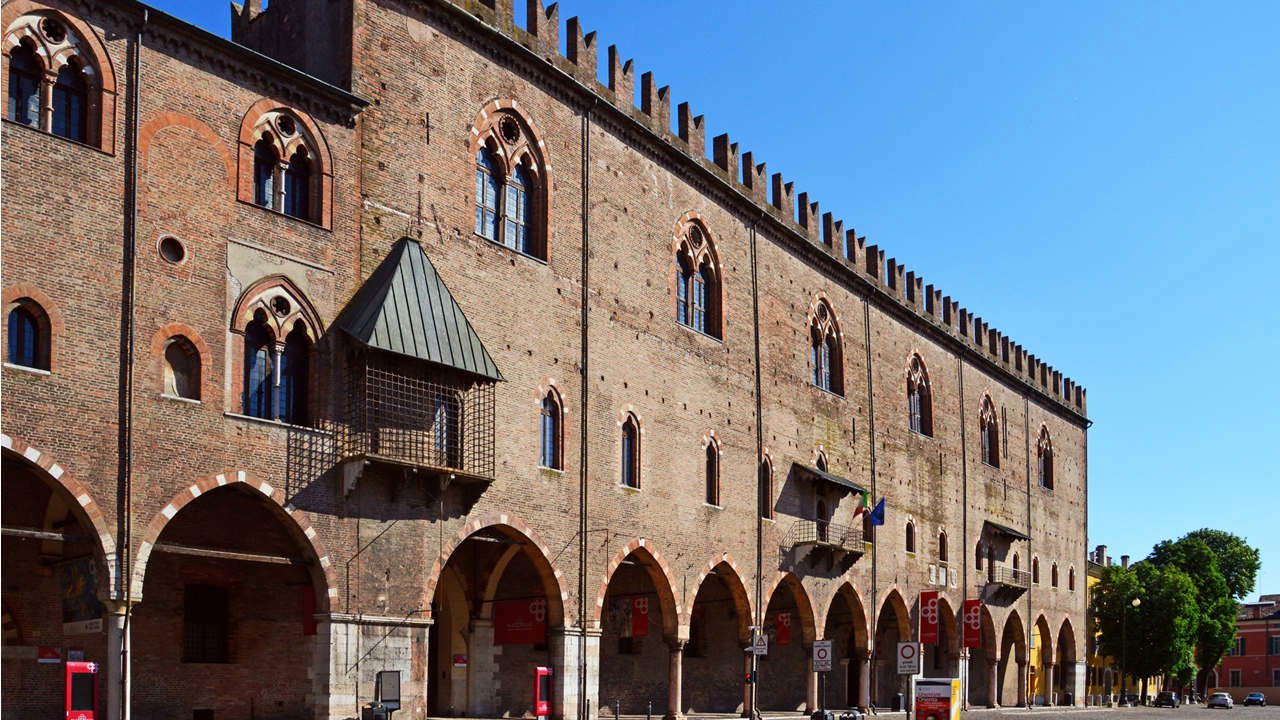
Mantua, Ducal Palace. The medieval façade of the Palazzo del Capitano, overlooking Piazza Sordello. Beneath the portico’s arches, the adventure of the “Guided Tours Forbidden to Muggles” begins.
The Harry Potter-themed guided tours are not an initiative organized by the Ducal Palace, but the museum has welcomed them positively. How important do you think collaboration with cultural institutions is for developing original tour concepts and promoting cultural heritage?
My “Guided Tours Forbidden to Muggles” are a private initiative that I organize completely independently as part of my professional work as a tour guide. The Palazzo Ducale Museum, precisely because of its institutional nature, rightly maintains a position of absolute impartiality toward the various tour guides who organize tours within its walls. It is a principle I fully share and believe it is important to respect. This does not mean, of course, that there cannot be a positive relationship between cultural institutions and the professionals who guide visitors in discovering our heritage on a daily basis. On the contrary, I believe that—even while maintaining the distinction between our respective roles—it is essential that we share the goal of promoting and raising awareness of our historical and artistic treasures, including through original storytelling approaches. After all, as I’ve mentioned, it was precisely a museum initiative—the 2022 exhibition “Naturalia and Mirabilia” —that unwittingly provided me with the inspiration from which this project was born. I must say, however, that one of the most heartwarming sources of satisfaction comes from the custodial and security staff at the Palazzo Ducale. I very often see big smiles on the staff’s faces when I walk through the halls and corridors of the palace, followed by a group of wizards and witches armed with magic wands—and, in the case of the most passionate fans, even wearing Hogwarts robes and uniforms! These are small moments of lightheartedness that give me particular pleasure and demonstrate how it’s possible to experience a place of extraordinary historical and artistic value with a touch of imagination, without ever failing to show it the respect it deserves. And speaking of respect, I believe it’s important to remember that my project also stems from a deep admiration for the narrative universe created by J.K. Rowling. The “Guided Tours Forbidden to Muggles” are intended as a tribute to that imaginary world, not a reproduction of it. I personally devised the texts, puzzles, materials, and narrative structure, striving to create something original that would bring the Wizarding World into dialogue with the history and art of the Gonzaga family. This is a completely independent initiative that has no official connection to J.K. Rowling, Warner Bros., or the other rights holders of the series, from whom it has received no authorization, approval, or sponsorship. After all, my intention is not to recreate Hogwarts in Mantua, but to pay homage to Rowling’s imagination by using it as a starting point to tell a completely different story: the authentic and equally fascinating story of the Ducal Palace.
At the end of each “Potter-themed” tour of the Palazzo Ducale, what do you hope this unique experience will leave participants with? And why should no one miss out on this adventure?
I’d love for participants to leave Palazzo Ducale taking two things with them: the memory of a fun adventure—perhaps shared with family or friends—and, above all, a fresh perspective on the historical and artistic heritage they’ve just discovered. My “Guided Tours Forbidden to Muggles” naturally involve a mission to complete and a treasure to find, but for me, the real reward isn’t just about solving the puzzles. It’s about ensuring that a work of art, a historical figure, or an architectural detail remains etched in their memory precisely because it played a central role in a moment of play, discovery, or laughter. I’d love it if, upon returning to visit the Palazzo Ducale, someone recognized a detail they’d noticed during our adventure and shared it with their companions. Or if, upon entering another museum, they found themselves looking at the works with greater curiosity, perhaps wondering what stories and mysteries they might hide. As for why you shouldn’t miss this experience, I’d say it’s an opportunity to experience one of Italy’s most extraordinary architectural complexes in a decidedly unusual way. For over two hours, adults and children alike can share an adventure in which history, art, literature, and imagination are constantly intertwined. And let’s face it: it’s not every day you get to wander through the halls of a Renaissance palace with a magic wand in hand, searching for mysterious Gonzaga Horcruxes ! Ultimately, what I’d like participants to take away is precisely this realization: that to find something wonderful, you don’t necessarily have to look for it in a fantasy world. And I’d like to conclude by borrowing a phrase often attributed to a magical character from another narrative universe, Mary Poppins: “Magic is everywhere; you just have to learn to see it.”
Warning: the translation into English of the original Italian article was created using automatic tools. We undertake to review all articles, but we do not guarantee the total absence of inaccuracies in the translation due to the program. You can find the original by clicking on the ITA button. If you find any mistake,please contact us.