





The Centrale Montemartini, a branch of the Capitoline Museums, is now more accessible thanks to the completion of a project funded under the PNRR to remove physical and sensory barriers. The Capitoline Superintendence for Cultural Heritage has completed a project that lasted approximately 22 months, with a total investment of 473,066.88 euros, which addressed various aspects of the visitor experience: from outdoor and indoor spaces to visitor services, as well as wayfinding tools and informational content.
The project followed an integrated strategy aimed at making the visit more independent and informed for a wide audience. Regarding physical accessibility, one of the main changes involved the museum’s outdoor area. The plaza in front of the entrance, previously used as a parking area for vehicles, has been completely pedestrianized and redeveloped with new accessible paving, green spaces featuring shrubs, ground-level lighting, and modular seating. A protected pedestrian path equipped with tactile signage has been created from Via Ostiense to the entrance of the Centrale Montemartini, designed to facilitate independent navigation for blind and visually impaired visitors.
The interior spaces have also undergone a comprehensive redesign. The visitor reception area and the clarity of the visitor routes have been improved through new furnishings and seating distributed along the tour route, along with the renovation of the refreshment area. Other improvements include a new ticket counter at a height suitable for people in wheelchairs and a coat check with Braille numbering. The museum’s two elevators have been equipped with text-to-speech systems to facilitate access to the spaces.
The project also included a complete renovation of the restrooms, with the creation of two restrooms accessible to people with disabilities and a space dedicated to families, equipped with a changing table and child-sized fixtures. Accessibility to these services has been further enhanced for deaf visitors through the installation of flashing lights connected to the fire alarm system.
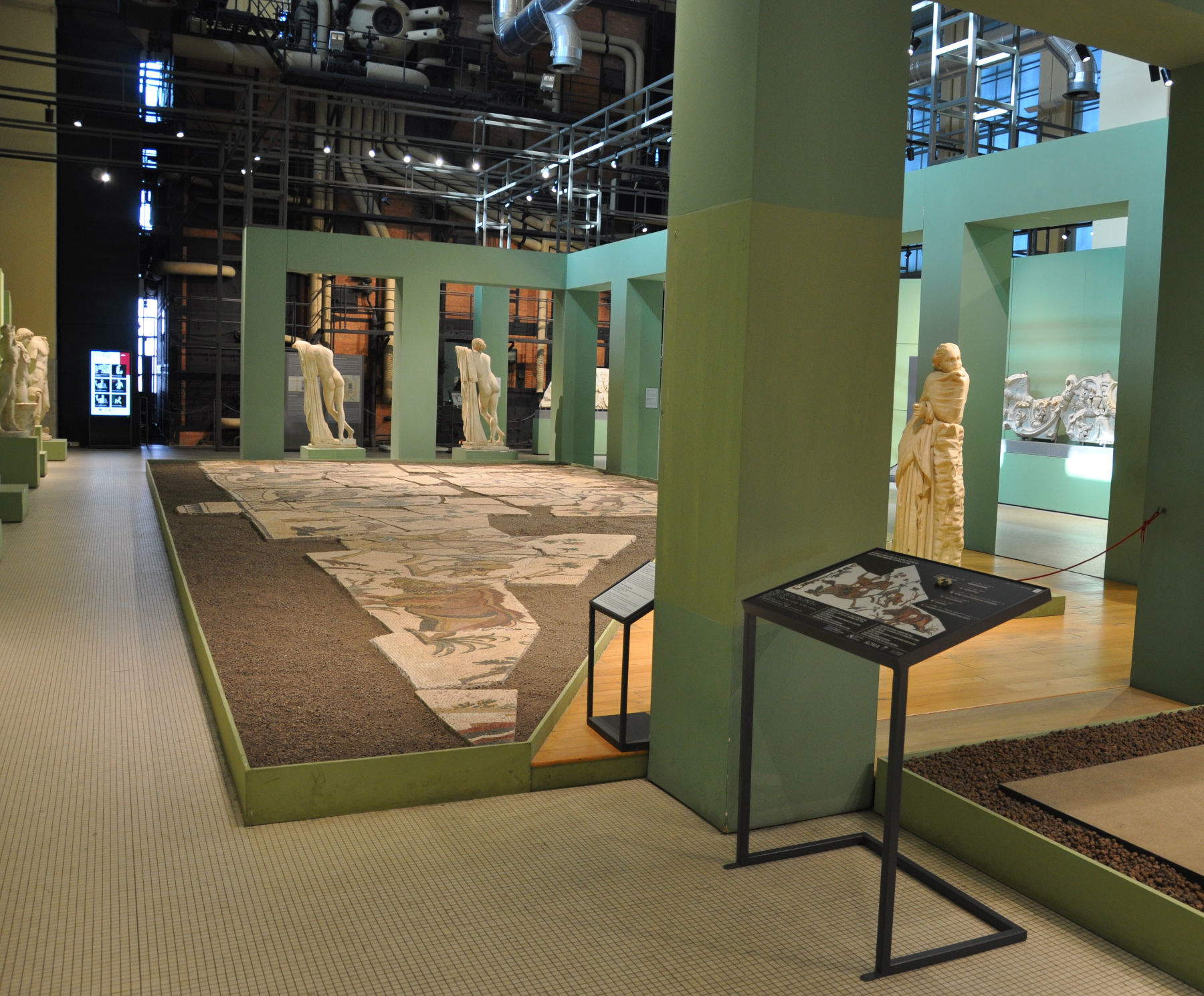
The renovations also addressed sensory accessibility, with improvements to wayfinding and communication systems both along outdoor pathways and within the exhibition spaces. Vertical signage was updated at the Garbatella Metro Station (Line B) and along the walkway connecting Via Ostiense to the museum entrance. Inside the Centrale Montemartini, new wayfinding systems and informational panels featuring simpler, more intuitive graphics have been installed.
To enhance the visitor experience, tactile exploration tools have been introduced, including four orientation maps designed to help visitors understand the museum’s layout and its indoor and outdoor routes, as well as two tactile reproductions of works from the collection. The offering is rounded out by a new museum app, which features 16 stops organized into four different itineraries: video stories, audio descriptions, videos in Italian Sign Language, and content for children. The multimedia materials can be accessed via personal devices or through two touchscreen monitors installed in the museum spaces.
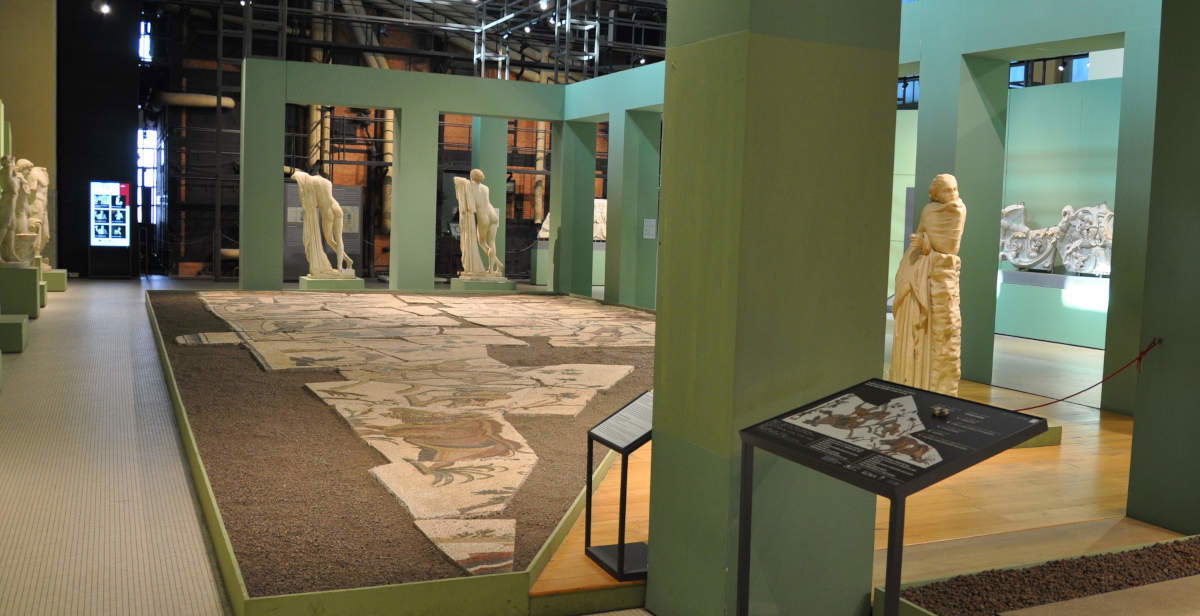
This initiative is part of the ongoing transformation of the Centrale Montemartini, a facility that over the years has progressively expanded its accessibility through restorations, new exhibitions, and a growing focus on inclusion. The museum stands as one of the most original examples in Rome’s cultural landscape, thanks to the coexistence of industrial archaeology and ancient art within the spaces of a former thermoelectric power plant.
Opened in 1912 as Rome’s first public facility for electricity generation, the structure was decommissioned in the 1960s. In the 1980s, Acea began the process of converting it into a multifunctional cultural space, enabling the preservation and enhancement of an important example of industrial archaeology. In 1997, the temporary exhibition *Machines and Gods*, featuring a selection of sculptures from the Capitoline Museums, marked the beginning of the complex’s new life. The exhibition’s success led to the transformation of the Centrale Montemartini into a permanent museum in 2001.
Today, the museum offers a renewed visitor experience focused on inclusion while maintaining the relationship between industrial machinery and masterpieces of ancient art that defines its identity, in one of the capital’s most dynamic neighborhoods.
“We are truly delighted to have reopened the Centrale Montemartini Museum to the public in a renewed form—one of the most beloved and unique institutions in Rome’s museum network, with its successful blend of ancient and modern elements—and which, starting today, welcomes visitors in an even more welcoming, accessible, and inclusive setting,” said Roberto Gualtieri, Mayor of Rome.
“Redesigning the spaces, the wayfinding systems, and the information: this was the major undertaking that involved one of the most important spaces within the Capitoline Museums, the Centrale Montemartini,” emphasizes Massimiliano Smeriglio, Councilor for Culture and Coordination of Initiatives Related to Holocaust Remembrance Day. “Just as we are doing in various locations throughout Rome, innovation means improving the visitor experience. For this reason, it was important to focus on physical and sensory accessibility, as well as digital solutions, at the Centrale Montemartini, to truly enable everyone to access and enjoy the museum space. These improvements have encompassed both indoor and outdoor spaces; for instance, the open area in front of the former power plant was once a parking lot and is now a small but beautifully maintained plaza, featuring a tribute to Corrado Puccioni, the engineer who designed and championed this structure of great industrial heritage. “We would like to thank the Capitoline Superintendence for Cultural Heritage, which led and completed the project using PNRR funds—a project costing approximately 470,000 euros, carried out with great care.”
 |
| Capitoline Museums, Centrale Montemartini Now More Accessible: PNRR Work to Remove Barriers Completed |

Warning: the translation into English of the original Italian article was created using automatic tools. We undertake to review all articles, but we do not guarantee the total absence of inaccuracies in the translation due to the program. You can find the original by clicking on the ITA button. If you find any mistake,please contact us.



























 IT
IT FR
FR DE
DE ES
ES CN
CN


