





Making a museum accessible does not simply mean removing architectural barriers, but rather rethinking spaces, services, communication, and organization so that people with different needs can fully enjoy their visit. This is the goal of “Museums and Universal Accessibility,” the new call for proposals launched by the Cariplo Foundation and aimed at museums in Lombardy and the Piedmontese provinces of Novara and Verbano-Cusio-Ossola. The initiative provides a total of 3 million euros and also includes free training and support programs for museums interested in exploring the topics of accessibility and universal design.
The call for proposals stems from the need to make accessibility a permanent component of museum policies and operations, with a particular focus on people with disabilities and children aged 0–6. This initiative represents the first operational tool through which Fondazione Cariplo translates the results of the survey on museum accessibility—previewed to museum professionals last June—into concrete resources. The research was promoted in collaboration with Abbonamento Musei and carried out in partnership with the Santagata Foundation for the Economy of Culture and museologist Maria Chiara Ciaccheri.
The new call for proposals is sponsored by Fondazione Cariplo’s Cross-Cutting Philanthropic Activities and Mandate Challenges Division and stems from the collaboration between two of the Foundation’s program areas. The first is the “Destination Autonomy” Challenge, aimed at strengthening local systems that support people with disabilities, promoting their inclusion, autonomy, and participation in community life. The second is the “Anita – L’infanzia prima” Challenge, dedicated to the well-being of children aged 0 to 6, with a particular focus on vulnerable situations.
Of the total 3 million euros available, each project may receive a grant ranging from 50,000 to 200,000 euros. A minimum co-financing of 20% of the total cost of the project is required. However, the aim is not limited to the creation of individual facilities or services: the stated intention is to support museums in defining medium- and long-term strategies, so that accessibility becomes a permanent and cross-cutting feature of spaces, services, and internal policies.
Funding may support both the introduction of new practices and the consolidation of existing initiatives. The goal is to move beyond a conception of accessibility tied to sector-specific interventions or one-off initiatives—such as visits available exclusively by reservation or workshops aimed at specific audience groups—and instead promote solutions integrated into the museum’s day-to-day operations.
Eligible initiatives include, for example, tactile maps and multisensory aids, self-guided tours available without reservations, content presented in simplified language, and more flexible hours and admission fees. For families with young children, dedicated spaces for breastfeeding and diaper changes may also be provided. The call for proposals also takes into account aspects that are less immediately visible but relevant to a structural transformation of the institutions, such as training for all staff—from the ticket office to management—the appointment of an internal accessibility coordinator, and the direct involvement of members of the targeted groups in the design of the initiatives.
The concept of accessibility is thus extended to the museum’s social function and its relationship with the community. Museums can, in fact, be considered places of welcome and well-being, not merely spaces dedicated to the preservation and enjoyment of cultural heritage. Among the examples cited by the Foundation is the possibility for a museum to serve as a welcoming space for the community during specific situations, such as heat waves.
The application process for the call for proposals will consist of two phases. The first phase involves the submission of proposals by December 9, 2026. For the selected proposals, a second phase will follow, with the submission of projects by November 11, 2027. The period between the two deadlines will be accompanied by a training and support program promoted by the Cariplo Foundation, designed to assist museums in defining their initiatives.
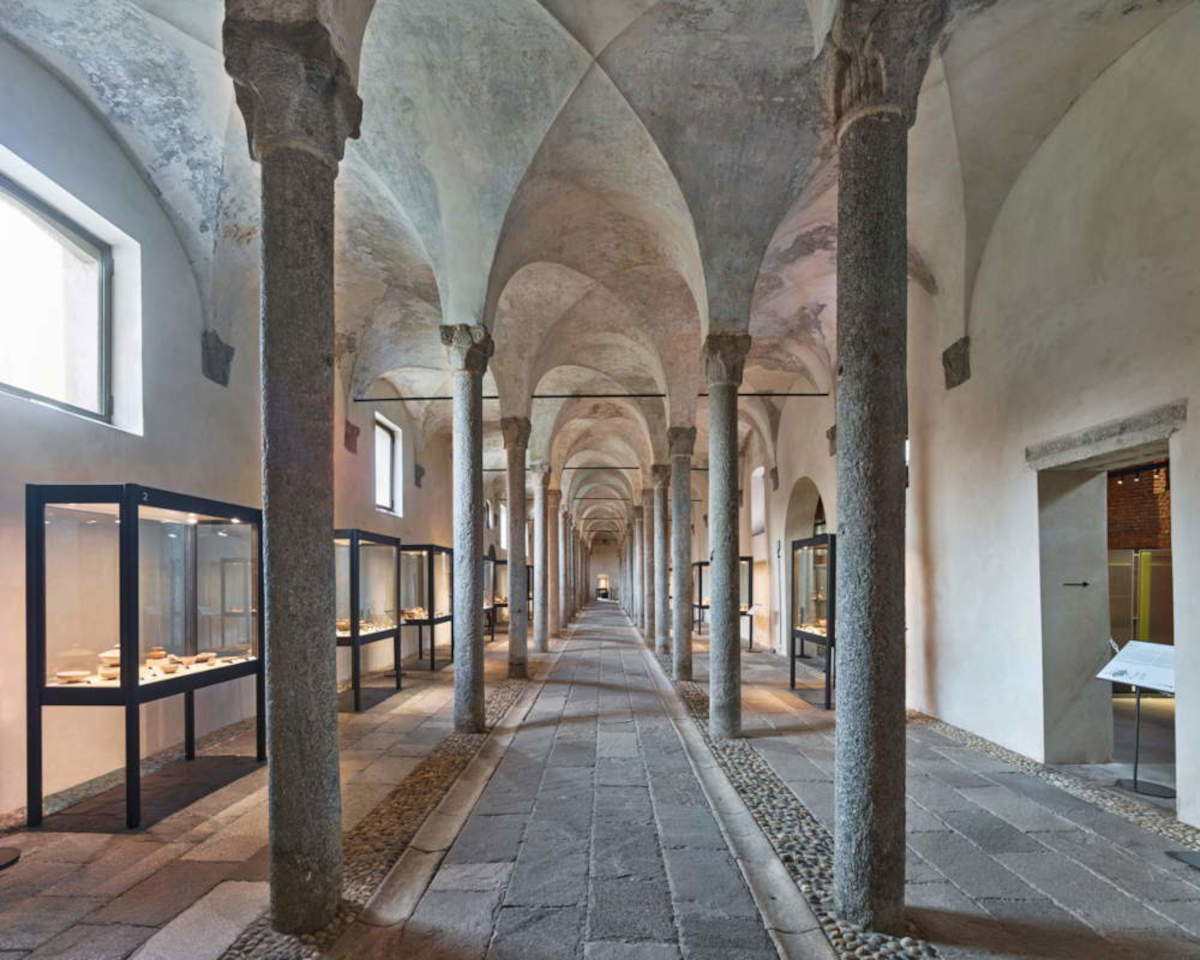
In parallel with the call for proposals, a capacity-building program will be launched, open to all museums interested in exploring accessibility and universal design, regardless of whether they apply for funding. The program will be organized by Abbonamento Musei in collaboration with the Santagata Foundation and Maria Chiara Ciaccheri, and will include training sessions and a community of practice. The goal is to foster the exchange of experiences, strengthen the skills of museum staff, and promote approaches aimed at designing more accessible and inclusive museums.
The context for this call for proposals is defined by data collected from the first systematic survey of museum accessibility conducted by Fondazione Cariplo in Lombardy and in the Piedmontese provinces of Novara and Verbano-Cusio-Ossola. Of the 336 museums invited to participate in the survey, 255 responded, representing 76%. The survey reveals a system that appears increasingly aware of the importance of accessibility, but in which efforts are still often fragmented and not always integrated into the routine planning of spaces, content, and internal policies.
With regard to early childhood, one of the strongest areas is educational outreach: 41% of museums are rated as very well-prepared in this regard, while 17% do not offer any specifically dedicated programs. The availability of spaces designed for children aged 0–6, however, appears more limited, with such spaces absent in 40% of museums. Dedicated services and facilities are absent in 48% of the museums. Changing tables are present in 46% of museums, designated areas for parking strollers in 34%, and a breastfeeding room in only 16%. The gap is even more evident when the analysis is narrowed to the 0–3 age group. Double-height displays are present in 3% of museums, tactile exhibits in 4%, workshops in 8%, and guided tours in 9%.
Even with regard to disability, the situation varies depending on the type of accessibility considered. Solutions related to physical accessibility are more established than those addressing cognitive, sensory, and organizational accessibility. Accessible restrooms are available in 77.3% of museums, and barrier-free routes—or those equipped with equivalent alternatives—in 63.1%. Free admission, on the other hand, is a widespread practice, affecting 91.4% of the institutions included in the survey.
There is more room for improvement regarding tools that allow people with disabilities to explore the museum independently. Multisensory aids are absent in 56.5% of museums, while plain-language captions are missing in 47.1%. The availability of tactile maps and raised-relief floor plans is even more limited, being absent in 78.8% of the facilities surveyed.
Challenges also extend to governance. In 47.6% of museums, there is still no designated accessibility coordinator, and only 7.5% of institutions incorporate the issue in a structured manner within their strategic plans. The data therefore suggests that accessibility is not solely about the introduction of assistive devices or the adaptation of spaces, but also about how institutions organize and plan their activities.
In both areas examined by the study, the availability of financial resources is cited as the main obstacle. For initiatives aimed at people with disabilities, this is the top challenge reported, cited by 64.8% of museums. For programs aimed at children, the percentage rises to 80%. The research highlights, however, that the size of the institution and financial resources are not the only determining factors. Even among the smallest museums, particularly advanced initiatives have been identified. According to the survey results, the most significant factor is the ability to integrate accessibility into the institution’s strategic vision and organizational structure.
It is at this level that “Museums and Universal Accessibility” aims to make an impact: not only through financial resources allocated to concrete initiatives, but also through the development of expertise, organizational models, and networks among institutions. Funding is therefore accompanied by a support program designed to foster change that will become part of the day-to-day operations of museums.
The call for proposals will be presented on Thursday, September 17, 2026, at 10:30 a.m., during a free online meeting (registration required). During the event, the initiative’s objectives, eligibility criteria, funding limits, and application procedures for the two phases will be explained. Information on the call for proposals and how to register for the meeting is available on the Fondazione Cariplo website.
“With this initiative, Fondazione Cariplo moves beyond the notion that there are ‘special’ audiences for whom separate measures are needed,” states Andrea Rebaglio, Director of the Cross-Cutting Philanthropic Activities and Mandate Challenges Division at Fondazione Cariplo. “It means designing spaces and services from the outset with the diversity of people who will use them in mind: a museum capable of welcoming a person with a disability, a family with young children, or a visitor with special needs is not simply more inclusive—it is a better and more functional place for everyone. The call for proposals is not limited to physical or technological interventions: it also includes support, training, and dialogue, so that accessibility is not an afterthought but a natural component of cultural planning.”
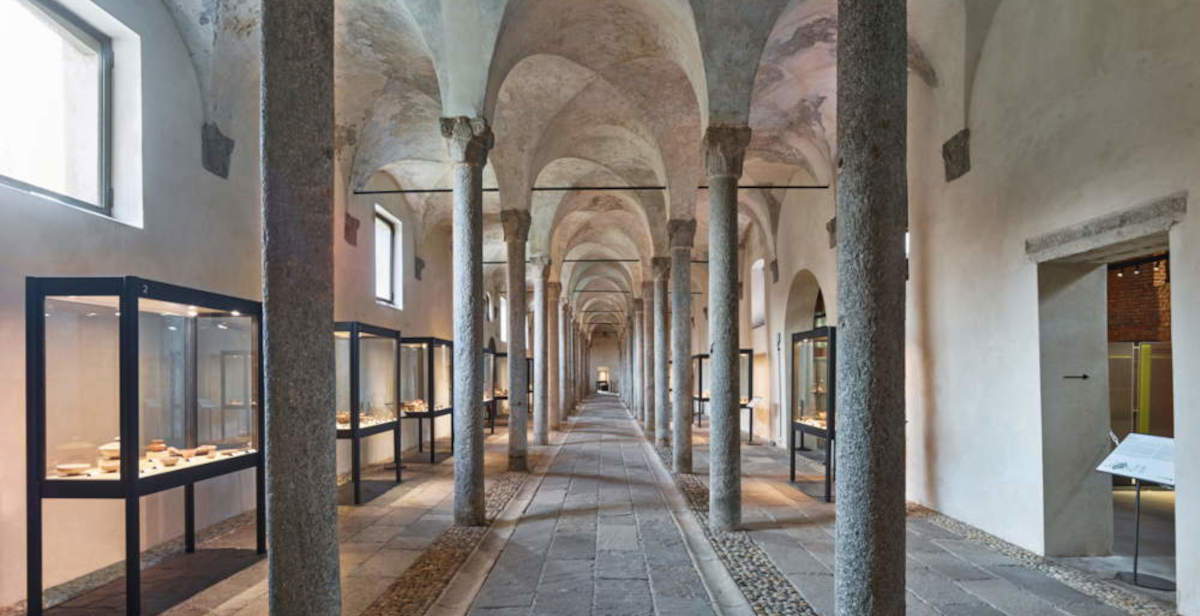 |
| Cariplo Foundation: 3 million to make museums more accessible to everyone |

Warning: the translation into English of the original Italian article was created using automatic tools. We undertake to review all articles, but we do not guarantee the total absence of inaccuracies in the translation due to the program. You can find the original by clicking on the ITA button. If you find any mistake,please contact us.




















 IT
IT FR
FR DE
DE ES
ES CN
CN


