




by Redazione 30/06/2026



Categories: Museums / Disclaimer
New lighting, environmental monitoring, touchscreens, and digital tools enhance the visitor experience at one of the masterpieces of the Renaissance: the Brancacci Chapel, at the heart of Italy’s participation in the European AccesS project


The Brancacci Chapel in Florence is at the heart of Italy’s participation in the European AccesS project, “Enhancing Accessibility and Sustainability in Smart Cities and Smart Buildings: The Universal Accessibility Suite Initiative,” an initiative funded by the Horizon Europe program that aims to make historic buildings and urban spaces increasingly accessible, inclusive, and sustainable through the use of innovative technologies.

The results of the pilot project were presented in the Tuscan capital and include a series of interventions designed to enhance the visitor experience without compromising the preservation of the frescoes. Among the main innovations are a new lighting system, environmental and visitor flow monitoring systems, ergonomic seating for the transept area, and a tactile panel dedicated to the scene of the Healing of the Cripple and the Resurrection of Tabitha, created by the University of Florence to promote accessibility for blind and visually impaired people.


The project involves six pilot sites across Europe, but the Brancacci Chapel represents a unique case: here, digital solutions are being applied to a cultural asset of extraordinary historical and artistic value, reconciling technological innovation with heritage preservation. Before work began, an extensive process of consultation and needs assessment was carried out, involving associations, visitors, museum staff, conservators, researchers, and representatives of people with disabilities. This dialogue identified specific needs, which were then translated into concrete solutions such as multisensory tours, tactile aids, video guides in Italian Sign Language (LIS), more accessible communication, and dedicated services. Between 2025 and 2026, sensors were installed to monitor temperature, humidity, air quality, and pollutant concentrations, as well as devices capable of detecting visitor flows and dwell times in a completely anonymous manner. The systems process only numerical data, without capturing images. The information collected will make it possible to correlate environmental conditions with visitor presence and the state of conservation of the frescoes, providing valuable tools for planning preventive maintenance and ensuring more sustainable management of the monument.
Among the tools developed is BrancacciPOV (Point of View), a platform developed by CNR ISPC based on the open-source ATON framework, which allows visitors to explore the history of the Chapel, restoration work, and diagnostic surveys through content accessible online and via tablets during guided tours. The project calls for further development of the platform to expand access to and knowledge of the monumental complex.
To showcase these new solutions, pilot tours will also be organized for people who are deaf or hard of hearing, blind or visually impaired, and those with mobility impairments, with the aim of making visits increasingly inclusive.
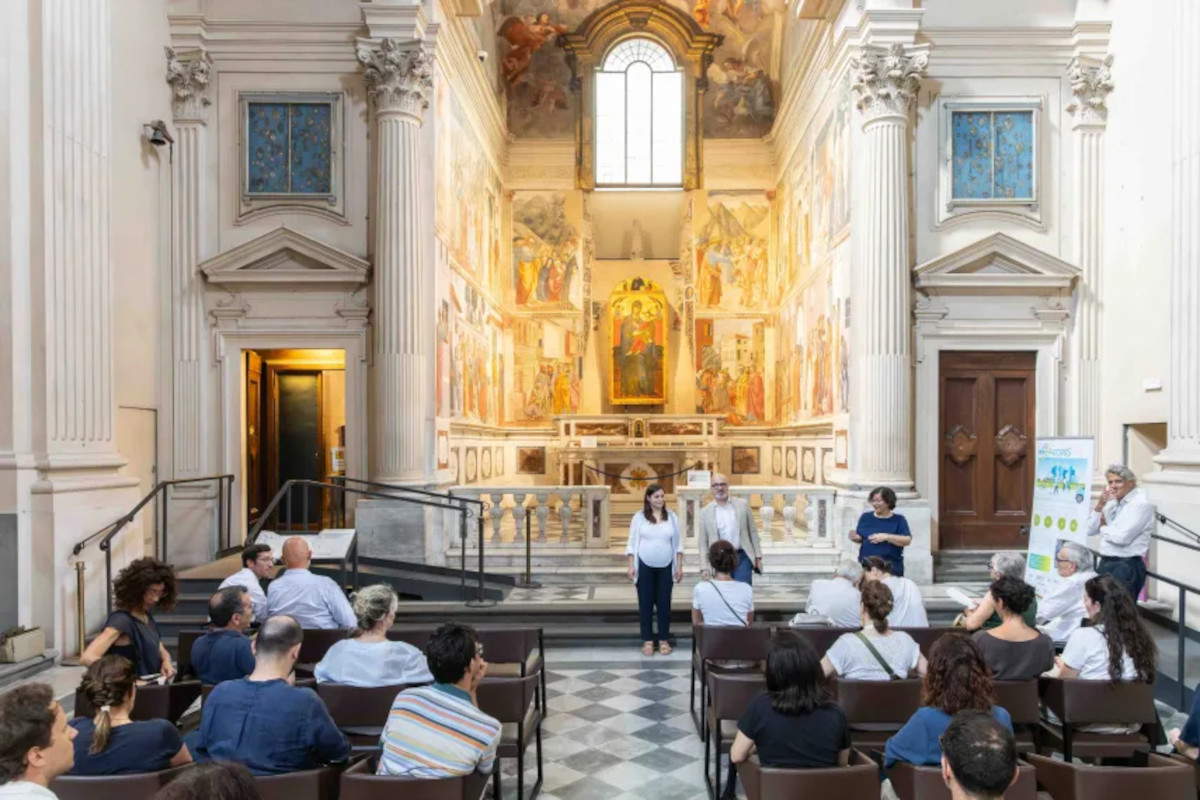
“The Brancacci Chapel is one of the iconic sites in the history of world art and, at the same time, an extraordinary laboratory for experimenting with new ways of accessing culture,” stated Giovanni Bettarini, Councilor for Culture. “Thanks to the European AccesS project, Florence reaffirms its international vocation and its ability to integrate heritage preservation, technological innovation, and social inclusion. Making a cultural asset more accessible means not only removing physical barriers but also enabling everyone to fully experience learning and participation.”
“With the AccesS project,” emphasized the Councilor for Information Services, Smart City, and Innovation, Laura Sparavigna, “Florence continues to invest in a vision of a smart city where research, innovation, and expertise come together to develop increasingly effective solutions to protect, enhance, and pass on to future generations a heritage that is unique in the world, while ensuring an increasingly inclusive and high-quality visitor experience for everyone.”
|
| Florence: The Brancacci Chapel Becomes More Accessible Thanks to Smart Technologies and New Inclusive Routes |
Warning: the translation into English of the original Italian article was created using automatic tools. We undertake to review all articles, but we do not guarantee the total absence of inaccuracies in the translation due to the program. You can find the original by clicking on the ITA button. If you find any mistake,please contact us.