





The Brescia Museums Foundation is taking a new step forward in its journey of digital innovation with “Double Reality – The Monument and Its Double,” a project that combines virtual reality, contemporary dance, and cultural heritage to offer a new way to experience the museum. The initiative coincides with the opening of the first VR Room in Brescia’s museum system, set up at the Pinacoteca Tosio Martinengo, where the immersive experience is included with the admission ticket.
Sponsored by the City of Brescia, the Brescia Museums Foundation, the National Choreographic Center/Aterballetto, and the Central Institute for the Digitization of Cultural Heritage – Digital Library, the project was developed as part of the PNRR program dedicated to the digitization of cultural heritage, funded by the European Union through the Next Generation EU plan. At the heart of the initiative is the concept of a museum “digital twin”—a digital reproduction of cultural heritage capable of engaging with contemporary artistic languages and new technologies. After more than a year of research, design, and experimentation, the project offers the public an immersive experience that transforms works of art, architecture, and collections into virtual environments to be explored through augmented reality and dance.
The collections of the Civic Museums of Brescia have been digitized in ultra-high definition and reimagined in three-dimensional scenarios that intertwine with specially created choreographed performances. The dancers’ bodies thus become the medium through which to reinterpret the historical and artistic heritage, bringing to life a narrative in which space, movement, and digital images merge into a single experience.
The project involves all the major museums managed by the Brescia Museums Foundation: the Santa Giulia Museum and the Brixia Museum. The Archaeological Park of Roman Brescia, both UNESCO World Heritage Sites, the Tosio Martinengo Art Gallery, the “Luigi Marzoli” Arms Museum, and the “Leonessa d’Italia” Museum of the Risorgimento, housed in Brescia Castle. Each location becomes the stage for an immersive narrative in which historical heritage and contemporary creativity interact through digital technologies. The technological development was made possible thanks to PNRR funding dedicated to digital co-creation platforms. The 360-degree stereoscopic footage, 3D animations, and design of the immersive experience were curated by Guido Geminiani, founder of Impersive, in collaboration with Digital Library, Activa Digital, and Civita Mostre e Musei, creating an ecosystem that integrates immersive videos, virtual environments, and artistic performances.
At the heart of the initiative is the new VR Corner at the Tosio Martinengo Art Gallery, where visitors can enjoy a 360-degree experience blending art, dance, and architecture. The project is also accompanied by a digital platform accessible via computers, smartphones, and compatible headsets, allowing users to explore the content in greater depth and access the experiences remotely. The performances are created by three leading figures in the international dance scene. Diego Tortelli, choreographer at the National Choreographic Center/Aterballetto and Head Choreographer for the closing ceremony of the Milan-Cortina 2026 Olympics, created the pieces dedicated to the Tosio Martinengo Art Gallery and the Arms Museum. Francesca Lattuada conceived the virtual reality performance dedicated to the Winged Victory, while Lara Guidetti curated the experiences set at the Santa Giulia Museum and the Museum of the Risorgimento.
Designed for a diverse audience, the project is aimed at visitors, families, students, schools, universities, cultural professionals, and enthusiasts of new technologies, with the goal of making cultural heritage increasingly accessible through innovative participatory tools.Accessibility is one of the central aspects of the initiative. The immersive experience is included in the admission ticket for the participating museums and requires no additional cost. Furthermore, in line with the cultural policies of the City of Brescia and the Brescia Museums Foundation, it is free for all residents of the city.
Double Reality is part of the digital experimentation program launched by the Brescia Museums Foundation in recent years, joining projects such as the Risorgimento VR Experience. This new initiative gives shape to a model of engagement that combines tangible heritage, performative expressions, and technological innovation.
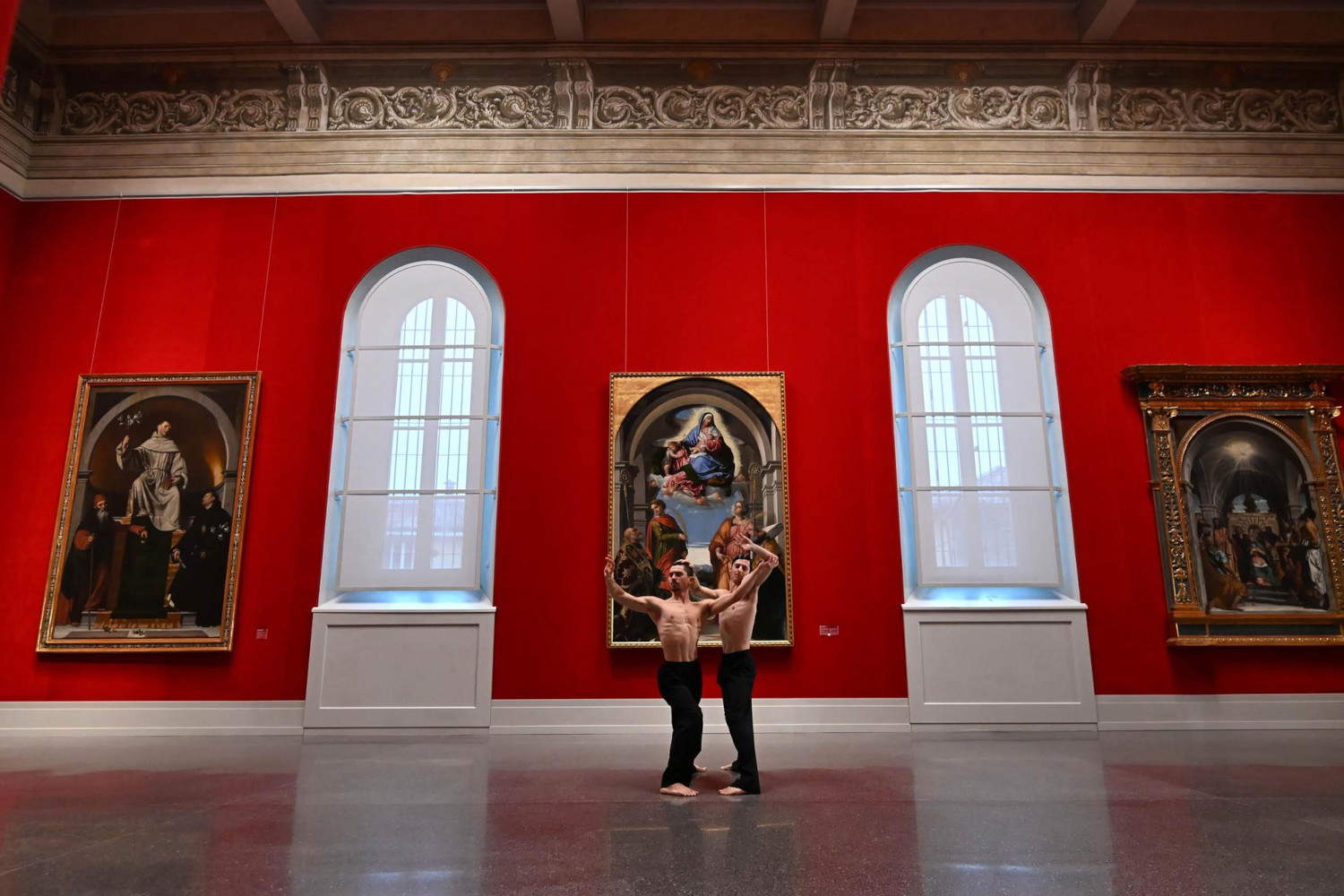
“I am particularly grateful that the Fondazione Brescia Musei and the National Choreographic Center/Aterballetto, for the third time in just over four years, have found a way to bring to life an original artistic project that respects the standards of their respective disciplines: on the one hand, the conservation and promotion of cultural heritage; on the other, the creation of performative works of art,” stated Francesca Bazoli, President of the Brescia Museums Foundation. “At the heart of this partnership between the two major institutions remain the extraordinary cultural objects, works of art and artifacts—whether movable or, as in the case of major monuments, immovable and monumental—managed by our Fondazione Brescia Musei, which once again proves itself innovative and courageous in exploring new ways to transform artistic languages. It is also extraordinary to see just how much we can now imagine and bring to life thanks to virtual reality tools. The dancers of the National Choreographic Center/Aterballetto company become the guiding thread of an emotional journey designed for the visitor: through their bodies, the artistic heritage of the past is reconstituted into a kaleidoscope of references, and the museum experience ceases to be singular, becoming multifaceted—at once tangible and digital, intimate and collective, earthly and transcendent.”
“With the project *Double Reality: The Monument and Its Double*, Fondazione Brescia Musei places itself at the forefront of the international museum scene by creating the first permanent VR Room dedicated to exploring the city’s museum heritage through the artistic medium of dance,” stated Stefano Karadjov, Director of Fondazione Brescia Musei. “The reality of our museums’ extraordinary heritage is interwoven with the simultaneously real and virtual reality of the dance choreographed by the National Dance Center, in which theuser finds themselves immersed in the heritage, physically resonating with every nuance and fostering a modern, dynamic understanding in line with the kind of innovative approach our foundation is accustomed to bringing to all its projects.”
“The emotional depth of our communication is fading in an era of proliferating media messages. Speed replaces intensity. Live performance retains its power, but it is certainly an ephemeral experience. That is why we are turning to VR. The experience of visiting a place in virtual reality is at once unreal and hyperreal. It happens by putting on a headset—so it’s not real—yet the details come into focus and are amplified,” added Gigi Cristoforetti, director of CCN/Aterballetto. “The National Choreographic Center stands out in Europe for the emphasis it places on research into the production of dance pieces through VR. These pieces have a completely different structure and development compared to stage productions. They involve a viewer who is up close—almost a co-protagonist—whom we can even pass behind, disappearing like ghosts. Together with Fondazione Brescia Musei, we have explored this research further, imagining that Brescia’s extraordinary museums host not only artifacts and works of art, but also dance performances. To know one is to encounter the other as well.”
|
| The Brescia Museums Foundation is inaugurating its VR Room with "Double Reality," which combines art, dance, and virtual reality |

Warning: the translation into English of the original Italian article was created using automatic tools. We undertake to review all articles, but we do not guarantee the total absence of inaccuracies in the translation due to the program. You can find the original by clicking on the ITA button. If you find any mistake,please contact us.
























 IT
IT FR
FR DE
DE ES
ES CN
CN


