




by Redazione 30/06/2026



Categories: Museums / Disclaimer
The GAM regeneration project, designed by MVRDV in collaboration with Balance Architettura and EP&S Group, was presented at the Teatro Regio in Turin. The 27.5-million-euro project reimagines the museum as a civic plaza, while an exhibition showcasing the five finalist projects from the competition has been on view since July 1.

The project for the redevelopment, revitalization, and enhancement of the GAM—the Civic Gallery of Modern and Contemporary Art—was presented today at the Teatro Regio in Turin. The project is intended to redefine the museum’s future through an initiative aimed at renewing its spaces, functions, and relationship with the city. The project was entrusted to a consortium led by the Dutch firm MVRDV, together with the Turin-based firms Balance Architettura and EP&S Group, winners of the international design competition. The initiative was carried out by Fondazione Torino Musei in partnership with Fondazione Compagnia di San Paolo, in collaboration with the City of Turin and with the support of Fondazione per l’Architettura / Torino.
The project represents one of the largest investments in the museum sector currently underway in Italy and is among the most significant in Europe. The plan has total funding of 27.5 million euros, provided by the Fondazione Compagnia di San Paolo, and is part of the roadmap outlined in the Fondazione Torino Musei Strategic Plan.
Founded as Italy’s first civic gallery of modern art, the GAM houses a collection of over 50,000 works. The redevelopment project aims to rethink the museum’s role within the contemporary museum landscape, focusing on both the building itself and how the spaces are used, with particular attention to environmental sustainability, accessibility, inclusion, and technological innovation. The stated goal is to develop a museum capable of engaging with social and cultural transformations, while maintaining a connection to its own architectural history.


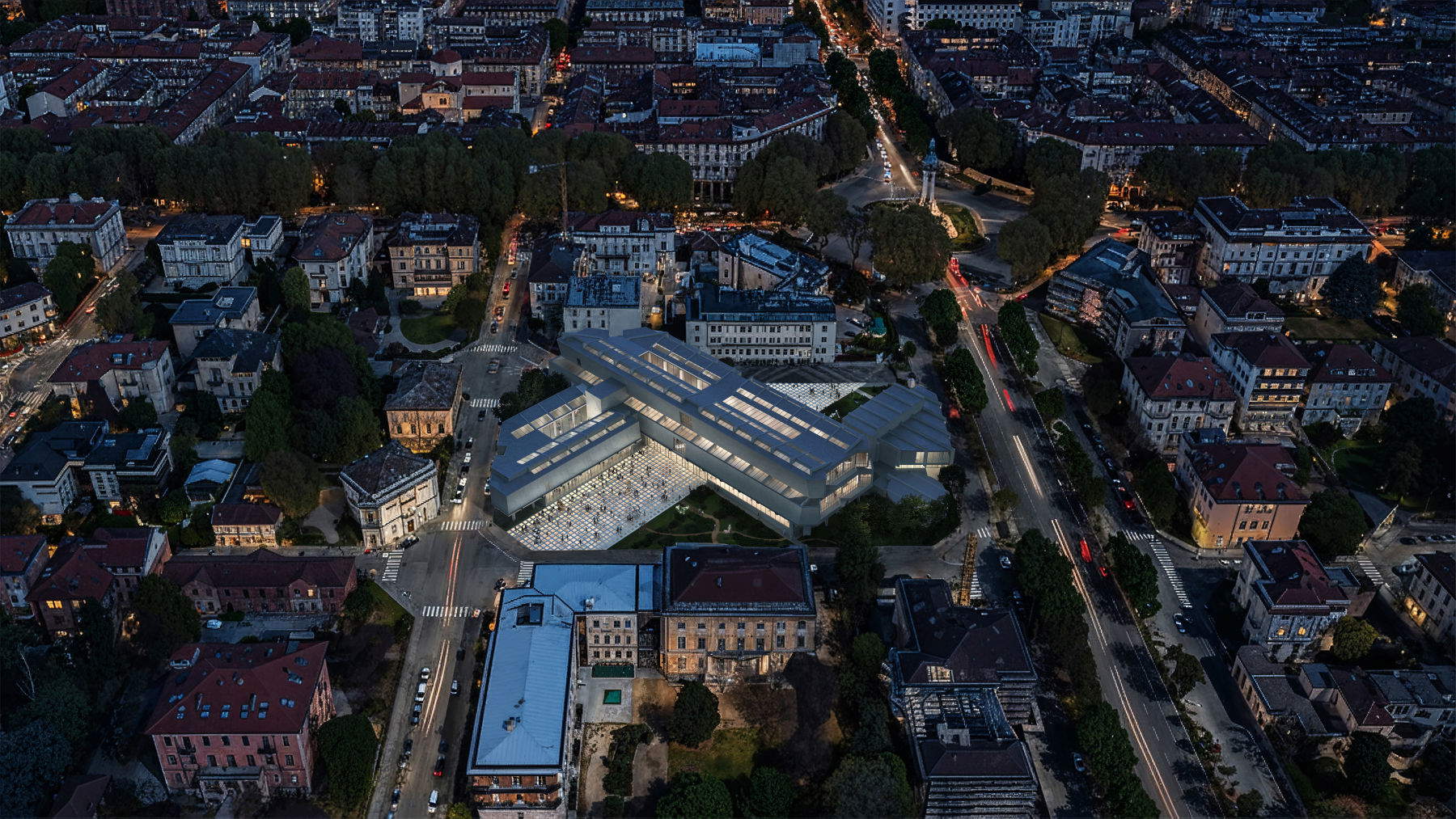
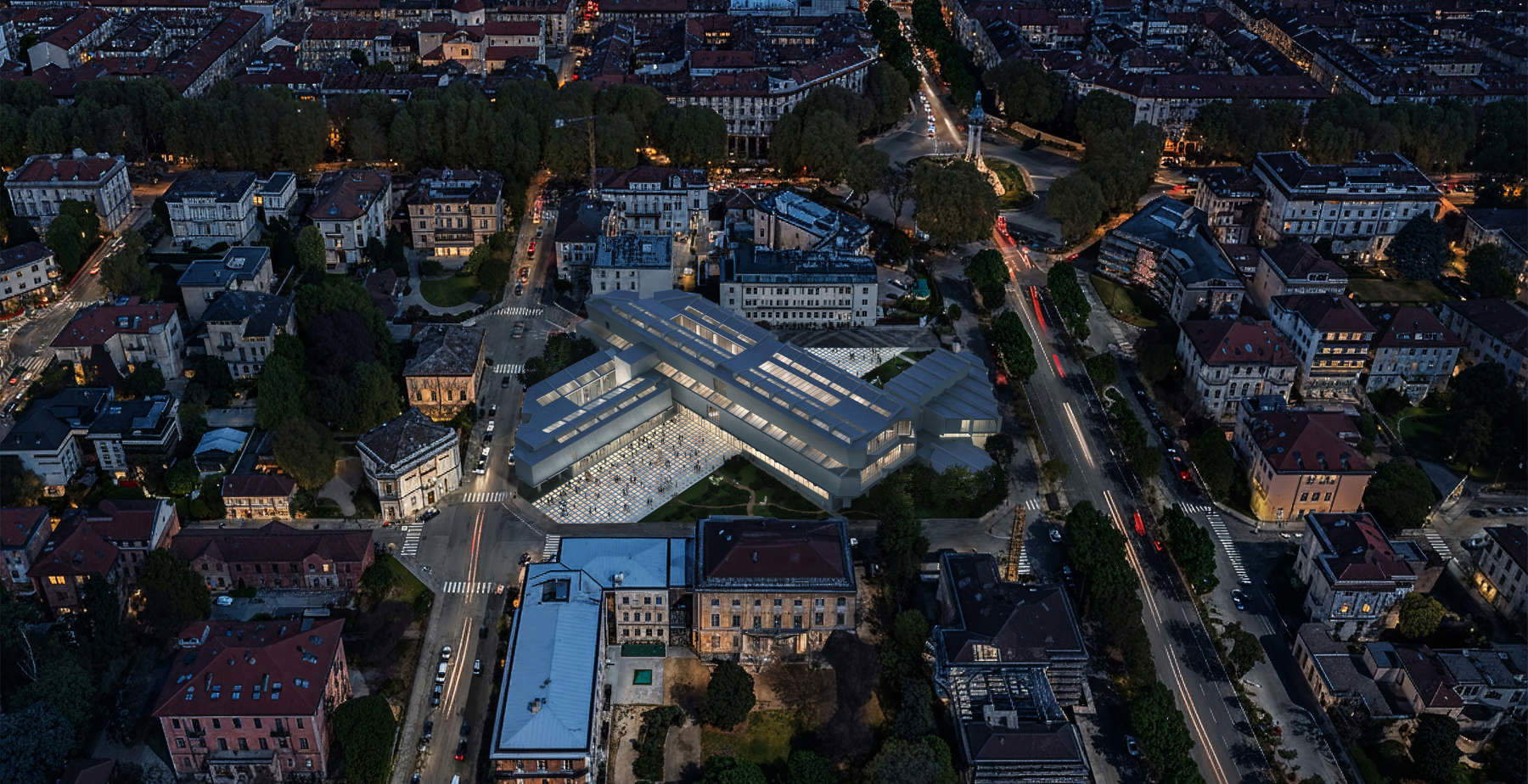
The project draws on the original design of the building, constructed in the 1950s by architects Carlo Bassi and Goffredo Boschetti, which was considered at the time one of the most innovative museum projects in postwar Italy. The new proposal reinterprets that layout in a contemporary key, transforming the GAM into an open cultural platform and a large civic plaza designed to foster interaction among citizens, visitors, and the community.
The official presentation was attended by Turin Mayor Stefano Lo Russo; Marco Gilli, president of the Fondazione Compagnia di San Paolo and chair of the competition jury; Massimo Broccio, president of the Fondazione Torino Musei; and representatives of the winning team: Winy Maas and Bertrand Schippan of MVRDV, Alberto Lessan and Jacopo Bracco representing Balance Architettura, and Elena Bo representing EP&S Group. The event was moderated by Federico Monga, deputy editor-in-chief of *La Stampa*, and Walter Mariotti, editorial director of *Domus*, in the presence of representatives from city and national institutions.
An exhibition dedicated to the International Design Competition was also announced at the same time. The exhibition, which will be on view at the GAM starting July 1, 2026, will present the winning project alongside the other four finalist proposals selected from among 49 design teams from various countries. In addition to the consortium led by MVRDV, the exhibition will feature projects by Kengo Kuma & Associates Europe, Guillermo Vázquez Consuegra Arquitecto SLP, Mario Cucinella Architects, and ACPV Architects – Antonio Citterio Patricia Viel. The initiative aims to document the process that led to the definition of the museum’s new layout and to offer the public an overview of the different design interpretations developed for the future of the GAM.
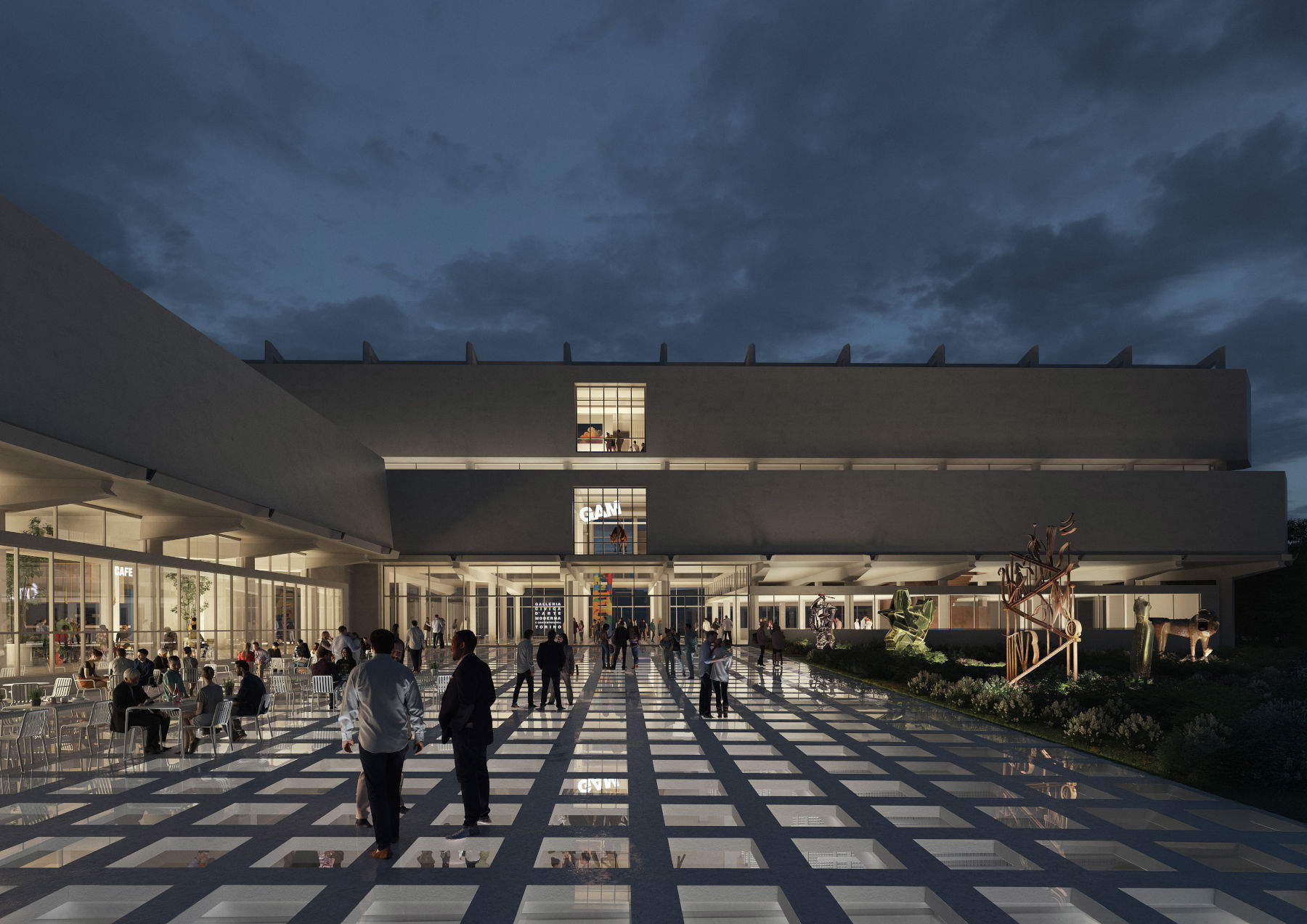
The winning team consists of MVRDV, Balance Architettura, EP&S Group, Michelangelo Di Gioia, and Professor Filippo Busato, in collaboration with Stratosferica and art historian Giorgina Bertolino. The results of the competition were announced on December 20, and the jury justified its decision by highlighting the proposal’s ability to approach the redevelopment as a critical yet respectful reimagining of the building, enhancing its relationship with the urban context.
The project redefines the museum as an open civic infrastructure, designed to expand the ways in which the spaces are used and to strengthen the dialogue between architecture, collections, and the city. The intention is to move beyond the museum’s traditional exhibition function and assign it a broader role as a place for community gathering and public participation.
Among the most significant interventions is the creation of a new multifunctional civic plaza outside the building, intended to be accessible throughout the day and to host cultural activities and outdoor events. The gardens will also be reorganized, with an increase in green spaces and a different integration of outdoor artworks into the urban landscape.
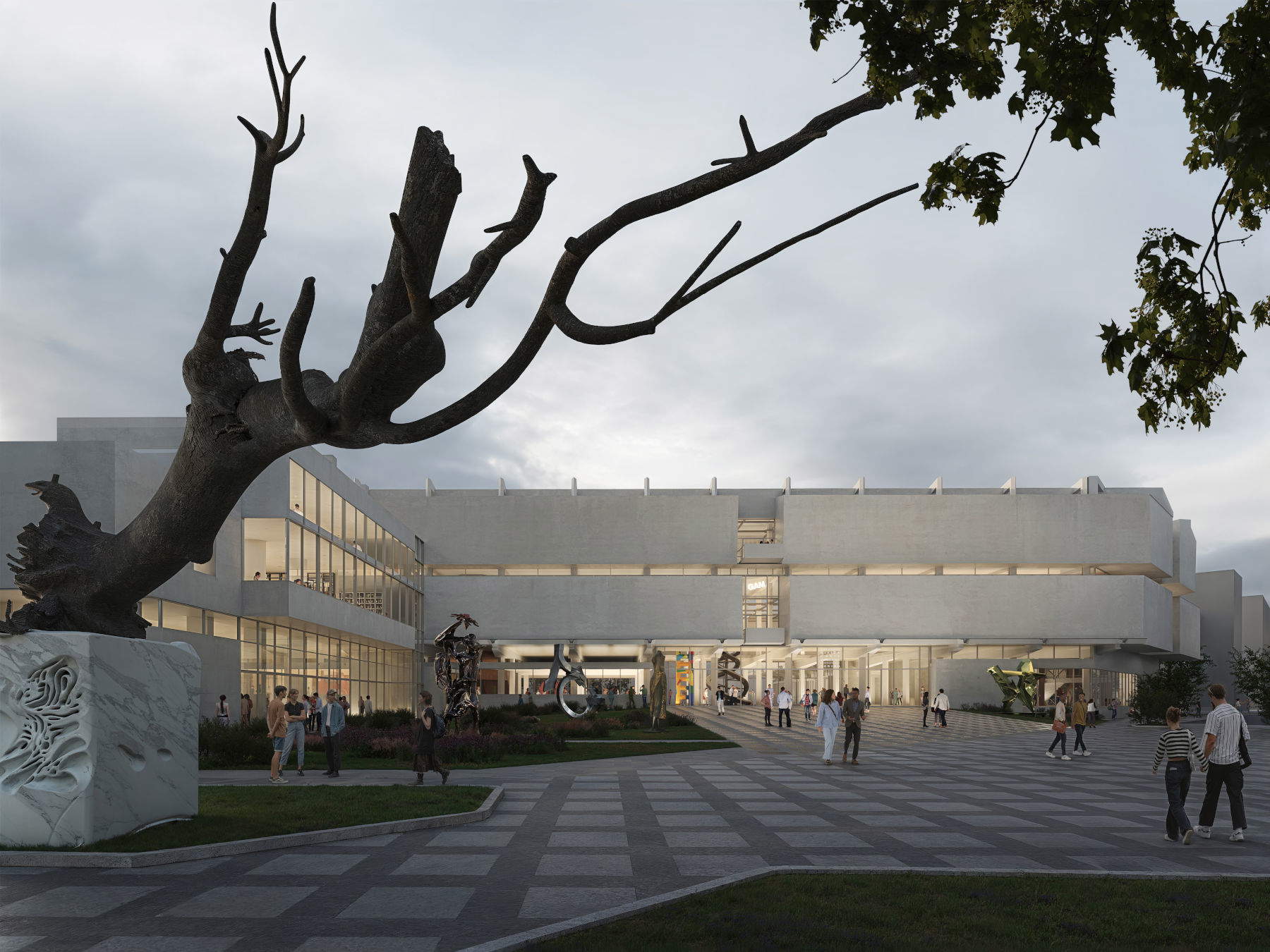
The main entrance will remain in its historic location at the corner of Corso Galileo Ferraris and Via Magenta, while a new pedestrian path called the “Diagonale di luce” will traverse the complex, connecting the city center with the urban areas undergoing the most recent transformation processes.
The renovations will also extend to the interior spaces. The project calls for the restoration of the original 1951 layout—which has been altered over time by successive additions—through a reorganization aimed at making the museum’s visitor journey clearer and more continuous. Natural light will play a central role in defining the spaces, and the monumental scale will once again become one of the main elements of the visitor experience.
One of the most significant changes concerns the collection preserved in the GAM’s storage facilities. Over 50,000 works, previously housed mainly in underground spaces, will be the focus of a new project to showcase them through the creation of the so-called “Living Storage.” The basement will, in fact, become a space accessible to the public, designed as a permanent exhibition area. The use of transparent surfaces will also make part of the exhibition route visible from outside the building.
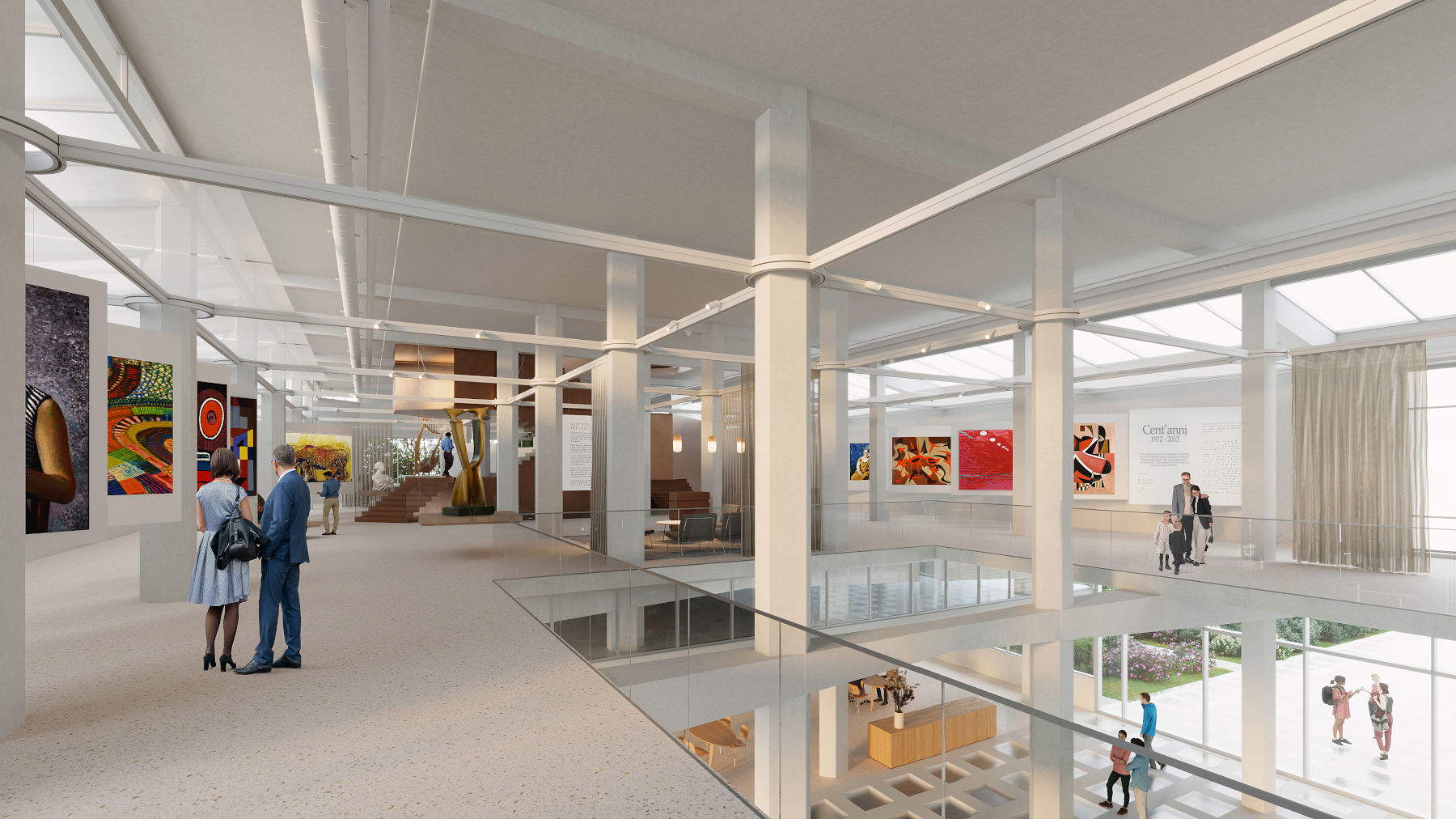
The functional layout of the spaces will be thoroughly redesigned. The ground floor will house the reception areas, spaces dedicated to educational programs, and a multipurpose area intended for activities that also serve the local community. A new dining area will also be created, featuring a separate entrance, designed to extend the complex’s accessibility even beyond the museum’s regular visiting hours.
The project also includes a new standalone auditorium, preceded by a flexible foyer and also accessible independently of the museum’s main route. The space will be used to host performances, meetings, and cultural initiatives. The permanent collections and the galleries dedicated to temporary exhibitions will be distributed between the first and second floors, according to design criteria that prioritize flexible layouts and adaptability to various curatorial needs.
Finally, during the presentation, a Public Program was announced that will run throughout the entire construction phase until the summer of 2027. The program will include initiatives aimed at the public during the construction period, with the goal of maintaining an active relationship between the GAM, the city, and visitors as the building’s transformation proceeds.
Statements
“We are truly very pleased with this project of international scope, which officially marks a new phase in the history of the GAM, transforming it into a model of culture and innovation,” said Turin Mayor Stefano Lo Russo. “Among the goals we, as an administration, have set for ourselves since the beginning of our term is certainly the revitalization of what—let us not forget—was Italy’s first gallery of modern art and has always played a strategic role within our city’s cultural system. A process of renewal has begun for the GAM which, in part through the major architectural redevelopment plan—to be implemented thanks to the winning design from the competition sponsored by the Fondazione Compagnia di San Paolo— will restore it to its former splendor, reviving the avant-garde spirit that characterized its founding—enriched with new and innovative elements—to further enhance its prestige at the national and international levels. Investing in culture always has a positive impact, both on the quality of life for citizens and on the promotion of the city.”
“The GAM is one of the iconic landmarks of Italian culture, and its revitalization represents a great opportunity for Turin,” states Marco Gilli, President of the Compagnia di San Paolo Foundation and Chair of the jury. “The Compagnia di San Paolo Foundation has chosen to support this initiative with a long-term vision, fully assuming the cost of the investment for the museum’s restoration and redevelopment and providing, in addition to the necessary financial resources, the expertise and experience gained in organizing international architectural competitions for major cultural institutions. As with the Egyptian Museum and the Cavallerizza Reale, we believe that the enhancement of cultural heritage must address the needs of the present and the challenges of the future: for this reason, the regeneration of the GAM is included among the Development Projects of the Foundation’s 2025–2028 Strategic Plan. The selected architectural design restores the GAM’s innovative spirit, reinforcing its role as an open, accessible, and international cultural institution. It is an investment in the quality of the city, in its ability to attract talent, generate knowledge, and offer new opportunities for cultural participation to future generations.”
“The GAM, Italy’s oldest civic gallery of modern and contemporary art—admirably rebuilt after the war with a design that was, at the time, unique and visionary—now aims to do the same once again with an eye toward the future,” states Massimo Broccio, President of the Fondazione Torino Musei. “The GAM redevelopment project represents the most significant investment at the national level and one of the most significant internationally in terms of ambition and impact. With the extraordinary conceptual and financial support of the Fondazione Compagnia di San Paolo and thanks to the fundamental backing of Mayor Lo Russo, it has been possible to plan a comprehensive regeneration project for the GAM that also represents an exceptional opportunity to reposition the museum on the international stage. Innovation and avant-garde are the guiding principles behind the comprehensive regeneration project for the GAM, reviving and evolving the innovative spirit that characterized—as a rare international example of its time—the museum’s founding and the design of the building. The project addresses the main contemporary challenges related to the evolution of museums and cultural venues: environmental sustainability, energy efficiency, architectural and technological innovation, but also—and above all—the implementation of new models for museum engagement geared toward tomorrow’s audience, in the fundamental spirit of inclusion and the museum’s social role, as well as its function as a cultural leader. A new civic space, a new plaza, and a gathering place. “I am particularly grateful to MVRDV, together with Balance Architettura and EP&S Group—the competition winners and among the most qualified professionals on the international stage—who, through their architectural design, have exemplarily captured and enhanced the spirit and vision of the project.”
“In many ways, our project draws on the ideas and optimism that inspired the construction of this building seventy years ago,” says Winy Maas, founding partner of MVRDV. “Our goal is to revitalize this building and make it as accessible as possible, creating a dialogue between the past and the future. “I like to think that if Carlo Bassi and Goffredo Boschetti could see our proposal today, they would be struck by how new technologies, materials, and contemporary values can take their design intuitions even further than was possible in the 1950s.”
 |
| Turin’s GAM is undergoing a transformation: MVRDV’s redevelopment project has been unveiled |
Warning: the translation into English of the original Italian article was created using automatic tools. We undertake to review all articles, but we do not guarantee the total absence of inaccuracies in the translation due to the program. You can find the original by clicking on the ITA button. If you find any mistake,please contact us.