





He passed away in Milan on July 3, at the age of 84, director, artist, and architect Yervant Gianikian, a leading figure in international experimental cinema and, together with Angela Ricci Lucchi (who passed away in 2018), a key contributor to one of the most original artistic explorations of cinematic language in the second half of the 20th century. The Venice Biennale announced his passing. Gianikian was one of the artists who most profoundly explored the memory of images, transforming the recovery of archival materials into a historical, political, and ethical reflection.
The Venice Biennale expressed its condolences in a message signed by the president, the general director, the head of the Historical Archive, the artistic director of the International Film Festival, the Board of Directors, and the entire institution. In the tribute released by the Biennale, Gianikian is described as a master of experimental cinema and the visual arts: it was at the Biennale itself that Gianikian won the Golden Lion in 2015 for the Armenian Pavilion, together with Angela Ricci Lucchi.
The relationship between Gianikian and the Venice Biennale spanned half a century of cultural history. From 1976 to 2025, the director attended the Venice International Film Festival numerous times with works created together with Angela Ricci Lucchi, while he participated in the Venice Biennale in 2001, 2013, and 2015.
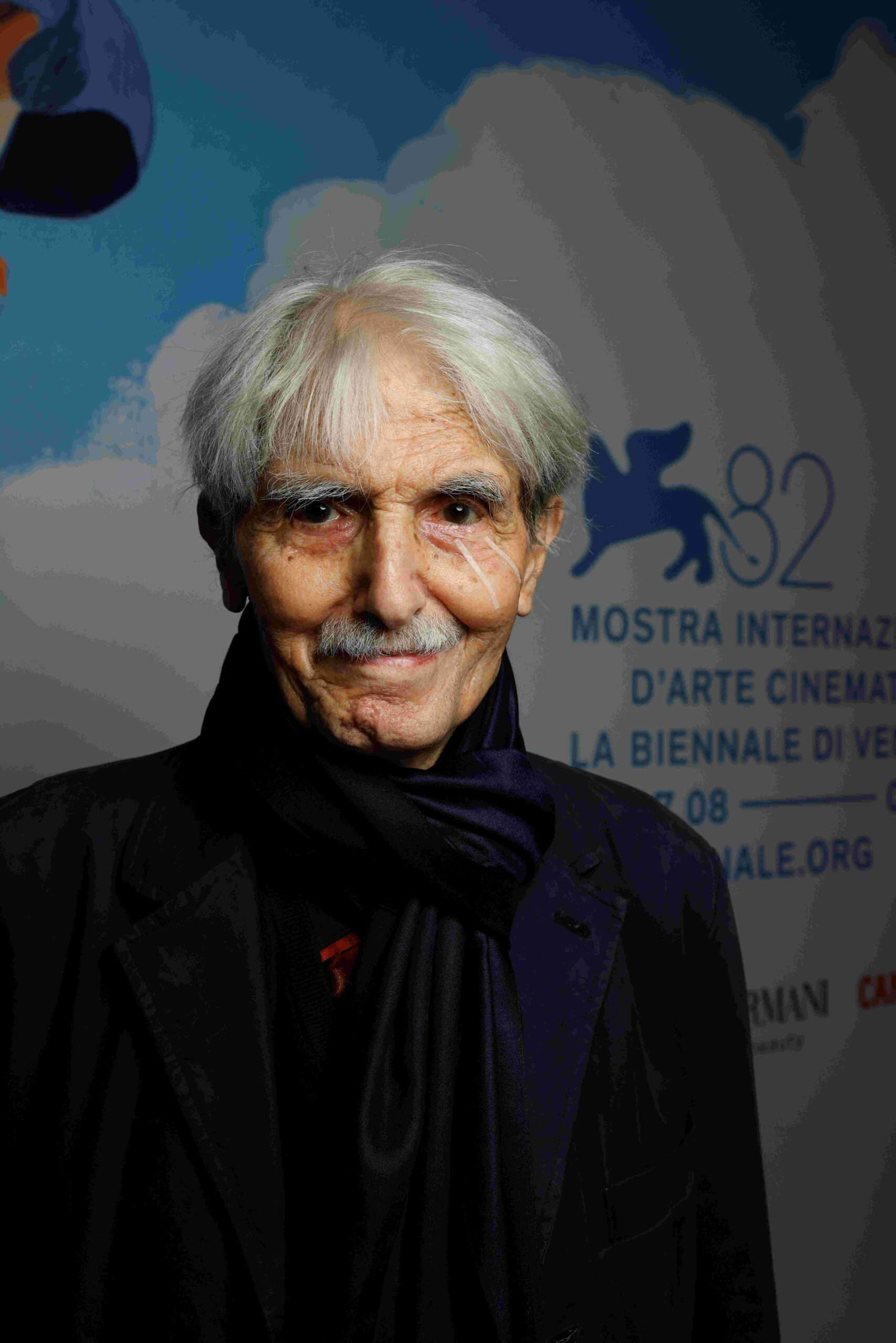
His work in recent years has been particularly significant, marked by the presentation of the three chapters of *Angela’s Diaries – The Two of Us Filmmakers*, dedicated to Angela Ricci Lucchi, who was his wife and thus his partner in life and artistic exploration. The films were presented at the Venice Film Festival in 2018, 2019, and, finally, in 2025, ideally continuing the creative dialogue between the two filmmakers even after Angela Ricci Lucchi’s death.
Last December, Gianikian had published what would turn out to be his final contribution to the magazine *La Biennale di Venezia*. In Issue 4 of 2025, in an essay titled “The Living Matter of Cinema,” he described the working method he had developed with his partner, characterizing it as “a maniacal labor of plunder, akin to that of miniaturists, Egyptian copyists, and archaeologists,” focused not so much on narrative as “on the face of things, the physiognomy of objects and environments, and what normally escapes notice.” These words effectively summarize an artistic practice grounded in a critical reinterpretation of images from the past. Through the recovery of historical films, Gianikian and Ricci Lucchi developed a personal technique for re-filming archival cinematic materials, manipulating the images through slow motion, colorization, and enlargements, and isolating details capable of revealing new interpretive perspectives. Their work was not limited to documentary recovery; rather, it transformed found footage into a tool for reflection on memory, the violence of history, colonialism, war, and the human condition.
Born in Merano in 1942 to a family of Armenian origin, Yervant Gianikian carried with him a family history deeply marked by the events of the 20th century. His father was, in fact, one of the survivors of the Armenian Genocide, having managed to save himself by finding refuge in Italy. This legacy was one of the factors that fueled his sensitivity toward the themes of historical memory, persecution, and collective tragedies.
After studying architecture in Venice, Gianikian embarked on an artistic career that initially focused on avant-garde cinema. His early experiments included so-called “scented films”—works in which the film screening was accompanied by the diffusion of aromatic essences designed to interact with the images, enhancing the viewer’s sensory experience. Starting in the mid-1970s, his career became inextricably linked with that of Angela Ricci Lucchi. Together, they embarked on a creative exploration that would redefine the language of experimental cinema through the creative reuse of archival footage, developing a distinctive and profoundly innovative method.
Over the course of their careers, they produced some of the most significant works in international independent cinema. These include *From the Pole to the Equator* (1986), *Men, Years, Life* (1990), *Prisoners of War* (1995), *On All the Peaks There Is Peace* (1999), *Balkan Inventory* (2000), *Images d’Orient – Vandal Tourism* (2001), *Oh! Man* (2004), *Pays Barbare* (2013), and the series *Angela’s Diaries – The Two of Us, Filmmakers*, which began in 2018. These works have addressed some of the most dramatic issues in contemporary history—from World War I to European colonialism, from the Balkan Wars to the consequences of political violence—developing a language that intertwines historical research, anthropological reflection, and formal experimentation.
Their work has been featured at major film festivals and leading international museums. The Gianikians’ works have been presented in various exhibition settings, including the Jeu de Paume in Paris in 1995 and 2006, the Museum of Modern Art in New York in 2000 and 2009, the Venice Biennale in 2001, the Tate Modern in London in 2011, and the Mart in Rovereto in 2014. Their participation in international film festivals has also been marked by numerous awards. In 2004, *Oh! Uomo* was nominated for the C.I.C.A.E. Award at the Cannes Film Festival, and the following year it received a special mention from the jury for best documentary at the Golden Apricot Yerevan International Film Festival.
In 2011, *Notes sur nos voyages en Russie 1989–1990* was nominated for Best Experimental Documentary at the Jihlava International Documentary Film Festival, while in 2013, *Pays Barbare* was nominated for Best Documentary at the same Czech festival as well as for the Pardo d’Oro at the Locarno Film Festival. The following year, the same film won the IBAFF Award at the IBAFF International Film Festival. A particularly significant honor came in 2015, when the two filmmakers were awarded the Prize of the Fédération Internationale des Archives du Film, further testimony to the value of their work on the world’s film heritage.
Also in 2015, as mentioned above, Gianikian and Ricci Lucchi received the Golden Lion at the Venice Biennale for the Armenian Pavilion, one of the high points of their international career. That project established a dialogue between the memory of the Armenian Genocide and the great tragedies of the 20th century.
The significance of their body of work is also confirmed by the presence of their films in major institutions dedicated to the preservation of international film heritage. Their works are, in fact, held in the film archives of the Museum of Modern Art in New York, the British Film Institute, the Cinémathèque Française in Paris, the Film Museum in Amsterdam, and the Cinémathèque in Canberra.
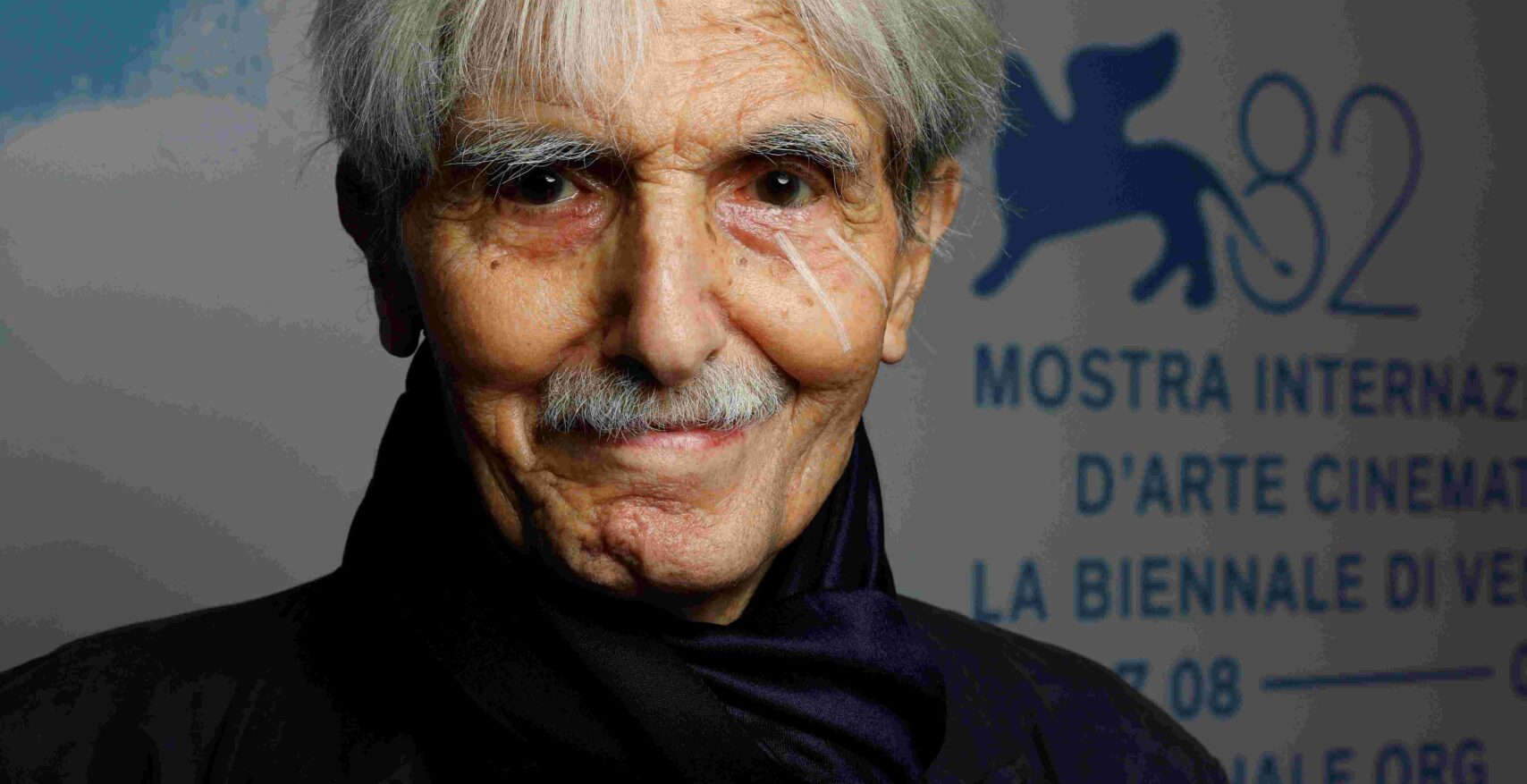 |
| Farewell to Yervant Gianikian, master of experimental cinema |

Warning: the translation into English of the original Italian article was created using automatic tools. We undertake to review all articles, but we do not guarantee the total absence of inaccuracies in the translation due to the program. You can find the original by clicking on the ITA button. If you find any mistake,please contact us.


















 IT
IT FR
FR DE
DE ES
ES CN
CN


