





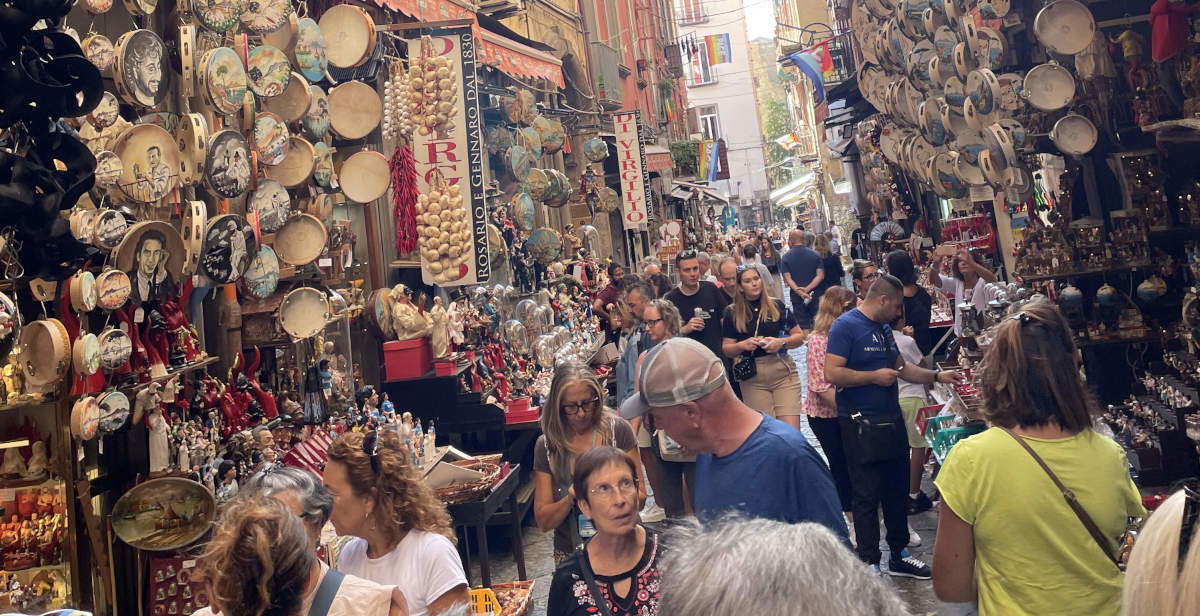
The workshops of the nativity scene artisans on Via San Gregorio Armeno in Naples remained closed yesterday morning (September 14) until 2:00 p.m. The protest, reportedby ANSA, took place at the traditional hub of artisanal production of shepherds and other figurines associated with the Neapolitan nativity scene tradition. Signs were displayed on the shop shutters to express opposition to the risk of new businesses opening that sell low-cost souvenirs unrelated to the street’s artisanal production.
The mobilization comes asthe City of Naples takes action on the issue, following reports of the possible opening of businesses on Via San Gregorio Armeno that are unrelated to the tradition of shepherds. In a statement released on September 14, 2026, the City declared its intention to reassure citizens, artisans, and merchants that measures are in place to protect the street’s commercial and historical identity.
At the heart of the Administration’s position is the new Commerce Plan, which, as specified by the City, introduces strengthened and binding protections for the area. Specifically, Article 13, paragraph 3, stipulates that on San Gregorio Armeno Street, “only the production and sale of nativity scene art and shepherds” are permitted. The City therefore emphasizes that no exceptions are permitted for this street: any new commercial activity not related to the production and sale of nativity scene art and traditional shepherds is formally prohibited by the provisions cited by the City Administration.
“San Gregorio Armeno Street represents a heritage site unique in the world, a symbol of our city’s identity and culture,” explains Teresa Armato, Councilor for Tourism and Productive Activities. “Precisely to protect its essence from homogenization and commercial speculation, the City of Naples first approved, in July 2023, a resolution prohibiting the opening of food and beverage establishments in Naples’ historic center and on San Gregorio Armeno, as well as any new business not related to traditional crafts and the production of nativity figures; and then a new City Council Resolution on June 29, 2026, establishing the new Plan for the regulation of food and beverage establishments, food production facilities, and neighborhood shops with on-site consumption in the historic center of Naples—a UNESCO site—and in the areas of the so-called ‘Buffer Zone.’ The City of Naples is closely monitoring developments in this matter and stands alongside the historic shops, reaffirming its daily commitment to protecting the cultural value, history, and nativity scene tradition that make San Gregorio Armeno the beating, authentic heart of the city.”
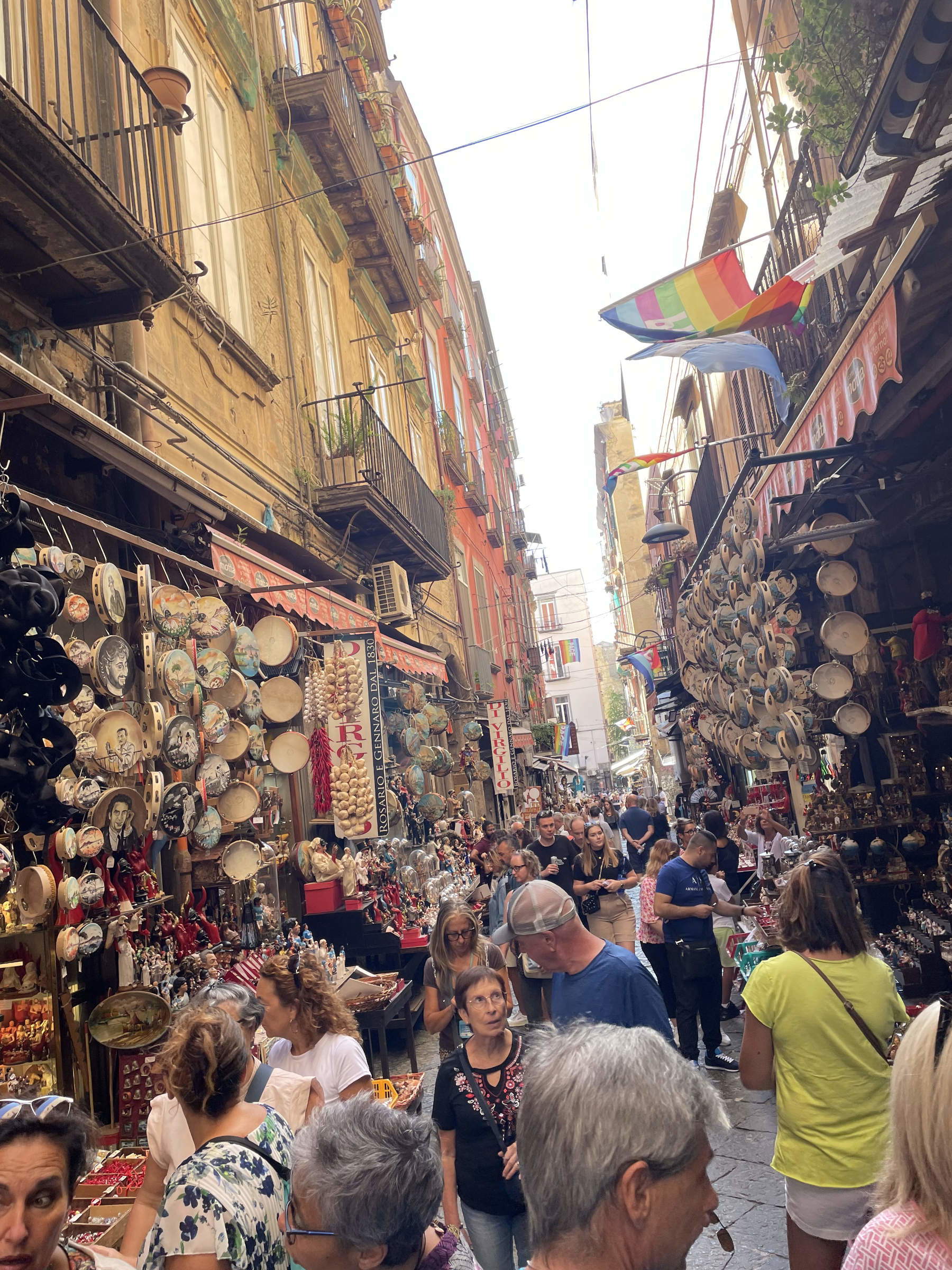
The concern expressed by the artisans relates to a phenomenon affecting numerous historic centers heavily exposed to tourism: the gradual replacement of businesses tied to a place’s cultural and productive characteristics with establishments focused primarily on selling standardized souvenirs. This commercial landscape can also be observed in some of the most popular areas of cities such as Venice and Florence, where the areas with the highest tourist traffic are filled with newsstands, stalls, and shops selling mass-produced souvenirs— items that are often unrelated to local artisanal traditions.
In Venice, for example, the tourist route around the Rialto Bridge is dotted with souvenir shops, while in Florence a similar selection can be found in the areas near Piazza del Duomo (Santa Maria del Fiore) and in other parts of the historic center. Of course, this phenomenon does not apply solely to the cities mentioned, nor to all commercial establishments in their historic districts, but it highlights an issue that has long been associated with the management of the most-visited historic centers. What is the right balance to strike between tourist demand, commerce, and the preservation of the activities that define a place’s identity?
In the case of San Gregorio Armeno, the issue takes on an additional layer of complexity because the street is historically identified precisely with a specific type of artisanal production. The presence of shops specializing in the creation of shepherds and nativity scene figures is, in fact, the commercial and productive characteristic to which the Commercial Plan intends to link the new businesses permitted to open. The issue also concerns the procedures through which applications to open new businesses are evaluated. The City explains that the review process for Certified Notifications of Business Commencement (SCIA) involves a preliminary investigation by the relevant offices. According to the City Administration, the procedure includes verifying the applicant’s compliance through a Chamber of Commerce registry check.
The commercial activity, the City further explains, may be authorized and launched only if the applicant’s corporate purpose is deemed fully compliant with the requirements set forth in the municipal regulations. The official review therefore concerns the legitimacy of the corporate purpose declared with the Chamber of Commerce and compliance with applicable regulations. Finally, in the same communication, the Administration also clarifies that the applicant’s nationality is not a relevant factor for the purposes of the verification.
While the artisans of San Gregorio Armeno are calling for the street to retain its unique character, the City of Naples is invoking the regulations already in force: the decision on which businesses may establish themselves will, in fact, be based solely on verification of their compliance with municipal provisions.
 |
| Florence and Venice, take a cue from Naples: in San Gregorio Armeno, junk doesn’t stand a chance |

Warning: the translation into English of the original Italian article was created using automatic tools. We undertake to review all articles, but we do not guarantee the total absence of inaccuracies in the translation due to the program. You can find the original by clicking on the ITA button. If you find any mistake,please contact us.




























 IT
IT FR
FR DE
DE ES
ES CN
CN


