




by Redazione 06/05/2026



Categories: News / Disclaimer
From May 9 to Sept. 27, 2026 at Santa Croce sull'Arno, a selection of works investigates the trajectories of contemporary art from the 1970s to the present, relating practices and languages through a non-chronological curatorial path.
From May 9 to September 27, 2026, the spaces of Villa Pacchiani (Santa Croce sull’Arno) will host the exhibition Works from the Pieroni - Stiefelmeier Collection, curated by Alessandro Cocchieri. Promoted by the City of Santa Croce sull’Arno, the exhibition presents itself as a survey of the trajectories of contemporary art from the 1970s to the present, avoiding a merely reconnaissance reading to instead propose an articulated critical device.
The project is based on the collection built by Mario Pieroni and Dora Stiefelmeier, characterized by a relational structure. The set of works develops through stratifications generated by encounters, affinities and theoretical tensions. What emerges is a configuration that takes on the features of an organism in continuous transformation, capable of returning a plurality of approaches and critical positions.
The exhibition path brings heterogeneous practices into dialogue, highlighting connections between research that has contributed to redefining the concept of work, space and authorship. Investigations on language and the tautological nature of conceptual art find a declination in the works of Joseph Kosuth, while modular and serial structures refer to Sol LeWitt’s research. In parallel, the material and archetypal dimension manifests itself in the works of Jannis Kounellis, juxtaposed with the environmental and perceptual component that characterizes the installations of Cristina Iglesias.


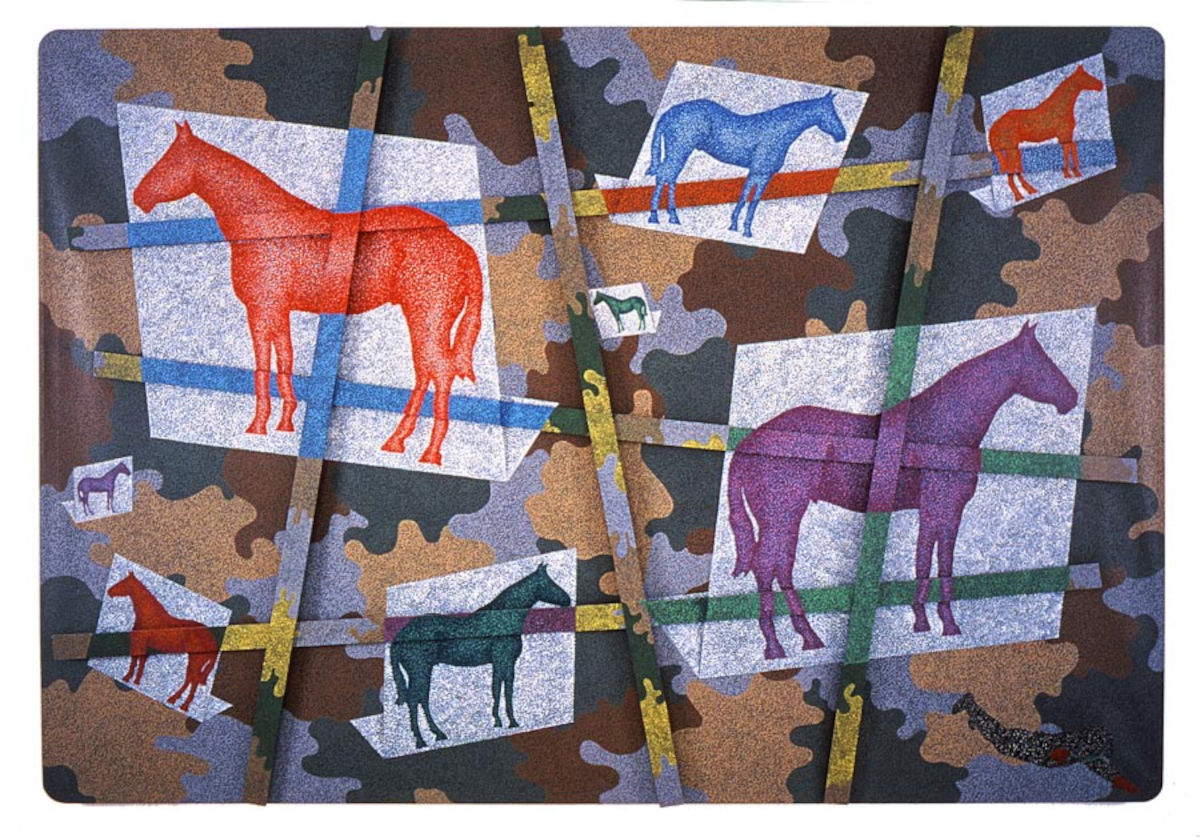
One section of the itinerary focuses on practices that interrogate the body, identity and social space. This includes the research of Vito Acconci and Jimmie Durham, whose works address issues related to physical presence and the political dimension of artistic action. On the other hand, reflection on sign, surface and temporality runs through the works of Carla Accardi and Ettore Spalletti.
Gianfranco Baruchello’s research also fits within this context, described as capable of constructing a fragmented and analytical imaginary, in which detail is transformed into mental and narrative structure. The exhibition also highlights a relevant Italian line in the redefinition of artistic language, represented by figures such as Giulio Paolini, Luigi Ontani and Remo Salvadori. Alongside these presences, the path opens to intercultural and transnational dimensions, including artists such as Mirosław Bałka and Bizhan Bassiri. The interweaving of poetics returns a complex panorama, in which the collection assumes the role of a dynamic archive.
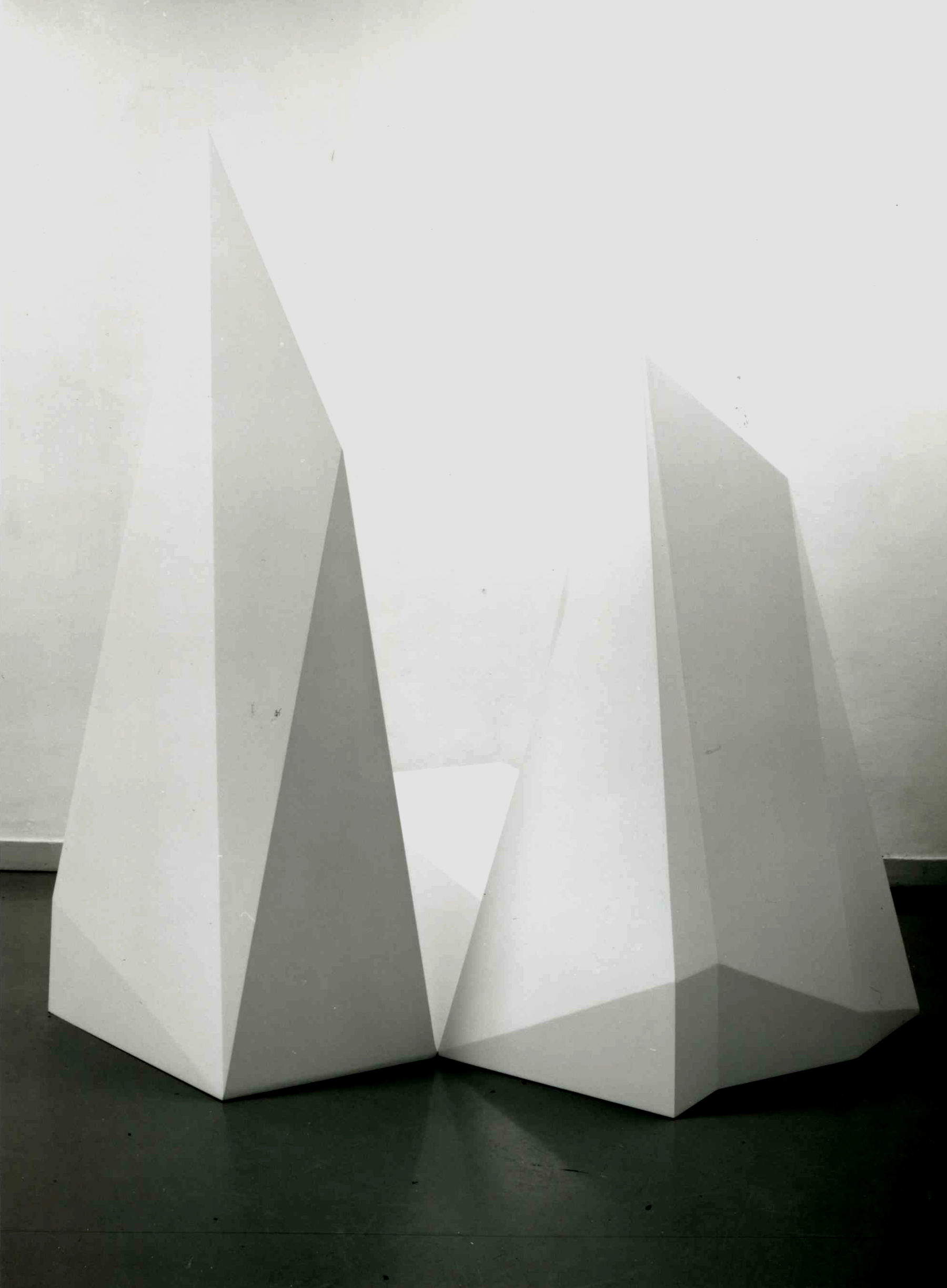
The curatorship avoids a linear chronological organization, favoring instead a structure based on resonances, affinities and counterpoints. Such an approach invites the visitor to build his or her own interpretive path, traversing the works according to non-hierarchical logic. Works from the Pieroni - Stiefelmeier Collection thus proposes a reflection on the role of the collection as a cultural and political practice, understood as a mediating space between artistic production, the exhibition system and memory.
“It is a pride for the administration to be able to bring to Villa Pacchiani an exhibition of such great relevance in the contemporary art scene,” says Culture Councillor Simone Balsanti. “We thank the Pieroni Stiefelmeier family for giving us the opportunity to host within our exhibition space works that represent, as a whole, a project of high value, thanks to the presence of artists of international relevance. The works featured, in the diversity of their language, are intended to offer the public an opportunity to reflect on the themes of identity, space and the role of art in society. Welcoming a curatorial project of this level means for the administration to continue in the work of making culture a tool for growth, dialogue and enhancement of the territory.”
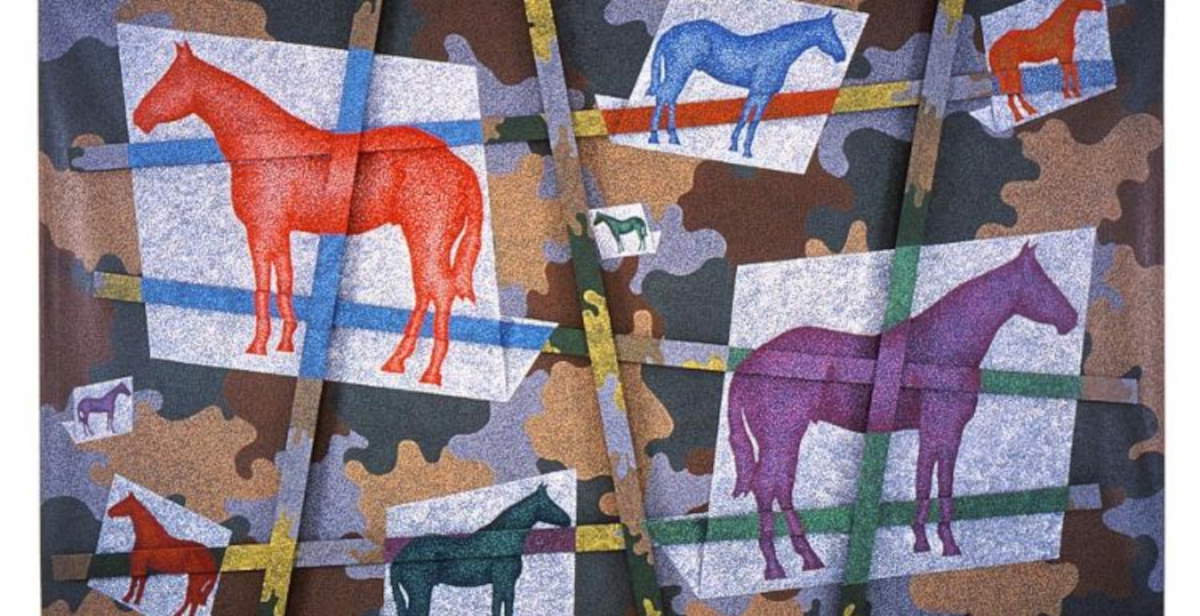 |
| The Pieroni-Stiefelmeier Collection on display at Villa Pacchiani |
Warning: the translation into English of the original Italian article was created using automatic tools. We undertake to review all articles, but we do not guarantee the total absence of inaccuracies in the translation due to the program. You can find the original by clicking on the ITA button. If you find any mistake,please contact us.