


by Luca Rossi 26/10/2026


Categories: Opinions / Disclaimer
From Giulia Cenci to Diego Marcon, some works raise an uncomfortable question: how much is truly new in today’s art? The problem may not be plagiarism, but rather the loss of historical memory and critical discourse. An article by Luca Rossi.
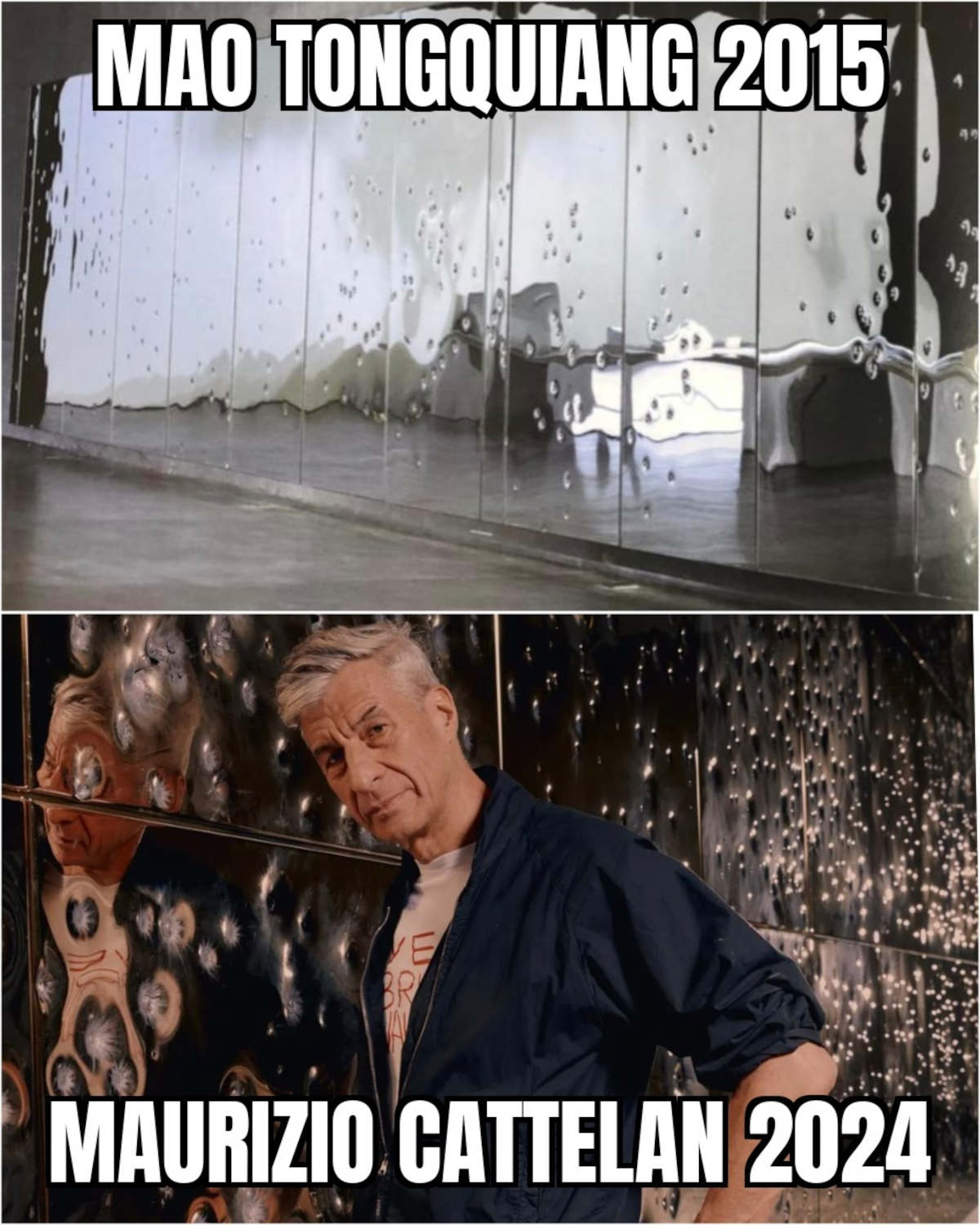
Roberto Daolio, a prominent Italian critic and curator, argued that form is already concept. There’s no getting around it: the form we give to a work is never merely a shell, but inevitably embodies the idea from which that work springs, the way of looking at the world, the artist’s attitude, and their stance. For this reason, when a contemporary work closely replicates forms, strategies, and devices developed decades earlier, it is not enough to claim that “the concept is different.” If the form coincides so closely, a part of the thought that form carries with it inevitably resurfaces.


But this article does not aim to set up a court for plagiarism. It is not necessarily a matter of claiming that certain artists have consciously copied works from the 20th century. The issue might be even more problematic: what if some of the younger generations know too little about what has already happened? What if, believing they are creating something new, they are unknowingly reviving methods, attitudes, visions, and devices developed forty, sixty, or eighty years ago? I could try to treat pneumonia today using tools and knowledge from eighty years ago: perhaps the patient would survive. But I would be forgoing decades of research and the possibilities offered by everything we have learned in the meantime. Something similar risks happening in contemporary art.


The gradual weakening of critical discourse over the past twenty years has created an environment in which works that are formally familiar can be perceived as new simply because the necessary memory to recognize their genealogies is lacking. It is here that certain Italian cases become particularly interesting.
The work of Giulia Cenci ( Cortona, 1988), an artist who has been strongly supported in recent years by the Italian and international art scenes, can be read as an emblematic case. In her early works, approaches traceable to the materiality and sensibility of the Informel movement emerge; subsequently, affinities become evident—at least upon comparative examination—with certain sculptural intuitions developed by Bruce Nauman (Fort Wayne, 1941) several decades ago: the fragmented body, the hybridization of figure and device, and the construction of unsettling presences through assemblages and casts.
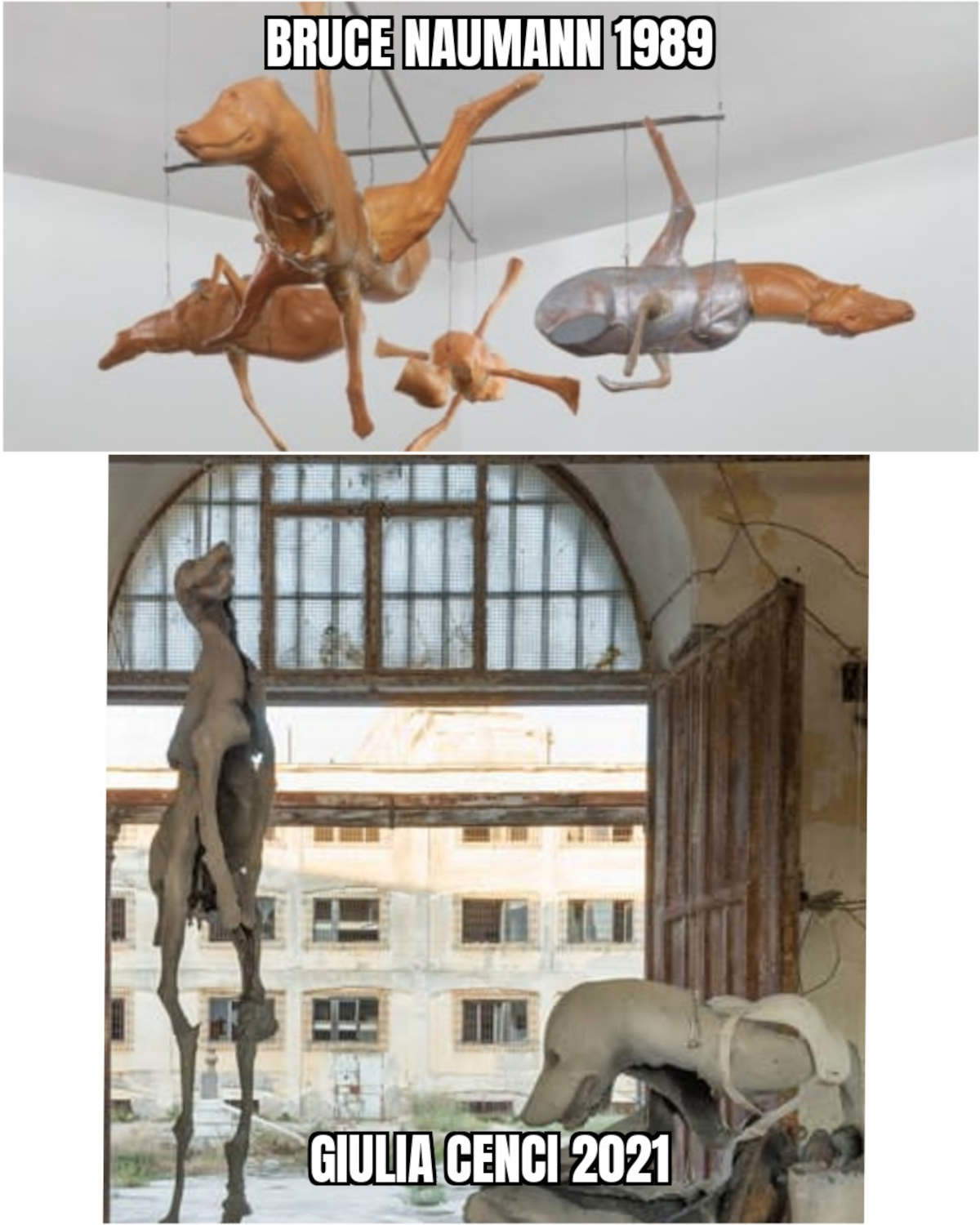
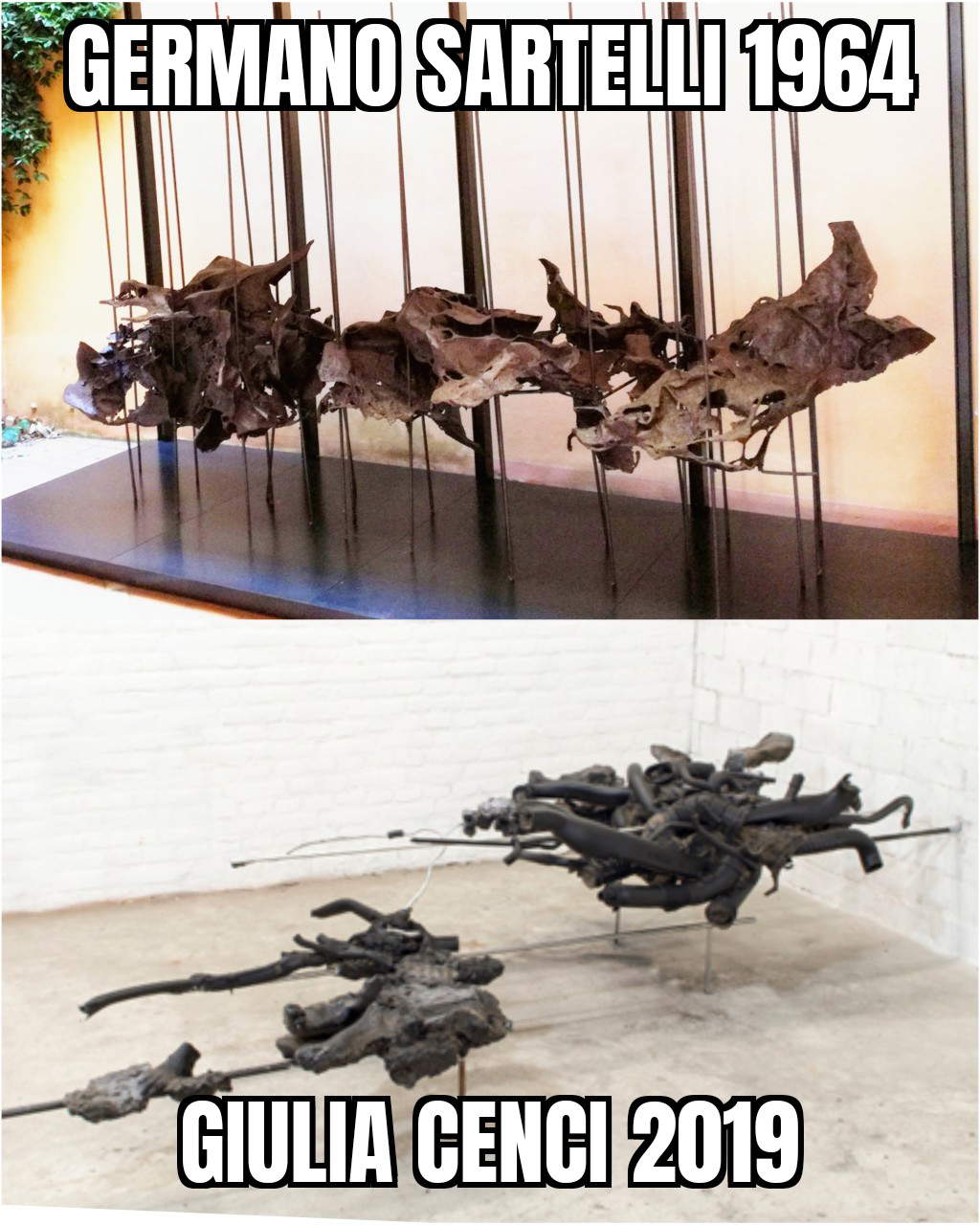
This does not automatically mean “copying.” It does, however, mean that it becomes legitimate to ask what critical distance separates citation from reworking, and reworking from mere formal repetition. For if a work draws on a historical language without using it to truly open up a perspective on the present, the risk is thatof an academic exercise: technically refined, formally effective, but incapable of producing a shift. At that point, the system that supports those works also comes into play. Curators, gallery owners, institutions, and collectors progressively invest economic, symbolic, and reputational capital in certain artists. The more this investment grows, the more difficult it becomes to radically question its value. There is no need to assume bad faith: it is a structural mechanism. The system inevitably ends up defending its own choices as well.
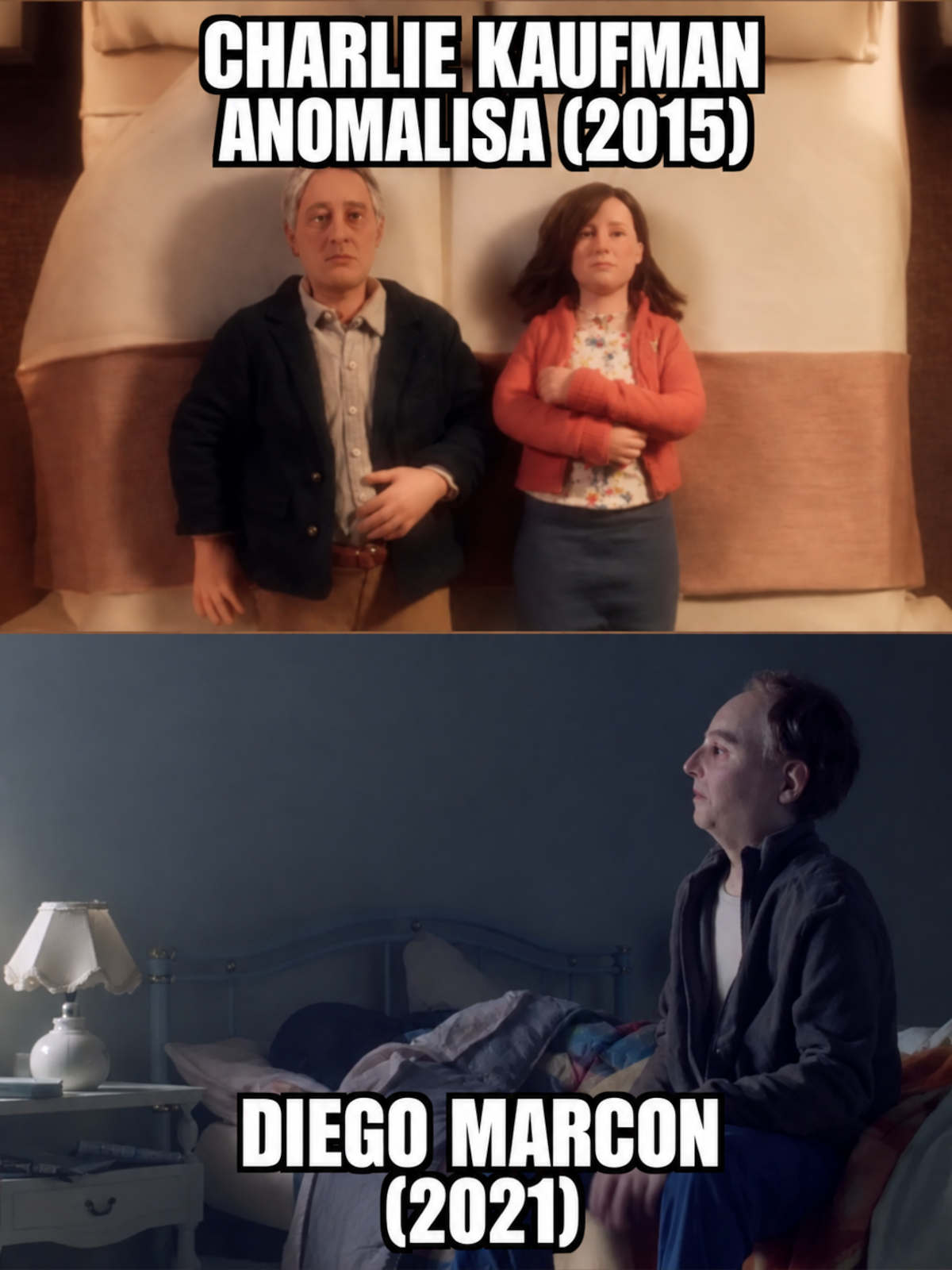
A similar discussion can be had regarding Diego Marcon ( Busto Arsizio, 1985), another Italian artist who has been strongly supported by institutions in recent years. In some of his works, visual and narrative references emerge that may evoke highly recognizable past experiences. The technique and atmosphere of certain films evoke, for example, the unsettling world of *Anomalisa* by Charlie Kaufman and Duke Johnson, released in 2015—years before Marcon’s works were presented at the 2022 Venice Biennale.The point is not to suggest a direct relationship of derivation, but rather to examine the genealogy of certain artistic approaches: artificial figures, animation, and cinema used to create an emotional estrangement between the human and the non-human. These reflections, incidentally, were explored with excellent results and well before anyone suspected such connections by Diego Zuelli ( Reggio Emilia, 1979) in the early 2000s.
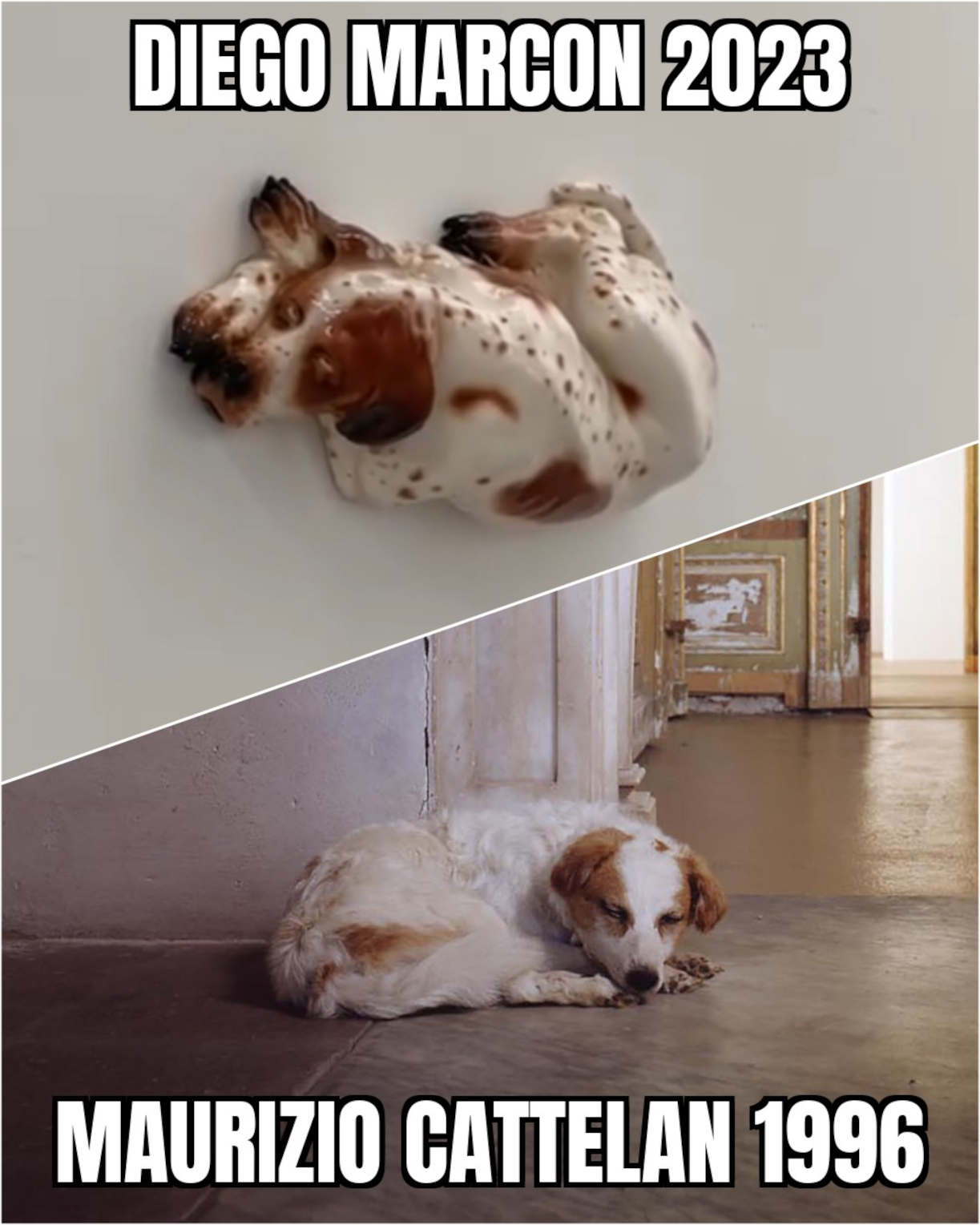
Even more evident, on an iconographic level, is the possible comparison between a video by Marcon—in which a digitally rendered child, hanged and placed in a mountain setting, paradoxically continues to sing a yodel—and the famous installation by Maurizio Cattelan (Padua, 1960) featuring children hanged from a tree in a public space in Milan. The works are different and belong to different contexts, but the visual association is strong enough to raise a question: when an image already powerfully inscribed in recent art history is reused, what new meaning has actually been added?
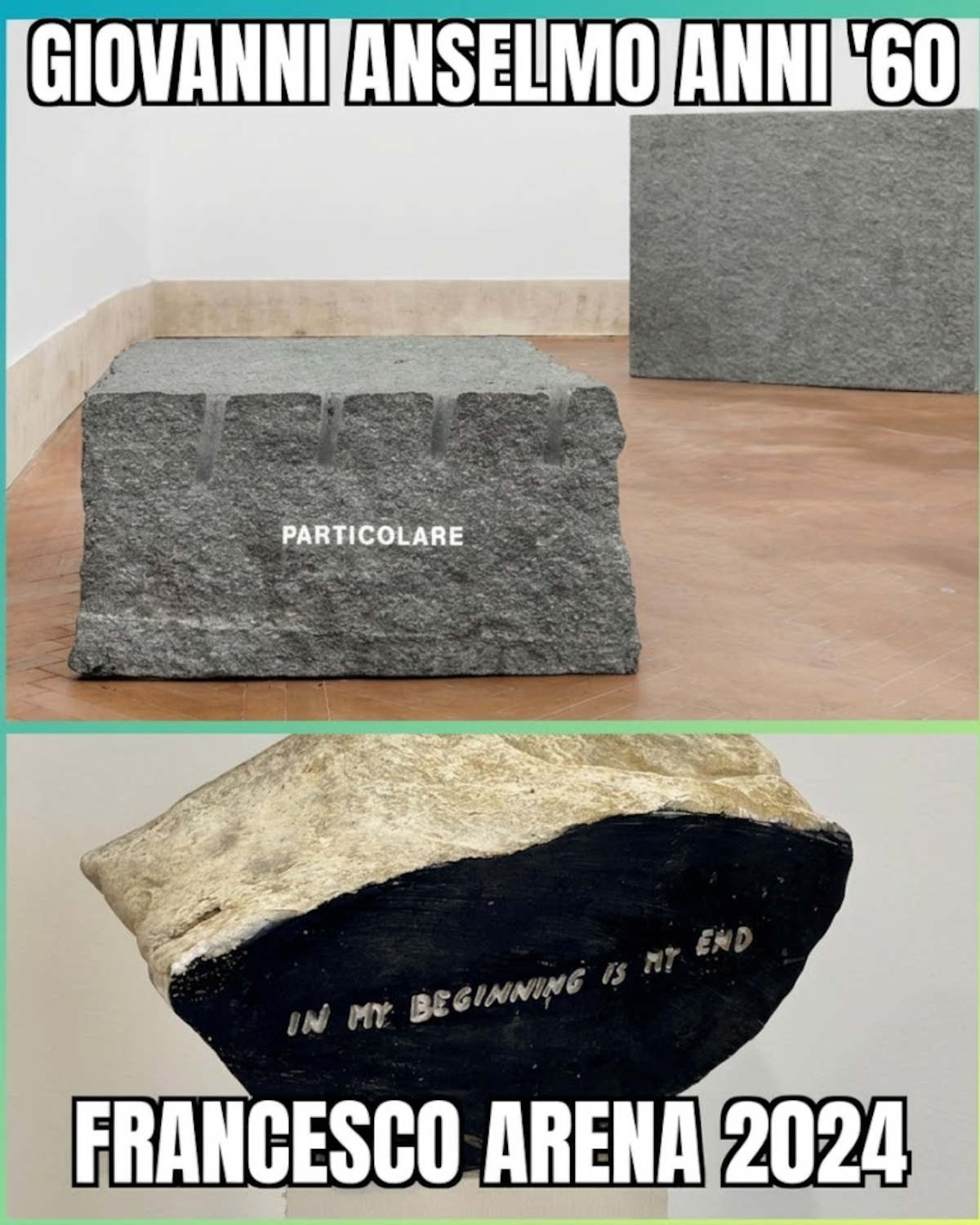
Francesco Arena (Bari, 1978) can also be viewed through this lens. His work continually revisits strategies belonging to the grammar of Arte Povera and Italian conceptual art: the relationship between scale and the body, weight and matter, biographical detail and object, word and sculpture. It is difficult, in some cases, not to think of lineages that trace back through Alighiero Boetti, Giovanni Anselmo, and other key figures of that era.
Once again: the problem isn’t using Boetti or Anselmo. It would be absurd to expect a contemporary artist to work without reference to history. Citation is perhaps inevitable today, but it must become a bridge to engage with the present; otherwise, the contemporary dies—exactly as is happening now. And we find ourselves idolizing yet another revival of painting with Luis Fratino, who transports us to late-19th-century Cubist atmospheres but with a dash of queerness that feels very much like an aperitif at Art Basel Unlimited.
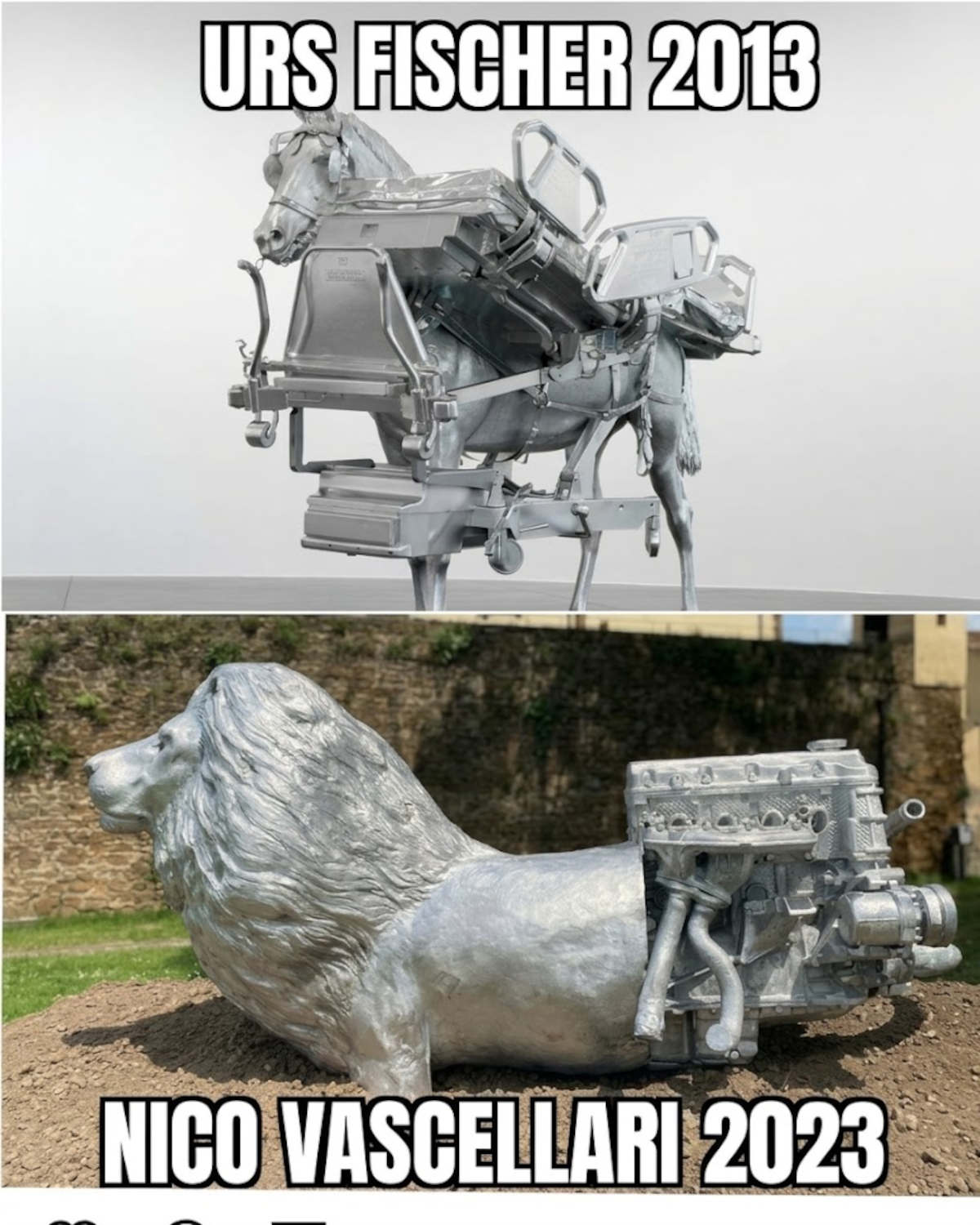
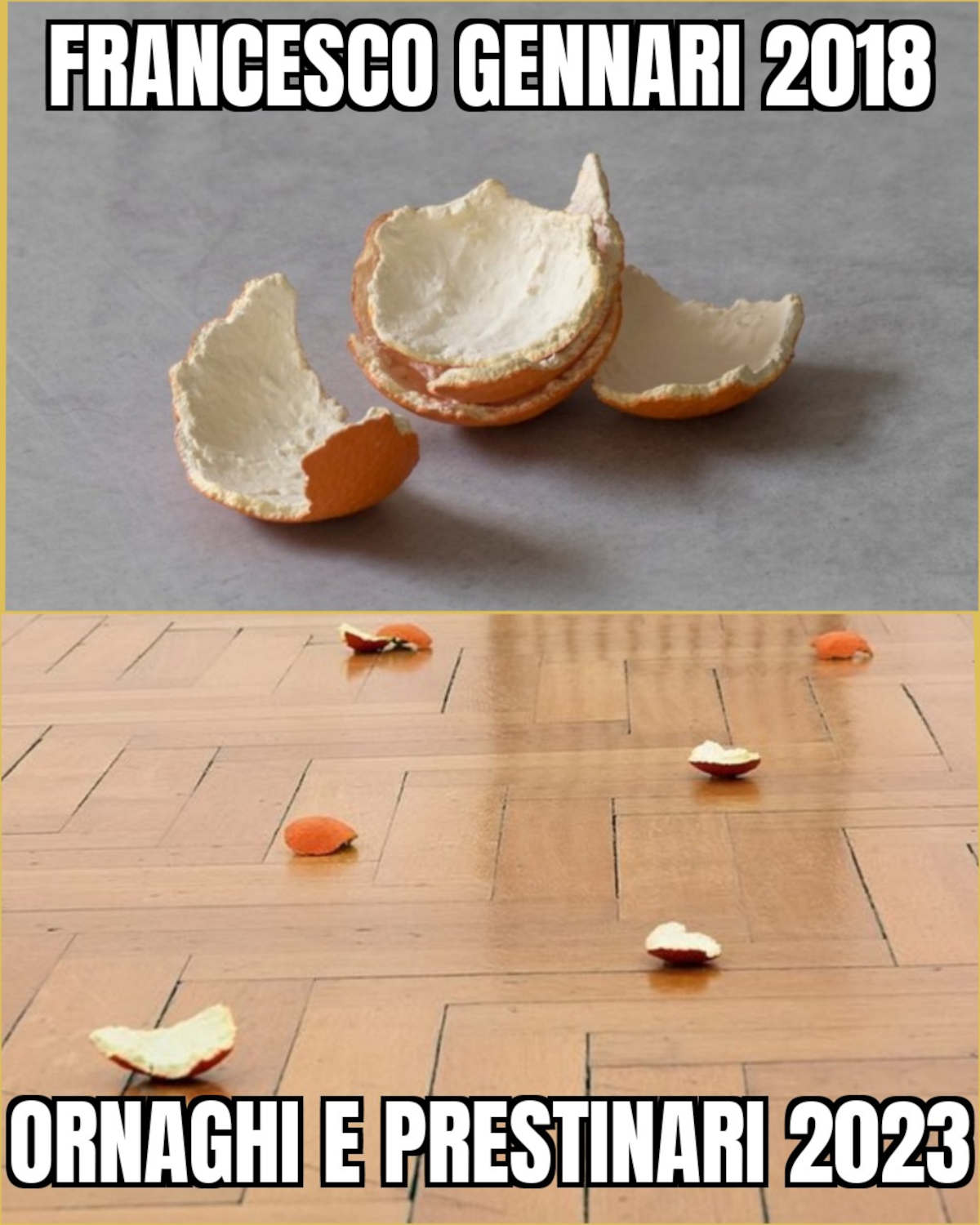
If genealogy becomes merely a repertoire, the artwork risks turning into a sort of “Scary Movie” of contemporary art: a sequence of instantly recognizable elements, recombined and updated, but without this recombination necessarily producing a new tool for understanding the present.
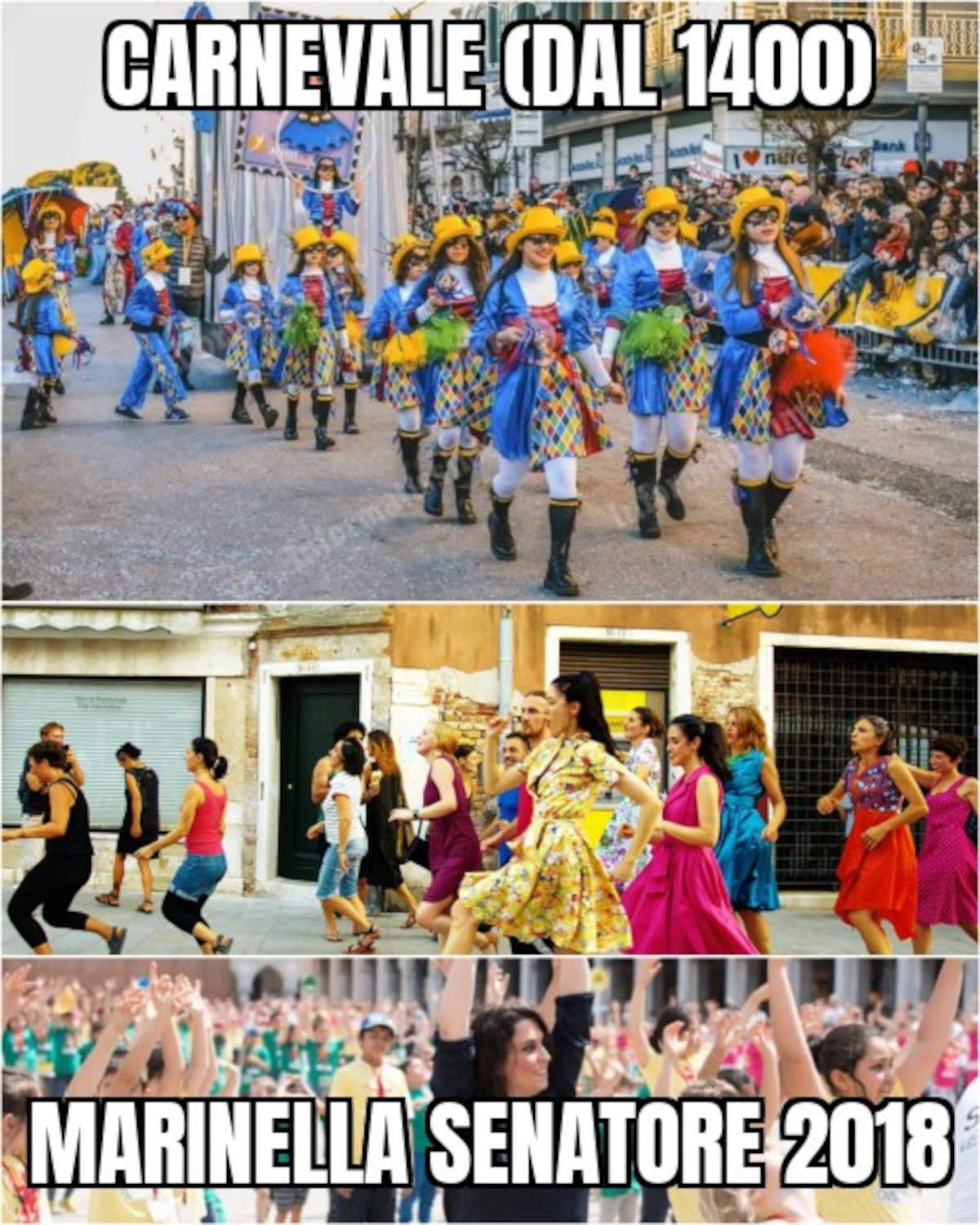
The practice of Marinella Senatore (Cava de’ Tirreni, 1977) also offers a different yet related case. On the one hand, we find the aesthetic appropriation of the illuminations and stage designs typical of popular festivals in Southern Italy—a language that already possesses its own cultural history and had already entered contemporary art through other artists. On the other hand, we find large participatory events in which associations, groups, and communities are called upon to intervene, perform, and come together. Here, too, participation, in and of itself, does not guarantee contemporaneity or radicalism. Indeed, participation becomes entertainment that places the spectator in a passive role.
When anything can happen, when every presence is welcomed and energies are simply allowed to flow, we must ask ourselves what exactly is the artistic mechanism capable of transforming a gathering, a festival, or a form of social interaction into a work of art. Otherwise, there is a risk that relational aesthetics will simply turn into an institutional carnival, not very different in structure from the countless festivals organized each year by municipalities, associations, and local communities.
A reference should be a bridge: starting from something we know to take us somewhere we haven’t been yet. It should use the past to address a new condition of the present. If, on the other hand, that bridge brings us back to exactly the same shore from which we set out, then we are not dealing with a reworking: we are dealing with a repetition. And this is precisely where the issue becomes political. Because contemporary art could be one of the few spaces in society where we can train new eyes, question our needs, develop novel forms of attention, and experiment with new ways of seeing, engaging with, and resisting the world around us—and the often-invisible dynamics of our private lives. If art ceases to produce new tools for seeing and continues, consciously or unconsciously, to repeat those of the past, it loses more than just its originality. It loses its very function.
Warning: the translation into English of the original Italian article was created using automatic tools. We undertake to review all articles, but we do not guarantee the total absence of inaccuracies in the translation due to the program. You can find the original by clicking on the ITA button. If you find any mistake,please contact us.