





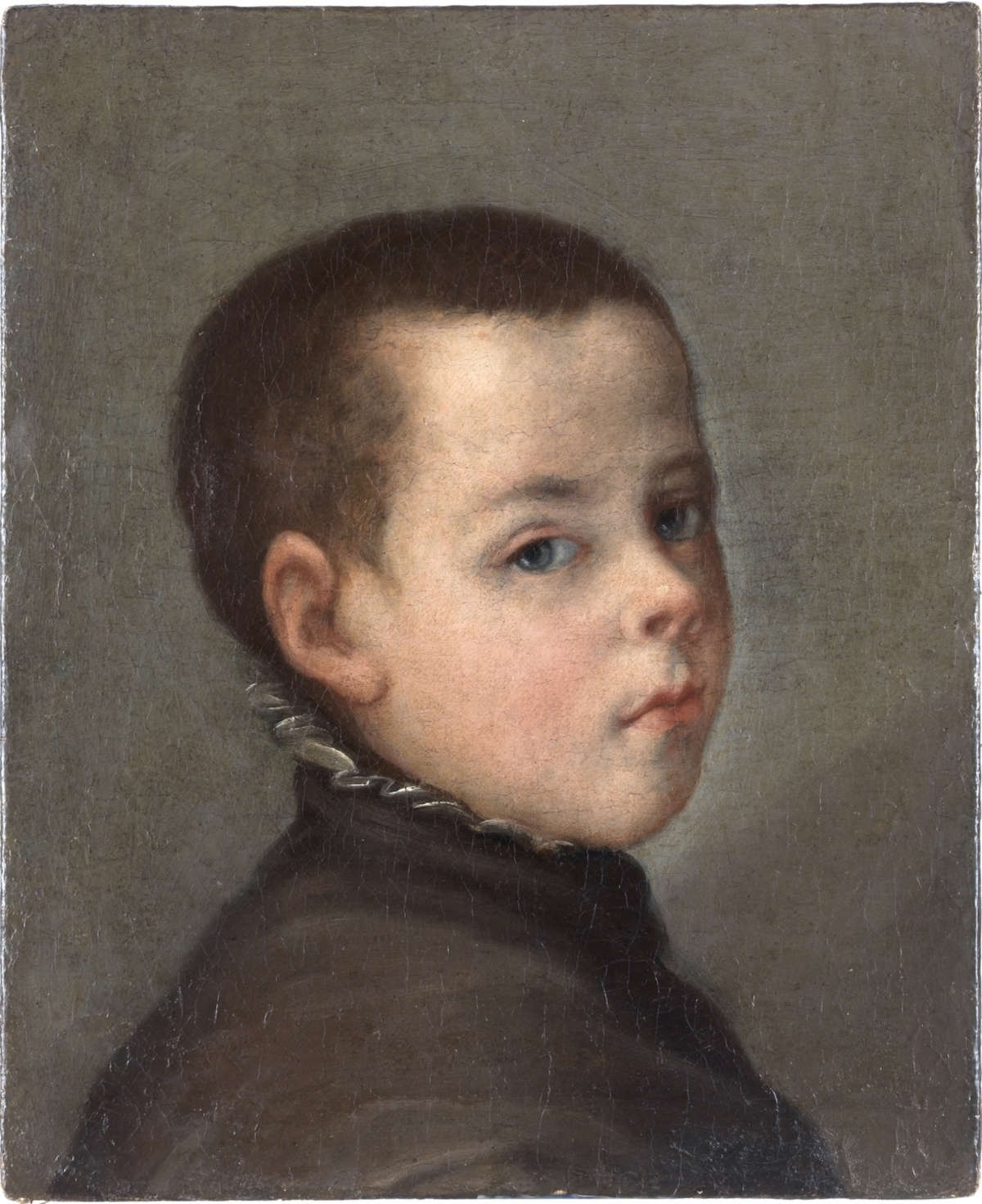
If one were to go by the headlines, it would seem there are no major doubts regarding the authenticity of the *Portrait of a Young Man*, which was presented with some grand ceremony in the halls of the Ducal Palace in Urbino—which are under the jurisdiction of the municipality—although the press releases have, quite rightly, opted for a bit more caution: The work is thus described as a small panel painting attributed to Federico Barocci which, according to the press release from the Hampel auction house that presented it in Urbino, “could constitute a new and valuable piece of the puzzle for the study of the Urbino artist.” According to Hampel’s website (although press releases from a few days ago still referred to a painting “currently under study”), an expert report attributes the small portrait to Barocci, and it is signed by Luca Baroni, a young scholar who, two years ago, curated—together with Luigi Gallo, Anna Maria Ambrosini Massari, and Giovanni Russo—the major exhibition on the Urbino artist held at the Galleria Nazionale delle Marche. In short: the boy in question is believed to be the same one who appears in the *Martyrdom of Saint Sebastian* in the Cathedral of Urbino—namely, a young man from the Bonaventura family, depicted in the lower part of the altarpiece. It’s a curious story, however, since the young man from the altarpiece had been cut away from the rest of the painting in 1982, entered the antiquities market illegally, was then rediscovered in 2017 by Giancarlo Ciaroni of Altomani & Sons, and after restoration, in 2020, he was reattached to the *Martyrdom*. Baroni believes that the small canvas found in Germany may be a preparatory sketch executed by Barocci before he began work on the final version of the altarpiece.
Now, I must preface this by stating right away that I have not seen the painting in person (which, since I am not a Barocci specialist, might not significantly alter the value of the observations that follow, but would at least allow me to offer a slightly more nuanced assessment) and that I am not here to provide an expert appraisal, much less to issue certificates of authenticity; however, this painting—given its characteristics, its relationship to other works we know, and also the somewhat unconventional manner in which it was presented to public scrutiny—perhaps deserves some consideration. Not to reach a verdict, of course, but to try to piece together a more subdued and less sensational preliminary inquiry that consists of asking ourselves why, precisely, we find ourselves standing before this painting.
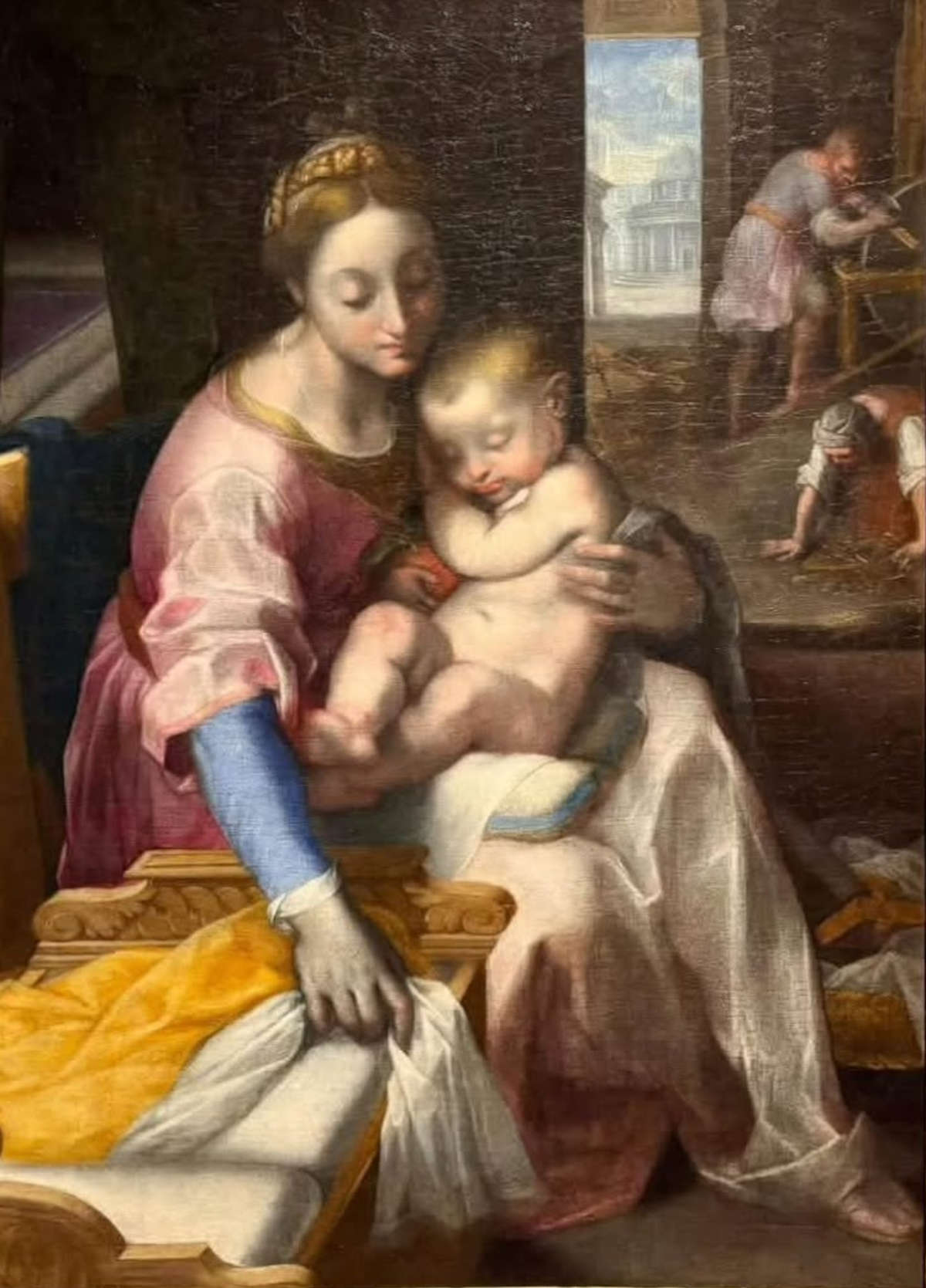
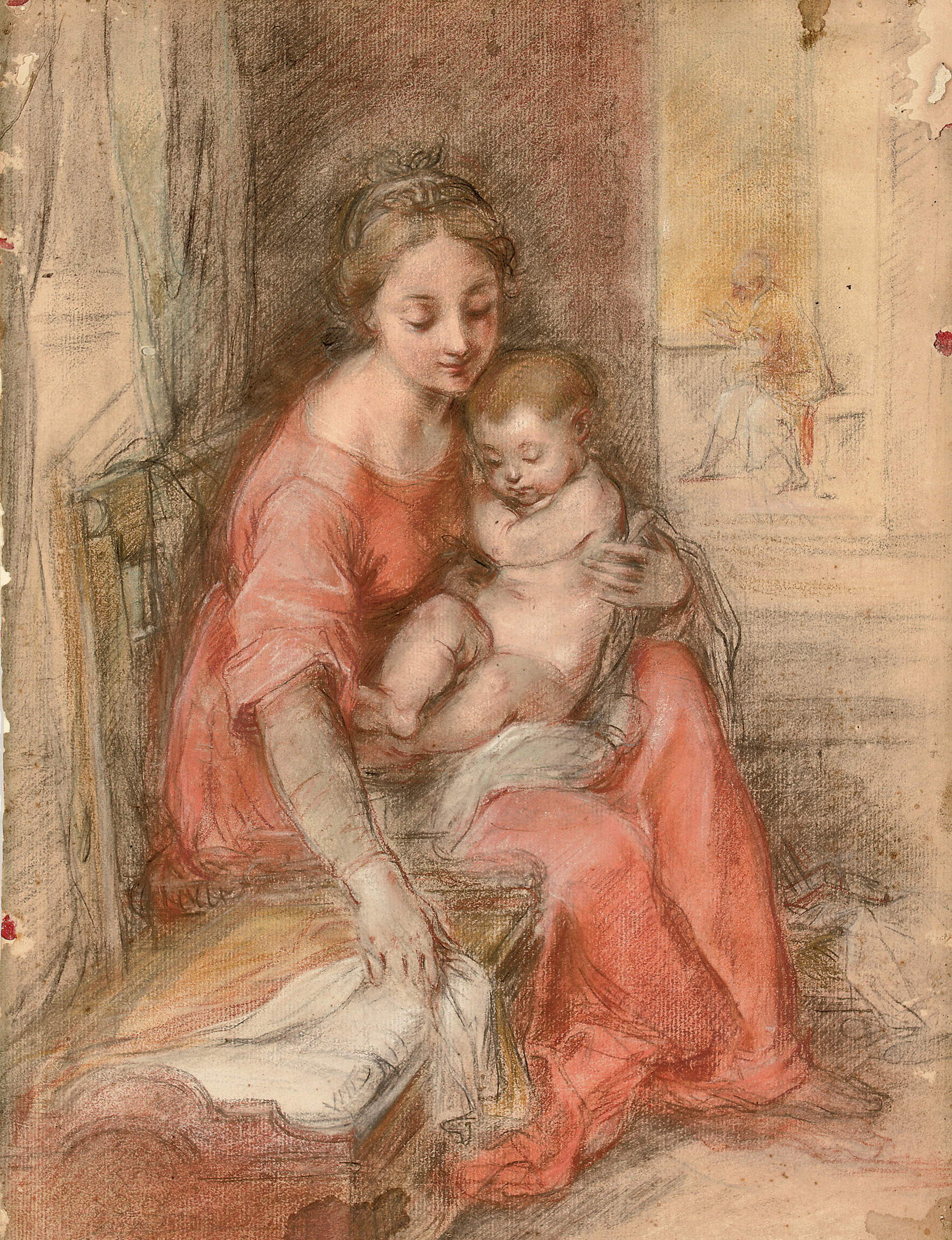
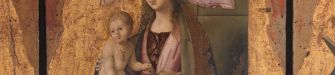
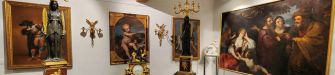
First, the context: the small panel depicting the young man from Munich—let’s call him that—has found its way into a colorful exhibition of assorted curiosities built around a painting, the Albani Madonna, presented as “one of Federico Barocci’s last masterpieces,” even though it is anything but a masterpiece, and probably not even by Barocci (except for the concept, of course), or at least only to a very small extent, since the work remained unfinished at the time of his death and was completed by assistants in his workshop, and perhaps even retouched and reworked many decades later (to gauge the difference between a masterpiece and an unfinished work by the master that was completed by others, it might be more interesting to consider comparing the painting on display with its preparatory drawing, which was auctioned in 2010 at Christie’s). Luigi Gallo agrees on this point (I actually met with him to get his opinion on the painting from Monaco): “The Madonna, ” he tells me, “was well known. And if we’d thought it was by Barocci, we would have requested it for the exhibition as well.” It is curious, in fact, and perhaps even instructive: following one of the best exhibitions of recent years—that at the Galleria Nazionale delle Marche, which showcased the best of Barocci’s work to visitors— the same building—albeit in a wing that has nothing to do with the Galleria Nazionale delle Marche—is organizing an exhibition that does indeed bear Federico Barocci’s name in the title, but whose central image seems to have been largely forgotten. That the Madonna is a Baroccean invention—it bears repeating—is beyond any doubt, yet it is also a “very problematic painting from a qualitative standpoint”: so says Anna Maria Ambrosini Massari, to whom I pose more or less the same questions I ask the director of the National Gallery. “I know it very well,” the scholar—who is among the foremost experts on Barocci—is keen to emphasize. “And regarding the Albani Madonna, there is an excellent, recent scholarly article by Barbara Agosti that clears up many misunderstandings—including historiographical ones—and sets the record straight on the entire matter.” Nevertheless, the assessment that it is a complicated painting, difficult to interpret, remains unchanged. “And on the other hand, even the late Andrea Emiliani—who was very dear to me and devoted much of his research to Barocci—agreed with this assessment; in fact, he suggested that a 18th-century restorer had carried out extensive work on it. Another great scholar, John Shearman, also agreed; in fact, the painting cannot be compared to other sublime works, even those from Barocci’s later years, and—even taking into account documented restorations and alterations—the strain in the rendering of space, the ramshackle perspective, the leaden colors, and the heavy brushstrokes are evident.”
One might think that the Albani Madonna has little to do with the German painting: true, but only to a certain extent. The fact is that, in a field that does not hesitate to label a painting as “a masterpiece”—even one as dubious and certainly uninspiring as the Albani Madonna—it would be hard to be surprised if the small Monacense panel were to be passed off as a rediscovered Barocci. Furthermore, the context certainly does not invalidate the painting’s possible authorship, should it be robustly proven (the circumstances surrounding the Munich portrait do not constitute any proof, of course), but it at least justifies asking what exactly one is looking at.
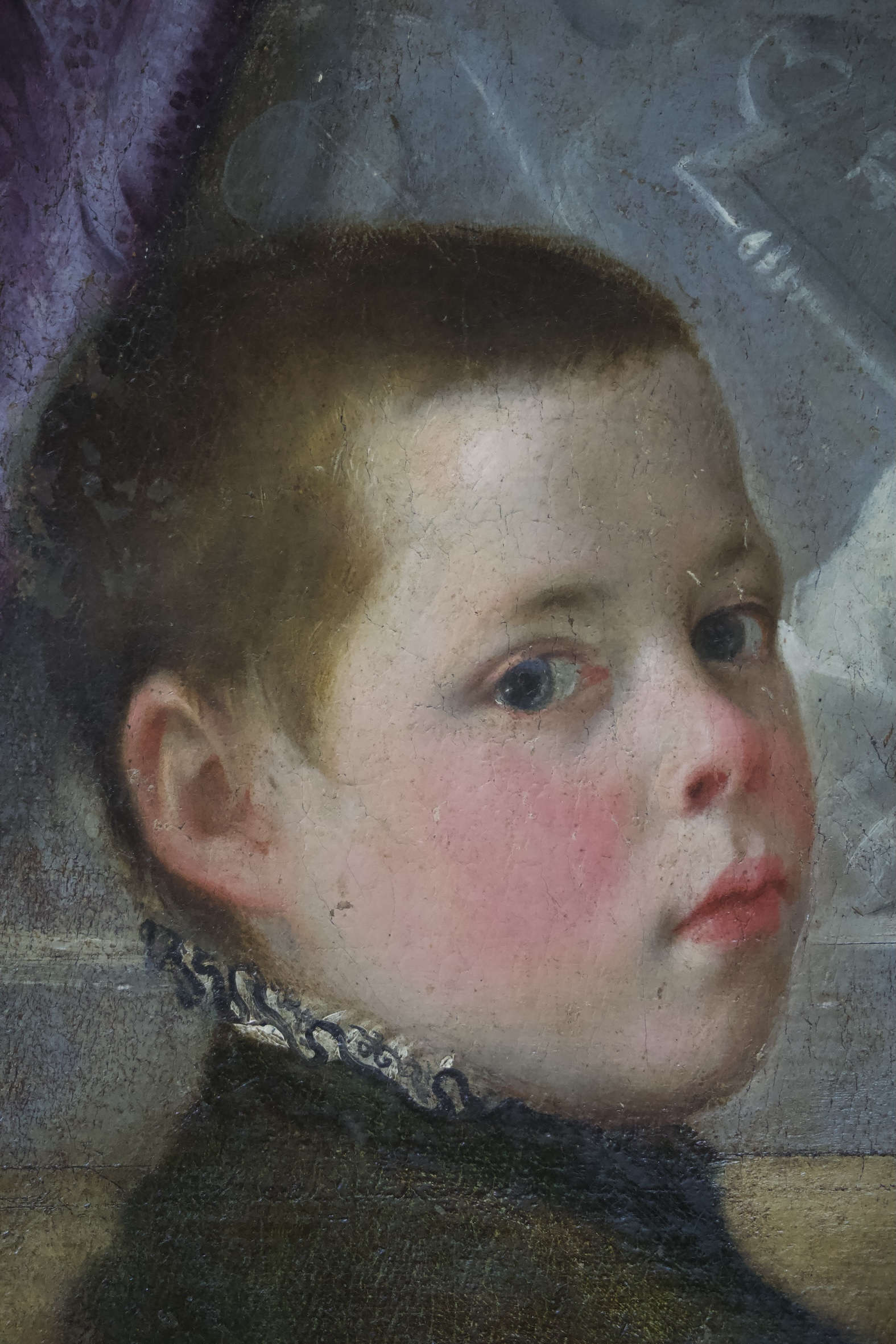
Gallo also tells me he has not yet seen the Munich portrait in person, so for now he is keeping his distance until he can examine it more closely. Although, he tells me, “I get the impression, looking at Barocci’s portraits—and thus the sensitivity, the depth, the transparencies—that we are in another universe. There are several elements that suggest I should exercise great caution in attributing it directly to Barocci: it seems to me that the transparencies, the glazes, and the expression are lacking; it is also less profound than the portrait in the *Martyrdom of Saint Sebastian*.” However, it is not merely the rigidity of an image that, as soon as one takes the trouble to compare it with that of the young man portrayed in the altarpiece, will undoubtedly appear harsher, more tense—almost as if, in the transition from the possible sketch to the final version, every trace of severity had vanished— and Barocci had decided to imbue the portrait of the young Bonaventura of Urbino with a softness and grace unknown to his German counterpart. One might argue that it is a preparatory sketch, of course, and that the final version is something else entirely. And yet the provisional nature of a possible sketch does not serve as a certificate of immunity against any doubt. Not to mention that the connection to an almost identical painting—held at the Pinacoteca Giaquinto in Bari and long attributed to an unspecified 17th-century Venetian painter—still needs to be explained. “A boy,” reads the museum’s 2006 catalog, “strongly characterized by his short hair, prominent nose, and intense blue gaze.” Federico Hermanin (who considered it a work from the Tuscan school of the 17th century) and Carlo Ludovico Ragghianti had both commented on the Apulian painting; Ragghianti, based on the clothing and light contrasts, instead attributed it to the Venetian 17th century and the circle of the Bassanos. No one, however, had noted the resemblance to the young Bonaventura in Barocci’s *Martyrdom* —a resemblance that, however, warrants further clarification. Could Barocci, then, have painted two works—certainly similar but not identical—of a quality that, at least judging by the photographs, appears significantly inferior to that of the altarpiece? The possible untenability of a third version as an autograph work, in the face of two others already interpreted as copies, is certainly not proof of inauthenticity, but it is nonetheless a burden of proof that the attribution should satisfy in a more than solid manner.
The subject of copies, moreover, is well known to Baroni, who in 2020 published a highly useful volume—with a preface by Ambrosini Massari— on the restoration of the *Martyrdom of Saint Sebastian*, in which the scholar had included the portrait from the Pinacoteca di Bari and a very similar painting, whose current location is unknown (it is known from a rather unimpressive photograph from the Zeri Foundation), both attributed as “anonymous after Federico Barocci,” both “likely seventeenth-century works from the Urbino school,” both considered replicas of the young Bonaventura’s face executed later, probably—as Baroni surmised—because they were commissioned by the family, “eager to have an effigy of their own illustrious ancestor,” or because in ancient times it was believed that the face “perpetuated Barocci’s likeness.” The Hampel panel, at least judging by the photos, does not seem to differ all that much from the other two similar works: why, then, should there be one executed directly by the master?
Anna Maria Ambrosini Massari seeks to focus attention precisely on the comparison between the small panel and the altarpiece. She, too, begins with the same caveat: she has not seen the painting in person. “Given this essential fact,” she tells me, “perhaps seeing the painting in person reveals something that, as far as one can judge from the photo that has circulated in the newspapers, is not evident. In fact, the disparity when compared to the masterpiece in the Duomo is striking—which does not work in the new painting’s favor—and I think this is plain for all to see. The same applies to the alleged preparatory drawing, which adds further complications to the entire matter.” He is referring to a sheet of paper, privately owned, that Baroni has linked to the German portrait and the altarpiece. “Even in cases where the related drawings are authentic, as with the Albani Madonna, ” he adds, “it means nothing if the quality of the painting doesn’t match, but this is a basic tenet of art history: if anything, those wonderful drawings prove that this is a concept from earlier years—perhaps around the mid-1970s—but evidently executed later. On the other hand, the nature of collaboration within the workshop alongside the master very often gives rise to such cases, which are inherent to Barocci’s work, as he still followed the organizational model of Raphael’s workshop. The fact is that the body of his authentic and documented paintings provides a qualitative benchmark—across all phases of his career—below which the quality cannot fall; for this reason, a trained eye suffices, and the comparisons are uncompromising.”
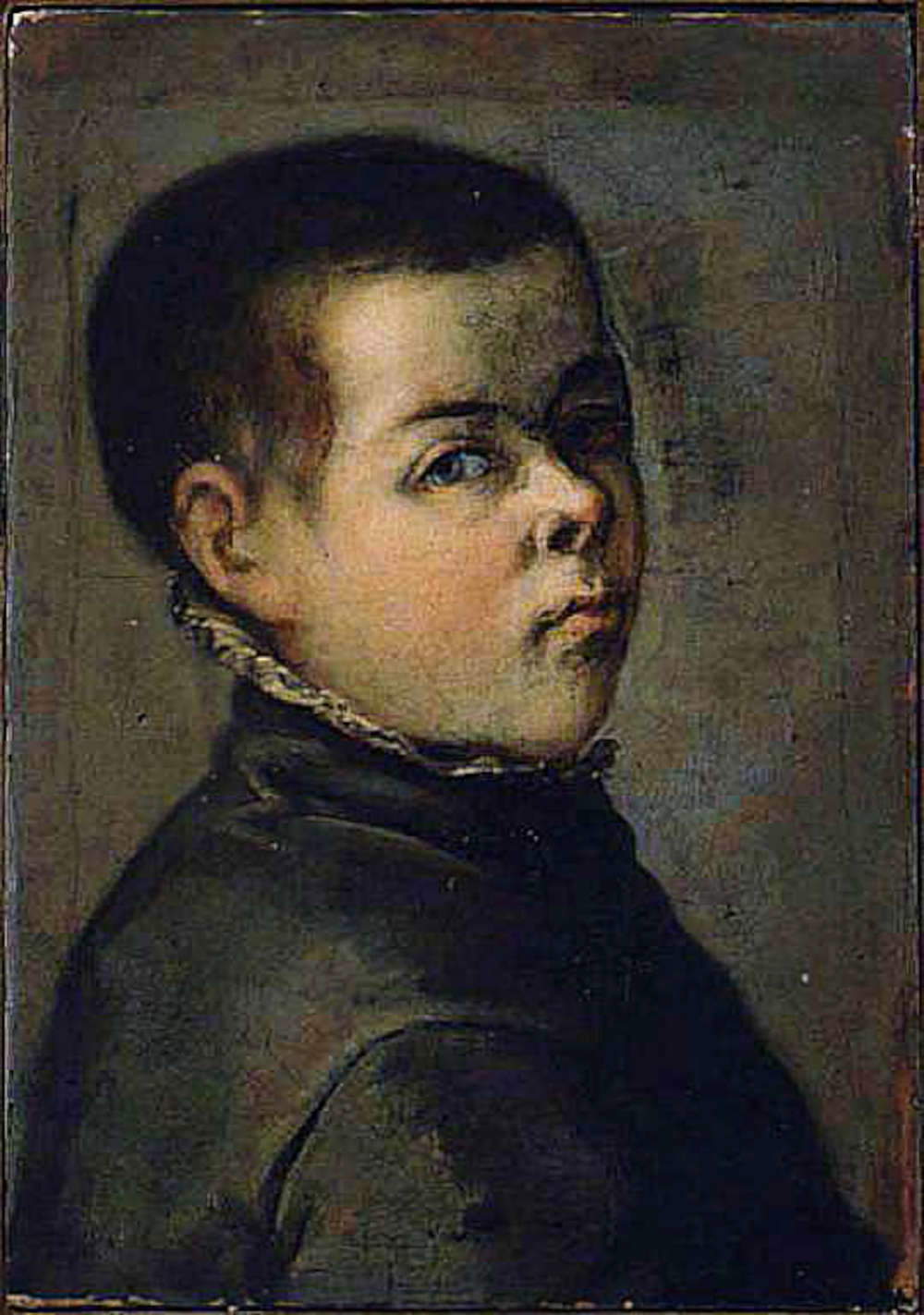
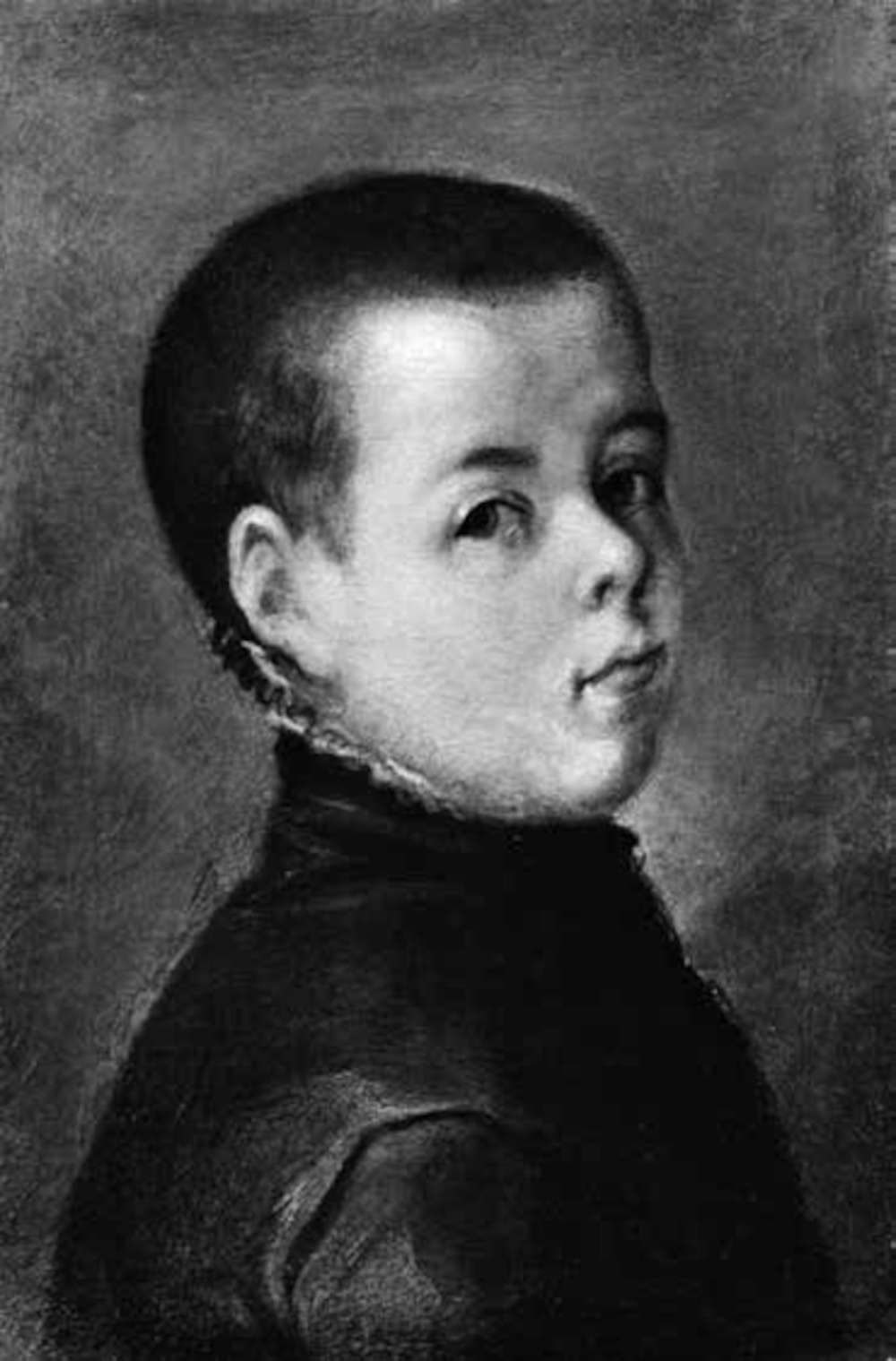
According to Director Gallo, there is another aspect of the matter that does not speak in favor of the rediscovered painting: “the fact that even the most authoritative voices—including my own—were completely excluded from endorsing or rejecting this attribution. In other words, it was decided that this was the painting; it was exhibited and held up as a treasure, all amid the silence of the scientific community.” Discussion among scholars, he adds, “especially when dealing with attribution issues, is a normal—even healthy—practice; it’s a positive thing.” All the more so, one might add, if it concerns a work for sale that is, however, enjoying significant institutional endorsement. Hampel’s website reveals that the work is valued between 80,000 and 120,000 euros and that it will be included in the authorized catalog of Federico Barocci, which Luca Baroni is currently compiling. Scholars will have time to evaluate the conclusions. Of course, I’m not saying that the newly discovered painting isn’t by Barocci, and Luca Baroni is a scholar of repute. I do wonder, however, whether the attribution to Barocci has been sufficiently substantiated.
Finally, one must ask what this exhibition will leave behind in Urbino. Or, conversely, what Urbino will leave behind for this exhibition. On this last point, we’ll likely see later on. As for the first point, it’s easier to answer now: so far, it doesn’t seem to have left much behind. Luigi Gallo, who was even made an honorary citizen of Urbino, asks this explicitly: “Why doesn’t the city take it upon itself to promote what’s already there—and there’s so much of it?” He’s thinking of the masterpieces—the real ones—by Barocci that are in the city but are difficult to see: the “Crucifixion” in the Oratorio della Morte (little or nothing is known about the small church’s opening hours: it seems to open only on special occasions, which is tantamount to saying it’s always closed), or the “Perdono di Assisi” in the Church of San Francesco. Ambrosini Massari goes so far as to appeal to the City Council: “It’s unfortunate that many institutions only take action when there’s at least the scent of a scoop, when in fact there’s so much to be done regarding our cultural heritage: I’m thinking, for example, of the urgent need for new lighting for the altarpiece of St. Francis in Urbino—the *Perdono di Assisi*, the artist’s absolute masterpiece, a powerful draw for tourism and a project that aligns perfectly with the City’s objectives. When Luigi Gallo and I organized the monographic exhibition on the painter—which had absorbed all the funding received in full from the Ministry alone through the National Gallery of the Marche—the issue had been raised, and I believe there had been preliminary discussions with the City Council. I may be mistaken, but I’d like to take this opportunity to address the City of Urbino: given the recently concluded Franciscan Year and the admirable efforts—including cultural initiatives and the promotion of the Capuchins—it would truly be commendable to take action.” It makes sense: why be so hasty when it comes to canonizing brand-new Baroccis, while the established ones are inaccessible or left in the dark?

The author of this article: Federico Giannini
Nato a Massa nel 1986, si è laureato nel 2010 in Informatica Umanistica all’Università di Pisa. Nel 2009 ha iniziato a lavorare nel settore della comunicazione su web, con particolare riferimento alla comunicazione per i beni culturali. Nel 2017 ha fondato con Ilaria Baratta la rivista Finestre sull’Arte. Dalla fondazione è direttore responsabile della rivista. Nel 2025 ha scritto il libro Vero, Falso, Fake. Credenze, errori e falsità nel mondo dell'arte (Giunti editore). Collabora e ha collaborato con diverse riviste, tra cui Art e Dossier e Left, e per la televisione è stato autore del documentario Le mani dell’arte (Rai 5) ed è stato tra i presentatori del programma Dorian – L’arte non invecchia (Rai 5). Al suo attivo anche docenze in materia di giornalismo culturale all'Università di Genova e all'Ordine dei Giornalisti, inoltre partecipa regolarmente come relatore e moderatore su temi di arte e cultura a numerosi convegni (tra gli altri: Lu.Bec. Lucca Beni Culturali, Ro.Me Exhibition, Con-Vivere Festival, TTG Travel Experience).
Warning: the translation into English of the original Italian article was created using automatic tools. We undertake to review all articles, but we do not guarantee the total absence of inaccuracies in the translation due to the program. You can find the original by clicking on the ITA button. If you find any mistake,please contact us.






















 IT
IT FR
FR DE
DE ES
ES CN
CN


