




by
Federico Giannini  @federicogiannini1
26/11/2026



Categories: Travel / Disclaimer
In Bistagno, in the Monferrato region, a plaster cast gallery houses the works of Giulio Monteverde, and these models bring to life the sensual and melancholic world of one of the greatest sculptors of the 19th century. And his angels tell the story of an era in which death ceased to be a promise of eternity and became a restless and seductive thought. A new article by Federico Giannini for the column “Le vie del silenzio.”


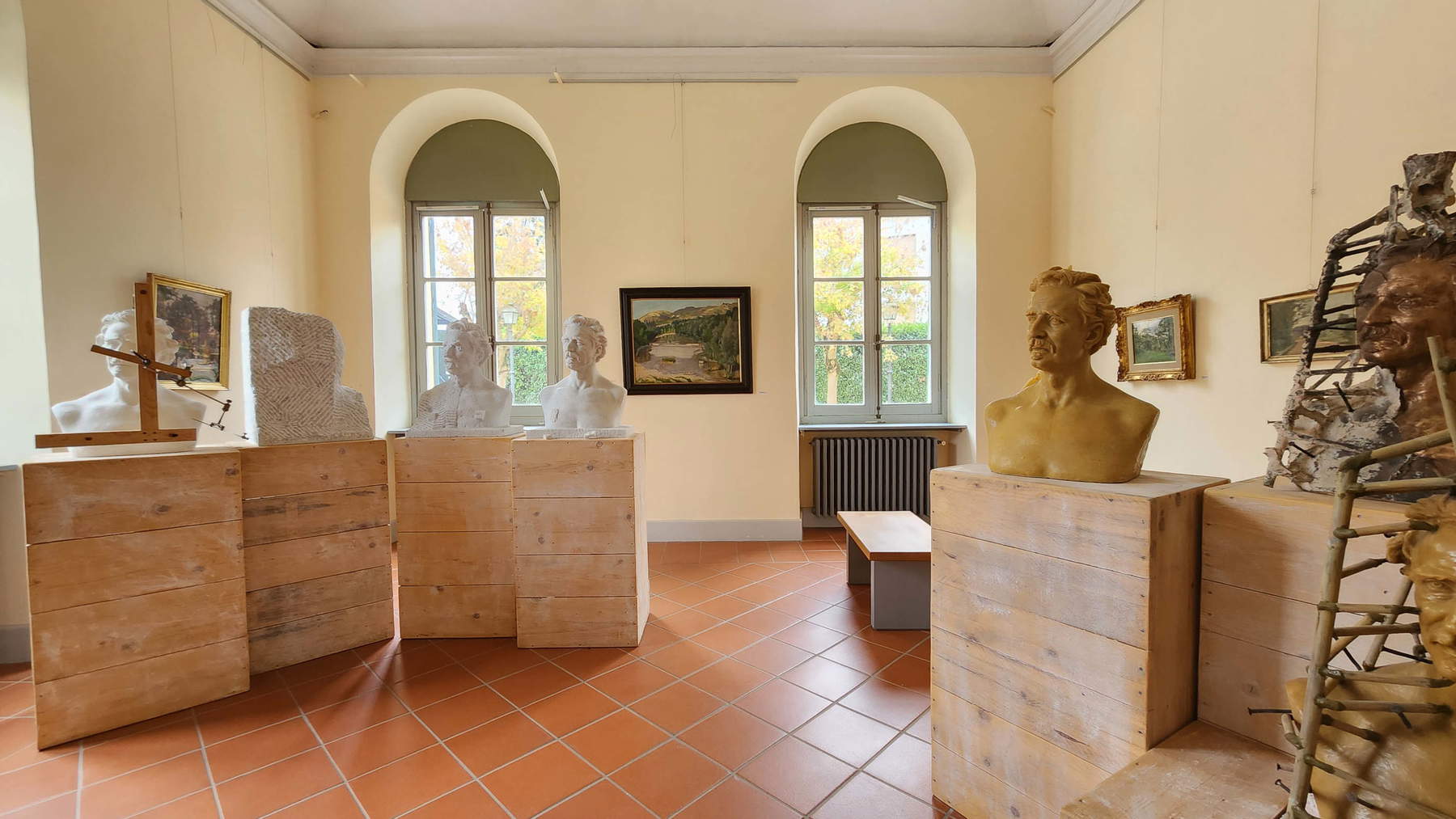
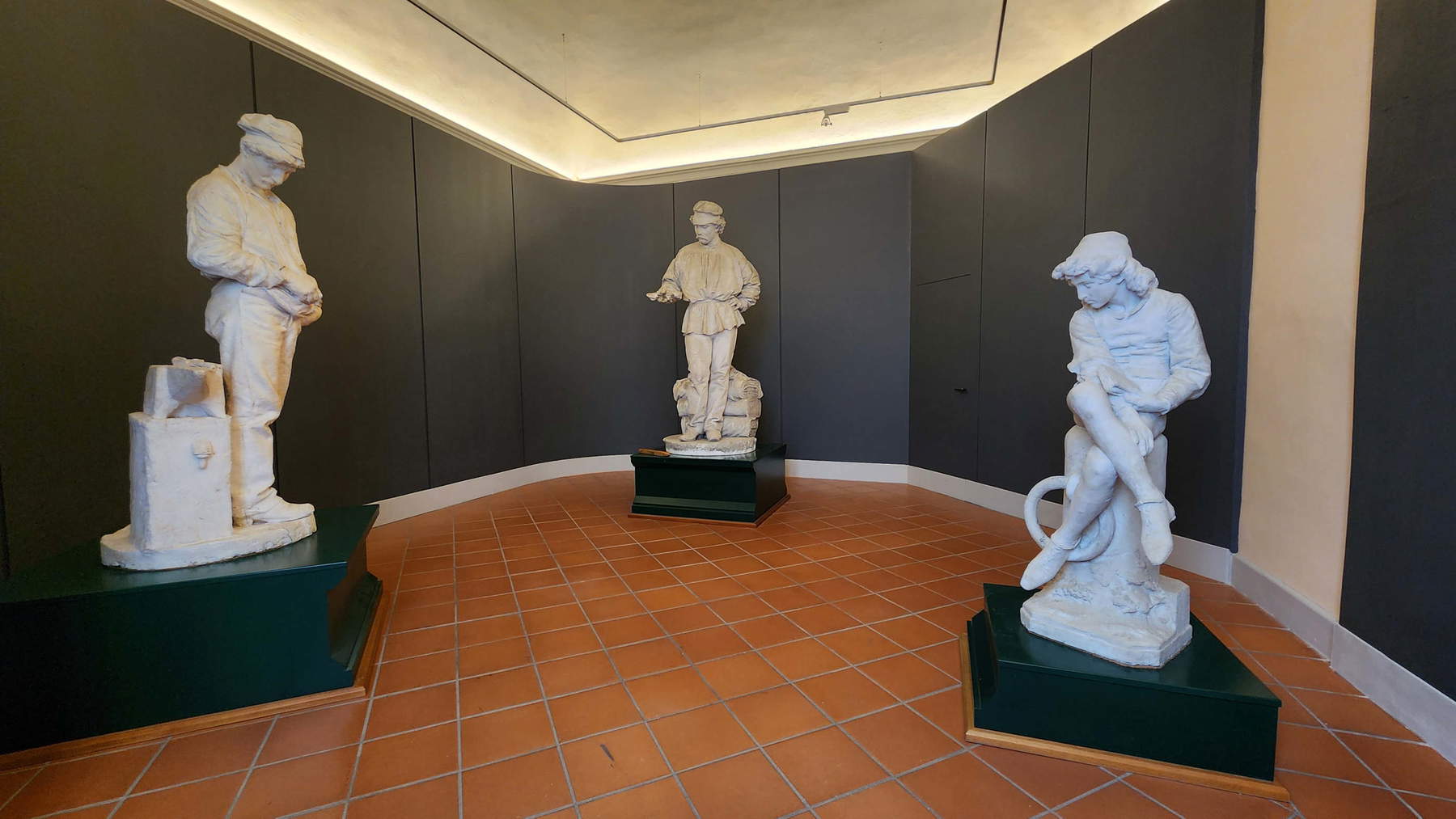
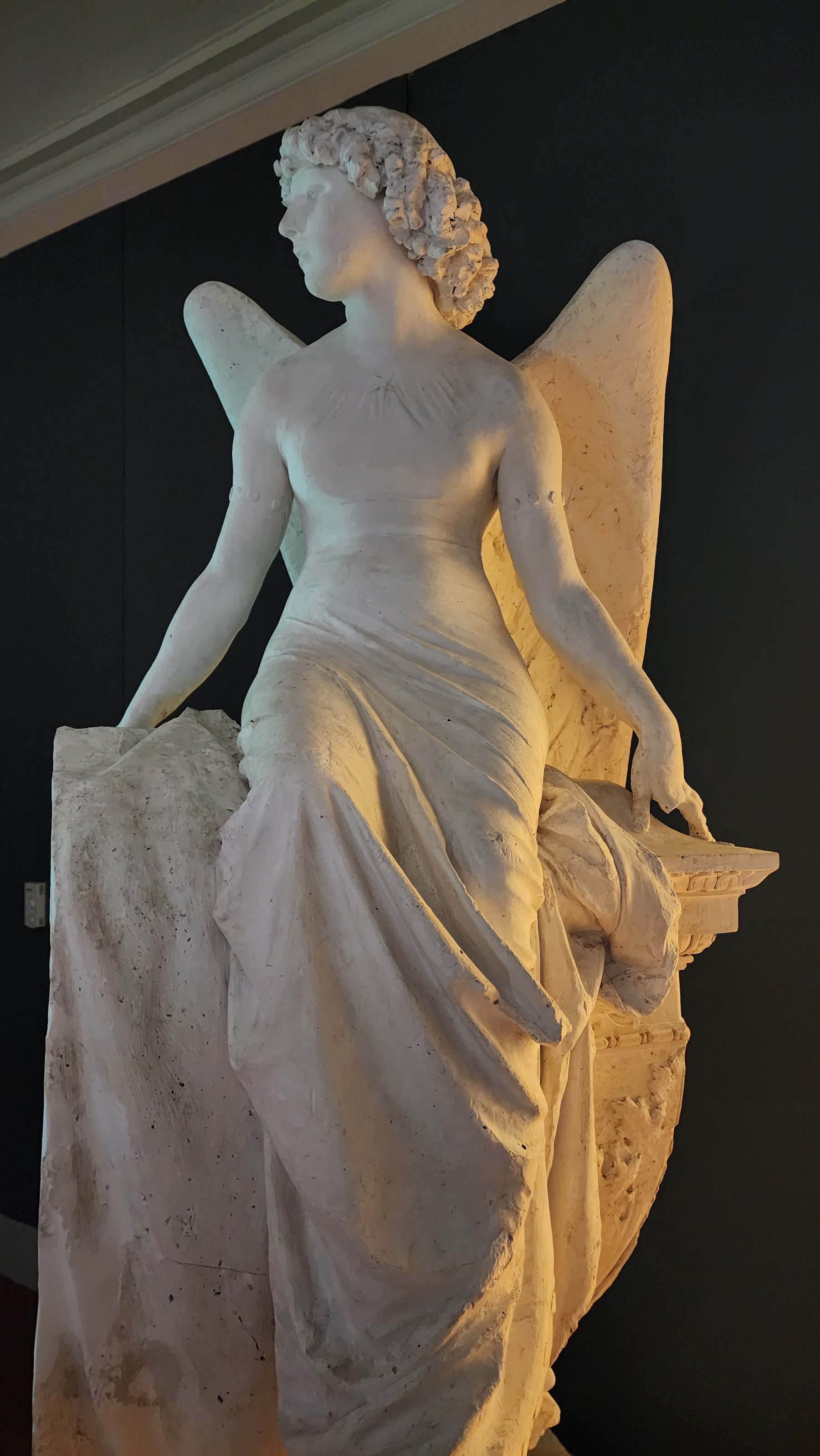
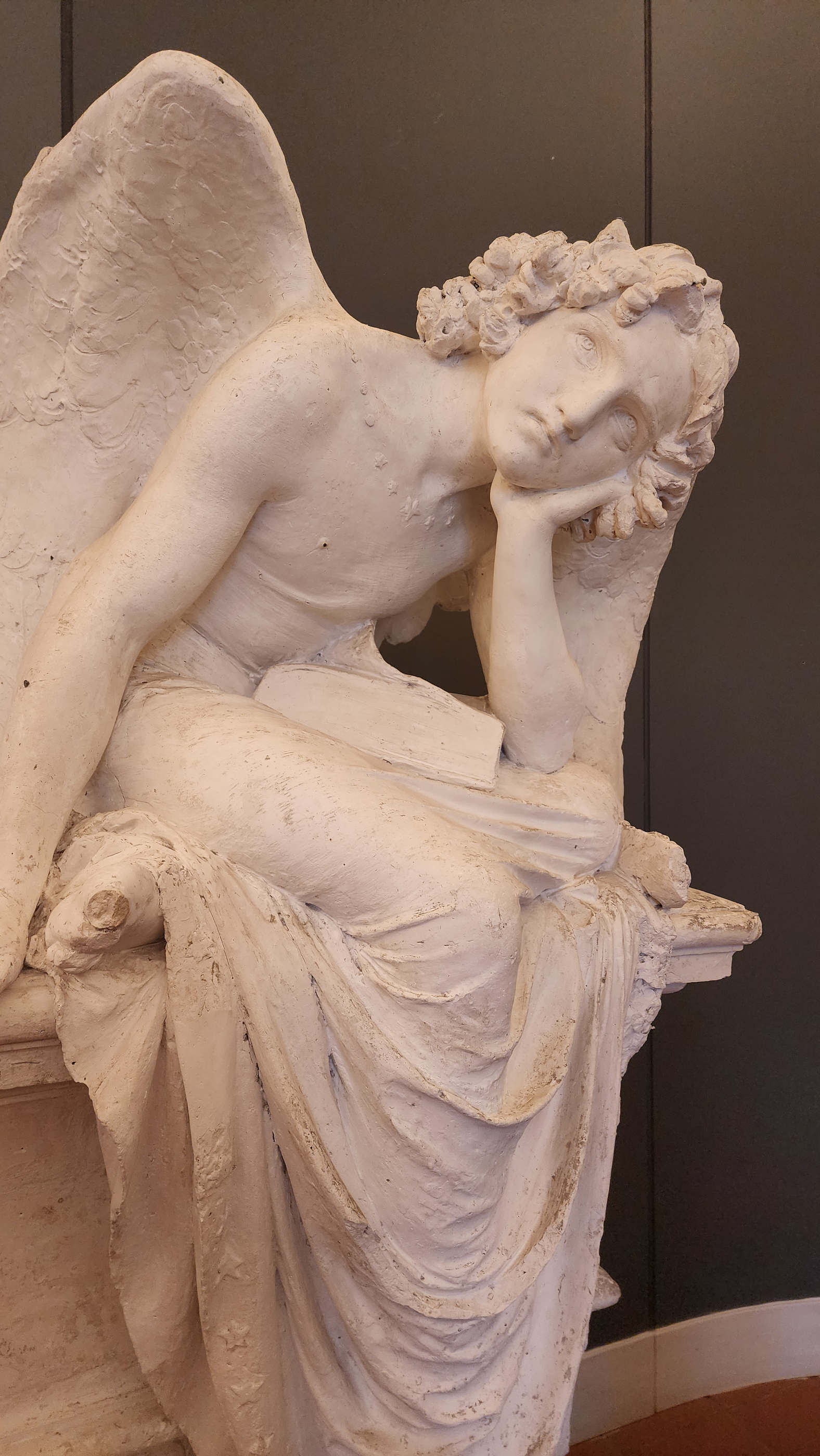
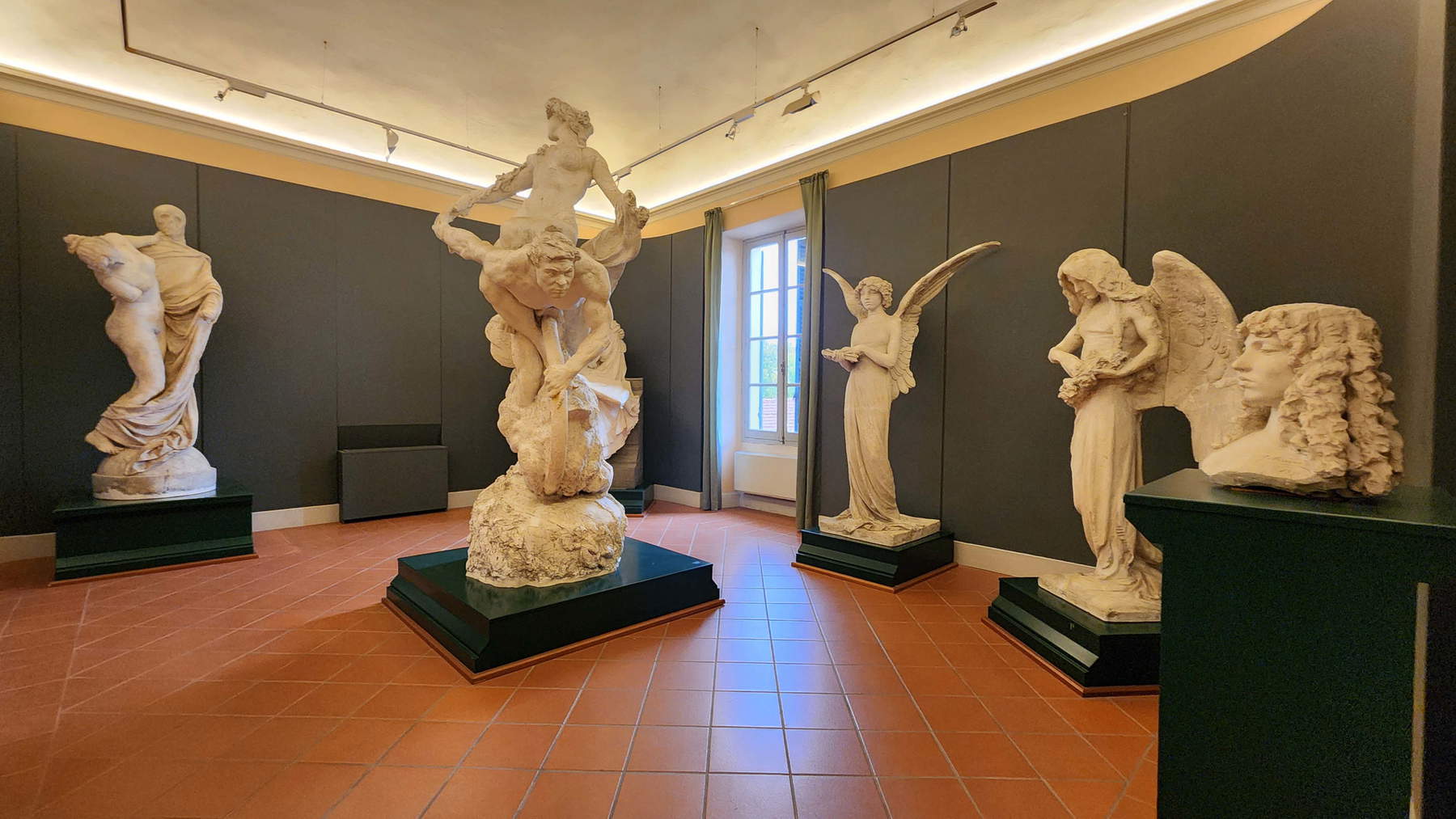
Giulio Monteverde’s angel Oneto is sensual and pensive, and its plaster model—with a broken wing and its surface scratched and flaked by the darkness of a warehouse where it remained locked away for who knows how many years—stands in one of the final rooms of the Bistagno plaster cast gallery. Since 2001, Monteverde’s collection of plaster casts has occupied the two floors of Palazzo Leale, a nineteenth-century villa where generations of locals pored over books and wrote on blackboards, as it once housed the local schools; at that time, the plaster casts were kept inside City Hall, and then at some point it was decided that, once the school had been evicted, the classrooms should house those “ghosts” that the sculptor’s heirs had donated to the City of Genoa after his death. Perhaps without really knowing what to do with them: the guide who’s showing me around the plaster cast gallery (that is, the same young man who sold me the ticket, and is so kind and so engrossed in his story that it seems tactless to ask him how the museum will manage now that the ticket office is unstaffed—since it appears he’s the only employee there)—explains to me that in Genoa the plaster casts had ended up in some storage room, and there, having outlived their purpose and forgotten by the light, they were abandoned for decades, until someone decided to give them a proper resting place and arranged for them to return to Bistagno.


A museum is usually a place where objects end up that have ceased to be what they once were. A plaster cast collection, therefore, is the final destination of a collection of ancient workshop tools now unfit for work—or at least for the work for which they were intended. The guide tells me that these were all preparatory models for Monteverde’s sculptures, and she takes care to do so with a surge of civic pride: it is here, she says, that you can see the artist at work. On some of the plaster casts, she points out, you can even see his fingerprints. Anyone could have carved the marble; it could be workshop work stemming from the master’s idea; who knows who might have had a hand in it—but plaster is another matter entirely. Even though there’s a sort of prejudice against plaster—because it isn’t haughty and polished like marble, nor is it tough and uncompromising like bronze—there’s no artist struggling against the material. These angels, these laborers, these portraits are merely mixtures of powder and water. But it is here that we see Giulio Monteverde at work, the artist shut away in his studio, the artist pondering the best way to give form to that idea on paper—one that was perhaps best suited to satisfy the bourgeois patrons who would provide him with work for the rest of his life.


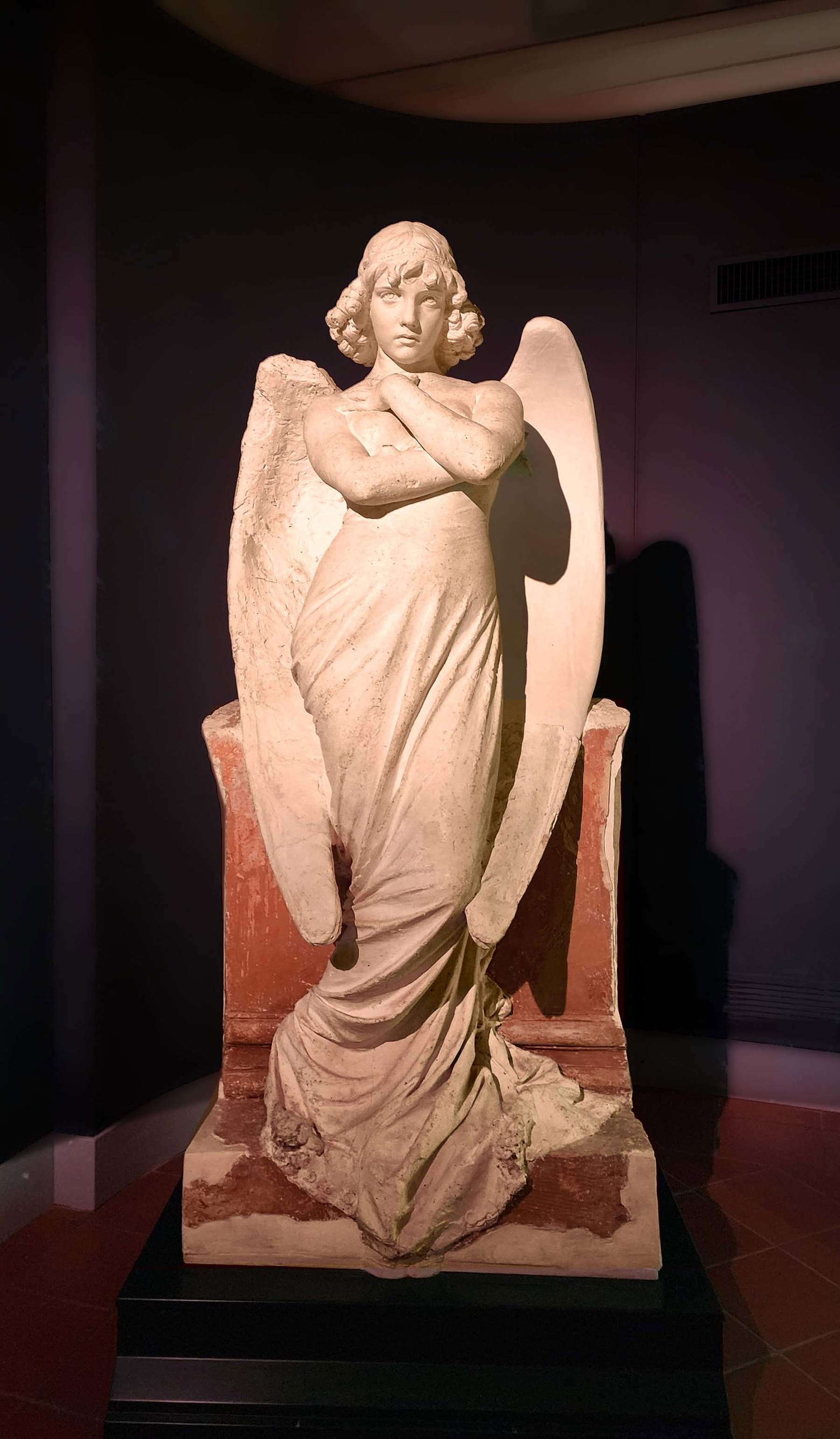
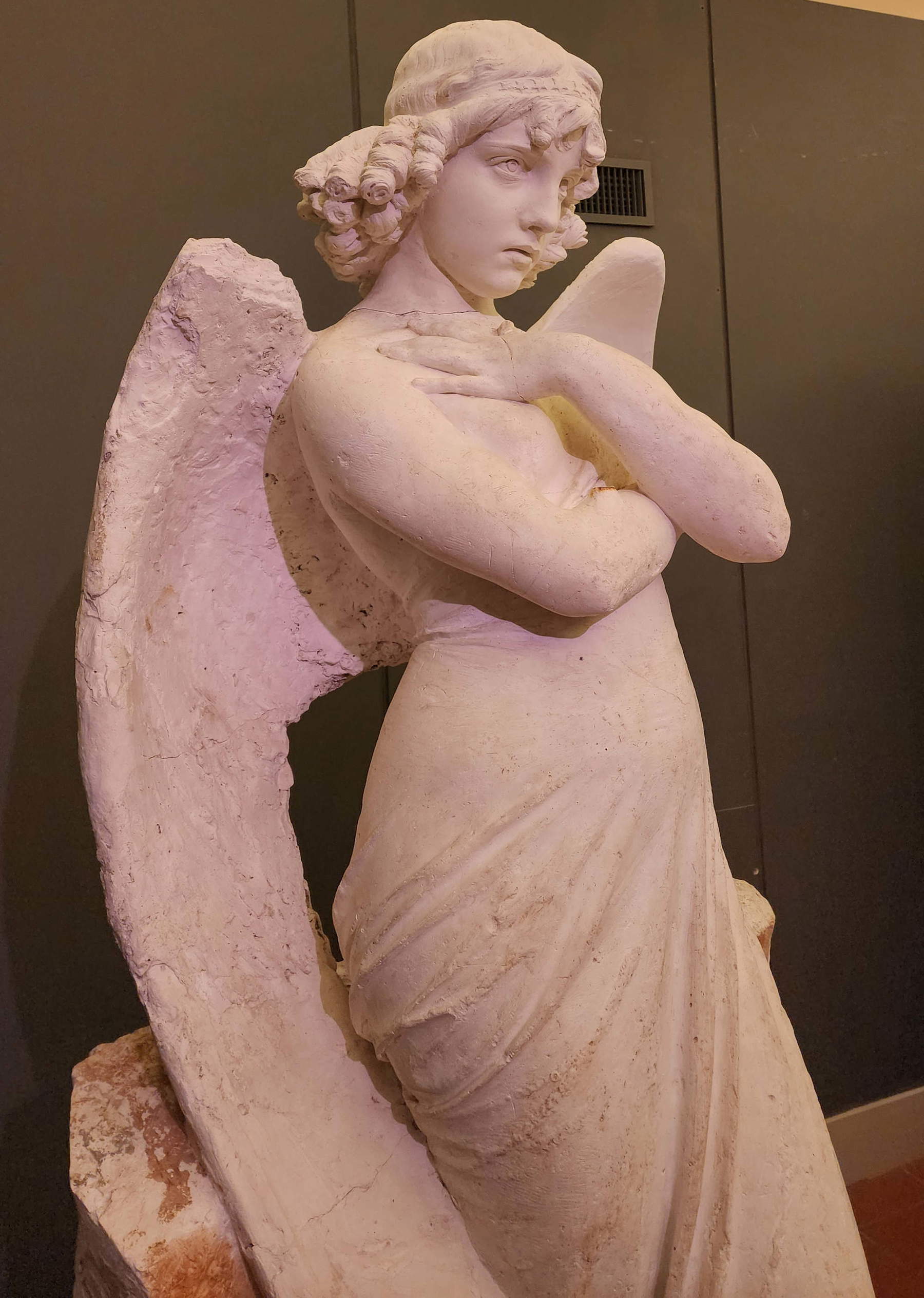
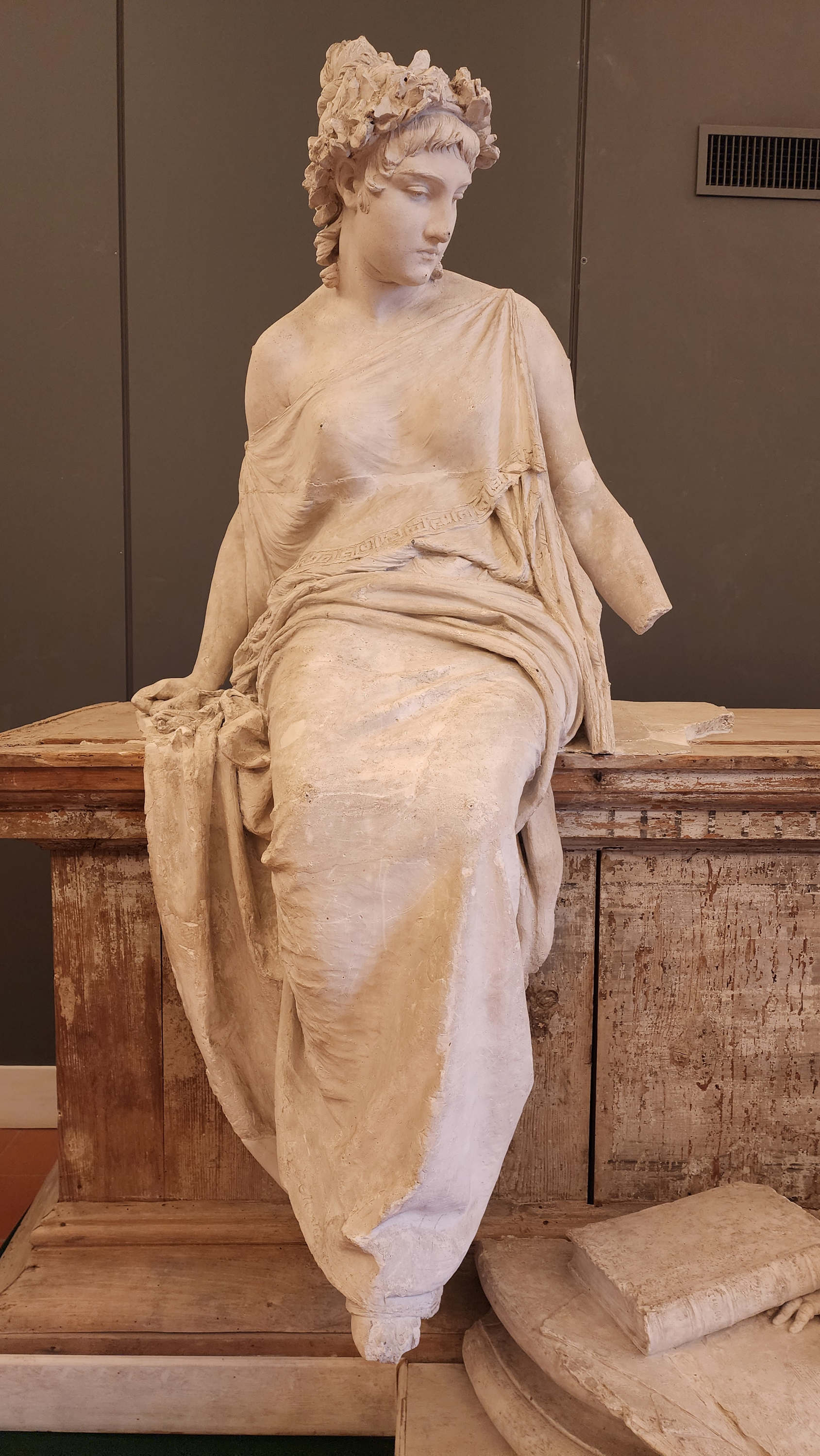
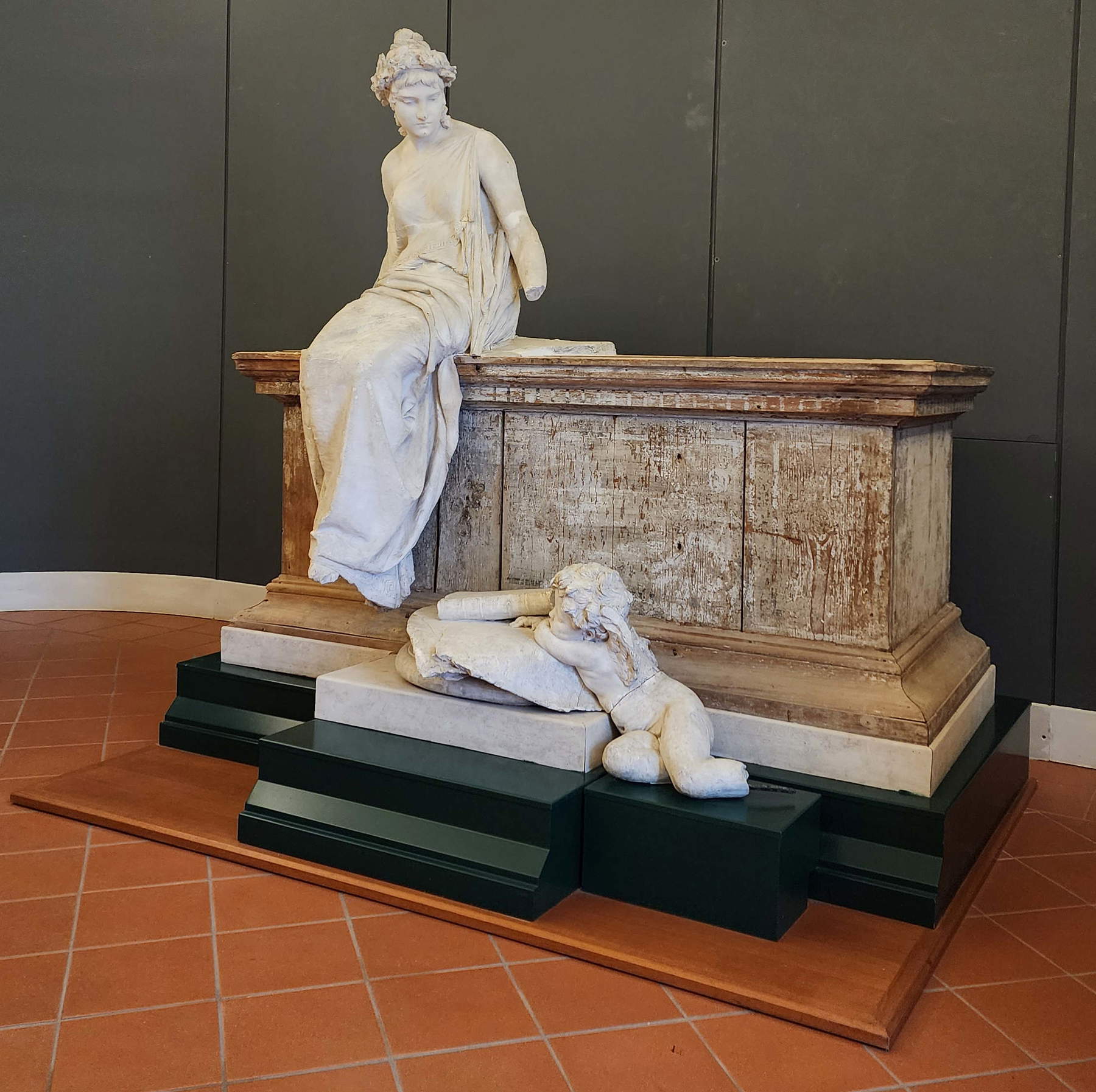
However, one should not be misled by the ethereal and enigmatic grace of these angels—who are not actually angels: it should be clarified, in more appropriate terms, that the figure on the Oneto tomb is in fact a female angel, and the same can be said for the female angel of the night on the Zonca tomb at the Verano Cemetery, and for the one seated on a sarcophagus housed within the De la Gándara family mausoleum in Madrid. These sinuous teenage girls, draped in sheer veils, are not to be trusted; they subvert every religious convention established up to that point, one must be wary of this swaying of hips, breasts, bare arms, and bare feet, which should have little that is worldly but ends up having little that is spiritual: they are not to be trusted because this beauty is entirely an idea of death—and, moreover, of a death that offers little in the way of consolation or reassurance. Monteverde is known to those few who today wander through the realms of nineteenth-century sculpture as having been a cemetery sculptor, and one would probably like to free him from this cliché—from the prejudice that has made him a sort of interior designer of the afterlife— a highly skilled craftsman who spent his entire life adorning the cemeteries of his time to satisfy a clientele wealthy enough to purchase—at considerable expense— a sufficiently monumental final resting place, by commissioning one of the artists who, toward the end of the nineteenth century, was among the most sought-after for that purpose. And so there is a tendency to focus on the most overtly realist aspect of his work—those marble sculptures filled with children’s games, ordinary scenes, meticulous allegories, and historical figures imagined in their daily lives, portraits adorned with lace, lace, and frills—probably without realizing that they are doing Monteverde a greater disservice. And without realizing that even in a portrait, a certain funereal solemnity can emerge.


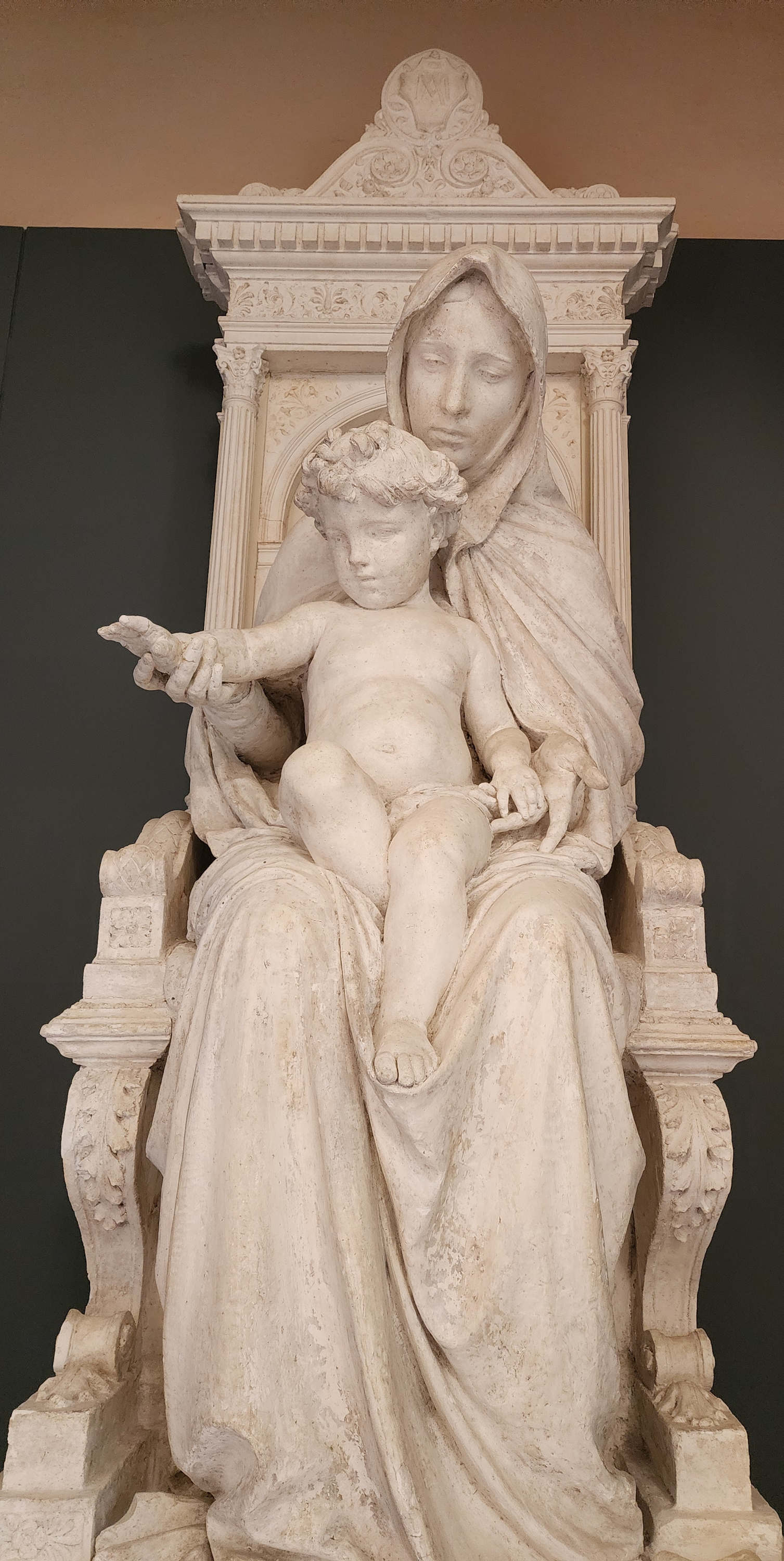
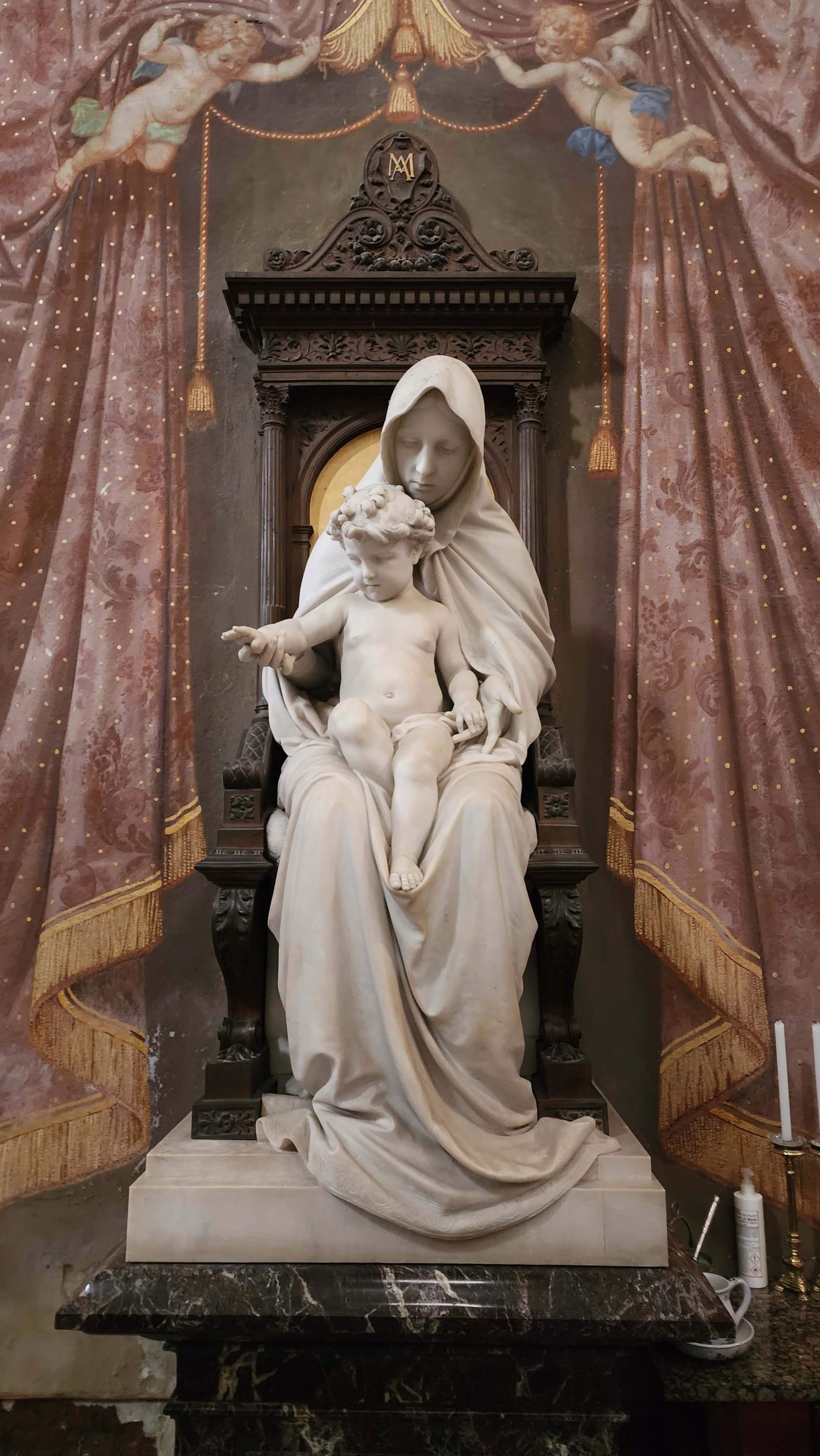
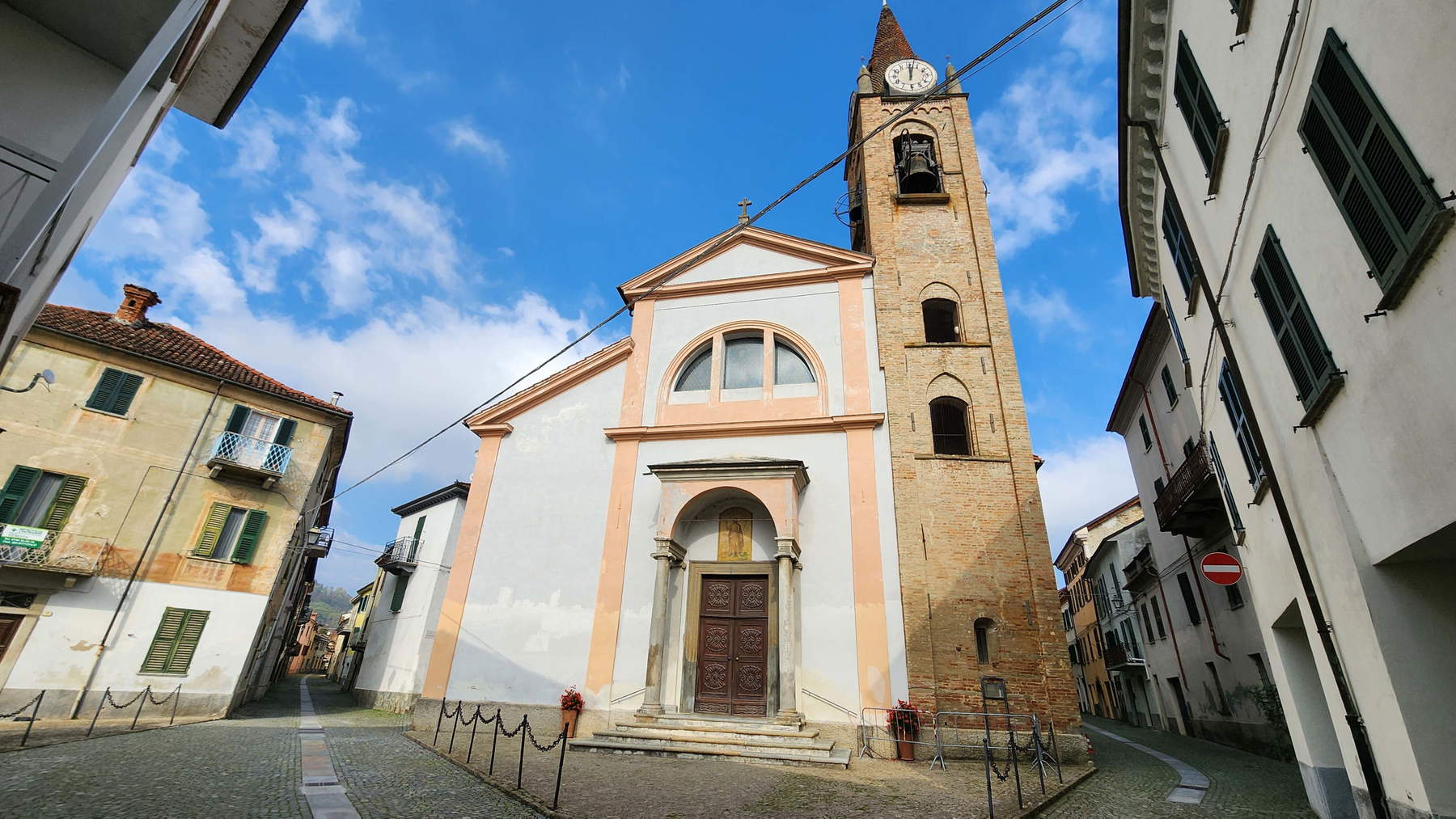
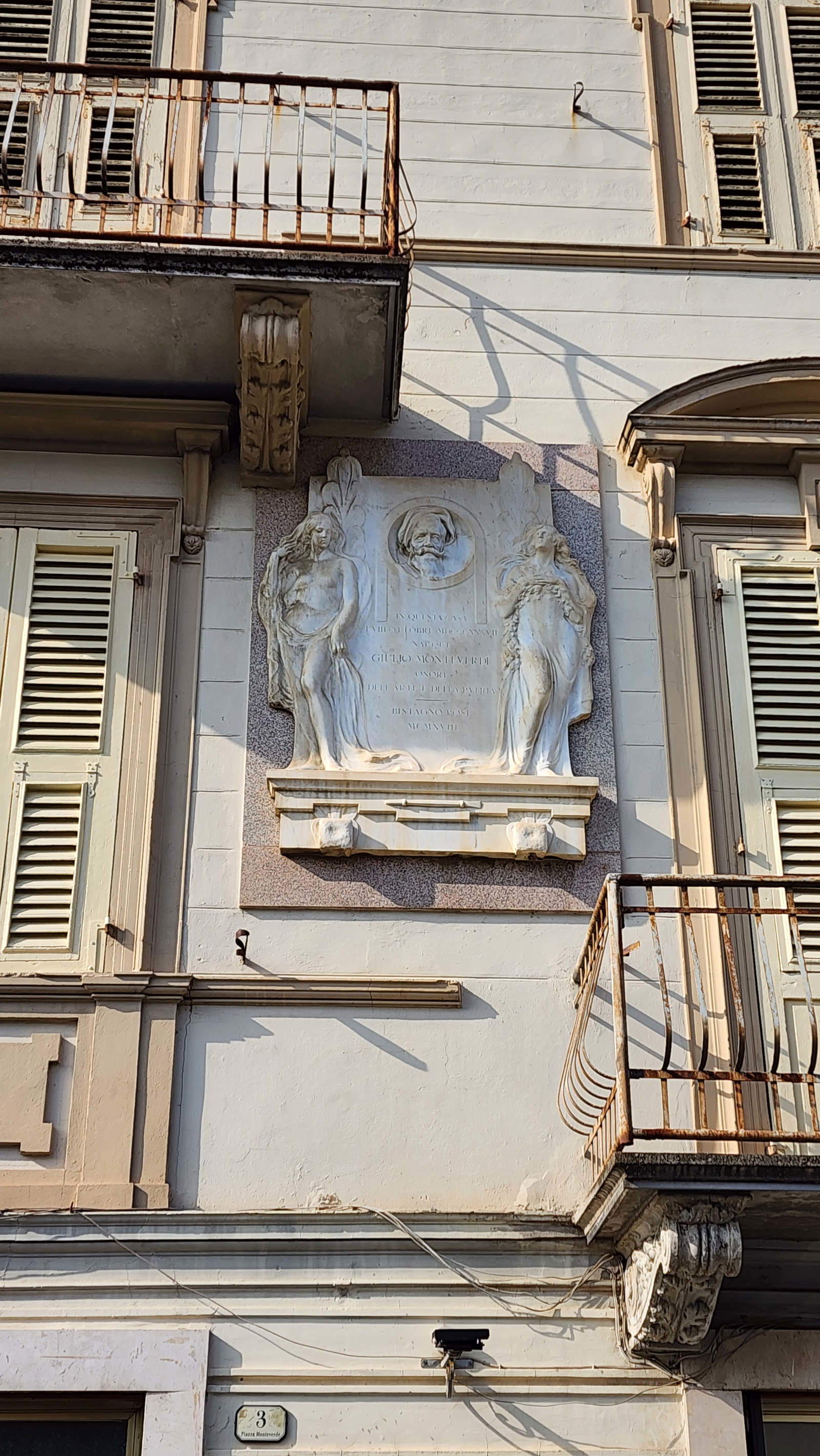
Little remains of Monteverde in Bistagno: the only thing is a marvelous, exquisitely delicate marble Madonna inside the parish church, another source of pride for the town (which costs me a negotiation with the sacristan, whom I catch at the door just as he’s about to lock up the church and go to lunch: he’ll delay locking up for a few minutes, and in exchange I’ll settle for seeing only Monteverde’s Madonna). It is another funerary image, since it was created for a monument in the Staglieno Cemetery, that of the Balduino family, and is a sort of stone renderingof the Oliva that Niccolò Barabino had painted a year earlier—a girl from Sampierdarena who had become the Mother of God in a symbolic sense, and whose composed and distant air of dignity is preserved in the Madonna of Monteverde. At the plaster cast gallery, you can see the model, and the guide is keen to point out that the Madonna in the parish church has a wooden throne—a detail that distinguishes her from the one in the Staglieno Cemetery, who sits on marble instead. Then, in town, near a beautiful hotel named after the sculptor, stands his birthplace: a modest yet dignified nineteenth-century building with a butcher shop on the ground floor, situated on the longest of the three sides that enclose the historic center. “Triangular,” as the tourist brochure provided by the municipality indeed states. And when you read that the historic center of Bistagno has the curious shape of an almost perfect equilateral triangle, your first instinct is to open Google Maps to verify the accuracy of the information. After doing so and confirming that the locals aren’t exaggerating when they claim their town’s precise geometric shape, if you’re actually there, you’ll be overcome by curiosity to see what lies at the vertices of the figure. However, there’s no pot full of gold to be found: just two single-story buildings and a medieval tower—the only remaining fragment of the castle that explains the town’s shape and which, according to historical accounts, was destroyed by the Spanish in the 17th century. Although—a rare, if not unique, case for a town of ancient origins—nothing is known about Bistagno’s medieval history, almost as if even its inhabitants have forgotten about a town you don’t happen upon by chance—unless you’re heading to the Langhe and looking for a cheaper place to stay than what’s available on the hills beyond the Bormida. No, one has to want to go to Bistagno. The Department of Cohesion Policies, in its latest report, classifies it as a “peripheral” municipality: this is the second-to-last rung in the classification of “inland areas,” a sort of administrative scale of distances from a center large enough to have a high-speed rail station, a first-class hospital, and a comprehensive educational system. And from here, it takes at least half an hour to reach the nearest medium-to-large city. Even the nearest highway is a half-hour drive away: you can get to Bistagno either via the provincial road that starts in Alessandria and then heads toward the mountains of the Genoa area, or by exiting at Ovada and driving along the winding Turchino state highway, or by racing down the hills that separate Monferrato from the Langhe. And all the roads are generally poorly lit: if you arrive at night, you’ll feel as if you’re flying through smoke, and the town will appear suddenly, as if a blanket of fog had cleared all at once, as you catch sight of the first warehouses.
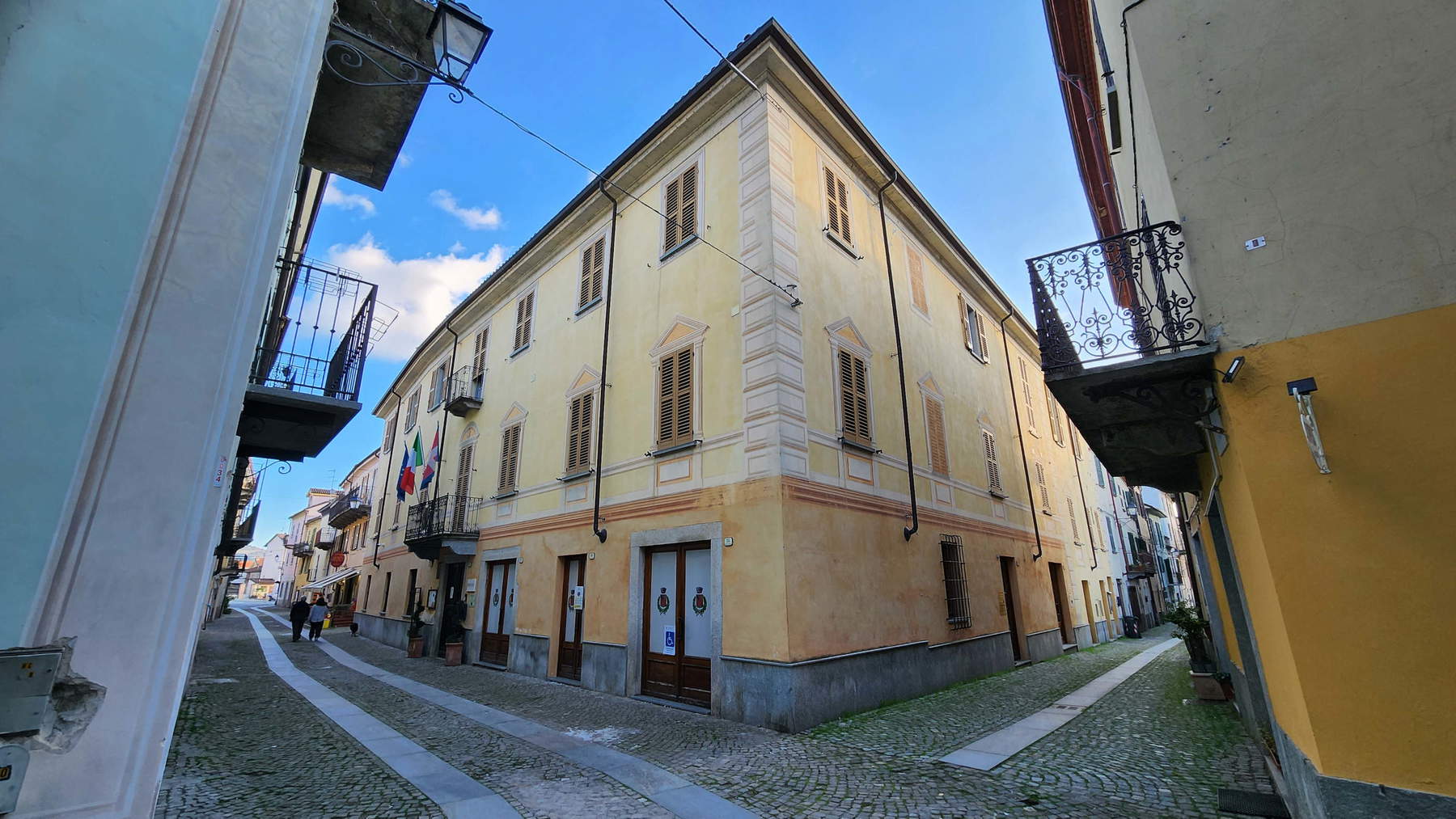
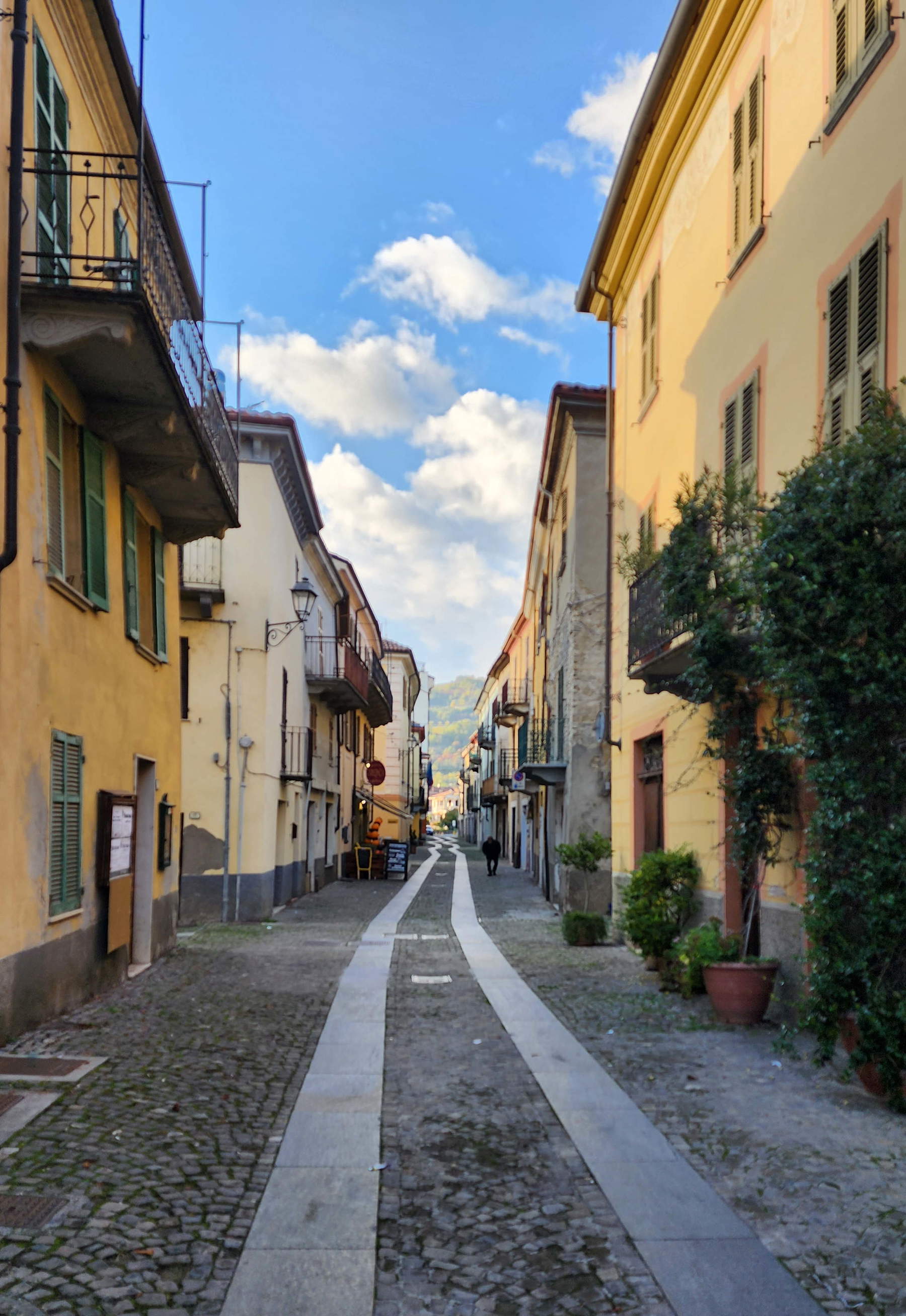
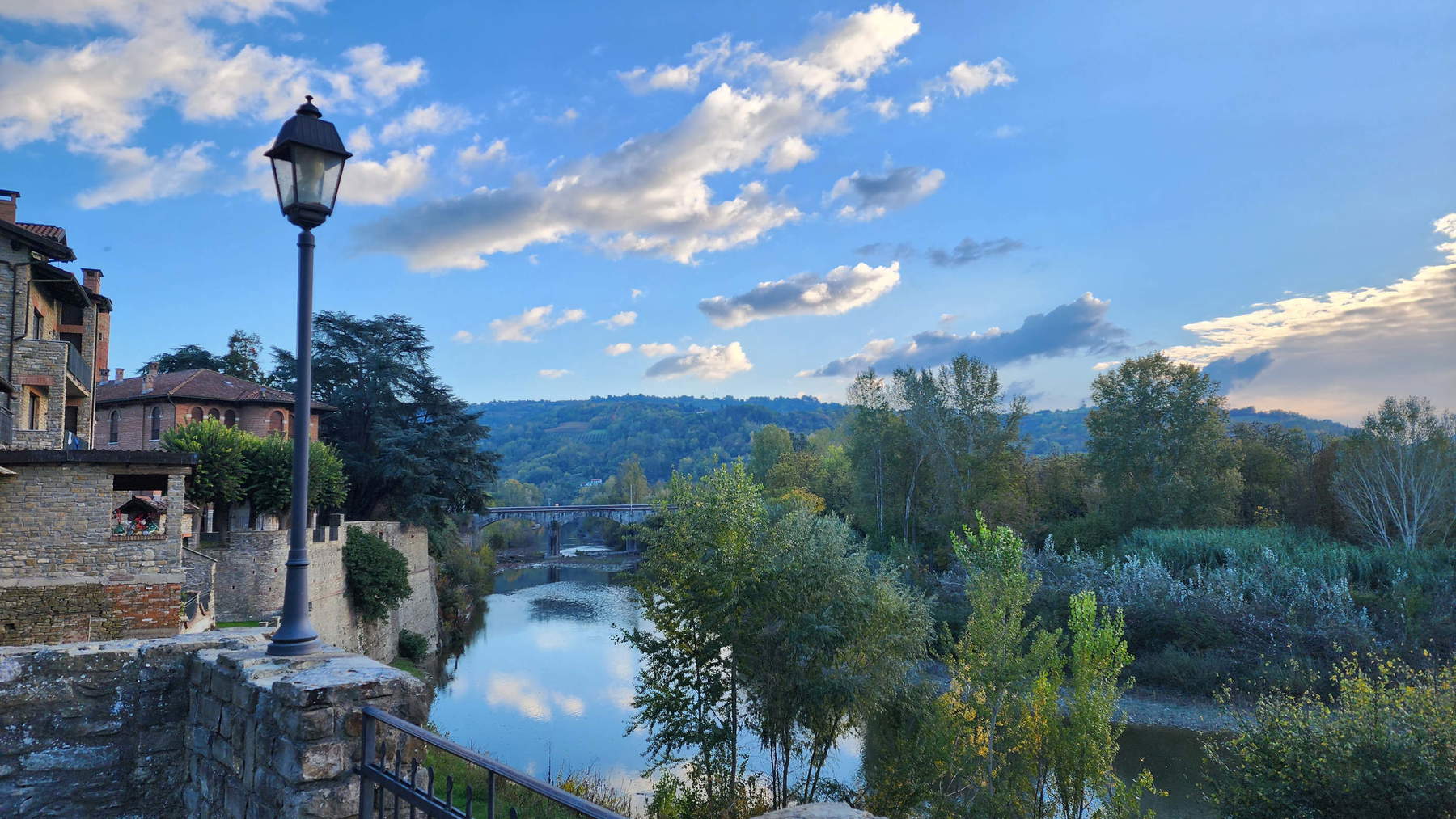
Obviously, given these circumstances, Bistagno has become depopulated over the years—a fate shared by many towns in the Bormida Valley. Not that this is a brand-new problem, since Monteverde himself had to move to Genoa to study when his parents—farm laborers—realized that their son had an extraordinary talent for woodcarving and, after he finished elementary school, had already sent him to study by the sea. However, it’s not entirely true that Bistagno is so isolated: nearby is Acqui, and a local girl lets me know that this charming spa town is sort of a hub for the area. I go there—it’s All Souls’ Weekend. In Monferrato, I discovered that on All Souls’ Weekend people eat a hearty chickpea soup (which was boiled starting the night before, so that the souls of the deceased, returning to visit their loved ones at night, could share the meal with them) so the locals are probably in the mood for a stroll; the shops are half-closed and half-open, yet the main streets are bustling, the bars and cafés are overflowing with people, the only bookstore I come across is packed, and there’s even someone venturing through the halls of the Archaeological Museum, at the top of the Paleologi Castle.
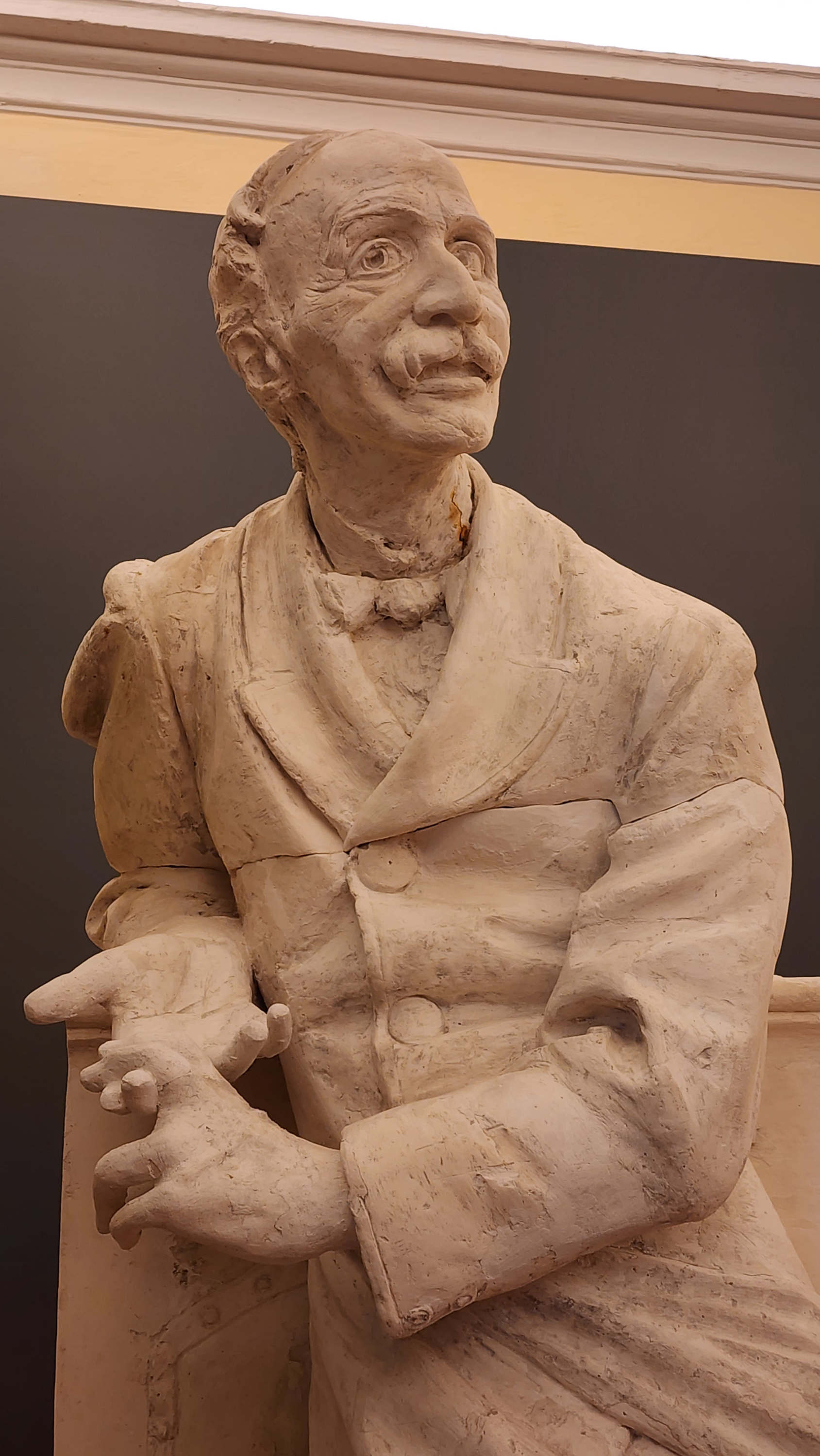
When you arrive in Acqui Terme, after driving for about ten minutes through these lands that seem to have developed a special knack for creating perfect November atmospheres, you come across Monteverde again, because in the square where the town center begins—Piazza Italia— there stands his monument to Giuseppe Saracco, Bistagno’s other celebrated son—a senator for forty years shortly after the unification of Italy, president of the Senate at the turn of the 20th century, and, for seven months, also prime minister, between 1900 and 1901. When he died, the city of Acqui—where he had long served as mayor—commissioned Monteverde, who had been a close friend of Saracco’s, to create a monument that would preserve his memory: The artist depicts the senator rising from his seat in Palazzo Madama, with his coat billowing in a way that conveys a sense of agitation, captured in the act of speaking before the assembly, his fingers interlaced as if to say that two plus two equals four. Saracco was a preeminent expert on public finance, and he seems intent on reminding us that one cannot go against the laws of economics—and thus against the laws of nature—and that, therefore, in the end, the numbers must add up. It’s curious that two years after Monteverde’s death (and two years after the monument to Saracco, which was his last work), Dostoevsky’s *Notes from the Underground * would be published in Italy, and its protagonist practically shouted himself hoarse to say the opposite—or nearly so— that “two plus two equals four” is magnificent but arrogant; that “two plus two equals four” is no longer life but the beginning of death, because once you discover that two plus two equals four, there is nothing left to seek—and so “two plus two equals four” is something unbearable.
One might wonder where there is any room left for human freedom, if everything is already determined and if everything can be reduced to a mathematical law. Monteverde, one might think, perhaps tried to address these anxieties with his cemetery sculptures, which were the exact opposite of his works that celebrated science and progress, which glorified figures like Jenner or Franklin. His underground works are adorned with angelic beauties that are admired first and foremost for the finesse of their craftsmanship, yet they possess a different nature than the angels that preceded them. Compared, for example, to those of his master Santo Varni, which are still angels engaged in praying for the deceased, or escorting his soul to paradise, or bearing witness to the certainty of the resurrection. Monteverde’s sensibility is different; his celestial creatures have a more pensive, more macabre, more intimidating presence. Giulio Cantalamessa had seen the Oneto tomb shortly after the statues were unveiled, and in that feminine angel (and he himself credited Monteverde with inventing the angel with feminine features) he had glimpsed the same features as in Canova’s work, but the Oneto angel had lost the quiet imperturbability of Neoclassicism, and her face seemed to be pierced by an obsessive thought of death, by a “desolate melancholy, as she seems to gaze into the distance, into infinity.” The fact is that in the span of twenty years—the time separating the angels of Santo Varni from those of Giulio Monteverde—something more radical than a mere shift in taste had occurred: the very concept of death had undergone a profound change. Science had overturned the certainties of religion, and if two plus two equals four, then one could not even be so certain of death as it had been described up to that point. People hadn’t stopped dying, but perhaps they had begun to harbor some doubts about the nature of eternity, and that geography of the afterlife—which for centuries had been taken for granted—had lost its bearings. It is only natural, then, that death—stripped of the reassurances of faith—should end up becoming a grim threat, that uncertainty should provoke unease, and that doubt should make one feel uneasy. Moreover: Monteverde is no longer even certain that a tomb should be the place most immune to the ravages of death, as it had always been since tombs first came to be filled with images. Usually, death used to be defeated; in the Celle tomb, also in Staglieno, it returns as the victor, in the form of a skeleton veiled by a shroud, having descended to seize a girl of twenty or so and carry her away. As if to say that you can try to escape that fateful embrace as much as you like, but every attempt will be in vain: those who are already on the other side take it upon themselves to remind those still on this side that this embrace is not a threat but a guarantee, and that sooner or later we will all be invited—whether willingly or not—to welcome it.
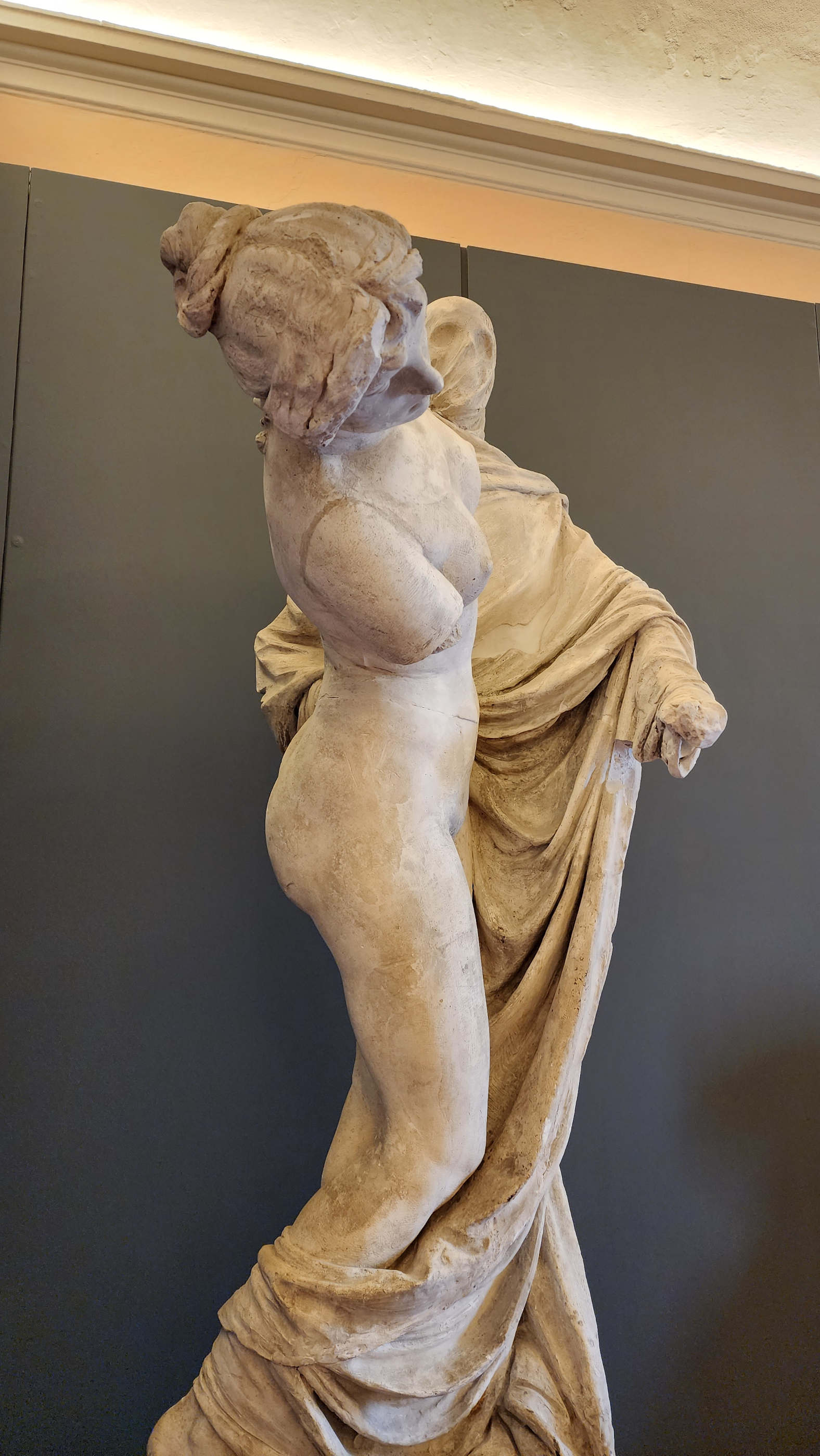
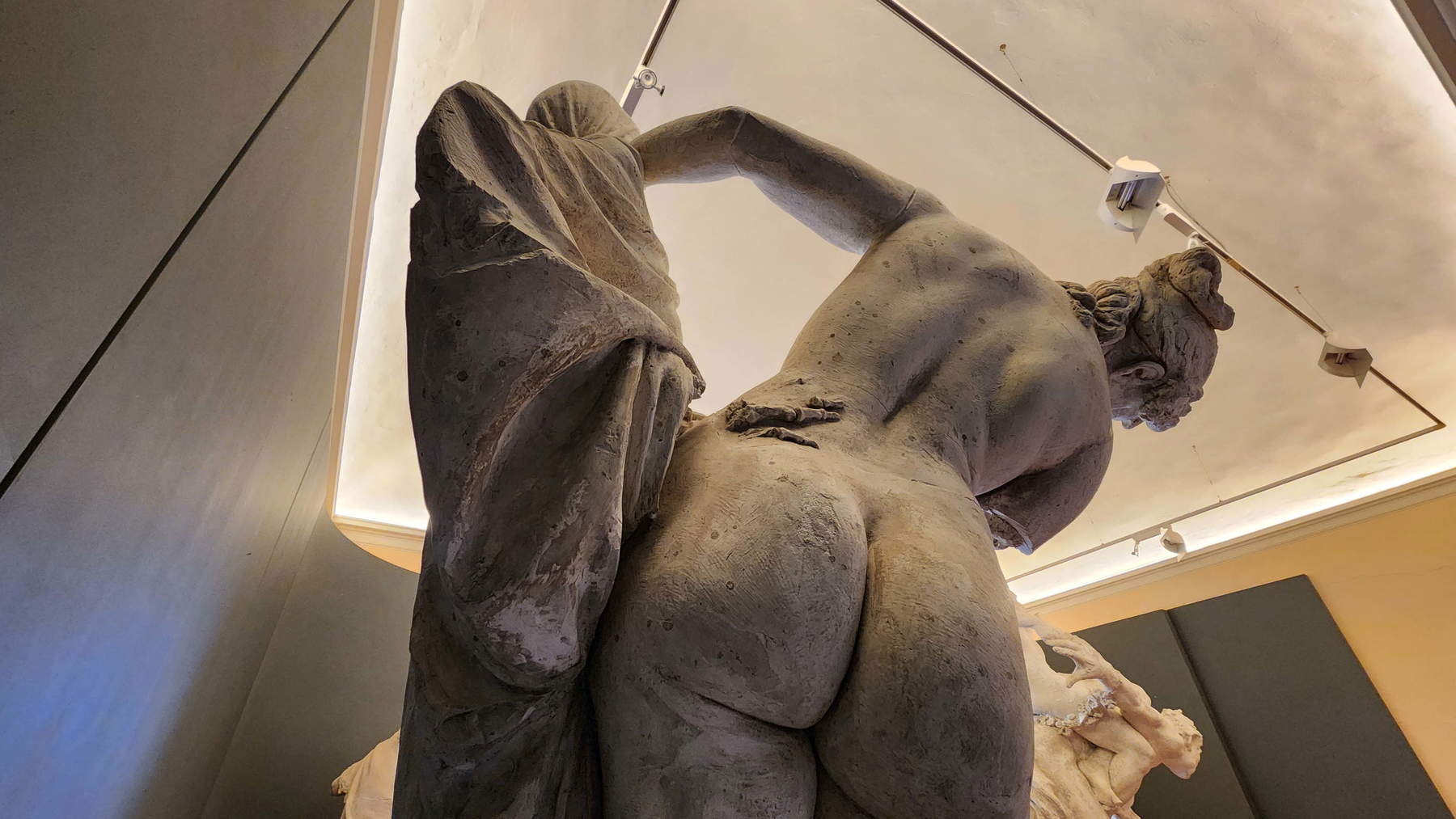
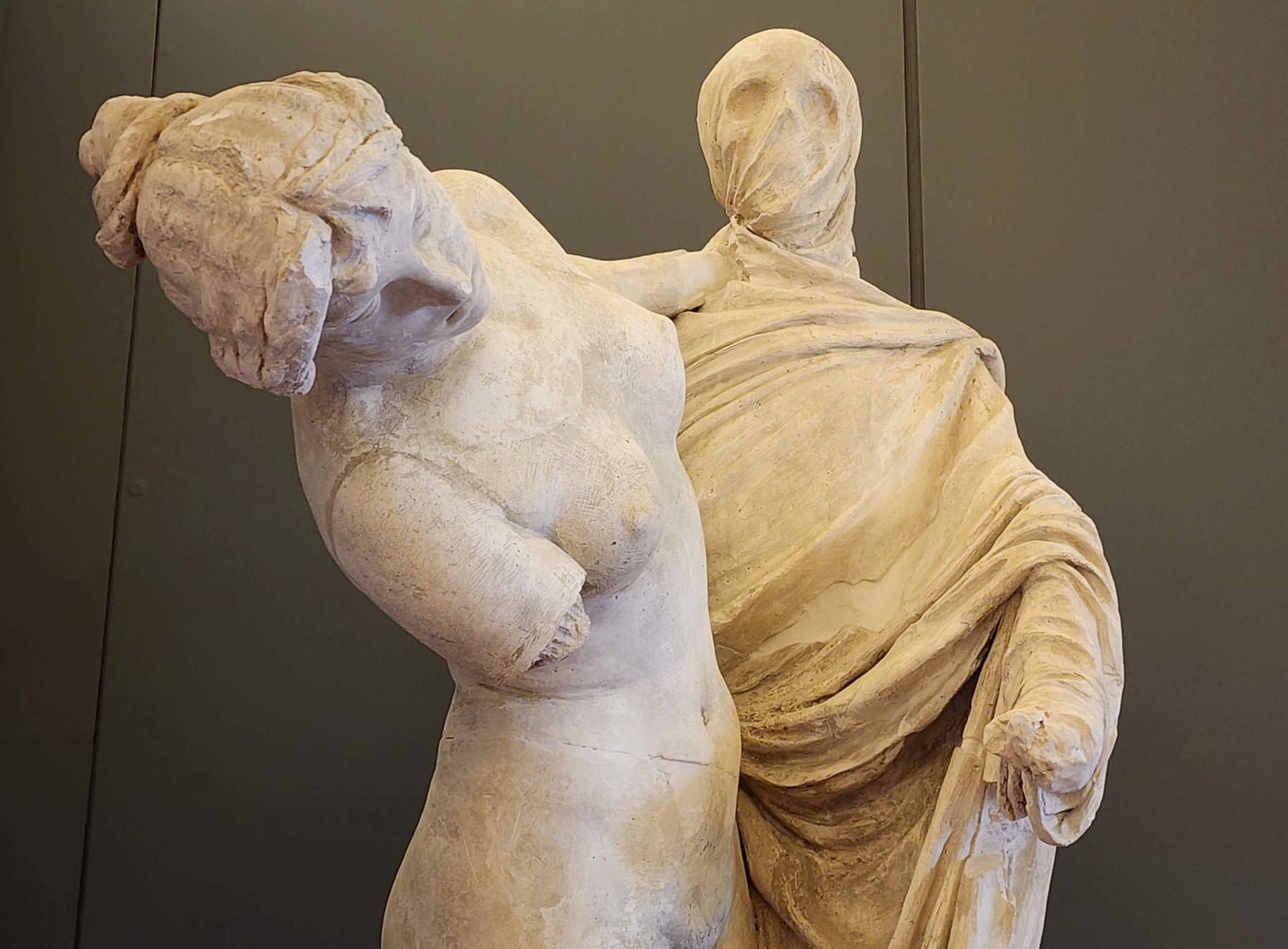
The guide reminds me that the young woman on the Celle tomb at Staglieno is covered by a heavy drape that conceals half her body, whereas in the plaster cast we see a fully nude figure—and a voluptuous one at that—because Monteverde evidently wanted to emphasize this principle of the eternal coexistence of sensuality and dissolution (“Eros and Thanatos,” as he calls it)—that is, the idea that there is a force driving every vital energy, every desire, every carnal thrill, yet that its opposite also exists, and indeed that existence is continually exposed to an end and to destruction. As if to say that even that body—so lush, so spring-like—already contains the seed of its own ruin. Monteverde had done nothing more than reiterate, in abrupt terms, what he had said ten years earlier with the angel Oneto.
“The first Symbolist angel,” wrote Sandra Berresford. “With its subtle yet overt sensuality, this angel, more than any other, captured the fin-de-siècle imagination of death.” Of course, one can debate the terms: even my guide tells me that we are in the presence of a Symbolist sensibility. Others would speak instead of idealism, because there are no symbols in Monteverde’s sculptures, because this angel is almost Pre-Raphaelite in style, because there are no visions, because it is realism in disguise, which still retains an interest in the quality of form and therefore in reality. Someone else has said that Monteverde developed a pre-Decadent sensibility. These are matters of little consequence: whatever label one might wish to apply to his nature, one cannot fail to recognize the place where Giulio Monteverde was able to best exercise his most authentic vocation—even if one encounters it in the cold hall of a building that was once a villa, then a school, and is now a museum. For Monteverde, the thought of death revealed itself to offer little consolation. And perhaps it didn’t even need to take on the appearance of something terrible. It was enough that it had become more seductive.
Warning: the translation into English of the original Italian article was created using automatic tools. We undertake to review all articles, but we do not guarantee the total absence of inaccuracies in the translation due to the program. You can find the original by clicking on the ITA button. If you find any mistake,please contact us.