




Nicolo Barabino proved that Mary of Nazareth is a woman made of verse and ink, that her image is a profoundly human construct, is the badge of devout, radiant, delicate consummation. He, however, had no knowledge of it; he was just a painter who had decided to paint an altarpiece for the church where he was baptized. The story of that painting, which Barabino had wanted to title with a verse from the Book of Sirach, Quasi oliva speciosa in campis, is that of an object that was born as the beau geste ofan artist not entirely unfamiliar with evidence of calculated generosity towards that Sampierdarena which had seen him born, grow up, implant his studio, of that suburb which would later be swallowed up by the electric mists of modernity: Barabino had been born when Sampierdarena was a fishing village or little more, and he painted his Oliva when the view of the sea had already been choked by the railroad viaduct and the trains clanked where the beach was, when the bottoms of the villas of the Genoese patriciate had been occupied by a mated expanse of factories. And the snow-white mantle of Barabino’sOliva then emerged from the painter’s hands amid the fumes of the smokestacks, amid the rattling of the looms, amid the fiery mouths of the foundries. Sampierdarena, however, may not yet have been interested in the industrial future of the newly born nation and retained that popular soul that had probably contributed to making Barabino, the son of a tailor and a seamstress, an unfailingly, indefatigably resigned, industrious and watchful artist.
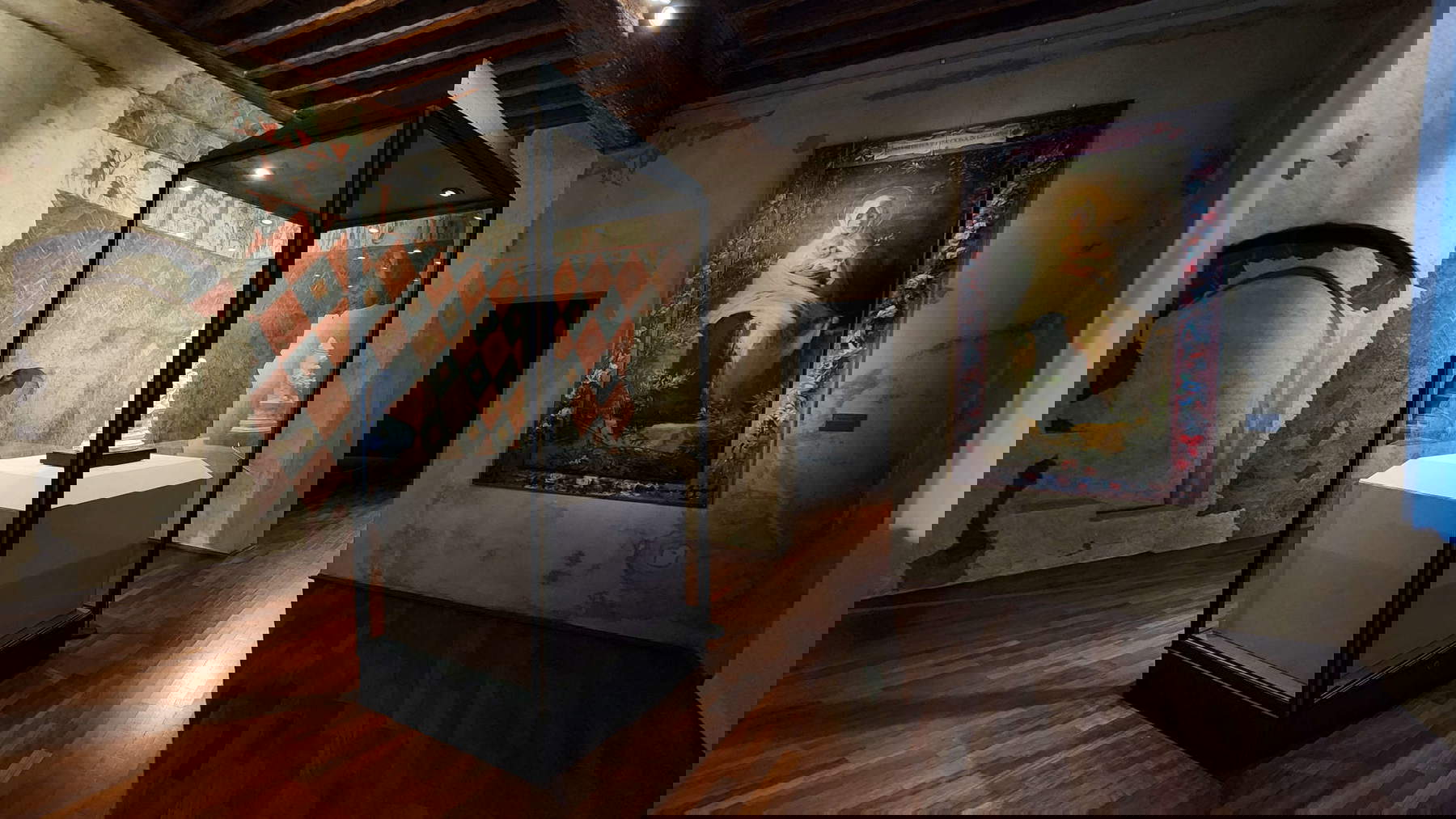
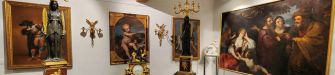
The exhibition that the Diocesan Museum in Genoa is now dedicating to the genesis and fortunes of theOliva (Sacro & Pop. Nicolò Barabino’s Quasi oliva speciosa in campis, a masterpiece of nineteenth-century painting, curated by Lilli Ghio, Paola Martini, Caterina Olcese Spingardi and Sergio Rebora) has arranged Barabino’s altarpiece in an almost back-to-back position, in the second room, after an introduction on the artist and his sacred production, at the side of a’huge vitrine that holds and displays a majolica Madonna from the Sansebastiano & Moreno manufactory, predating by a couple of years Barabino’sOliva that stands next to it and which the public finds naked inside a reproduction of the original frame sprinkled with garlands and flowers, lilies and roses, ferns and daisies. It is as if the work is trying to make itself aloof, it is as if that position somehow wants to betray the very title of the exhibition, to betray that status of “masterpiece” that was probably not even part of Barabino’s plans. Nor, however, can one imagine him as an artist alien to any premeditation, since the “masterpiece,” before reaching the church of Santa Maria della Cella, before returning to his working-class neighborhood, was being packed up and shipped to Venice for the 1887 National Exhibition: Margherita di Savoia saw theOliva, fell in love with it, wanted it for her bedroom at the Villa Reale in Monza, Umberto I shelled out seven thousand liras to please his wife’s wish (today it would be thirty-five thousand euros), and the romantic tribute to the memory of the baptism would give itself patience a year, time to remake another one almost the same, the one that later ended up on October 21, 1888 on the altar of the church and that today ended up in the rooms on the second floor of the Diocesan Museum of Genoa for the exhibition.
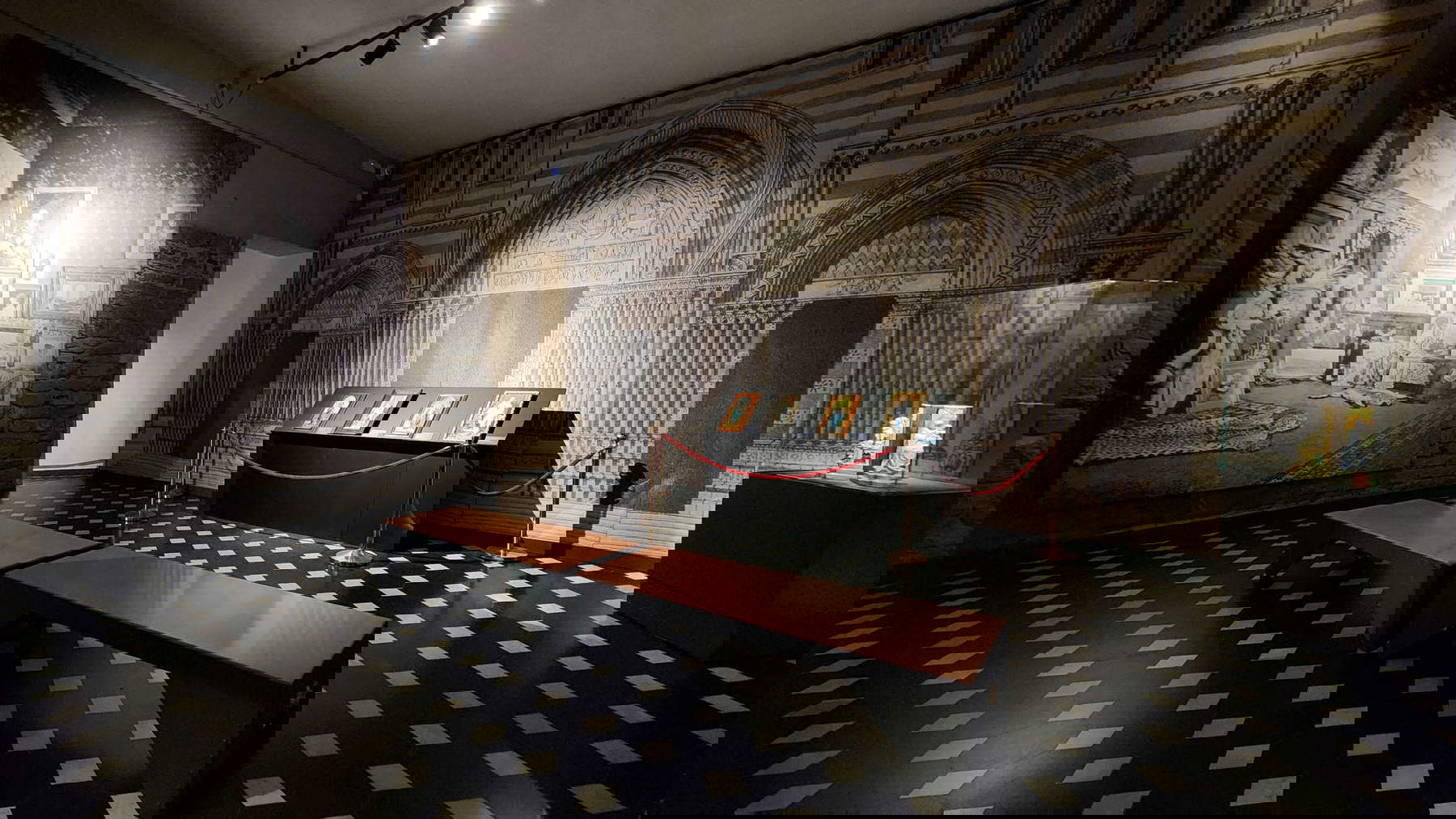
It will perhaps be useful at this point to recall that Barabino was at the time famous not for this sacred production of his, which was not marginal but certainly not even majority within the corpus of his works, but rather for his frescoes, for his activity as a director of studied and highly intelligent decorative enterprises, which ensured his success during his lifetime but cost him, one might say, oblivion outside Genoa, he whom twentieth-century critics have often considered a sort of cold, restrained and academic alter ego of Domenico Morelli, his contemporary. Sergio Rebora, in this regard, recalls in the catalog that someone at the time pointed out a vivid resemblance between theOliva and a Madonna that Morelli had painted a few years earlier, the Virgin of Roses at the center of a triptych brought by the Neapolitan to the 1872 National Exhibition in Milan. There is, indeed, some obvious affinity, but it must also be said that Barabino over the years had continued to work on his idea of a Madonna near and far, divine and earthly, humble and regal, starting at least with that Consolatrix Afflictorum of 1859, evoked in the exhibition by anengraving reproducing the original now at the Pinacoteca Civica in Savona, and a work on which a success had rained down that perhaps even Barabino did not expect, and then followed with the Madonna of the Rosary for the Church of the Immaculate in Via Assarotti (the model of the triptych is on display in the exhibition). Morelli and Barabino were related by the same intentions, the same ideas, the same visions. Normal then that certain of their images give the impression of coinciding: in any case, Barabino seems to have been untouched by accusations of plagiarism, which did not stop the fortunes of his Oliva.
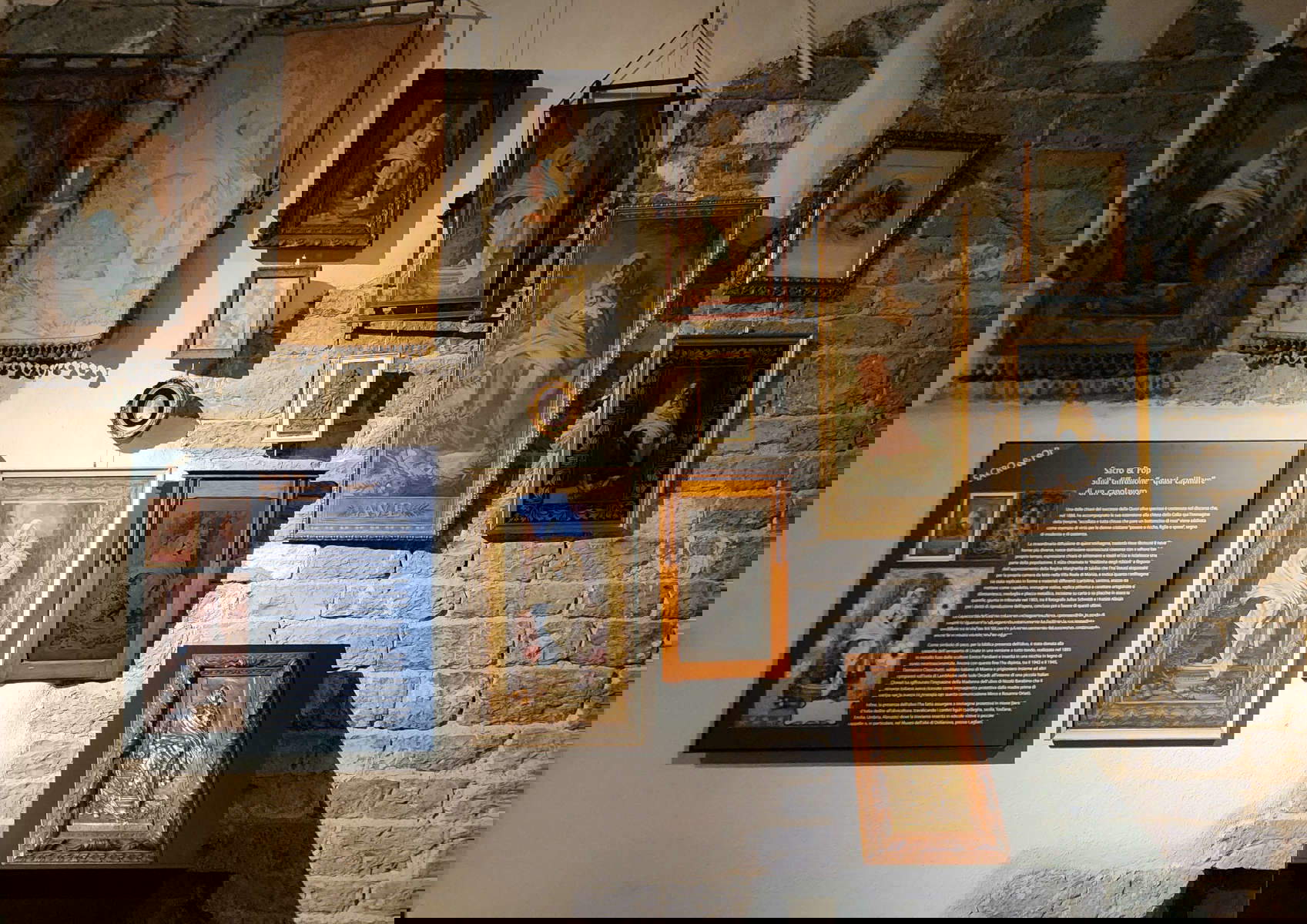
Here it is, then, before the eyes of visitors to the Diocesan Museum in Genoa, that essay in very fresh neo-sixteenth-century verism that smells of oil and orange. There is, in theOliva, a haughty and benevolent majesty that harkens back to the Madonnas of Giorgione, of Giovanni Bellini, to those calm and troubled queens, absent and hesitant, sovereigns of heaven and earth almost embarrassed on those lofty, distant, distant thrones. But there is also a popular vein that is unknown to Barabino’s predecessors. Of course, it can be argued that there are precedents: because of his savage and violent realism, Caravaggio had not ventured to give faces of harlots to his Madonnas. There is then to be found, in the idea of a world that does not exist, at least one element that Barabino and Caravaggio have in common.
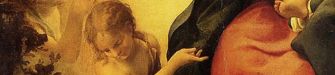
If, however, we look even fleetingly at Barabino’sOliva we derive as it were the impression that we have always known that adolescent Virgin, that still and silent Madonnina, even though she is wrapped in a heavy shawl of pearly cloth, even if she is hiding behind those quick and sure brushstrokes, behind the seventeenth-century chiaroscuro, behind the iridescence, even if Barabino has lengthened her legs, carefully concealed under the ultramarine tunic to accentuate that sense of hieratic dignity, even if the setting is all covered with olive branches, even if her eyes are closed and shadowed, even if the girl holds in her arms a Child who, you can bet the house, is not her own, but still manages to stay good and calm with his olive branch in her hand, blond as wheat, staring at the concerning with his dark eyes. The Genoese of the late nineteenth century looked at Barabino’sOliva and will have recognized a familiar air in that oval face, in those sad eyes, in those narrow, thin lips marked by a’shadow, a dark veil barely discernible, they will have recognized in it a girl seen among the caruggi, at the market, on the banks watching the fishermen’s boats, or along the streets that led to the corderie, the spinning mills, the sugar mills, a girl of sixteen, seventeen, eighteenyears old covered by her sharecropper, not even thinking that Barabino would see in her a cedar from Lebanon, a cypress from Mount Hermon, a palm from the oasis of Engaddi, a rose from Jericho, a majestic olive tree of those that grow on the plains. A girl from Sampierdarena like many, who became Mary for pretence, in the sense that Barabino invented and lied through a teenager who had nothing celestial about her. A fake Virgin, more fake than fiction, yet so solemn and so cast in her task, in her part of a ghost with the colors of the sky that materialized to prove that the world is an invention.
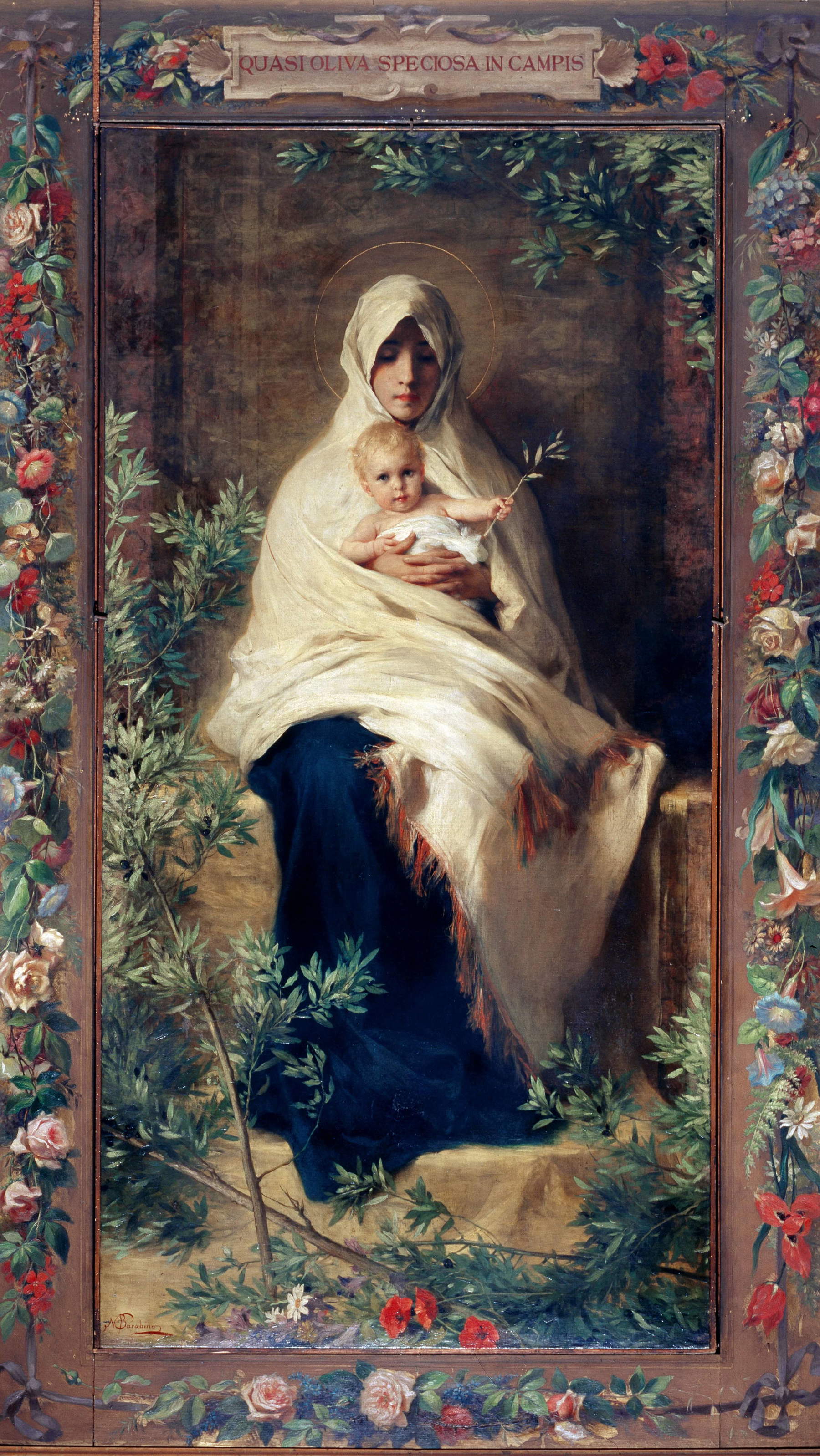
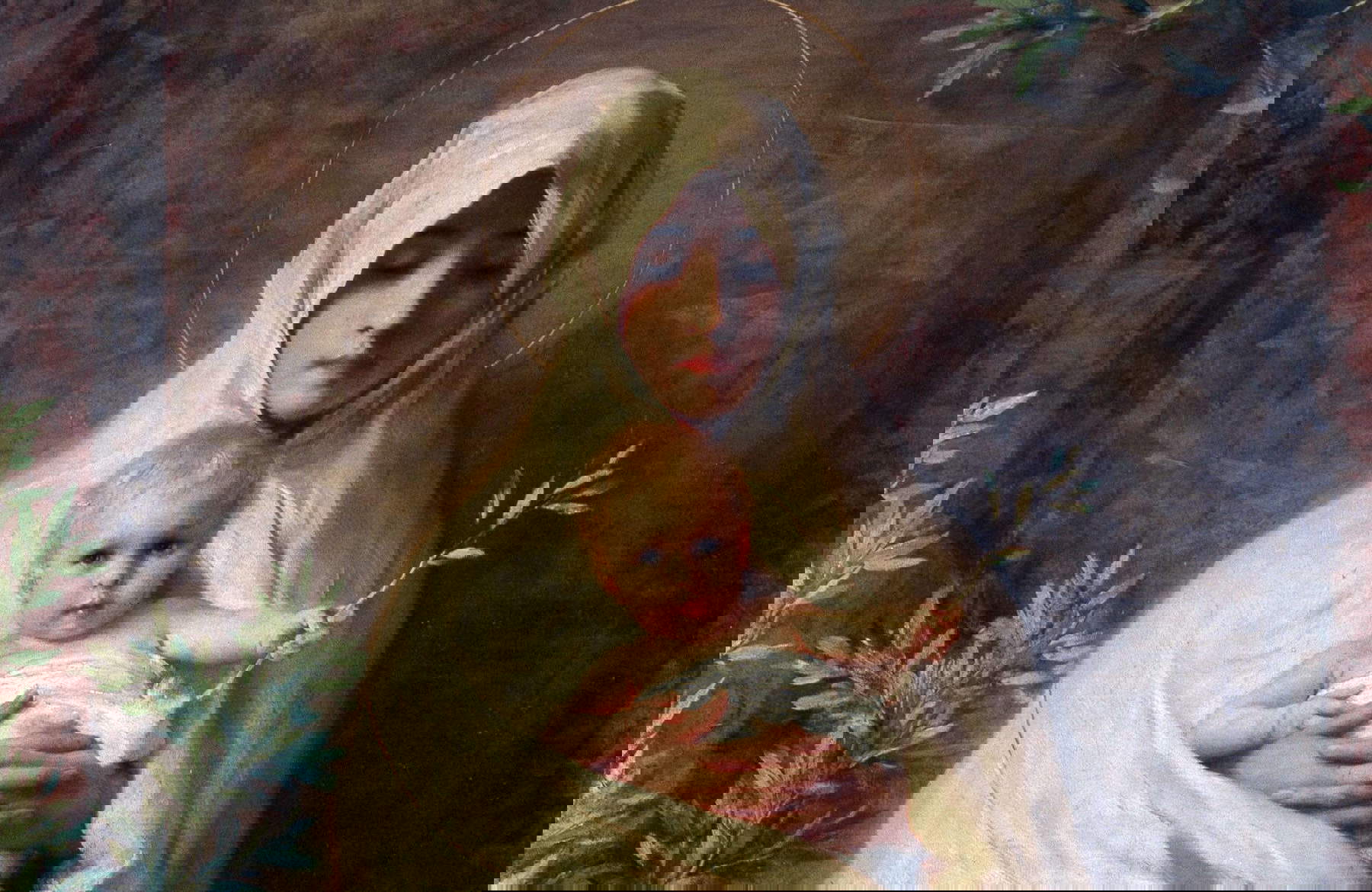
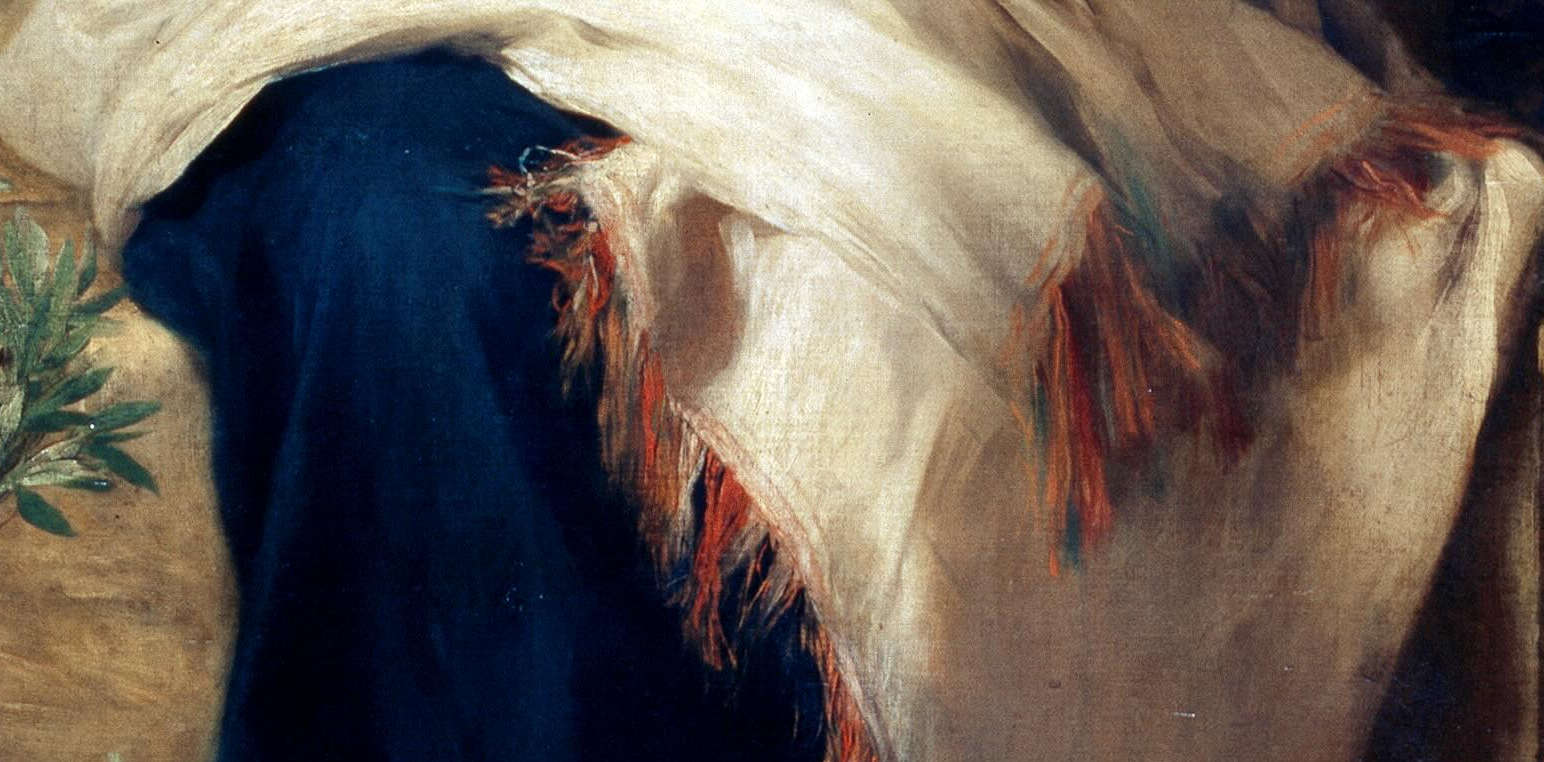
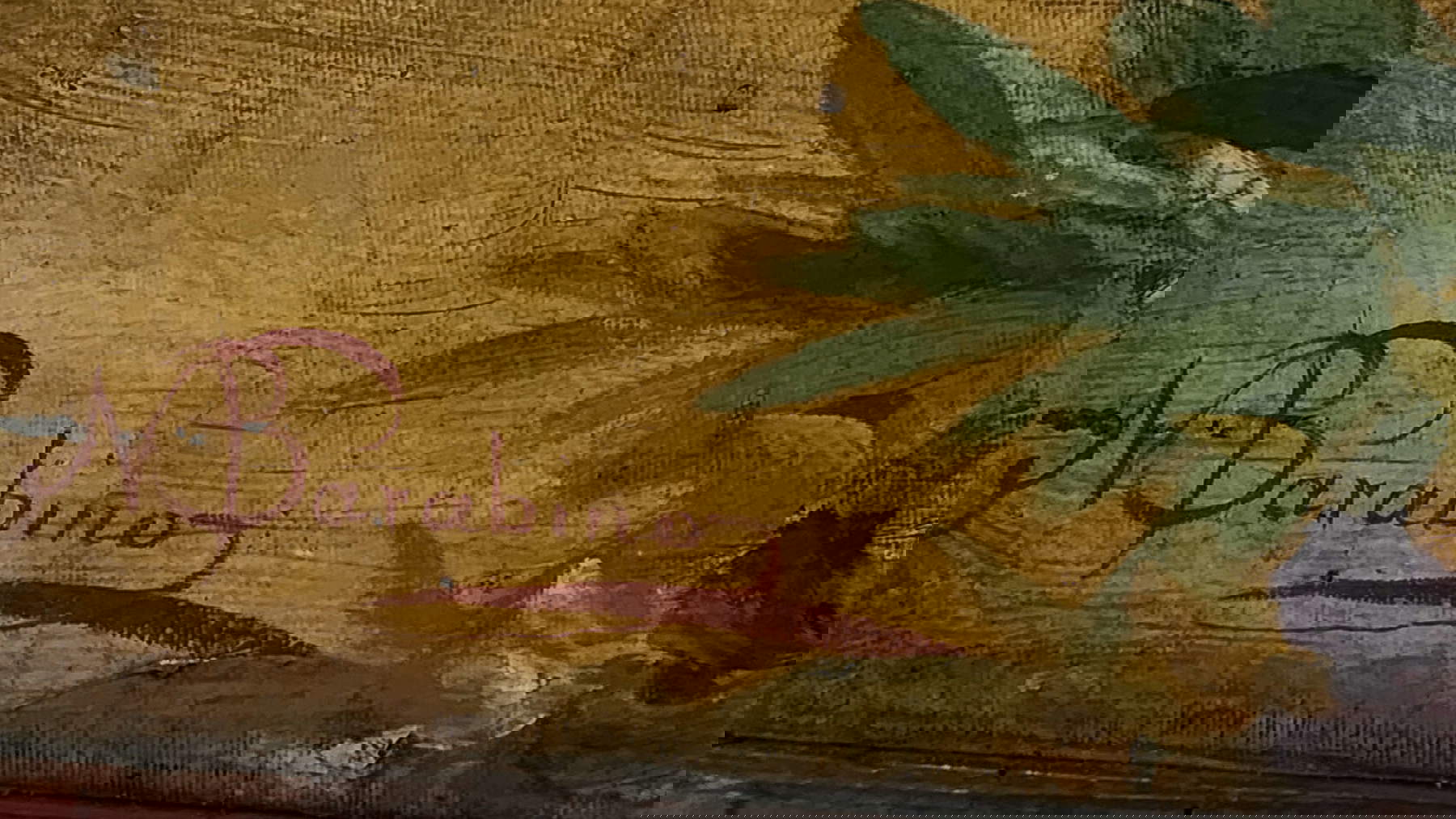
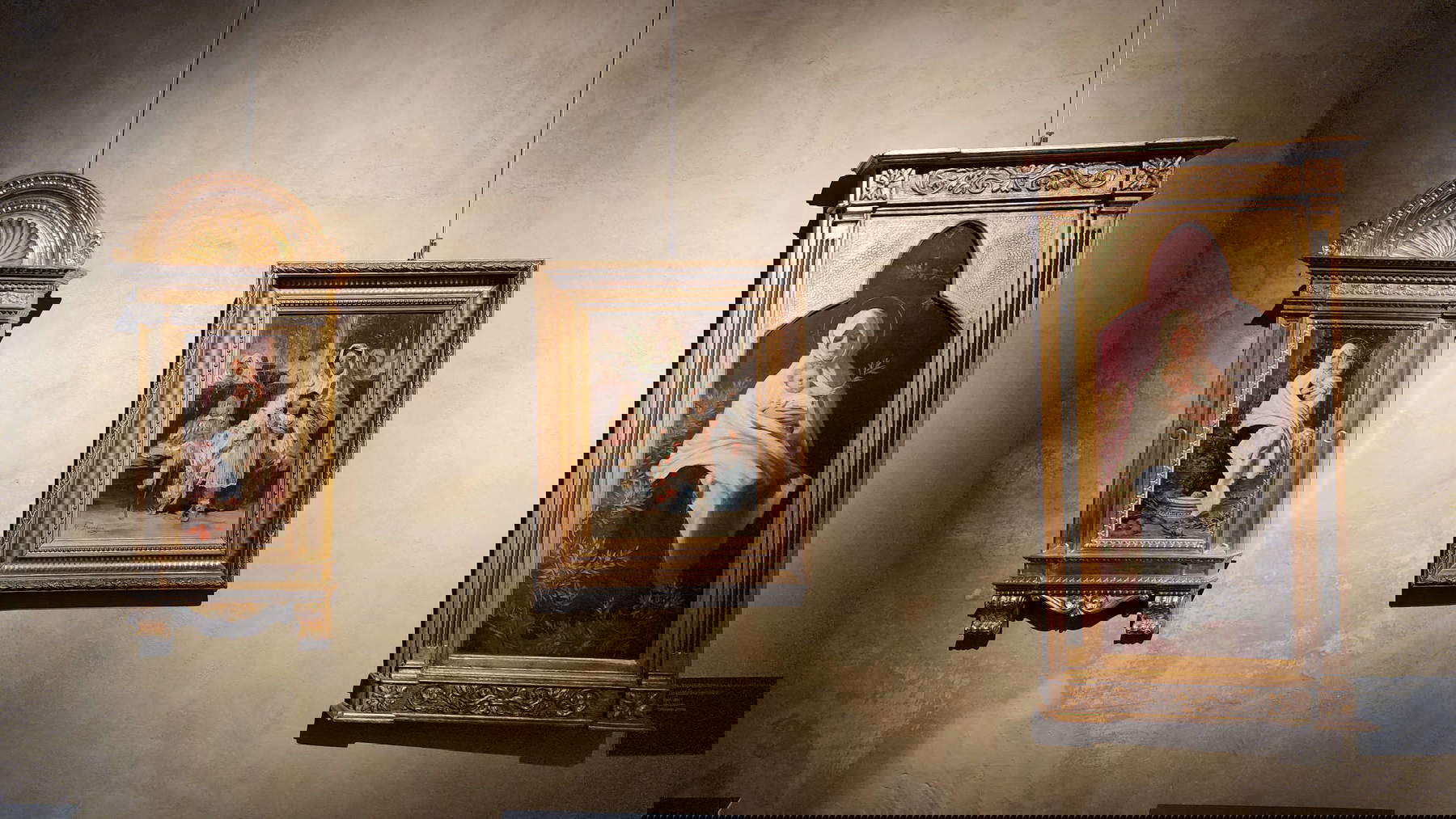
There is, in that face, an air of composed, detached nobility: the painter must have sensed this transversality, and we imagine him repainting, at that very moment, the same face for the Charitas that would later end up, Caterina Olcese Spingardi recalls, in the collections of a count who was interested in art. Rebora sees instead in Barabino’sOliva , in spite of all that adolescent, everyday, reassuring populist beauty, pre-Symbolist anxieties, from an excess of decorativism one would think, with all those plants that are supposed to evoke the qualities of the Virgin and which are called upon to turn the verses of Sirach into flesh, and with all those fabrics, even more precious in the first version, the one bought from the Savoys, with whom Barabino was, moreover, familiar. Closer and even more reassuring then the second version: Replacing the oranges with poppies, getting the cardinal’s satins out of the way, covering the marble base of the throne with an ochre carpet, and entering theOlive in the church for which it was intended from the beginning, it happened that Barabino’s Madonna underwent a kind of reverse transfiguration, which was not contemplated in the painter’s plans and which in any case the painter would have known only partially, since he was allowed to survive little of his most famous painting. Of the first replicas he would take care of himself, since requests to repeat the painting on a smaller scale came to him from the clientele that had made him an all-too-well-to-do painter, that clientele bourgeois enough to like a dresser-sizeOliva , well-to-do enough to ask the artist directly. There is, to recall all the replicas, the one that he had been asked by the son of a shipowner who imported grain from Mariupol: he had commissioned Barabino to remake the first version of theOliva and put it in the center of a small triptych to be placed in the house. Then, escaping the painter’s control, theOliva first took on the consistency of ceramics and majolica and became a kind of luminous ornament, a glazed ornament, an exercise in decoration on painted terracotta. After that, theOlive dried up and returned to the world.
Entering the last room of the exhibition at the Diocesan Museum in Genoa is a bit like stopping in the television department of an appliance store. In front of those screens broadcasting the same image, that image of working-class devotion, that image of domestic kitsch, that image that generations of Genoese will have hung above the headboard of their bed, that they will have kept on the console in the entrance of their homes, that they will have decorated with olive branches on Palm Sunday, thatimage that embarked on the steamships that, with the painter still alive, departed from the port of Genoa and took thousands of compatriots to the Americas, one could almost wonder on what position Barabino’sOliva stands, whether it could pass for a profession of faith, definition of a dogma, serious confessional declaration or I don’t know what else. Certainly no longer a liturgical image and perhaps no longer even a masterpiece. In the uncertainty, there is no doubt thatOliva is at the origin of a slippage that is all its own (but which also knows countless analogous cases in the history of art), a slippage that is perhaps even double, of which one becomes aware at the very moment in which the object loses its consistency, vanishes, dissolves, and yet it is precisely when the object becomes a spectre that manages to bring forth something that cannot be subjected to traditional paradigms of interpretation, to the normal frames of reference of art history, it is when the object disappears (in the exhibition the first version is not even on display) that the work becomes a kind of new collective presence. TheOliva, and Barabino could not have imagined this, was probably endowed with a generative power that, to be sure, can be explained according to entirely rational logic (clarity, simplicity, beauty, recognition, history: a perfect sacred icon for post-unitary Italy), but that was not in his predictions. Now, Niccolò Barabino died four years before the inaugural edition of the Venice Biennale opened. One of his works would still reach us, however, many years later, in 1934, when an exhibition of 19th-century portraiture was organized at the Biennale and a portrait of Sarah Bernardt, which had belonged to his grandson, was summoned to Venice. Almost a hundred years later, in 2026, the Venice Biennale decided to favor an idea of art as a generative practice addressed to the community by going fishing mostly outside of Europe, outside of Italy: here, perhaps imaginingOliva inside the Central Pavilion of the Giardini, under the decorations of Galileo Chini, at this point might not seem such a peregrine design.

The author of this article: Federico Giannini
Nato a Massa nel 1986, si è laureato nel 2010 in Informatica Umanistica all’Università di Pisa. Nel 2009 ha iniziato a lavorare nel settore della comunicazione su web, con particolare riferimento alla comunicazione per i beni culturali. Nel 2017 ha fondato con Ilaria Baratta la rivista Finestre sull’Arte. Dalla fondazione è direttore responsabile della rivista. Nel 2025 ha scritto il libro Vero, Falso, Fake. Credenze, errori e falsità nel mondo dell'arte (Giunti editore). Collabora e ha collaborato con diverse riviste, tra cui Art e Dossier e Left, e per la televisione è stato autore del documentario Le mani dell’arte (Rai 5) ed è stato tra i presentatori del programma Dorian – L’arte non invecchia (Rai 5). Al suo attivo anche docenze in materia di giornalismo culturale all'Università di Genova e all'Ordine dei Giornalisti, inoltre partecipa regolarmente come relatore e moderatore su temi di arte e cultura a numerosi convegni (tra gli altri: Lu.Bec. Lucca Beni Culturali, Ro.Me Exhibition, Con-Vivere Festival, TTG Travel Experience).
Warning: the translation into English of the original Italian article was created using automatic tools. We undertake to review all articles, but we do not guarantee the total absence of inaccuracies in the translation due to the program. You can find the original by clicking on the ITA button. If you find any mistake,please contact us.













 IT
IT FR
FR DE
DE ES
ES CN
CN


