




by Noemi Capoccia 09/09/2026



Categories: Works and artists / Disclaimer
"Monumenta," the large-scale installation created by Fabrizio Plessi in 2012 in the Valley of the Temples in Agrigento, still resonates today with the echoes of a vision in which gods, memory, nature, and technology came together. An article by Noemi Capoccia.
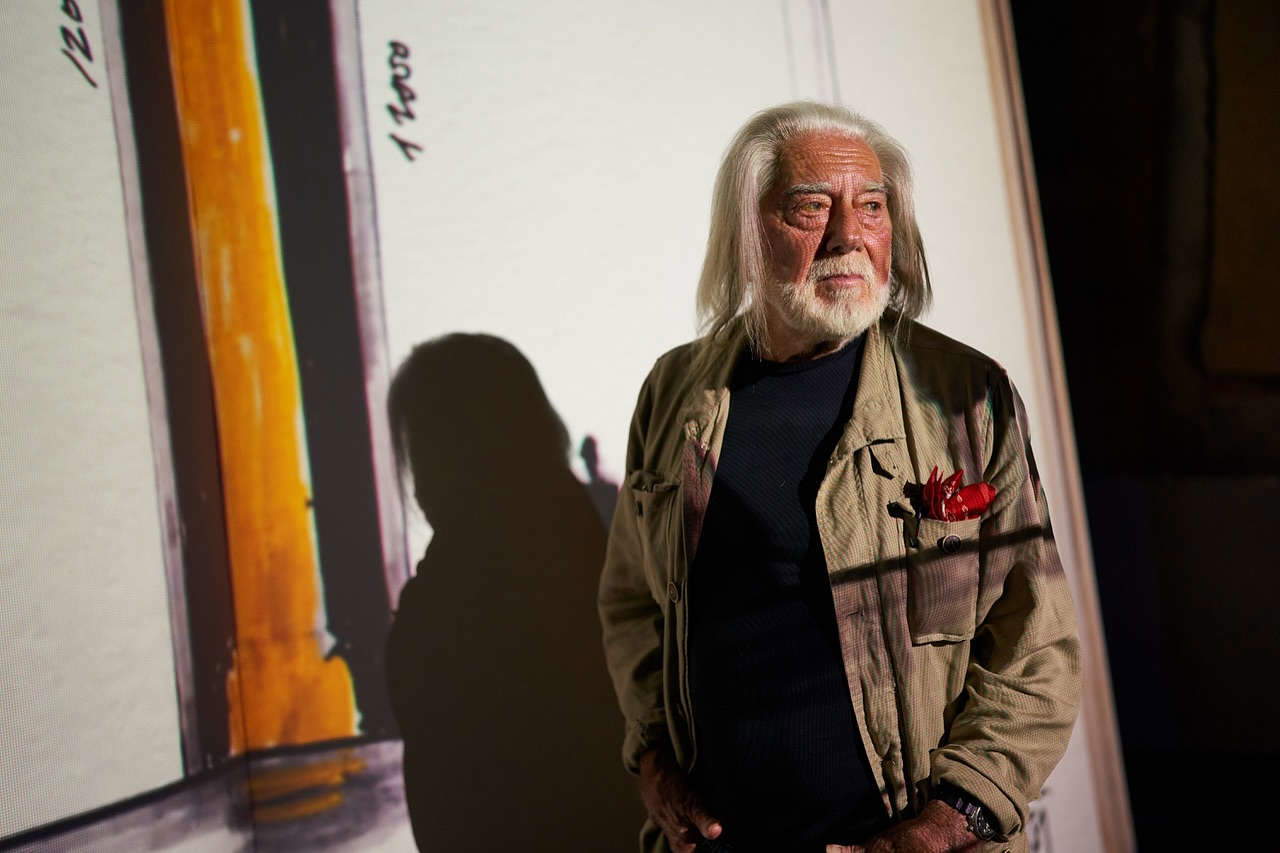
The Valley of the Temples in Agrigento is one of those places where memory is not limited solely to the preservation of the past. The columns, temples, sacred areas, and archaeological fragments continue to evoke associations and interpretations. It is a landscape in which time seems to have settled in successive layers without ever disappearing completely—much like Pompeii. When Fabrizio Plessi (Reggio Emilia, 1940 – Dolo, 2026), a pioneer of video art and video installations, arrived there in 2012 to design *Monumenta*, he found himself, in a sense, in the position of a new Odysseus: and no, I’m not talking about the traveler crossing the Mediterranean in search of a homeland; I’m talking about an artist who has arrived in a land inhabited by the gods, called upon to grapple with their silent presence and with what remains of that world in the present.

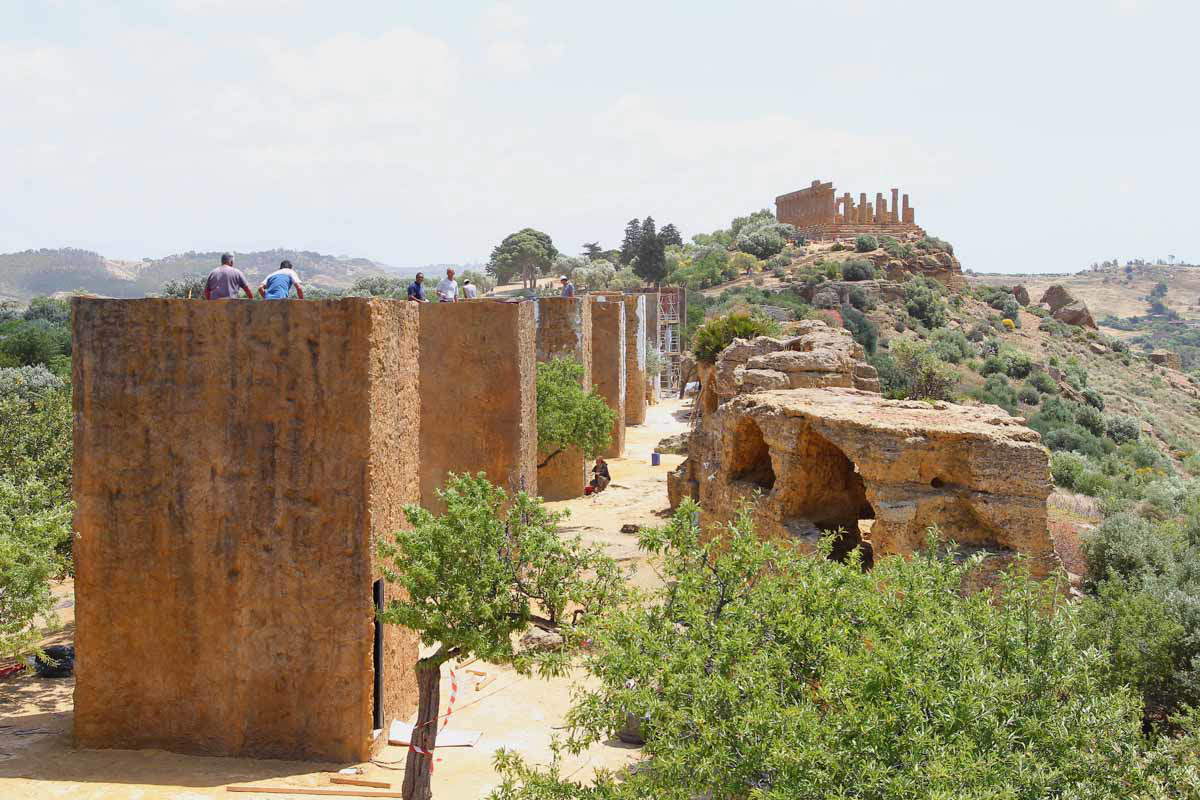
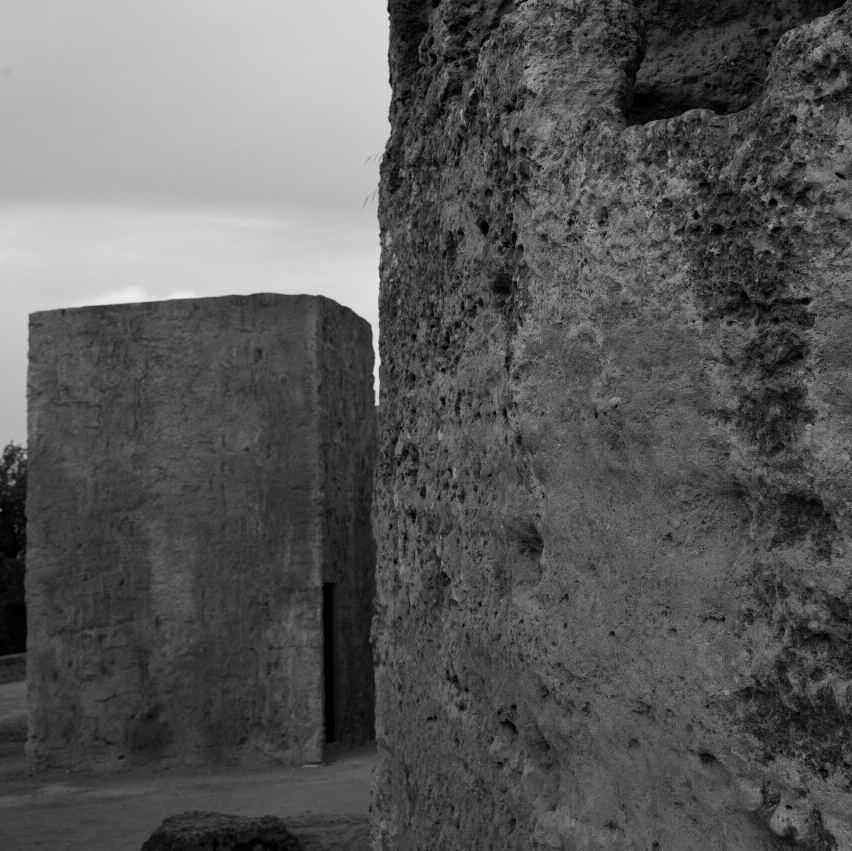
Just as Odysseus, during his journey, finds himself in the presence of the gods on multiple occasions, Plessi engages with a landscape in which the gods are not visible but continue to be evoked by the architecture and the layers of history. Monumenta arises from this encounter. He does not seek to reconstruct the ancient nor to blend technology into archaeology. What Plessi creates is, in fact, a titanic work. He positions nine large monolithic chambers within the site—nine spaces conceived as thresholds—each chamber dedicated to a deity from Greek mythology and a natural element: Poseidon, Persephone, Apollo, Hades, Aphrodite, Hebe, Zeus, Demeter, and Hephaestus. The result is a journey in which water, fire, earth, wind, ice, and electricity appear through digital images projected inside structures that, from the outside, evoke stone and monuments.


Accompanying the installation’s architecture is the monograph *Fabrizio Plessi. Monumenta*, featuring critical essays by curator Marco Tonelli, published in 2012 by Il Cigno GG Edizioni. The writing resonates with the visionary dimension of Plessi’s poetics; as the curator notes, the artist himself would sometimes return to reread it.
Every religion has its own cosmogony—a narrative through which to bring order to the origin of the world, the gods, and the forces that govern the universe. Indeed, the system of *Monumenta* can also be interpreted in light of this idea of cosmic order, even as it operates within the tradition of Greek mythology. And why not—given their numerical structure and function as a cosmological system—could the cells of *Monumenta* be compared to the Great Heliopolitan Ennead, the group of nine primary deities of Egyptian cosmogony: Atum, Shu, Tefnut, Geb, Nut, Osiris, Isis, Seth, and Nephthys. “Ennead” derives from the Greek enneás, “nine,” and refers precisely to a group of nine deities. In Plessi, of course, the genealogy belongs to a different tradition and the reference is to the Greek world; what the two systems have in common, however, is the need to arrange figures and forces within a structure capable of giving shape to the universe.
It is within this architecture that we can now imagine a new assembly of the gods. I am speaking of a way to restore the nine cells to their collective dimension. As in a pantheon, each deity assumes a specific function and, together with the others, contributes to shaping a cosmology. In *Monumenta*, however, the gods no longer belong solely to myth; they become figures through which Plessi explores matter and its absence, memory, and transformation.
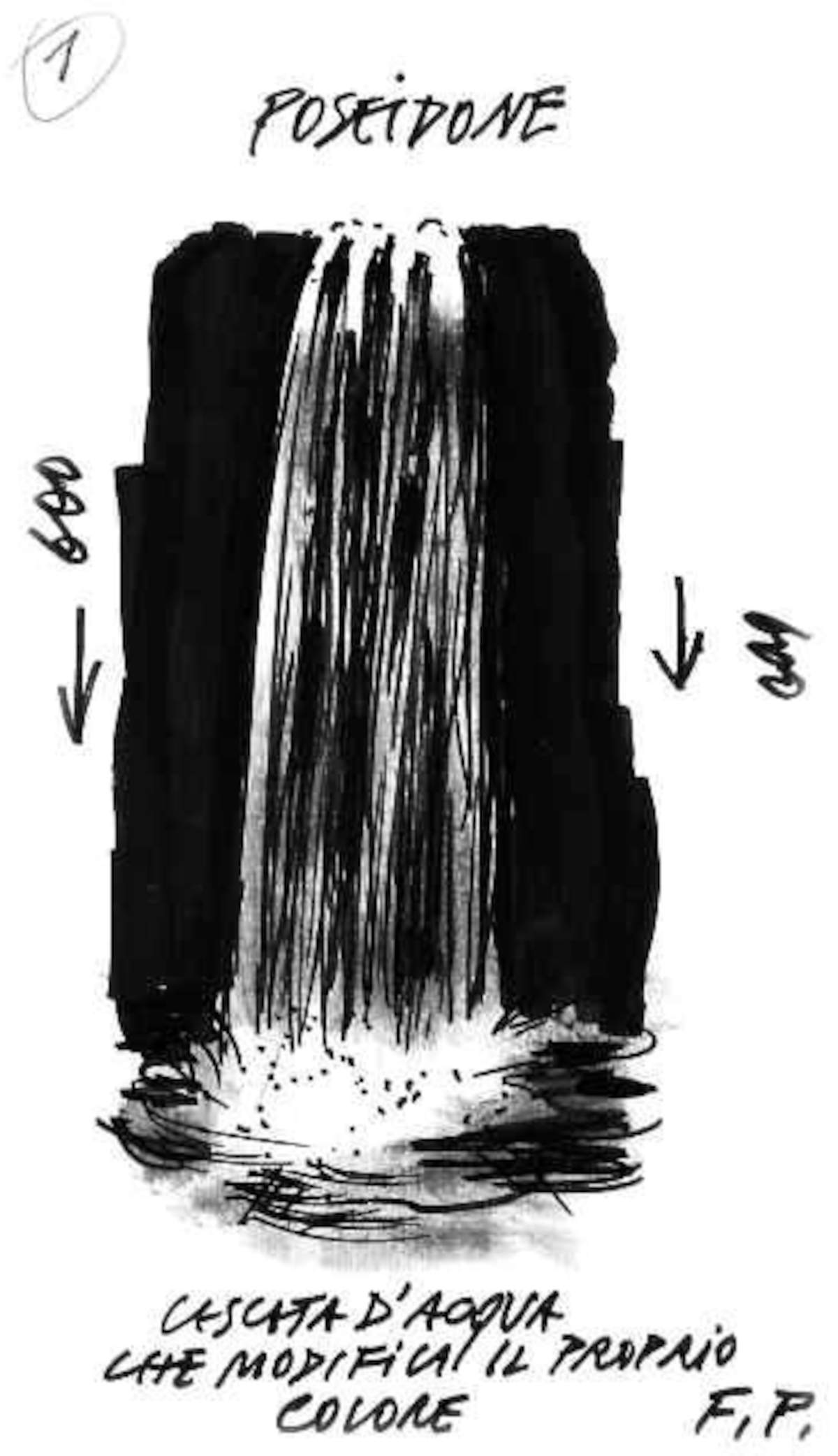
Poseidon occupies the first threshold. His element iswater, which in Plessi’s work is one of the foundations of his research. The artist had associated it with fluidity, freedom, movement, and his own artistic identity. Before *Monumenta* came the electronic waterfalls— *Mareverticale*, *Electronic Water Fall*, *Mari*— —and even earlier, the drawings in which water, ice, coal, steel, neon, and various other materials were brought into relation through analogies and metamorphoses.
In the installation’s chamber, however, water takes on a new form: a waterfall created entirely by computer flows from top to bottom, gradually changing color. There is no physical water, yet the eye immediately recognizes its behavior. The question, therefore, is not whether what we see is real. The question is to understand to what extent an image can replace matter without losing its perceptual effectiveness. Plessi works on the threshold of illusion, a threshold that belongs to the very history of art. The reference in *Monumenta* is thus to an ancient tradition in whichthe artist was also judged by his ability to deceive the senses. Poseidon’s waterfall is water without water and nature without nature. It is matter that exists only in perception.
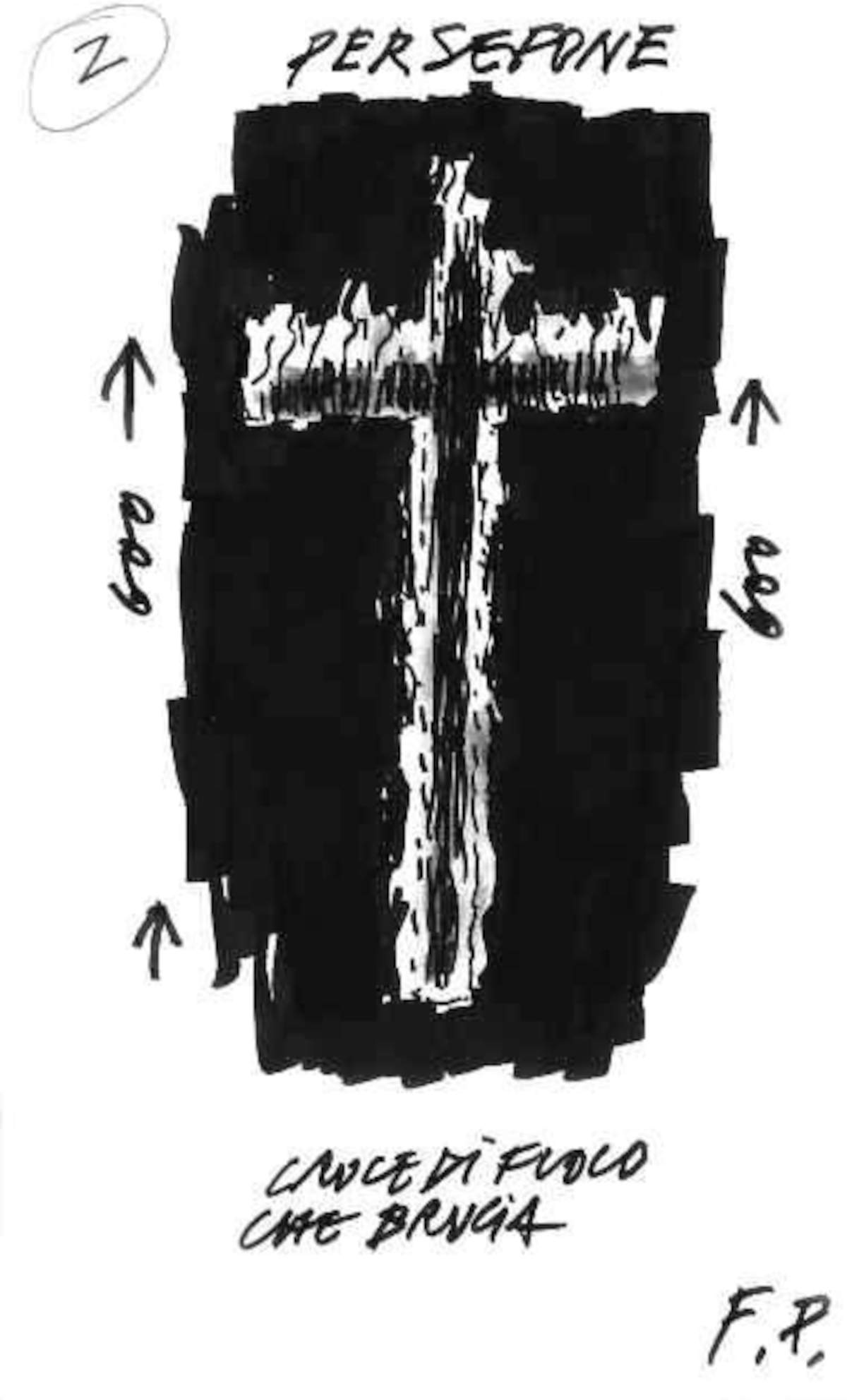
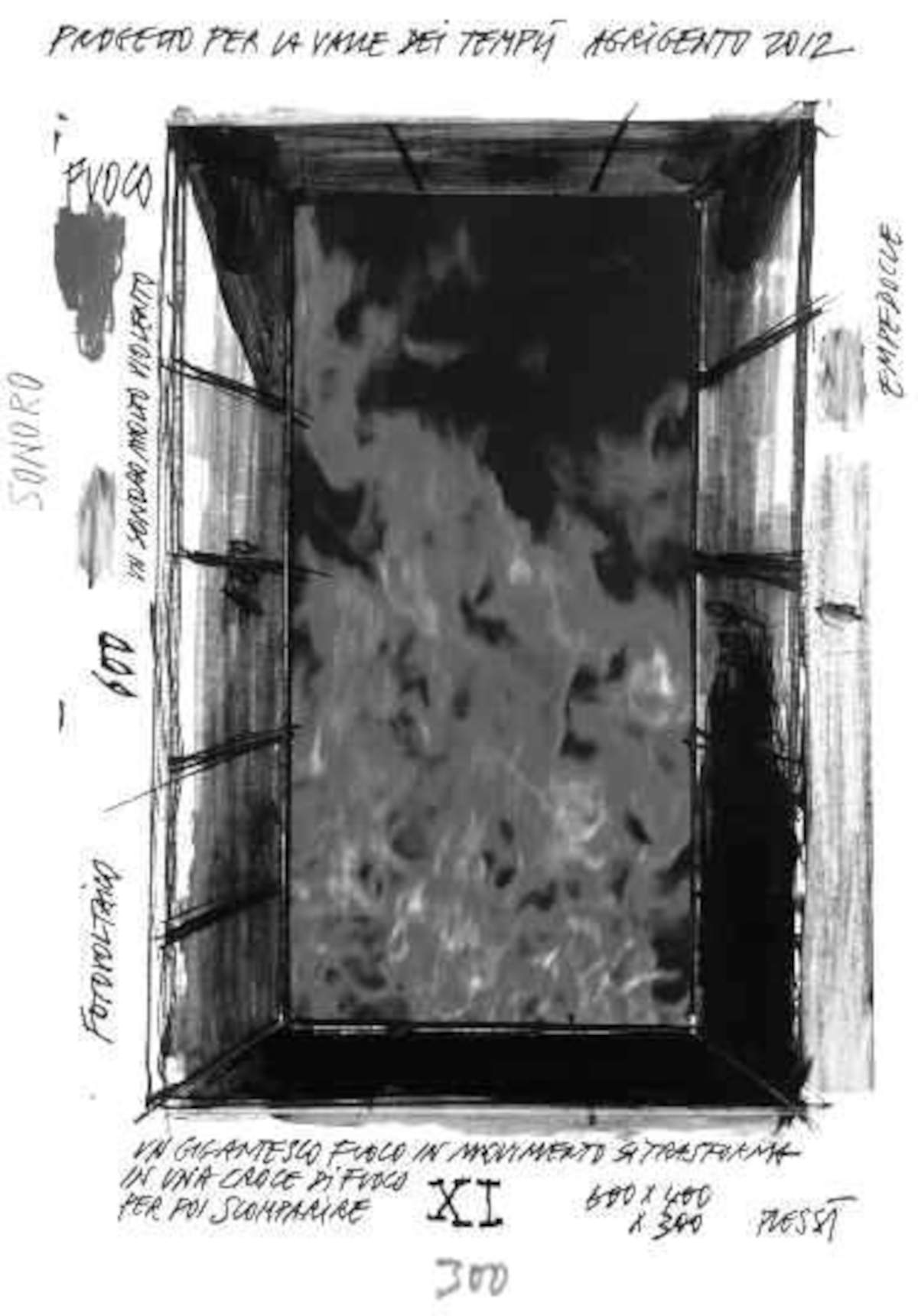
From the first cell to the second, the movement comes to a halt to make way for fire. Persephone embodies the themes of descent and rebirth, of death and regeneration. Her mythological story is linked to the cyclical nature of the world and to her relationship with the underworld. In the cell that Plessi dedicates to her, a black cross emerges from the flames, becomes fire itself, and finally vanishes. The cross introduces into the sequence a memory distinct from that of Greek mythology. As Tonelli writes, the Valley of the Temples is, in fact, a place where different religions, cultures, and eras have overlapped. The Temple of Concordia, transformed into a Christian basilica in the sixth century, is one of the most evident examples of this. Persephone’s cross brings different eras and systems of meaning into collision; it does not represent a religious symbol. Fire becomes destruction, but also transformation—a possibility of rebirth. It is here that Persephone might be the first to speak of death—not the death of the artist, but death as a necessary condition for the transformation of the image. Her presence in the sequence suggests that what disappears is not necessarily lost; it can change state, reemerge, and ultimately take on a different form.
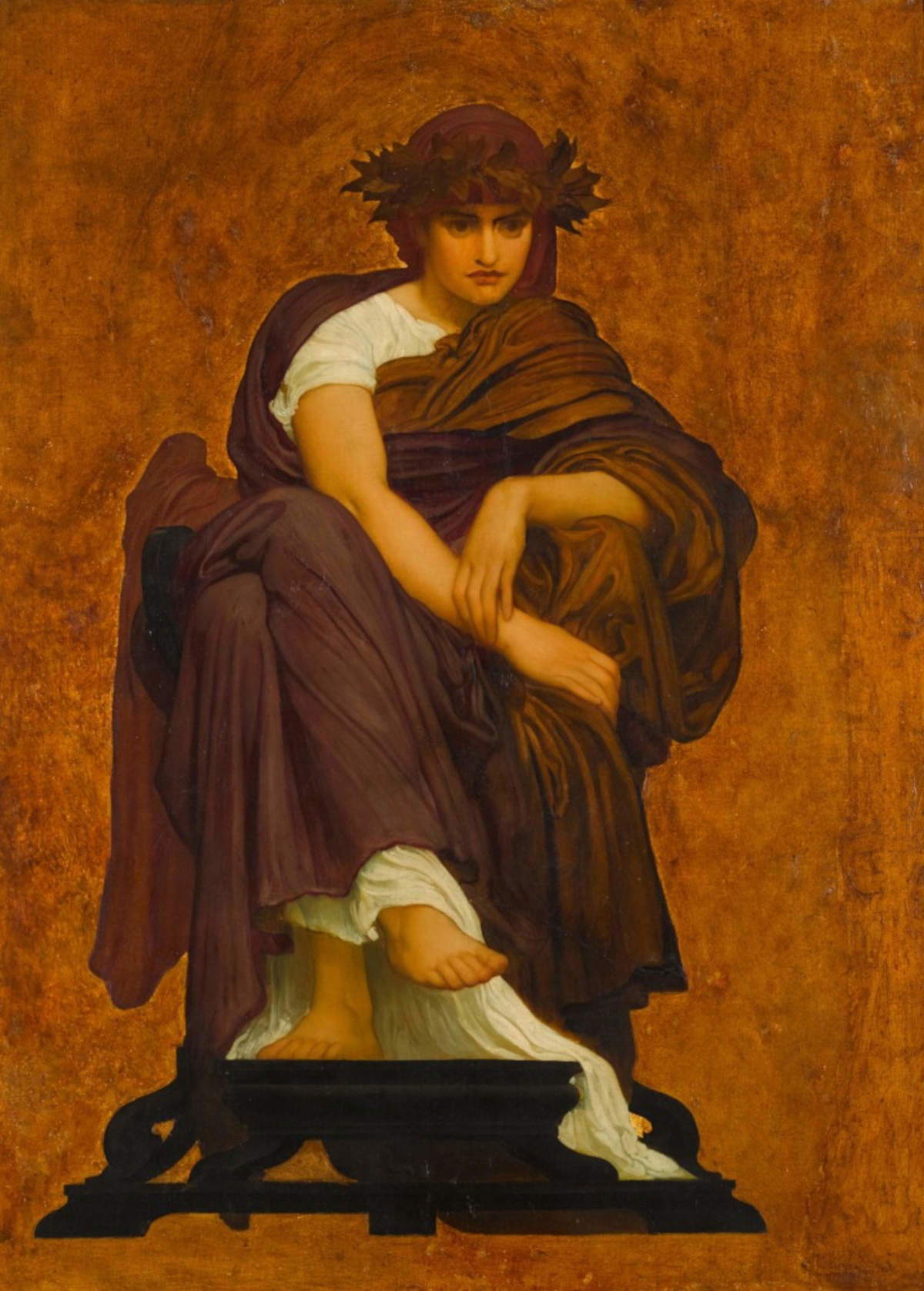
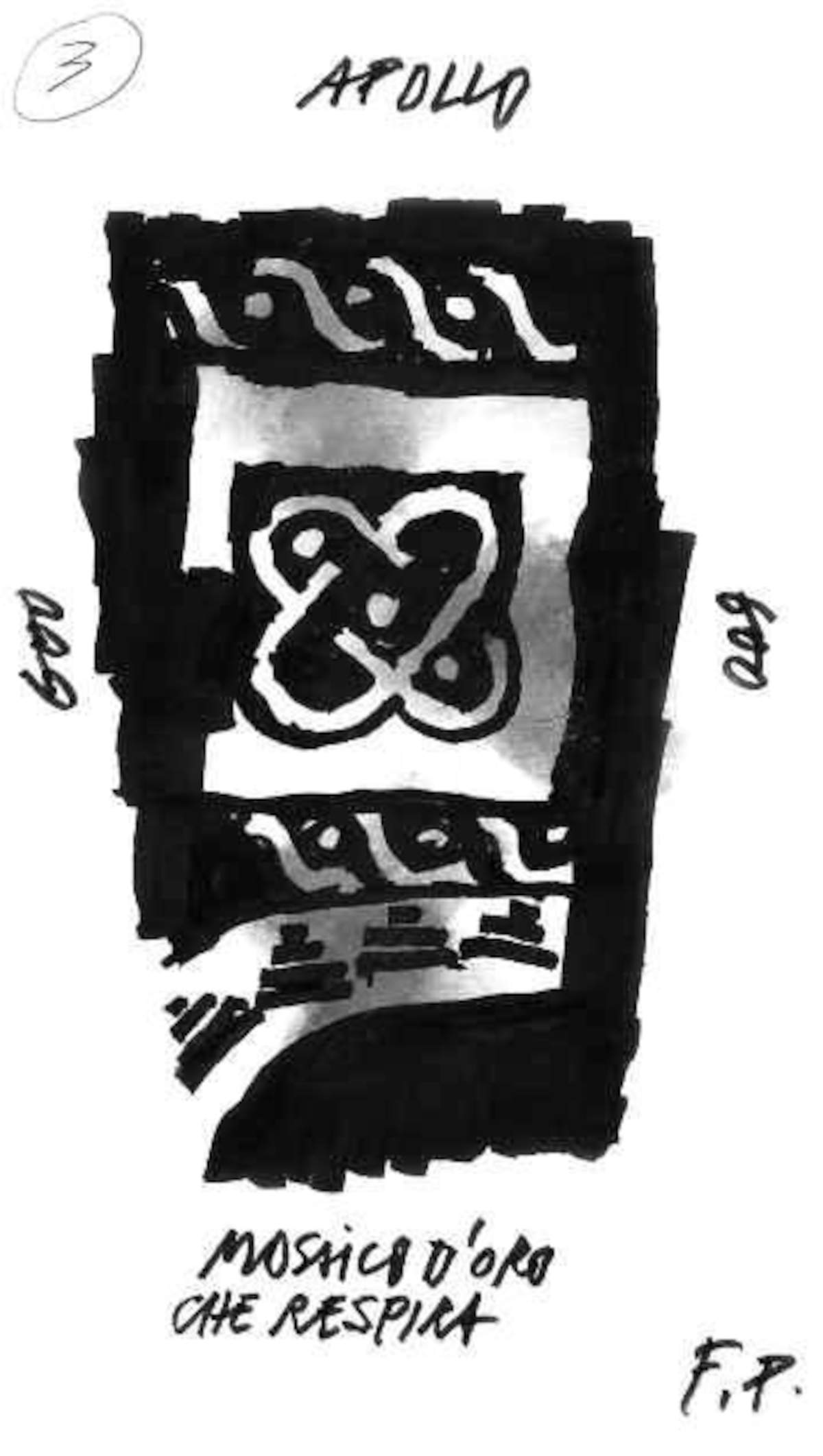
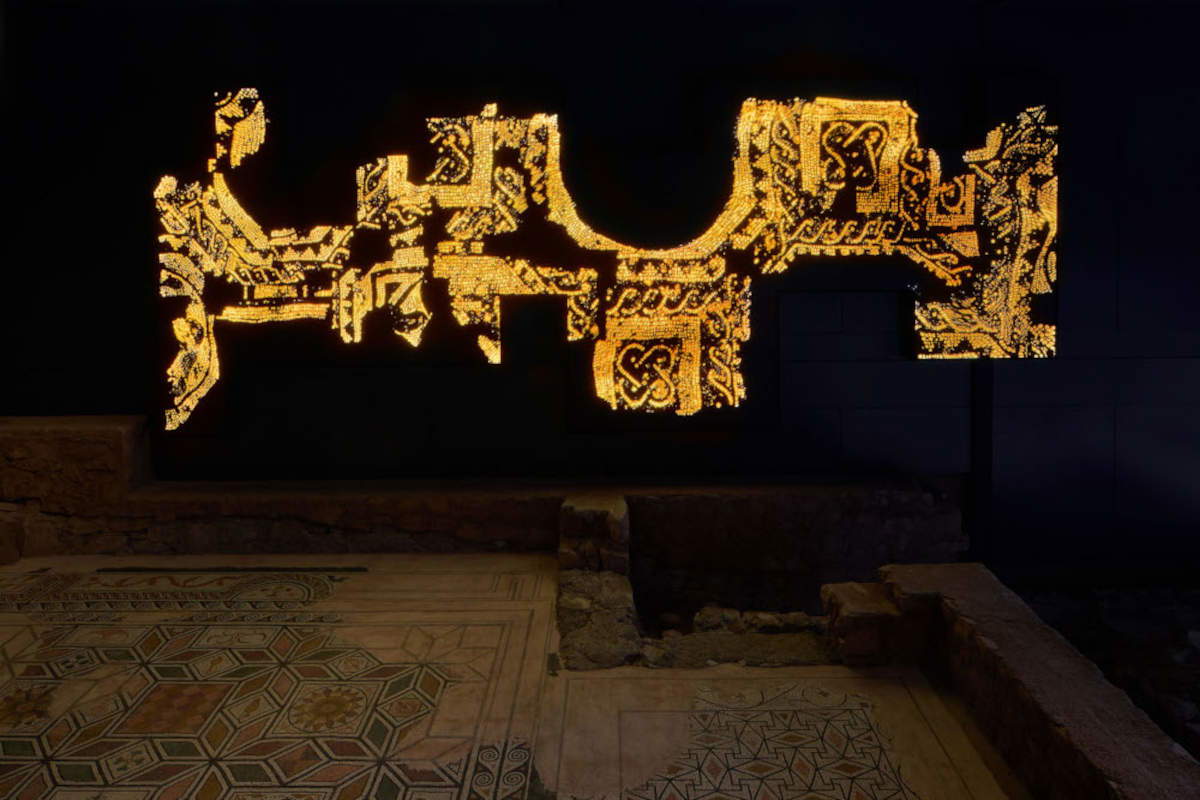
Apollo occupies the third cell of *Monumenta* and introduces the theme of memory in an even more explicit way. The god of music, poetry, and the arts is accompanied by the Muses, nine deities born of Zeus and Mnemosyne (or Mnemosine), Memory. The number of the Muses thus also establishes a further correspondence with the structure of Monumenta: nine possibilities for organizing a universe through images. Apollo’s cell is dominated by a Greco-Roman-Byzantine mosaic that appears to move in the water. Archaeology and immersion, fragment and movement enter into a relationship in which the past loses its fixity and becomes, once again, the stuff of the present. It is a conception of memory that finds further development in *Underwater*, a spectacular installation of digital gold mosaics created several years after *Monumenta*, where the mosaic surface—entrusted to the movement of the image and the music of Michael Nyman—escapes the stability inherent in the artifact.
The same principle also runs through *Underwater Treasure*, a further reworking of the artist’s earlier research, in which the mosaics of Roman Brescia are returned to the aquatic element. Water, a constant presence since Plessi’s early days, becomes a form of time without acting merely as a subject or an optical device. As it flows, the floor tiles of ancient Brixia (modern-day Brescia) disappear and reappear, in a movement that transforms archaeological memory into an unstable experience. What time erodes, the digital image makes mobile once again and exposes it to the very same precariousness that led to its disappearance. It does not intend to preserve it, because that is not its purpose. In this sense, Mnemosyne is perhaps the invisible figure that runs through the entire Monumenta exhibition. For Plessi, memory serves to reactivate. It is what allows an ancient statue to breathe again, a mosaic to move, a nonexistent waterfall to appear real, or even an intact and majestic column to soar into the air.
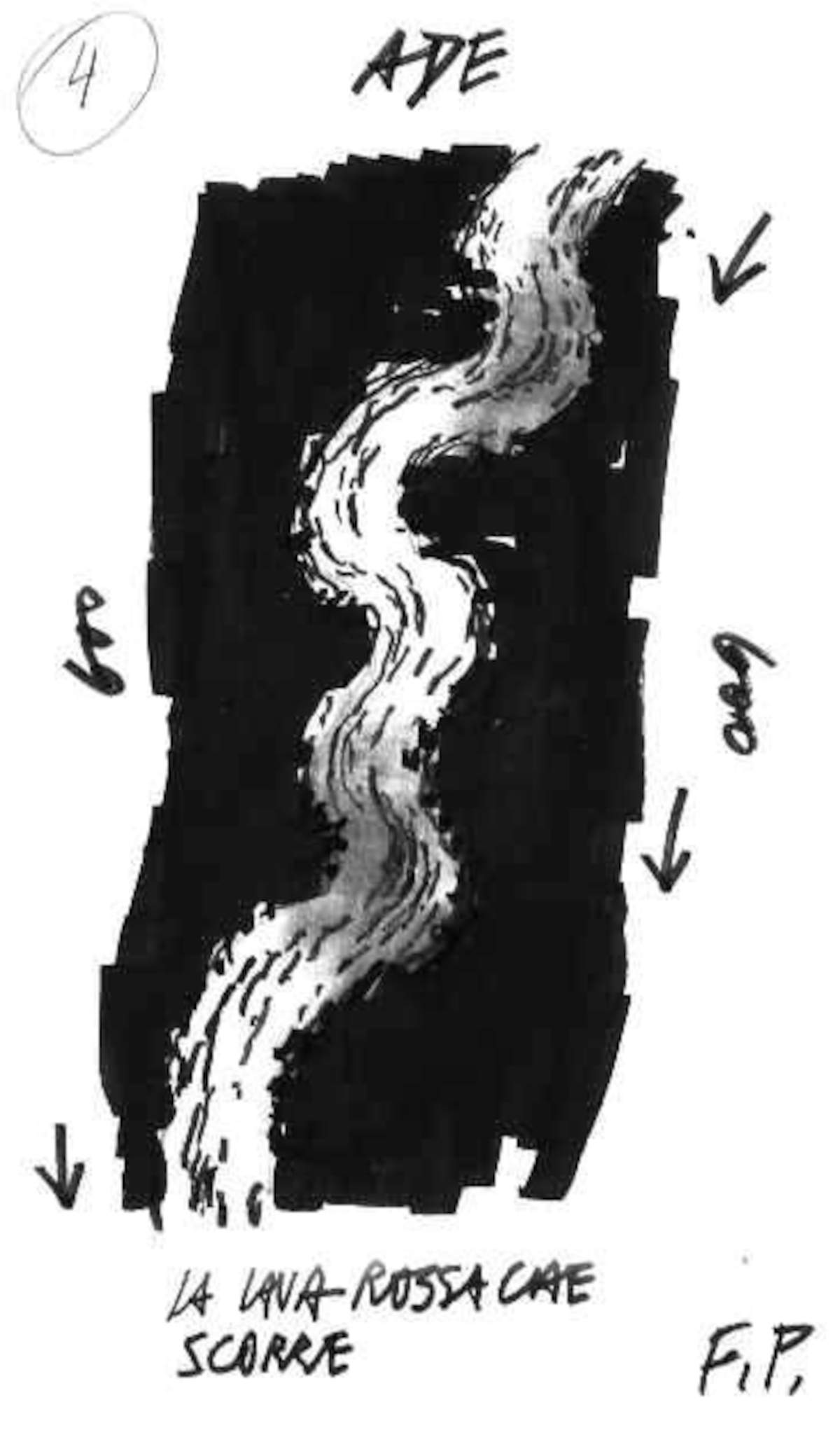
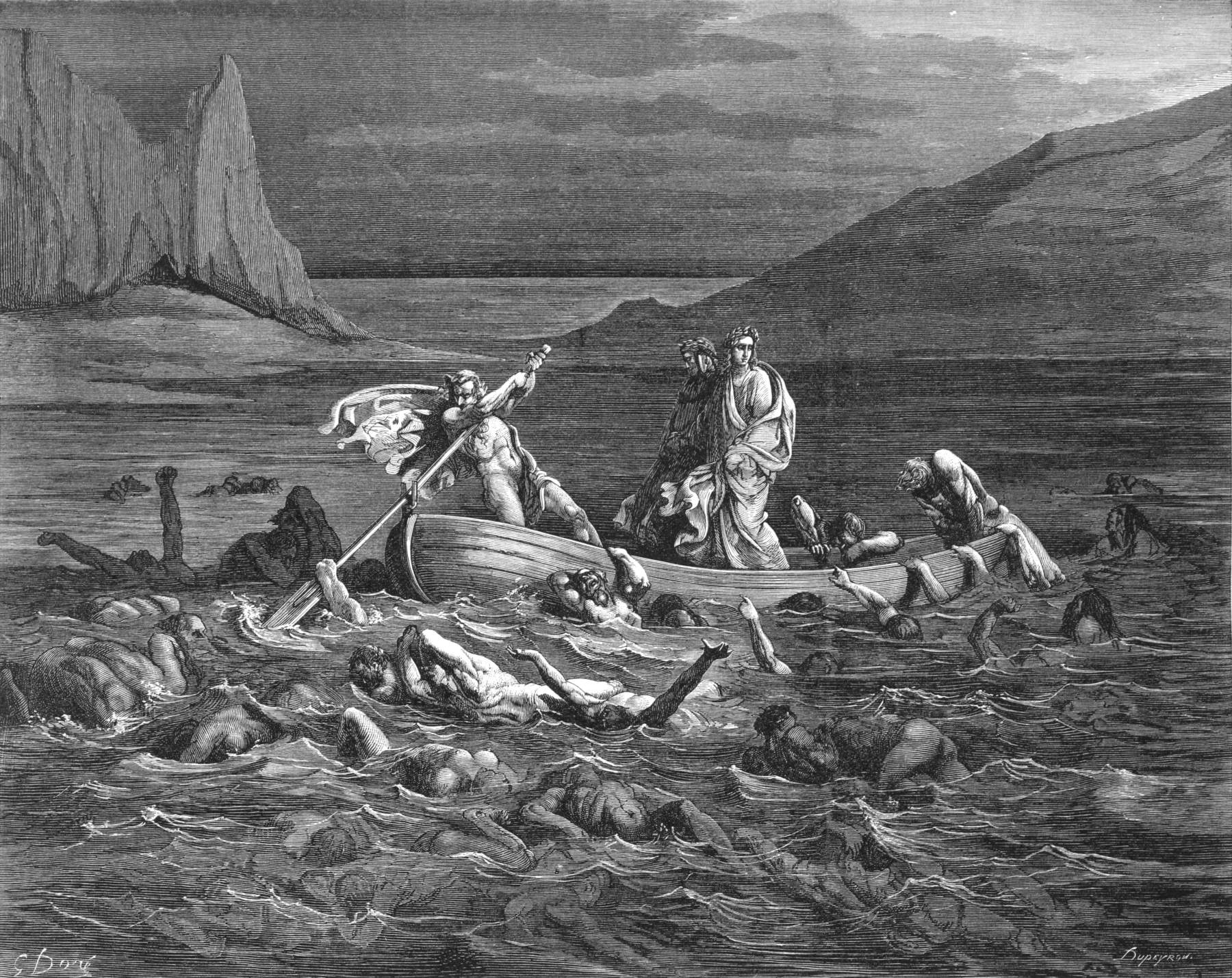
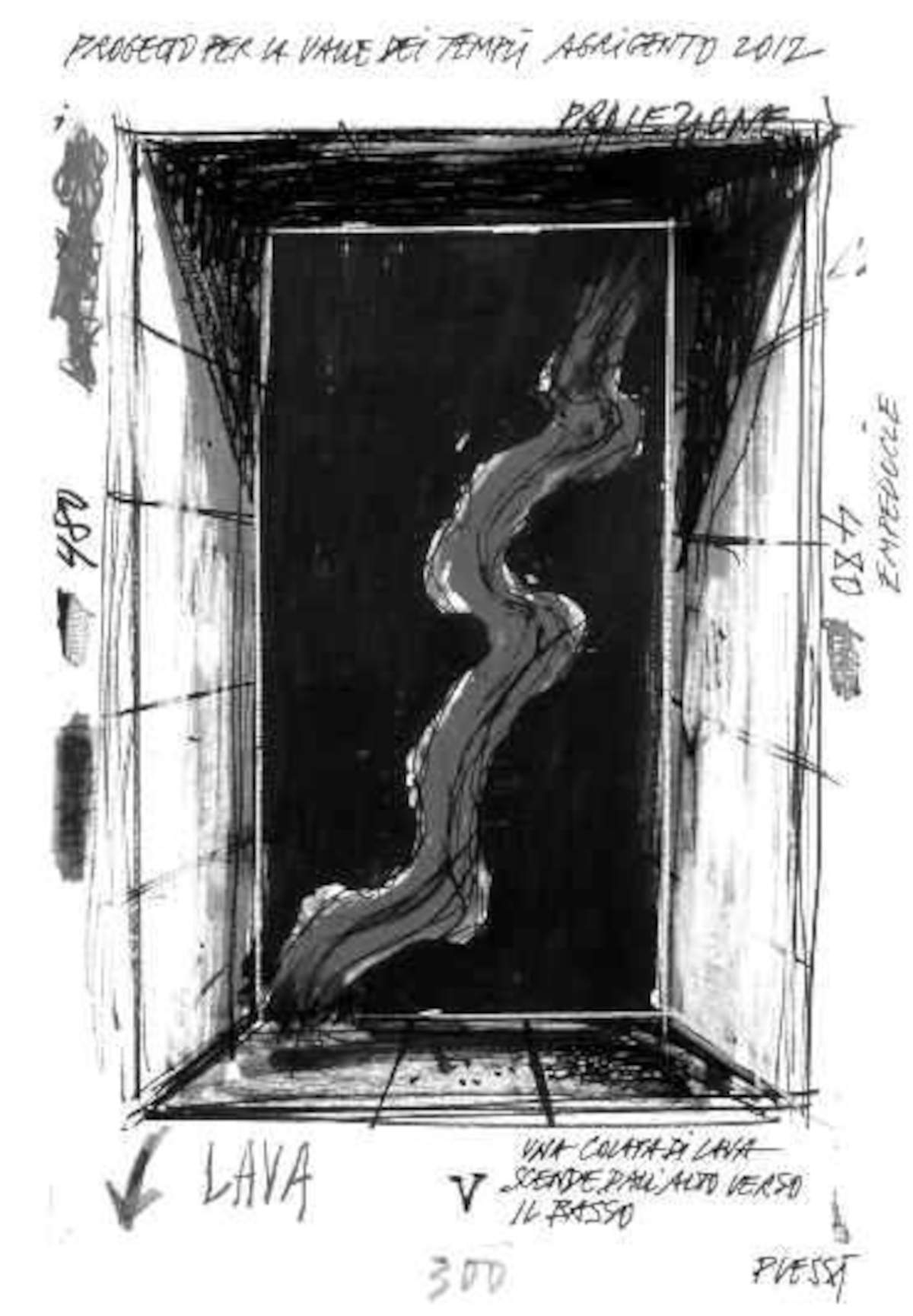
The journey continues with Hades. While Poseidon rules the water and Persephone the fire, Hades belongs to the depths. His river is the Styx, a watercourse that Plessi transforms into a lava flow. The infernal water is replaced by fire, yet it retains its function as an element in motion. The material changes, but the flow remains. Hades’s cell is thus one of the clearest demonstrations of the artist’s method: the goal is to replace one element with another and blur the lines between the real and the virtual to the point where it becomes difficult to determine where one ends and the other begins.
Here, the tradition of Hell enters the image through literature as well. The Styx, along with the Acheron and the Phlegethon, belongs to the underworld geography evoked by Dante in the Divine Comedy, and Hades’ lava also seems to draw upon the poetic memory of Dante’s poem. The digital lava evokes Sicily’s volcanic landscape and, at the same time, the tradition of depictions of Hell. The Valley of the Temples, viewed through imagery and technology, becomes a place where Greek myth, history, geology, and literary imagination can coexist peacefully. And Plessi is the master of this art. Let me clarify one point. Here, Hades does not represent the afterlife. The deity symbolizes the part of the sequence in which matter seems to come closest to its own dissolution. The lava moves slowly, unhurriedly, and it is precisely this slowness that alters the perception of time. Added to this layering is the 18th-century tradition of volcanic eruptions, when the natural phenomenon was adopted by painting as an experience of the Sublime. In the paintings of the English artist Joseph Wright of Derby—such as *Vesuvius in Eruption, with a View over the Islands in the Bay of Naples* or *A View of Vesuvius from Posillipo, Naples*—the incandescent lava and lapilli are both a luminous spectacle and a manifestation of destructive force. Plessi recovers that same ambivalence found in Wright’s work, but removes it from painting and nature to reconstruct it through the digital image. The lava of the god of the Underworld thus becomes both a geological phenomenon and electronic matter.
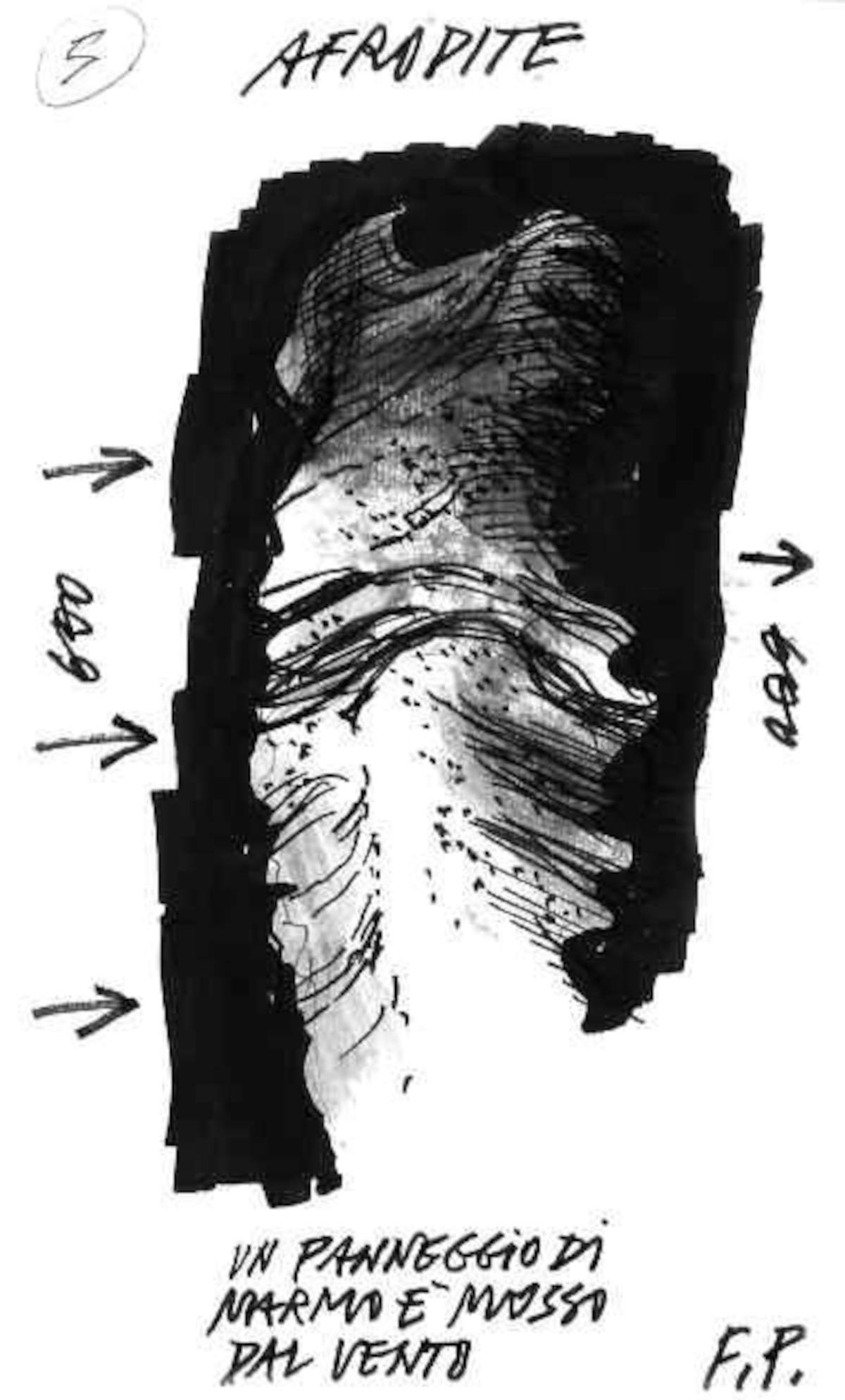
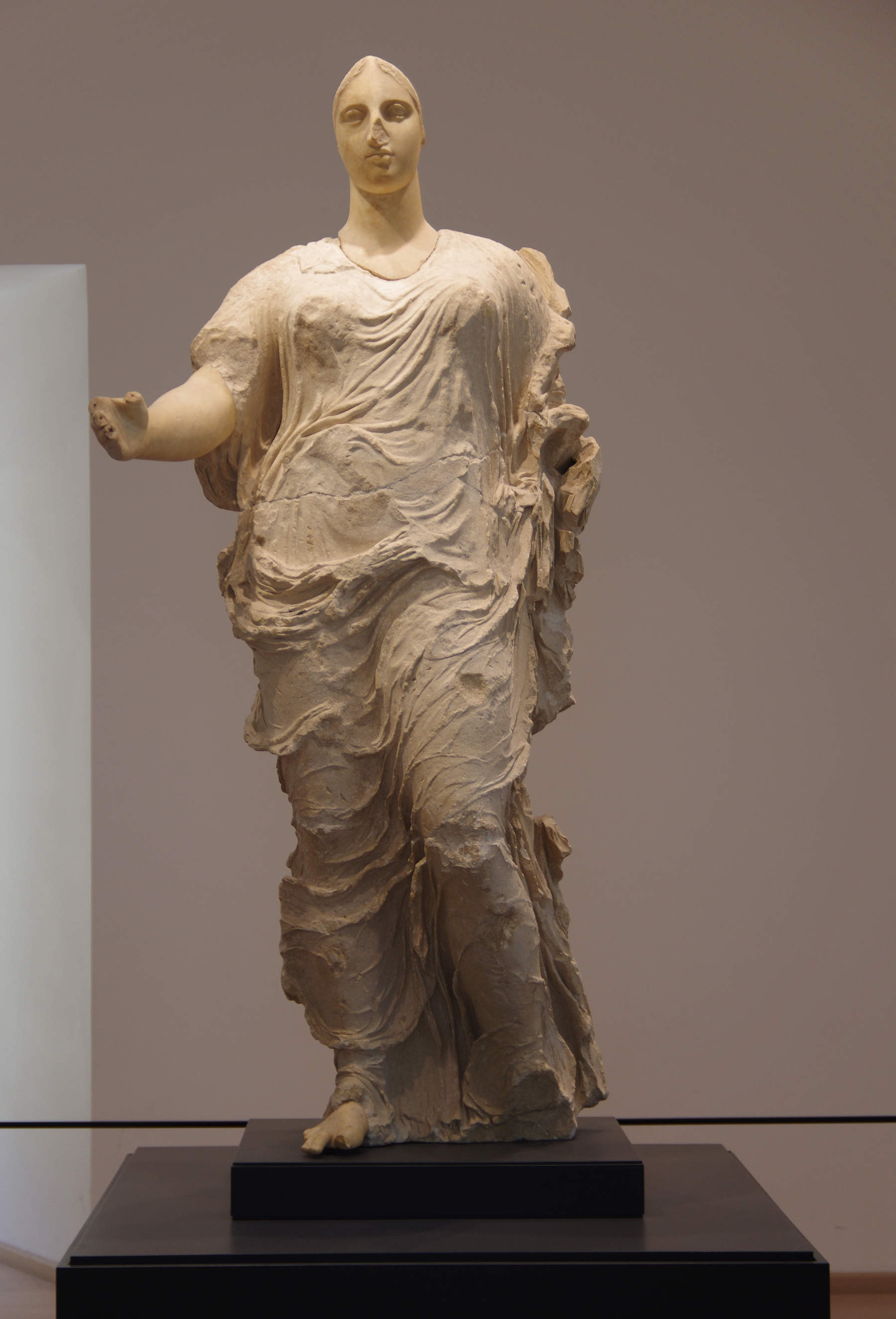
Aphrodite occupies the fifth cell. Here, memory takes the form of beauty. The projected image is that of the Venus of Morgantina, a statue created in the 5th century B.C. by a disciple of Phidias and returned to Sicily in 2011 after its stay at the Getty Museum. Plessi does not merely reproduce the sculpture: he animates it and dances with Aphrodite. He creates a digital breeze that seems to pass through her garments, introducing a subtle yet sufficient movement into the figure to transform our perception. The statue remains motionless, yet the image makes it breathe. It is a contemporary reinterpretation of the myth of Pygmalion, the legendary king of Cyprus who, according to tradition, fell in love with an ivory statue depicting Aphrodite, transforming the carved material into the likeness of a living creature. Here, however, the opposite occurs. A physically existing sculpture is transformed into a digital image and, through that image, takes on a new form of perceptual life. Aphrodite could thus address the assembly to speak of art’s ability to make the absent present. In this cell, Plessi behaves almost like God with Adam. He breathes life into the material through video reproduction, like a breath that frees it from its immobility and restores it, at least for an instant, to the world of the living.
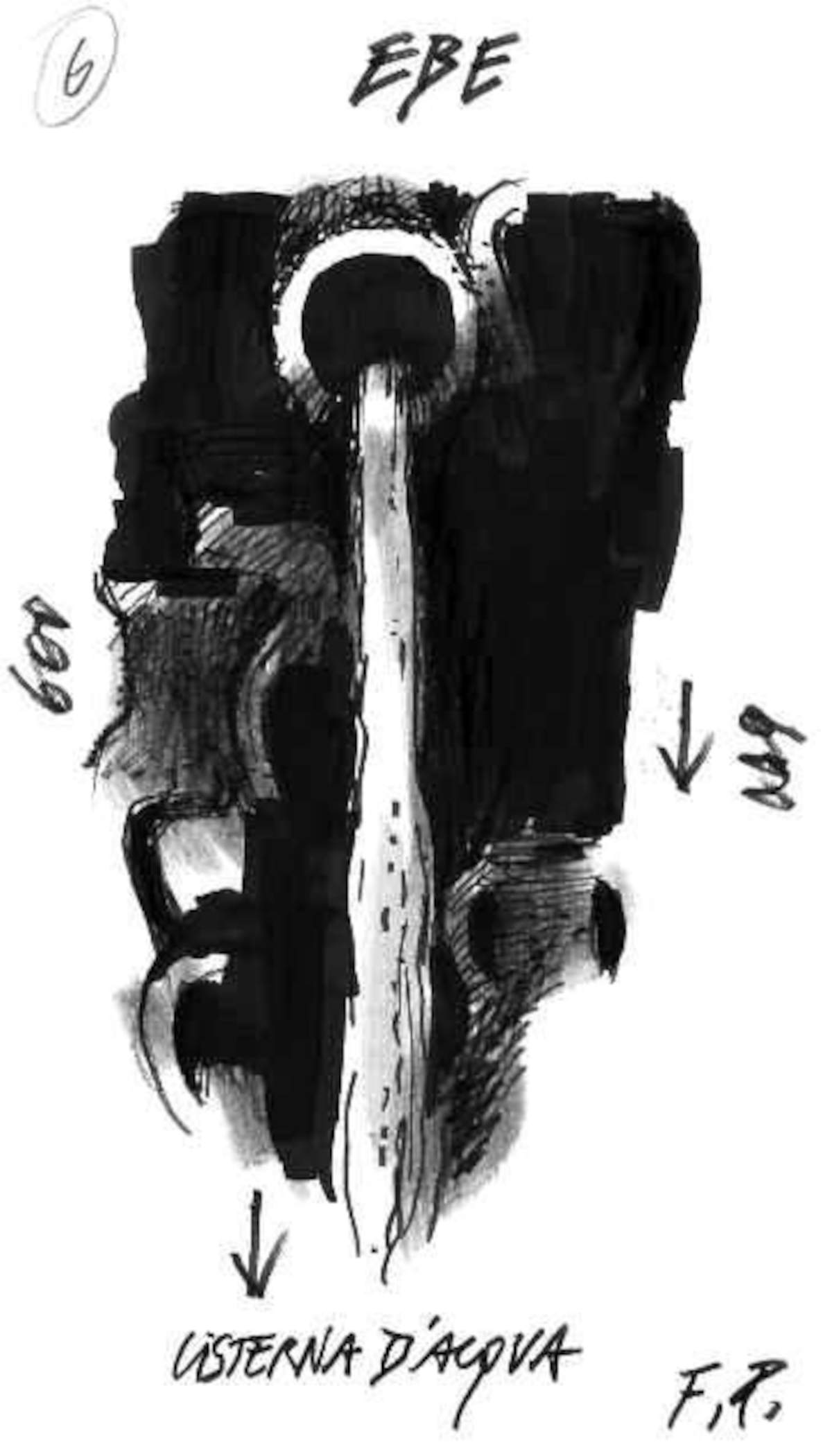
The sixth cell belongs to Hebe, cupbearer of the gods and symbol of eternal youth. The theme of age introduces a new form of temporality into the sequence. The amphorae and archaeological artifacts belong to the past; water (as with Poseidon), however, continues to flow. The container is ancient, while movement is new. Here, too, Plessi establishes a relationship between permanence and transformation. Archaeology preserves objects; water, in a sense, sets them in motion. In this sense, the spring becomes a metaphor for creativity—something that springs from a vessel and, once set free, continues to flow. Ebe thus poses a question that runs through the entire work. What does it mean to be young when matter is destined to age? Plessi’s answer lies in movement. What remains is not necessarily what stays still.
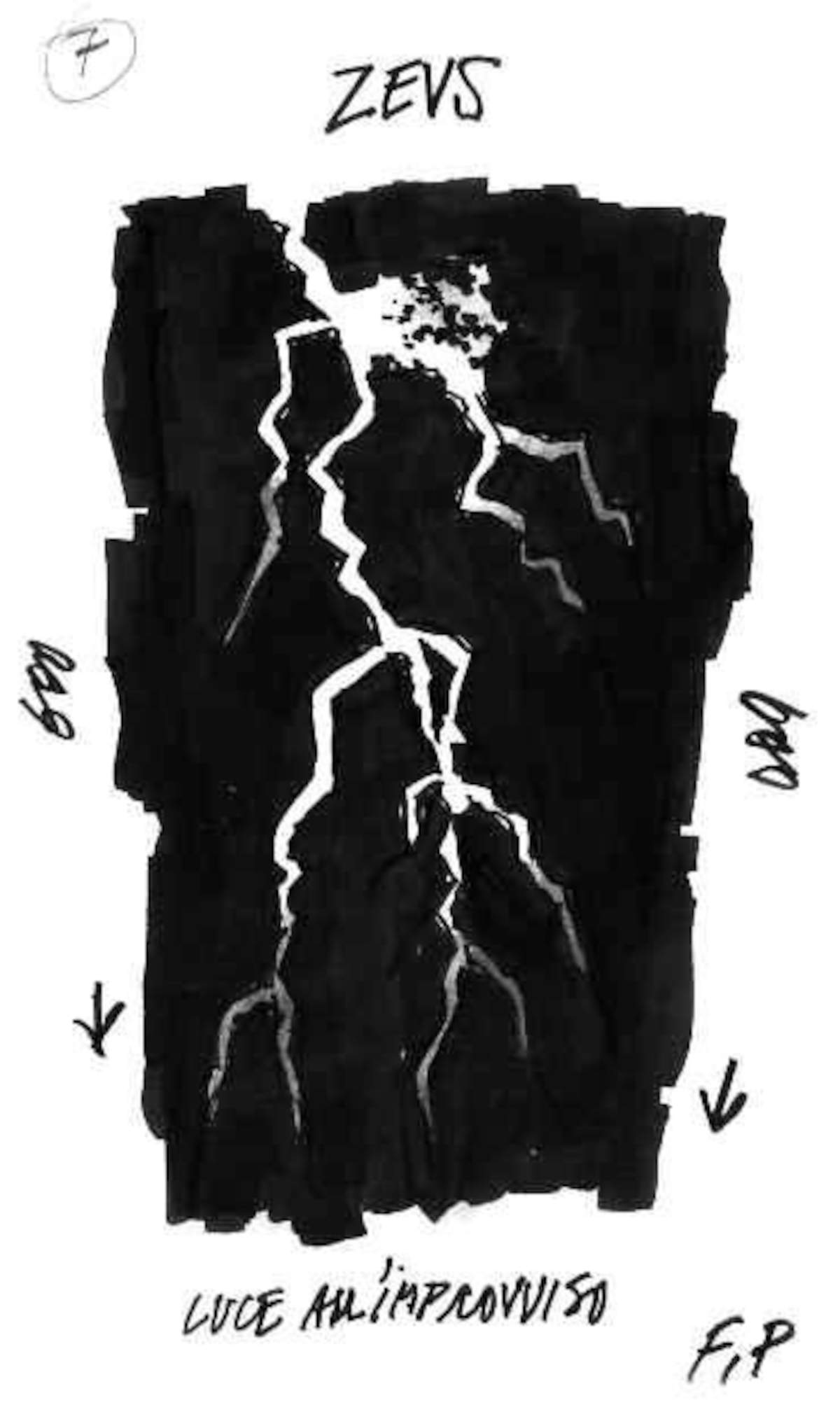
Zeus is the seventh. Thunderous Zeus, lord of the lightning bolt—his essence iselectricity. Flashes, lightning, and thunder fill the cell and shape the deity of the sky into the figure through which Plessi engages most directly with technology. Electricity is, in this interpretation, the very principle of his art. It is what allows Poseidon’s waterfall to exist, Persephone’s fire to burn, and Apollo’s mosaic to move. In Zeus, technology finally becomes an image of its own functioning. The lightning bolt, however, is also one of the oldest forms of representing divine power. Plessi thus brings contemporary technology into a mythological framework. The computer is presented as a tool capable of producing a new optical reality.
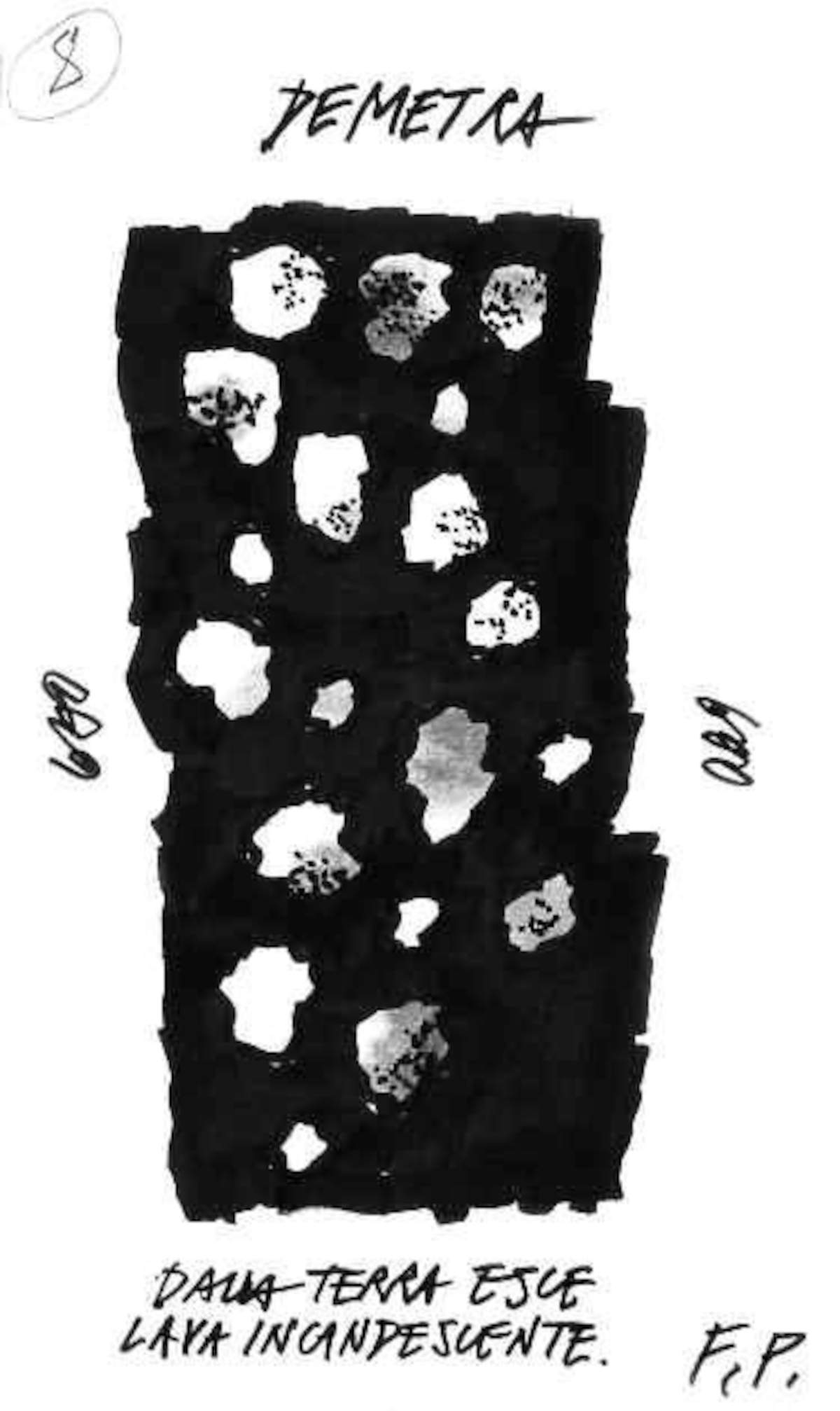
The eighth cell is Demeter. Here, the landscape seems to recede beyond history, until it reaches primordial matter. Abysses of fiery red magma open up beneath a black, glossy surface, while steam and heat seem to emanate directly from the earth’s bowels. In the book by Tonelli, Plessi recounts having sensed the “telluric force” of the place as early as his first site visit to the Valley of the Temples. Demeter is thus Mother Earth, but also a chthonic deity (connected to the underworld). Her image transports the viewer beyond the time of humans and gods, toward a geological dimension in which matter precedes all form. The magma appears as a primordial soup, a substance still capable of generating life. The installation also dialogues with research that Plessi had already undertaken in previous years, beginning with his works dedicated to lava and volcanic rocks.
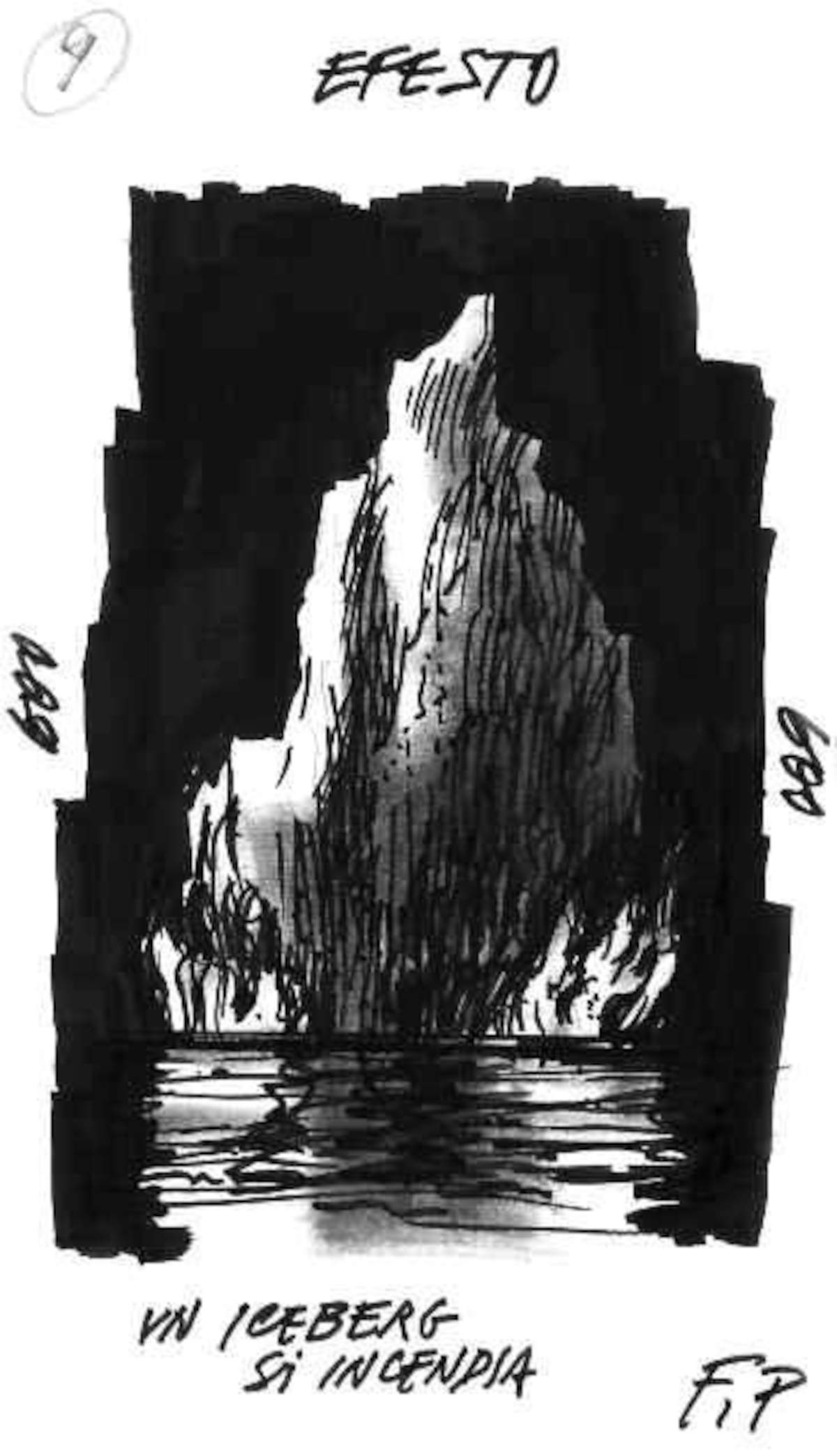
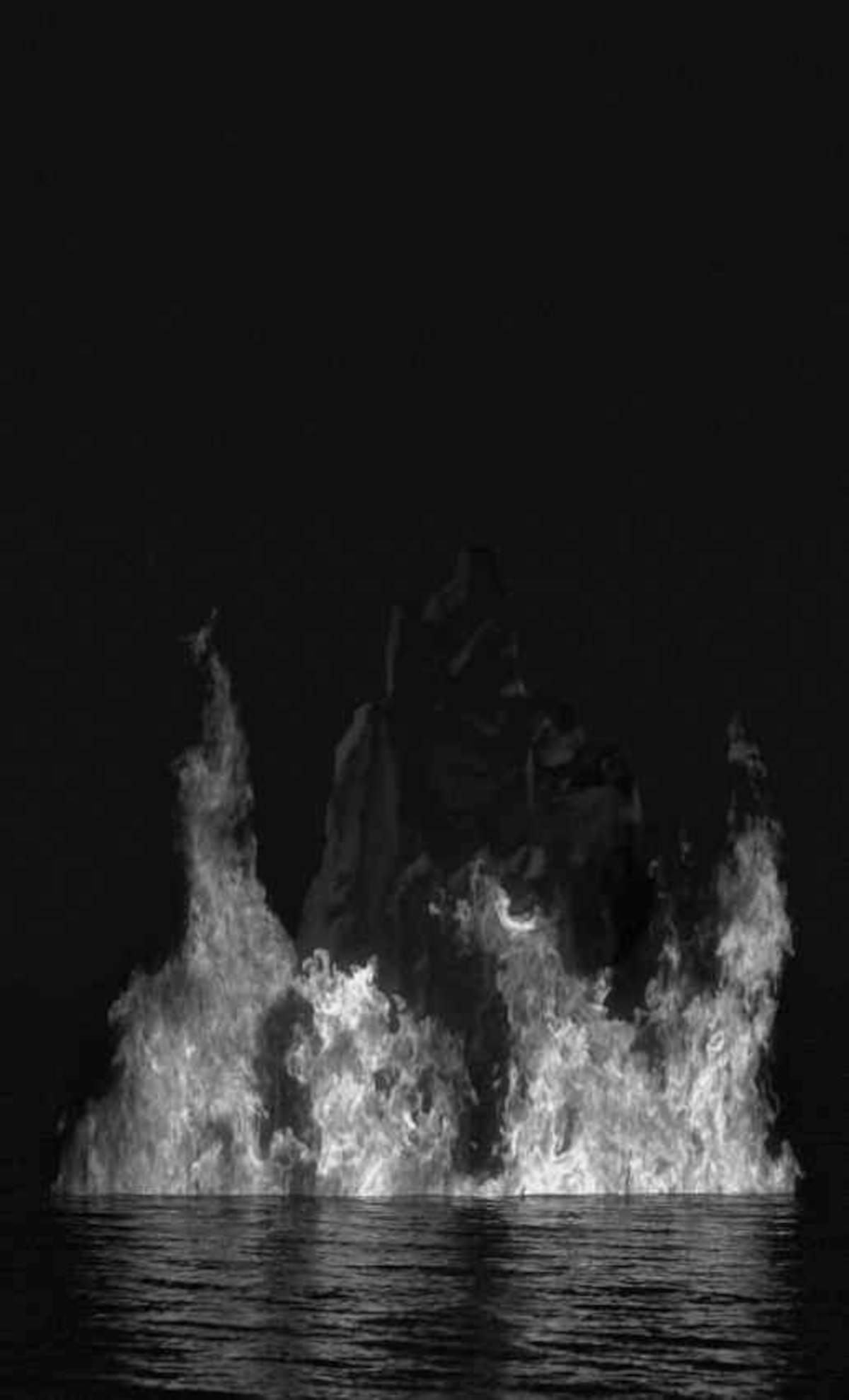
The final deity is Hephaestus, and to be honest, there could be no more fitting conclusion. As the god of fire, a blacksmith and craftsman, Hephaestus belongs to the realm of technique and transformation. In the Valley of the Temples, a temple was dedicated to him (in the western part of the complex), of which two columns still remain. His sanctuary is thus the final stop on the journey. A gigantic monolith, an icemenhir , stands motionless above a black sea. Fire slowly emerges from the water; the flames grow, reach the ice, and melt it. The iceberg vanishes, and then darkness returns.
It is perhaps the most radical scene in *Monumenta*, because here Plessi finally pits two opposing materials against each other. Fire is no longer a form that alludes to combustion. In the digital dimension of representation, it brings about the transformation of another material. The ice transitions from a solid to a liquid state, and the mountain that seemed eternal is erased. Hephaestus, more than the other gods, might recognize Plessi as an artist-craftsman. But what distinguishes the god from the artist is precisely the material they work with. Hephaestus forges metal; Plessi works with images, light, electronics, and space. The former transforms physical matter; the latter constructs a material that lacks physical consistency yet, in any case, produces perceptual effects. The final cell thus encapsulates one of the fundamental contrasts in Plessi’s work. Which one? Real and virtual; material and immaterial. Ice does not exist; fire does not exist; destruction is not physical. Yet the eye perceives it as real.
This is precisely the point at which the assembly of the gods can return to the initial question: time and memory—the very themes that Pink Floyd had evoked in 1971 with “Echoes,” performed that same year among the ruins of Pompeii, and in 1973–1974 with “Time.” They, too (with Adrian Maben directing the 1971 film *Pink Floyd: Live at Pompeii* ), had chosen an archaeological site to grapple with the passage of time: in Pompeii, the music entered a landscape marked by absence and memory. More than forty years later, Plessi undertakes a different project but one grounded in a similar tension. In the Valley of the Temples, he brings the language of technology into an ancient site and constructs images capable of bringing to the surface what time has taken away from matter.
Monumenta was thus conceived as a structure capable of engaging with the temporality of the Valley of the Temples. The nine cells are contemporary monuments that take on the appearance of ancient artifacts and, at the same time, house images that can exist only in the technological present. They are the new temples of the deities. And it is here that Plessi constructs his great paradox: to build monuments, he used structures that contain something invisible.
The 2012 installation is a sort of archaeology of the future; it is an ambition that permeates all nine cells, and the Valley becomes as much a part of the work as the projected images. Plessi designed it on site, seeking the position in which the cells could blend into the landscape—the olive trees, the almond trees, the ruins, and the sea horizon. He did not want to compete with the space; on the contrary, he sought to become the space itself. The outer surface of the cells echoes the colors and rough texture of the calcarenite stone, while inside, technology produces what seems impossible from the outside. A nature that does not exist but that perception accepts as real.
I therefore believe that the comparison with Odysseus may be apt for Monumenta. Just as Homer’s hero traverses worlds, encounters gods, descends into the shadows, and returns toward the light, so too has the visitor to Monumenta been able to cross a sequence of thresholds. They enter the darkness and, from that darkness, see a waterfall, a fire, a mosaic, a lava flow, a statue, a spring, a bolt of lightning, a primordial landscape, and melting ice appear. The path is a journey through memory. And perhaps it is Mnemosyne herself who has the final word in this gathering.
“Do not look for Fabrizio Plessi in the Valley.”
The gods gaze upon the Valley. Plessi is not on Olympus; he is not in the nine cells. He is not even in the images that continue to flow when the power is on. He is in the device that holds them together, in the relationship between nature and technology, in the memory of a place, in the possibility that a digital work might bring back to the surface a waterfall, a fire, a statue, a river, or a fragment of a mosaic—as if they belonged to a time preceding our very own memory.
Tonelli’s text defines the work as “a myth in and of itself,” almost Plessi’s ultimate mythology. And this is precisely where the most interesting point of the assembly lies: the gods need not remember the artist because the artist has already constructed a place for them in which memory continues to be produced. It is also for this reason that the work can be read as a personal Theogony, as the curator states. The nine cells narrate the origin of a universe in which every deity embodies a force and every force becomes an image. Poseidon’s water, Persephone’s fire, Apollo’s memory, Hades’ lava, Aphrodite’s wind, Hebe’s regenerative water, Zeus’ electricity, Demeter’s earth, and Hephaestus’ transformative fire compose a technological cosmology.
The passing of Fabrizio Plessi, which occurred after decades of research, inevitably introduces a new dimension to the interpretation of *Monumenta*. The work, however, does not need to be transformed into a monument to the artist’s memory. It is already built around memory, time, and the possibility of giving permanence to that which, by its very nature, is destined to disappear. Perhaps this is the conclusion of the assembly: the gods do not need to remember Plessi, because it is Plessi who has entrusted them with the task of remembering. Its nine cells were nine devices in which the past was reactivated, nine places where technology took the form of archaeology and archaeology that of the image. And so time—that very time Plessi had sought to outwit, and the time sung about by Pink Floyd—is not stopped. It continues to flow like Poseidon’s water. Like Hades’ lava.
Warning: the translation into English of the original Italian article was created using automatic tools. We undertake to review all articles, but we do not guarantee the total absence of inaccuracies in the translation due to the program. You can find the original by clicking on the ITA button. If you find any mistake,please contact us.