





We cover our faces even before we know which part of ourselves we’re seeking shelter from.
It happens when pain catches us off guard and our hands fly up to our eyes with animal-like speed, when shame makes us bow our heads, when someone looks at us for a second longer than necessary and we feel as though they can see, right through our skin, everything we’ve carefully buried beneath ordinary days and half-hearted smiles. We bring a hand to our mouth, hide our eyes, turn our face toward the wall, desperately try to shield a few centimeters of flesh from the gaze of others, and hope that it’s enough to keep the rest hidden, as if our identity—as if our pain—had precise boundaries and could be contained behind our eyelids, as if no one could notice the blood as long as we keep squeezing the wound hard enough. When we’re very young, we do something similar when we play hide-and-seek: we crouch behind a curtain, leaving our legs sticking out; we tuck our heads under a pillow or cover our eyes with both hands, and, for a few moments, we truly believe we’ve vanished, because the world we can no longer see must have stopped—by some childish and therefore perfect law—seeing us as well. It’s one of the sweetest images of childhood, that absolute trust in the possibility of becoming invisible simply by hiding our face. Then we grow up; we learn that the rest of our body remains exposed, that others continue to look at us even when we stop looking at them—and yet we retain something of that child who is convinced that simply covering the part through which the world enters is enough to escape its gaze entirely.
Our face betrays us because it always speaks before our words. Our mouth may say that everything is fine while the corners of our lips droop; our eyes may continue to stare at someone while, inside, we’ve already begun to drift away. That’s why we learn very early on to compose it, to control its movements, to offer others a version calm enough to spare them the trouble of wondering what’s really going on. We build faces that are livable for those we love. We keep them clean and tidy, while behind them we let grow whatever we fear might disgust them, hurt them, or convince them that loving us was a huge misjudgment. Peter Parker has been covering his face since he was fifteen.
At first, it seems like a reasonable precaution: if anyone were to discover who is beneath the mask, every person he loves would become a target—a vulnerable body upon which his enemies could exact the price of that discovery. So Peter pulls the red fabric over his head and erases his own face to keep the faces of others alive. Every time he becomes Spider-Man, he performs an act of love that already takes the form of a disappearance.
At the end of the 2021 film *No Way Home*, directed by Jon Watts, Peter takes this logic to its bloodiest conclusion. To save MJ and Ned, he agrees to be torn from their memories. Their love survives only within him, stripped of the possibility of being shared. Peter holds onto the words spoken, the bodies embraced, the memory of the times someone looked at him knowing exactly who he was; they hold onto a life from which he has been erased.
The world continues to recognize Spider-Man and ceases to recognize Peter Parker. Perhaps this is the cruelest part of his story as told in the new film *Spider-Man: Brand New Day*, directed by Destin Yori Daniel Cretton: the mask created to protect the man ends up outliving him. Two white eyes crisscrossed by a spiderweb become more real than the face they’re meant to hide, while Peter’s human face—with all the people he has loved and who have loved him—ceases to mean anything to anyone who encounters it. In *Spider-Man: Brand New Day*, Peter has come of age within that erasure. New York knows his costume; the police work with him, the city relies every day on a figure whose name it doesn’t know, and he remains on the margins of others’ lives—close enough to protect them and far enough away to no longer have a place in their memories, even in the casual way one greets someone they’ve met thousands of times. He saved the people he loved from his own existence. Now he must continue to exist without them.
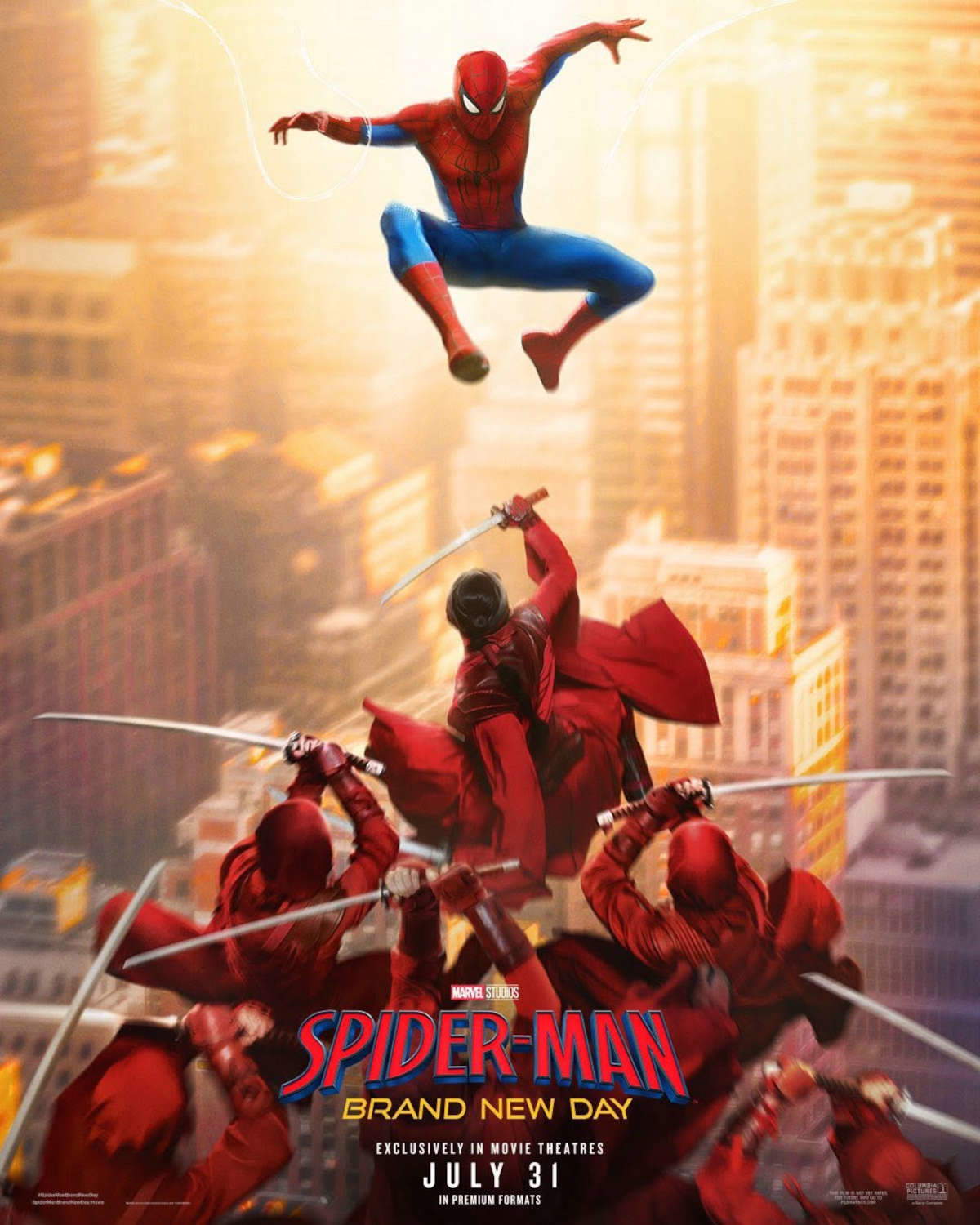
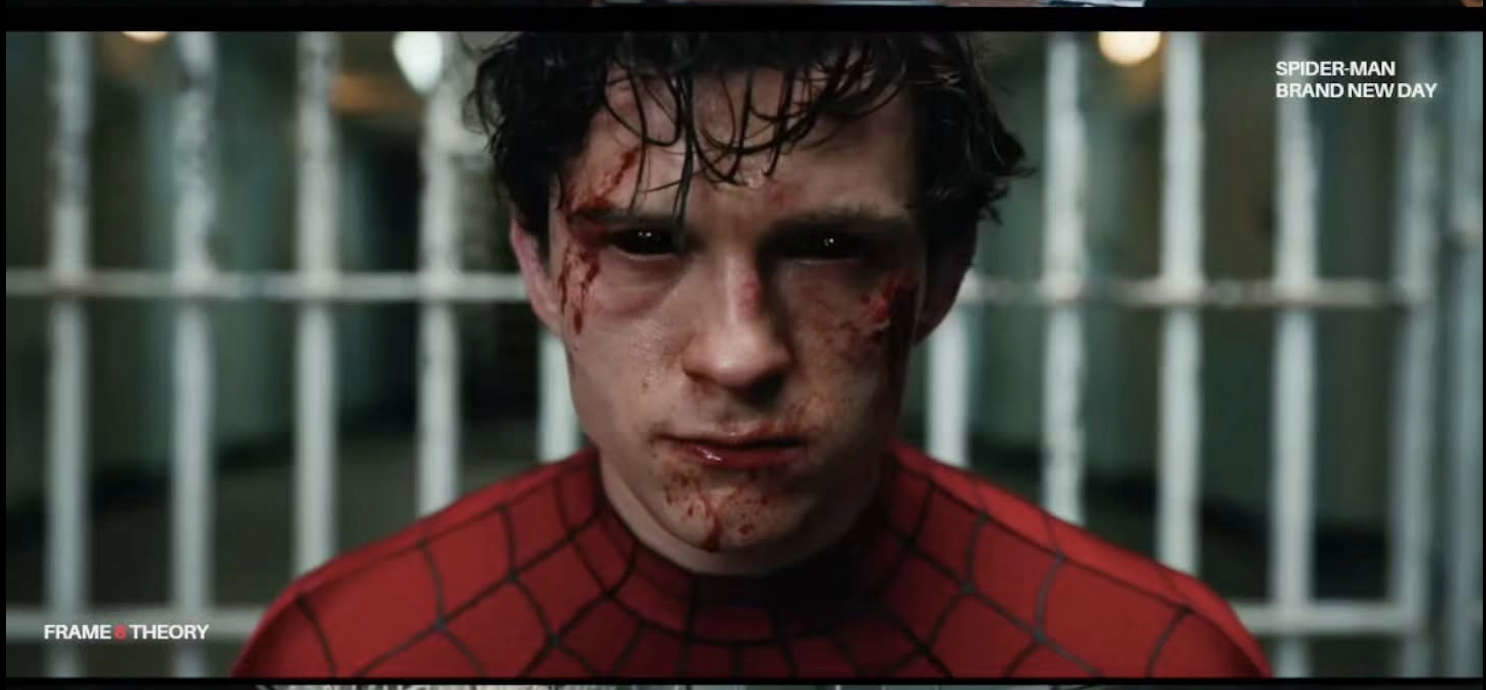
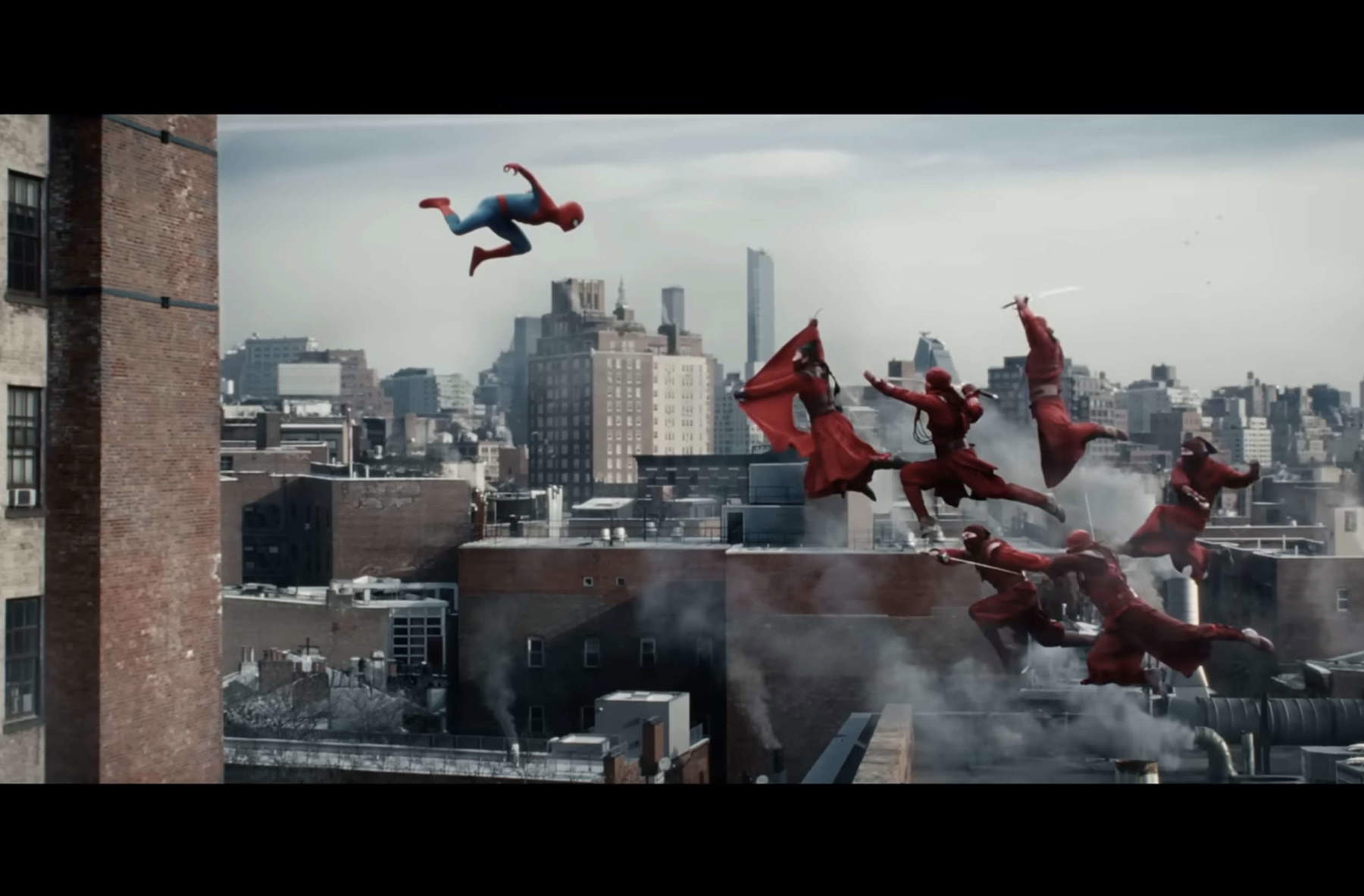
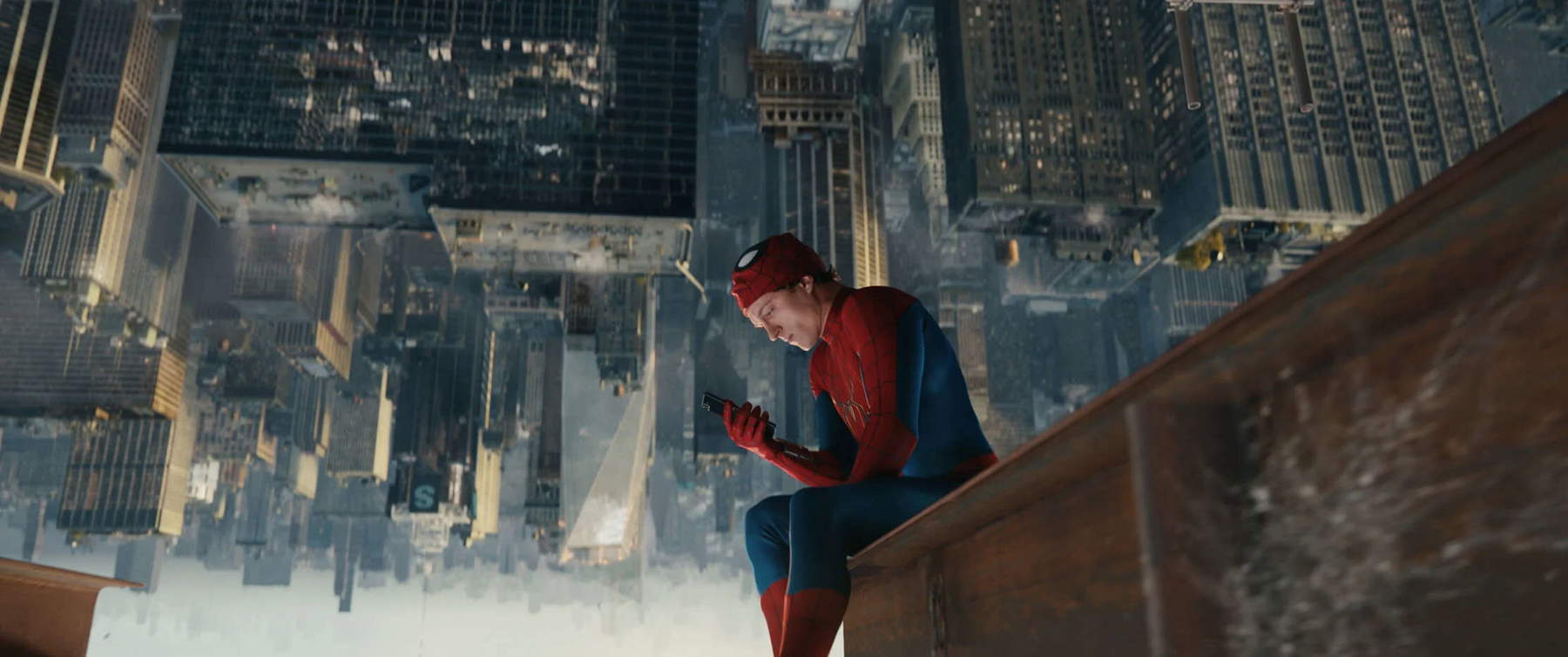
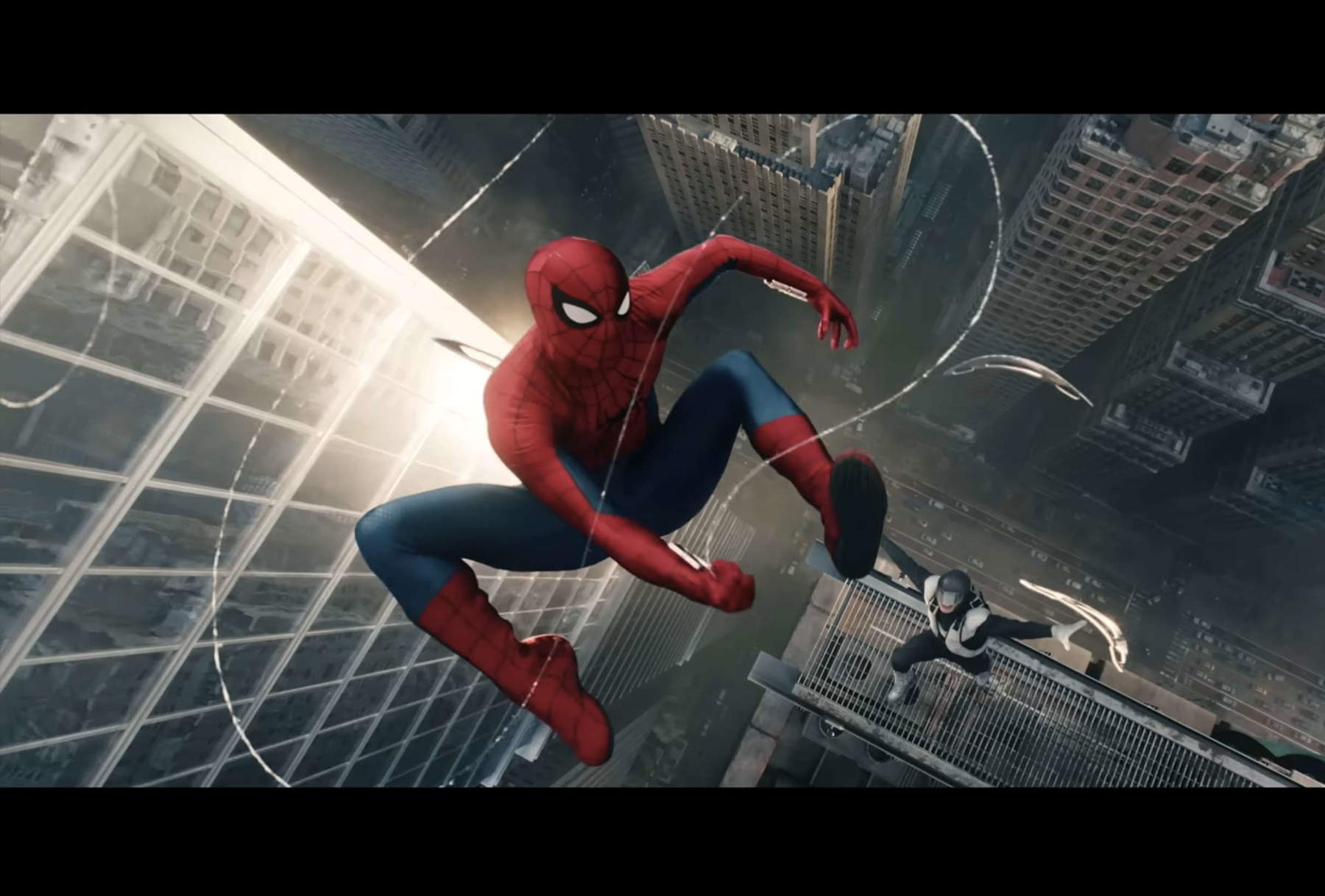
In the new movie, even his body begins to betray him. The arachnid part seeps into his flesh, altering the form through which Peter recognizes himself and making it increasingly difficult to continue believing that Spider-Man is merely a costume to wear—a creature distinct from himself that can be summoned when someone needs help and then stowed away at the bottom of a backpack. Peter then builds a device capable of making him appear less monstrous, as if the priority in the face of this transformation were, once again, to make it bearable to the eyes of others—to temper its rage, tame its senses, and prevent those standing before him from realizing just how deeply the spider has now penetrated his very bones. But Peter is the spider just as much as he is the boy left alone in a room that no one will ever come looking for; he is both in the same body, even when he tries to separate them, even when he covers his face and hopes that the fabric might establish a boundary that his flesh has already erased.
How often do we do the same with what lives inside us? How often do we call the way we withdraw “protection”—convincing those we love that everything is fine so they can go about their day without having to touch the part of us that’s bleeding, crafting a more docile version of our pain and letting it come out in our place, while the rest remains locked in a room from which, after many years, we risk never knowing how to return? Perhaps we fear that love has a limit to what it can bear—that it can welcome our tenderness and our terror, but only as long as they arrive separately, in portions small enough to be digested. So we learn to divide ourselves up. To one person we show our fear, to another our anger, and to yet another we grant the part of us that can laugh until we’re breathless. No one gets it all. No one could. Andres Serrano did something terribly similar with death.
In 1992, he entered the morgue of an unnamed city and began photographing the corpses without ever revealing them to us in their entirety. Of some we see a hand; of others, a mouth left slightly ajar, skin scarred by fire, or a face barely visible beneath the sheet. All bodies reduced to fragments, stripped of the life stories that had held them together until just a few hours earlier and redefined by the sole piece of information the morgue still deems necessary.
Stabbed to death. Fatal meningitis. Death by drowning. Suicide by rat poison.
Identity vanishes, and in its place remains the cause of death, as if an entire life could be condensed into the way it was abruptly cut short. The series *The Morgue* dates back to 1992; Serrano breaks the pain down into pieces because it would be impossible to look at it all at once. He always offers us a way out: he offers us a wrist, a wound, the purplish crease of an eyelid, and lets us imagine the person who once held those fragments together—someone who had a name spoken with affection, a specific way of entering the house, perhaps even someone capable of recognizing him by the sound of his footsteps. Now, all that remains of that continuity are enormous details, illuminated with painterly care, beautiful enough to compel us to linger before what—had we encountered it without a frame—we would have looked away from.
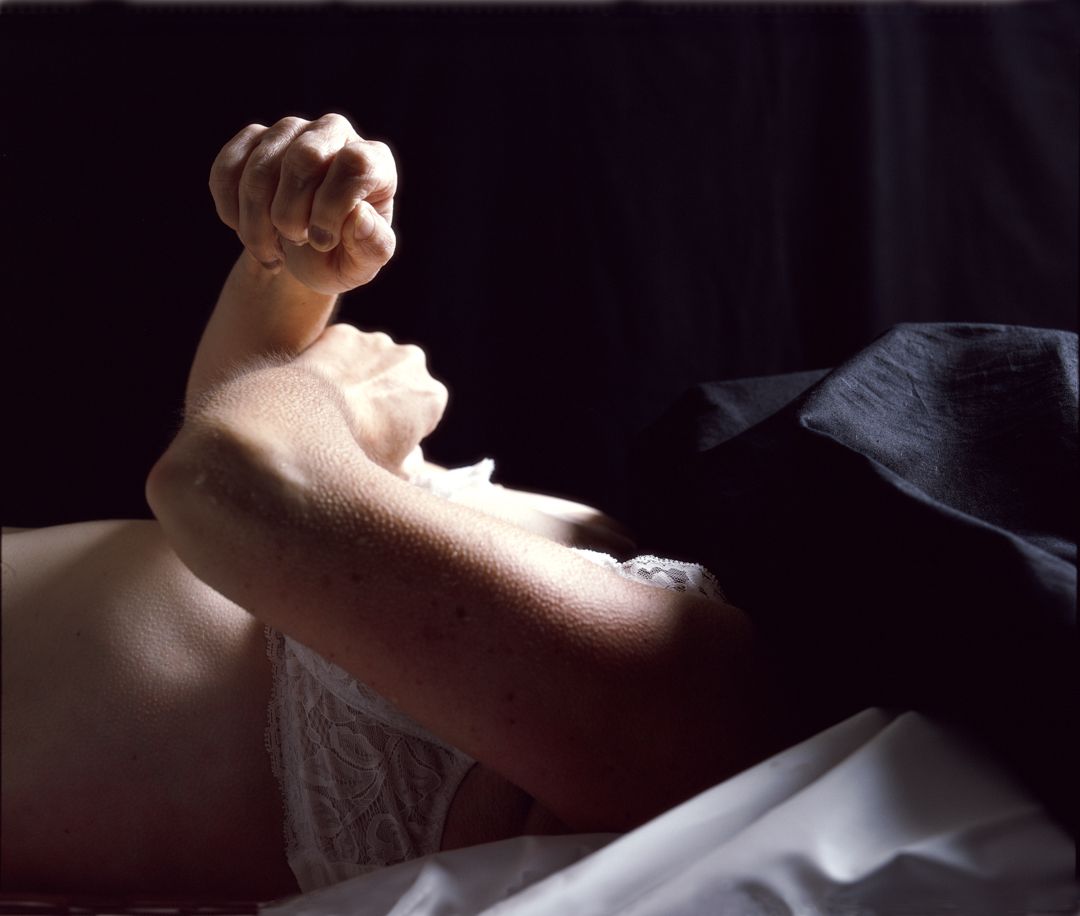
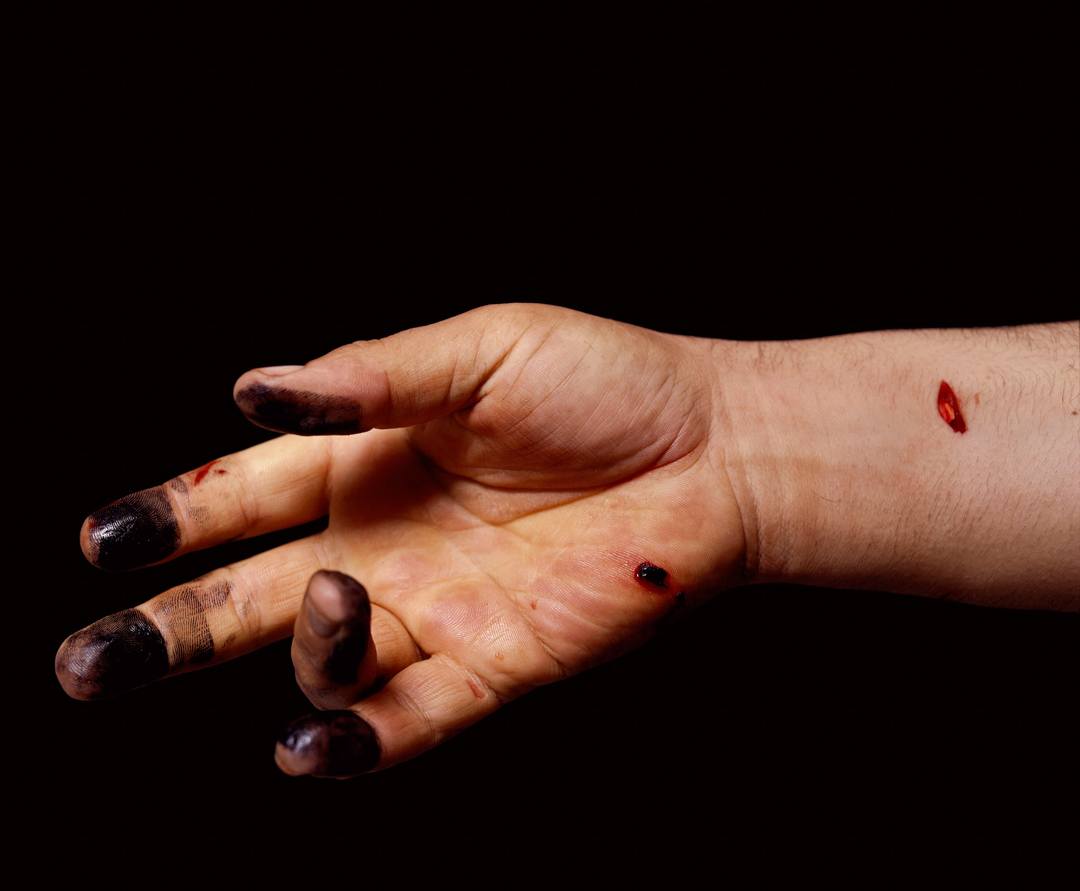
We, too, surrender ourselves to others in this way: already cropped out of the frame, we offer a hand while concealing the wound that made it tremble; we reveal our mouth as it laughs and cover everything that same mouth had to bite down on to remain closed. Those who love us gather these fragments and try to piece together a person from them; sometimes they even manage to recognize us better than we can ourselves, but a part still remains off-screen, along with the things we kept silent to protect them and those we hid because we feared that, once seen, they would change the way they pronounced our name.
Perhaps every relationship is also a gentle morgue where we deposit, one by one, the parts of ourselves that we’ve managed to lose without dying, and we continue to call out to one another, because it would be unbearable to be remembered only by the wound that divided us.
And perhaps that is also why, after having given away the rest, we defend our face with such stubbornness: we can let someone know our fears, we can tell them what happened to us, and even allow them to touch the spot where it hurts the most—as long as there remains a face capable of holding everything together, a continuous surface on which the scattered parts can still pretend to belong to the same person. We always return there. To the face.
We look for it in photographs of those we’ve lost and in those from when we were children, scrutinizing them with a kind of superstition, as if the eyes of those days had preserved an answer that we’ve lost over the years or simply stopped understanding; we observe it in the mirror on our worst days, getting so close that we can make out the pores, the fine veins beside the eyelids, the marks left by sleep, hoping to find on the skin an explanation for what is happening inside. We continue to believe that the face holds a truth, even though we spend much of our lives training it to lie.
Peter Parker pulls this lie over his head. He pulls it up to his neck, adjusts the fabric around his eyes, and disappears behind a face on which no one could read a thing. Two white lenses take the place of his gaze. The spiderweb pattern on the fabric organizes the surface, containing what might otherwise spill out. Peter may be afraid, he may feel his body changing beneath the costume, he may long to flee as he leaps from a building, but the mask remains intact and presents the world with a coherent creature, far simpler than the boy trembling inside it. Perhaps this is what all masks are for, even before they serve to hide. They take what appears contradictory within us and force it into a recognizable form, so that others can love us without having to confront the chaos from which we come every single time. A cheerful person. A reliable person. The one who always knows what to say. The strong one. A definition draped over the face with the delicacy of a sheet and the same ability to suffocate, while we continue to breathe softly for fear that someone might notice the imperceptible movement. The American artist John Baldessari, on the other hand, placed a circle over our faces.
He began covering the faces of people in advertising photographs and film stills with colored discs, stripping the image of the very detail on which the possibility of recognizing who was before us depended. The face disappeared beneath a basic, flat shape—one that was even cheerful in its colors—yet the gaze inevitably settled right there, on the spot that had become inaccessible, like a tongue that keeps returning to a tooth that hurts.
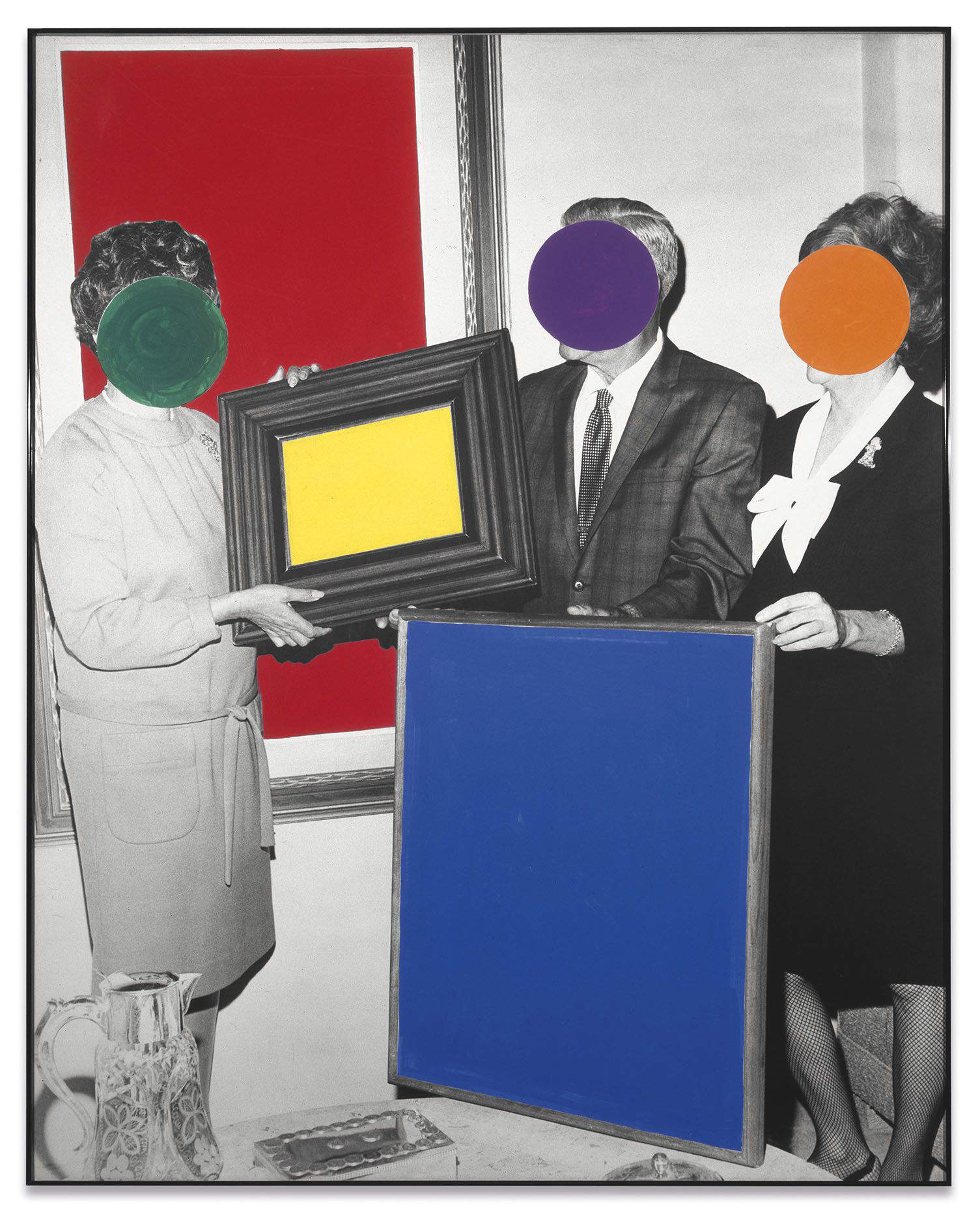
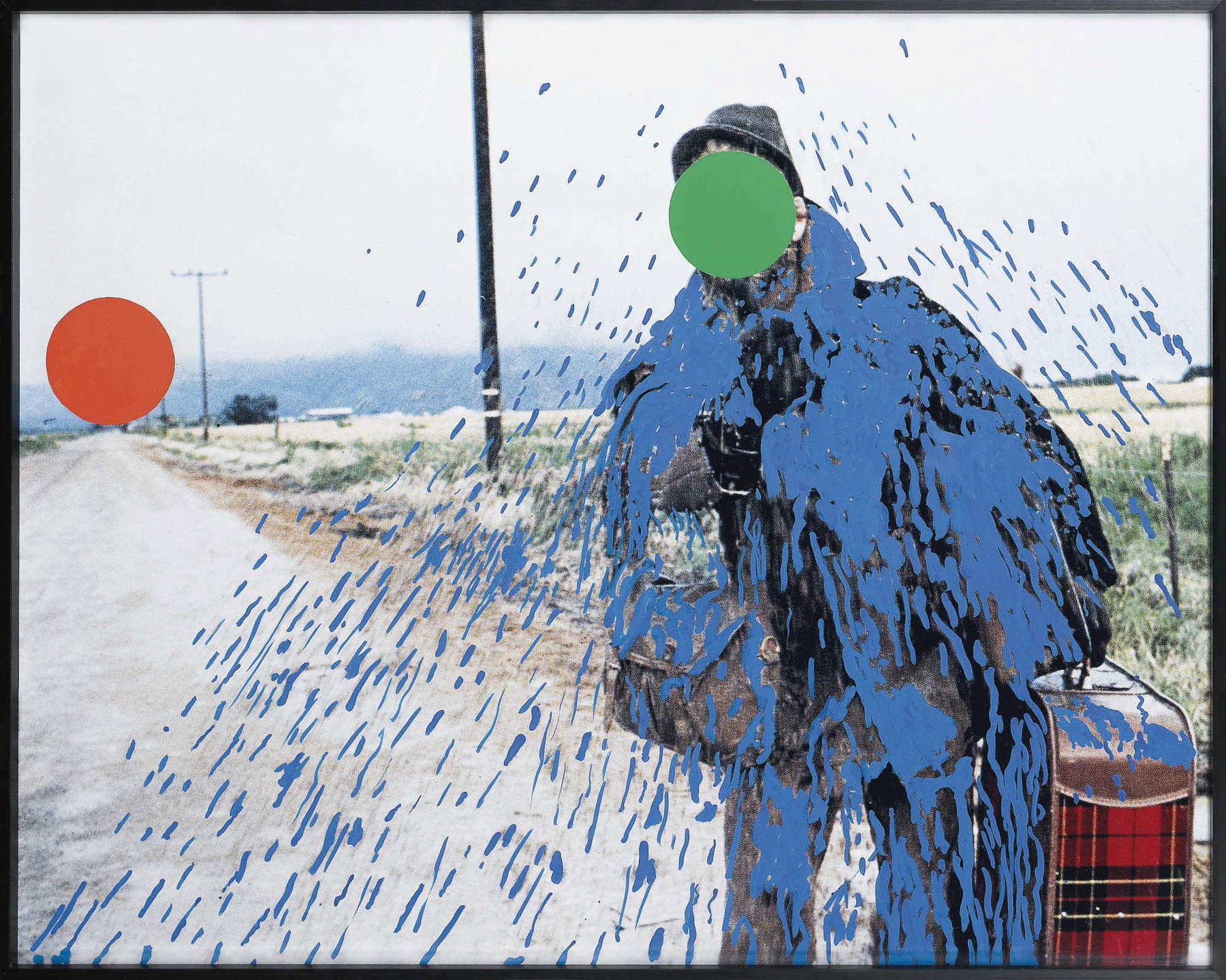
Baldessari had intuited the fundamental cruelty of concealment: if someone shows us a face, we look at it and move on, but if they cover it, we begin to desire it. We want to know who is beneath the red, beneath the yellow, beneath that small artificial sun that has erased the eyes and mouth while leaving the body, the clothes, and the scene in which that person was living intact. We invent features we have never seen and attribute an age, an expression, perhaps even a story. In fact, above all, a story.
The absent face becomes more crowded than any visible face because we’re forced to fill it with what we carry inside or with what we desire. This is what happens even when we look at Spider-Man. The mask has very few features, yet no one perceives it as an empty surface. We read fear in the tilt of the head, weariness in the curve of the shoulders, and a smile that doesn’t exist in the way the body seems to open up for an instant. The face has been erased, and we continue to search for it, contributing to its invention every time we look. The artist and photographer Lorna Simpson takes an even more radical step, because she refuses to grant it to us.
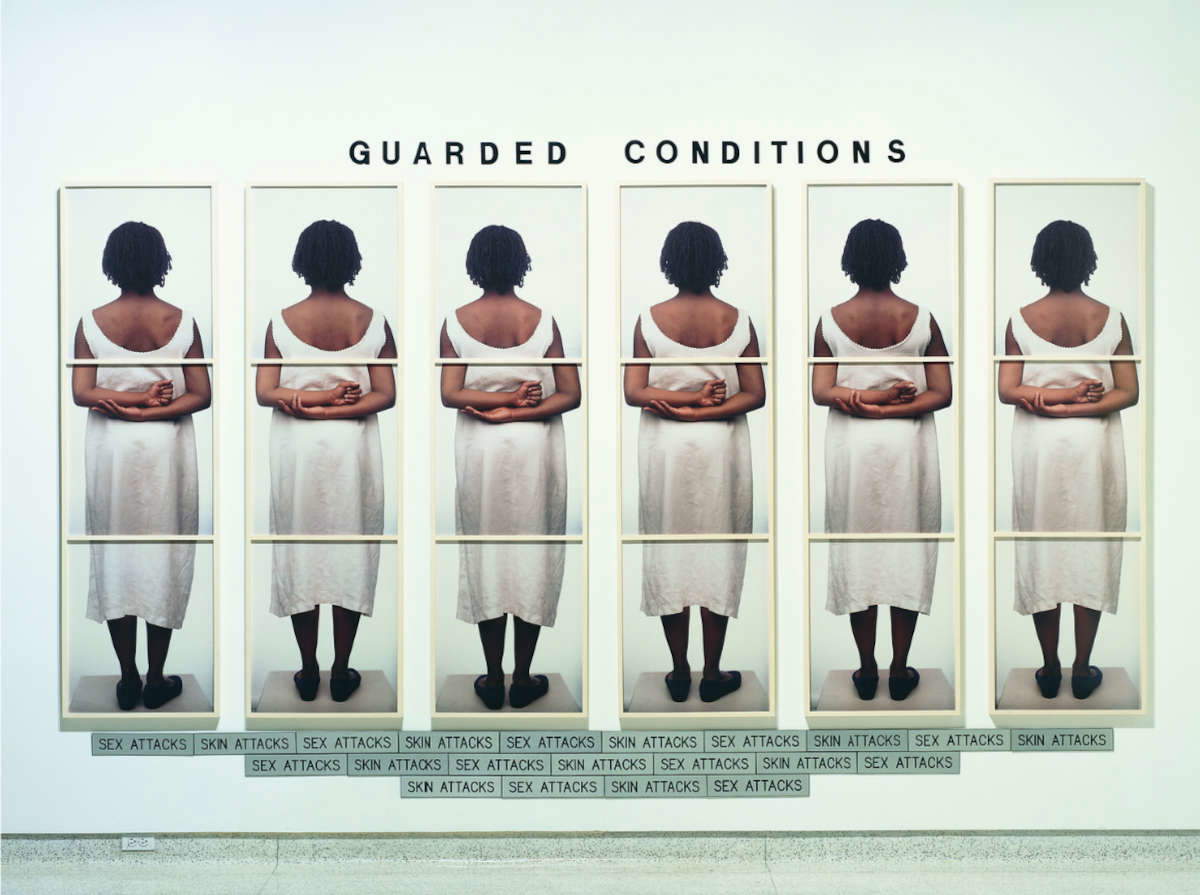
In *Guarded Conditions*, created in 1989, a Black woman appears with her back to us in a sequence of fragmented and repeated photographs: we see her as a whole and yet divided, multiplied by the grid, exposed to the gaze and yet withdrawn from its desire for possession. Beneath the images, the words“sex attacks” and“skin attacks” alternate until it becomes impossible to separate the violence inflicted on the body from that which is conveyed through the way that body is classified and reduced to a meaning determined by others.
That back prevents us from using the face as a moral shortcut. We cannot search the woman’s eyes for a pain that would authorize us to pity her, nor for an expression reassuring enough to allow us to walk away without feeling involved. We must remain facing the body and the story imprinted upon it, accepting that this person has no obligation to turn around to make herself understandable.
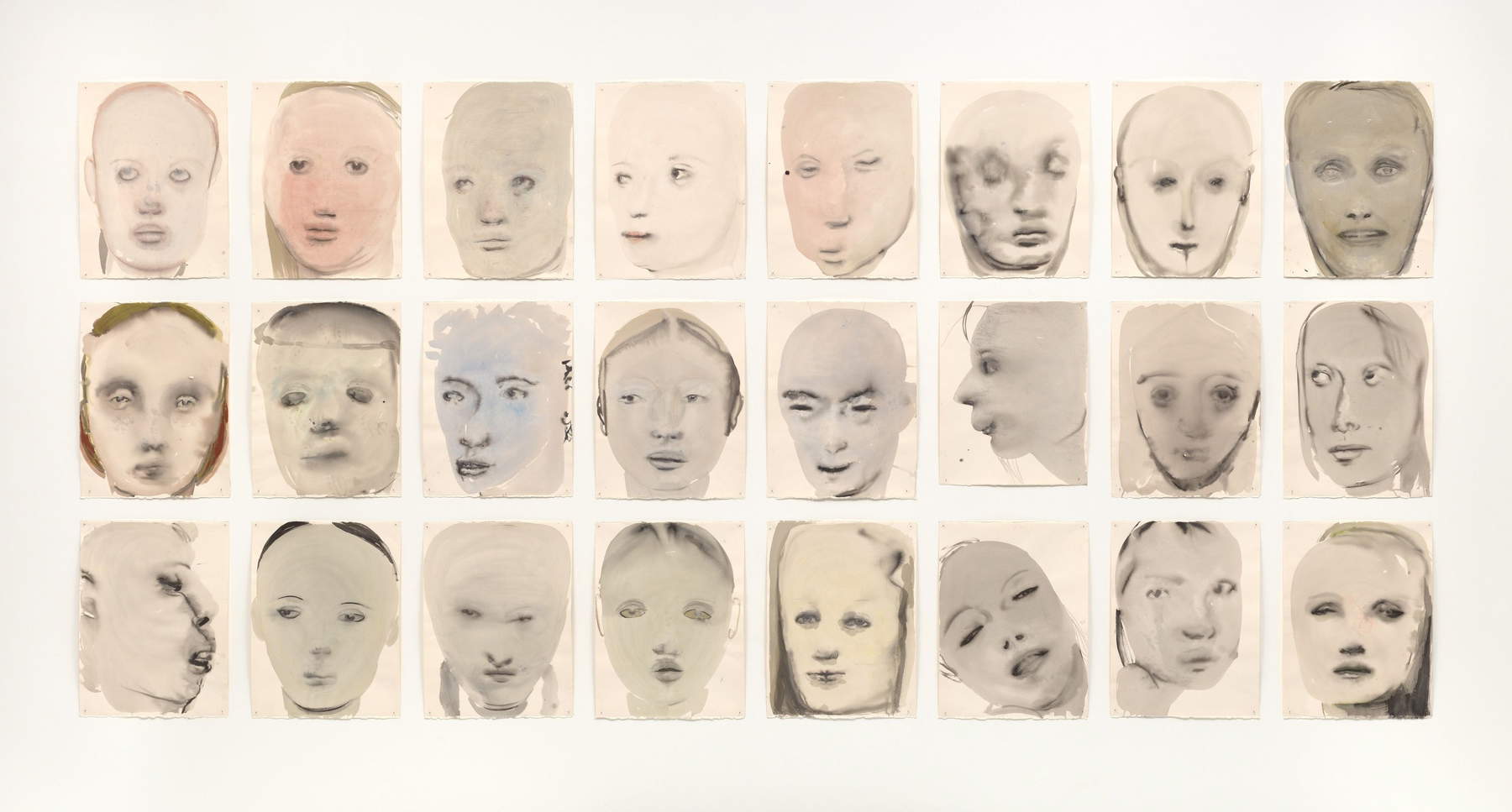
Even hiding can be a way to preserve something. The problem is that, by constantly defending who we are from the gaze of others, we risk becoming unreachable—just as Peter does. And so Marlene Dumas paints people who seem to reach us after traveling a long distance, as if the photographic image from which she often draws her inspiration had to lose something at every stage—first in memory and then in the murky waters of paint. Her faces drip, flake away at the edges, and retain stains that could be shadows or bruises, and the eyes emerge from the paint without managing to anchor the person they are meant to reveal. Many of his works are called portraits, although the Tate notes that they are not portraits in the traditional sense, because Dumas works with images already worn down by the public gaze—personal photographs or newspaper clippings—bodies that arrive on the canvas after having been desired and, ultimately, forgotten.
In Dumas’s faces, the mask adheres so deeply to the skin that it can no longer be lifted, and what remains is the paint itself—a watery substance that grants a feature and immediately withdraws it, just as happens when we try to remember someone we’ve loved and discover, with physical shame, that we can reconstruct their eyes or the way they curved their mouth, but the whole image eludes us. The more we insist, the more the face crumbles beneath our fingers.
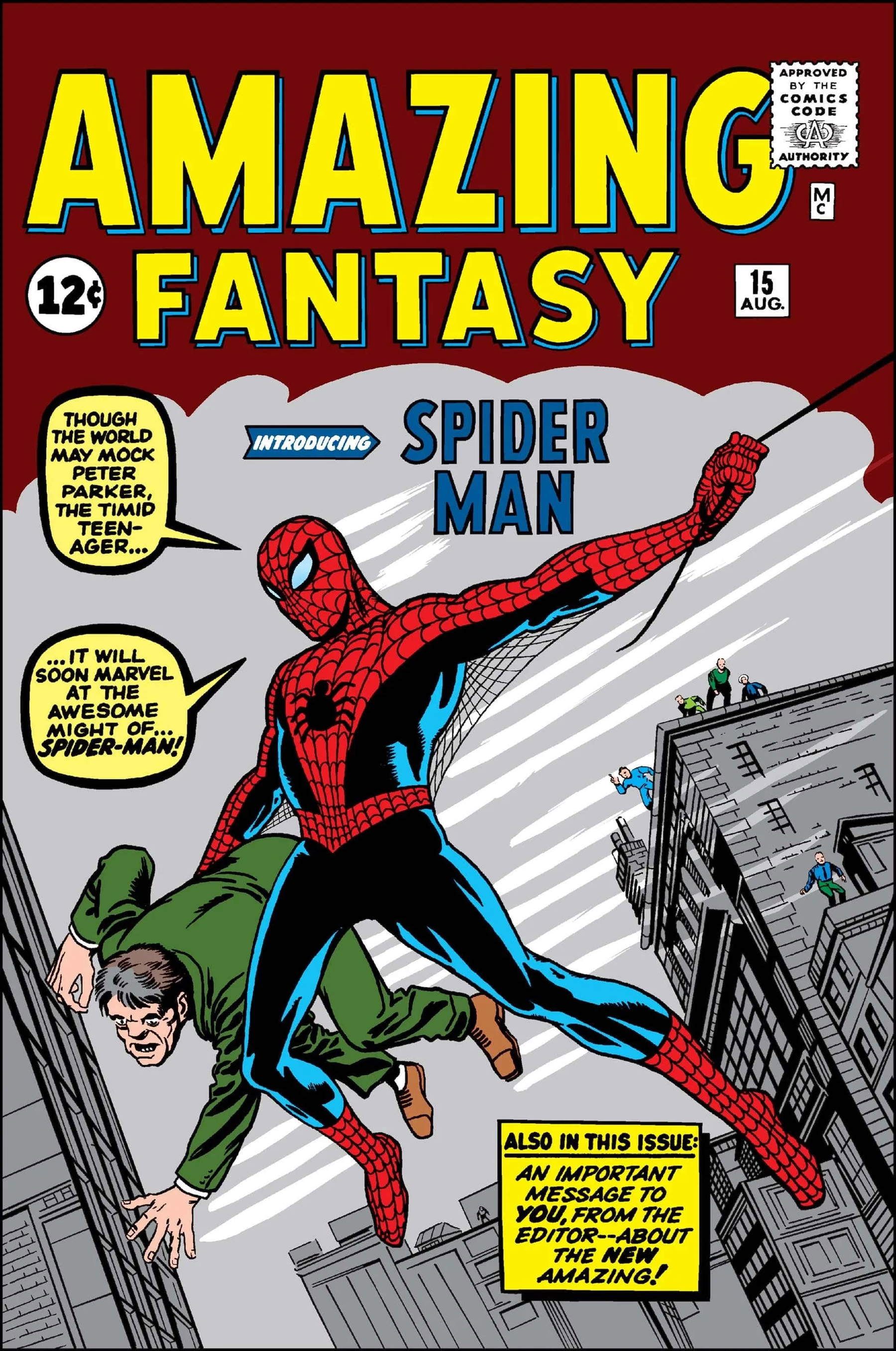
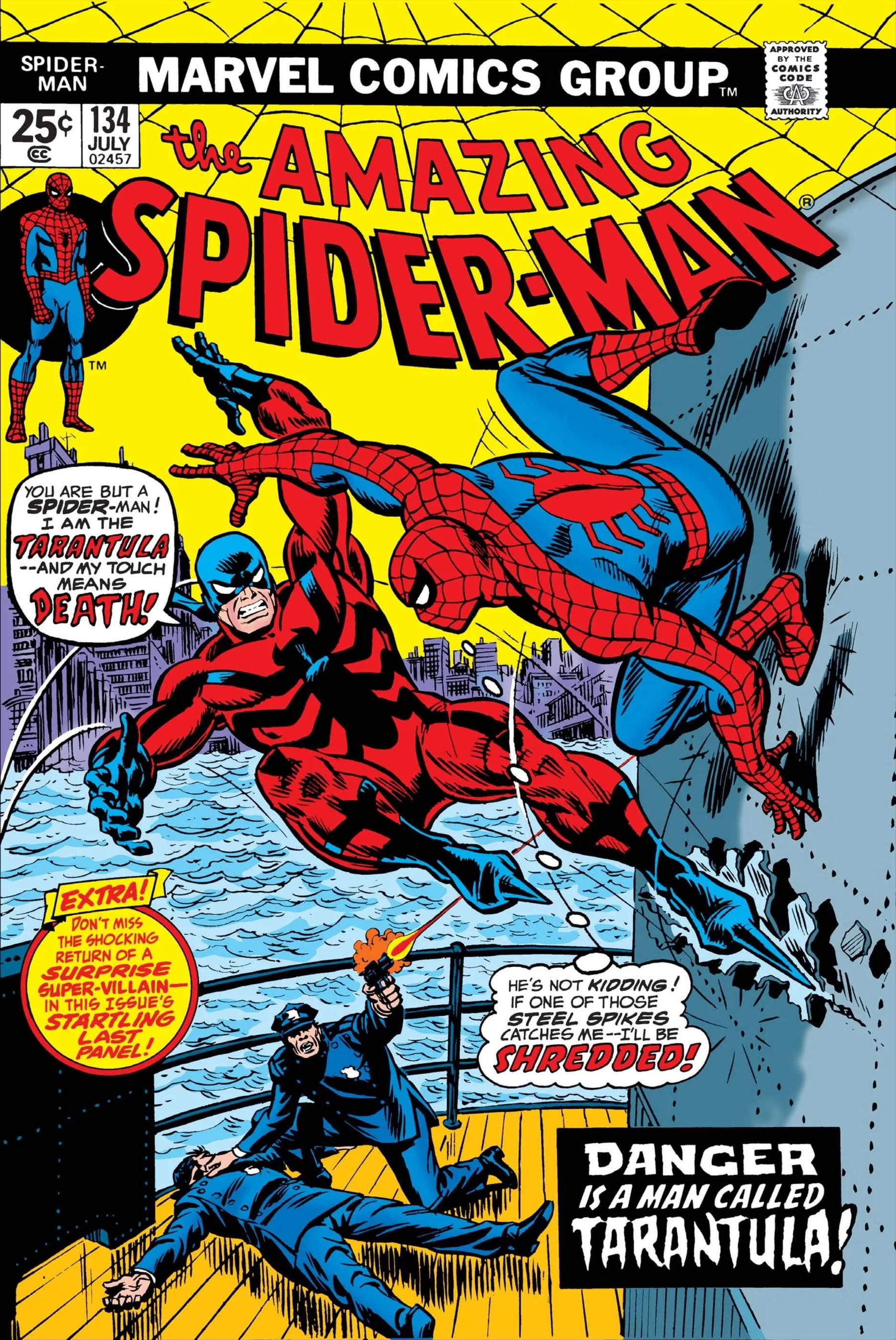
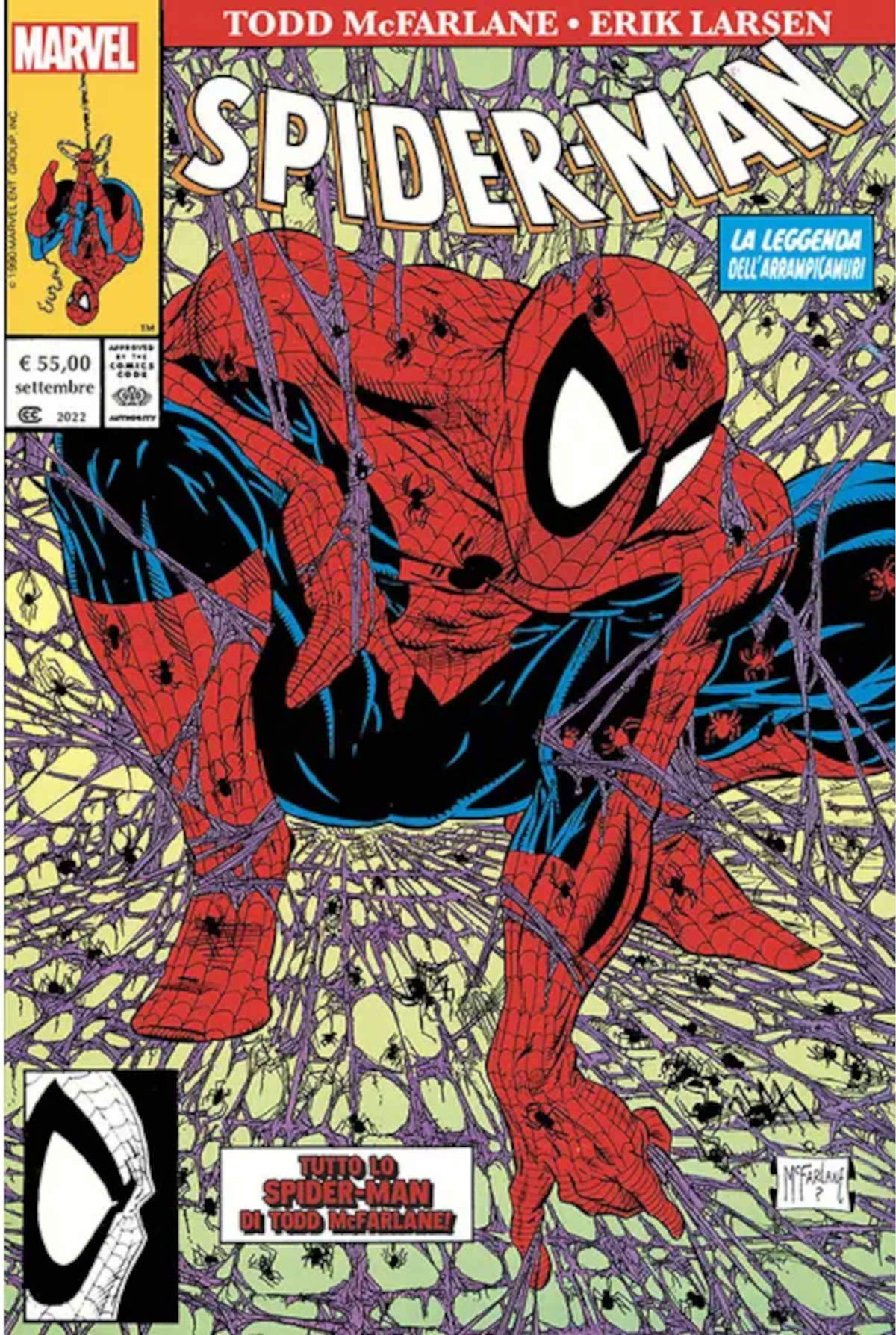
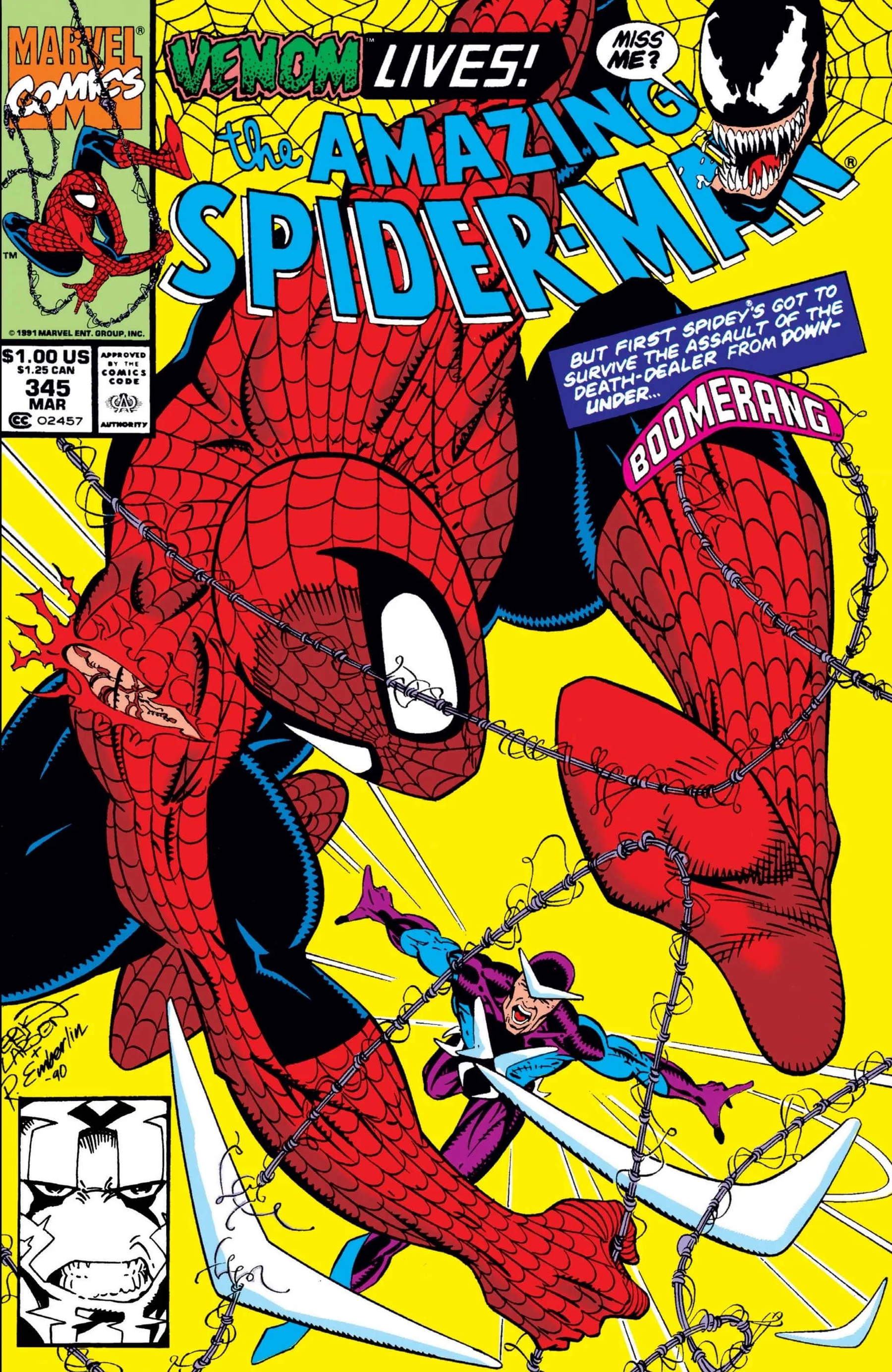
Perhaps no face is ever fully present. We look at living flesh and superimpose an archive upon it. Every person we love thus bears on their face all the faces we have attributed to them, including those they never had. Peter Parker’s face changes depending on who draws him, but the mask allows us to pretend that it is always him. Under Steve Ditko’s pencils, his body was tight, nervous, and crouched with a painful awkwardness, while John Romita Sr. gave him a more confident presence, and Todd McFarlane contorted him until the spider emerged from the man’s joints. His white eyes widen, narrow, and take on a mobility that no lens should possess. Every artist alters what the mask hints at, and yet, despite this, we continue to recognize Spider-Man without hesitation. I wonder, then, if recognizing someone has always meant accepting their variations—deciding that the person remains the same even as time alters their body and their life experiences carve out a new physiognomy. Francis Bacon painted the point at which this trust begins to falter.
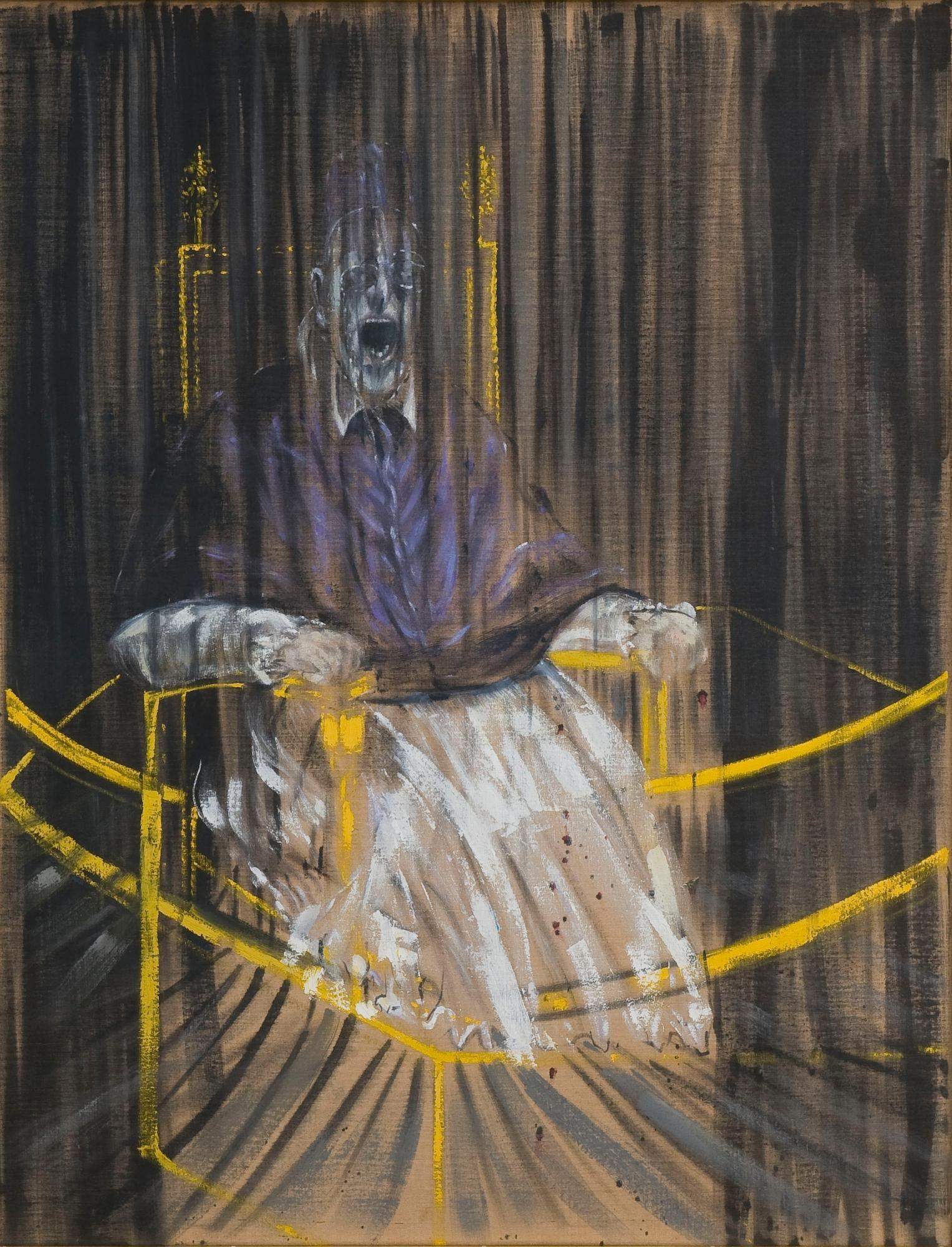
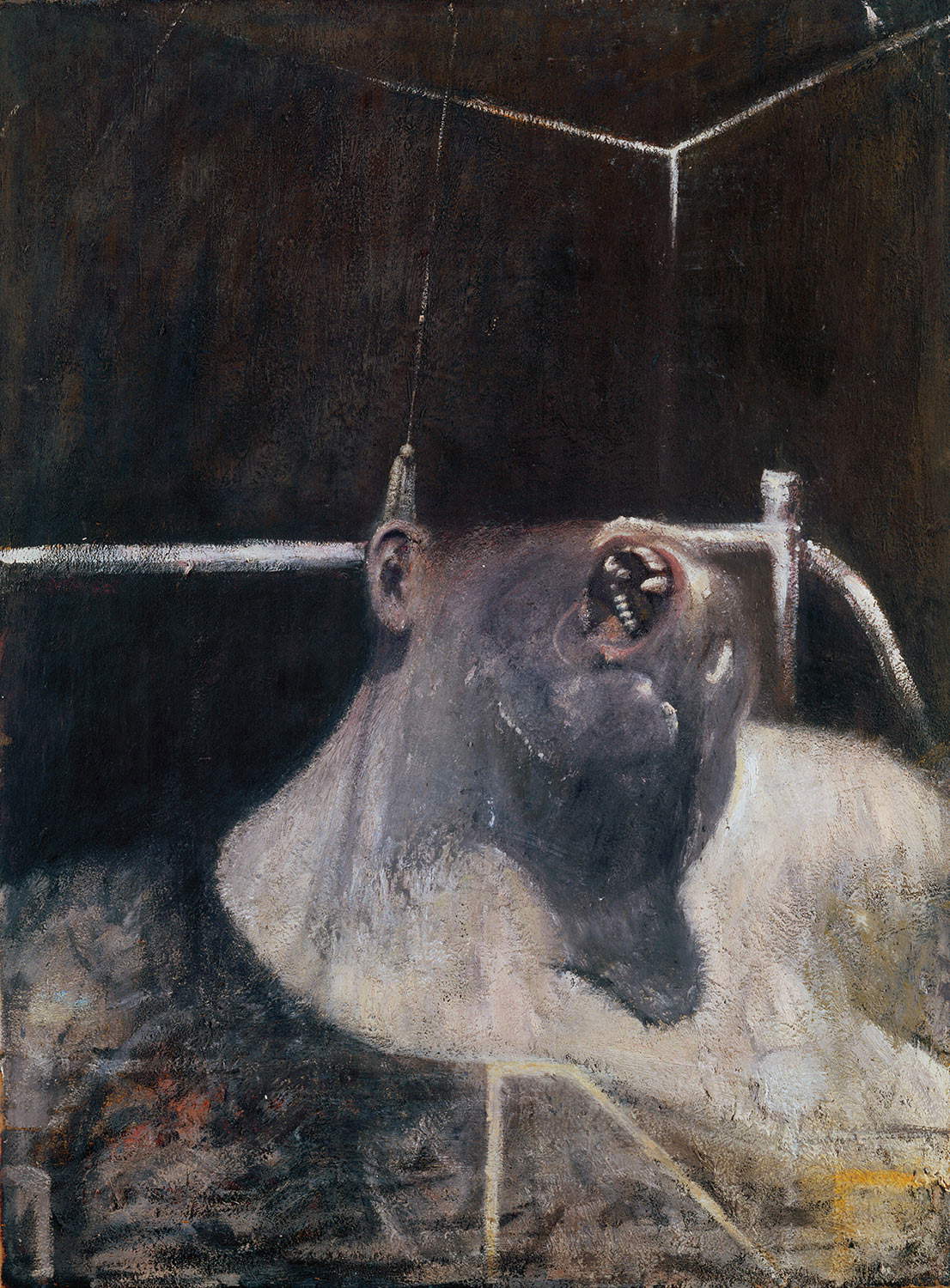
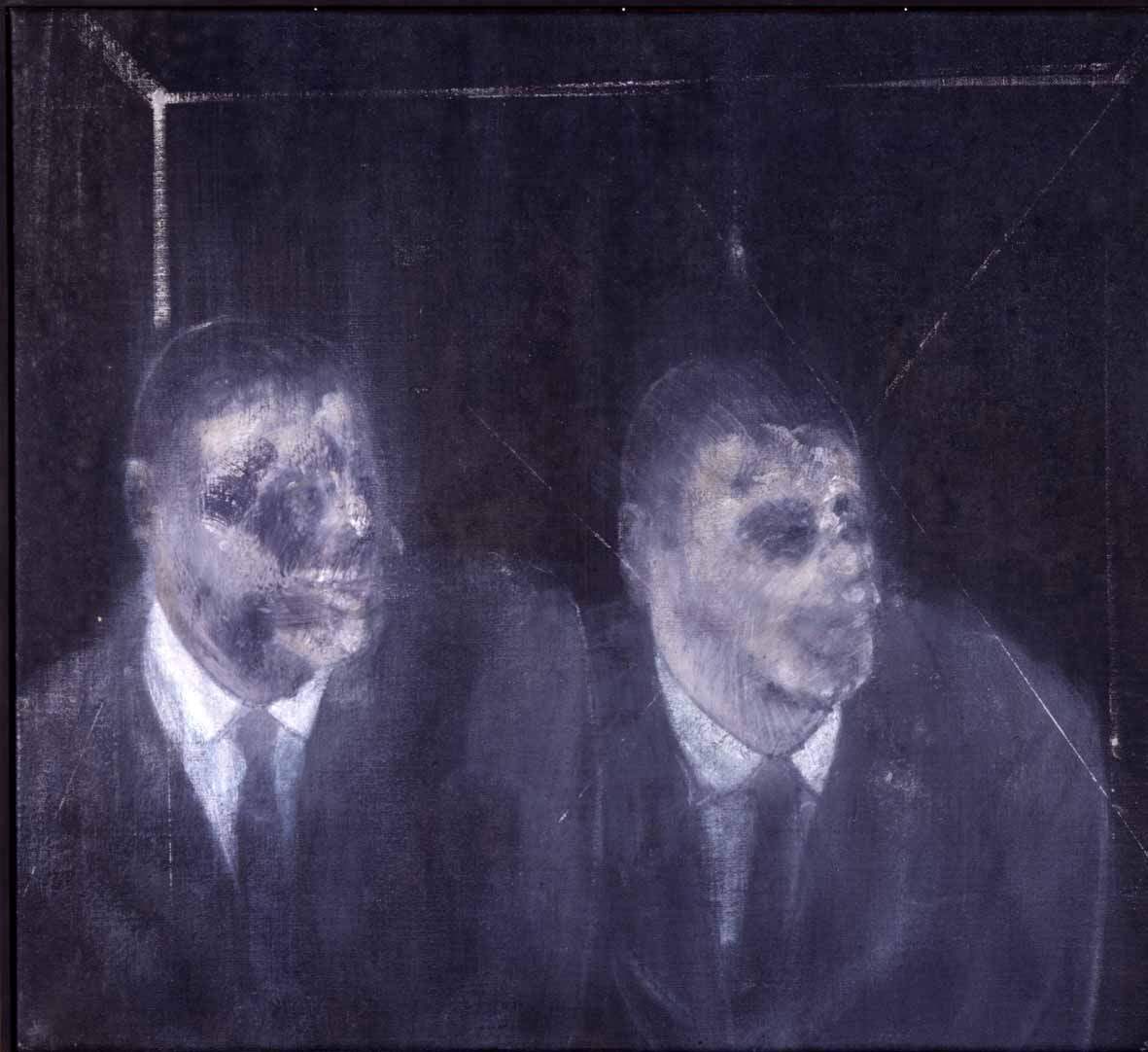
In her portraits, the flesh seems to be pulled away by a force acting from within: a cheek sags, the mouth opens at the most unlikely angle, the eyes lose their alignment, and the head continues to occupy the space of a face even when the features have ceased to cooperate. Bacon often worked from photographs—images already separated from the bodies they had captured—and would smear the still-wet paint until its legibility was altered. The figure remains before us with an intolerable presence, confined to rooms that seem too small to contain what is happening to it—a form of unsettling realism, constructed precisely through deformation.
Looking at Bacon’s work, one realizes that a face can become a mask even while remaining completely bare; all it takes is repeating the same expression for years, holding the jaw in the same way, smiling every time we’re asked if we’re happy, and the flesh learns, arranges itself as needed, retains the contractions we’ve imposed on it until what we used to hide ourselves becomes the way others recognize us.
At that point, removing the mask would be as painful as tearing off one’s own skin.
Peter still tries to believe that beneath Spider-Man there is an unspoiled boy, an original face to which he can return once the city has stopped demanding anything of him, but *Brand New Day* shatters this hope once and for all because the spider advances within his body, transforming it and making the separation between the creature and the man increasingly fragile. Peter builds a device to appear less monstrous, as we all do when we realize that the hidden part is beginning to press against the surface. We seek a sentimental technology to make it acceptable: we can call it irony, reserve—sometimes we even call it character—but in the meantime, the face continues to change. With the artist William Utermohlen, this transformation becomes unbearable to watch, especially because we know it doesn’t belong solely to painting.
After being diagnosed with Alzheimer’s in 1995, Utermohlen continued to paint self-portraits, partly at the suggestion of one of the nurses caring for him. In the works of the following years, the face gradually loses its structure: the proportions shift, the skull seems to split open, and the mouth and eyes struggle to find a common place. The series of his final self-portraits preserves the trace of an artist who continues to perform the act through which he had defined himself throughout his life, even as his ability to do so dwindles.
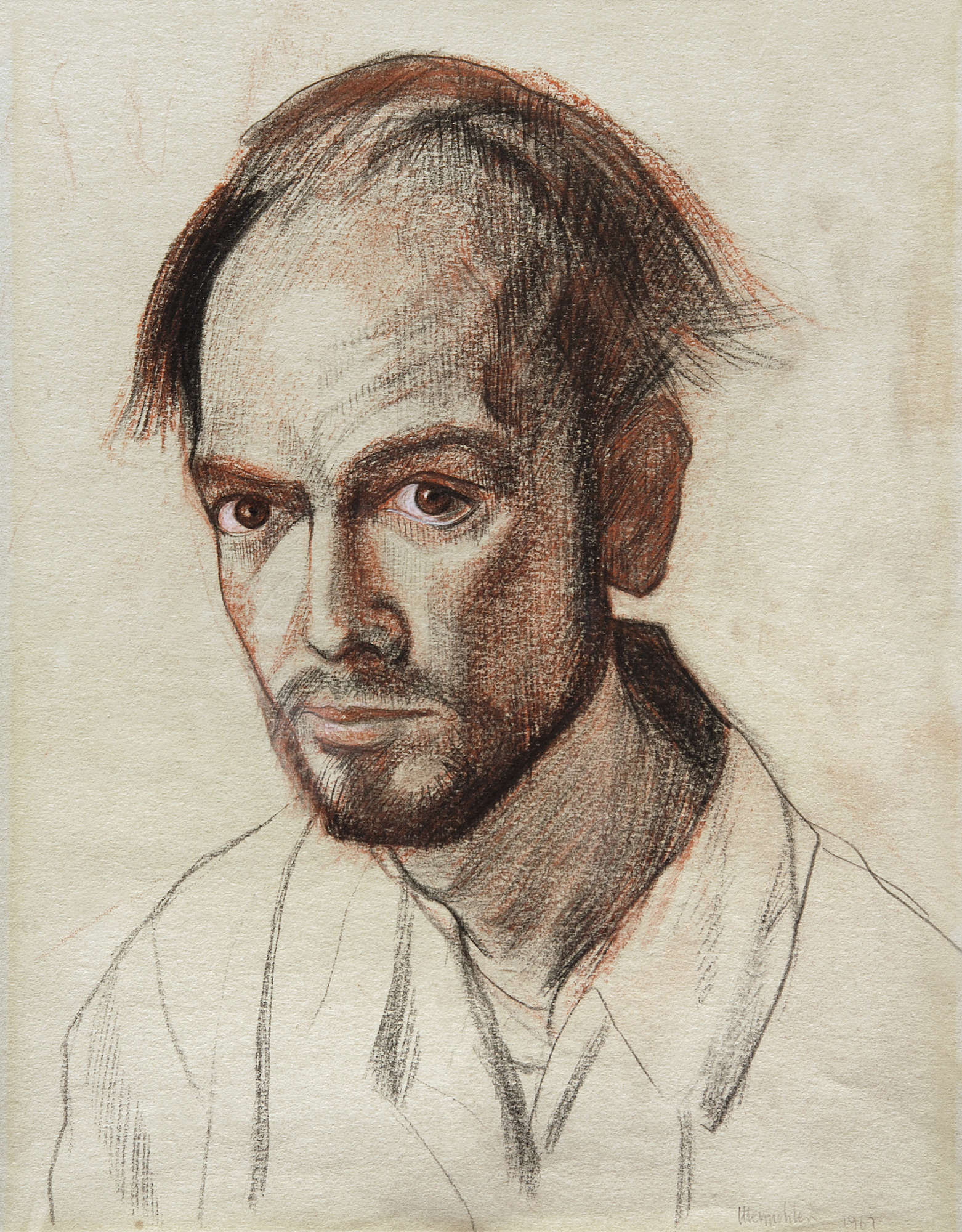
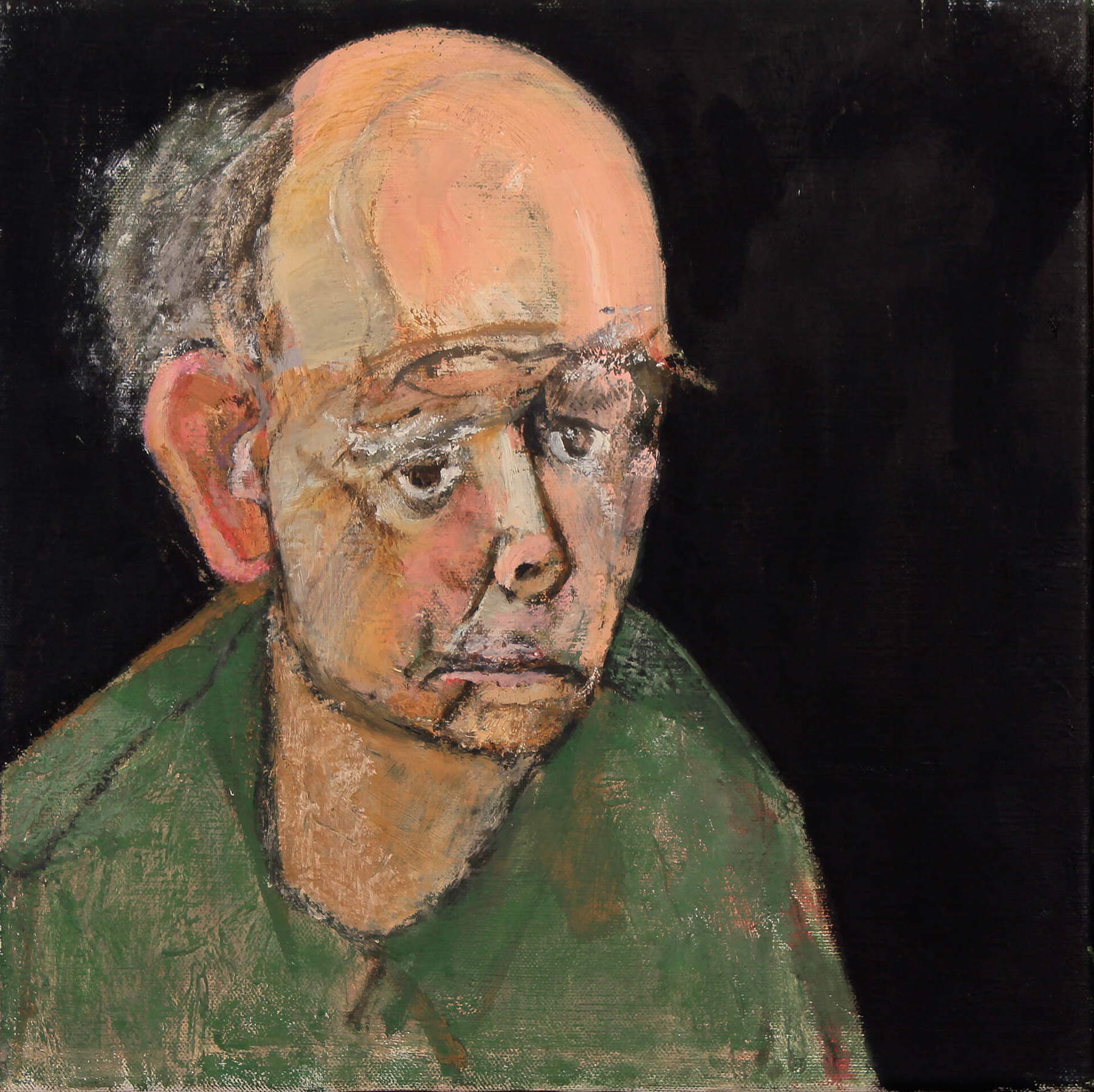
One must view these works with caution, resisting the temptation to interpret them as a clinical demonstration in which every cognitive loss corresponds to a visible deformation. Utermohlen remained a painter even during his illness; his work is not an illustrated medical record, and to reduce it to a chronicle of deterioration would be to strip it of the very identity he sought to preserve through his art. And yet, standing before those faces, it is hard not to sense the presence of someone who continues to call out to himself as his own name slips away.
A self-portrait usually arises from the desire to leave a record. I was here. This was my face. This is how I chose to see myself. But in Utermohlen’s paintings, that gesture also seems directed inward, as if painting could keep open a passage between the man and his own image, offering memory a surface to cling to when the rest begins to recede. And just as Peter Parker still possesses all his memories, yet no one else can confirm to him that they ever existed, Utermohlen continues to be surrounded by people capable of recognizing him, while the possibility of reaching his own face grows ever more fragile. These are two opposing forms of the same loneliness. In one, the world forgets who we are and leaves us alone to guard the person we once were. In the other, the world preserves our name and our face while we begin to lose the path back to them. Perhaps this is the fear buried beneath all the masks: the fear of being left alone.
And, in the end, we remain alone even when someone holds us so tightly that it takes our breath away, because between their body and ours there is always a part that cannot be crossed. A silent, physical space from which we watch others love us, unable to tell whether they would continue to do so if they could see what we’ve left in the shadows. We can be known deeply and yet, at the same time, remain unreachable. We can spend a lifetime beside someone and die carrying within us rooms that person has never entered.
No one will ever know us in our entirety. No one will ever love us in every part, because some parts of us will never reach the gaze of another human being. Perhaps love also consists of this painful approximation—of reaching out toward something that will continue to elude us, and of remaining, even while knowing that all we will ever possess of the other is what they had the courage to show us. Peter Parker puts on a mask to protect those he loves from the monster he fears he is. Then he spends his life hoping that someone will recognize the man left beneath, even though he has done everything possible to ensure that no one can ever find him again.


The author of this article: Francesca Anita Gigli
Francesca Anita Gigli, nata nel 1995, è giornalista e content creator. Collabora con Finestre sull’Arte dal 2022, realizzando articoli per l’edizione online e cartacea. È autrice e voce di Oltre la tela, podcast realizzato con Cubo Unipol, e di Intelligenza Reale, prodotto da Gli Ascoltabili. Dal 2021 porta avanti Likeitalians, progetto attraverso cui racconta l’arte sui social, collaborando con istituzioni e realtà culturali come Palazzo Martinengo, Silvana Editoriale e Ares Torino. Oltre all’attività online, organizza eventi culturali e laboratori didattici nelle scuole. Ha partecipato come speaker a talk divulgativi per enti pubblici, tra cui il Fermento Festival di Urgnano e più volte all’Università di Foggia. È docente di Social Media Marketing e linguaggi dell’arte contemporanea per la grafica.Warning: the translation into English of the original Italian article was created using automatic tools. We undertake to review all articles, but we do not guarantee the total absence of inaccuracies in the translation due to the program. You can find the original by clicking on the ITA button. If you find any mistake,please contact us.






















 IT
IT FR
FR DE
DE ES
ES CN
CN


