



by Redazione 11/11/2026


Categories: Ancient art / Disclaimer
It was in Florence in the early 19th century and passed through the Valdarno region before arriving in England in 1904. Exhibited at the Ashmolean in 1934 as a workshop piece, Botticelli’s “Virgin and Child Enthroned” returns there today as an autograph work, for a three-year loan.


A painting by Sandro Botticelli ( Alessandro Filipepi; Florence, 1445–1510)—a Madonna and Child Enthroned that was located in Florence in the early 19th century, specifically in the Oratory of San Giuliano , at the convent of the same name, is now on display atthe Ashmolean Museum in Oxford, more than ninety years after the museum last exhibited it to the public. In the meantime, its attribution has also changed. Between 1934 and 1935, in fact, the panel was exhibited at the Ashmolean in an exhibition as a work from Botticelli’s workshop. Today it is considered an autograph work and returns to the museum with this new attribution.


Its recent history is well known: after being housed in the Oratory of San Giuliano, the work was moved to the chapel of a convalescent home for sick members of the Calasanzian order in Comezzano, near Vaggio, in the municipality of Figline Valdarno. It passed by inheritance to the Graziani family and remained there until around 1900, after which it entered the collection of Giovanni Magherini Graziani. In November 1903, the Florentine art dealer Elia Volpi purchased it, and by May 1904 it was already in England, having been acquired by Harriet Sarah Loyd-Lindsay, Lady Wantage. The work will now remain in Oxford for three years, on loan from the Klesch Collection, the private London collection that acquired it in early 2026. It will be displayed in the Italian Renaissance gallery, alongside masterpieces by Paolo Uccello, Giovanni Bellini, and Titian. It thus joins a collection of Italian Renaissance paintings that the museum recently enriched with a “Crucifixion” by Beato Angelico.


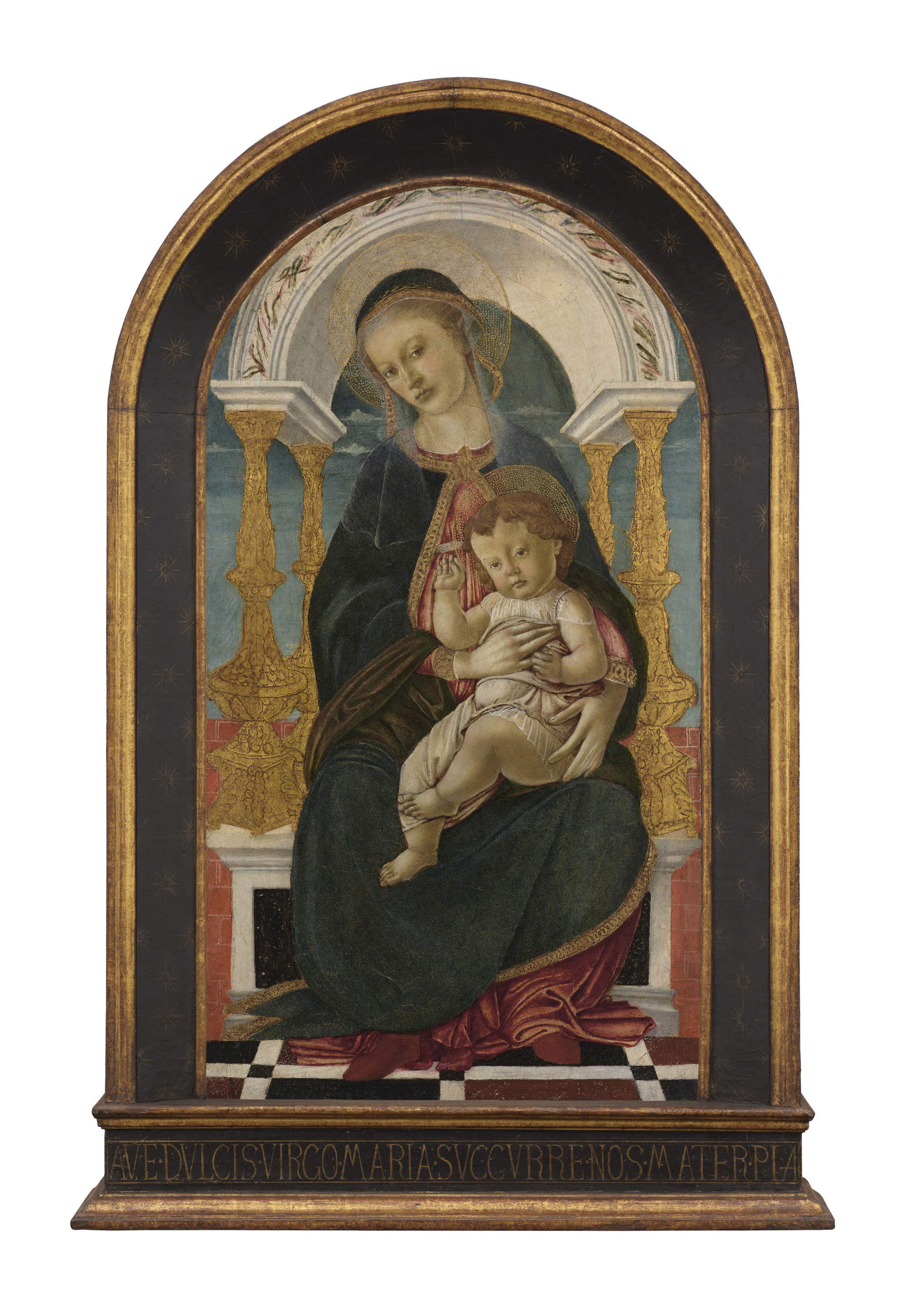
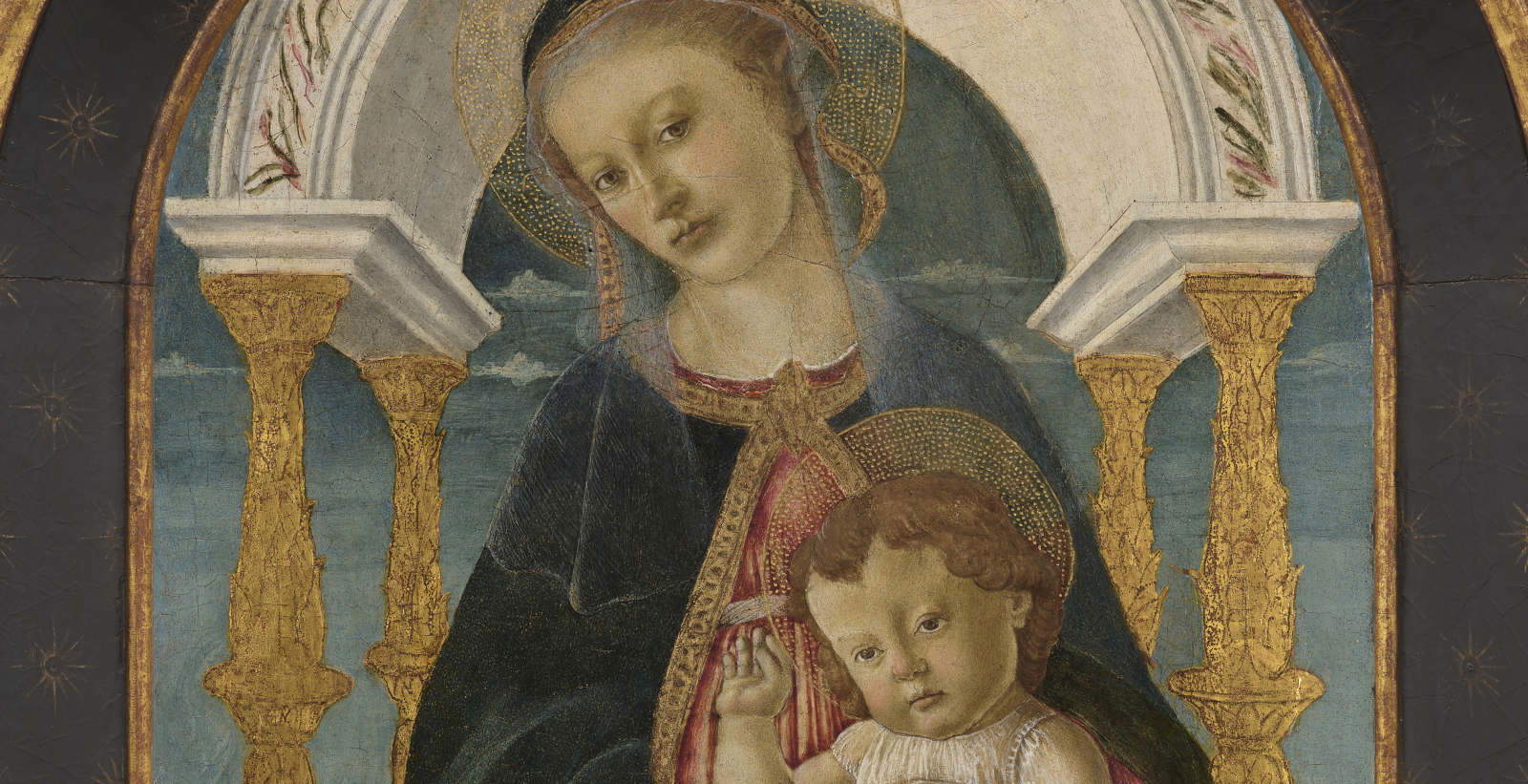
The painting, executed in tempera on panel, measures 83.3 by 44.9 centimeters and dates to around 1470, when the young Botticelli was establishing himself in Florence. It depicts the Virgin seated on a throne with the Child and was likely intended for private devotion: the painter’s personal approach to the human figure is already evident here, particularly in the delicate details of Mary’s face. When, last year, the painting underwent an export appraisal, it was noted that the Virgin’s face, in terms of shape and angle, resembles that of the Uffizi’s “Venus of Spring,” painted between the late 1470s and early 1480s. The abundant use of gold leaf is also striking: Italian painters of earlier generations often applied it to the backgrounds of devotional images, but by Botticelli’s time it had become less common. The painter, who according to tradition had trained as a goldsmith, continued instead to explore its decorative possibilities.


The panel is now in restored condition. In the summer of 2026, it underwent restoration: the work removed a yellowed varnish and later overpaintings, revealing well-preserved details of the figures of the Virgin and Child and restoring the original, cooler tones. The painting also has a new arched frame, hand-carved and inspired by 15th-century Florentine models.
In England, the panel has a long history tied to Oxfordshire. Lady Wantage, a collector and philanthropist, added it to her collection of antique paintings at Lockinge House, near Wantage. The work remained in the family for more than a century and was rarely seen by the public. After 1944, it was moved to Betterton House, also in the vicinity of Wantage. The only time the public was able to view it was during the 1934–1935 exhibition at the Ashmolean dedicated to the paintings from Lockinge House. Then, in December 2024, the panel was sold at auction by Sotheby’s in London.
Following that sale, the painting was in danger of leaving the United Kingdom. In 2025, the British government imposed a temporary export ban, valid until August 8 of that year, to give a museum or institution in the country time to purchase it. The listed price was 9,960,000 pounds plus VAT, for a total value of over 10.2 million. The Reviewing Committee on the Export of Works of Art and Objects of Cultural Interest (RCEWA), which examines requests for the export of works of art and objects of cultural interest, determined that the work met the third of the Waverley criteria. In other words, it recognized the work’s exceptional importance for the study of Western art, Renaissance Florentine workshop practices, and the history of British collecting. Another reason is that there are very few examples of Botticelli’s early works in the United Kingdom.
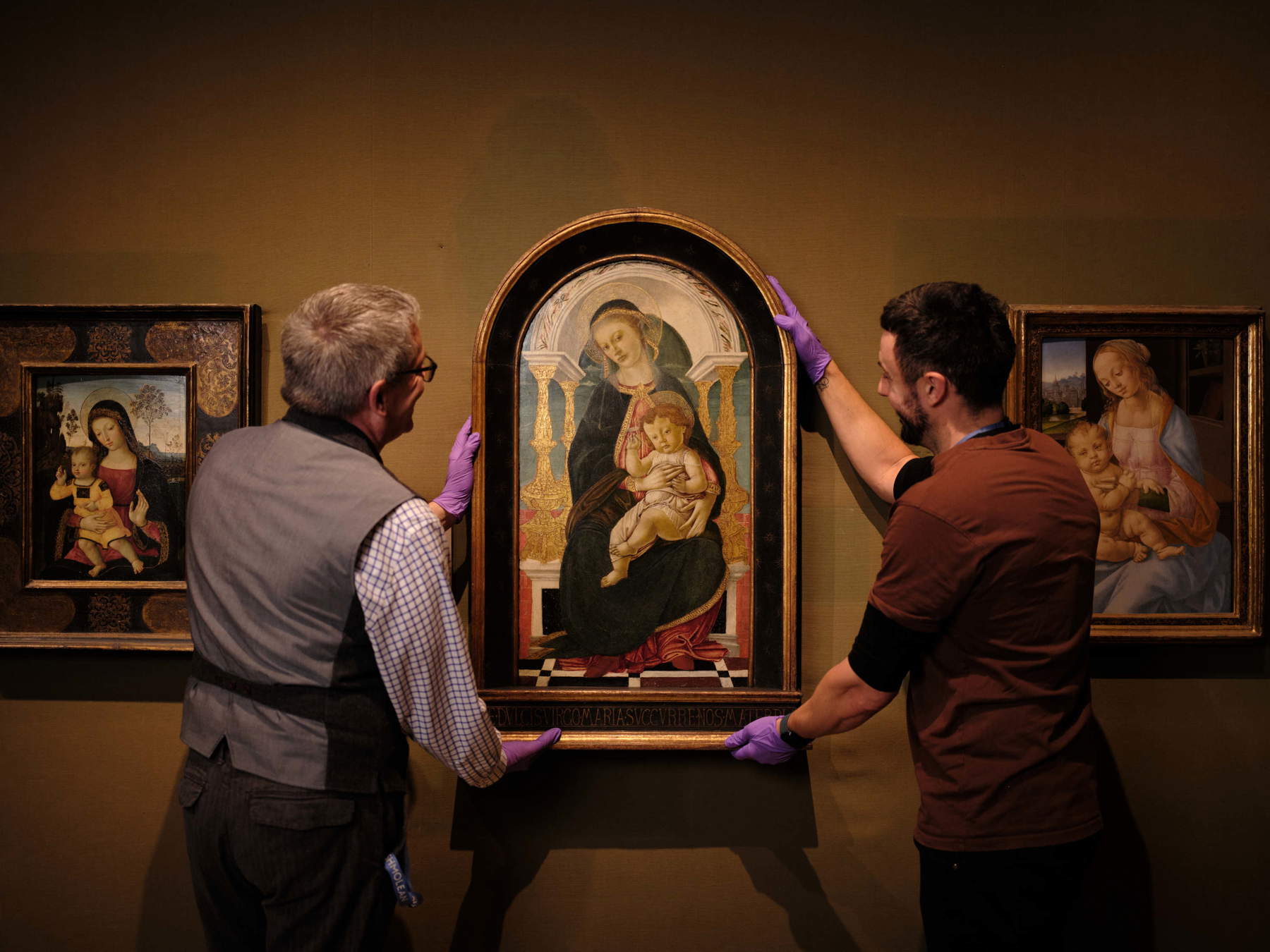
At the time, the Minister for Creative Industries, Arts, and Tourism, Sir Chris Bryant, had described the panel as “a perfect example of Botticelli’s genius and a unique piece of history.” Christopher Baker, a member of the committee, had emphasized the work’s value for research: “Further research into the placement of Botticelli’s work throughout his career and the organization of his workshop, as well as his connections to the broader context of Florentine Renaissance art, would be of enormous benefit.” Baker also noted that the painting had arrived in Great Britain in 1904, at a time when the Victorian-era enthusiasm for Botticelli was still alive.
In the end, the painting was not purchased by a public institution but by a private collection. The Klesch Collection acquired it after the auction, and the result is that the panel will remain in the United Kingdom and is once again on public view. “We are delighted that this beautiful and fascinating painting remains in the United Kingdom and that visitors will have the opportunity to see it here at the Ashmolean, alongside other works of the Italian Renaissance,” says Xa Sturgis, director of the Ashmolean Museum in Oxford. “We are immensely grateful to the Klesch Collection for making this possible, and we look forward to sharing the painting with visitors over the next three years.” Collectors A. Gary and Anita Klesch reflect on the connection between the work and the museum that houses it: “We are delighted to share this painting with the public and to see it return to the Ashmolean Museum, an institution closely tied to its history. We are grateful for the museum’s collaboration in bringing this work to a wider audience and in helping to preserve and celebrate its cultural legacy today and for future generations.”
 |
| A Rediscovered Botticelli: It Was in Danger of Leaving the United Kingdom, but Is Now on Display in Oxford |
Warning: the translation into English of the original Italian article was created using automatic tools. We undertake to review all articles, but we do not guarantee the total absence of inaccuracies in the translation due to the program. You can find the original by clicking on the ITA button. If you find any mistake,please contact us.