





More than 300 square meters of mosaics—371, to be exact—created in the early 17th century based on cartoons by Cristofano Roncalli, known as il Pomarancio (Pomarance, 1552 – Rome, 1626), are once again visible in St. Peter’s Basilica in Rome. These are the mosaics that cover the dome of the Clementine Chapel, one of the most significant decorative ensembles in Rome from the early decades of the 17th century, which underwent a conservation restoration project that began in May 2025 and has now been completed.
The work did not focus solely on the mosaic tiles: during the project, the contemporary stucco decoration was also restored, thereby restoring a more cohesive appearance to the chapel’s entire decorative scheme. The project also produced digital documentation intended to serve as a tool for future monitoring and maintenance activities: the survey of the dome, the mapping of deterioration, and information on the work performed were integrated into a three-dimensional model created using BIM (Building Information Modeling) methodology.
The need to intervene on the dome had emerged from periodic monitoring activities conducted by the Fabbrica di San Pietro. The erection of the scaffolding, which began in January 2025, allowed for a close-up examination of the surfaces and an assessment of the condition of the mosaics: the investigations revealed critical issues attributable both to the natural degradation of the materials and to the interventions that had taken place over time. Once the surfaces were accessible via the scaffolding, it was possible to extend the inspections to the stucco decoration as well: this was therefore included in the work plan, with the aim of addressing the various components of the decorative elements in a coordinated manner and ensuring their stability and long-term preservation.
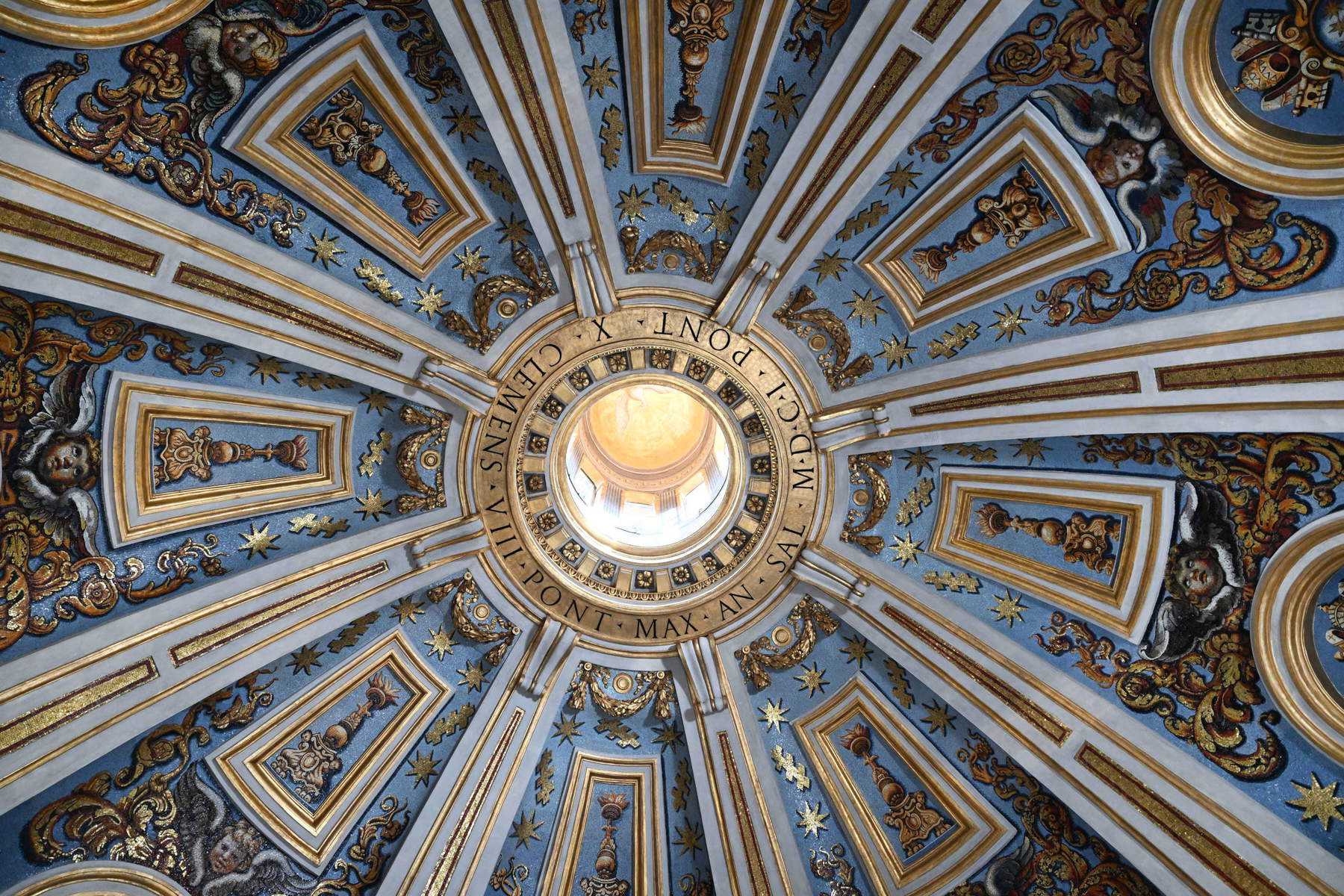
The restoration was preceded by a comprehensive diagnostic campaign: photographic documentation was compiled, laboratory analyses of the constituent materials were conducted, digital maps of the forms of deterioration were created, and endoscopic surveys were performed. The collection of this data made it possible to establish a comprehensive picture of the surfaces’ condition prior to the intervention and to guide subsequent conservation operations. Particular attention was paid to digital documentation. The survey of the dome, conducted using BIM methodology—which incorporated the three-dimensional architectural model, survey data, the mapping of forms of deterioration, and information on the work carried out during the project, enabled the creation of a searchable and updatable digital archive, designed not only as documentation of the recently completed restoration but also as a tool for future monitoring and maintenance campaigns.
Work on the mosaic surfaces began with pre-cleaning and dust removal. This was followed by the pre-consolidation of the tesserae and loose panels, followed by controlled cleaning. The work also addressed efflorescence through specific treatments and included both surface and deep consolidation. The next phase focused on elements that had become incongruous with the decoration over time, the gaps, and the restoration of proper legibility to the surfaces. The incongruous elements were removed, the gaps were filled with stucco, and the final aesthetic presentation of the mosaic was completed.
A similar procedure, in terms of methodology and diagnostics, was followed for the stucco work: in this case as well, the operations were preceded by the preliminary interventions necessary to secure the surfaces. This was followed by cleaning and consolidation—both adhesive and cohesive—addressing both the matrix of the molded elements and the gilded film that characterizes their surface. The work on the stuccoes concluded with the filling of the gaps and the final aesthetic presentation. The project as a whole thus had a twofold purpose: on the one hand, to ensure the physical preservation of the decorations; on the other, to restore the formal and chromatic legibility of the ensemble.
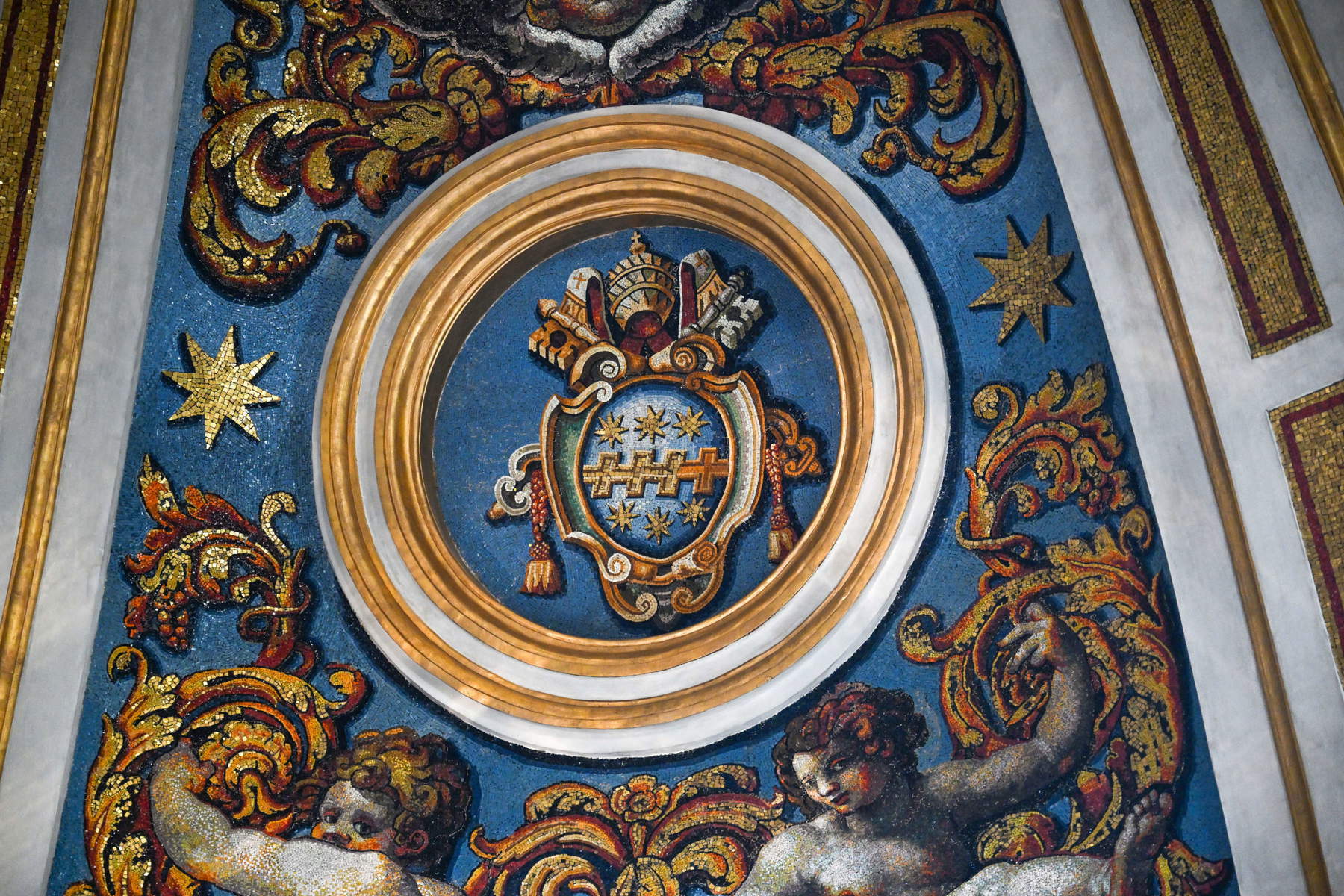
Throughout the various operations, formulations were used that, in accordance with the restoration project, meet the requirements of chemical and physical compatibility, reversibility, and retractability. The objective was to treat the surfaces in accordance with theoretical principles and current regulations governing the conservation and restoration of cultural heritage.
The restoration project also addressed substrates at risk of detachment, ensuring their structural consolidation. Furthermore, both intrinsic and extrinsic factors contributing to the degradation of the materials were addressed, while cleaning, consolidation, restoration, and aesthetic presentation contributed to restoring the visual unity of the decoration.
To understand the significance of this project, one must consider the history of the Clementine Chapel and the specific period in Roman history during which its decorative scheme was conceived. The chapel is named after Clement VIII, born Ippolito Aldobrandini ( Fano, 1536 – Rome, 1605), who commissioned its decoration. The chapel was built according to a design by Michelangelo Buonarroti and completed by Giacomo della Porta in 1580, as a symmetrical counterpart to the Gregorian Chapel. The Clementine Chapel is part of the complex of rooms surrounding the Confession of St. Peter, one of the basilica’s central nuclei. The chapel’s iconographic program is rooted in the cultural climate of the Counter-Reformation, and Cardinal Cesare Baronio ( Sora, 1538 – Rome, 1607), a central figure in Roman ecclesiastical culture of the time, played a decisive role in shaping it. The decoration was therefore intended to be part of a broader program in which images, architecture, and ornamental elements combined to convey a specific religious meaning.
The mosaics were created in the early 17th century, between 1601 and 1604. A team of about ten master artisans was involved in their creation, including Marcello Provenzale, Paolo Rossetti, and Ranuccio Semprevivo. The use of mosaics to decorate the Vatican basilica was a response to the building’s unique nature and the desire to ensure the images’ longevity, translating elaborate compositions—developed through preparatory cartoons—into durable materials. Among these cartoons were those by Cristofano Roncalli, known as Pomarancio, which served as the basis for the decoration of the dome. His involvement places the decorative scheme of the Clementine Chapel squarely within the heart of Roman artistic culture between the late sixteenth and early seventeenth centuries, at a time when the city was developing new figurative languages and new forms of visual communication linked, in part, to the needs of the post-Tridentine Church.
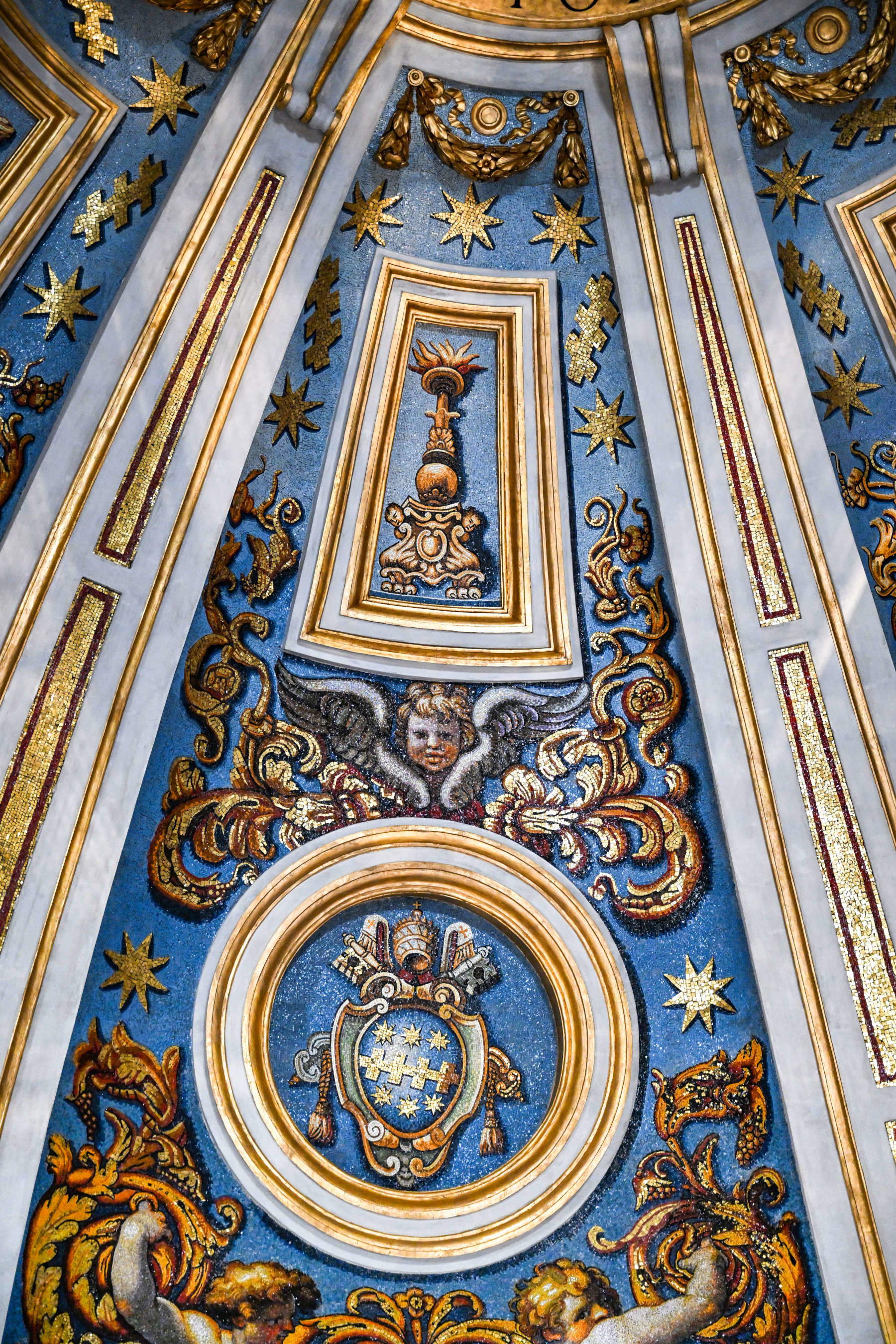
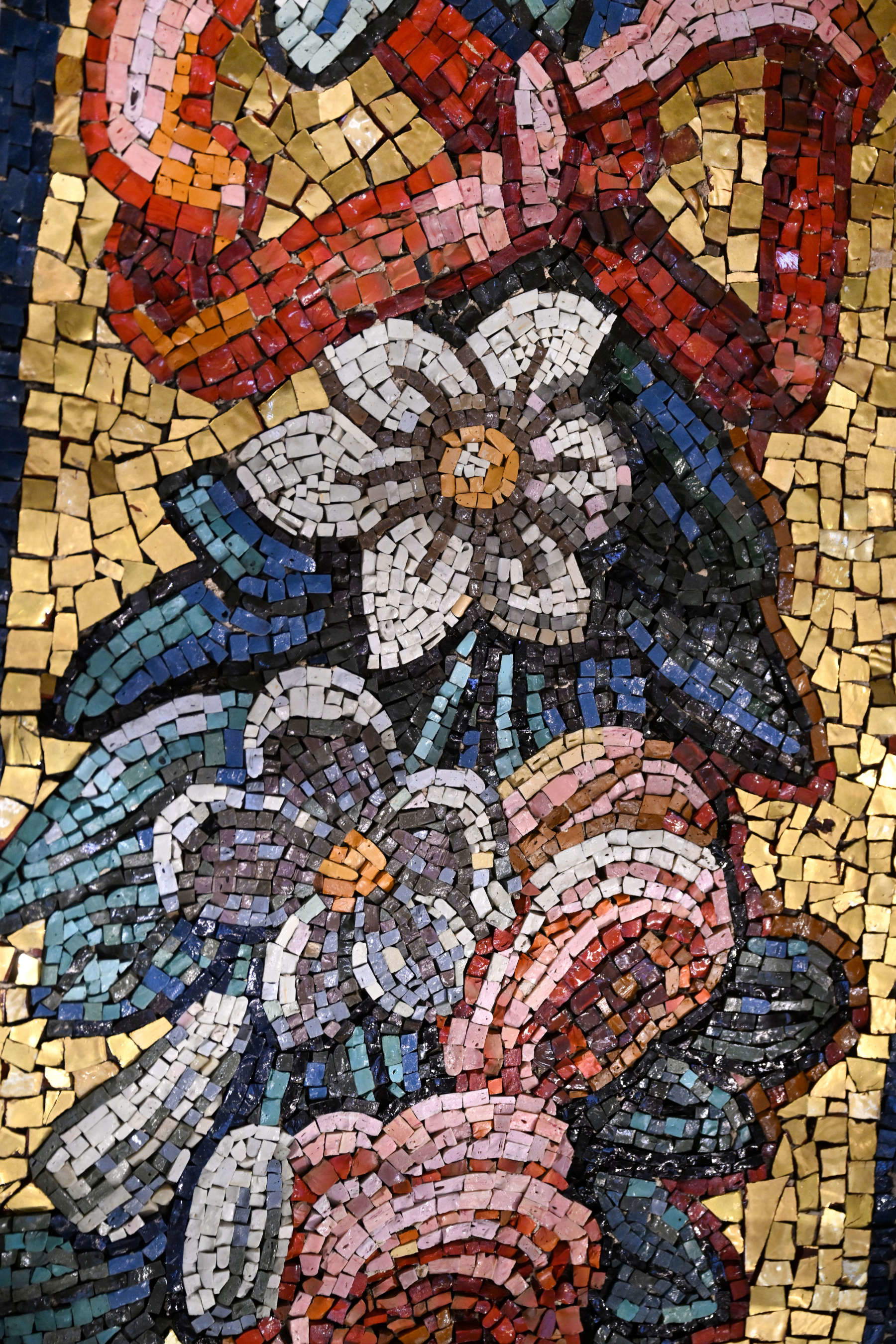
However, the dome’s decoration consists of more than just the main mosaic surface: the decorative scheme also includes rich ornamentation featuring cherubs, festoons, and heraldic symbols associated with the Aldobrandini family. The pendentives depict the four Doctors of the Church, while the lunettes feature biblical scenes. Mosaics and stucco thus work together to create a unified decorative system, in which the various techniques interact with one another.
It is precisely this unity that the restoration sought to restore. Work focused solely on the mosaic tiles would not have been sufficient to restore a correct interpretation of the whole; for this reason, the assessments carried out during the restoration led to the inclusion of the stucco decoration in the scope of the work. The restoration is thus complete after a process lasting over a year, which has restored to the Clementine Chapel not only clean and stabilized surfaces but also a new documentary foundation for its ongoing conservation. The dome, with its 371 square meters of mosaics, is once again legible alongside the accompanying stucco decoration, while the digital documentation preserves a record of the conditions found and the work carried out. The restoration of the dome thus becomes part of the very history of the conservation of St. Peter’s Basilica: a building in which the complexity of the decorative elements makes it necessary to combine interventions on individual works and surfaces with continuous monitoring and documentation capable of tracking the changes in materials over time. For the Clementine Chapel, the recently completed restoration project provided an opportunity to address the signs of deterioration identified by the Fabbrica di San Pietro and, at the same time, to develop a tool designed to be used even after the scaffolding has been dismantled.
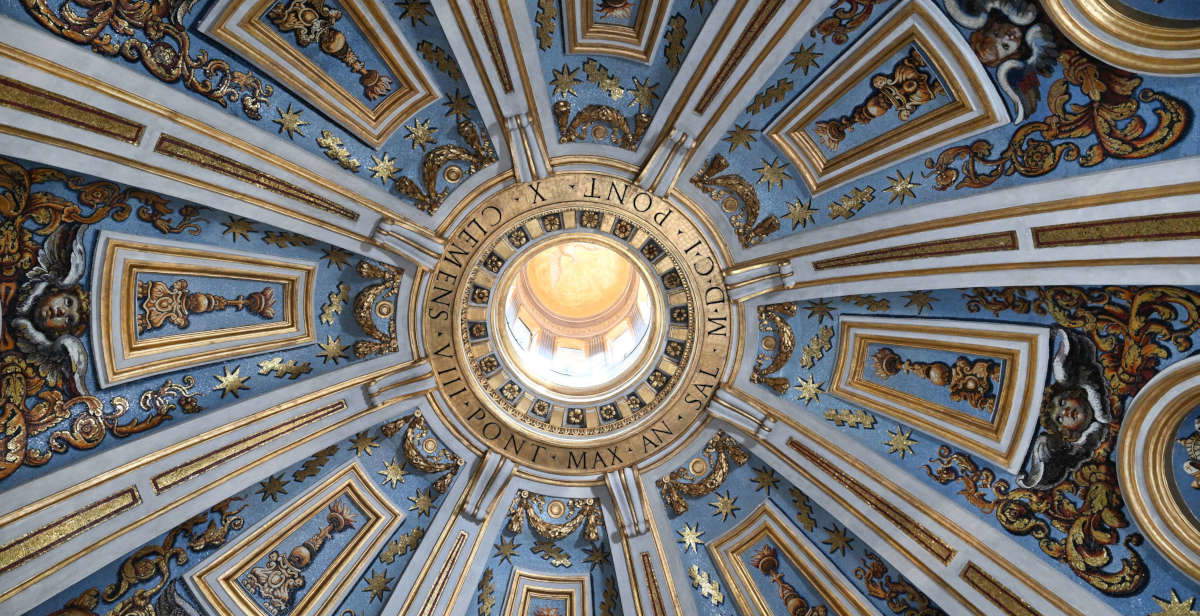 |
| St. Peter's Basilica: The dome of the Clementine Chapel has been restored; 371 square meters of mosaics have been preserved |

Warning: the translation into English of the original Italian article was created using automatic tools. We undertake to review all articles, but we do not guarantee the total absence of inaccuracies in the translation due to the program. You can find the original by clicking on the ITA button. If you find any mistake,please contact us.





























 IT
IT FR
FR DE
DE ES
ES CN
CN


