





After nearly thirty years of closure, one of the most evocative residencesin ancient Herculaneum is finally welcoming visitors once again. On July 9, 2026, the House of Charred Furniture—one of the most significant domus in the Herculaneum Archaeological Park—will reopen to the public, thanks to a comprehensive restoration project that marks a new chapter in the preservation and promotion of this UNESCO site. For nearly three decades, this house has silently preserved traces of the daily lives of ancient Herculaneum’s inhabitants, remaining closed to visitors while continuing to be the subject of research, conservation efforts, and preservation activities. Today, that silence is broken, and the domus once again tells its story, ushering in a new era for the Archaeological Park that will continue in the fall of 2026 with the reopening of other important residences in the ancient city.
The House of Charred Furniture owes its name to one of the most extraordinary finds unearthed during the excavations conducted between 1932 and 1933 by Amedeo Maiuri, the archaeologist who, more than any other, contributed to the rediscovery of ancient Herculaneum. On that occasion, a small table and a bed with a high headboard were discovered, both still bearing traces of fabric and the remains of the rope netting to which the wooden slats were attached. These are common household objects, preserved by the eruption of Vesuvius and surviving to the present day as exceptional testimonies to Roman daily life.
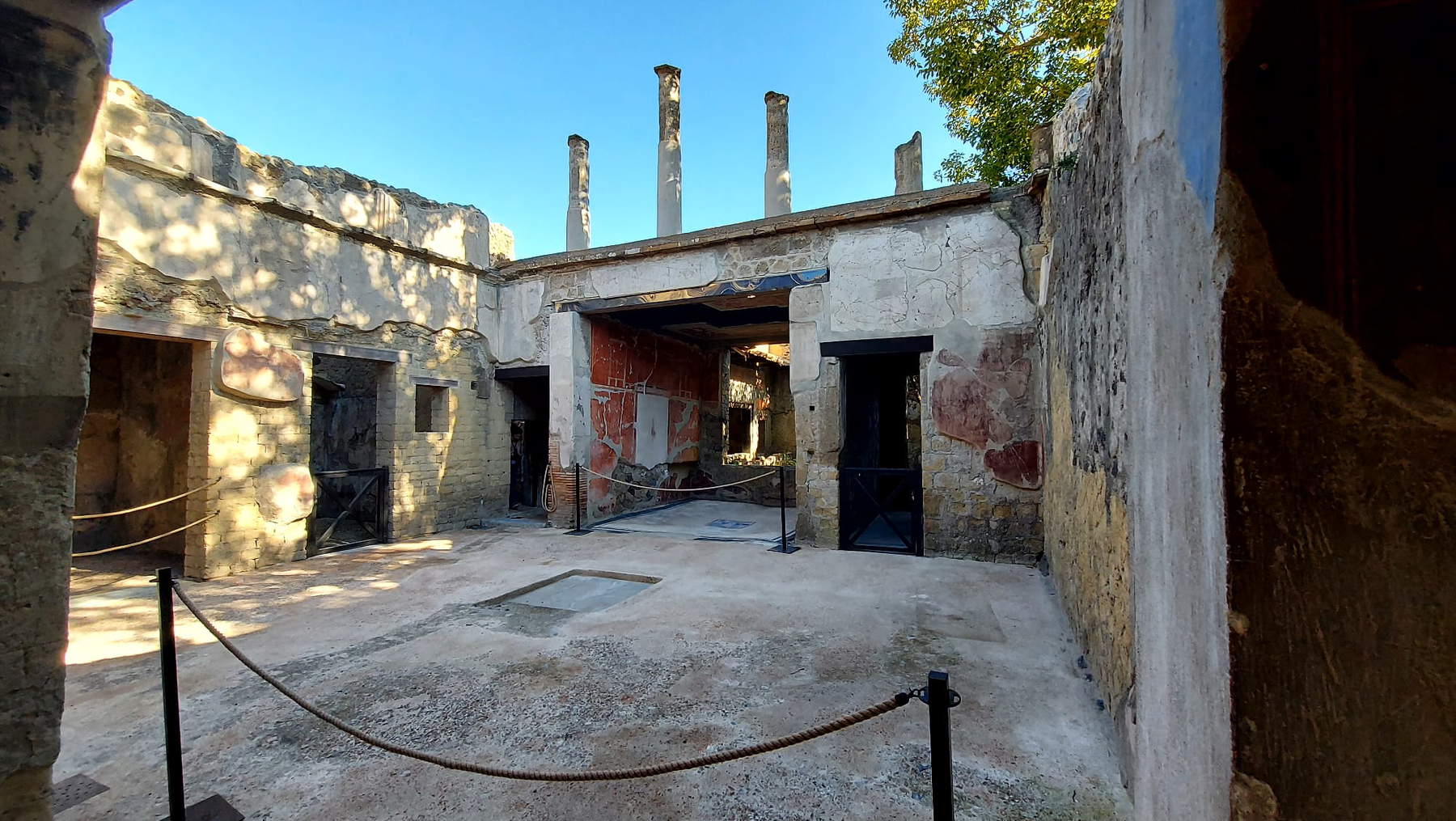
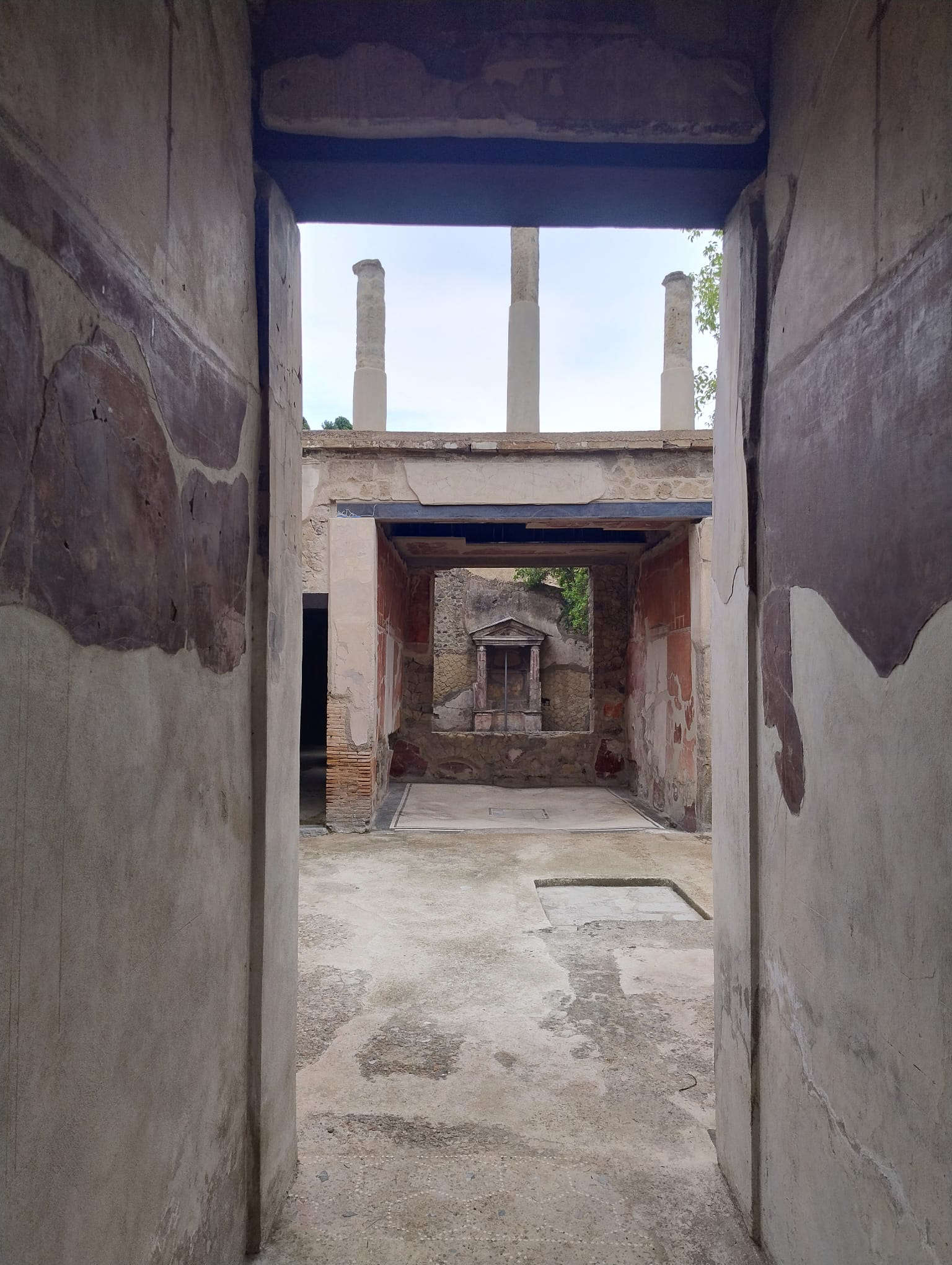
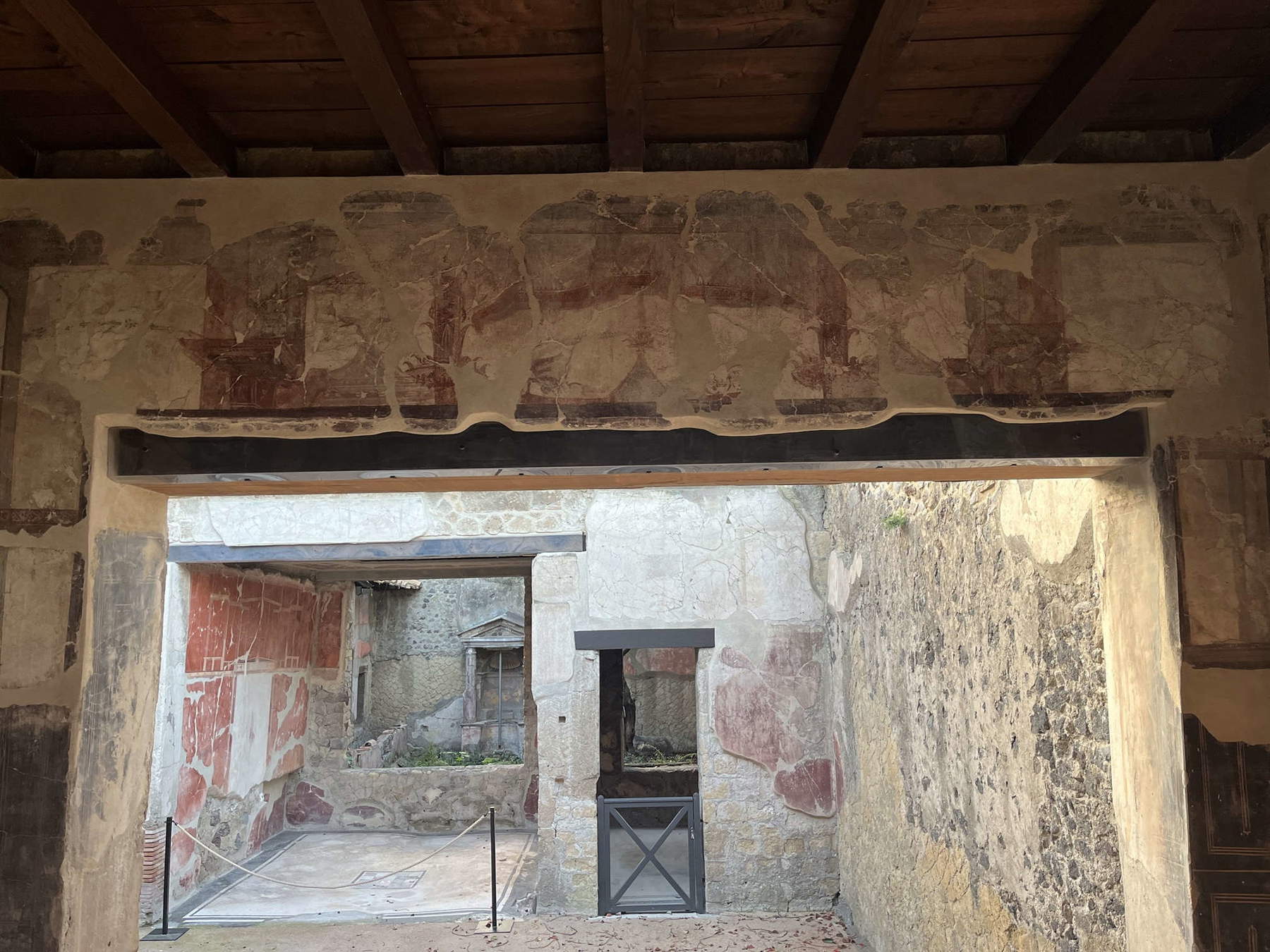
Entering the domus means stepping into a residence built during the Republican era that has retained remarkable architectural coherence over time. The rooms are arranged around the central atrium and the garden at the rear of the house, where there is a small lararium in the form of a small temple dedicated to the family’s domestic worship. From the very first phase of the building’s construction, a colonnaded loggia on the upper floor overlooked the atrium and helped define the layout of the interior spaces. The walls, decorated in the Fourth Style, also bear witness to the various transformations the house underwent over time, documenting the renovations that took place during the home’s occupation prior to the eruption of 79 AD.
Among the most prestigious rooms is the triclinium located to the right of the entrance, characterized by a mosaic floor embellished with a refined marble emblem and decorations depicting still lifes. Also of particular interest is the tablinum, which preserves a mosaic with a marble inlay and significant traces of the ancient frescoed ceiling.
At the rear of the house lies the so-called oecus Cyzicenus, a large room illuminated by a wide window overlooking the garden. It was precisely here that the charred table and bed were discovered, which gave the domus its name. Even today, these furnishings remain one of the most poignant testimonies to the tragedy that struck Herculaneum, as they freeze in time the final moments of domestic life from nearly two thousand years ago.
“Uncovering and returning the House of the Charred Furniture to the city, after nearly thirty years of closure,” emphasizes Federica Colaiacomo, director of the Archaeological Park, “is an achievement that touches us deeply. We’re not just talking about the restoration of an architectural space, but about the recovery of a human story made up of everyday gestures—a bed, a small table—that the eruption froze in time and that today, thanks to a long and patient restoration effort, we can finally recount once again. It is a tangible sign of a forward-looking conservation strategy, based on daily care and long-term planning for our heritage.”
The reopening of the domus is the result of a conservation project that began over ten years ago. The initial work involved reconstructing the roofs and securing the decorated surfaces, efforts carried out as part of a collaboration between the Herculaneum Archaeological Park and the Packard Humanities Institute, which operates on the site through the Packard Institute for Cultural Heritage, active in Herculaneum for twenty-five years.
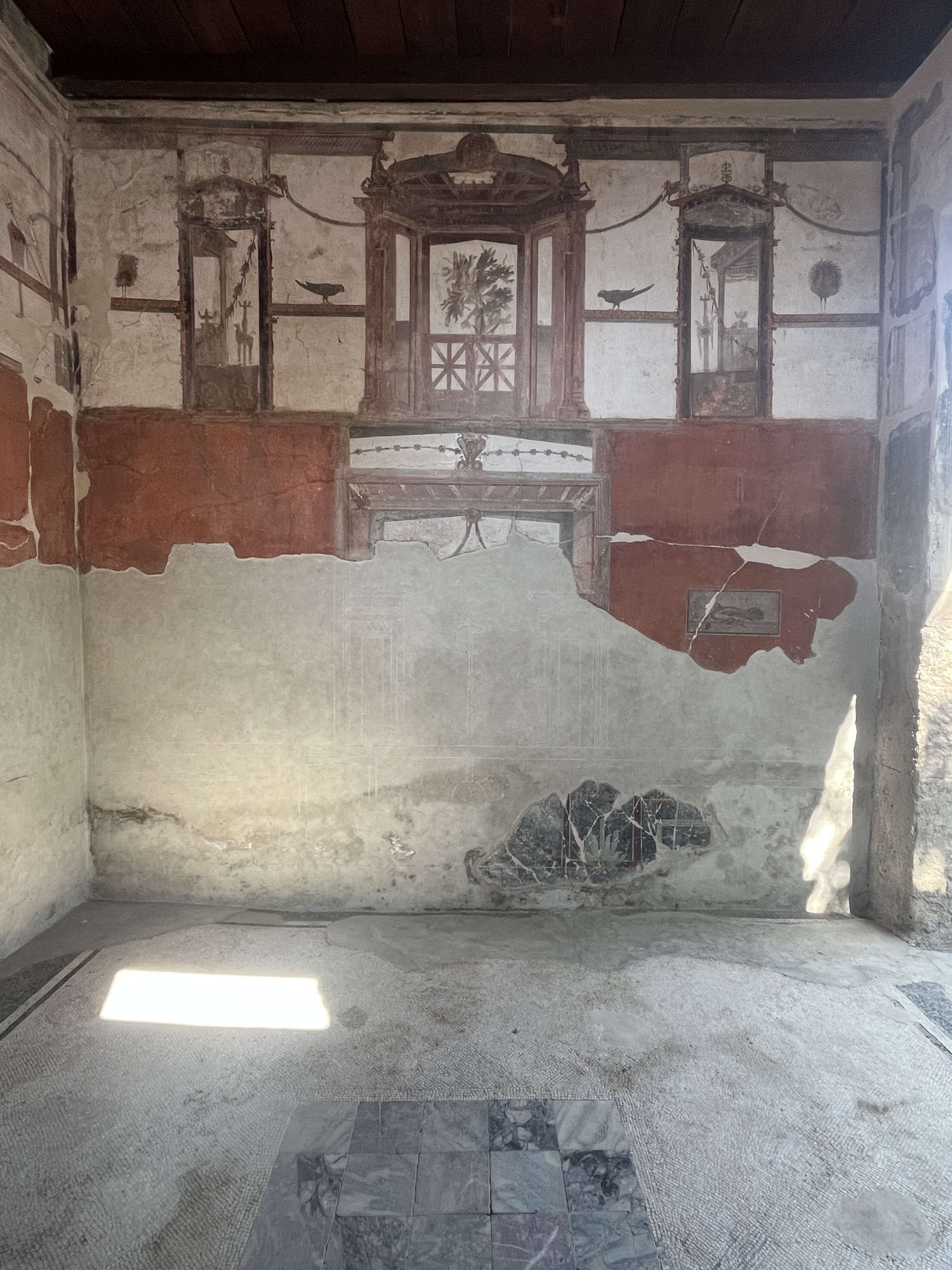
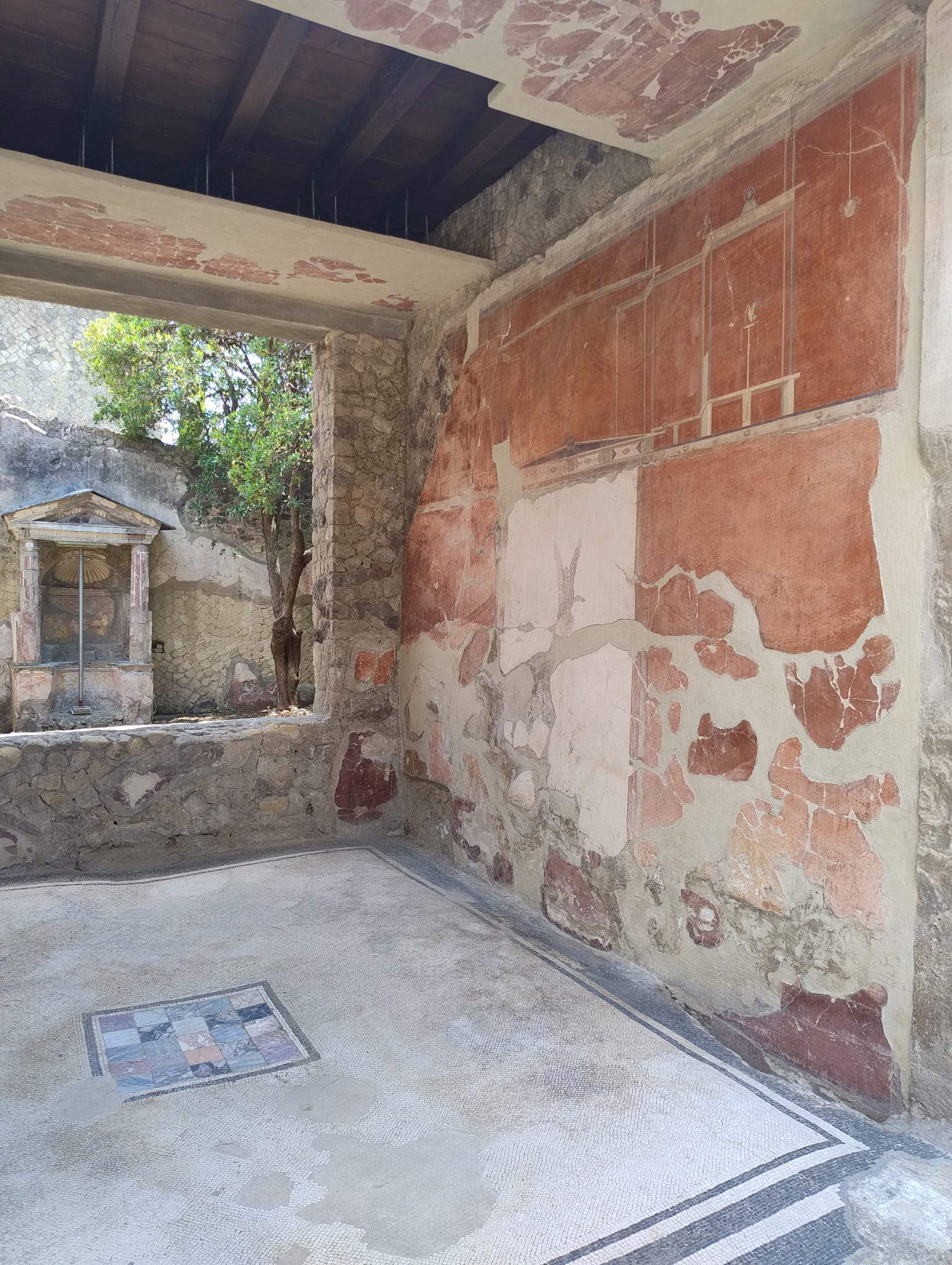
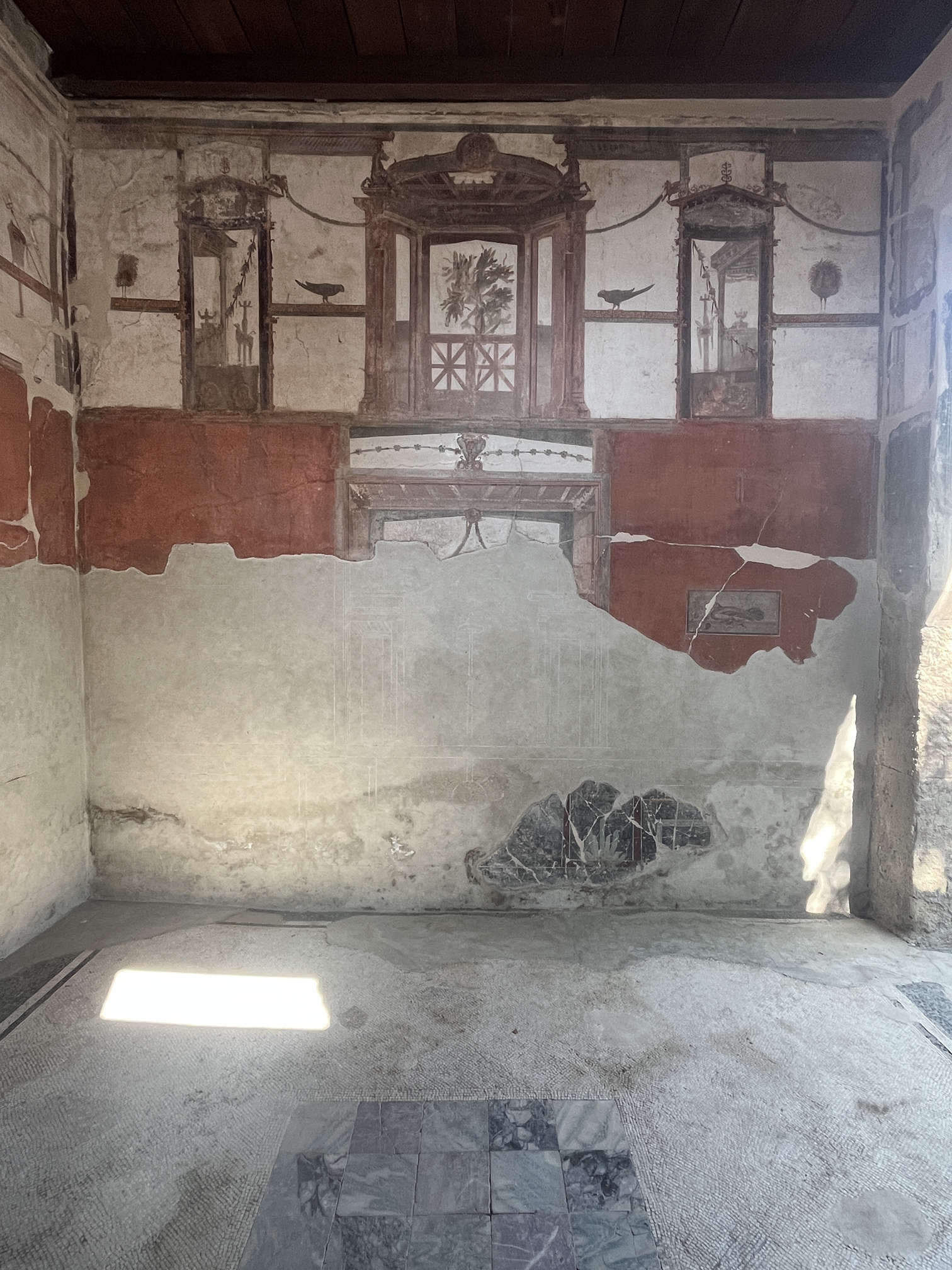
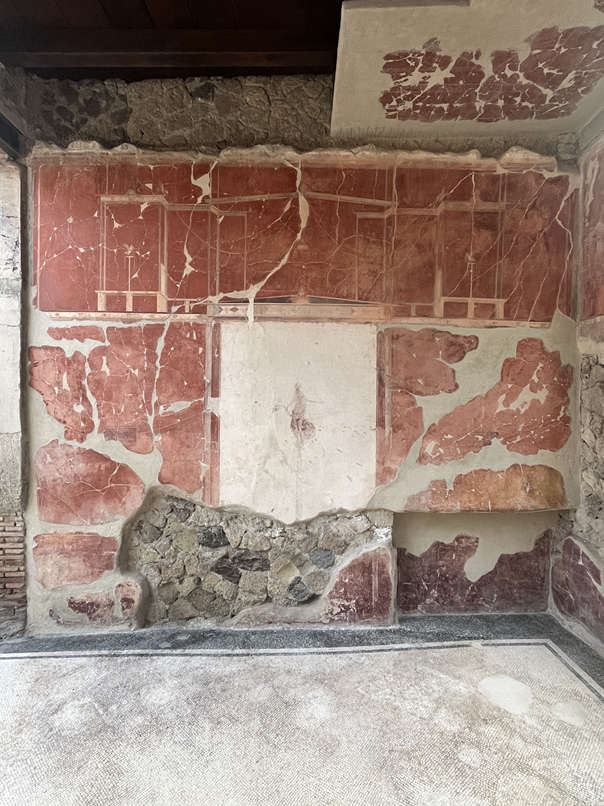
As architect Rossella Di Lauro of the PHI-IPBC explains, “the most recent interventions represent a natural continuation of the initial work. In this phase, we prioritized unresolved critical issues, such as the reconstruction of certain wooden floors, the replacement of damaged lintels, and the consolidation and complete restoration of the columns facing the atrium, located on the first floor above the tablinum’s roof. This last intervention, in particular, was carried out thanks to precise three-dimensional surveys and delicate operations of controlled disassembly and reassembly, in close collaboration with the conservators and restorers. The iron lintels—which feature exceptional sections of charred wood—were replaced with new wooden structures, expertly crafted using innovative solutions, so that they could continue to serve as protective cases; in fact, the carefully restored charred fragments have been returned to these display cases; this specific type of intervention was designed to facilitate the monitoring and future maintenance of the precious wooden artifacts.”
The restoration of the House of Charred Furniture is part of a broader project to conserve the structures and decorated surfaces of Herculaneum’s main domus. The program, developed through joint planning between the Archaeological Park and the Packard Foundations, calls for the reopening of six of the ancient city’s most important residences. The project is being developed by a private partner and carried out under the scientific and technical coordination of the Archaeological Park. The entire strategy is based on an approach that prioritizes scheduled maintenance and the conservation of the entire archaeological urban fabric. This methodology has already yielded concrete results in March 2025, when the House of the Tuscan Colonnade and the House of the Wooden Sacellum were reopened to the public.
The reopening of the atrium and the rooms surrounding it is only the first phase of the project to enhance the domus. Upcoming work will focus on the garden (hortus) and the restoration of the lararium, according to a phased plan that is part of the routine management strategy for one of the world’s most important archaeological sites.
A visit to the House of Charred Furniture is also naturally complemented by a visit to the Antiquarium of the Archaeological Park. The charred wood that made the domus famous is, in fact, preserved and on public display on the mezzanine level of the Antiquarium, alongside other artifacts from ancient Herculaneum that tell stories of daily life cut short by the eruption of Vesuvius. Among these artifacts is also one of the small tables discovered right inside the house, allowing visitors to complete their exploration of the domus through an experience that unfolds between the original rooms of the residence and the museum’s exhibition spaces.
|
| Herculaneum: The House of Charred Furniture Reopens After Thirty Years |

Warning: the translation into English of the original Italian article was created using automatic tools. We undertake to review all articles, but we do not guarantee the total absence of inaccuracies in the translation due to the program. You can find the original by clicking on the ITA button. If you find any mistake,please contact us.

























 IT
IT FR
FR DE
DE ES
ES CN
CN


