





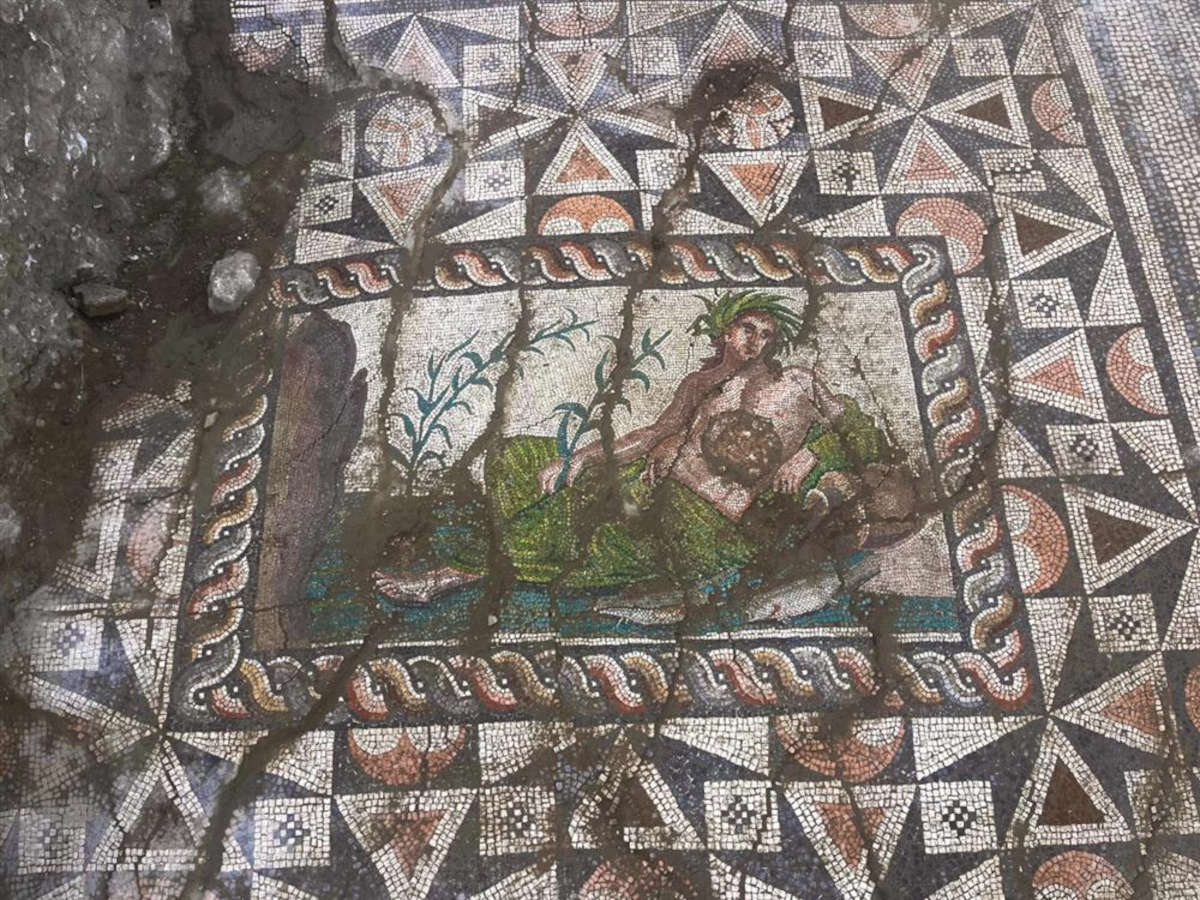
An important archaeological discovery has been made in the ancient city of Aspendos, Turkey. During excavations conducted by the Ministry of Culture and Tourism, an exceptional 3rd-century A.D. mosaic depicting Eurymedon—the personification of the river of the same name that gave rise to and brought prosperity to the city—was unearthed. The mosaic, discovered in the area of the eastern square of the Via del Teatro, represents an interesting example of the depiction of a river deity in Roman mosaic art and offers new insights into the study of Anatolian artistic production during the Imperial period. The discovery was announced on June 18 by the Minister of Culture and Tourism, Mehmet Nuri Ersoy, who emphasized the exceptional scientific value of the find. According to the minister, the mosaic is a fundamental source for deepening our understanding of Anatolian mosaic art from the Roman era, thanks both to its iconographic characteristics and its high quality of craftsmanship.
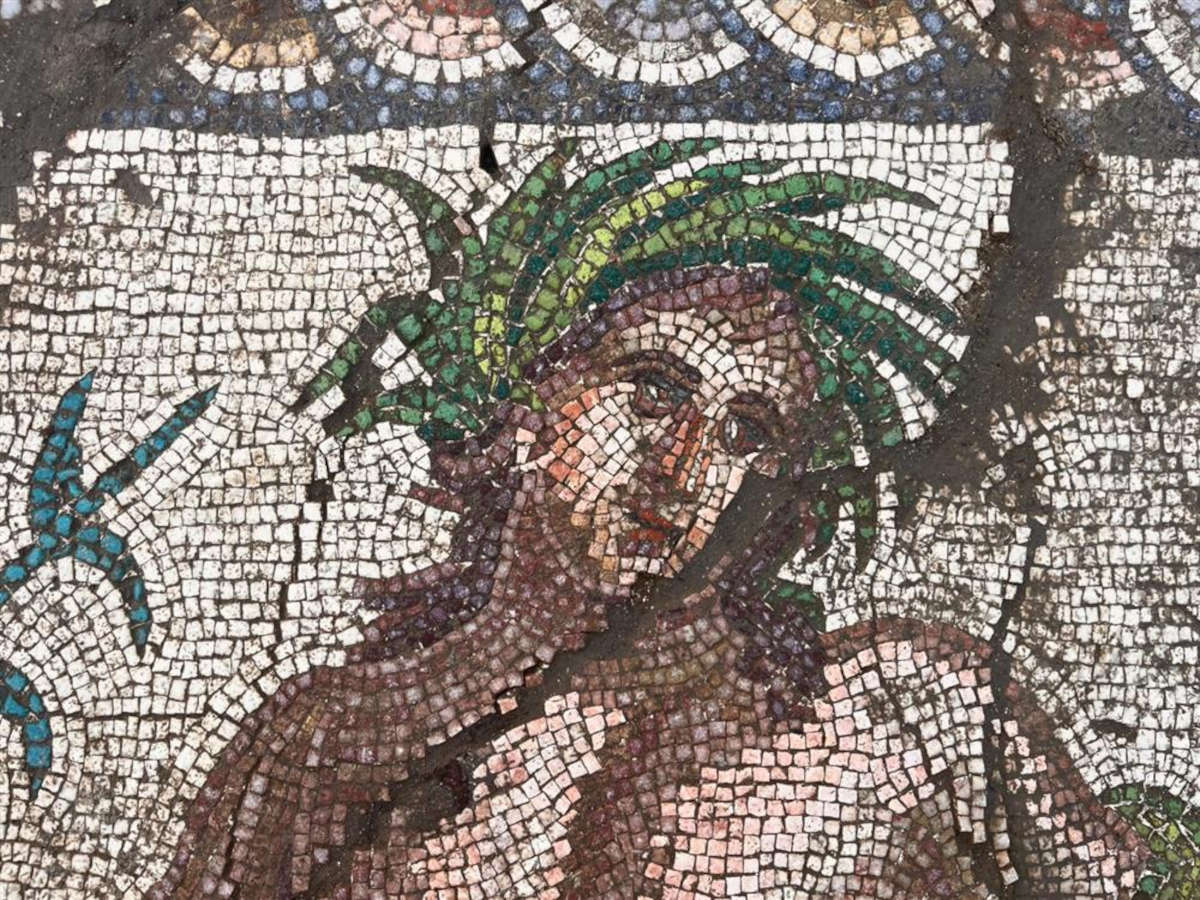
The work was uncovered during archaeological excavations along the Theater Road, the ancient thoroughfare that connected the Acropolis of Aspendos with the famous Roman theater. It was precisely in this area that archaeologists identified a monumental structure decorated with mosaics, yielding one of the most significant discoveries in recent years for the archaeological site. Commenting on the discovery, Ersoy explained that at the center of the mosaic appears the figure now known as the “Young Eurymedon,” the personification of the Eurymedon River, “During our excavations in Aspendos, we have unearthed a find of extreme importance that will shed light on Roman-era Anatolian mosaic art,” the minister stated. “At the center of the mosaic discovered on Via del Teatro is a depiction of the Young Eurymedon. Enriched by reeds, an amphora, and fish figures, this composition reflects the symbolic representation of water, fertility, and life. The work, remarkable for the color transitions created with small tesserae, its richness of detail, and the high quality of its craftsmanship, is also of particular importance as it represents a rare depiction of a river deity in mosaic art. This discovery not only reveals the artistic richness of Aspendos but also provides important scientific data on Roman-era Anatolian mosaic art. I would like to thank the invaluable experts from the General Directorate of Cultural Heritage and Museums of our Ministry, our excavation team, and everyone who contributed.”
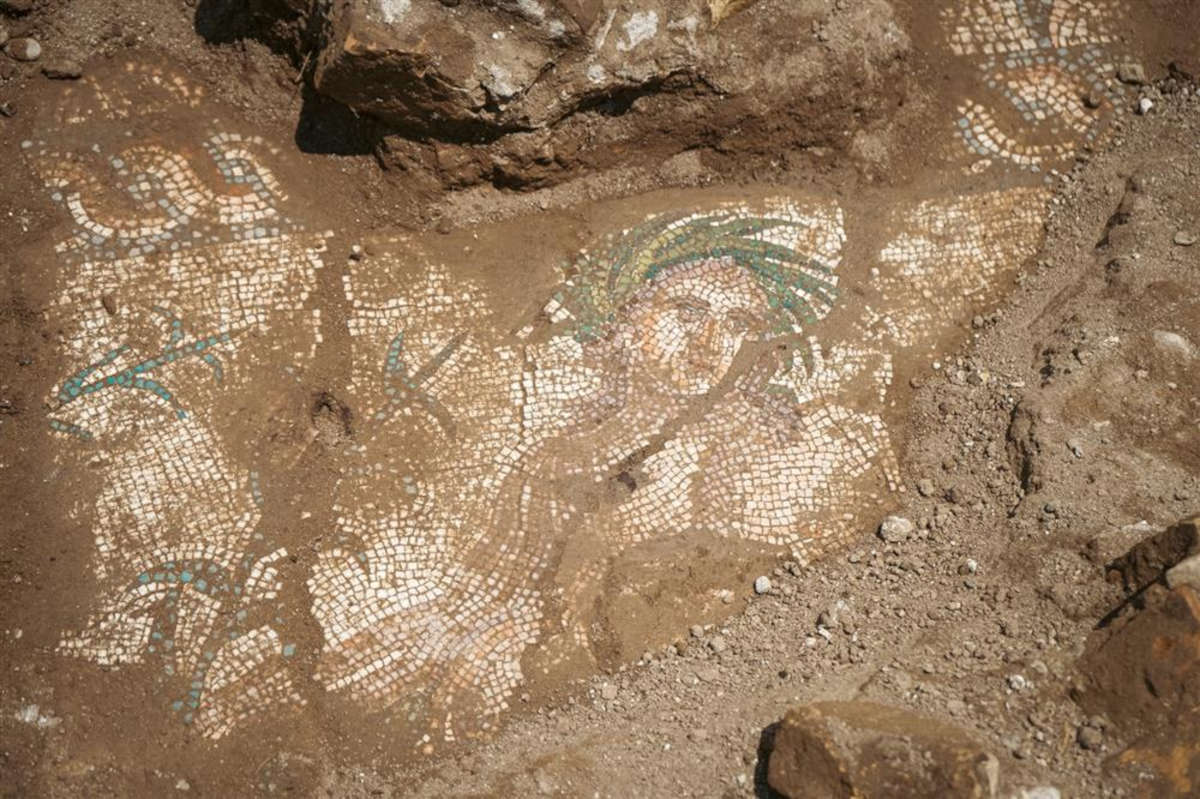
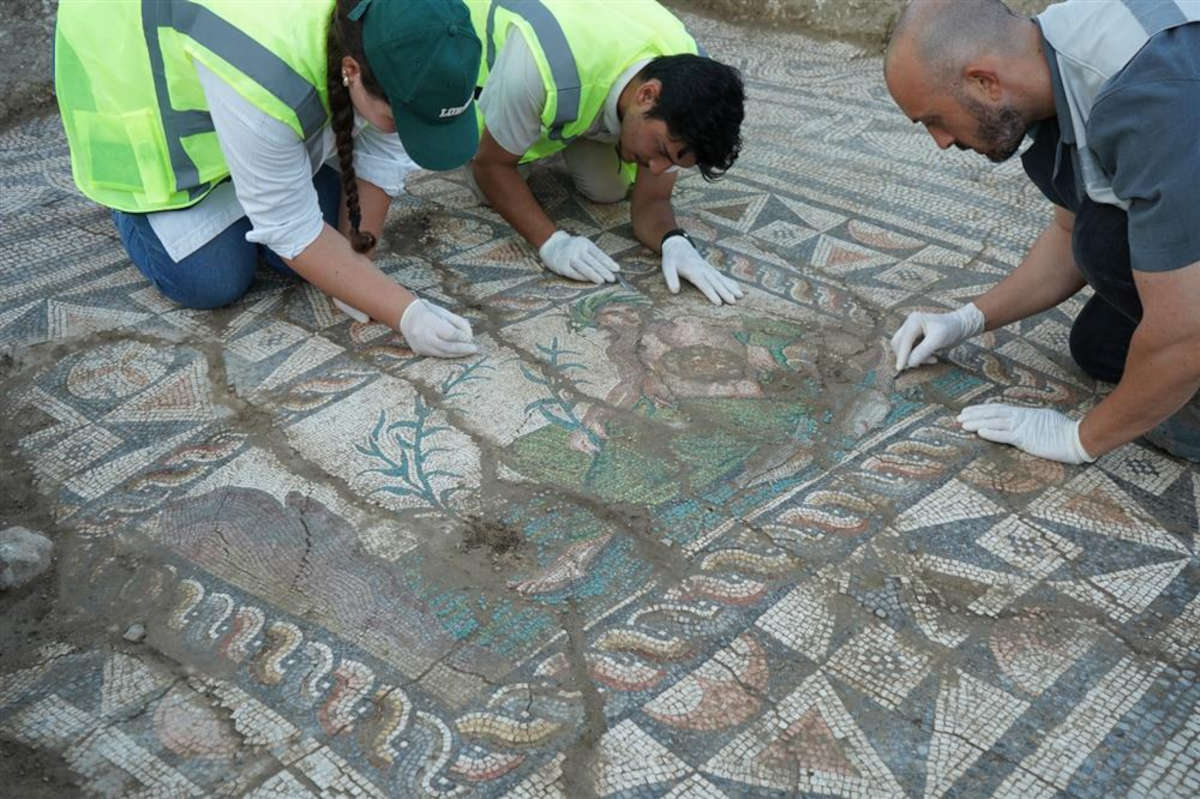
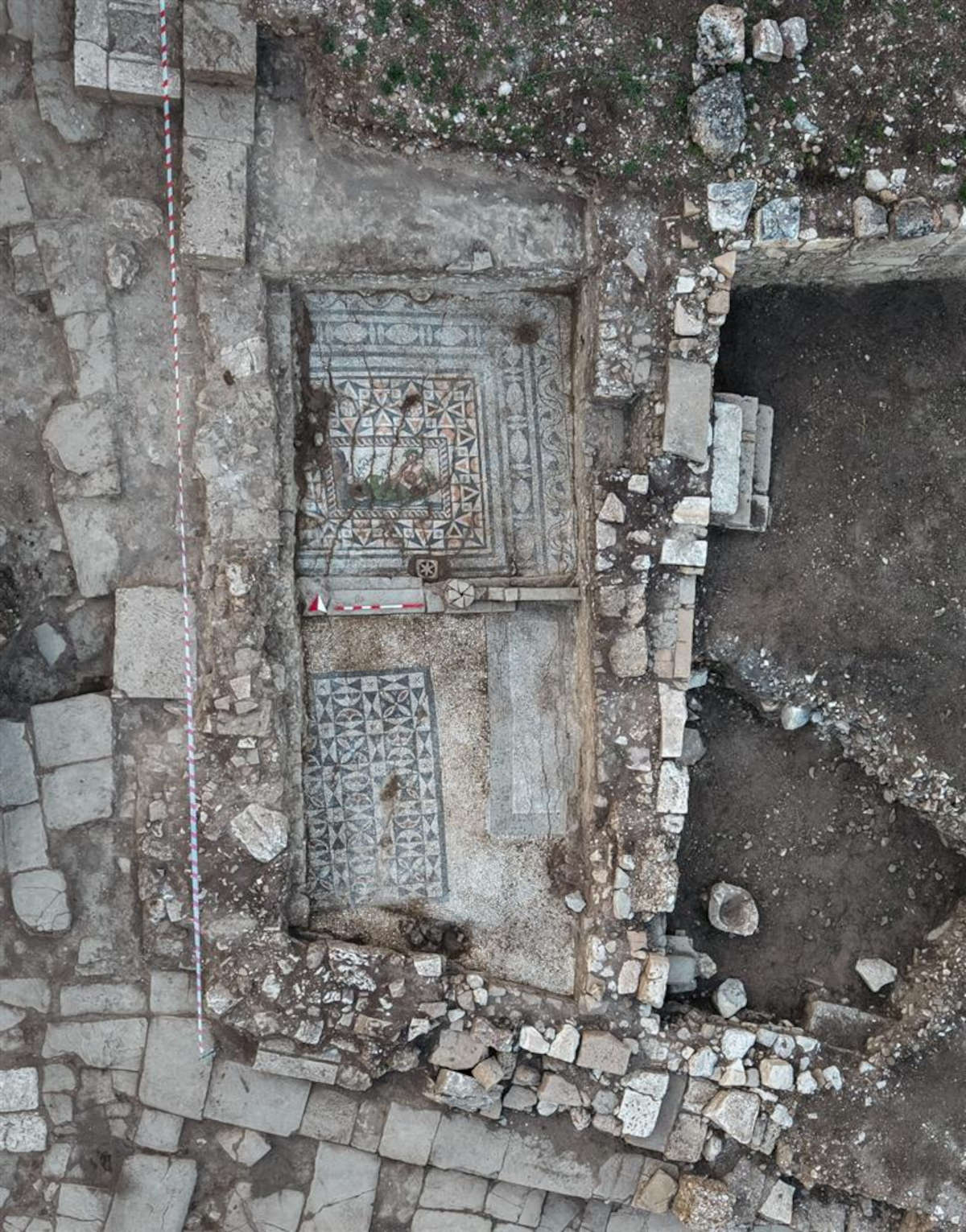
Initial analyses indicate that the building was constructed in the early 3rd century A.D. as a monumental pool. So far, archaeologists have unearthed a section of the mosaic floor measuring approximately six meters by seven and a half meters, but they believe the decoration continues into areas yet to be excavated. Scholars also hypothesize that the structure underwent significant alterations following the earthquake that struck the region in 262 AD. After the earthquake, the building was reportedly divided into several rooms through the construction of interior walls, thereby altering its original layout.
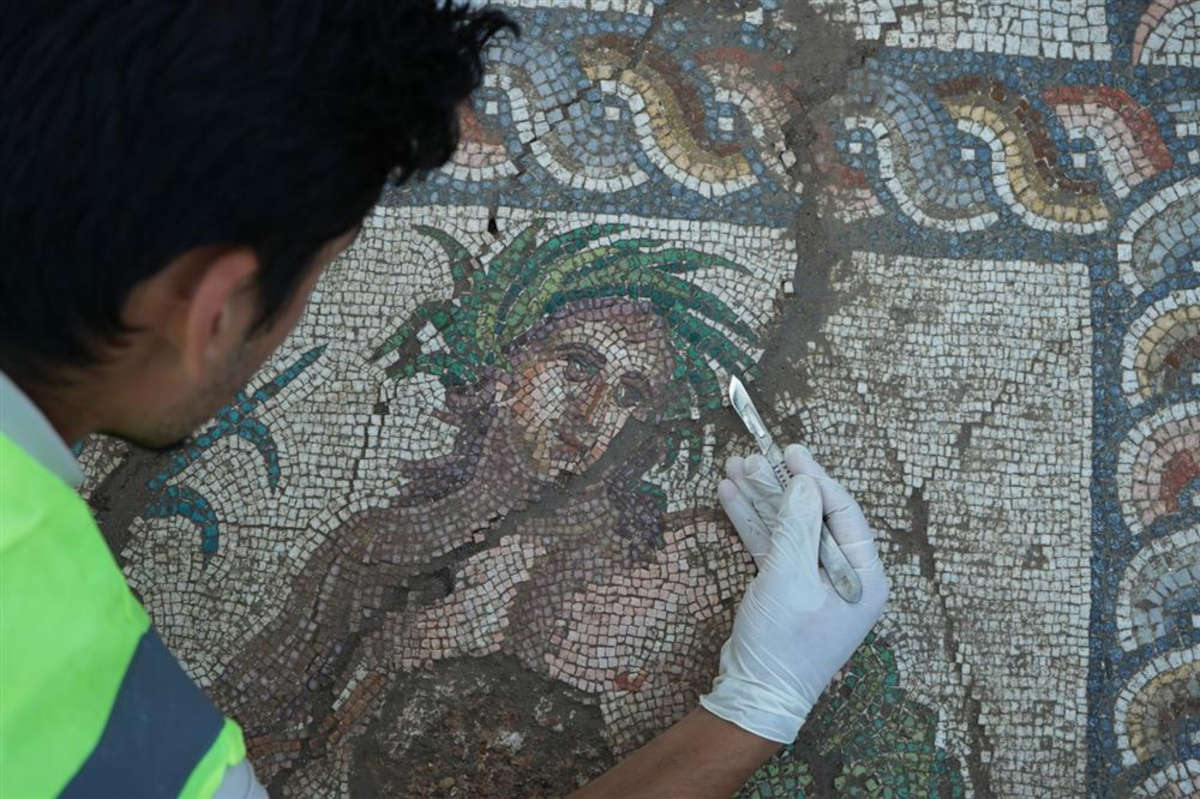
The mosaic floor consists of at least two distinct panels. The first features a geometric design, while the second contains, at its center, a figurative scene depicting the young Eurimedon. The figure was identified through comparison with similar iconographic examples and based on the characteristics of the depiction. The composition is centered on the figure of the god, depicted holding reeds in his hands and wearing them on his head. The figure is shown leaning against an amphora from which water flows—an element that evokes the river’s generative role and symbolizes fertility, abundance, and the life force of nature. Accompanying the main figure are fish depicted swimming toward one another, included to reinforce the reference to the aquatic environment and to lend dynamism to the entire composition. The reed leaves, the amphora, and the fish figures are not merely decorative elements; rather, they contribute to the construction of a complex symbolic language that evokes the relationship between the city and its river—a fundamental element for the economic and social development of the ancient settlement.
From an artistic standpoint, the mosaic is striking for the high quality of its craftsmanship. The tesserae have been arranged to create delicate chromatic nuances, while the accuracy of the details and the balance of the proportions attest to the high level of skill achieved by the artisans who created the work. It is precisely this combination of technical refinement and iconographic rarity that gives the mosaic a scientific and cultural value of particular significance: depictions of river deities in Roman mosaic art are in fact quite rare, and the discovery at Aspendos can therefore be considered an important source of study for understanding the spread of these subjects in Roman Anatolia.
|
| Turkey: Rare Roman Mosaic Depicting the River God Eurimedonte Discovered |

Warning: the translation into English of the original Italian article was created using automatic tools. We undertake to review all articles, but we do not guarantee the total absence of inaccuracies in the translation due to the program. You can find the original by clicking on the ITA button. If you find any mistake,please contact us.
























 IT
IT FR
FR DE
DE ES
ES CN
CN


