





One of Vicenza’s most valuable archaeological artifacts, the mosaic in Piazza Biade—housed at the Natural History and Archaeological Museum of Santa Corona—will undergo a major restoration and enhancement project made possible by the support of Rigoni di Asiago, in collaboration with Fondaco Italia. The initiative is part of the cultural patronage project “La Natura nel cuore di…,” launched by Rigoni di Asiago in 2015 with the goal of contributing to the protection and restoration of Italy’s historical and artistic heritage. Through this initiative, the company has supported numerous conservation projects.
The project in Vicenza combines restoration, scientific research, and innovation, with the goal of restoring full legibility to one of the most significant examples of mosaic art from Roman-era Veneto. The conservation work will begin with cleaning the surfaces, which is necessary to remove dust deposits and alterations accumulated over time that currently dull the brilliance of the colors and make the decorations less legible. In addition, tiles showing signs of instability will be stabilized, materials from previous restorations will be removed, and targeted interventions will be carried out to ensure better long-term preservation of the work.
Discovered in 1881 during construction work in the Piazza Biade area, the mosaic belonged to a prestigious residence in late-antique Vicenza. Originally covering an area of more than ninety square meters, it still preserves a rich decorative repertoire consisting of geometric motifs and mythological depictions, among which the figures of Hercules, Meleager, Bellerophon, and the Cupids, a testament to the high artistic level achieved by Roman mosaic workshops.
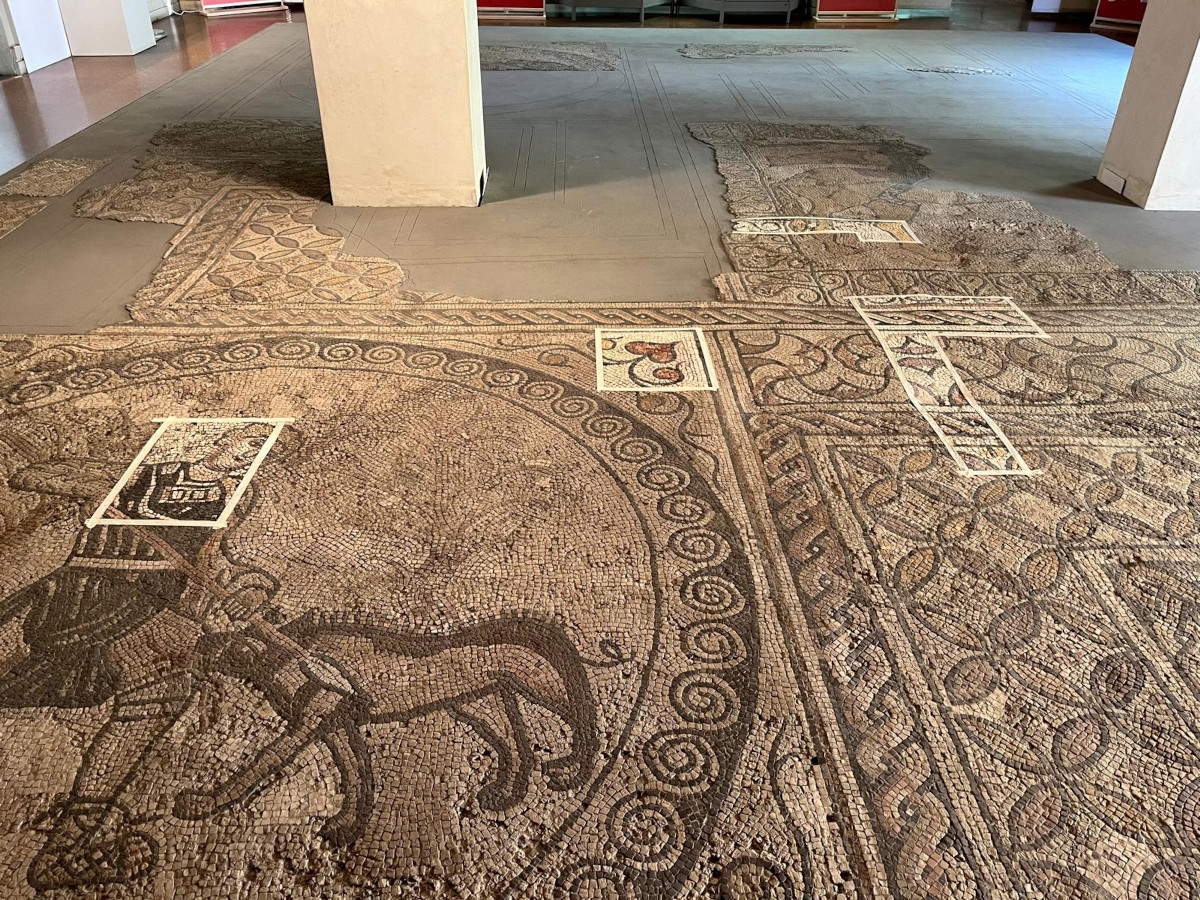
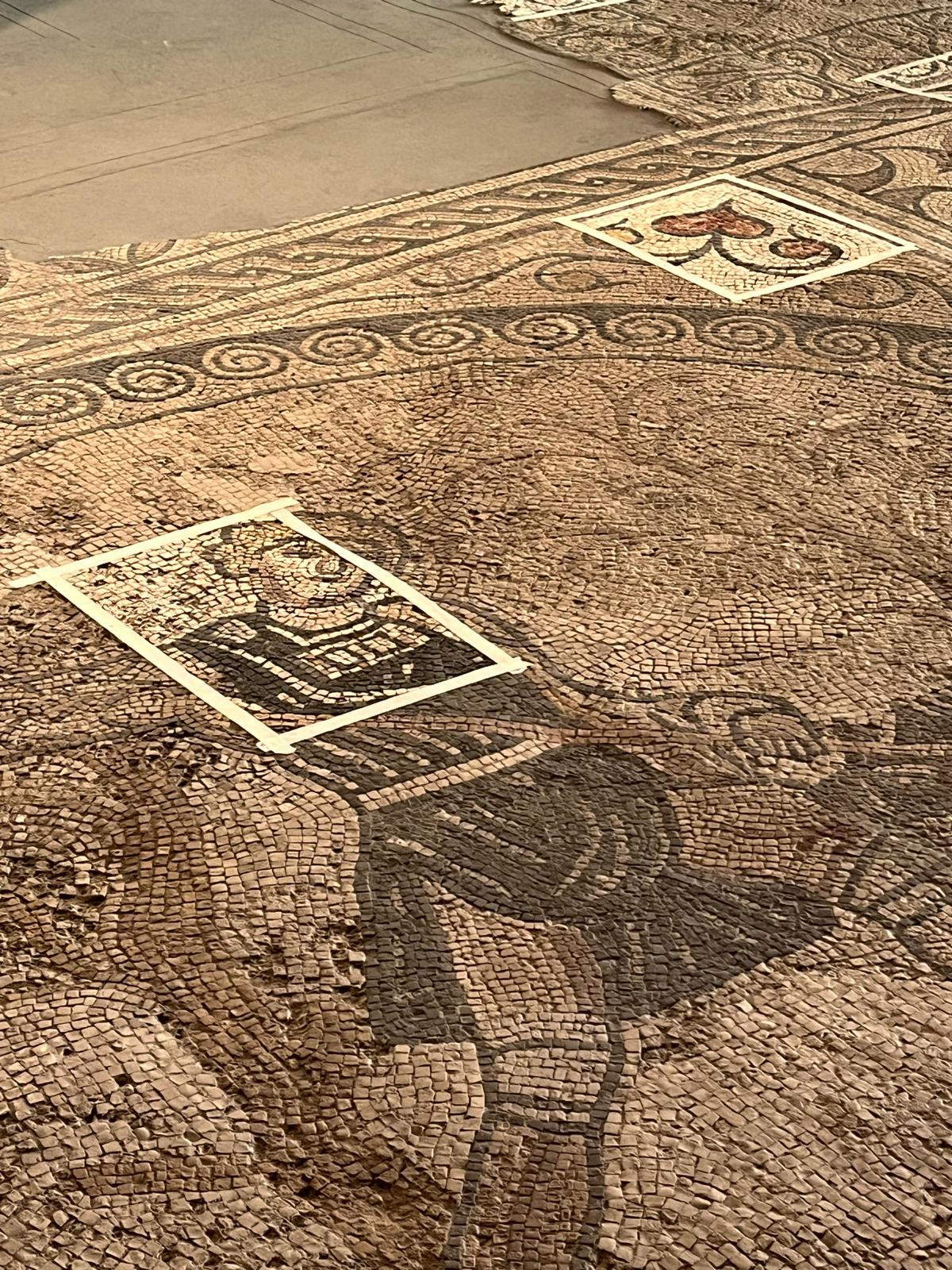
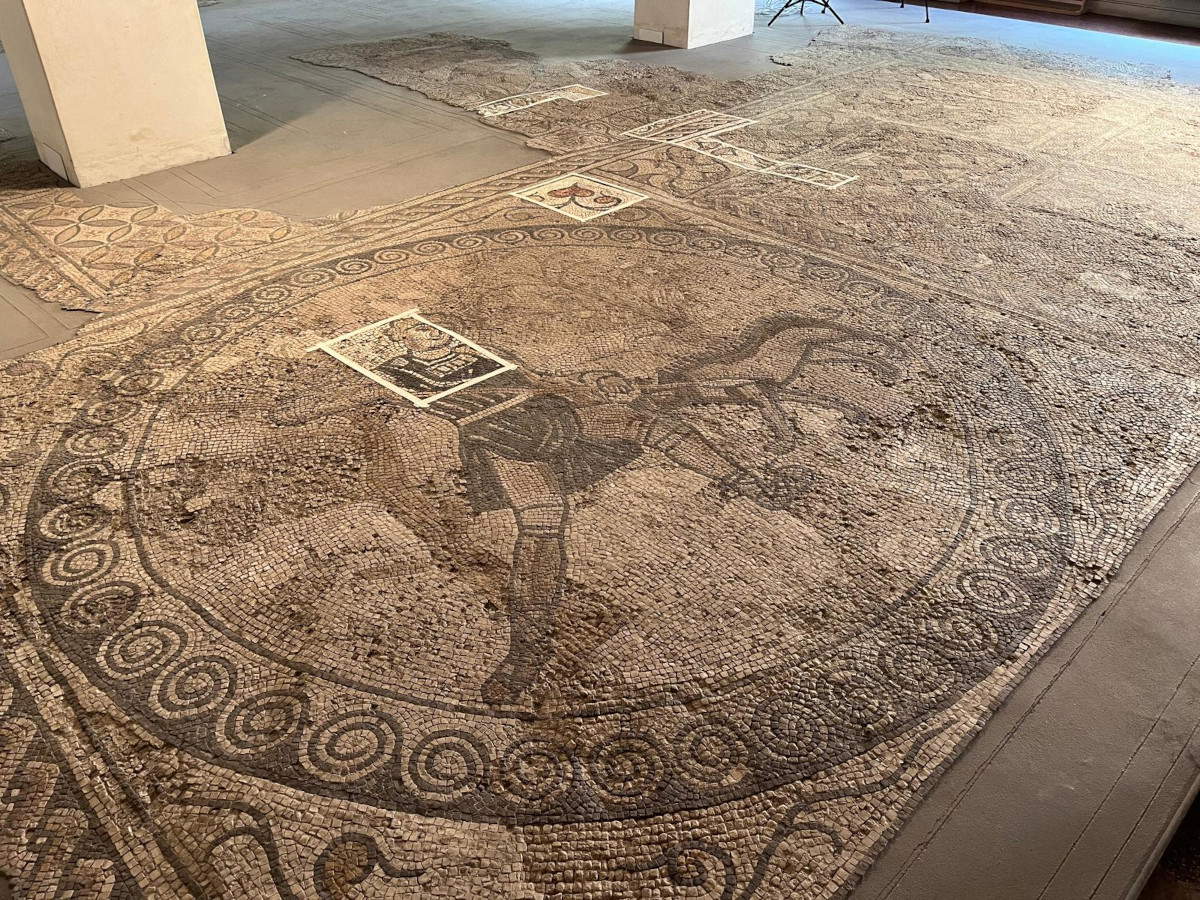
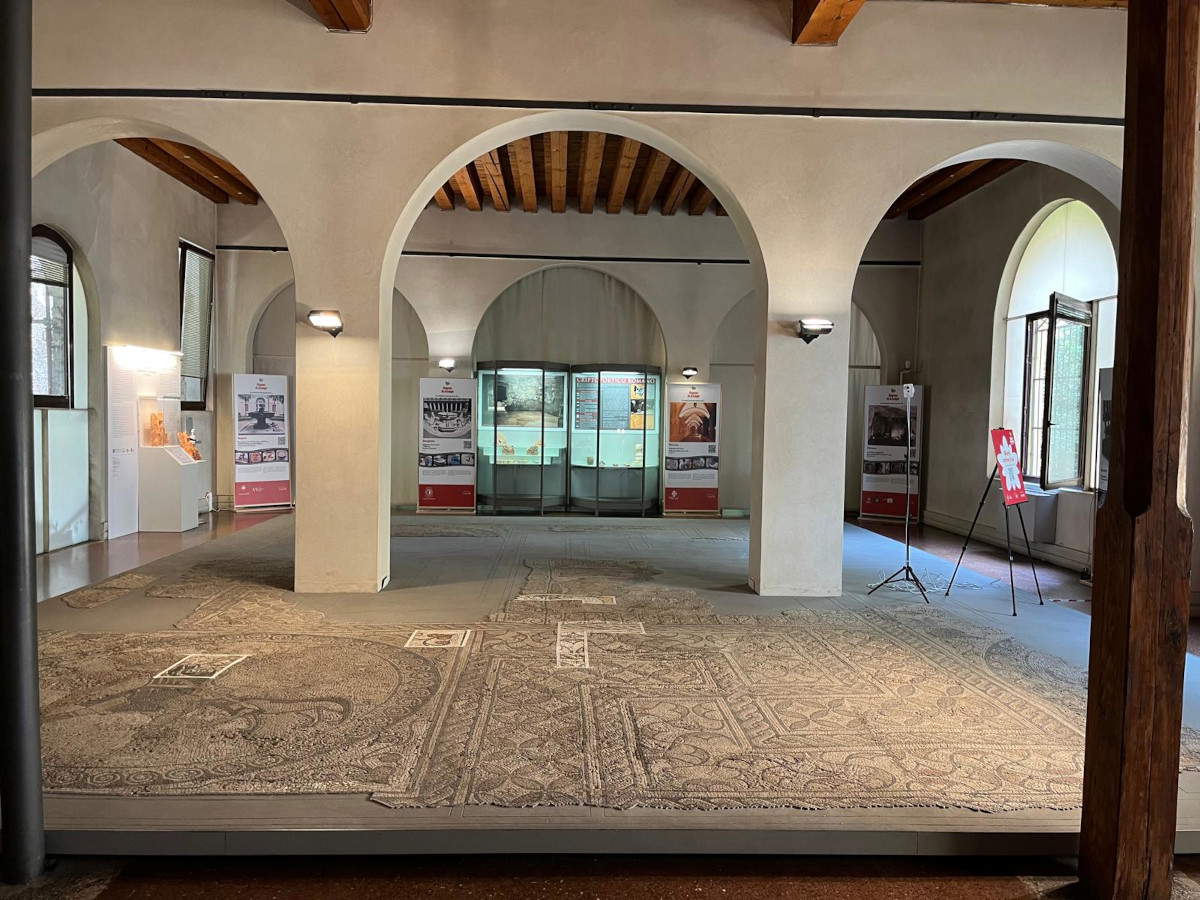
Alongside the restoration, a broader enhancement project will be developed that will encompass the entire exhibition space. The room will be equipped with a new lighting system designed to highlight the mosaic’s details, while the display panels will be completely renewed with historically and scientifically updated content.
Among the main new features are digital tools designed to enhance the visitor experience. A touchscreen will allow visitors to virtually explore the mosaic, delving deeper into the depicted mythological scenes and reconstructing the topography of Roman Vicenza through interactive content dedicated to the historical and archaeological context. Special attention will also be given to public outreach regarding the restoration work. The project will be carried out as an open-site restoration, offering museum visitors the opportunity to directly observe the work performed by the restorers and to learn about the techniques used in the conservation of archaeological artifacts.
Even those unable to travel to Vicenza will be able to follow the various phases of the project thanks to a webcam installed inside the museum, connected to the SkylineWebcams platform, which will broadcast the progress of the work live. The entire restoration and renovation project is scheduled to be completed in early 2027, when the mosaic will once again be fully visible.
“The Natural History and Archaeological Museum is one of the jewels of our city’s cultural heritage, and as the city administration, we have chosen to invest wholeheartedly in its enhancement,” said Mayor Giacomo Possamai. “We are currently carrying out numerous projects: from the new exhibition design for the hall dedicated to the Roman Theater of Berga—made possible in part by our recent win of the #Volotea4Veneto award, to the ‘Places’ project for the redevelopment of the natural history section—with a particular focus on accessibility and enhancing the visitor experience—and the seismic retrofitting work in the cloisters of the Santa Corona complex. Added to these is now the prestigious restoration of the Roman mosaic in Piazza Biade, which will allow us to present the city and its visitors with a completely renovated work of art and further enrich the museum experience. I would like to thank Rigoni di Asiago and Fondaco Italia for their invaluable collaboration and for choosing to include the Roman mosaic in Piazza Biade in the “Nature in the Heart of…” project, dedicated to the restoration and enhancement of cultural heritage sites throughout Italy.”
“The restoration of the mosaic—which, unfortunately, has been neglected for years—along with other enhancement projects and the updating of scientific content, will restore full legibility and breathe new life into an artifact of extraordinary value, not only from a historical and archaeological perspective but also for its exceptional artistic quality,” emphasized Ilaria Fantin, Councilor for Culture. “The restoration officially begins today, but the initial preliminary work carried out in recent days on certain sections of the mosaic already allows us to appreciate the impact the project will have, bringing to light the vibrancy of the colors and the richness of the original images. The project will also be designed as a true ‘open workshop’: restoration work will take place during the museum’s opening hours, allowing visitors to observe the professionals’ work up close. Throughout the project, in-depth sessions open to the public will also be organized, during which the museum’s archaeologist-curator, together with the restorers and archaeologists involved, will explain the restoration techniques, the history, and the characteristics of the mosaic, placing it within the broader context of ancient Vicetia. “This is a valuable opportunity to showcase not only the final result of the restoration but also the complex work of research, conservation, and enhancement that goes into safeguarding our cultural heritage.”
“The project supported by Rigoni di Asiago, in collaboration with Fondaco Italia, for the restoration of the mosaic in Piazza Biade has the merit of drawing attention to a treasure of great value for the collections, for the museum, and for the city, while also implementing one of the strategies we are most focused on: engaging companies that are committed to our heritage in public-private partnerships to support museum activities. Like a mosaic, this project is a piece of a broader initiative that, since the arrival of archaeologist and curator Valentina Donadel, has been taking shape to refocus the city’s attention on Vicenza’s most ancient history. “We are therefore not only restoring and literally unearthing—given the layer of dust—a mosaic that is unique in the city for its kind, but we are also building an engaging and up-to-date narrative around this artifact, one linked to the city’s identity,” explained Valeria Cafà, director of the Civic Museums of Vicenza.
“With the project ‘Nature at the Heart of…,’ we continue to care for places and works that tell the story of the history and identity of Italy’s regions. The Roman mosaic in Piazza Biade is an extraordinary testament to Vicenza’s historical roots and the cultural richness of the Veneto region. Supporting this initiative means contributing not only to the preservation of a site of great archaeological value but also to its promotion through new tools for education and outreach. We believe that cultural heritage is a shared asset, capable of fostering awareness, a sense of belonging, and sustainable development for communities. “This is why we continue to invest in projects that make art and culture increasingly accessible and relevant to people, in line with the principles of social responsibility that have always guided our company,” said Andrea Rigoni, president of Rigoni di Asiago.
“The mosaic in Piazza Biade is one of the most fascinating examples of Roman Vicenza and tells a story that deserves to be known and shared by an ever-wider audience,” commented Enrico Bressan, president of Fondaco Italia. “Through this initiative, Fondaco Italia is once again supporting a project that combines preservation, research, and promotion, in the belief that cultural heritage represents a strategic resource for regional growth. Rigoni di Asiago’s support confirms just how much corporate patronage can tangibly contribute to the preservation of cultural heritage, creating opportunities for knowledge, inclusion, and development. It is not merely a matter of restoring a work of art, but of returning it to the community with new tools for interpretation and participation, thereby strengthening the bond between heritage, citizens, and visitors.”
|
| Vicenza: The mosaic in Piazza Biade will be restored as an open-site project, with support from Rigoni di Asiago |

Warning: the translation into English of the original Italian article was created using automatic tools. We undertake to review all articles, but we do not guarantee the total absence of inaccuracies in the translation due to the program. You can find the original by clicking on the ITA button. If you find any mistake,please contact us.






















 IT
IT FR
FR DE
DE ES
ES CN
CN


