




by Redazione 08/07/2026



Categories: Contemporary art / Disclaimer
With *500*, Flavio Favelli transforms two banknotes into a work of public art that weaves together history, identity, and social commentary. The mural was created as part of the “Gibellina: Italian Capital of Contemporary Art” initiative.

Flavio Favelli has created “Gibellina 500,” a new public art installation produced as part of the artist-in-residence program of Gibellina, the Italian Capital of Contemporary Art. The work, curated by Cristina Costanzo, is part of a dialogue between contemporary art, memory, and urban space.


The project takes shape througha large mural created in a municipal area overlooking Piazza 15 Gennaio, one of the most iconic sites representing Gibellina’s collective memory and identity. Here, Favelli uses the wall as a narrative surface, transforming it into a space for both private and public reflection. The work is part of the artist’s ongoing research since 2012 on mural painting, a medium through which she has undertaken numerous interventions in public spaces, often sparking heated debate about the role of art outside traditional exhibition venues. Through this medium, Favelli explores the relationship between the artwork and the city, between image and interpretation, challenging the boundaries between the museum and the street.
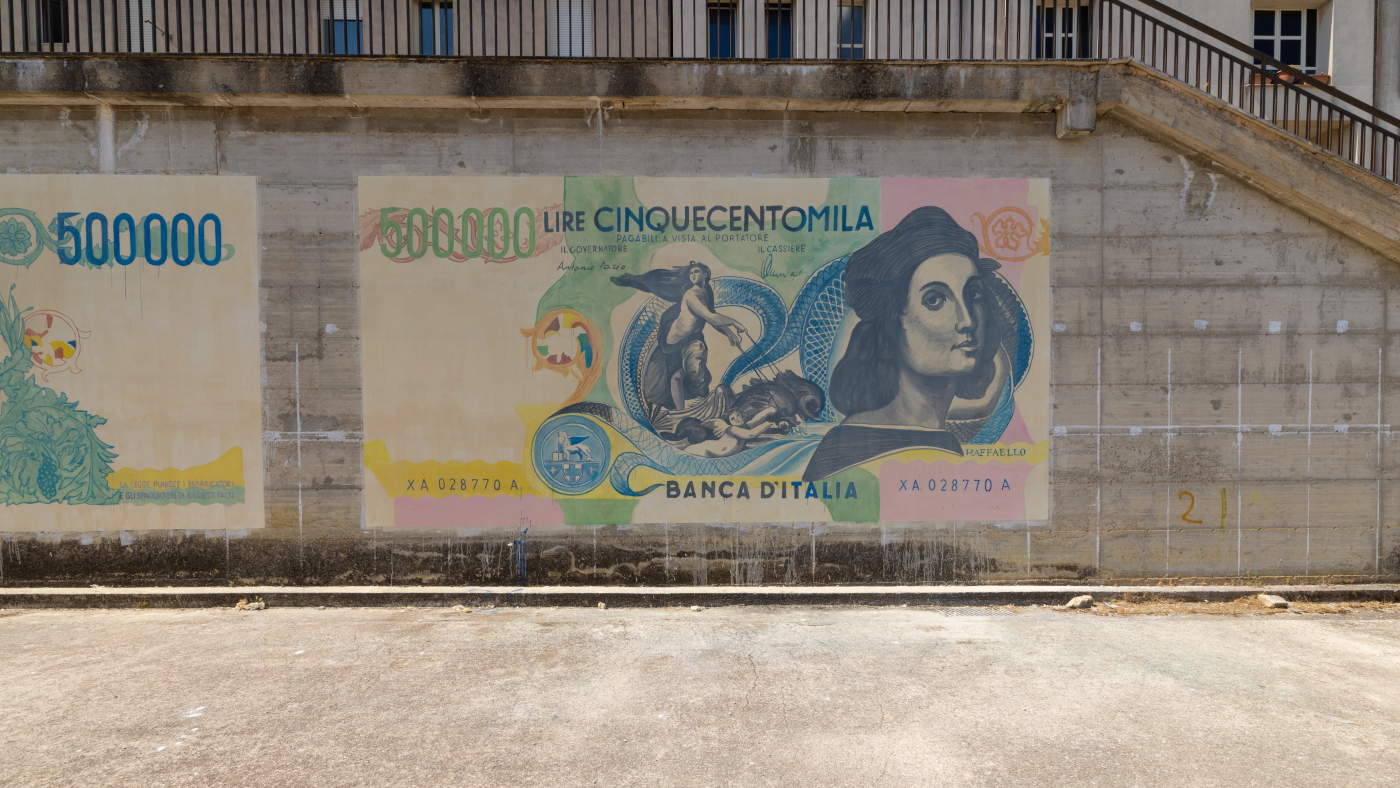
For *500*, the artist chose two banknotes as her subject: the 500,000-lire note and the 500-euro note. Reproduced on both the front and back, the two banknotes serve as the starting point for a reflection on the economic, cultural, and political significance of the images that accompany daily life. The 500,000-lire banknote—one of the least common in the history of the Italian Republic but considered a numismatic masterpiece—is dedicated to Raffaello Sanzio. The mural features the self-portrait of the master from Urbino accompanied by a detail from The Triumph of Galatea and, on the reverse, the famous School of Athens.




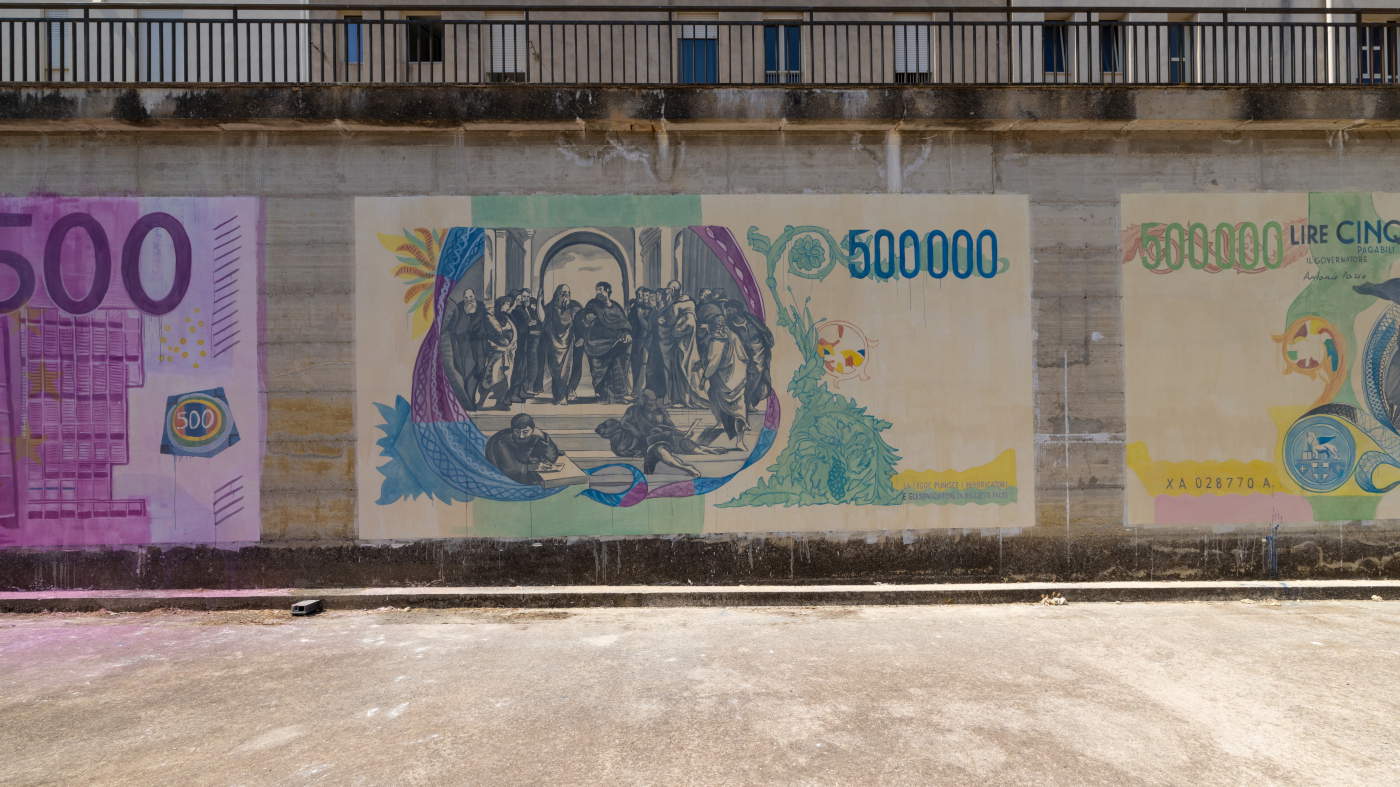
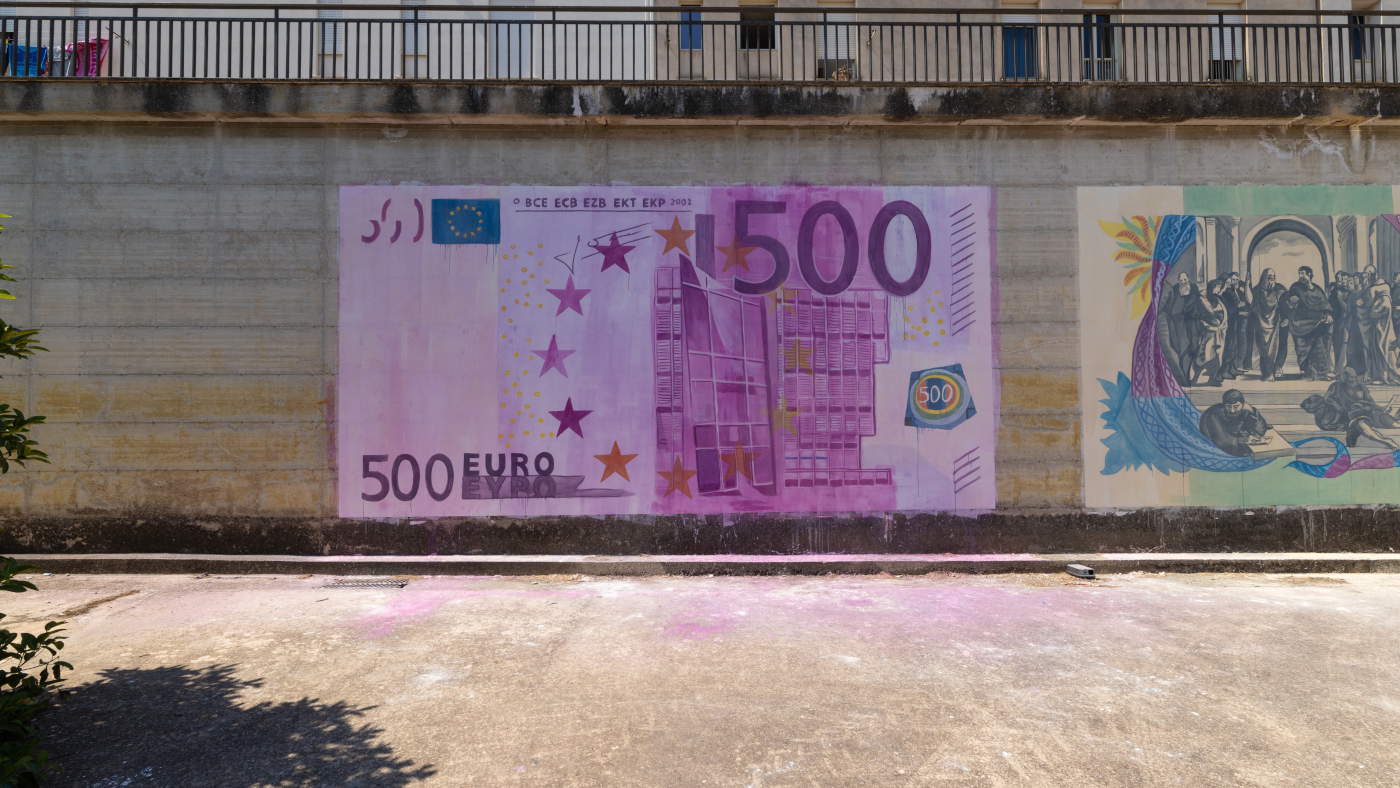
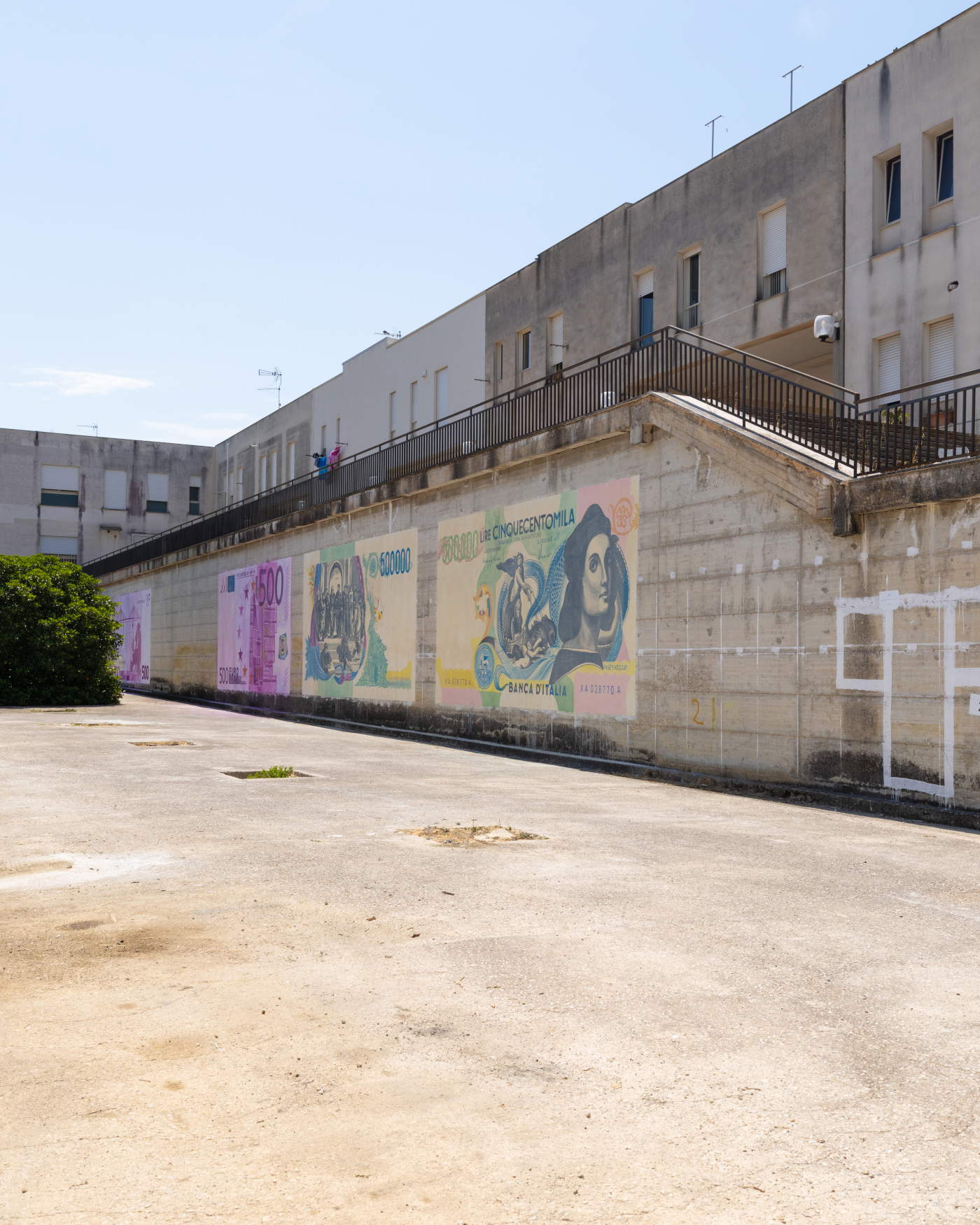
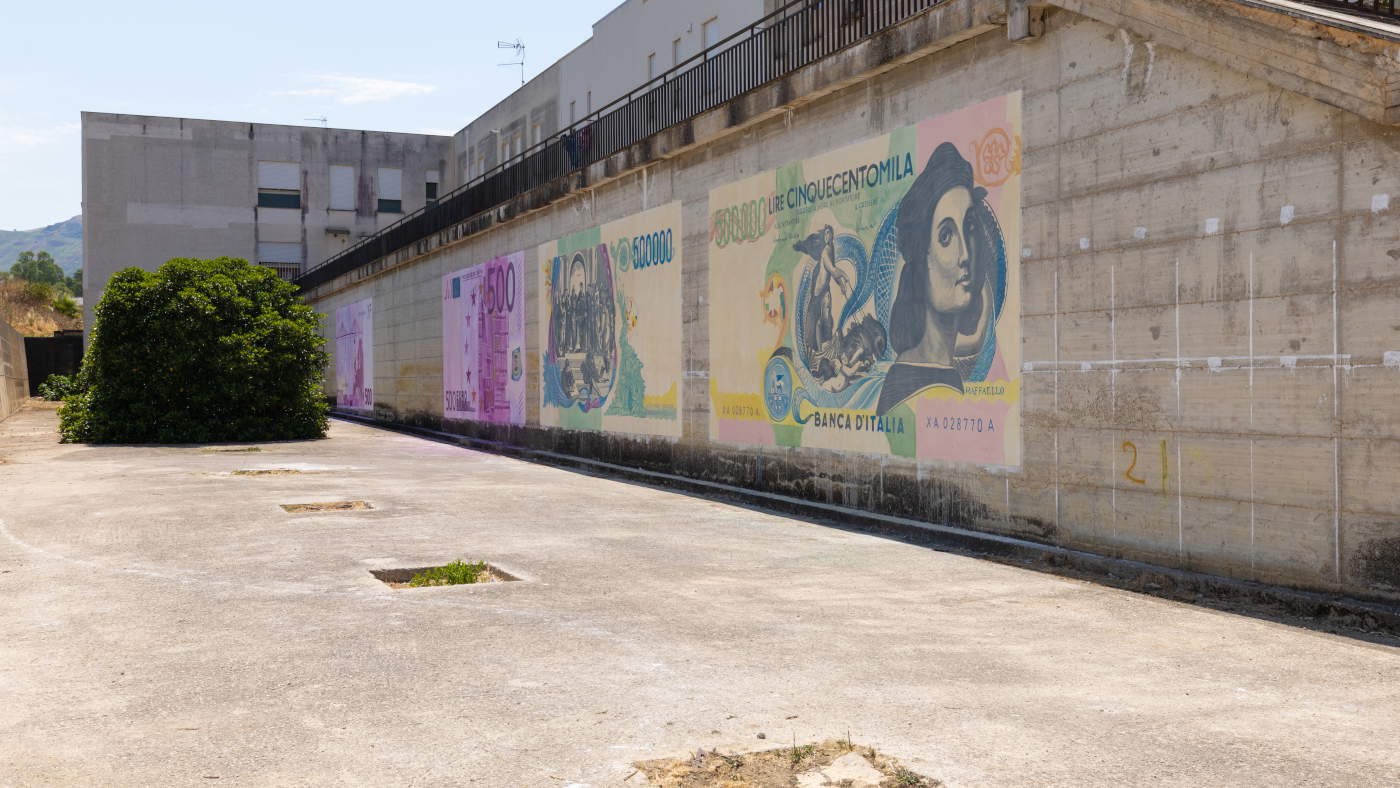
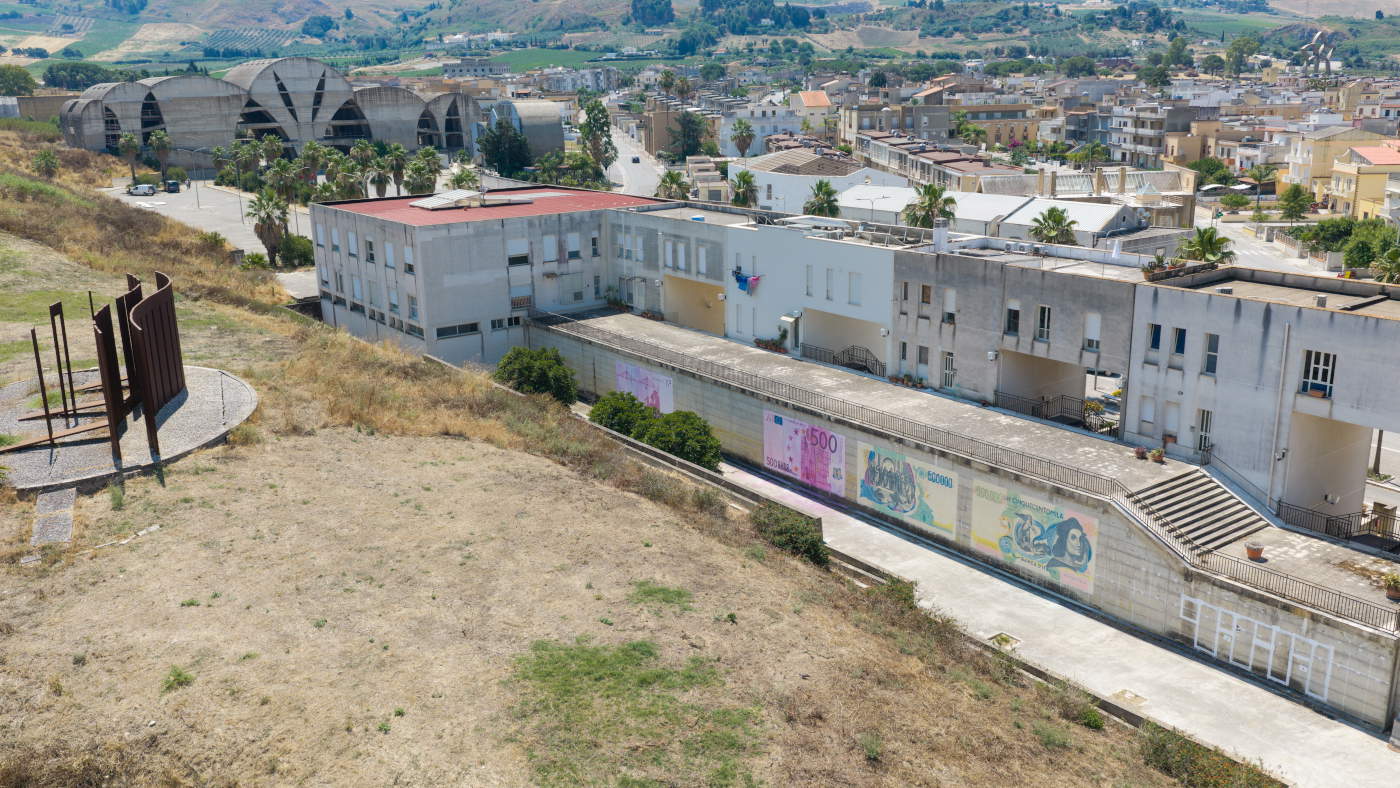
Next to it is the 500-euro banknote, the highest denomination of the single European currency. Its imaginary architectural elements—which bear no resemblance to any real buildings—take on a special meaning in Favelli’s interpretation: among these, the bridge depicted on the reverse stands out; the artist interprets it as an idealized reference to the bridge over the Strait of Messina, transforming a graphic element into a symbolic allusion to contemporary debate. Through the enlargement and faithful reproduction of the banknotes, Favelli transforms familiar images into tools for critical inquiry. They thus become an opportunity to reflect on the value of money, collective memory, national and European identity, and the symbolic power of the images that accompany everyday life.
With *500*, Gibellina enriches its public art collection with a work that invites the public to look beyond the surface of everyday life.
|
| In Gibellina, Flavio Favelli’s new mural reflects on the value of money and collective memory |
Warning: the translation into English of the original Italian article was created using automatic tools. We undertake to review all articles, but we do not guarantee the total absence of inaccuracies in the translation due to the program. You can find the original by clicking on the ITA button. If you find any mistake,please contact us.