




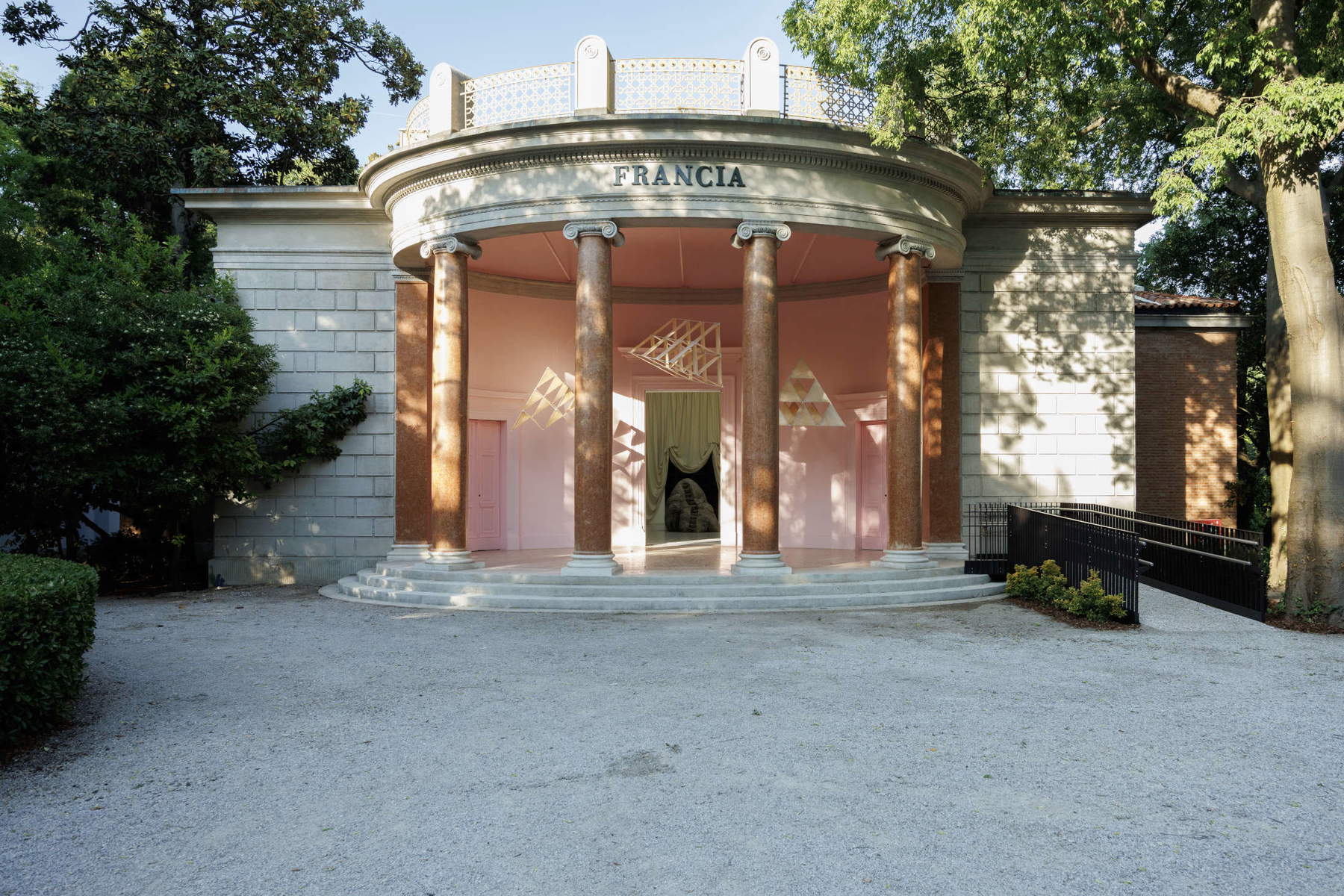
France is represented at the 61st Venice Biennale by Yto Barrada (Paris, 1971) with the project *Comme Saturne*, curated by Myriam Ben Salah. The artist brings to the French Pavilion a work that draws on the cosmological imagery associated with Saturn—a planet traditionally linked to melancholy, seclusion, and the slowness of thought—and transforms it into a device capable of connecting language, color, matter, textile techniques, myth, and memory. Comme Saturne takes shape not only within the exhibition space but also unfolds through a process of experimentation based on association and connection. One word evokes another, a technique paves the way for a myth, a color refers to the history of a material, and even an error can be transformed into a gesture. At the heart of Yto Barrada’s new research lies, in particular, the term “dévoré,” which refers to a textile finishing technique and becomes, for the artist, a starting point that is both concrete and paradoxical. The term evokes the revolutionary phrase that, like Saturn, the Revolution devours its own children.
The entire pavilion is conceived as a sort of suite dedicated to Saturn, organized through sequences, repetitions, variations, and inversions. The exhibition unfolds across different spaces, each characterized by its own function and system of references, yet all connected within a single exploration that challenges established relationships between knowledge, matter, and representation. At the threshold of the pavilion stands a kite made of goatskin, an element that symbolically establishes a connection between heaven and earth. The image of the kite thus introduces one of the project’s central themes: the relationship between seemingly distant realms—between the cosmic and the material, between the high and the low, between myth and concrete experience.
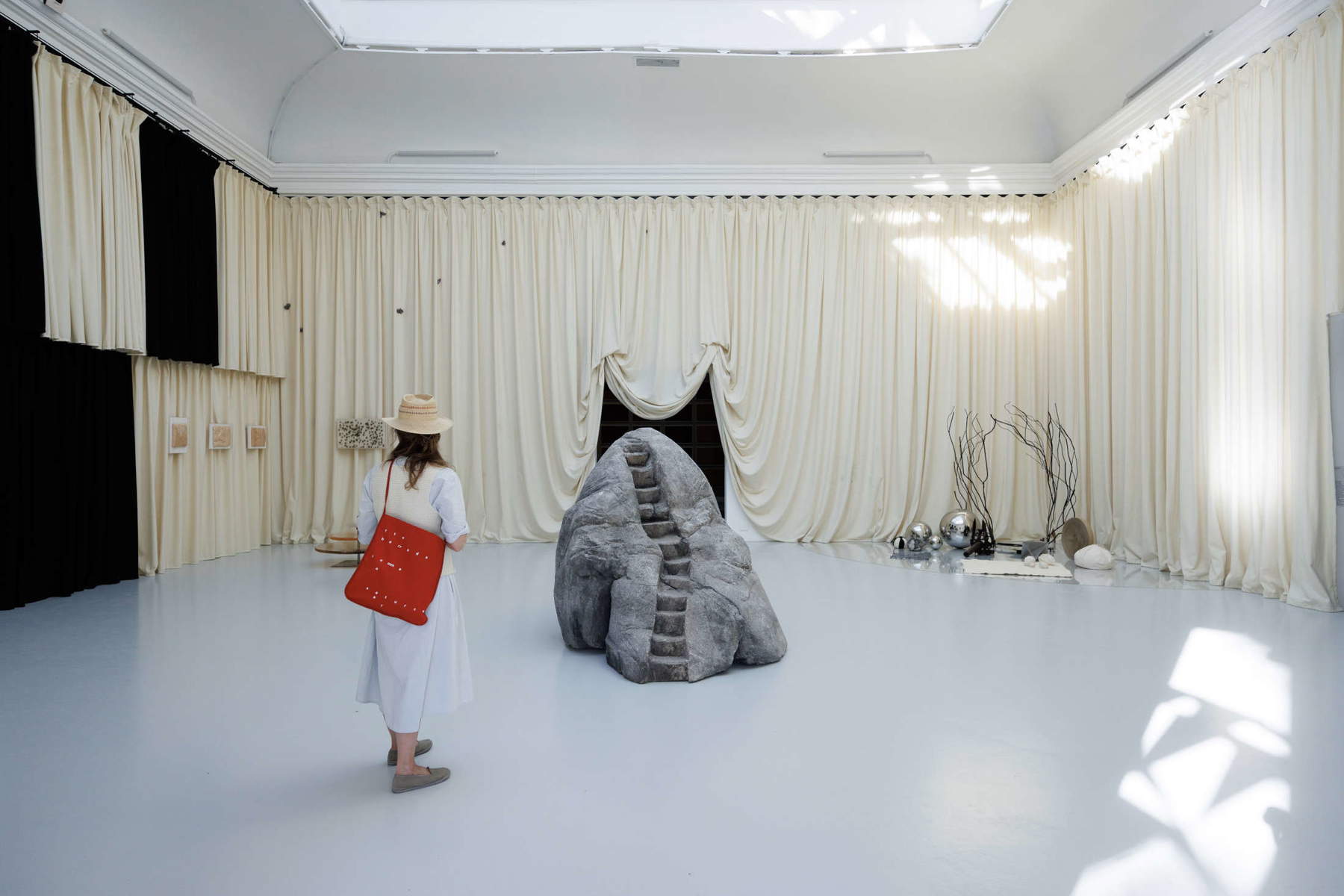
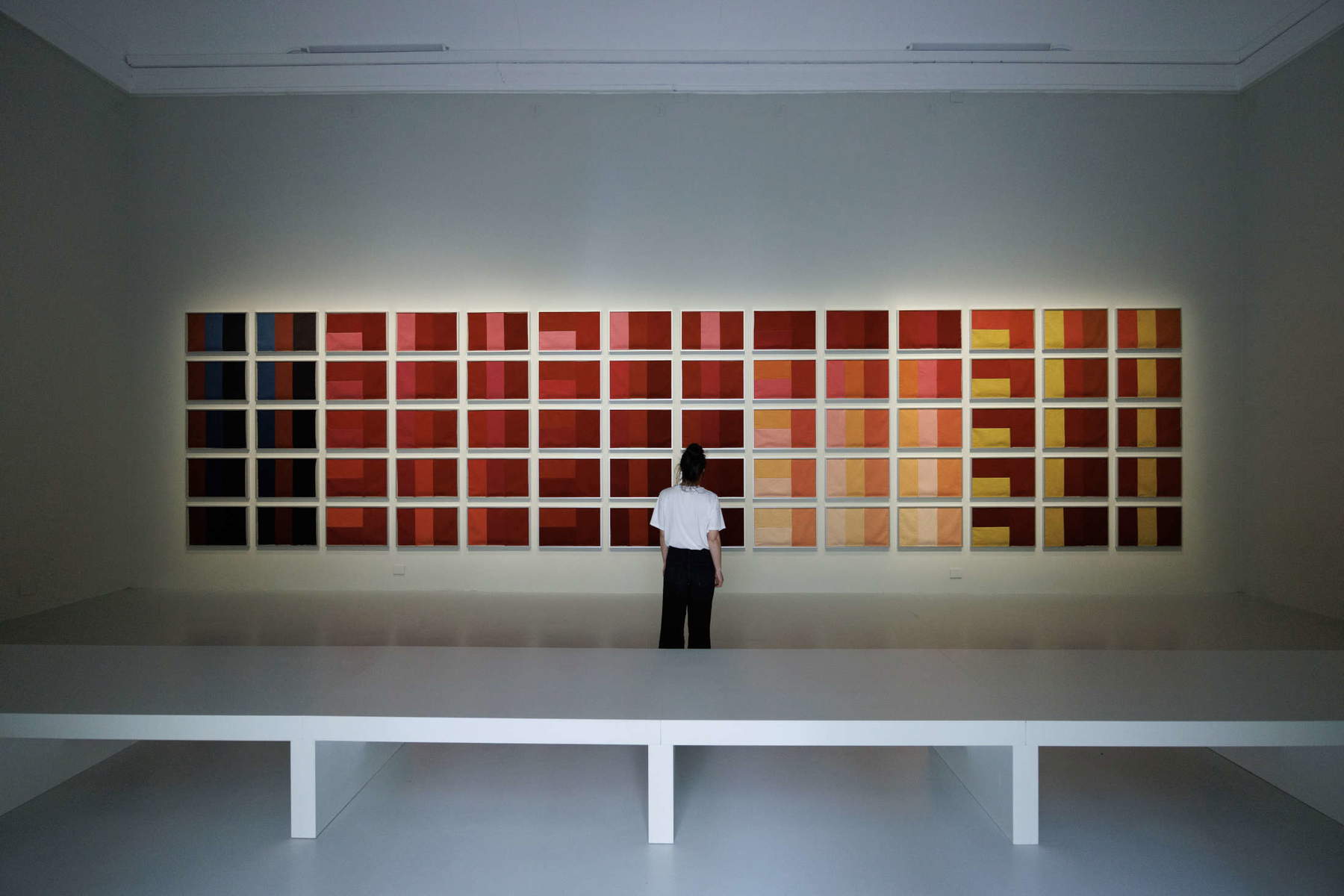


Next comes the “Sala delle pieghe” (Hall of Folds), a space lined and draped in wool that is gradually bleached by daylight. Here, Yto Barrada establishes a dialogue between cosmic time and the mythological time of Cronus, the figure who, in classical tradition, is closely associated with Saturn. The textile material thus also becomes a tool for making the passage of time visible, through a process of transformation that is not only aesthetic but also conceptual.
At the center of the exhibition is a wheel of rules and constraints borrowedfrom OuLiPo, the French literary group founded on experimentation and the use of structures, rules, and limitations as tools to generate new creative possibilities. This device evokes the linguistic games that run throughout the entire project and highlights one of the fundamental aspects of Barrada’s research: the constraint is not interpreted as a limitation on freedom, but as a condition capable of producing unexpected associations, deviations, and new forms.
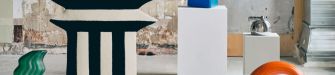
The “Work Room,” on the other hand, explores the theme of the Saturnalia, the ancient Roman festivals dedicated to Saturn during which the social order was temporarily subverted and hierarchies could be overturned. Here, too, the historical and mythological reference serves as a tool for questioning the structures through which society organizes its relationships, categories, and forms of authority. The “Study Room,” on the other hand, has its roots in *The Mothership*, a garden of colorful plants created by the artist in Tangier. In this context, color is not considered merely a visual element, but a form of collective knowledge shared among artists, artisans, and gardeners. Natural materials, artisanal practices, and artistic research thus interrelate, challenging the separation between specialized knowledge and knowledge developed through experience. The exhibition culminates in the Salle du dévoré, where the violence associated with the Saturnian dimension finds physical expression. Here, the material is corroded through the use of acid, producing what the project defines as an “economy of the fragment.” Wear, abrasion, and loss of form become strategies that are both aesthetic and political. The worn-down material is therefore not simply the result of a technical process, but becomes the site where a reflection on violence, transformation, and precariousness manifests itself.


It is precisely in this relationship between destruction and transformation that *Comme Saturne* finds one of its main interpretive keys. The project aims not so much to offer an escape from reality as to provide a tool for poetic survival. The response to the world’s state of instability is not to succumb to melancholy, but to inhabit that very instability with clarity, balancing derision, anxiety, and seriousness.
The exhibition is accompanied by a publication dedicated to the research conducted by Yto Barrada. Since the catalog was published after the exhibition opened, it also includes images of the installed spaces and provides a detailed account of the artist’s most recent experiments in the fields of language, color, and material culture.
The volume opens with a glossary of terms related to dyeing, fabrics, and textile techniques that served as the starting point for the works and installations created for the French Pavilion. Particular attention is given to certain polysemic terms, whose meaning shifts depending on the context in which they are spoken and produced. These include words related to sadness, exhaustion, being devoured, the void, and lining. From its very first pages, the glossary thus establishes a relationship of freedom from the authority of established knowledge.
The heart of the publication consists of the so-called “plates,” illustrations in which the image occupies the center of the page while the text is moved to the margins. This editorial choice, too, draws upon and subverts a Western convention linked to the tradition of the book and the primacy of text over image, instead placing the visual component in a primary position.
Just as the margins play a central role in the pavilion, so too in this volume do illustrations and footnotes take on a predominant role and are accompanied by commentary. A detail of a work, a view of the studio or an exhibition, an iconographic reference, or a snapshot of the creative process enters into dialogue with annotations, quotations, and oral testimonies. The result is a system of relationships and ramifications that translates a thought in motion onto the page.


The book is described as a “subjective encyclopedia,” in which the reader navigates through associations and cross-references, particularly those that lead back to the introductory glossary. The structure thus invites a reading experience that is not necessarily linear, but rather one marked by detours, returns, and vanishing points. Numerous perspectives and diverse points of view ultimately weave a narrative that extends the experience of the Venetian exhibition beyond the physical space of the pavilion.
The catalog also includes an introduction by Myriam Ben Salah, director of the Renaissance Society in Chicago and curator of the French Pavilion; an essay by Arnaud Dubois, an anthropologist of color at the CNRS and scientific advisor to the pavilion; and a previously unpublished contribution by the historian and Oulipian writer Marcel Bénabou.
Yto Barrada’s presence at the Venice Biennale, however, is not limited to the spaces of the French Pavilion. To broaden the project’s reach and strengthen its international dimension, the Institut français, together with its cultural network abroad, has developed a series of initiatives dedicated to the artist’s work in collaboration with the curator. These initiatives, designed to take place before, during, and after the Art Biennale, include talks, screenings, exhibitions, workshops, and residencies. The program unfolds in various locations linked to Barrada’s professional history, connecting cities and institutions from New Delhi to Paris, and from London to Tangier.
|
| Yto Barrada presents “Comme Saturne” at the French Pavilion at the Venice Biennale |

Warning: the translation into English of the original Italian article was created using automatic tools. We undertake to review all articles, but we do not guarantee the total absence of inaccuracies in the translation due to the program. You can find the original by clicking on the ITA button. If you find any mistake,please contact us.




















 IT
IT FR
FR DE
DE ES
ES CN
CN


