





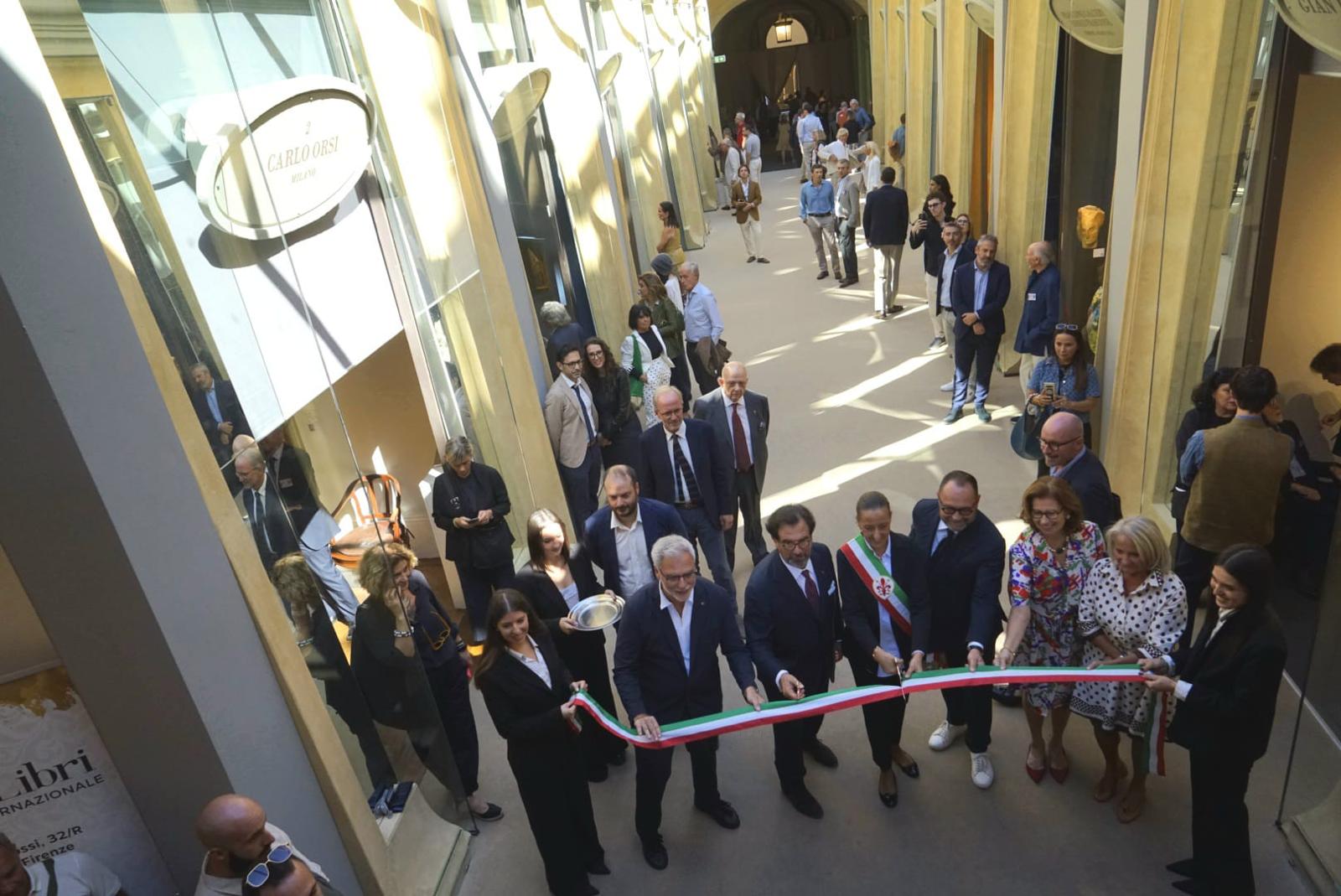
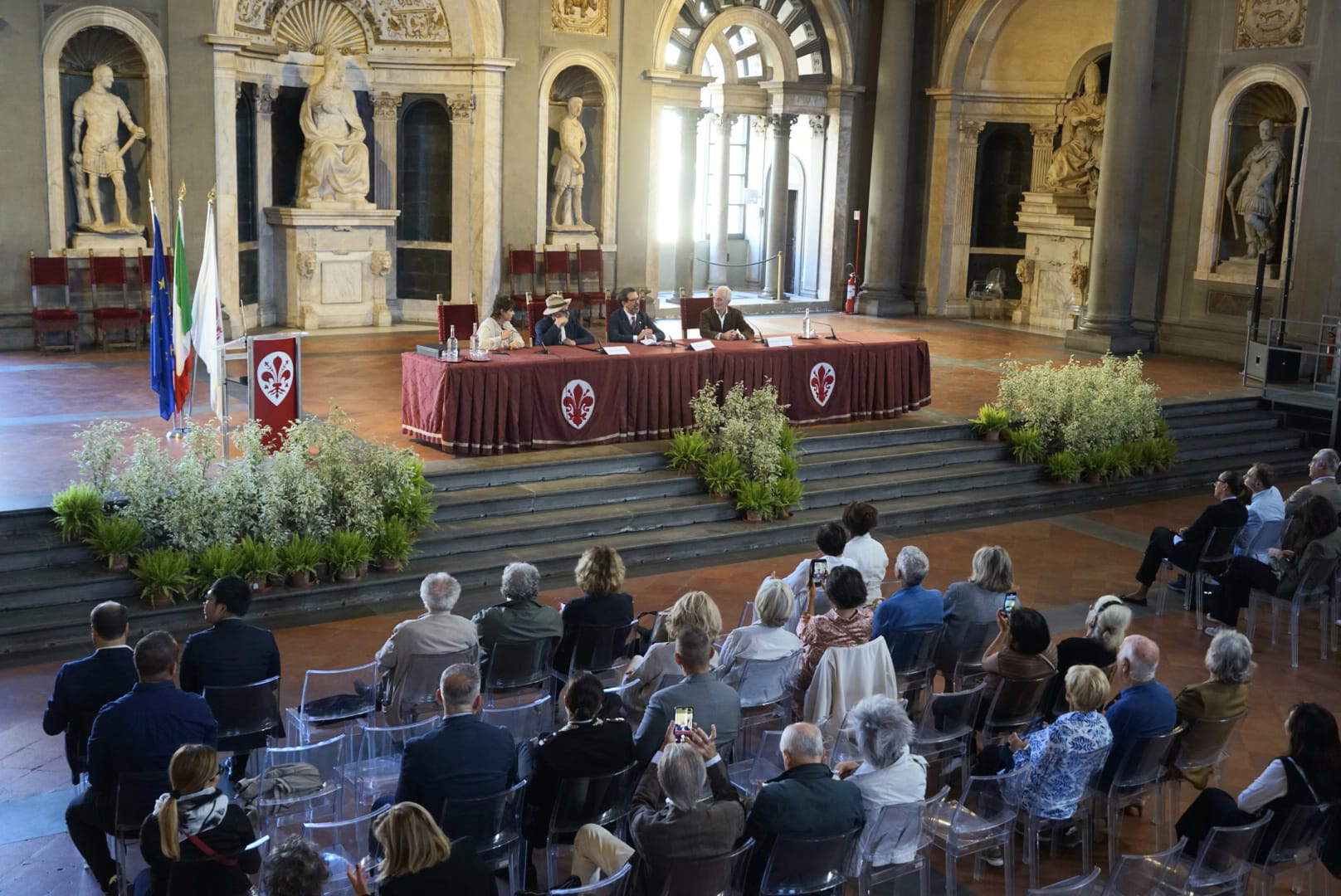
The Florence International Antiques Biennial officially opened today with a ceremony held in the Salone dei Cinquecento at Palazzo Vecchio, attended by Mayor Sara Funaro, the event’s secretary general Bruno Botticelli, and other city dignitaries. The BIAF will continue from today through October 4 at Palazzo Corsini, featuring approximately eighty antique dealers and a program of talks and presentations in the Salone del Trono. The event opened with the Lorenzo d’Oro Award, which was presented to Julian Schnabel: the American artist and filmmaker received the award during the opening ceremony from Mayor Sara Funaro and master silversmith Gianfranco Pampaloni.
For the 2026 edition, the award has been reimagined to forge a more direct connection withFlorentine craftsmanship. Pampaloni was selected by a jury of experts as part of a competition open to the city’s master silversmiths and created the silver-plated piece by reinterpreting an ancient symbol associated with Lorenzo the Magnificent: the three intertwined rings, also depicted in Sandro Botticelli’s *Pallas and the Centaur* as an allegory of Medici diplomacy. In the new award, these three inseparable elements symbolize harmony, continuity, and shared strength. It is a nod to the Medici tradition that accompanies the recognition bestowed upon a prominent figure in contemporary international culture.
“I am happy to be here in Florence and to receive this Lorenzo d’Oro award from the hands of the silversmith who crafted it, Gianfranco Pampaloni,” said Julian Schnabel during the ceremony. “Art is a hymn to life. I am an artist and filmmaker, and every art form is immortal because even after we are gone, we will continue to communicate with those we will never know. It is a consolation for this life that comes to an end. We will continue to live through our works in the eyes of future generations.”
The Lorenzo d’Oro Award is not the only one presented by the BIAF: during the press preview, the winners of the festival’s long-standing awards for the best works—the Painting Award, the Sculpture Award, and the Decorative Arts and Design Award—were also announced.
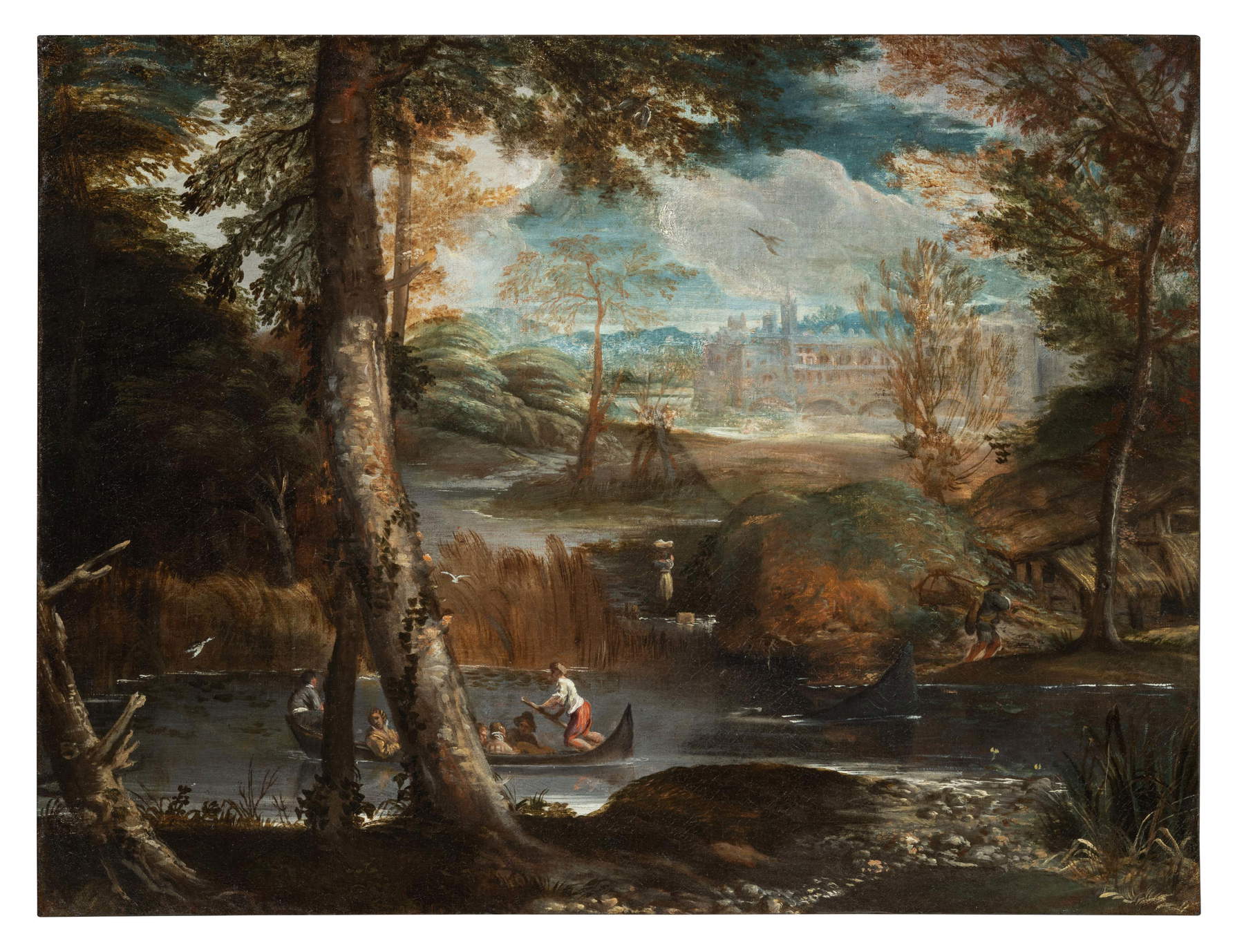
The Painting Award went to *River Landscape with Boatmen* by Annibale Carracci ( Bologna, 1560 – Rome, 1609), a 66-by-86-centimeter oil on canvas presented by the Rimini-based Alice Fine Art gallery and dating to the late 1580s. The painting depicts a pivotal moment in the development of the modern landscape: nature is no longer merely the backdrop against which a story unfolds, but takes on an autonomous role, eventually becoming the true subject of the depiction. Carracci constructs the scene along a waterway crossed by a boat, amid trees, reeds, and vegetation that occupies much of the canvas. Human figures are present, but they appear almost absorbed by their surroundings. It is precisely this relationship between man and nature that lends the painting a particular intensity: the natural setting does not function as a mere theatrical backdrop but determines the atmosphere and rhythm of the image.
The history of the work adds a further element of interest: the painting was in fact part of the Platky Collection in Leipzig and later passed into the collection of Fritz Haussmann in Berlin. The first attribution to Carracci was made by Hermann Voss, who first proposed it in 1919 and revisited the work in 1931. The painting later passed from Haussmann to a Swiss collector, whose heirs have preserved it to this day. Known until now only through a photograph, it has continued to be regarded by critics as a work of significance. The painting dates from the years when Annibale Carracci was experimenting with a new conception of landscape. Indeed, the painting reveals the influence of Venetian painting and a particular attention to the effects of light: the rapid, cursive brushstrokes construct the landscape by alternating areas of light and shadow, while the soft, enveloping tones help create a unified atmosphere.
The Venetian influence is also linked to the trip Annibale took with his brother Agostino in late 1587. His familiarity with Titian’s painting is reflected in the scene’s use of light, but Carracci departs from it in favor of a more naturalistic view. The monumentality and solemnity of the Venetian landscape are translated into a more immediate vision, in which nature appears to be observed directly rather than merely organized according to an idealized composition.
This is one of the aspects that make *River Landscape with Boatmen* significant in Annibale’s artistic development. The painter, one of the key figures in the transition from the sixteenth to the seventeenth century, experimented with different genres and artistic languages, contributing to the emergence of a new conception of painting. In landscape painting, this exploration led to the consideration of nature as an autonomous and living presence, destined to play an increasingly important role in European painting in the centuries that followed.
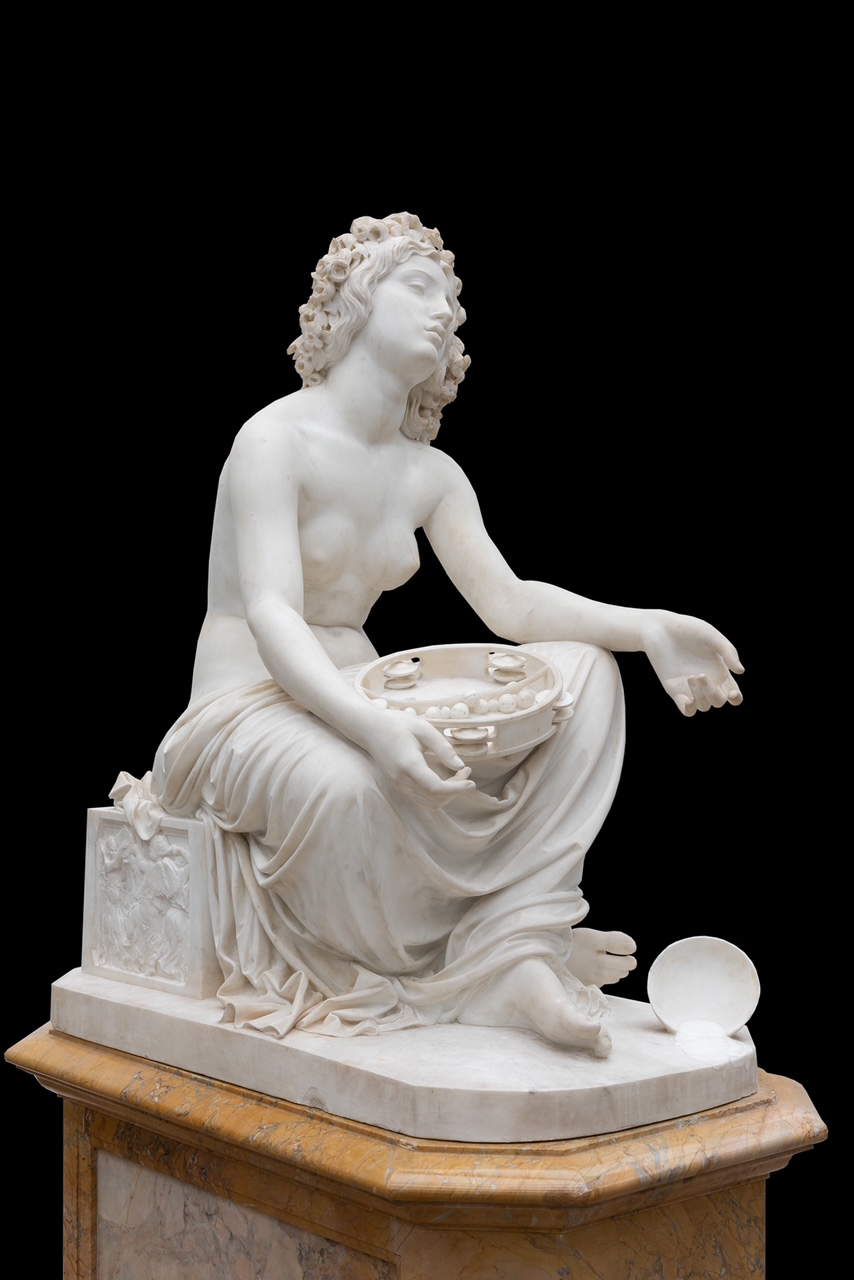
The Sculpture Prize , on the other hand, was awarded to *The Tired Bacchante* by Giovanni Dupré ( Siena, 1817 – Florence, 1882), presented by the Gomiero Gallery in Montegrotto Terme (Padua). The sculpture, crafted from statuary marble and Siena Yellow marble, belongs to the sculptor’s “Neo-Greek” phase and was commissioned by the King of Portugal. With this work, Dupré reached one of the most significant milestones in his mid-19th-century artistic exploration. The reference to ancient statuary, however, does not amount to a mere archaeological imitation. The figure of the bacchante, resting after the Dionysian dance, combines the naturalistic precision of the anatomy with a clear interest in the sensuality of form.
The young woman is depicted nude, with her legs covered by a light drapery. Her body is relaxed in a pose that conveys both fatigue and intoxication, while beside her lie the cembalo and the overturned cup—attributes that make the reference to the Dionysian world unmistakable. Her face retains the ecstatic expression of the dance but is marked by exhaustion. Her hair is gathered at the nape of her neck, and a garland of small roses frames her head, introducing the theme of transience into the scene.
Dupré’s artistic exploration stemmed from his engagement with ancient sculpture, which he deepened during his 1853 trip to Naples through visits to the Bourbon Museum and Pompeii. But his interest in antiquity was part of a broader debate on the nature of art, a subject the sculptor also explored through his friend Luigi Mussini and, later, during his trip to London and Paris in the summer of 1857.
In this sense, *The Weary Bacchante* marks a transition from his earlier purist sensibility toward an international aesthetic. Dupré himself spoke, in a letter to Antonio Ciseri, of that “pagan luxury” which he identified with the new allure exerted by ancient beauty. In this sculpture, the moralizing intent that had characterized his other works disappears, and the pursuit of a sensual, refined, and autonomous beauty takes precedence.
The work enjoyed remarkable success even among international collectors. Dupré reported having replicated it several times: at least five versions are documented, destined respectively for Manchester, London, St. Petersburg, and the United States, in addition to the one created in 1865 for the King of Portugal. The marble sculpture presented at the BIAF, originating from Villa Santa Margherita in Costalpino and provided by the Ciseri heirs, was identified by Ettore Spalletti as the Portuguese version.
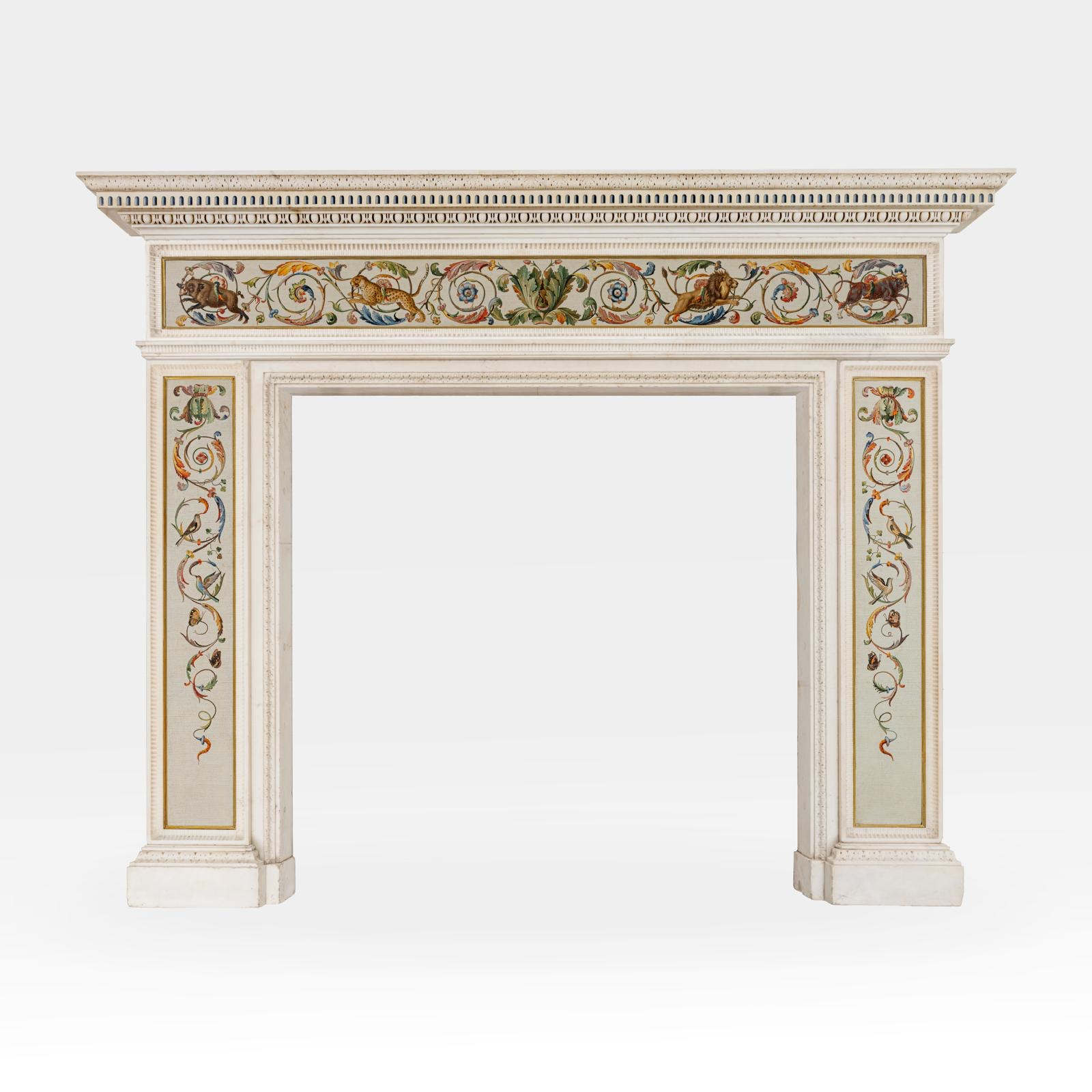
Rounding out the group of award-winning works is the Decorative Arts and Design Award, presented to a monumental fireplace by Giacomo Raffaelli (Rome, 1753–1836), presented by the Rome-based Verdini Antiques. Created in the early 19th century, the piece is made of white marble and micromosaic. Raffaelli is considered one of the leading figures in the decorative arts at the turn of the 18th and 19th centuries and one of the artists who contributed to the success of the technique using extremely small tiles, known as Roman micromosaic. His use of this technique on small panels depicting landscapes, animals, flowers, ruins, and religious and mythological subjects allowed him to create images of extraordinary precision, in which the small size of the tiles became a tool for achieving almost painterly effects.
In the fireplace that won an award at the BIAF, the marble of the carved structure frames micromosaic inlays in which the precision of the details becomes an integral part of the decoration. The depicted images transform the piece of furniture into a sort of narrative device: the animals, captured in their movements and expressions, occupy a space that invites the observer to draw closer and linger over the details. Raffaelli’s technique, in fact, achieves effects of great chromatic richness and an almost three-dimensional perception of the scenes. The micromosaic is not merely an ornamental element added to the piece, but becomes the focal point where an essential part of its artistic quality is concentrated.
BIAF 2026 continues through October 4 at Palazzo Corsini with approximately eighty exhibitors. Alongside the works presented by the antique dealers, the program includes meetings, conferences, and presentations dedicated to art history, collecting, restoration, and the culture of antiques. Books, artworks, restoration projects, and new research serve as the starting points for the events hosted in the Throne Room, expanding the Biennale’s narrative beyond the objects on display in the exhibition halls.
|
| Annibale Carracci, Dupré, and Raffaelli: the award-winning works at BIAF 2026. Lorenzo d'Oro Award goes to Schnabel |

Warning: the translation into English of the original Italian article was created using automatic tools. We undertake to review all articles, but we do not guarantee the total absence of inaccuracies in the translation due to the program. You can find the original by clicking on the ITA button. If you find any mistake,please contact us.


























 IT
IT FR
FR DE
DE ES
ES CN
CN


